



AMPK
AMP-activated protein kinase
AMPK (AMP-activated protein kinase) is an enzyme that plays a role in cellular energy homeostasis. It consists of three proteins (subunits) that together make a functional enzyme. The net effect of AMPK activation is stimulation of hepatic fatty acid oxidation andketogenesis, inhibition of cholesterol synthesis, lipogenesis, and triglyceride synthesis, inhibition of adipocyte lipolysis and lipogenesis, stimulation of skeletal muscle fatty acid oxidation and muscle glucose uptake by pancreatic beta-cells. AMPK acts as a metabolic master switch regulating several intracellular systems including the cellular uptake of glucose, the β-oxidation of fatty acids and the biogenesis of glucose transporter 4 (GLUT4) and mitochondria.
AMPK Isoform Specific Products
-
NUAK1
(10)
View all products
-
NUAK2
(5)
View all products
-
AMPK
(334)
View all products
-
AMPK α1β1γ1
(12)
View all products
-
AMPK α2β1γ1
(8)
View all products
-
AMPK α1β2γ1
(5)
View all products
-
AMPK α2β2γ1
(6)
View all products
-
BRSK1
(1)
View all products
-
BRSK2
(1)
View all products
-
HUNK
(1)
View all products
-
AMPKα
(2)
View all products
All Product Categories
-
AMPK Inhibitors
(73)
View all products
-
AMPK Agonists
(15)
View all products
-
AMPK Antagonists
(2)
View all products
-
AMPK Activators
(308)
View all products
-
AMPK Modulators
(4)
View all products
-
AMPK Inducers
(4)
View all products
-
AMPK Substrate
(1)
View all products
-
AMPK Proteins
(7)
View all products
-
AMPK Related Products (458)
Related Products (458)

-
Recombinant Proteins (7)
-
Antibodies (17)
-
AMPK Isoform Comparison
-
Sinigrin (Standard)
 0 ImagesSynonyms: Allyl-glucosinolate (Standard); 2-Propenyl-glucosinolate (Standard)Sinigrin (Standard) (Allyl-glucosinolate (Standard)) is the analytical standard of Sinigrin (HY-N0404). This product is intended for research and analytical applications. Sinigrin (Allyl-glucosinolate) is an orally active glucosinolate found in cruciferous plants. Sinigrin possesses multiple activities such as anti-cancer, antibacterial, antifungal, anti-inflammatory, antioxidant, and inhibition of fat synthesis. Sinigrin can be used in the research of tumors, inflammatory, and metabolic diseases.
-
Urolithin D (Standard)
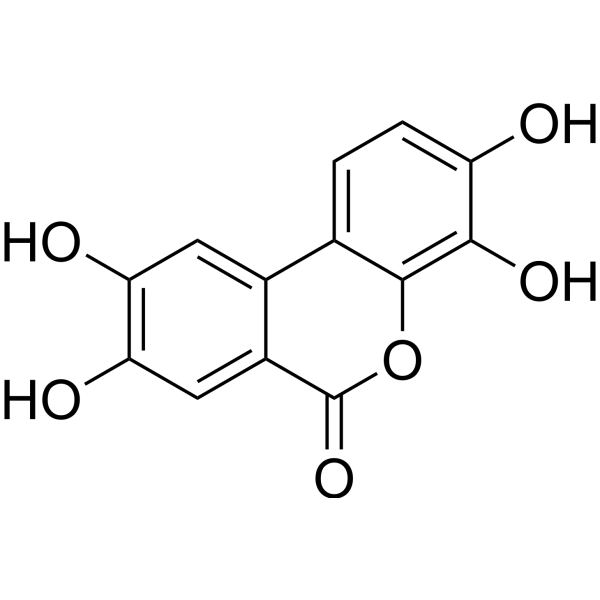 0 ImagesCat. No.: HY-133178RCAS No.: 131086-98-1Synonyms: 3,4,8,9-Tetrahydroxy urolithin (Standard)Urolithin D (Standard) (3,4,8,9-Tetrahydroxy urolithin (Standard)) is the analytical standard of Urolithin D (HY-133178). This product is intended for research and analytical applications. Urolithin D (3,4,8,9-Tetrahydroxy urolithin) is a colonic metabolite of Ellagitannins and a competitive, reversible, and selective antagonist of the EphA receptor. Urolithin D inhibits EphA2-ephrin-A1 binding with an IC50 of 0.9 μM. Urolithin D is also a potent antioxidant that scavenges free radicals and repairs oxidized DNA damage. Additionally, Urolithin D suppresses triglyceride accumulation and promotes fatty acid oxidation by activating the AMPK signaling pathway. Urolithin D can be used for research on tumors, metabolic, and inflammatory diseases.
-
YPLP
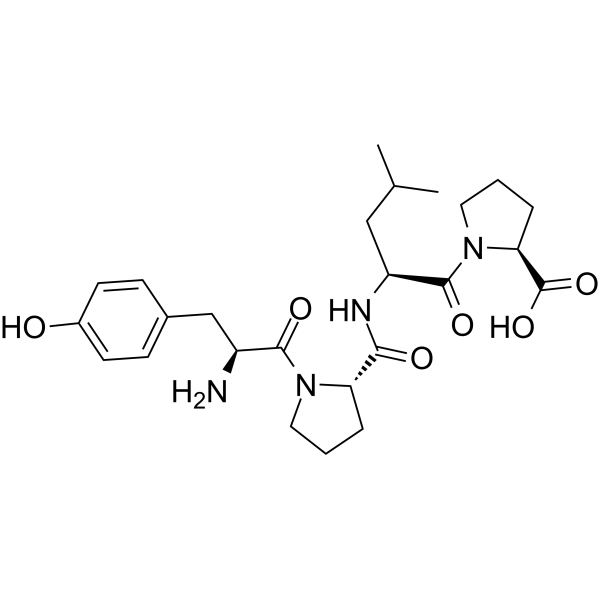 0 ImagesCat. No.: HY-163315CAS No.: 2414391-44-7YPLP is a yeast-derived peptide Tyr-Pro-Leu-Pro, which exhibits activity in anti fatigue mechanisms through the nuclear factor erythroid-2-related factor 2 (Nrf2)- and AMP-activated protein kinase (AMPK) pathway. YPLP is orally active.
-
ARUK2010489
 0 ImagesCat. No.: HY-178171ARUK2010489 (Compound 23) is a potent, selective and brain-penetrant NUAK1 inhibitor with a pIC50 of 8.7. ARUK2010489 also inhibits CDK2, CDK4 and CDK6 activity, with inhibitory rate of 7%, 39% and 26% at 1 μM. ARUK2010489 can be used for the research of neurological disease, such as Alzheimer’s disease (AD).
-
Biotin-AMPKα2β1γ1 Recombinant Human Active Protein Kinase
 0 ImagesCat. No.: HY-E70796AMPK is an αβγ heterotrimeric serinethreonine kinase activated by decreasing concentrations of adenosine triphosphate (ATP) and increasing AMP concentrations. Biotin-AMPKα2β1γ1 Recombinant Human Active Protein Kinase is obtained by co-expressing AMPKα2, AMPKβ1, and AMPKγ1 proteins and is biotinylated.
-
Tipepidine citrate
 0 ImagesCat. No.: HY-B2185CAS No.: 14698-07-8Tipepidine citrate is a non-narcotic antitussive agent. Tipepidine citrate reversibly inhibits dopamine D2 receptor-mediated GIRK current (IDA(GIRK)), thereby activating VTA dopamine neurons, with an IC50 of 7.0 μM for IDA(GIRK). Tipepidine activates AMPK. Tipepidine citrate has antidepressant-like effects. Tipepidine citrate enhances the analgesic effect of Carbamazepine (HY-B0246). Tipepidine citrate improves adipose tissue fibrosis and glucose intolerance in high-fat diet-induced obese mice.
-
LRRK2/NUAK1/TYK2-IN-1
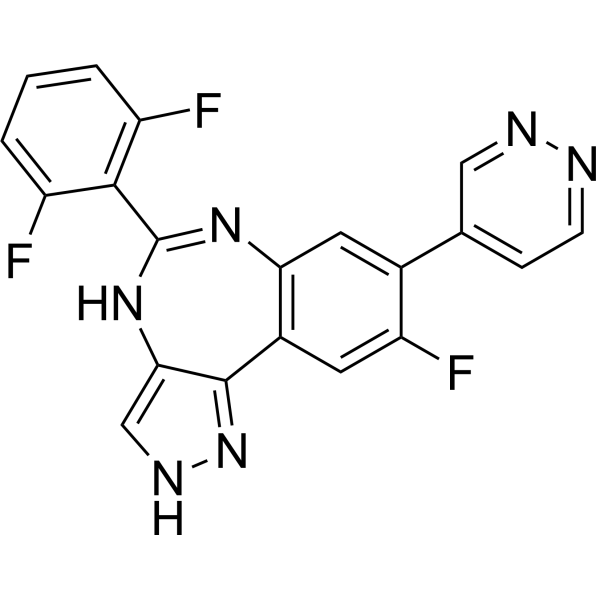 0 ImagesCat. No.: HY-153103CAS No.: 2629192-96-5LRRK2/NUAK1/TYK2-IN-1 (conpound 226) shows inhibitory activity toward LRRK2 (Wt), LRRK2 (G2019), TYK2 and NUAK1, with IC50 values lower than 10 nM. LRRK2/NUAK1/TYK2-IN-1 can be used for autoimmune disease research.
-
Canola oil
 0 ImagesCat. No.: HY-N20666CAS No.: 120962-03-0Canola oil is an orally effective adipogenesis inhibitor and gut microbiota modulator. Canola oil inhibits the expression of PPARγ, SREBP1, SREBP2, Insig1 and Insig2, and increases the phosphorylation level of the AMPK pathway. Canola oil inhibits adipogenesis and reshapes gut microbiota in mice to ameliorate obesity. Canola oil can be used in obesity-related research.
-
OXPHOS-IN-2
 0 ImagesCat. No.: HY-176284OXPHOS-IN-2 is an orally active OXPHOS inhibitor. OXPHOS-IN-2 exhibits potent inhibitory activity in PC9 (IC50 = 12.3 nM) and Bxpc-3 cells (IC50 = 250 nM in glucose medium, IC50 = 17.5 nM in galactose medium). OXPHOS-IN-2 decreases the NADH/NAD+ ratio and reduces ATP levels. OXPHOS-IN-2 induces tumor cells apoptosis by activating reactive oxygen species (ROS) and downregulating the level of Nrf2. OXPHOS-IN-2 can be used for research on cancer such as non-small cell lung cancer and pancreatic cancer.
-
QIK Recombinant Human Active Protein Kinase
 0 ImagesCat. No.: HY-E70858QIK belongs to the AMPK/SNF1 kinase family. It is a ubiquitously expressed protein and is upregulated rapidly after a hormone-regulated form of Qin is activated. QIK Recombinant Human Active Protein Kinase is a recombinant QIK protein that can be used to study QIK-related functions.
-
HSF1/AMPK activator 1
 0 ImagesCat. No.: HY-181808CAS No.: 2170935-59-6HSF1/AMPK activator 1 is a compound that modulates the HSF1/AMPK axis and the TGF-β1/Smad signaling pathway. HSF1/AMPK activator 1 exhibits anti-hepatic fibrosis activity and metabolic stability. HSF1/AMPK activator 1 inhibits fibrosis formation and cell proliferation in activated hepatic stellate cells. HSF1/AMPK activator 1 alleviates liver injury and hepatic fibrosis symptoms in fibrotic mice. HSF1/AMPK activator 1 is applicable to research related to hepatic fibrosis.
-
Biotin-AMPKα1β2γ1 Recombinant Human Active Protein Kinase
 0 ImagesCat. No.: HY-E70795AMPK is an αβγ heterotrimeric serinethreonine kinase activated by decreasing concentrations of adenosine triphosphate (ATP) and increasing AMP concentrations. Biotin-AMPKα1β2γ1 Recombinant Human Active Protein Kinase is obtained by co-expressing AMPKα1, AMPKβ2, and AMPKγ1 proteins and is biotinylated.
-
Biotin-Nuak2 Recombinant Human Active Protein Kinase
 0 ImagesCat. No.: HY-E70802NUAK2 is a member of the SNF1/AMP kinase (AMPK) family (serine/threonine kinases) that is regulated by the putative tumor suppressor LKB1 (20-23) and also by death receptor signaling through NF-κB. Biotin-Nuak2 Recombinant Human Active Protein Kinase is a recombinant Nuak2 protein that can be used to study Nuak2-related functions, and is biotinylated.
-
Phellodendrine chloride (Standard)
 0 ImagesCat. No.: HY-N0735RCAS No.: 104112-82-5Phellodendrine chloride (Standard) is the analytical standard of Phellodendrine chloride (HY-N0735). Phellodendrine chloride is an orally active plant alkaloid. Phellodendrine chloride inhibits the proliferation of KRAS-mutated pancreatic cancer cells by suppressing macropinocytosis and glutamine metabolism, inducing ROS accumulation and mitochondrial apoptosis. Phellodendrine chloride promotes autophagy by activating the AMPK/mTOR pathway, alleviating intestinal damage in ulcerative colitis. Phellodendrine chloride can alleviate gouty arthritis by inhibiting the IL-6/STAT3 signaling pathway. Phellodendrine chloride suppresses allergic reactions by altering the conformation of MRGPRB3/MRGPRX2 protein, thereby inhibiting the activation of PKC and subsequent downstream MAPK and NF-κB signaling. Phellodendrine chloride inhibits the AKT/NF-κB pathway and down-regulates the expression of COX-2, thereby protecting zebrafish embryos from oxidative stress. Phellodendrine chloride has an anti-major depressive disorder (MDD) effect by down-regulating CHRM1, HTR1A, and the PI3K/Akt signaling pathway.
-
D-Arabinose-d2
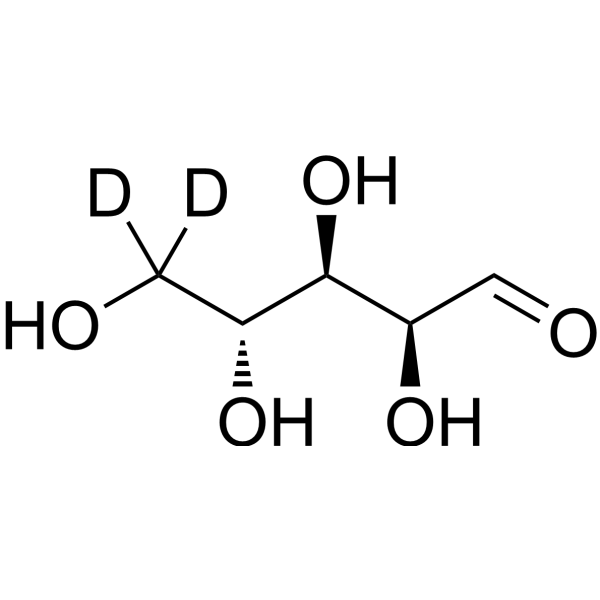 0 ImagesCat. No.: HY-N0059S4CAS No.: 2419933-20-1D-Arabinose-d2 is the deuterium labeled D-Arabinose (HY-N0059). D-Arabinose is is an orally active antidepressant and a growth inhibitor of C. elegans (IC50 is 7.5 mM). D-Arabinose can penetrate the blood-brain barrier, selectively interfere with the metabolism of D-ribose and D-fructose, and inhibit the growth of nematodes. D-Arabinose can also inhibit the synthesis of cell biofilm and exert antibacterial activity. D-Arabinose activates the ACSS2-PPARγ/TFEB-CRTC1 axis through the lysosomal AXIN-LKB1-AMPK pathway, inducing CRTC1 transcription, exerts antidepressant-like activity. D-Arabinose is the ring-opened form of the aldopentose D-?Arabinose (HY-N7082).
-
Cryptolepine
 0 ImagesCat. No.: HY-W800535CAS No.: 480-26-2Cryptolepine is an orally active multi-potent alkaloid with anti-cancer, anti-bacterial, anti-viral, anti-malarial, anti-inflammatory, anti-hyperglycemic, relieve pain and other properties. Cryptolepine acts as an inhibitor of c-Myc, mTOR, NF-κB, HIF-1, MAPK and an activator of AMPKα1/2. It intercalates into DNA, inhibits topoisomerase II (Top II), disrupts mitochondrial dynamics and induces apoptosis. Cryptolepine also exhibits anti-plasmodial and cholinesterase inhibitory activities. Cryptolepine can be used in research related to tumors (melanoma, hepatocellular carcinoma, mammary adenocarcinoma, etc.), malaria, inflammatory diseases and diabetes, particularly in studies focused on inhibiting tumor growth and anti-plasmodial infection.
-
Lonchocarpin
 0 ImagesCat. No.: HY-119590CAS No.: 31501-55-0Synonyms: LonchocarpineLonchocarpin (Lonchocarpine) is a Wnt/β-catenin signaling pathway inhibitor. The IC50 of Lonchocarpin in SW480 pBAR/Renilla cells is 4 μM. Acting downstream of β-catenin stabilization, Lonchocarpin inhibits β-catenin nuclear localization and TCF-mediated transcription, as well as the proliferation and migration of colorectal cancer cells. Lonchocarpin enhances Nrf2/ARE-mediated antioxidant responses in primary astrocytes via AMPK and JNK-related signaling, reduces H2O2-induced ROS production, and increases the expression of HO-1, NQO1 and MnSOD. Lonchocarpin can be used in research on colorectal cancer and oxidative stress.
-
ASS1 activator 1
 0 ImagesCat. No.: HY-181832ASS1 activator 1 (Compound 10f) is a ASS1 activator with an EC50 of 1.90 μM. ASS1 activator 1 enhances the activity of ASS1 and promotes AMPK phosphorylation. ASS1 activator 1 induces cell Apoptosis. ASS1 activator 1 exhibits anticancer activity against triple-negative breast cancer, colorectal cancer and liver cancer.
-
AMPK activator 14
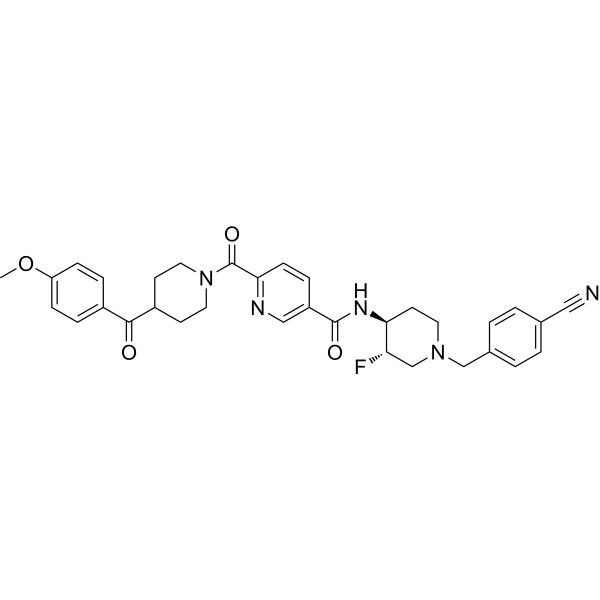 0 ImagesCat. No.: HY-162042CAS No.: 1356632-18-2AMPK activator 14 (compound 32) is an orally active AMPK activator. AMPK activator 14 decreases fasted glucose and insulin levels in a db/db mouse model of Type II diabetes.
-
Bempedoic acid (Standard)
 0 ImagesSynonyms: ETC-1002 (Standard); ESP-55016 (Standard)Bempedoic acid (Standard) is the analytical standard of Bempedoic acid. This product is intended for research and analytical applications. Bempedoic acid (ETC-1002) is an ATP-citrate lyase (ACL) inhibitor. Bempedoic acid (ETC-1002) activates AMPK.




