



Bacterial
Anything that destroys bacteria or suppresses their growth or their ability to reproduce. Heat, chemicals such as chlorine, and antibiotic drugs all have antibacterial properties. Many antibacterial products for cleaning and handwashing are sold today. Such products do not reduce the risk for symptoms of viral infectious diseases in otherwise healthy persons. This does not preclude the potential contribution of antibacterial products to reducing symptoms of bacterial diseases in the home.
All Product Categories
-
Bacterial Inhibitors
(7553)
View all products
-
Bacterial Agonists
(3)
View all products
-
Bacterial Antagonists
(9)
View all products
-
Bacterial Activators
(25)
View all products
-
Bacterial Modulators
(27)
View all products
-
Bacterial Chemicals
(2)
View all products
-
Bacterial Inducers
(6)
View all products
-
Bacterial Controls
(14)
View all products
-
Bacterial Substrates
(2)
View all products
-
Bacterial Ligand
(1)
View all products
-
Bacterial Related Products (8893)
Related Products (8893)

-
Antibodies (14)
-
Related Compound Screening Libraries (1)
-
Staphyloferrin A
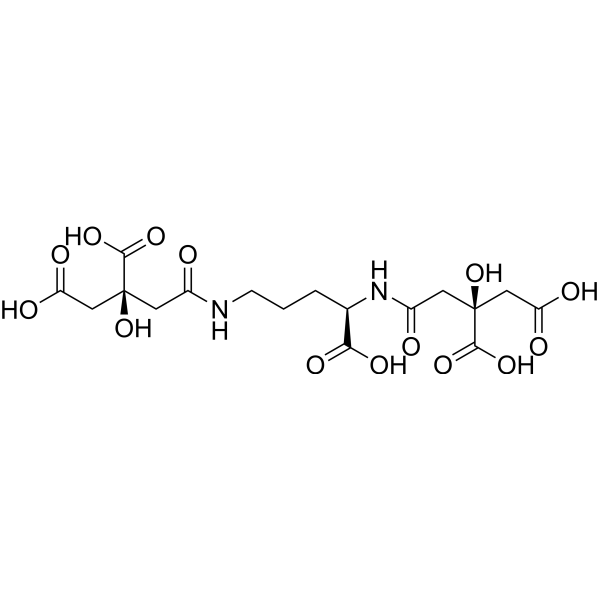 0 ImagesCat. No.: HY-N11874CAS No.: 127902-98-1Staphyloferrin A is a carboxylate-type siderophore, as well as an iron (III) chelator and a HtsA ligand with high binding affinity for iron (III). Staphyloferrin A can be used in studies of bacterial infections.
-
Propranolol hydrochloride (Standard)
 0 ImagesPropranolol (hydrochloride) (Standard) is the analytical standard of Propranolol (hydrochloride). This product is intended for research and analytical applications. Propranolol hydrochloride is a nonselective β-adrenergic receptor (βAR) antagonist, has high affinity for the β1AR and β2AR with Ki values of 1.8 nM and 0.8 nM, respectively. Propranolol hydrochloride inhibits [3H]-DHA binding to rat brain membrane preparation with an IC50 of 12 nM. Propranolol hydrochloride is used for study of hypertension, pheochromocytoma, myocardial infarction, cardiac arrhythmias, angina pectoris, and hypertrophic cardiomyopathy.
-
D-Tartaric acid
 0 ImagesD-Tartaric acid (D-(-)-Tartaric acid) serves as an additive in beverages and other food products. When combined with pyrrole, D-Tartaric acid is used to construct a D-TA/polypyrrole-based bacterial imprinted polymer sensor for the detection of Vibrio parahaemolyticus. D-Tartaric acid enhances the sensitivity of polypyrrole-based bacterial imprinted polymer sensors for detecting Vibrio parahaemolyticus. D-Tartaric acid is applicable to research on Vibrio parahaemolyticus infection.
-
Sulfamethoxazole (Standard)
 0 ImagesSulfamethoxazole (Standard) (Ro 4-2130 (Standard)) is the analytical standard of Sulfamethoxazole (HY-B0322). This product is intended for research and analytical applications. Sulfamethoxazole (Ro 4-2130) is a sulfonamide antibiotic with a widespread antibacterial activity. Sulfamethoxazole inhibits bacterial folate metabolism by competing with 4-Aminobenzoic acid (HY-B1008) (PABA) to act on dihydropteroate synthetase and dihydropteroate reductase. Sulfamethoxazole can be used for the study of urinary tract infections (UTIs), prostatitis, and bronchitis.
-
Ectoine (Standard)
 0 ImagesEctoine (Standard) is the analytical standard of Ectoine. This product is intended for research and analytical applications. Ectoine is a natural cell protectant, an amino acid derivate produced by bacteria living under extremely harsh environmental conditions. Ectoine serves as an osmoregulatory compatible solute, increasing the hydration of the skin surface and stabilizing lipid layers, which is useful in skincare. Ectoine demonstrates a good safety profile for the treatment of allergic rhinitis.
-
Gentisyl alcohol
 0 ImagesGentisyl alcohol has anti-Staphylococcus aureus activity.
-
Mezlocillin sodium
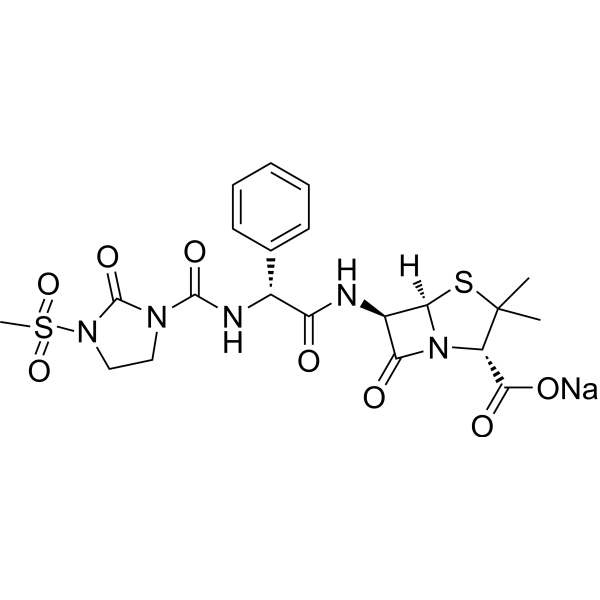 0 ImagesSynonyms: BAY-f 1353 sodiumMezlocillin (BAY-f 1353) sodium is a β-lactam antibiotic, a semisynthetic and extended-spectrum antibiotic. Mezlocillin sodium is active against both gram-negative and gram-positive bacteria. Mezlocillin sodium can be used in bacterial infection research.
-
Puromycin dihydrochloride (Standard)
 0 ImagesSynonyms: CL13900 dihydrochloride (Standard)Puromycin (dihydrochloride) (Standard) is the analytical standard of Puromycin (dihydrochloride). This product is intended for research and analytical applications. Puromycin dihydrochloride (CL13900 dihydrochloride), an aminonucleoside antibiotic, inhibits protein synthesis.
-
Pyrazinamide (Standard)
 0 ImagesSynonyms: Pyrazinecarboxamide (Standard); Pyrazinoic acid amide (Standard)Pyrazinamide (Standard) is the analytical standard of Pyrazinamide. This product is intended for research and analytical applications. Pyrazinamide (Pyrazinecarboxamide; Pyrazinoic acid amide) is a potent and orally active antitubercular antibiotic. Pyrazinamide is a proagent that is converted to the active form pyrazinoic acid (POA) by PZase/nicotinamidase encoded by the pncA gene in M. tuberculosis.
-
PPM1A-IN-1
 0 ImagesCat. No.: HY-164220CAS No.: 2919466-30-9PPM1A-IN-1 (Compound IV-4) is an inhibitor for PP2C Ser/Thr phosphatase protein phosphatase Mg2+/Mn2+-dependent 1A. PPM1A-IN-1 exhibits antibacterial activity against Mycobacterium tuberculosis.
-
D-Sorbitol-13C6
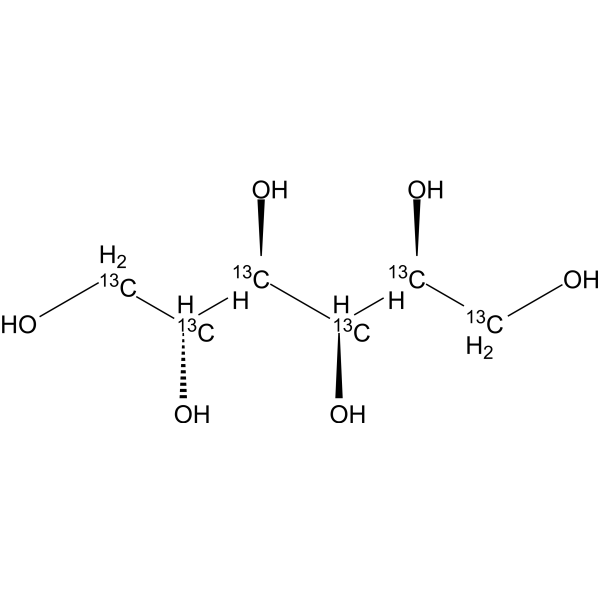 0 ImagesSynonyms: Sorbitol-13C6; D-Glucitol-13C6D-Sorbitol-13C6 is the 13C labeled D-Sorbitol. D-Sorbitol (Sorbitol) is a six-carbon sugar alcohol and can used as a sugar substitute. D-Sorbitol can be used as a stabilizing excipient and/or isotonicity agent, sweetener, humectant, thickener and dietary supplement.
-
Vanillic acid (Standard)
 0 ImagesVanillic acid (Standard) is the analytical standard of Vanillic acid. This product is intended for research and analytical applications. Vanillic acid is a flavoring agent found in edible plants and fruits, also found in Angelica sinensis. Vanillic acid inhibits NF-κB activation. Anti-inflammatory, antibacterial, and chemopreventive effects.
-
Imidazolidinyl urea
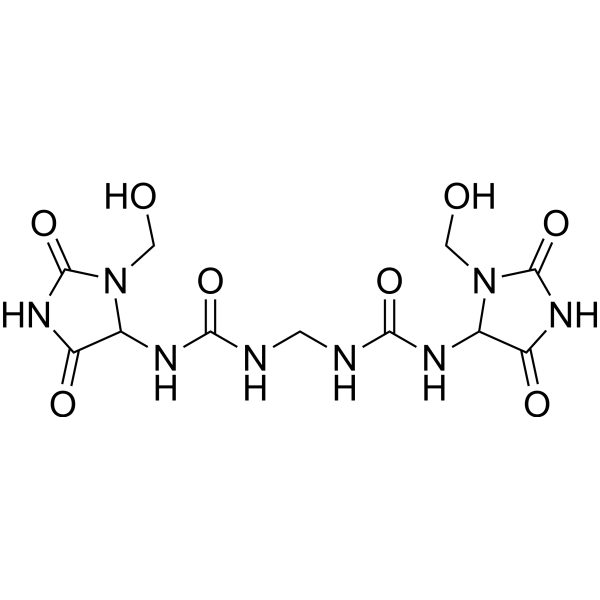 0 ImagesImidazolidinyl urea is a commonly used antibacterial preservative in cosmetics and pharmaceuticals that releases formaldehyde through decomposition. Imidazolidinyl urea can also be used in the preparation of multifunctional hydrogels for the care of infectious wounds. Imidazolidinyl urea has broad-spectrum antibacterial activity, which mainly inhibits the reproduction of gram-negative bacteria and gram-positive bacteria, and restricts the growth of yeast and mold to a certain extent. Imidazolidinyl urea can induce non-histaminergic allergy by MRGPRX2 activation of mast cells.

-
Tilmicosin phosphate
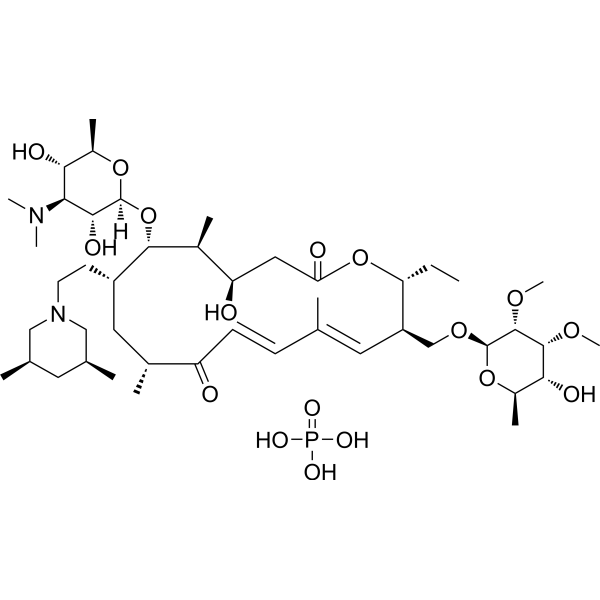 0 ImagesSynonyms: LY-177370 phosphate; EL-870 phosphateTilmicosin (LY-177370) phosphate is an orally active calcium channel antagonist and macrolide antibiotic with antimicrobial activity. Tilmicosin phosphate mainly acts on the 50S subunit of bacterial ribosomes, inhibiting protein synthesis. Tilmicosin phosphate is effective in the treatment of respiratory diseases in livestock such as cattle, sheep and pigs. In addition, Tilmicosin phosphate has immunomodulatory and anti-inflammatory effects.
-
Sodium diacetate
 0 ImagesSynonyms: Sodium hydrogen diacetateSodium diacetate (Sodium hydrogen diacetate) is a multifunctional biochemical reagent with antibacterial (bacteria) and antifungal (fungi) activities. Sodium diacetate exerts its antimicrobial effect mainly by effectively penetrating the cell walls of microorganisms and interfering with enzyme interactions. Sodium diacetate inhibits the growth and survival of fungi such as Botrytis cinerea, as well as bacteria such as Listeria and Escherichia coli. Sodium diacetate inhibits the growth of endothelial cells. Sodium diacetate can be used in the synthesis of food preservatives, flavoring agents and pH control additives.
-
Iodopropynyl butylcarbamate
 0 ImagesSynonyms: IPBCIodopropynyl butylcarbamate (IPBC) is a broad-spectrum antibacterial agent. Iodopropynyl butylcarbamate disrupts bacterial membranes and inhibits V. parahaemolyticus and S. aureus biofilms. Iodopropynyl butylcarbamate exhibits antimold activity and displays broad-spectrum antifungal/antialgal activity involving iodine-thiol protein disruption. Iodopropynyl butylcarbamate can be used in research related to bacterial and fungal infections.
-
Allolactose
 0 ImagesAllolactose, a disaccharide, is a lac operon inducer in Escherkhiu coli and other bacteria.
-
Acyclovir sodium
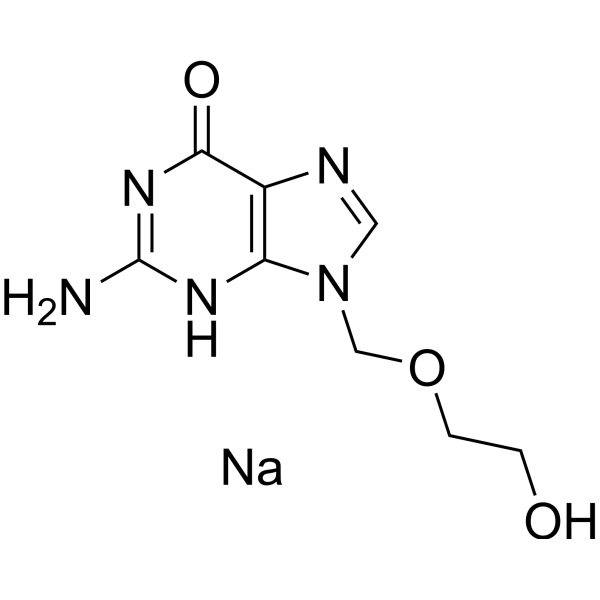 0 ImagesSynonyms: Aciclovir sodium; Acycloguanosine sodiumAcyclovir (Aciclovir) sodium is a potent, orally active antiviral agent. Acyclovir sodium has antiherpetic activity with IC50 values of 0.85 μM and 0.86 μM for HSV-1 and HSV-2, respectively. Acyclovir sodium induces cell cycle perturbation and apoptosis. Acyclovir sodium prevents bacterial infections during induction therapy for acute leukaemia.
-
Rabeprazole Sulfide
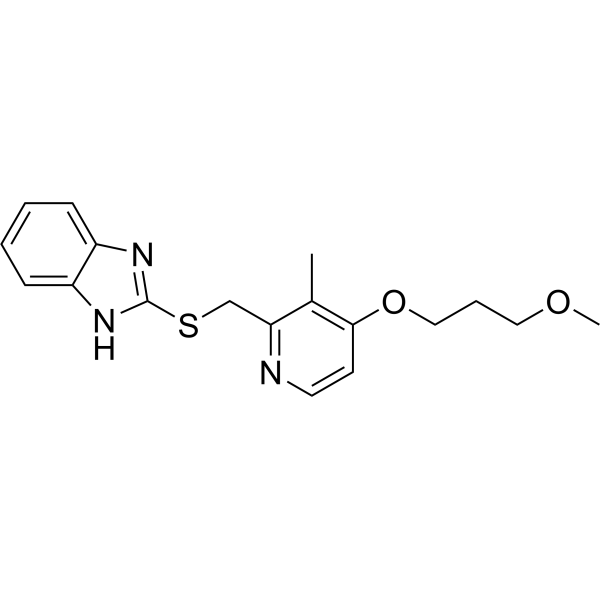 0 ImagesRabeprazole Sulfide is a sulfide metabolite of Rabeprazole (HY-B0656). Rabeprazole Sulfide inhibits Helicobacter pylori motility. Rabeprazole Sulfide can be used for the research of Helicobacter pylori infection.




