



Cetalkonium chloride

Based on 1 Customer Validation
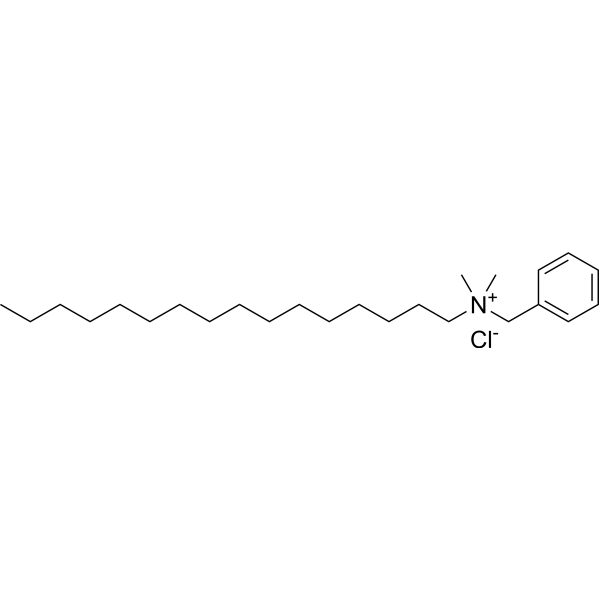
Cetalkonium chloride is an ammonium antiseptic agent used in many topical agents for infections of mouth, throat and eye. Cetalkonium chloride acts as anti-inflammatory amphiphilic agent. Cetalkonium chloride is a cationic surfactant, that improves the precorneal residence time and bioavailability of drugs. Cetalkonium chloride interacts with the negative charges on the bacterial cell membrane, disrupts the integrity of the cell membrane, causes leakage of cell contents and ultimately leading to bacterial death.
Nur für Forschungszwecke. Wir verkaufen nicht an Patienten.
- Reinheit : 99.42%
- CAS. Nr.: 122-18-9
- Formel: C25H46ClN
- Molecular Weight:396.09
-
Speicherung:
4°C, sealed storage, away from moisture
* In solvent : -80°C, 6 months; -20°C, 1 month (sealed storage, away from moisture)

To place orders, for customer services and technical support, please contact: MedChemExpress USA
Tel: 609-228-6898 E-mail: [email protected] [email protected]


-
 Biologische Aktivität
-
Chemical Information
-
Lösungsmittel & Löslichkeit
- Protokoll
- Reinheit & Dokumentation
- Verweise
-
 Help & FAQs


-
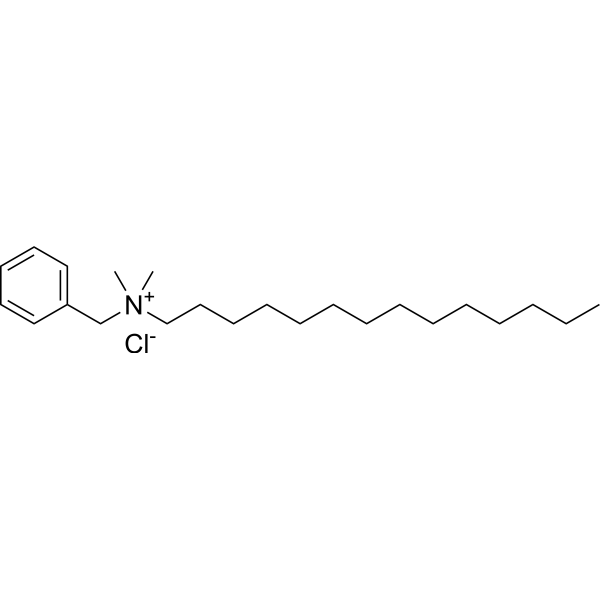
HY-W011087
Benzyldimethyltetradecylammonium chlorideBiochemical Assay Reagent -
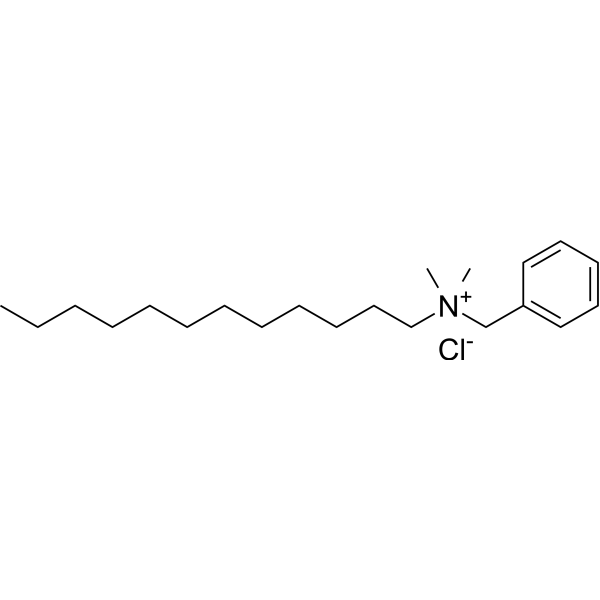
HY-B1549
Lauryl benzalkonium chlorideCationic Surfactant -
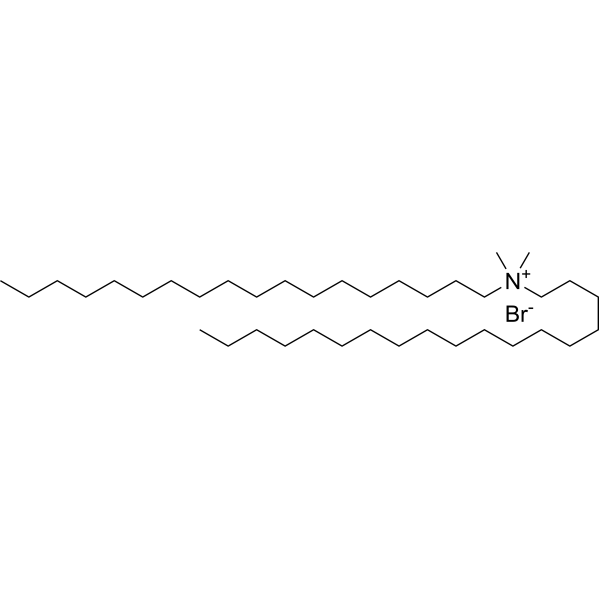
HY-131119
Dimethyldioctadecylammonium bromideBiochemical Assay Reagent -
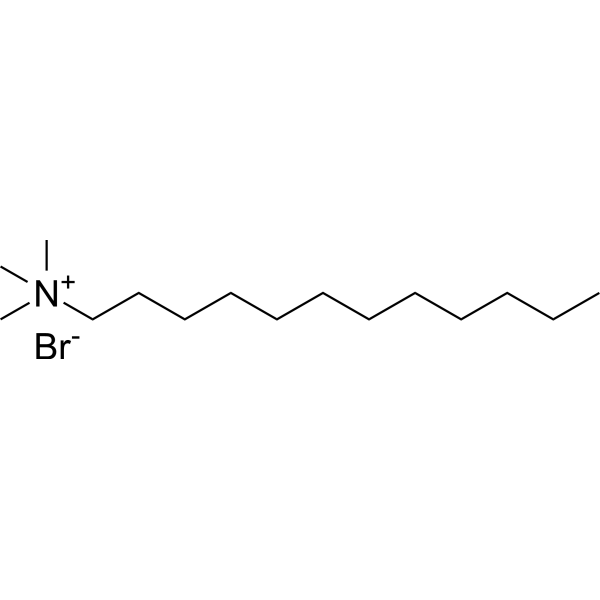
HY-D0838
Dodecyltrimethylammonium bromideSurfactant -
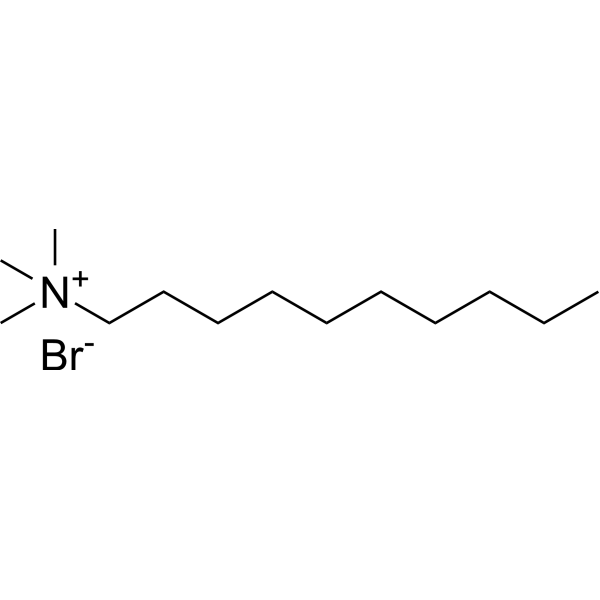
HY-W008630
Decyltrimethylammonium bromideBiochemical Assay Reagent -

HY-Y1891
Tween 80 -

HY-141415
Tween 20Nonionic Surfactant -
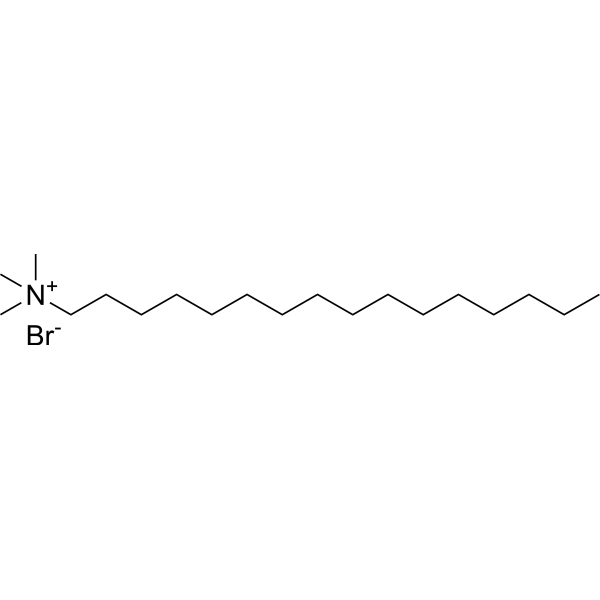
HY-B1260
Cetrimonium bromideCationic Surfactant -

HY-B1597R
Cetalkonium chloride (Standard)Antiseptic Agent -
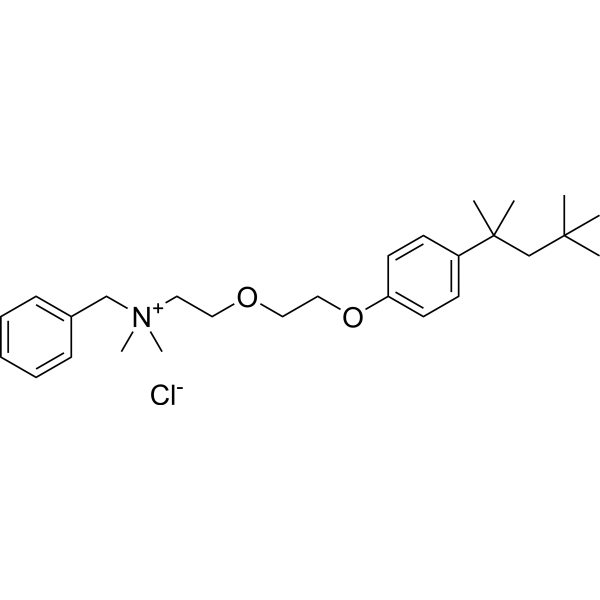
HY-B0942
Benzethonium chlorideMicrobiocidal Agent -
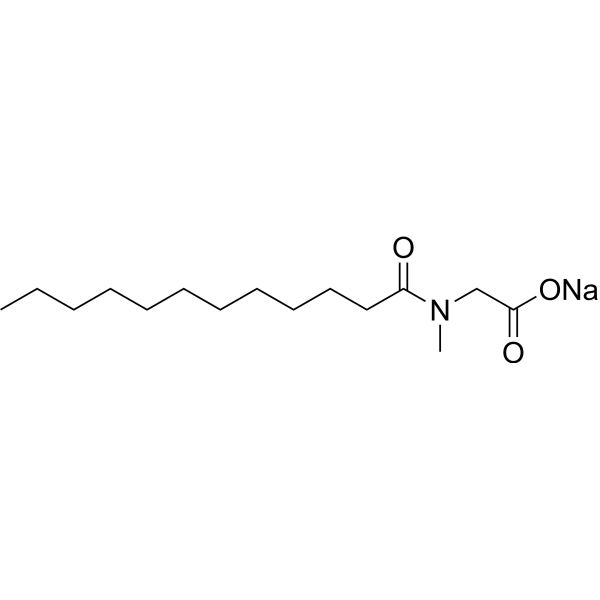
HY-125920
Lauroylsarcosine sodiumBiochemical Assay Reagent -
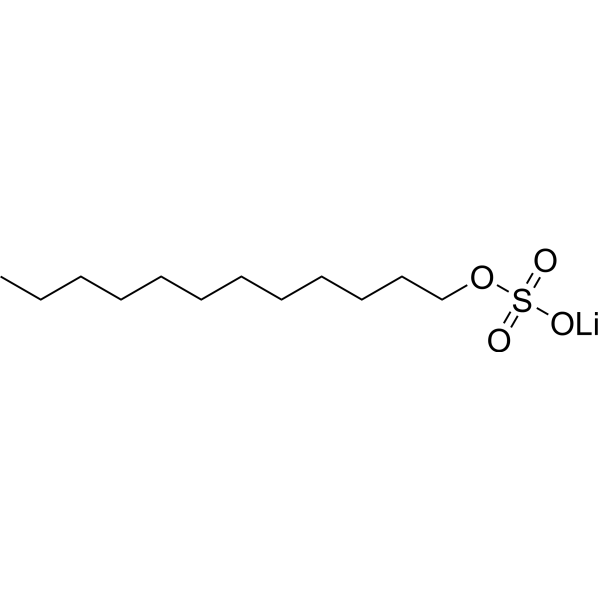
HY-W099535
Lithium dodecyl sulfateSurfactant


Biologische Aktivität
Beschreibung
Cellular Effect
|
Cell Line

|
Type | Value | Description | References |
|---|---|---|---|---|
| HEK293 | CC50 |
6.84 μM
Compound: BAC-16
|
Cytotoxicity against human HEK293 cells after 48 hrs by MTT assay
Cytotoxicity against human HEK293 cells after 48 hrs by MTT assay
|
[PMID: 31191861] |
In Vitro
Cetalkonium chloride (0.005%, 30 min) increases the healing speed in scraped human corneal epithelial cells[2].
Cetalkonium chloride exhibits antibacterial activity against Gram-positive bacteria, such as Staphylococcus sp., and Streptococcus sp.[3].
MedChemExpress (MCE) has not independently confirmed the accuracy of these methods. They are for reference only.
-
Cell Line:Human corneal epithelial cell
-
Concentration:0.005%
-
Incubation Time:30 min
-
Result:Promoted the healing of scraped cells.
In Vivo
MedChemExpress (MCE) has not independently confirmed the accuracy of these methods. They are for reference only.
-
Animal Model:Rat cornea model[2]
-
Dosage:0.002% - 0.005% in cationic oil/water nanoemulsions
-
Administration:instillation, twice a day for 5 days
-
Result:Induced scar-free re-epithelization of the cornea after corneal scraping and reduced the number of inflammatory cells.


Chemical Information
-
CAS. Nr. 122-18-9
-
Appearance Solid
-
Molecular Weight 396.09
-
Formel C25H46ClN
-
Color White to off-white
-
SMILES
C[N+](C)(CCCCCCCCCCCCCCCC)CC1=CC=CC=C1.[Cl-]
-
Synonyms
Benzyldimethylhexadecylammonium chloride
-
Versand
Room temperature in continental US; may vary elsewhere.
-
Speicherung
4°C, sealed storage, away from moisture
* In solvent : -80°C, 6 months; -20°C, 1 month (sealed storage, away from moisture)


Lösungsmittel & Löslichkeit
In Vitro:
DMSO : 100 mg/mL (252.47 mM; Need ultrasonic; Hygroscopic DMSO has a significant impact on the solubility of product, please use newly opened DMSO)
Please refer to the solubility information to select the appropriate solvent. Once prepared, please aliquot and store the solution to prevent product inactivation from repeated freeze-thaw cycles.
Storage method and period of stock solution: -80°C, 6 months; -20°C, 1 month (sealed storage, away from moisture). When stored at -80°C, please use it within 6 months. When stored at -20°C, please use it within 1 month.
Please refer to the solubility information to select the appropriate solvent. Once prepared, please aliquot and store the solution to prevent product inactivation from repeated freeze-thaw cycles.
Storage method and period of stock solution: -80°C, 6 months; -20°C, 1 month (sealed storage, away from moisture). When stored at -80°C, please use it within 6 months. When stored at -20°C, please use it within 1 month.
Konzentration (Stammlösung) × Volumen (Stammlösung) = Konzentration (Ziellösung) × Volumen (Ziellösung)
In Vivo:
Select the appropriate dissolution method based on your experimental animal and administration route.
- For the following dissolution methods, please ensure to first prepare a clear stock solution using an In Vitro approach and then sequentially add co-solvents:
- To ensure reliable experimental results, the clarified stock solution can be appropriately stored based on storage conditions. As for the working solution for In Vivo experiments, it is recommended to prepare freshly and use it on the same day.
- The percentages shown for the solvents indicate their volumetric ratio in the final prepared solution. If precipitation or phase separation occurs during preparation, heat and/or sonication can be used to aid dissolution.
Add each solvent one by one: 10% DMSO 40% PEG300 5% Tween-80 45% Saline
Solubility: ≥ 2.5 mg/mL (6.31 mM); Clear solution
This protocol yields a clear solution of ≥ 2.5 mg/mL (saturation unknown).
Taking 1 mL working solution as an example, add 100 μL DMSO stock solution (25.0 mg/mL) to 400 μL PEG300, and mix evenly; then add 50 μL Tween-80 and mix evenly; then add 450 μL Saline to adjust the volume to 1 mL.
Preparation of Saline: Dissolve 0.9 g sodium chloride in ddH₂O and dilute to 100 mL to obtain a clear Saline solution.
Add each solvent one by one: 10% DMSO 90% (20% SBE-β-CD in Saline)
Solubility: ≥ 2.5 mg/mL (6.31 mM); Clear solution
This protocol yields a clear solution of ≥ 2.5 mg/mL (saturation unknown).
Taking 1 mL working solution as an example, add 100 μL DMSO stock solution (25.0 mg/mL) to 900 μL 20% SBE-β-CD in Saline, and mix evenly.
Preparation of 20% SBE-β-CD in Saline (4°C, storage for one week): 2 g SBE-β-CD powder is dissolved in 10 mL Saline, completely dissolve until clear.
In Vivo Dissolution Calculator
Please enter the basic information of animal experiments:
-
-
-
-
Recommended: Prepare an additional quantity of animals to account for potential losses during experiments.
Please enter your animal formula composition:
-
%DMSO +
Recommended: Keep the proportion of DMSO in working solution below 2% if your animal is weak.
-
%+
-
+%Tween-80 + +
-
%Saline +
The co-solvents required include: DMSO, . All of co-solvents are available by MedChemExpress (MCE). , Tween 80. All of co-solvents are available by MedChemExpress (MCE).
Working solution concentration: 0.22 mg/mL
Method for preparing stock solution: mg drug dissolved in μL DMSO. Stock solution concentration: mg/mL. * In solvent : -80°C, 6 months; -20°C, 1 month (sealed storage, away from moisture)
1. Take μL DMSO stock solution;
2. Add μL .
μL , mix evenly;
3. Then add μL Tween 80, mix evenly;
4. Then add μL
Please ensure that the stock solution in the first step is dissolved to a clear state, and add co-solvents in sequence. You can use ultrasonic heating (ultrasonic cleaner, recommended frequency 20-40 kHz), vortexing, etc. to assist dissolution.


Reinheit & Dokumentation
-
Data Sheet (268 KB)
-
SDS (560 KB)
- English - EN (560 KB)
- Français - FR (560 KB)
- Deutsch - DE (560 KB)
- Norwegian - NO (560 KB)
- Español - ES (560 KB)
- Swedish - SV (560 KB)
- Italian - IT (560 KB)
- Korean - KR (560 KB)
- Portuguese - PT (560 KB)
-
Handling Instructions (2659 KB)
Verweise
[1]. Cesar Torres-Luna, et al. Formation of Drug-Participating Catanionic Aggregates for Extended Delivery of Non-Steroidal Anti-Inflammatory Drugs from Contact Lenses. Biomolecules. 2019 Oct 10;9(10):593. [Content Brief]
[2]. Daull P, et al., Benefits of cetalkonium chloride cationic oil-in-water nanoemulsions for topical ophthalmic drug delivery. J Pharm Pharmacol. 2014 Apr;66(4):531-41. [Content Brief]


Complete Stock Solution Preparation Table
Please refer to the solubility information to select the appropriate solvent. Once prepared, please aliquot and store the solution to prevent product inactivation from repeated freeze-thaw cycles.
Storage method and period of stock solution: -80°C, 6 months; -20°C, 1 month (sealed storage, away from moisture). When stored at -80°C, please use it within 6 months. When stored at -20°C, please use it within 1 month.
| Optional Solvent | Concentration Solvent Mass | 1 mg | 5 mg | 10 mg | 25 mg |
|---|---|---|---|---|---|
| DMSO | 1 mM | 2.5247 mL | 12.6234 mL | 25.2468 mL | 63.1170 mL |
| 5 mM | 0.5049 mL | 2.5247 mL | 5.0494 mL | 12.6234 mL | |
| 10 mM | 0.2525 mL | 1.2623 mL | 2.5247 mL | 6.3117 mL | |
| 15 mM | 0.1683 mL | 0.8416 mL | 1.6831 mL | 4.2078 mL | |
| 20 mM | 0.1262 mL | 0.6312 mL | 1.2623 mL | 3.1558 mL | |
| 25 mM | 0.1010 mL | 0.5049 mL | 1.0099 mL | 2.5247 mL | |
| 30 mM | 0.0842 mL | 0.4208 mL | 0.8416 mL | 2.1039 mL | |
| 40 mM | 0.0631 mL | 0.3156 mL | 0.6312 mL | 1.5779 mL | |
| 50 mM | 0.0505 mL | 0.2525 mL | 0.5049 mL | 1.2623 mL | |
| 60 mM | 0.0421 mL | 0.2104 mL | 0.4208 mL | 1.0519 mL | |
| 80 mM | 0.0316 mL | 0.1578 mL | 0.3156 mL | 0.7890 mL | |
| 100 mM | 0.0252 mL | 0.1262 mL | 0.2525 mL | 0.6312 mL |


Cetalkonium chloride Related Classifications
HY-B1597 Related Classifications
 Powered by Bioz