



Rapanone

Based on 1 Customer Validation
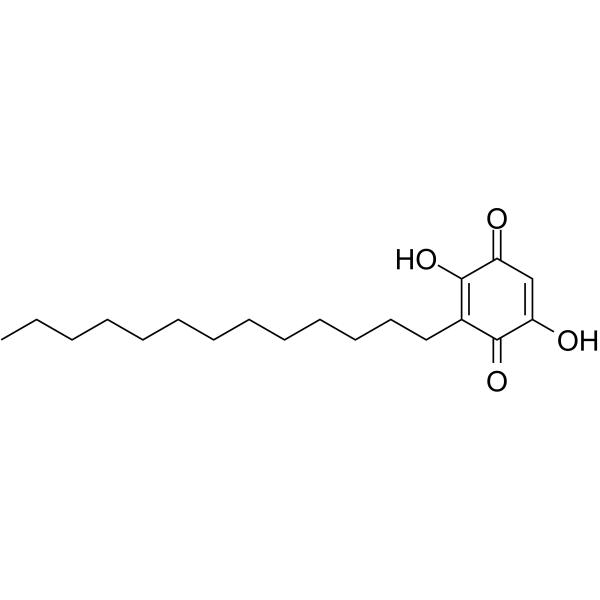
Rapanone is a natural benzoquinone. Rapanone exhibits a broad spectrum of biological actions, including anti-tumor, antioxidant, anti-inflammatory, antibacterial and antiparasitic. Rapanone also is a potent and selective human synovial PLA2 inhibitor, with an IC50 of 2.6 μM.
연구목적의 판매만을 진행합니다. 환자를 대상으로 한 판매는 하지 않습니다.
- Purity : 99.93%
- CAS No.: 573-40-0
- 화학식: C19H30O4
- 분자량:322.44
-
보관:Powder -20°C, 3 years , 4°C, 2 years ; In solvent -80°C, 6 months , -20°C, 1 month

To place orders, for customer services and technical support, please contact: MedChemExpress USA
Tel: 609-228-6898 E-mail: [email protected] [email protected]


-
 Biological Activity
-
Chemical Information
-
용액&용해도
- Protocol
- 순도&문서
- References
-
 Help & FAQs


-
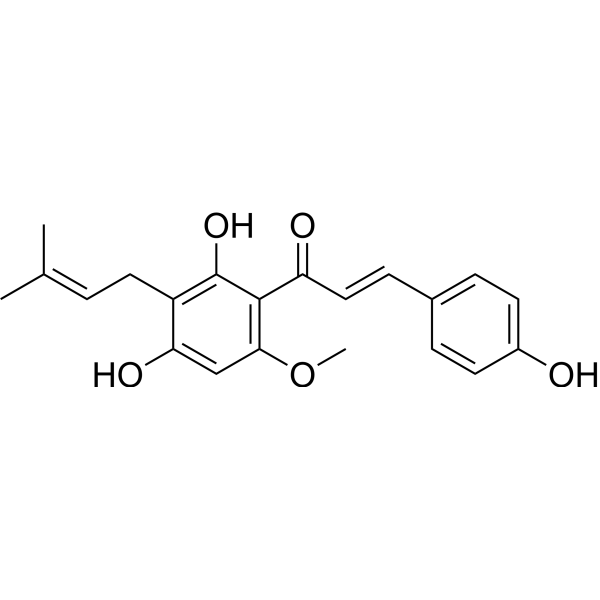
HY-N1067
XanthohumolCOX Inhibitor -
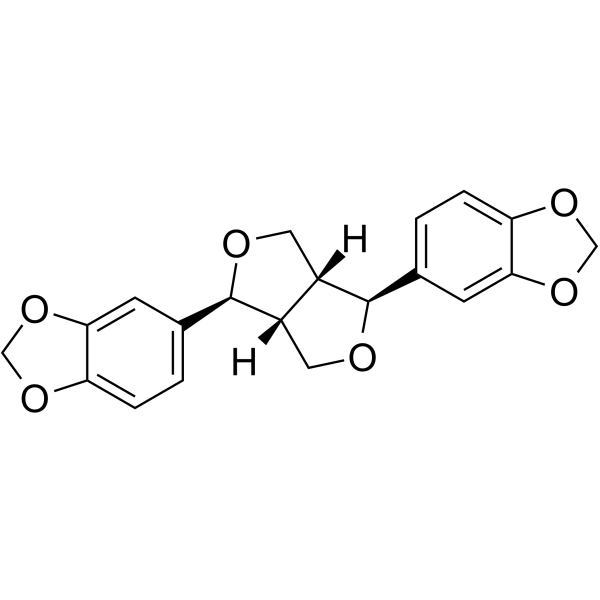
HY-N0121
SesaminDelta 5 Desaturase Inhibitor -
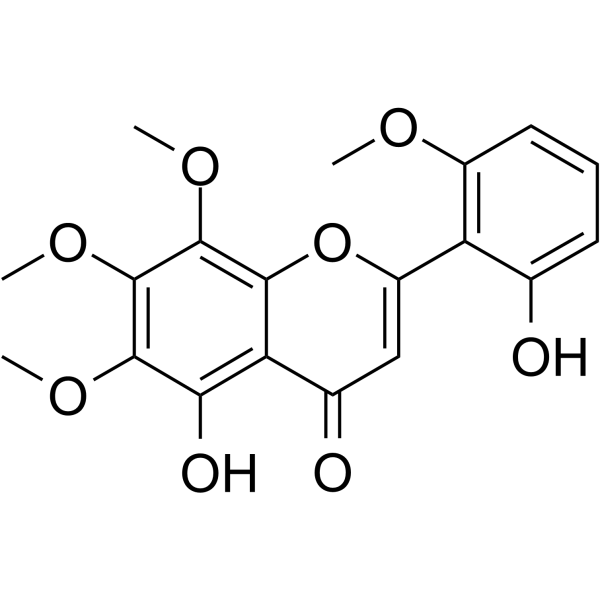
HY-N6624
Skullcapflavone IIBacterial Inhibitor -
HY-N0735
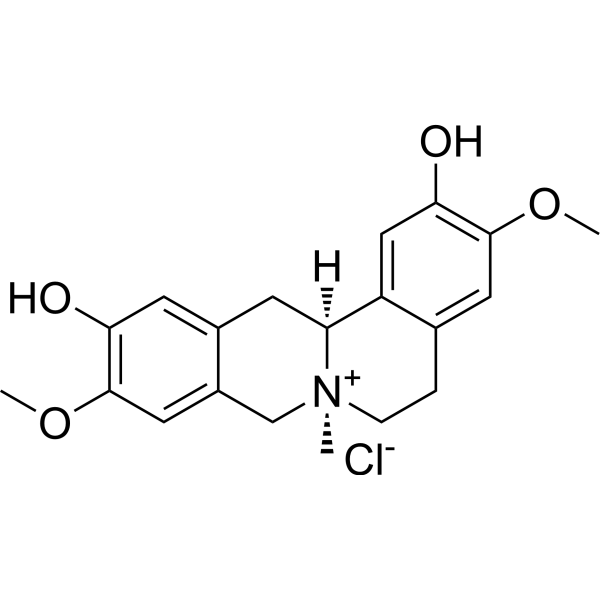
Phellodendrine chlorideAnti-inflammatory/Anti-tumor/Anti-allergic Agent -
HY-N0747
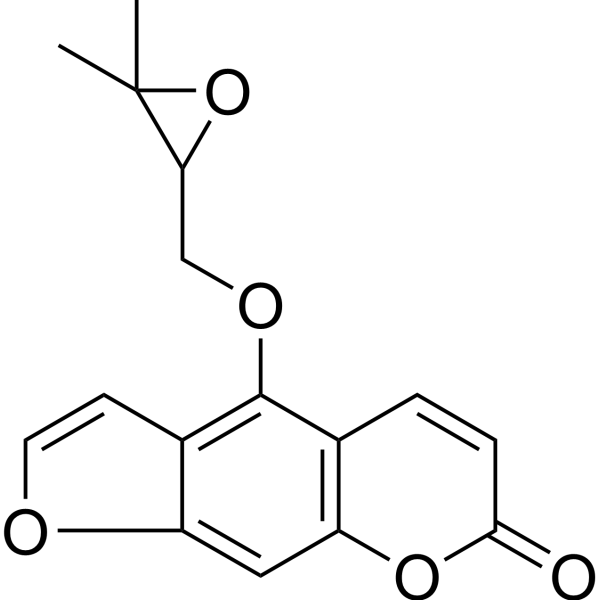
OxypeucedaninHKv1.5 Current Blocker -
HY-N7004
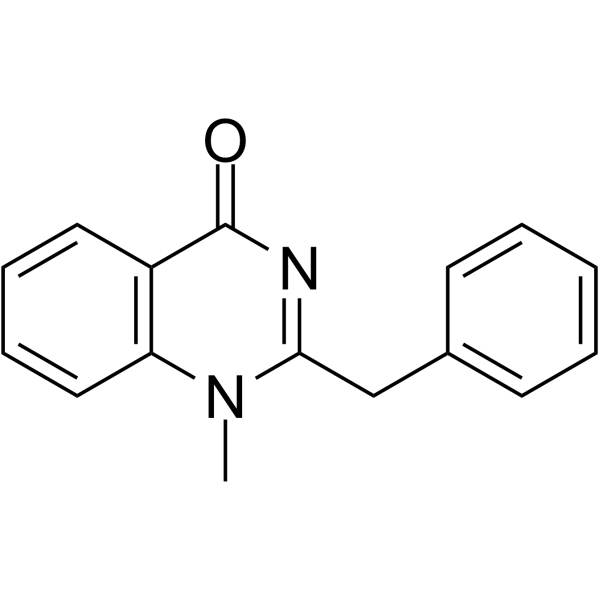
ArborinemAChR Inhibitor -
HY-N9331
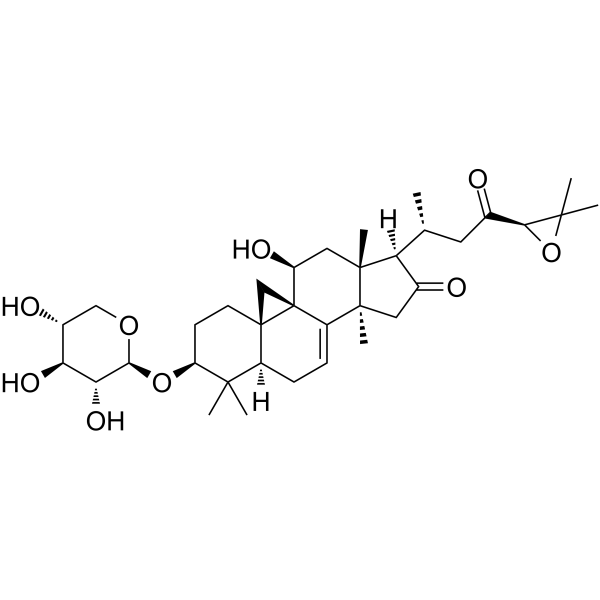
Cimicifugoside H-1 -
HY-N2411
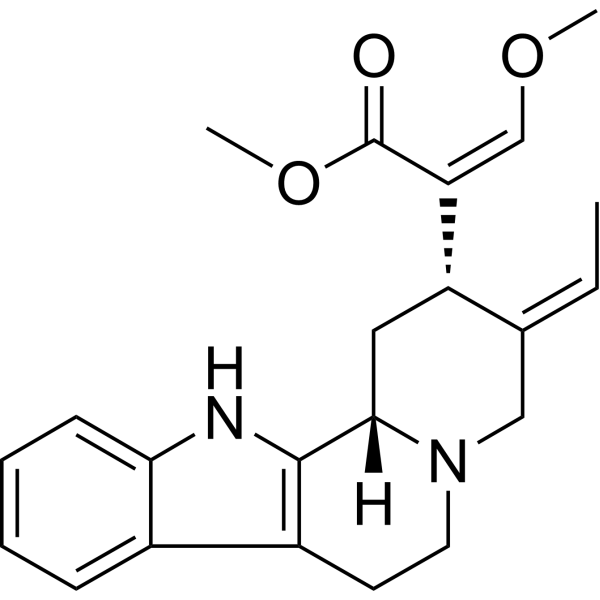
Geissoschizine methyl ether5-HT1A Receptor Agonist -
HY-N6064
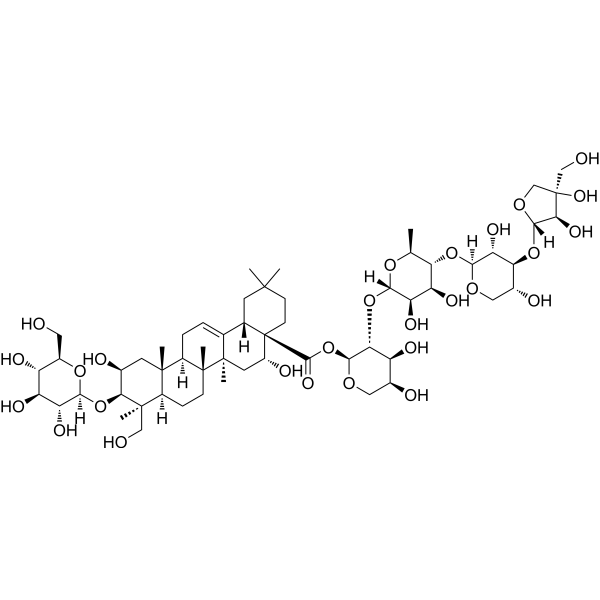
Polygalacin DApoptosis Inducer -
HY-N2162
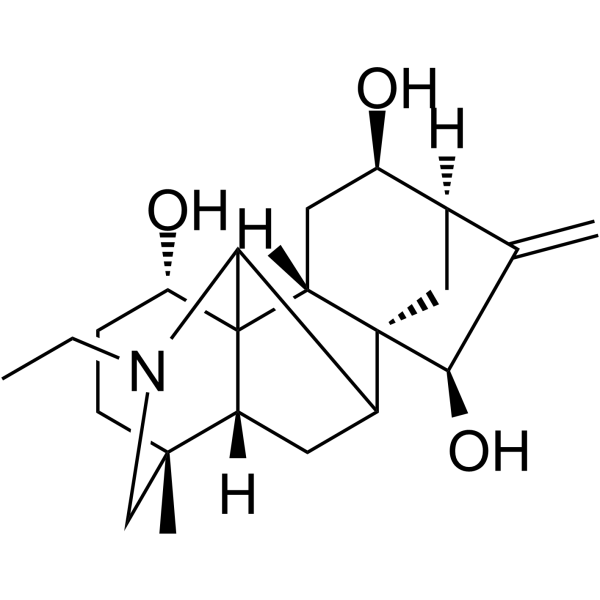
12-EpinapellineAnti-Inflammatory Agent -
HY-19619
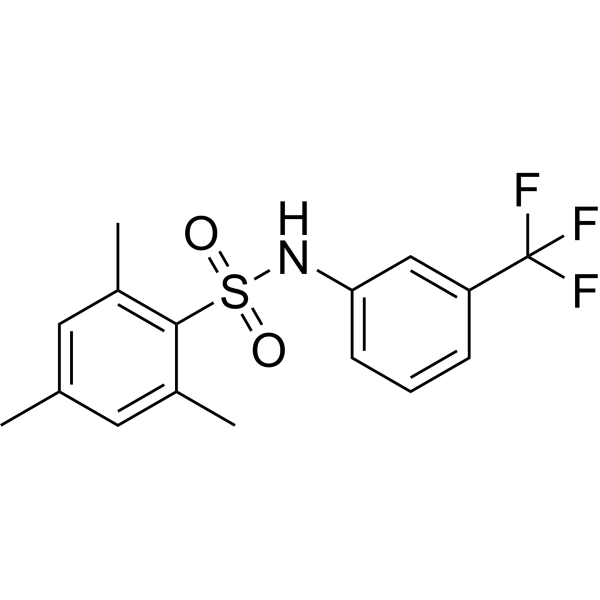
m-3M3FBSPhospholipase C Activator -
HY-107416
RHC 80267Diacylglycerol Lipase Inhibitor


Biological Activity
제품 설명
IC50 & Target
[4]|
PLA2 2.6 μM (IC50) |
Cellular Effect
|
Cell Line

|
Type | Value | Description | References |
|---|---|---|---|---|
| A2780 | IC50 |
1.82 μM
Compound: 3
|
Cytotoxicity against human A2780 cells after 96 hrs by MTT assay
Cytotoxicity against human A2780 cells after 96 hrs by MTT assay
|
[PMID: 17125236] |
| A549 | IC50 |
0.9 μM
Compound: 23d
|
Inhibition of mPGES1 in IL-1beta stimulated human A549 cell microsomal membranes assessed as reduction in PGE2 synthase activity after 15 mins using PGH2 substrate by RP-HPLC method
Inhibition of mPGES1 in IL-1beta stimulated human A549 cell microsomal membranes assessed as reduction in PGE2 synthase activity after 15 mins using PGH2 substrate by RP-HPLC method
|
[PMID: 25765759] |
| A549 | IC50 |
1.58 μM
Compound: 3
|
Cytotoxicity against human A549 cells after 96 hrs by MTT assay
Cytotoxicity against human A549 cells after 96 hrs by MTT assay
|
[PMID: 17125236] |
| Bel-7402 | IC50 |
1.46 μM
Compound: 3
|
Cytotoxicity against human Bel-7402 cells after 96 hrs by MTT assay
Cytotoxicity against human Bel-7402 cells after 96 hrs by MTT assay
|
[PMID: 17125236] |
| BGC-823 | IC50 |
1.89 μM
Compound: 3
|
Cytotoxicity against human BGC-823 cells after 96 hrs by MTT assay
Cytotoxicity against human BGC-823 cells after 96 hrs by MTT assay
|
[PMID: 17125236] |
| HCT-8 | IC50 |
1.52 μM
Compound: 3
|
Cytotoxicity against human HCT8 cells after 96 hrs by MTT assay
Cytotoxicity against human HCT8 cells after 96 hrs by MTT assay
|
[PMID: 17125236] |
In Vitro
Rapanone (10-40 μM; 24 h) inhibits the cell viability, with IC50s of 35.58 μM and 27.89 μM for primary rats hepatocytes and HepG2 cells, respectively[1].
Rapanone (10-40 μM; 24 h) induces a concentration-dependent mitochondrial membrane potential dissipation, ATP depletion, hydrogen peroxide generation and, phosphatidyl serine externalization in HepG2 cells[1].
Rapanone inhibits electron transport at Complex III and promotes mitochondrial dysfunction[1].
MedChemExpress (MCE) has not independently confirmed the accuracy of these methods. They are for reference only.
In Vivo
MedChemExpress (MCE) has not independently confirmed the accuracy of these methods. They are for reference only.


Chemical Information
-
CAS No. 573-40-0
-
Appearance Solid
-
분자량 322.44
-
화학식 C19H30O4
-
Color Light yellow to orange
-
SMILES
O=C1C(O)=C(CCCCCCCCCCCCC)C(C(O)=C1)=O
-
Structure Classification
-
Initial Source
-
선적
Room temperature in continental US; may vary elsewhere.
-
보관
Powder -20°C 3 years 4°C 2 years In solvent -80°C 6 months -20°C 1 month


용액&용해도
In Vitro:
DMSO : 25 mg/mL (77.53 mM; ultrasonic and warming and heat to 60°C; Hygroscopic DMSO has a significant impact on the solubility of product, please use newly opened DMSO)
Please refer to the solubility information to select the appropriate solvent. Once prepared, please aliquot and store the solution to prevent product inactivation from repeated freeze-thaw cycles.
Storage method and period of stock solution: -80°C, 6 months; -20°C, 1 month. When stored at -80°C, please use it within 6 months. When stored at -20°C, please use it within 1 month.
Please refer to the solubility information to select the appropriate solvent. Once prepared, please aliquot and store the solution to prevent product inactivation from repeated freeze-thaw cycles.
Storage method and period of stock solution: -80°C, 6 months; -20°C, 1 month. When stored at -80°C, please use it within 6 months. When stored at -20°C, please use it within 1 month.
Concentration (start) × Volume (start) = Concentration (final) × Volume (final)
In Vivo:
Select the appropriate dissolution method based on your experimental animal and administration route.
- For the following dissolution methods, please ensure to first prepare a clear stock solution using an In Vitro approach and then sequentially add co-solvents:
- To ensure reliable experimental results, the clarified stock solution can be appropriately stored based on storage conditions. As for the working solution for In Vivo experiments, it is recommended to prepare freshly and use it on the same day.
- The percentages shown for the solvents indicate their volumetric ratio in the final prepared solution. If precipitation or phase separation occurs during preparation, heat and/or sonication can be used to aid dissolution.
In Vivo Dissolution Calculator
Please enter the basic information of animal experiments:
-
-
-
-
Recommended: Prepare an additional quantity of animals to account for potential losses during experiments.
Please enter your animal formula composition:
-
%DMSO +
Recommended: Keep the proportion of DMSO in working solution below 2% if your animal is weak.
-
%+
-
+%Tween-80 + +
-
%Saline +
The co-solvents required include: DMSO, . All of co-solvents are available by MedChemExpress (MCE). , Tween 80. All of co-solvents are available by MedChemExpress (MCE).
Working solution concentration: 0.22 mg/mL
Method for preparing stock solution: mg drug dissolved in μL DMSO. Stock solution concentration: mg/mL.
1. Take μL DMSO stock solution;
2. Add μL .
μL , mix evenly;
3. Then add μL Tween 80, mix evenly;
4. Then add μL
Please ensure that the stock solution in the first step is dissolved to a clear state, and add co-solvents in sequence. You can use ultrasonic heating (ultrasonic cleaner, recommended frequency 20-40 kHz), vortexing, etc. to assist dissolution.


순도&문서
-
Data Sheet (269 KB)
-
SDS (396 KB)
- English - EN (396 KB)
- Français - FR (396 KB)
- Deutsch - DE (396 KB)
- Norwegian - NO (396 KB)
- Español - ES (396 KB)
- Swedish - SV (396 KB)
- Italian - IT (396 KB)
- Korean - KR (396 KB)
- Portuguese - PT (396 KB)
-
Handling Instructions (2659 KB)
References
[1]. Andreu GLP, et, al. Rapanone, a naturally occurring benzoquinone, inhibits mitochondrial respiration and induces HepG2 cell death. Toxicol In Vitro. 2020 Mar;63:104737. [Content Brief]
[2]. Morais LS, et, al. Antileishmanial compounds from Connarus suberosus: Metabolomics, isolation and mechanism of action. PLoS One. 2020 Nov 6;15(11):e0241855. [Content Brief]
[3]. Vega-Hernández K, et, al. Discerning the antioxidant mechanism of rapanone: A naturally occurring benzoquinone with iron complexing and radical scavenging activities. J Inorg Biochem. 2017 May;170:134-147. [Content Brief]
[4]. Ospina LF, et, al. Inhibition of acute and chronic inflammatory responses by the hydroxybenzoquinonic derivative rapanone. Planta Med. 2001 Dec;67(9):791-5. [Content Brief]


Complete Stock Solution Preparation Table
Please refer to the solubility information to select the appropriate solvent. Once prepared, please aliquot and store the solution to prevent product inactivation from repeated freeze-thaw cycles.
Storage method and period of stock solution: -80°C, 6 months; -20°C, 1 month. When stored at -80°C, please use it within 6 months. When stored at -20°C, please use it within 1 month.
| Optional Solvent | Concentration Solvent Mass | 1 mg | 5 mg | 10 mg | 25 mg |
|---|---|---|---|---|---|
| DMSO | 1 mM | 3.1014 mL | 15.5068 mL | 31.0135 mL | 77.5338 mL |
| 5 mM | 0.6203 mL | 3.1014 mL | 6.2027 mL | 15.5068 mL | |
| 10 mM | 0.3101 mL | 1.5507 mL | 3.1014 mL | 7.7534 mL | |
| 15 mM | 0.2068 mL | 1.0338 mL | 2.0676 mL | 5.1689 mL | |
| 20 mM | 0.1551 mL | 0.7753 mL | 1.5507 mL | 3.8767 mL | |
| 25 mM | 0.1241 mL | 0.6203 mL | 1.2405 mL | 3.1014 mL | |
| 30 mM | 0.1034 mL | 0.5169 mL | 1.0338 mL | 2.5845 mL | |
| 40 mM | 0.0775 mL | 0.3877 mL | 0.7753 mL | 1.9383 mL | |
| 50 mM | 0.0620 mL | 0.3101 mL | 0.6203 mL | 1.5507 mL | |
| 60 mM | 0.0517 mL | 0.2584 mL | 0.5169 mL | 1.2922 mL |


Rapanone Related Classifications
HY-N8213 Related Classifications
 Powered by Bioz