



JNK
c-Jun N-terminal kinase
JNK (c-Jun N-terminal kinase), a kinase subfamily belonging to the MAPK, is activated in response to various stress stimuli and possesses a wide variety of regulatory functions. The JNK family of serine/threonine protein kinases comprises three isoforms (JNK1, JNK2 and JNK3). JNKs are involved in the emergence and progression of diverse pathologies such as neurodegenerative, cardiovascular and metabolic disorders as well as inflammation and cancer.
Similar to the other MAP kinases, JNKs are activated by a phosphorylation cascade generally involving two types of upstream kinases, the so-called MAP kinase kinase kinases (MAP3K, MKKK) and the MAP kinase kinases (MAP2K; MKK). At the MAP2K level, JNKs are activated by MKK4 and MKK7, the former is a common activator of the JNK and the p38 MAP kinase signaling pathway. The JNK cascade shares various intersection points with other pathways making it a part of a complex signaling network.
JNK Isoform Specific Products
All Product Categories
-
JNK Related Products (534)
Related Products (534)

-
Antibodies (16)
-
JNK Isoform Comparison
-
Isodorsmanin A
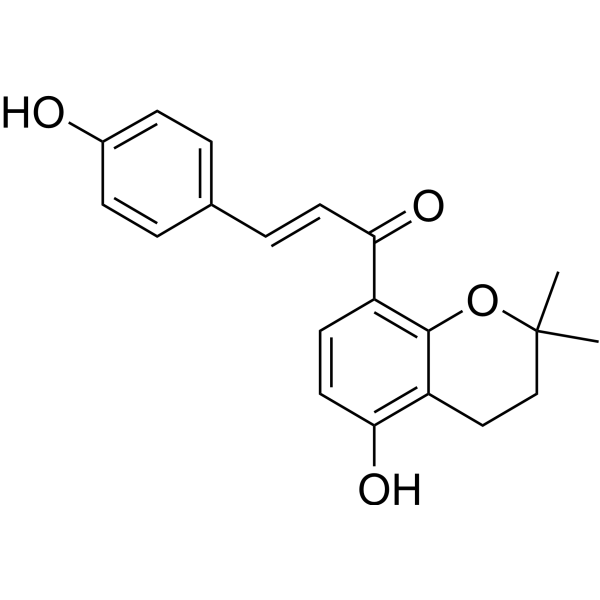 0 ImagesCat. No.: HY-N3487CAS No.: 118266-99-2Isodorsmanin A is an anti-inflammatory agent. Isodorsmanin A suppresses the production of inflammatory mediators and proinflammatory cytokines. Isodorsmanin A inhibits the phosphorylation of JNK, MAPK.
-
JNK-IN-15, Cell-Permeable, Negative Control
 0 ImagesCat. No.: HY-P10141JNK-IN-15, Cell-Permeable, Negative Control is a negative control of JNK-IN-15, Cell-Permeable (HY-P10140). JNK-IN-15, Cell-Permeable is an inhibitor of JNK.
-
Buforin IIb
 0 ImagesCat. No.: HY-P12127CAS No.: 233273-63-7Synonyms: BF2-BBuforin IIb (BF2-B) is an anticancer peptide, as well as an Antibacterial and Antifungal agent. Buforin IIb is derived from histone H2A. Buforin IIb activates SAPK/JNK and p38 MAPK. Buforin IIb induces mitochondria-dependent Apoptosis. Buforin IIb achieves selective targeting by interacting with gangliosides on the surface of cancer cells, and can penetrate cancer cell membranes without causing damage. Buforin IIb exhibits antibacterial activity against Gram-negative bacteria, Gram-positive bacteria and fungi. Buforin IIb can be used in the research of cervical cancer, as well as cancers including leukemia, central nervous system cancer, ovarian cancer, breast cancer, melanoma, colon cancer, non-small cell lung cancer, renal cancer and prostate cancer.
-
APH003
 0 ImagesCat. No.: HY-184915CAS No.: 3065495-08-8APH003 is an orally active IRAK4 PROTAC degrader with a DC50 of 0.74 nM in human peripheral blood mononuclear cells (hPBMCs). APH003 recruits IRAK4 to CRBN to form a ternary complex, mediates the ubiquitination and degradation of IRAK4 via the ubiquitin-proteasome pathway, and inhibits the kinase activity of IRAK4. APH003 inhibits LPS- or IL-1β/LPS-induced phosphorylation of ERK, JNK and NF-κB. APH003 inhibits the secretion of TNF-α, IL-6, IL-8 and IL-13 by stimulated hPBMCs. APH003 exhibits anti-inflammatory activity in rat TNBS-induced intestinal inflammation models and mouse IL-33-induced skin inflammation models. APH003 can be used in research related to inflammatory bowel disease and skin inflammation.
-
HVF18-a3-d
 0 ImagesCat. No.: HY-P11250HVF18-a3-d is an antimicrobial peptide. HVF18-a3-d reduces NO production. HVF18-a3-d inhibits the production of TNF-α and IL-6, reduces ROS production, and suppresses the TLR4 signaling pathway, as well as LPS-induced phosphorylation of ERK, JNK, and p38 MAPK. HVF18-a3-d exhibits antimicrobial activity against a variety of bacteria by disrupting their outer and inner membranes. HVF18-a3-d protects mice from fatal septic shock induced by Acinetobacter baumannii resistant to Carbapenem. HVF18-a3-d shows anti-inflammatory and antioxidant effects.
-
TAT-JIP
 0 ImagesCat. No.: HY-P10048CAS No.: 1623722-15-5TAT-JIP inhibits the phosphorylation of endogenous c-jun activated by PHA–PMA.
-
ETI60
 0 ImagesETI60 is an orally active, selective TLR inhibitor that targets the nucleoside-binding Site I on TLR7 (IC50 = 0.68 μM) and TLR9 (IC50 = 0.12 μM), sparing surface TLRs (including TLR1/TLR2, TLR2/TLR6, TLR4 and TLR5). ETI60 potently inhibits endosomal TLR-mediated pro-inflammatory signaling with nanomolar activity in cellular, biophysical and in vivo assays. ETI60 modulates the expression of genes associated with inflammation. ETI60 effectively ameliorates symptoms in mouse models of psoriasis, and systemic lupus erythematosus (SLE). ETI60 can be used for autoimmune and inflammatory diseases research.
-
LJ-2698
 0 ImagesCat. No.: HY-153149CAS No.: 945457-84-1Synonyms: FM101LJ-2698 (FM101) is an orally active adenosine A3 receptor (Adenosine A3 Receptor) antagonist. LJ-2698 blocks adenosine A3 receptor-dependent pro-inflammatory JNK, ERK, and NF-κB signaling pathways. LJ-2698 prevents alveolar cavity enlargement, restores pulmonary function, and inhibits matrix metalloproteinase activity and pulmonary cell apoptosis (apoptosis) in mice. LJ-2698 induces mitochondrial dysfunction, necroptosis, and intrinsic apoptosis. LJ-2698 ameliorates renal injury in mice with diabetic nephropathy, and alleviates diet-induced hepatic inflammation and fibrosis. LJ-2698 can be used in the research of emphysema, diabetic nephropathy, and metabolic dysfunction-associated steatotic liver disease.
-
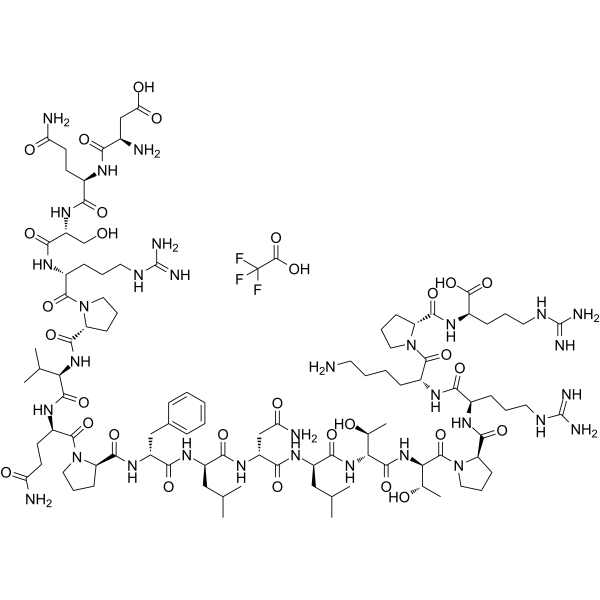
d-T101 peptide
 0 ImagesCat. No.: HY-P11298CAS No.: 2120397-85-3d-T101 peptide, a human hormone-peptide, is a T1/ST2 receptor ligand. d-T101 peptide binds to the T1/ST2 receptor and activates caspases 8, 9 and 3 mediated apoptosis, together with activation of JNKinase and p38 MAPKinase. d-T101 peptide also changes Golgi structural with function loss and downregulation of the endoplasmic reticulum (ER) stress repair mechanism. d-T101 peptide has immunostimulatory and anticancer activity, selectively induces apoptosis in proliferating cancer cells and increases IL-2 and IFN-γ expression as well as the recruitment of NK cells and M1 macrophages to the tumor site.
-
JNK3 inhibitor-7
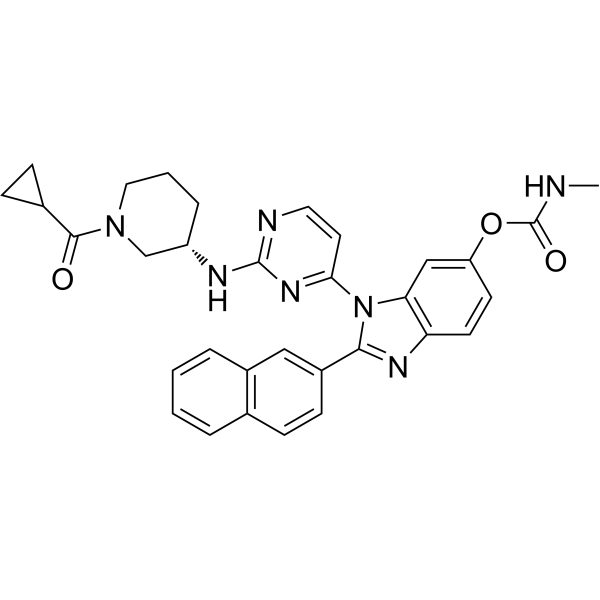 0 ImagesCat. No.: HY-149279CAS No.: 3034676-52-0JNK3 inhibitor-7 is a potent, orally active and cross the blood-brain barrier JNK3 inhibitor with IC50 values of 53, 973, 1039 nM for JNK3, JNK2, JNK1, respectively. JNK3 inhibitor-7 shows significant neuroprotective effects. JNK3 inhibitor-7 has the potential for the research of Alzheimer’s disease (AD).
-
Esculentoside B
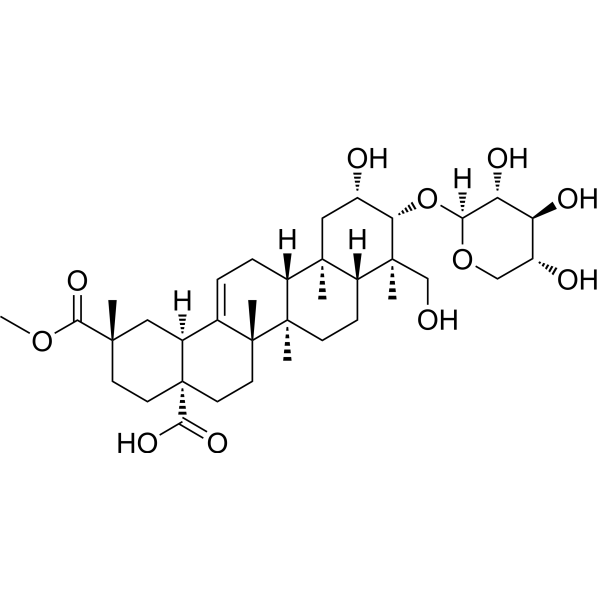 0 ImagesSynonyms: Phytolaccoside BEsculentoside B (Phytolaccoside B) is a natural product from the roots of Phytolacca acinosa Roxb. Esculentoside B is neurotoxic to zebrafish larvae, and impairs their central nervous system development. Esculentoside B inhibits inflammatory response and has antifungal activity.
-
Nimustine
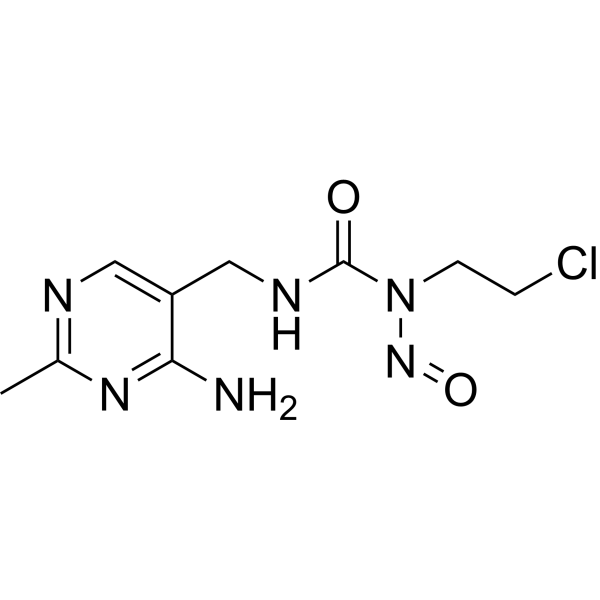 0 ImagesCat. No.: HY-13703CAS No.: 42471-28-3Nimustine is an alkylating agent, which induces DNA double-strand breaks (DSBs) and inter-strand crosslinks (ICLs), thereby activating the DNA damage response (DDR) signaling pathway. Nimustine activates p38 MAPK/JNK signaling pathway, and exhibits antitumor activity.
-
JNK3-IN-11
 0 ImagesCat. No.: HY-181993JNK3-IN-11 is a selective JNK3 inhibitor with an IC50 of 2.08 nM. JNK3-IN-11 binds to the JNK3 ATP-binding pocket, forming conserved hydrogen bonds with Met149 and a water-mediated hydrogen bond with Lys93. JNK3-IN-11 suppresses TGF-β1-induced c-Jun phosphorylation, reduces profibrotic markers COL1A1 and PAI-1, restores E-cadherin expression, and has protection against podocyte injure. JNK3-IN-11 can be used for the research of chronic kidney disease.
-
GR2-128
 0 ImagesCat. No.: HY-184396GR2-128 is a dual inhibitor targeting MLK3 and NAMPT with IC50 values of 84 nM and 14 nM, respectively. GR2-128 inhibits downstream JNK/c‑Jun signaling and reduces NAD+ levels. GR2-128 exhibits antiproliferative and pro-apoptotic activities in triple-negative breast cancer cells without significant toxicity to normal cells. GR2-128 suppresses tumor growth, reduces macrophage and neutrophil infiltration, and increases tumor T-cell markers in a syngeneic mouse model, and can be used for triple-negative breast cancer research.
-
Mapk10 Mouse Pre-designed siRNA Set A
 0 ImagesCat. No.: HY-RS08096
Mapk10 Mouse Pre-designed siRNA Set A contains three designed siRNAs for Mapk10 gene (Mouse), as well as a negative control, a positive control, and a FAM-labeled negative control.
-
OVA-E1 peptide
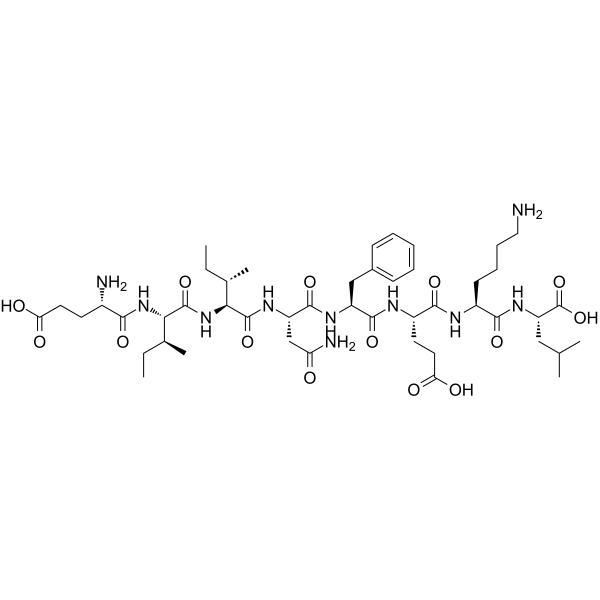 0 ImagesCat. No.: HY-P2319CAS No.: 153316-01-9OVA-E1 peptide, is an antagonist variant of SIINFEKL [OVA (257-264). OVA-E1 peptide, activates the p38 and JNK cascades similarly in mutant and wild-type thymocytes.
-
JNK-IN-24
 0 ImagesCat. No.: HY-175276CAS No.: 2226808-28-0JNK-IN-24, a JNK inhibitor, is an anti-metastatic cancer agent. JNK-IN-24 downregulates JNK and MMP1 expression in Scrib knockdown induced cancer tissues. JNK-IN-24 promotes recovery from tumorous wing disc phenotype of ScribRNAi. JNK-IN-24 can be used for the study in various epithelial cell-derived cancers.
-
Lucidone
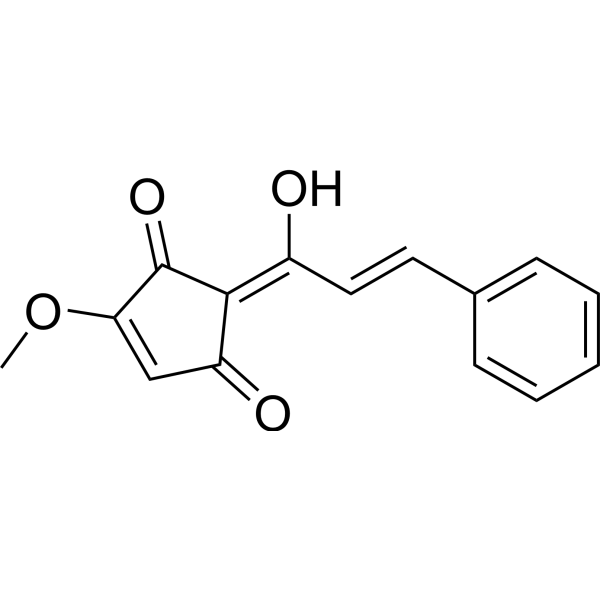 0 ImagesLucidone, an anti-inflammatory agent that can be isolated from the fruit of Lindera erythrocarpa Makino. Lucidone inhibits LPS-induced NO and PGE2 production in RAW 264.7 mouse macrophages. Lucidone also decreases TNF-α secretion, iNOS and COX-2 expression. Lucidone prevents NF-κB translocation and inhibits JNK and p38MAPK signals. Lucidone also has inhibitory activity against Dengue virus (DENV) (EC50=25 μM).




