



MDM-2/p53
The p53 tumor suppressor is a principal mediator of growth arrest, senescence, and apoptosis in response to a broad array of cellular damage. p53 is a short-lived protein that is maintained at low, often undetectable, levels in normal cells. Under stress conditions, the p53 protein accumulates in the cell, binds in its tetrameric form to p53-response elements and induces the transcription of various genes.
MDM-2 is transcriptionally activated by p53 and MDM-2, in turn, inhibits p53 activity in several ways. MDM-2 binds to the p53 transactivation domain and thereby inhibits p53-mediated transactivation. MDM-2 also contains a signal sequence that is similar to the nuclear export signal of various viral proteins and, after binding to p53, it induces its nuclear export. As p53 is a transcription factor, it needs to be in the nucleus to be able to access the DNA; its transport to the cytoplasm by MDM-2 prevents this. Finally, MDM-2 is a ubiquitin ligase, so is able to target p53 for degradation by the proteasome.
In many tumors p53 is inactivated by the overexpression of the negative regulators MDM2 and MDM4 or by the loss of activity of the MDM2 inhibitor ARF. The pathway can be reactivated in these tumors by small molecules that inhibit the interaction of MDM2 and/or MDM4 with p53. Such molecules are now in clinical trials.
All Product Categories
-
MDM-2/p53 Inhibitors
(114)
View all products
-
MDM-2/p53 Agonists
(8)
View all products
-
MDM-2/p53 Antagonists
(4)
View all products
-
MDM-2/p53 Activators
(166)
View all products
-
MDM-2/p53 Modulators
(29)
View all products
-
MDM-2/p53 MDM2 Inhibitors
(65)
View all products
-
MDM-2/p53 p53 Activators
(115)
View all products
-
MDM-2/p53 p53 Inhibitors
(16)
View all products
-
MDM-2/p53 Inducers
(17)
View all products
-
MDM-2/p53 Degraders
(8)
View all products
-
MDM-2/p53 Controls
(6)
View all products
-
MDM-2/p53 Ligands
(9)
View all products
-
MDM-2/p53 Related Products (637)
Related Products (637)

-
Antibodies (17)
-
MDM-2/p53 Signaling Pathway
-
USP10-IN-4
 0 ImagesCat. No.: HY-175538USP10-IN-4 is a potent ubiquitin-specific protease 10 (USP10) inhibitor with an IC50 of 10.87 μM and a Kd of 365 nM. USP10-IN-4 effectively inhibits USP10-mediated proteasomal degradation of downstream proteins YAP and p53, leading to the subsequent downregulation of CDK4 in the p53 signaling pathway. USP10-IN-4 promotes apoptosis in HCC cells and inhibits the onset and progression of liver cancer. USP10-IN-4 can used for the study of hepatocellular carcinoma (HCC).
-
p53 Activator 14
 0 ImagesCat. No.: HY-170591CAS No.: 2922588-44-9p53 Activator 14 (Compound 7A) is a derivative of Neratinib (HY-32721), that induces DNA damage, activates p53, and inhibits the proliferation of multi cancer cells (IC50=7.21 μM for HCT116 cell). p53 Activator 14 inhibits the adhesion, migration and invasion of HCT116, arrests the cell cycle, and induces apoptosis. p53 Activator 14 inhibits angiogenesis and exhibits antitumor efficacy in chick chorioallantoic membrane (CAM) model.
-
Leucettamol A
 0 ImagesCat. No.: HY-125660CAS No.: 151124-32-2Leucettamol A is an inhibitor of Ubc13 (ubiquitin E2 enzyme)-Uev1A interaction, with an IC50 of 50 μg/mL. Leucettamol A can potentially activate the expression of cancer suppressor p53 and is a precursor of anticancer agents. Leucettamol A can be isolated from a marine sponge, Leucetta aff. Microrhaphis.
-
CG-1521
 0 ImagesCat. No.: HY-108919CAS No.: 674767-29-4CG-1521 is a histone deacetylase (HDAC) inhibitor that stabilizes Ac-Lys373 P53, increases P21 levels and HDAC2 degradation. CG-1521 can inhibit proliferation, induce cell cycle arrest and apoptosis. CG-1521 promotes Bax translocation to the mitochondria and cleavage. CG-1521 downregulates KIF4, Aurora B and Nek2 protein expression and DNA synthesis. CG-1521 can be used for the research of prostate cancer and inflammatory breast cancer.
-
BMH-9
 0 ImagesCat. No.: HY-118912CAS No.: 457937-39-2BMH-9 (Compound Z54) is a modulator for nuclear receptor subfamily 2, group F, member 6 (NR2F6) (also known as nuclear orphan receptor Ear2). BMH-9 is an activator for p53 signaling pathway through interaction with DNA. BMH-9 inhibits proliferation of human cancer cells, exhibits antitumor efficacy in NOD-SCID mouse models.
-
Apoptosis inducer 65
 0 ImagesCat. No.: HY-189411Apoptosis inducer 65 is an apoptosis inducer with antiproliferative activity against cancer cells. Apoptosis inducer 65 induces G0/G1 cell cycle arrest and intrinsic apoptosis by upregulating p53, BAX, and caspase-7, while downregulating Bcl-2. Apoptosis inducer 65 inhibits ROS, NO, TNF-α, IL-1β, and IL-6 in macrophages. Apoptosis inducer 65 can be used for research on hepatocellular carcinoma and inflammation.
-
p53 Activator 16
 0 ImagesCat. No.: HY-179506P53 Activator 16 (Compound JC16) is a p53 activator. P53 Activator 16 exhibits selective cytotoxicity and pro-apoptotic (apoptosis) activity towards p53-Y220C mutant cancer cells, while having little effect on wild-type or P53-deficient cells. P53 Activator 16 induces the conformational transition of cell p53-Y220C from the mutant form to the wild-type form, accompanied by the transcriptional activation of p53 target genes, without increasing the overall level of p53 protein. P53 Activator 16 can be used for the study of p53 mutant cancers.
-
MI-773 TFA
 0 ImagesMI-773 TFA is an orally active, selective MDM2-p53 interaction inhibitor with a Ki of 0.88 nM for MDM2. MI-773 TFA blocks the MDM2-TP53 interaction. MI-773 TFA potently activates p53. MI-773 TFA induces Apoptosis. MI-773 TFA causes tumor regression in xenograft models of adenoid cystic carcinoma. MI-773 TFA exhibits anticancer effects in neuroblastoma. MI-773 TFA can be used for the research of adenoid cystic carcinoma.
-
VEGFR-2-IN-70
 0 ImagesCat. No.: HY-175019VEGFR-2-IN-70 is a potent VEGFR-2 inhibitor with an IC50 of 18.04 nM. VEGFR-2-IN-70 exhibits cytotoxicity against A549 and MCF-7 cancer cells with IC50 values of 0.43 μM and 3.8 μM, respectively. VEGFR-2-IN-70 induces G1 cell cycle arrest and apoptosis in lung cancer cells. VEGFR-2-IN-70 is useful in cancer research.
-
Antitumor agent-202
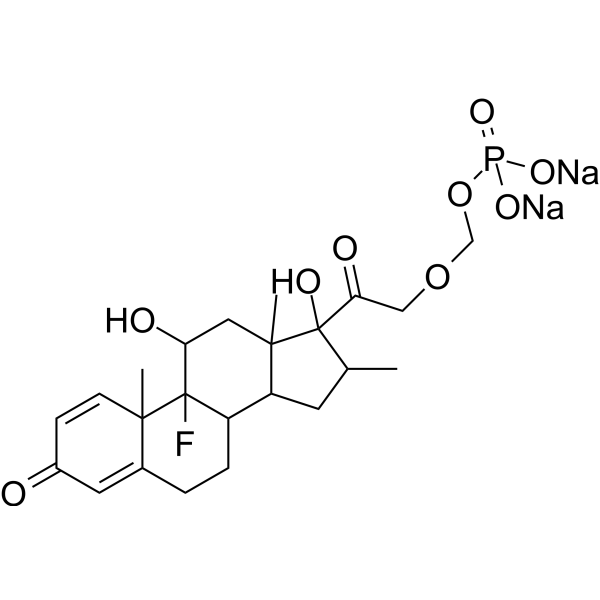
 0 ImagesCat. No.: HY-W287494CAS No.: 38470-63-2Antitumor agent-202 is a stabilizer of the p53 Y220C mutant. It exhibits a selective inhibitory effect on the proliferation of tumor cells carrying the p53 Y220C mutation and can be applied to the research of cancers associated with the p53 Y220C mutation.
-
N-Desmethyl clomipramine
 0 ImagesN-Desmethyl clomipramine (Desmethylclomipramine; Norclomipramine) is the orally active major active metabolite of the tricyclic antidepressant Clomipramine (HY-B0457A), possessing multiple activities including anti-inflammatory, antioxidant, antibacterial, and antiparasitic effects. N-Desmethyl clomipramine blocks autophagosome-lysosome fusion, leading to the accumulation of LC3-II, p62, ATG7, WIPI2, and ATG5-12, reactivates the p53/p21 pathway, induces apoptosis through C-PARP and C-CAS3, and inhibits the proliferation, migration, and invasion of renal cancer cells. N-Desmethyl clomipramine inhibits LdTOPIA, inducing R-loop accumulation in the nucleus of Leishmania, ultimately causing parasite death. N-Desmethyl clomipramine can be used for research on depression, metastatic renal cell carcinoma, and leishmaniasis.
-
Kevetrin
 0 ImagesCat. No.: HY-16270CAS No.: 500863-50-3Synonyms: 3-Cyanopropyl carbamimidothioate; 4-IsothioureidobutyronitrileKevetrin (3-Cyanopropyl carbamimidothioate; 4-Isothioureidobutyronitrile) is an apoptosis inducer that exhibits p53-dependent and p53-independent antitumor activity. In TP53 wild-type models, Kevetrin activates and stabilizes the p53 protein by altering the processing of MDM2, thereby inducing cell cycle arrest and apoptosis. Kevetrin shows higher sensitivity in mutant models. Kevetrin is applicable for the research of various cancers including acute myeloid leukemia and breast cancer.
-
PI3K/mTOR-IN-19
 0 ImagesCat. No.: HY-179155PI3K/mTOR-IN-19 is an orally active, potent, selective PI3K (IC50 = 4.23 nM) and mTOR (IC50 = 2.3 nM) inhibitor. PI3K/mTOR-IN-19 significantly inhibits Eca109 cell viability and induces apoptosis. PI3K/mTOR-IN-19 causes G0/G1 cell cycle arrest, decreased mitochondrial membrane potential, and demonstrates marked telomerase inhibitory activity. PI3K/mTOR-IN-19 modulates the expression of key apoptotic regulators (Bcl-2, Bax, and p53) and downregulates the PI3K/Akt/mTOR signaling pathway. PI3K/mTOR-IN-19 can be used for the study of esophageal cancer.
-
RO 2468
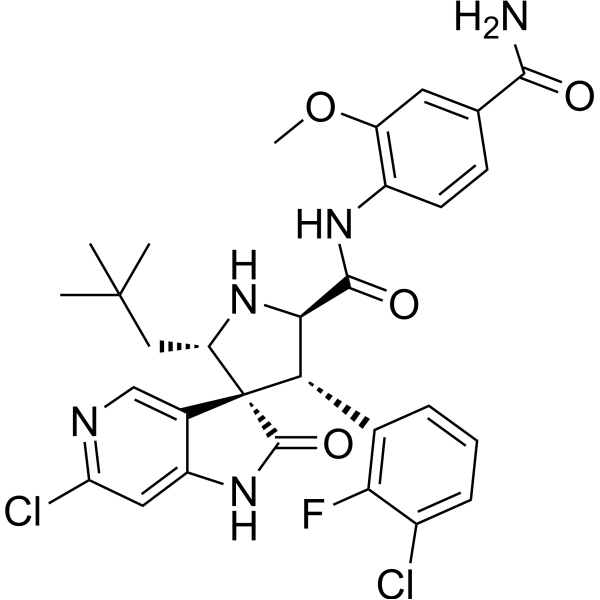 0 ImagesCat. No.: HY-12579CAS No.: 1360821-21-1RO 2468 is a potent, orally active and selective p53-MDM2 inhibitor. RO 2468 has anti-proliferative active. RO 2468 suppresses c growth in SJSA1 osteosarcoma models without obvious toxicity.
-
AKT-100
 0 ImagesCat. No.: HY-179129CAS No.: 3076960-67-0AKT-100 is a p53 reactivation agent. AKT-100 significantly inhibits the proliferation of various ovarian and endometrial cancer cells at low concentrations. AKT-100 can upregulate cell cycle regulatory genes (such as p21, GADD45) and pro apoptotic genes (such as NOXA, DR5), and inhibit DNA repair pathways. AKT-100 is commonly used in cancer research.
-
L14-8
 0 ImagesCat. No.: HY-175000L14-8 is a potent ferroptosis inducer. L14-8 promotes PLK1 degradation via ubiquitination, increasing TP53 phosphorylation to enhance SAT1 transcription, thereby triggering ferroptosis and cancer cell death. L14-8 can be used for the study of advanced prostate cancer.
-
Topo I/II-IN-3
 0 ImagesCat. No.: HY-183330Topo I/II-IN-3 is a dual inhibitor of topoisomerase I/II (topoisomerase I/II), with an IC50 of 8.99 μM against Topo I and an IC50 of 26.92 μM against Topo II. Topo I/II-IN-3 induces DNA damage, elevates intracellular ROS levels, activates the mitochondrial apoptosis pathway, and exerts cytotoxicity against cancer cells. Topo I/II-IN-3 upregulates the expression of γ-H2AX, p53, activated caspase-9, Bax and activated caspase-3, while downregulating the expression of Bcl-2. Topo I/II-IN-3 can be used in research related to breast cancer, liver cancer and gastric cancer.
-
Lumichrome-d8
 0 ImagesCat. No.: HY-W708917Lumichrome-d8 is the deuterium labeled Lumichrome (HY-115385). Lumichrome, a photodegradation product of Riboflavin, is an endogenous compound in humans. Lumichrome inhibits human lung cancer cell growth and induces apoptosis via a p53-dependent mechanism. Lumichrom is the inhibitor for AKT/β-catenin signaling pathway.
-
TAT-N24
 0 ImagesCat. No.: HY-P10797Purity: 99.83%TAT-N24 is a cell-penetrating peptide and also an inhibitor of p55PIK. TAT-N24 disrupts the interactions between p55PIK and p53, PCNA or Rb, blocks the p53-dependent ubiquitin-mediated degradation process, and inhibits the nuclear translocation and phosphorylation of NF-κB p65. TAT-N24 enhances MMS-induced p53-dependent cell apoptosis, inhibits DNA synthesis, reduces the expression of Cyclin D1, and induces cell cycle arrest at the G0/G1 or S phase. TAT-N24 inhibits the activation of NLRP3 and NLRC4 inflammasomes, reduces the expression of ZBP1-PANoptosome components, and suppresses PANoptosis. TAT-N24 can be used in research related to leukemia, colon cancer, cervical cancer, liver cancer, corneal neovascularization, restenosis and acute glaucoma.




