



PERK
Protein kinase R-like endoplasmic reticulum kinase; PKR-like endoplasmic reticulum kinase
Protein kinase R (PKR)-like endoplasmic reticulum kinase (PERK) is one of four known kinases that respond to cellular stress by deactivating the eukaryotic initiation factor 2 α (eIF2α) or other signal transduction cascades. PERK is highly expressed in pancreatic beta-cells and is essential in the beta-cell's development, differentiation and function.
PERK is a type I ER membrane protein containing a stress-sensing domain facing the ER lumen, a transmembrane segment, and a cytosolic kinase domain. Increase in unfolded proteins in the ER causes release of ER chaperones from the stress-sensing domain of PERK, which results in its activation via oligomerization and autophosphorylation at multiple serine, threonine, and tyrosine residues. Upon activation, PERK phosphorylates eIF2α at serine 51, rendering it an inhibitor of the ribosome translation initiation complex, consequently reducing overall protein synthesis. The reduction in translation reduces the ER burden, providing time for the cell to process or degrade the accumulated unfolded proteins to restore ER homeostasis. Although global protein synthesis is decreased, there is specific increased translation of certain mRNAs, such as ATF4, which modulate cellular survival pathways and enhance UPR function. Interfering with PERK function in cancer cells may limit their ability to thrive under hypoxia or nutrient deprived conditions and lead to apoptosis or tumor growth inhibition.
All Product Categories
-
PERK Related Products (209)
Related Products (209)

-
Antibodies (2)
-
eIF4E/eIF4G PPI-IN-1
 0 ImagesCat. No.: HY-176288eIF4E/eIF4G PPI-IN-1 is an eIF4E/eIF4G interaction inhibitor with a KD of 20.2 μM for eIF4E protein. eIF4E/eIF4G PPI-IN-1 plays an antitumor role in multiple modes of action including regulating the activity of eIF4E by inhibiting the Ras/MAPK/eIF4E signaling pathway, apoptosis and cell migration. eIF4E/eIF4G PPI-IN-1 suppresses the growth of HepG2 xenografts in nude mice and was relatively nontoxic to mice.
-
EGFR-IN-154
 0 ImagesCat. No.: HY-173188EGFR-IN-154 (compound 4c) is an EGFR inhibitor with EC50 values of 0.16 μM, 21.73 μM and 41.56 μM against EGFR Del19, EGFR WT and EGFR L858R, respectively. EGFR-IN-154 shows anticancer activity on various cance cell lines. EGFR-IN-154 induces mitochondrial apoptosis, and decreases pERK1/2 and pAkt levels, but increases pJNK and pp38 levels.
-
Anticancer agent 296
 0 ImagesCat. No.: HY-181087Anticancer agent 296 is a potent anticancer agent that activates the PERK-eIF2α-CHOP signaling pathway to induce endoplasmic reticulum stress, thereby regulating caspase and Bcl-2 family proteins, ultimately leading to apoptosis. Anticancer agent 296 increases intracellular levels of reactive oxygen species (ROS), reduces mitochondrial membrane potential, and promotes Ca2+ release. Anticancer agent 296 suppresses cell colony formation and S-phase cell proliferation, and induces autophagy. Anticancer agent 296 is applicable for research on non-small cell lung cancer (NSCLC).
-
Cyprodinil-13C6
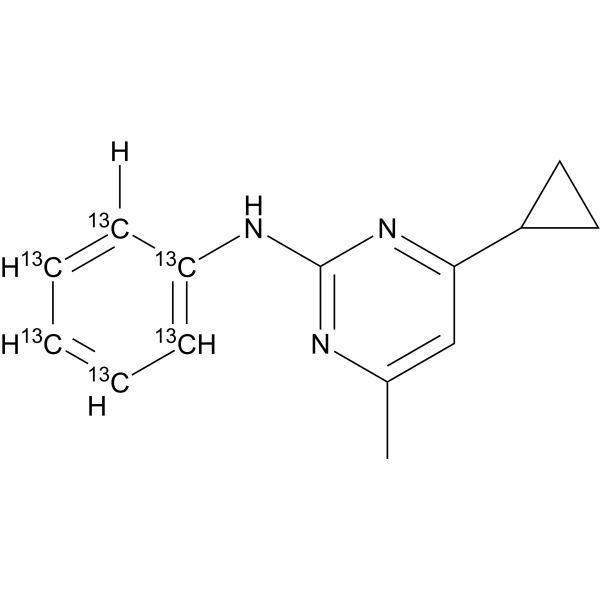 0 ImagesCat. No.: HY-116214S1CAS No.: 1773496-63-1Synonyms: CGA-219417-13C6Cyprodinil-13C6 (CGA-219417-13C6) is the 13C6 labeled Cyprodinil (HY-116214). Cyprodinil (CGA-219417) is a broad-spectrum anilinopyrimidine fungicide and an activator of the aryl hydrocarbon receptor. Cyprodinil also has anti-androgenic and androgenic activities. Cyprodinil can inhibit the biosynthesis of methionine in plant-pathogenic fungi and protect fruits and vegetables from a variety of pathogens.
-
NCATS-SM0225
 0 ImagesCat. No.: HY-181529CAS No.: 1212623-02-3NCATS-SM0225 is an endoplasmic reticulum-associated degradation (ERAD) inhibitor and a direct binder of VDAC1, VDAC2 and VDAC3. NCATS-SM0225 exhibits an IC50of 1.02 μM for ERAD and a Kd of 3.13 μM for human VDAC1 binding. NCATS-SM0225 disrupts cellular calcium homeostasis, enhances VDAC1-IP3R coupling and activating PERK. NCATS-SM0225 selectively kills cancer cells, exhibits tumor growth inhibitory effects in melanoma xenograft models. NCATS-SM0225 can be used for research on multiple cancers including melanoma, as well as the molecular mechanisms of ERAD and calcium homeostasis regulation.
-
PERK-IN-4-d3
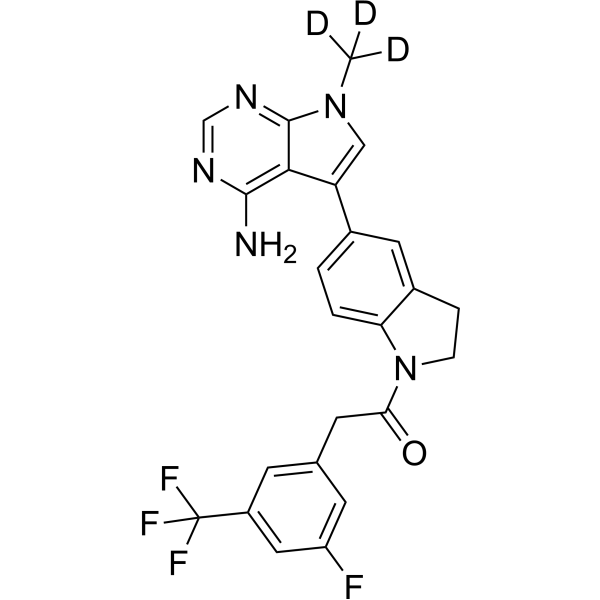 0 ImagesCat. No.: HY-137813S
-
(S)-PERK-IN-5
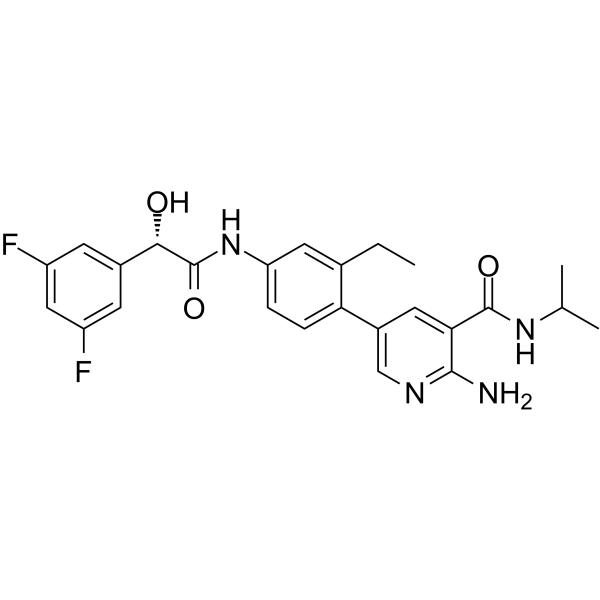 0 ImagesCat. No.: HY-145835ACAS No.: 2616821-92-0(S)-PERK-IN-5 is the S-enantiomer of PERK-IN-5. (S)-PERK-IN-5 (example 39) is a PERK inhibitor, with an IC50 of 0.101-0.250 μM.
-
AM-8719
 0 ImagesCat. No.: HY-187998CAS No.: 3034975-33-9AM-8719 is an orally active, blood-brain barrier-penetrant KRASG12C inhibitor. AM-8719 binds covalently to KRASG12C, inhibits SOS1-catalyzed GDP/GTP exchange, and suppresses downstream ERK phosphorylation. AM-8719 exhibits antiproliferative activity against KRASG12C tumor cells. AM-8719 can be used for the research of KRASG12C-positive cancers.
-
Dehydrodiisoeugenol-d4
 0 ImagesCat. No.: HY-N0589SDehydrodiisoeugenol-d4 is the deuterium labeled Dehydrodiisoeugenol (HY-N0589). Dehydrodiisoeugenol is an orally active anti-inflammatory and anti-tumor agent. Dehydrodiisoeugenol inhibits the proliferation of colorectal cancer cells, and induces apoptosis, autophagy, endoplasmic reticulum stress and cell cycle arrest. Dehydrodiisoeugenol also exerts anti-inflammatory effects by inhibiting the activation of NF-κB and the expression of COX-2. Dehydrodiisoeugenol can be used in the research related to colorectal cancer, inflammatory diseases and ulcerative colitis.
-
YF135
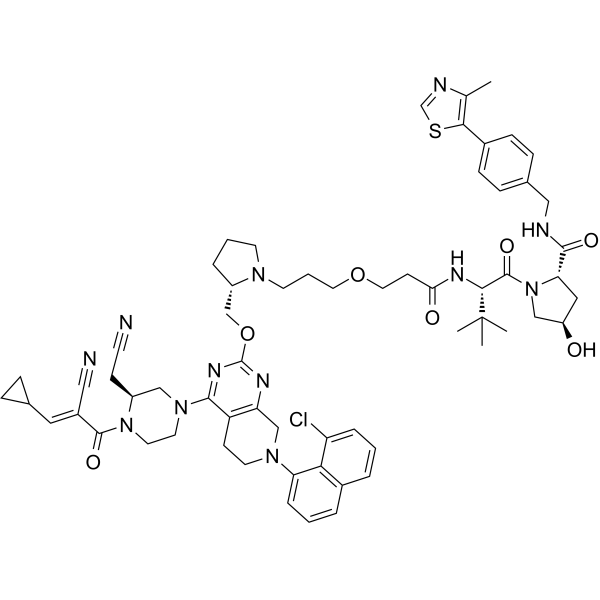 0 ImagesCat. No.: HY-144323CAS No.: 2913177-53-2YF135 is a KRASG12C PROTAC degrader that mediates proteasomal degradation of KRASG12C in a reversible manner. In KRASG12C-mutant H358 and H23 lung cancer cells, the DC50 values of YF135 for KRAS degradation are 3.61 μM and 4.53 μM, respectively. YF135 attenuates the pERK signaling pathway in cancer cells. YF135 is applicable for lung cancer-related research.
-
FGFR-IN-27
 0 ImagesCat. No.: HY-183780FGFR-IN-27 is an orally active, broad-spectrum FGFR inhibitor, with an IC50 of 0.24 nM against human FGFR1, 0.71 nM against FGFR2, 0.87 nM against FGFR3, and 6.50 nM against FGFR4. FGFR-IN-27 inhibits cancer cell proliferation and blocks tumor growth. FGFR-IN-27 reduces the phosphorylation levels of AKT and ERK, induces apoptosis and ferroptosis, increases ROS levels, and decreases GSH levels. FGFR-IN-27 can be used in the research of hepatocellular carcinoma.
-
Pachypodol (Standard)
 0 ImagesCat. No.: HY-N3121RCAS No.: 33708-72-4Pachypodol (Standard) is the analytical standard of Pachypodol (HY-N3121). This product is intended for research and analytical applications. Pachypodol is an orally active methoxyflavonoid compound. Pachypodol activates the ERK-dependent Nrf2 pathway and inhibits Apoptosis. Pachypodol exhibits activities such as antioxidant, cytoprotective, anti-inflammatory effects. Pachypodol improves cognition. Pachypodol exerts protective effects against cardiac and liver damage. Pachypodol has anticancer activity against colon cancer.
-
PAMP-12 (unmodified) TFA
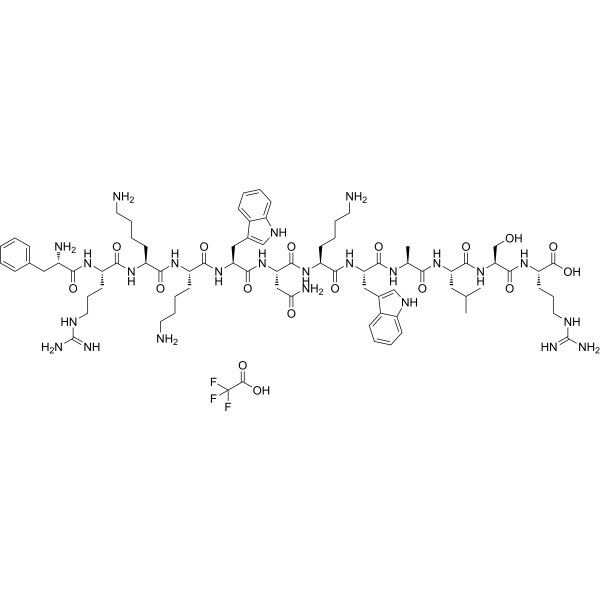 0 ImagesCat. No.: HY-P3419APAMP-12 (unmodified) TFA is an endogenous peptide and is a MrgX2 agonist. PAMP-12 (unmodified) TFA can reduce cAMP accumulation, increase Ca2+ levels, enhance beta-arrestin recruitment, decrease IP-1, and increases phosphoERK. PAMP-12 (unmodified) TFA can elicit hypotension through inhibiting catecholamine secretion from sympathetic nerve endings and adrenal chromaffin cells. PAMP-12 (unmodified) TFA can be used for the research of hypotension and ulcerative colitis.
-
Continentalic acid (Standard)
 0 ImagesCat. No.: HY-N6908RCAS No.: 19889-23-7Continentalic acid (Standard) is the analytical standard of Continentalic acid (HY-N6908). This product is intended for research and analytical applications. Continentalic acid is a diterpenoid organic acid. Continentalic acid exhibits multiple activities including anti-inflammatory, antioxidant, neuroprotective, antibacterial and antitumor effects. Continentalic acid alleviates oxidative stress, reduces pro-inflammatory cytokine production, inhibits MAPK phosphorylation and neutrophil infiltration, and induces growth inhibition and apoptosis of cancer cells. Continentalic acid can be used in research related to traumatic brain injury, cancer, inflammation and infections.
-
(S)-IP-DK143
 0 ImagesCat. No.: HY-181817(S)-IP-DK143 is a polymeric micellar formulation. (S)-IP-DK143 inhibits the proliferation of cervical cancer cells, induces ROS-mediated apoptosis, and triggers mitochondrial dysfunction. (S)-IP-DK143 activates the p38 MAPK signaling pathway, increases the phosphorylation level of p38. (S)-IP-DK143 can be used for the research of cervical cancer.
-
KD36
 0 ImagesCat. No.: HY-179702KD36 is a selective KRAS-G12C inhibitor with an IC50 value of 0.92 μM. KD36 can inhibit the phosphorylation of ERK and AKT, induce the accumulation of reactive oxygen species (ROS), reduce mitochondrial membrane potential, thereby leading to apoptosis of KRAS-G12C mutant cells. KD36 can be used in the research of non-small cell lung cancer (NSCLC).
-
(Rac)-Opnurasib
 0 ImagesCat. No.: HY-139612BCAS No.: 2653201-38-6Synonyms: (Rac)-JDQ-443; (Rac)-NVP-JDQ443
-
MRS2768
 0 ImagesCat. No.: HY-108649CAS No.: 1047980-83-5MRS2768 is a potent, selective, and metabolically stable P2Y2 receptor agonist with an EC50 of 1.89 μM for the human P2Y2 receptor. MRS2768 activates Gq/PLC/PKC signaling, leading to downstream phosphorylation of Akt, eNOS, and ERK, with effects varying by cell type. MRS2768 inhibits ENaC via Gq/PKC/Src/Akt to promote natriuresis and lower blood pressure in the kidney. MRS2768 activates eNOS to increase NO secretion in endothelial cells. MRS2768 drives proliferation via PI3K/Akt in fibroblasts and cancer cells. MRS2768 exerts anti-apoptotic effects through PKC/Src/Akt in cardiomyocytes. MRS2768 can be applied to investigate P2Y2-dependent pathological processes, including acute kidney injury, chronic kidney disease and renal fibrosis, DOCA-salt induced hypertension, myocardial infarction, pulmonary arterial hypertension, pancreatic cancer, cardiac fibrosis, dry eye disease, as well as shear stress-mediated vascular remodeling and atherosclerosis.
-
DdBIC
 0 ImagesCat. No.: HY-180786CAS No.: 3085711-53-8DdBIC is a pyroptosis inducer. DdBIC binds to Nur77 and triggers its translocation to mitochondria, activates SDHA to deplete succinyl-CoA, disrupts heme homeostasis, induces electron leakage, and elicits mitochondrial ROS production. DdBIC induces mitochondrial ROS that oxidatively activates OMA1, promotes OPA1 cleavage and its release into the cytoplasm, activates the integrated stress response via PERK, and ultimately activates granzyme B to cleave GSDMC. DdBIC can be used for the study of melanoma.
-
SB-T-101141
 0 ImagesCat. No.: HY-106159CAS No.: 186348-05-0SB-T-101141 is a novel taxane. SB-T-101141 effectively induces a noncanonical ferroptosis to overcome Paclitaxel (HY-B0015) resistance of breast cancer. SB-T-101141 facilitates the production of iron and ferrous ions and ROS. SB-T-101141 stably binds to KHSRP to inhibit the iron-dependent expression of CISD1 related to iron homeostasis. SB-T-101141 synergistically enhances the iron-dependent activation of JNK and PERK pathways via KHSRP. SB-T-101141 suppresses breast tumor growth in MCF-7(PR)/MDA-MB-231(PR) or KHSRP knock-down MCF-7 xenograft mice model.




