



Ras
Ras proteins are small GTPases that function as molecular switches, cycling between inactive GDP-bound and active GTP-bound states to regulate intracellular signaling networks controlling cell proliferation, differentiation, migration, survival, and apoptosis[1][2]. Mechanistically, activated Ras transduces signals from cell-surface receptors to major downstream pathways, including the RAF-MEK-ERK cascade, thereby coordinating growth-related transcriptional programs and cellular responses[1][2]. The human RAS family comprises the highly homologous isoforms KRAS, NRAS, and HRAS, which share common effectors yet display distinct signaling outputs, partly due to sequence divergence within regions involved in allosteric communication and membrane interactions[3][4]. Compared with related isoforms, KRAS exhibits unique membrane-targeting characteristics associated with its hypervariable region and is the predominant RAS isoform mutated in human malignancies, whereas NRAS and HRAS show different mutation frequencies and biological distributions across cancer types[4][5][6]. RAS genes are among the most frequently mutated oncogenes in human cancer, and gain-of-function mutations commonly affecting codons 12, 13, and 61 promote persistent Ras activation that drives tumorigenesis in diverse experimental and clinical settings[5][7]. For experimental applications, isoform-selective signaling mechanisms and Ras conformational regulation provide important frameworks for the development and evaluation of Ras-targeted inhibitors and mechanistic cancer models[3][8].
References:
- [1]. Wan X, et al. The Prognostic Value of HRAS mRNA Expression in Cutaneous Melanoma. Biomed Res Int. 2017;2017:5356737. [Content Brief]
- [2]. Wikipedia.
- [3]. Parker JA, et al. The K-Ras, N-Ras, and H-Ras Isoforms: Unique Conformational Preferences and Implications for Targeting Oncogenic Mutants. Cold Spring Harb Perspect Med. 2018 Aug 1;8(8):a031427. [Content Brief]
- [4]. Nussinov R, et al. Oncogenic Ras Isoforms Signaling Specificity at the Membrane. Cancer Res. 2018;78(3):593-602.
- [5]. Muñoz-Maldonado C, et al. A Comparative Analysis of Individual RAS Mutations in Cancer Biology. Front Oncol. 2019;9:1088.
- [6]. Nussinov R, et al. Ras isoform-specific expression, chromatin accessibility, and signaling. Biophys Rev. 2021;13:489-505.
- [7]. Hobbs GA, et al. RAS isoforms and mutations in cancer at a glance. J Cell Sci. 2016 Apr 1;129(7):1287-92. [Content Brief]
- [8]. Silverman I, et al. Structural modifications and kinetic effects of KRAS interactions with HRAS and NRAS: an in silico comparative analysis of KRAS mutants. Front Mol Biosci. 2024;11:1436976.
All Product Categories
-
Ras Related Products (427)
Related Products (427)

-
Antibodies (19)
-
BIMAX2 acetate
 0 ImagesCat. No.: HY-P10600APurity: 98.66%BIMAX2 acetate is a high affinity nuclear localization signal (NLS) peptide. BIMAX2 acetate can mimic the activity of the classical nuclear localization signal (cNLS) and competitively bind to importin α, thereby inhibiting the binding of cNLS-cargo proteins to importin α. BIMAX2 acetate can be used to study the role of RBBP4 in regulating nuclear import efficiency and cell senescence.
-
Rac1-IN-5
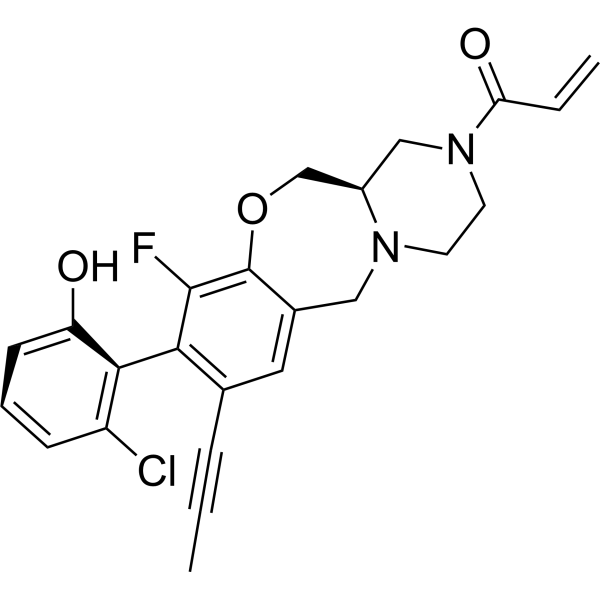
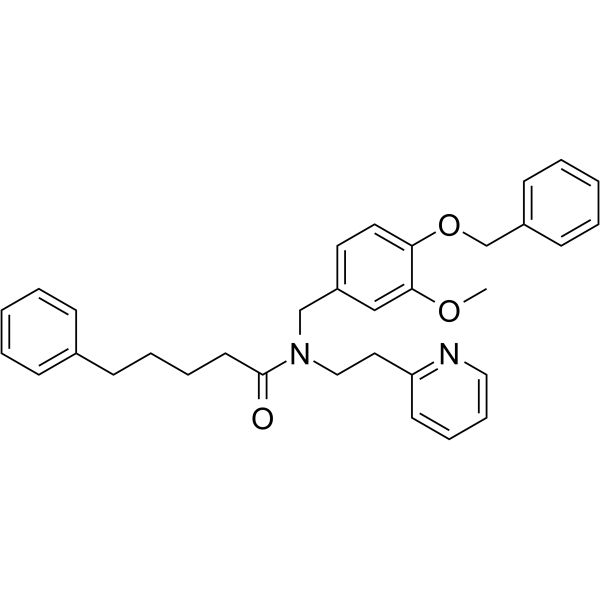
 0 ImagesRac1-IN-5 is a specific, reversible inhibitor of RAC1 (KD = 30 nM). Rac1-IN-5 competes with guanine nucleotides for specific binding to RAC proteins, effectively blocking RAC1 activity and RAC1-dependent cellular functions. Rac1-IN-5 exhibits anti-tumor metastasis effects in vivo and can improve survival. Rac1-IN-5 can be used to study invasive cancers such as triple-negative breast cancer and colon cancer.
-
Tadnersen
 0 ImagesSynonyms: BIIB078; IONIS-C9RxTadnersen (BIIB078), an antisense oligonucleotide (ASO), selectively targets C9ORF72 transcript variants 1 and 3 that carry the expansion.
-
RGB-1
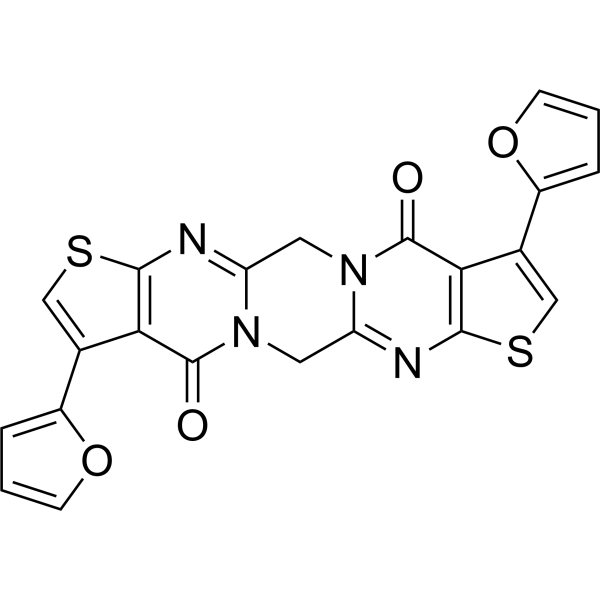 0 ImagesCat. No.: HY-156228CAS No.: 930455-91-7RGB-1 selectively binds to and stabilizes RNA G-quadruplex structures, and reduces the expression of the NRAS proto-oncogene in breast cancer cells. RGB-1 can serve as a tool for investigating the cellular functions of RNA G-quadruplex structures and identifying novel mRNA G-quadruplex-forming sequences. RGB-1 is applicable for breast cancer research.
-
CCG-232601
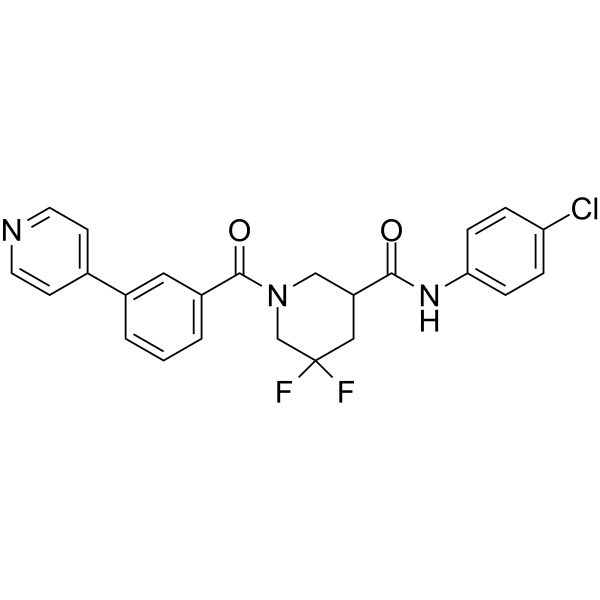 0 ImagesCCG-232601 (compound 8f) is a potent and orally active Rho/MRTF/SRF transcriptional pathway inhibitor. CCG-232601 inhibits the development of Bleomycin-induced dermal fibrosis in mice. CCG-232601 has the potential for the research of antifibrotic for systemic scleroderma.
-
KRas G12R inhibitor 1
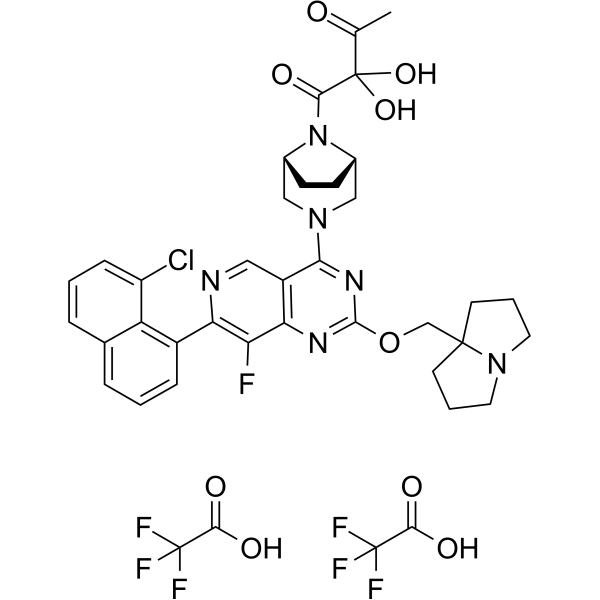 0 ImagesCat. No.: HY-151523Purity: 98.40%KRas G12R inhibitor 1 is a covalent inhibitor targeting the common oncogenic mutant KRas G12R with selectivity for the mutant arginine. KRas G12R inhibitor 1 possesses an α,β-diketoamide and exploits strong nucleophilicity of the mutant cysteine and irreversibly binds in the Switch II region of KRas. KRas G12R inhibitor 1 can be researched for K-Ras (G12R)-driven cancer such as pancreatic ductal adenocarcinoma (PDAC).
-
Tadnersen sodium
 0 ImagesCat. No.: HY-132581APurity: 99.30%Synonyms: BIIB078 sodium; IONIS-C9Rx sodiumTadnersen sodium, an antisense oligonucleotide (ASO), selectively targets C9ORF72 transcript variants 1 and 3 that carry the expansion.

-
MLS000532223
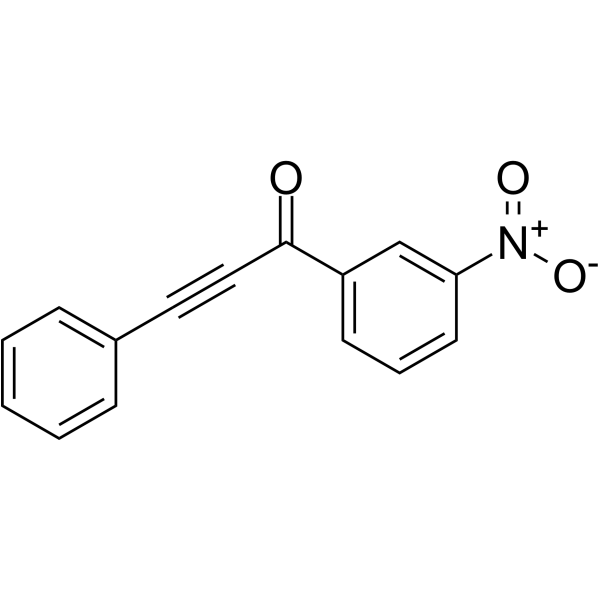 0 ImagesMLS000532223 is a high affinity, selective inhibitor of Rho family GTPases, with EC50 values ranging from 16 μM to 120 μM. MLS000532223 prevents GTP binding to several GTPases.
-
Kobe2602
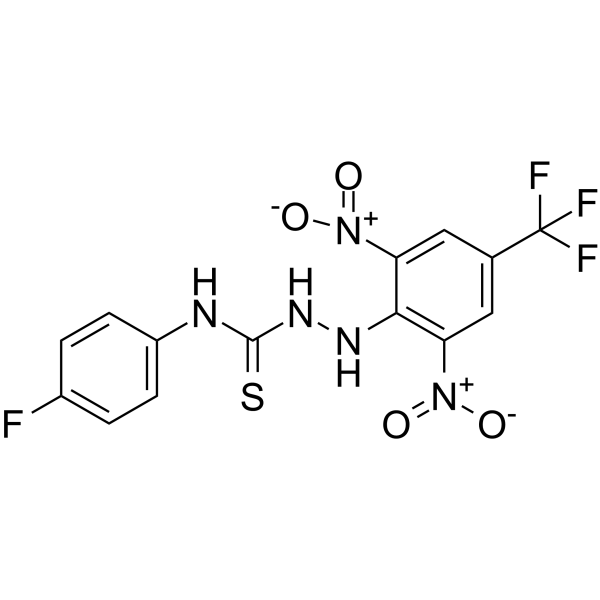 0 ImagesKobe2602 is a Ras-Raf interaction inhibitor. Kobe2602 inhibits the binding of H-Ras·GTP to c-Raf-1 RBD with a Ki of 149 μM. Kobe2602 has antitumor activity.
-
I942
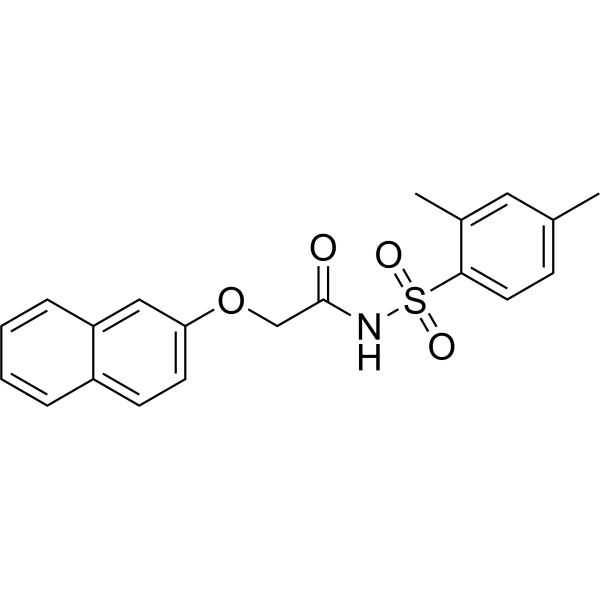 0 ImagesI942 is a first in class, selective non-cyclic nucleotide (NCN) EPAC1 agonist. I942 can attenuate proinflammatory cytokine signalling normally associated with cardiovascular diseases.
-
FTI 276 TFA
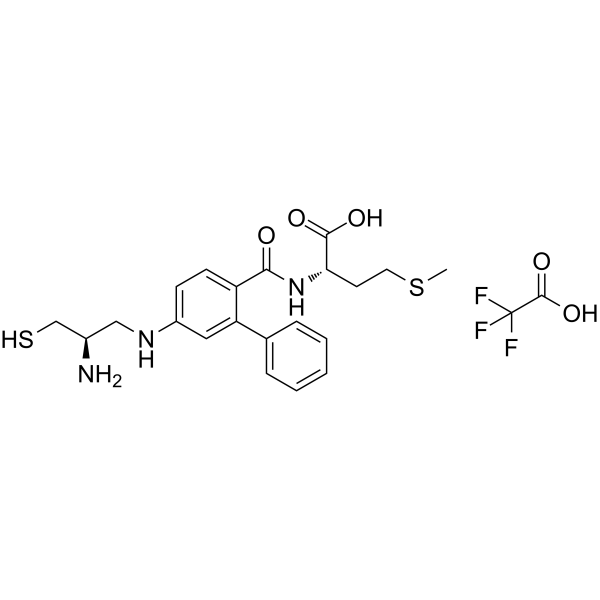 0 ImagesFTI 276 TFA is a farnesyltransferase (FTase) inhibitor with an IC50 of 0.5 nM, and it exhibits selectivity for FTase over geranylgeranyltransferase I (GGTase I). FTI 276 TFA blocks the farnesylation of H-Ras and K-Ras4B, causes inactive Ras-Raf complexes to accumulate in the cytoplasm, and inhibits constitutive MAPK activation. FTI 276 TFA reduces the number, incidence and volume of tumors, and restricts the growth of tumors expressing activated K-ras. FTI 276 TFA can be used in research related to pulmonary adenoma.
-
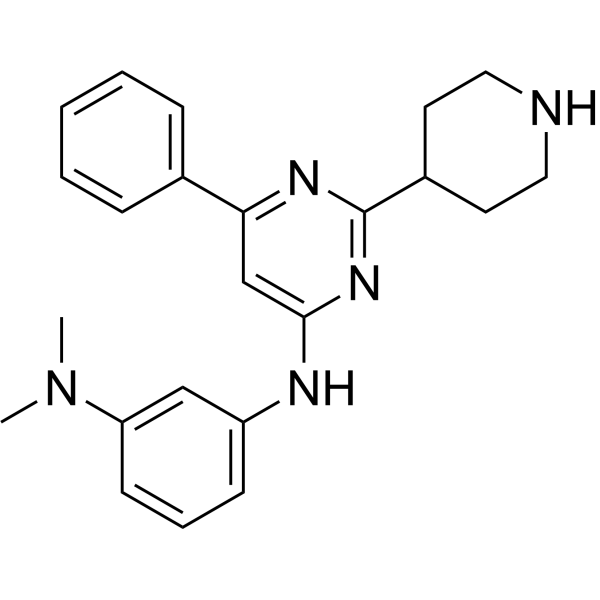
Clifutinib
 0 ImagesClifutinib is an orally active and selective internal tandem duplication mutation of FMS-like tyrosine kinase 3 (FLT3-ITD) inhibitor with an IC50 value of 15.1 nM. Clifutinib exerts strong antiproliferative effects on FLT3-ITD acute myeloid leukemia (AML) cell lines (MV-4-11: IC50 = 1.5 nM; MOLM-13: IC50 = 1.4 nM). Clifutinib inhibits the activity of FLT3-ITD kinase and blocks the downstream RAS/MAPK, PI3K/AKT, and JAK/STAT5 signaling pathways of FLT3. Clifutinib induces apoptosis of acute myeloid leukemia (AML) cells with FLT3-ITD mutations. Clifutinib demonstrates significant antitumor efficacy in mice bearing MV-4-11 or MOLM-13 xenografts. Clifutinib is promising for research of relapsed/refractory FLT3-ITD-positive acute myeloid leukemia.
-
K-Ras-IN-1
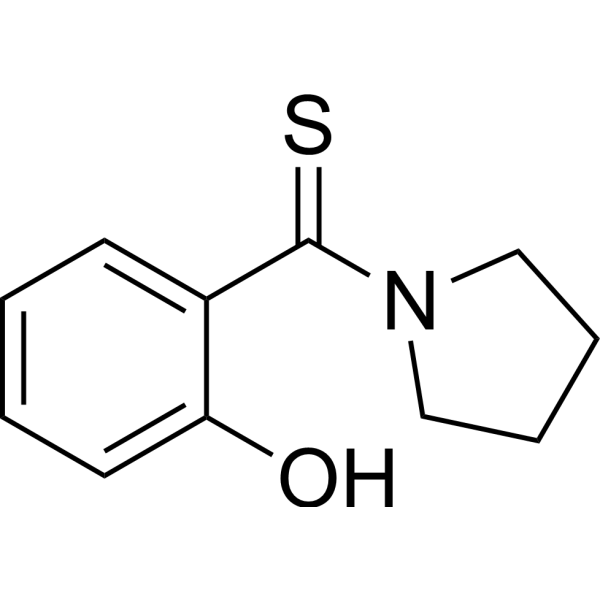 0 ImagesK-Ras-IN-1 is the inhibitor for K-Ras by occupying the binding site of son of sevenless (Sos), preventing the interaction between Sos and K-Ras, inhibiting the Sos-catalyzed GDP to GTP exchange process. K-Ras-IN-1 is promising for research of pancreatic, colon and lung cancer.
-
Sotorasib isomer
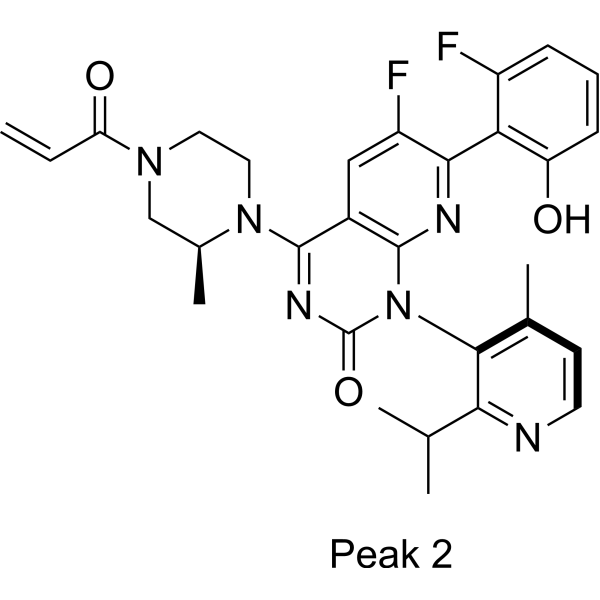 0 ImagesSynonyms: AMG-510 isomerSotorasib (AMG-510) isomer is the less active isomer of Sotorasib (AMG-510). AMG-510 is a potent KRAS G12C covalent inhibitor.
-
IMM-01
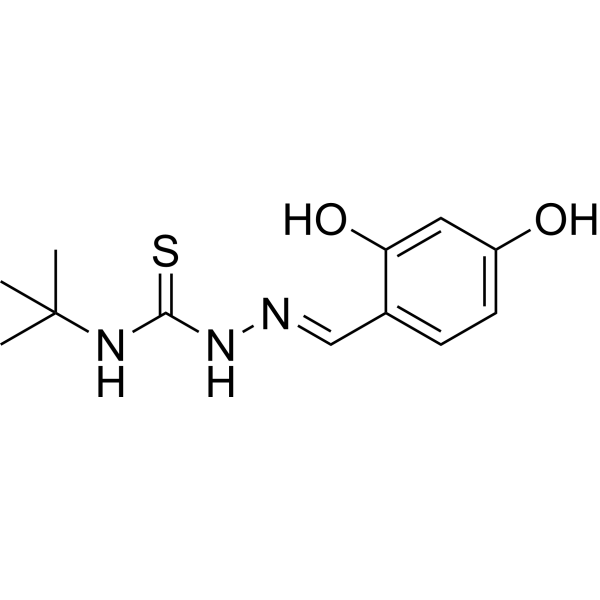 0 ImagesIMM-01 is a mammalian Diaphanous (mDia)-related formins agonist that inhibits DID-DAD (diaphanous inhibitory domain-diaphanous autoregulatory domain) binding with an IC50 of 140 nM. IMM-01 acts by disrupting the autoinhibitory bond between the DID and DAD domain and thus activates formins. IMM-01 shows anticancer effects.




