



Carboxylesterase (CES)
Carboxylesterase; Carboxylic-ester Hydrolase
Cboxylesterases (CES) are serine hydrolases belonging to the superfamily of proteins with α/β hydrolase fold. Cboxylesterases are widely distributed in many tissues including liver, intestine, lung and kidney. Cboxylesterases catalyze the ester cleavage of a large number of structurally diverse ester- or amide-containing substrates into the corresponding alcohol and carboxylic acid. Actually, Cboxylesterases can hydrolyze ester, thioester, amide, and carbamate linkages in a wide variety of endo- and xenobiotic compounds, thus playing key roles in both endobiotic metabolism, and in activation and/or detoxification of xenobiotics. In humans, three Cboxylesterases have been identified, namely human carboxylesterase 1 (CES1), CES2, and CES3. Among them, CES1 and CES2 are two widely studied isoenzymes involved in xenobiotic metabolism. Cboxylesterases play an important role in the metabolism of various xenobiotics including ester drugs and environmental toxicants, and also participate in lipid homeostasis[1].
Carboxylesterase (CES) Isoform Specific Products
All Product Categories
-
Carboxylesterase (CES) Related Products (59)
Related Products (59)

-
Carboxylesterase (CES) Isoform Comparison
-
Alisol G
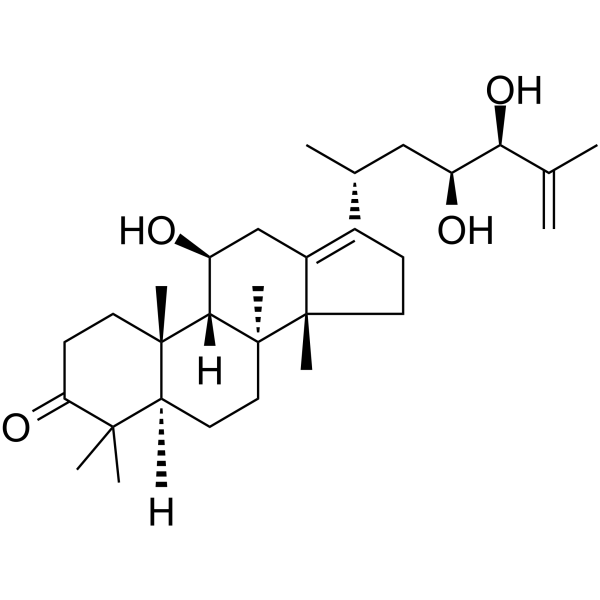 0 ImagesSynonyms: Alisol-G; 25-Anhydroalisol AAlisol G (25-Anhydroalisol A) is a human carboxylesterase 2 (hCES2) inhibitor with an IC50 of 3.85 μM. Alisol G exhibits cytotoxic activity against human cancer cells, antibacterial activity against Gram-positive strains, and anti-hepatitis B virus activity. Alisol G can be used in research related to lung cancer, breast cancer, prostate cancer, bacterial infections, and HBV infections.
-
Pancreatic lipase/Carboxylesterase 1-IN-1
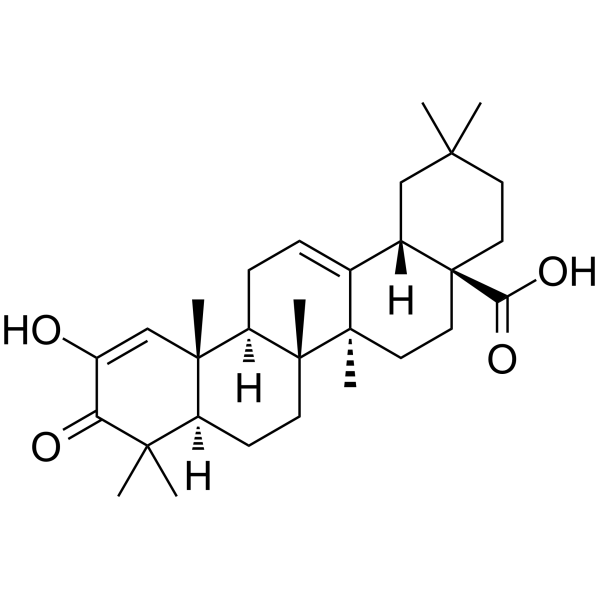 0 ImagesPancreatic lipase/Carboxylesterase 1-IN-1 (Compound 39) is a potent dual inhibitor of pancreatic lipase (PL) and human carboxylesterase 1A (hCES1A) with IC50 values of 2.13 µM and 0.055 µM against PL and hCES1A.
-
Carboxylesterase-IN-2
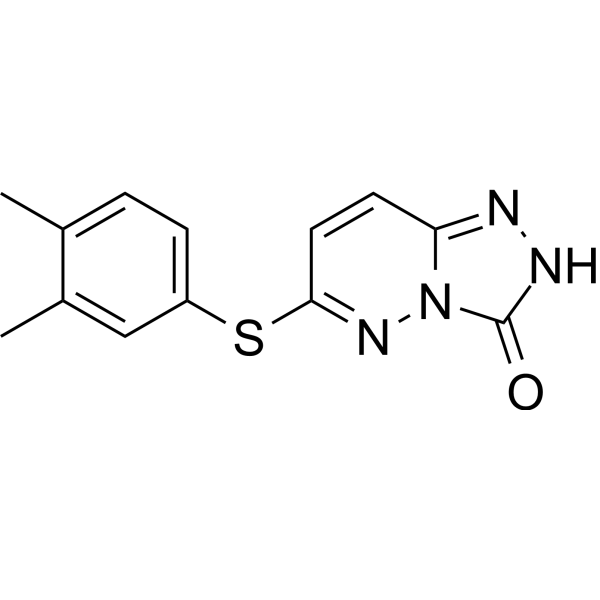 0 ImagesCarboxylesterase-IN-2 (compound 4u) is a potent inhibitor of Carboxylesterase Notum with an IC50 less than or equal to 10 nM. Notum is a negative regulator of Wnt signaling acting through the hydrolysis of a palmitoleoylate ester, which is required for Wnt activity. Carboxylesterase-IN-2 has the potential for the research of cancer disease.
-
Gancaonin I
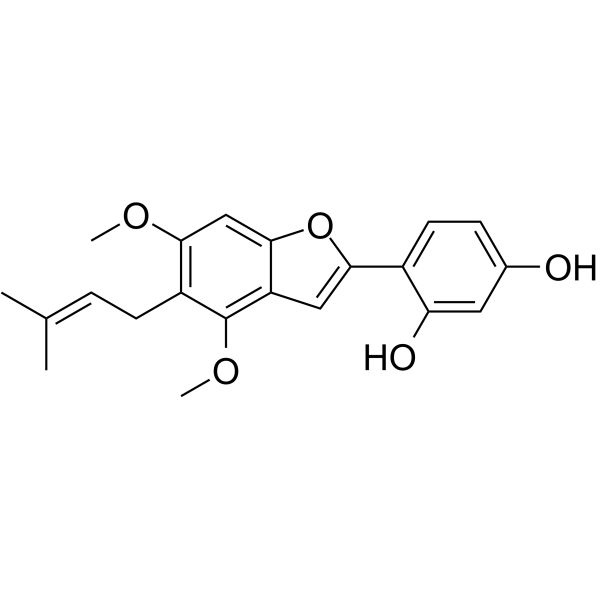 0 ImagesCat. No.: HY-N3921CAS No.: 126716-36-7Gancaonin I, an Isoflavone, exhibits moderate inhibition on human carboxylesterase 2 (hCES2A) with IC50 of 1.72 μM. Gancaonin I inhibits hCES2A-mediated fluorescein diacetate (FD) hydrolysis.
-
Spirotetramat
 0 ImagesCat. No.: HY-120253CAS No.: 203313-25-1Synonyms: BY-108330Spirotetramat (BY-108330) is an orally active Insecticide and lipid biosynthesis inhibitor. Spirotetramat regulates the activities of superoxide dismutase (SOD) and glutathione peroxidase (GSH-Px), with short-term exposure increasing their activities and long-term exposure altering their activities. Spirotetramat induces the activity and mRNA expression of carboxylesterase (CarE). Spirotetramat induces oxidative stress and lipid peroxidation in tadpoles. Spirotetramat is toxic to amphibian tadpoles and exhibits sublethal/non-lethal toxicity to amphibians. Spirotetramat causes death in immature psyllids, aphids, scale insects, mealybugs, whiteflies and thrips, and shows a high lethal rate against Cacopsylla pyri nymphs. Spirotetramat reduces the fecundity of Aphis gossypii. Spirotetramat induces tolerance in the offspring of exposed Aphis gossypii, and acts on Myzus persicae, Bemisia tabaci and Tetranychus urticae.
-
Dibromsalicil
 0 ImagesDibromsalicil (Compound 31) is a carboxylesterase (CES) inhibitor with activity of 72.7 nM against hiCE (human intestinal carboxylesterase) and 53.5 nM against rCE (rabbit liver carboxylesterase). Dibromsalicil has almost no activity against hCE1 (human liver carboxylesterase) and cholinesterase.
-
LK-44
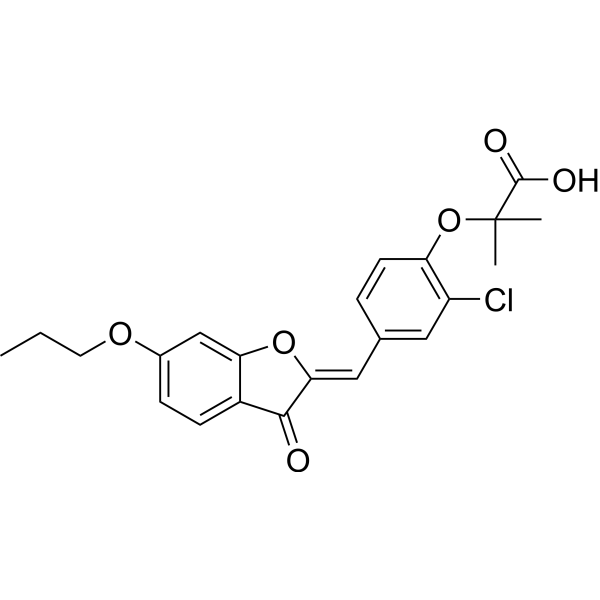 0 ImagesCat. No.: HY-155228hCES2A-IN-2 (Compound 44) is an orally active human carboxylesterase 2 (hCES2A) inhibitor (IC50: 5.02 μM). hCES2A-IN-2 improves Irinotecan (HY-16562)-induced delayed diarrhea.
-
PMPMEase-IN-1
 0 ImagesCat. No.: HY-118041CAS No.: 1190196-76-9PMPMEase-IN-1 is an allylated methylated protein methylesterase inhibitor with the property of inhibiting PMPMEase activity. PMPMEase-IN-1 may provide a useful strategy for cancer inhibition by enhancing its affinity for polyisoprenyl derivatives. PMPMEase-IN-1 showed the potential to have an effective concentration (EC50) value in causing degeneration of human neuroblastoma SH-SY5Y cells. Specific inhibition of PMPMEase-IN-1 may help regulate the metabolism of polyisoprenyl proteins and thus maintain normal cell survival. Further development and application of PMPMEase-IN-1 may open up new avenues for inhibiting degenerative diseases and cancer.
-
CEMT
 0 ImagesCat. No.: HY-D3166CAS No.: 2413816-64-3CEMT is a carboxylesterase (CES) substrate and a ratiometric two-photon fluorescent reporter probe. CEMT can be hydrolyzed by CES to generate HMT, which is used for mitochondrial pH sensing. After activation by CES, CEMT exhibits ratiometric fluorescence changes in response to pH variations. CEMT targets and covalently binds to mitochondria, and can avoid leakage during acidification, thus enabling in situ imaging (Ex/Em = 410 nm/550 nm).
-
Oseltamivir acid methyl ester
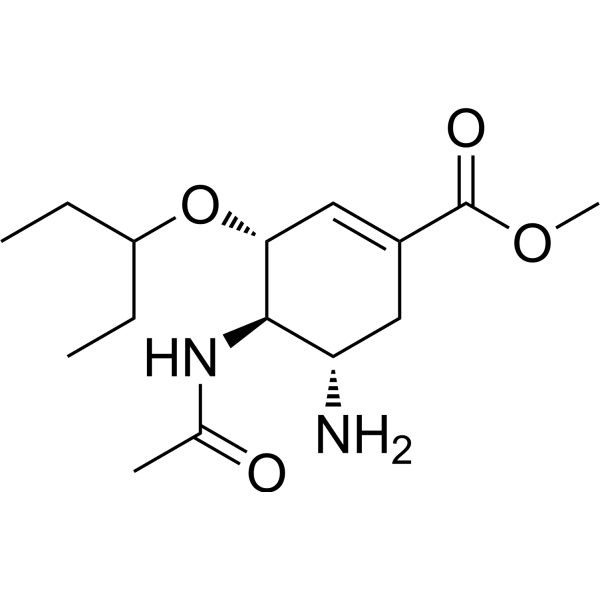 0 ImagesCat. No.: HY-147331CAS No.: 208720-71-2Oseltamivir acid methyl ester is a precursor form of the neuraminidase inhibitor and antiviral oseltamivir acid. Oseltamivir acid methyl ester is converted to oseltamivir acid by carboxylesterase 1 (CES1).
-
Benz-AP
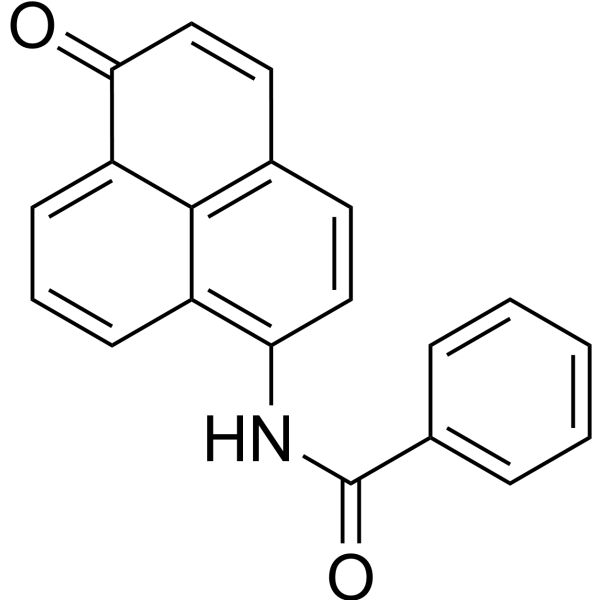 0 ImagesCat. No.: HY-147915CAS No.: 2416220-53-4Benz-AP is a potent photosensitizer. Benz-AP produces singlet oxygen, with a negative correlation with hCES2 (Human carboxylesterase 2) activity. Benz-AP displays a higher photocytotoxicity potency in cancer cells under low hCES2 environments. Upon TPE (Two-photon excitation), Benz-AP produces ROS and kills cancer cells and tumor spheroids.
-
CES2A-IN-3
 0 ImagesCat. No.: HY-176465CAS No.: 3037959-47-7CES2A-IN-3 (Compound 9d) is a potent serine-targeting covalent human carboxylesterase 2A (hCES2A) inhibitor with an IC50 value of 0.12 nM. CES2A-IN-3 is promising for research of diarrhea and ulcerative colitis.
-
Antifeedant agent 1
 0 ImagesCat. No.: HY-169068Antifeedant agent 1 is a carboxylesterase inhibitor that exerts insecticidal activity by inhibiting insect feeding, with an EC50 value of 0.038 mg/mL. Antifeedant agent 1 can be used in research related to pest control.
-
DDAO phosphate diTEA
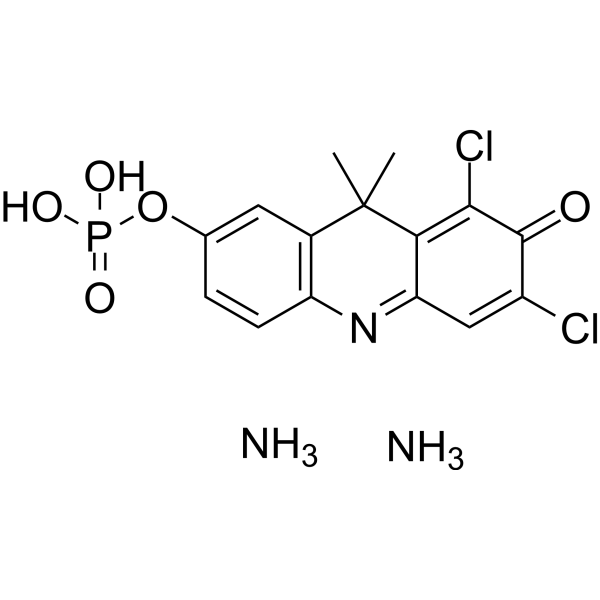 0 ImagesCat. No.: HY-D1739DDAO phosphate diTEA is an amphoteric surfactant derived from DDAO (dimethyldodecylamine oxide). The head group of DDAO in DDAO phosphate diTEA exists in a non-ionic state at pH > 7 and in a cationic state at pH < 5 due to protonation of the oxygen atom. When combined with the anionic surfactant SDS, DDAO can incorporate into mixed micelles, reducing the net micellar charge and attenuating electrostatic repulsion between SDS head groups. DDAO can be used to formulate the ONOO⁻-targeting probe DDAO-PN, which generates significant near-infrared fluorescence at 657 nm.
-
Kushenol X
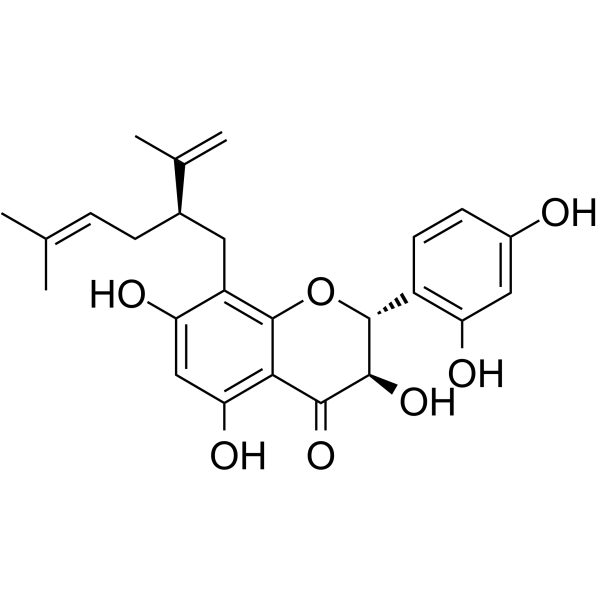 0 ImagesCat. No.: HY-N3413CAS No.: 254886-77-6Kushenol X, a flavonoid compound isolated from the roots of Sophora flavescens. Kushenol X is a potent β-glucuronidase and human carboxylesterase 2 (hCE2) inhibitor with IC50s of 2.07 μM and 3.05 μM, respectively.
-
Carboxylesterase-IN-4
 0 ImagesCat. No.: HY-176840CAS No.: 819869-10-8Carboxylesterase-IN-4 (compound 3e) is a potent carboxylesterase inhibitor with an IC50 of 1.58 nM. Carboxylesterase-IN-4 can be used in the study of cholesterolemia.
-
Ethyl phenylglyoxylate-d5
 0 ImagesCat. No.: HY-W701476CAS No.: 1025892-26-5Synonyms: Ethyl benzoylformate-d5; Phenylglyoxylic acid ethyl ester-d5Ethyl phenylglyoxylate-d5 (Ethyl benzoylformate-d5; Phenylglyoxylic acid ethyl ester-d5) is the deuterium labeled Ethyl phenylglyoxylate (HY-W016618). Ethyl phenylglyoxylate (Ethyl benzoylformate), the ethyl ester of phenylglyoxylic acid, is used as a synthetic reagent. Ethyl phenylglyoxylate is also a poor substrate but a potent inhibitor of chicken liver carboxylesterase. Additionally, Ethyl phenylglyoxylate exhibits photoreactivity, where its excited triplet carbonyl can initiate intermolecular hydrogen abstraction, radical coupling and cross-linking reactions.
-
Z-Pro-Ala
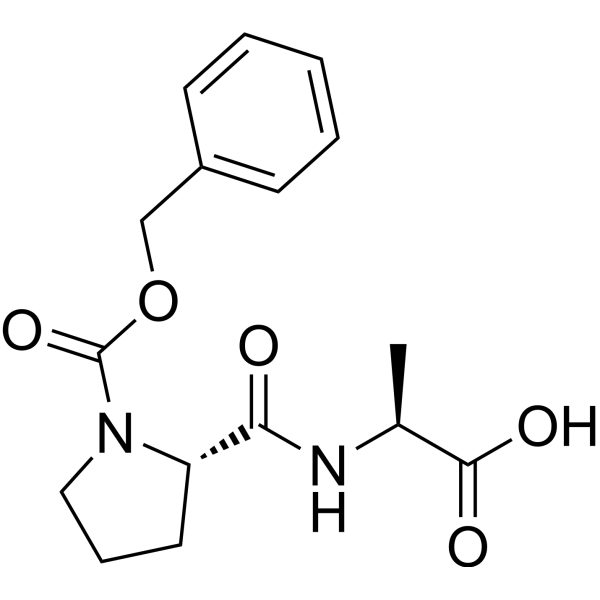 0 ImagesCat. No.: HY-P4611CAS No.: 14030-00-3Z-Pro-Ala is an acid carboxypeptidase. Z-Pro-Ala can be isolated from grains and leaves of wheat, Triticum aestivum L.
-
Carboxylesterase-IN-5
 0 ImagesCat. No.: HY-176841CAS No.: 648894-93-3Carboxylesterase-IN-5 (Compound 2e) is an irreversible and competitive Carboxylesterase (CES) inhibitor with an IC50 of 21.7 nM for porcine liver CES. Carboxylesterase-IN-5 can be used for hypocholesterolemia research.
-
Bakuchiol (Standard)
 0 ImagesCat. No.: HY-N0235RCAS No.: 10309-37-2Synonyms: (S)-(+)-Bakuchiol (Standard)Bakuchiol (Standard) is the analytical standard of Bakuchiol. This product is intended for research and analytical applications. Bakuchiol is a phytoestrogen that can be obtained from psoralen seeds. Bakuchiol has been proven to be a non-competitive inhibitor of multiple enzymes, including UDP-glucuronosyltransferase 2B7 (UGT2B7) and human carboxylesterase 2 (hCE2) , with IC50s values of 40.9 μM and 7.28 μM, respectively. Bakuchiol exhibits significant research and application potential in areas such as anti-inflammatory, antibacterial, antitumor therapies, as well as drug metabolism regulation.



