



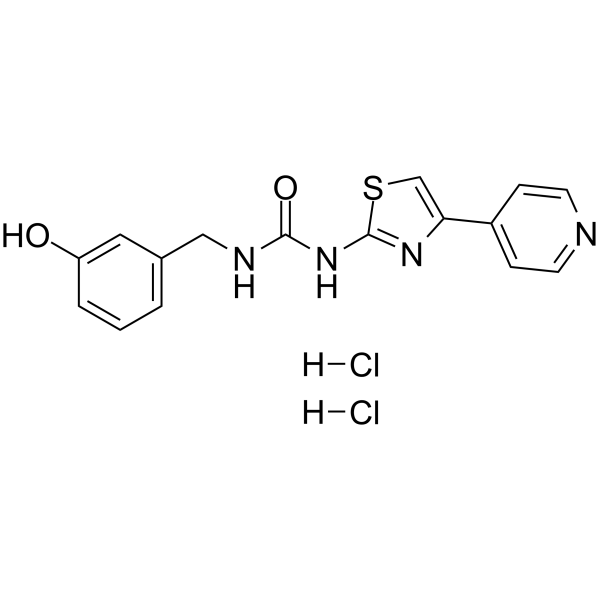
RKI-1447 dihydrochloride
Based on 4 publication(s) in Google Scholar
RKI 1447 dihydrochloride is a potent and selective ROCK inhibitor with IC50s of 14.5 and 6.2 nM for ROCK1 and ROCK2, respectively. RKI 1447 dihydrochloride suppresses colorectal carcinoma cell growth and promotes apoptosis.
For research use only. We do not sell to patients.
- Purity: 99.94%
- CAS No.: 1782109-09-4
- Formula: C16H16Cl2N4O2S
- Molecular Weight:399.29
-
Storage:
4°C, sealed storage, away from moisture and light
* In solvent : -80°C, 6 months; -20°C, 1 month (sealed storage, away from moisture and light)

To place orders, for customer services and technical support, please contact: MedChemExpress USA
Tel: 609-228-6898 E-mail: [email protected] [email protected]


-
 Biological Activity
-
Chemical Information
-
Solvent & Solubility
- Purity & Documentation
- References
-
 Help & FAQs


-
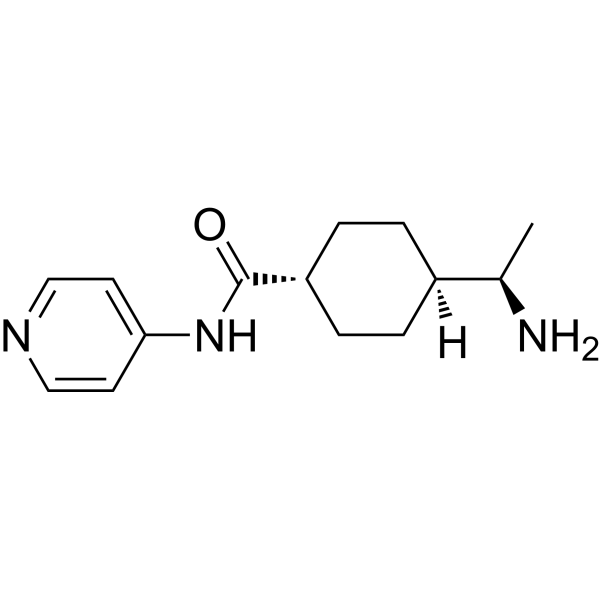
HY-10071
Y-27632 -
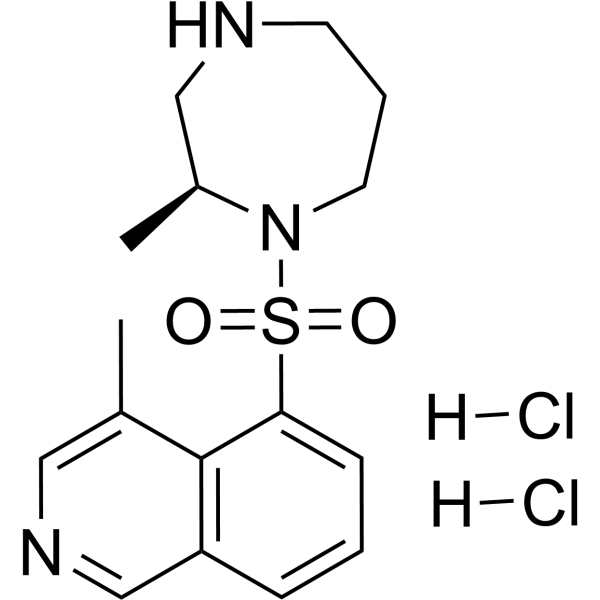
HY-15720A
H-1152 dihydrochloride -
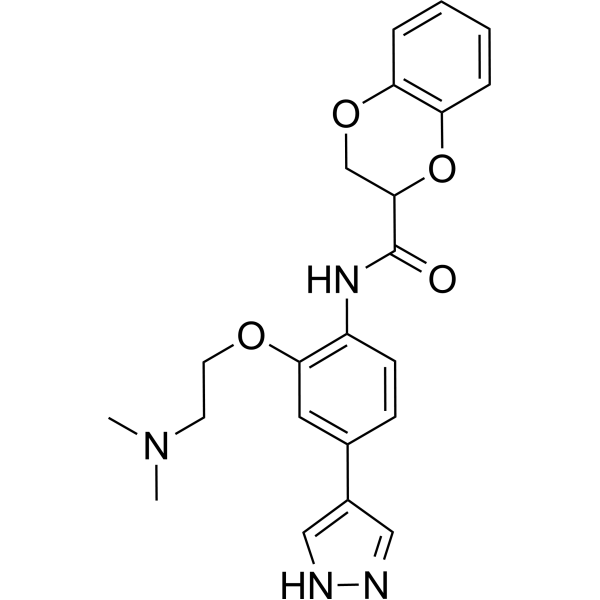
HY-13300
SR-3677 -
HY-108518
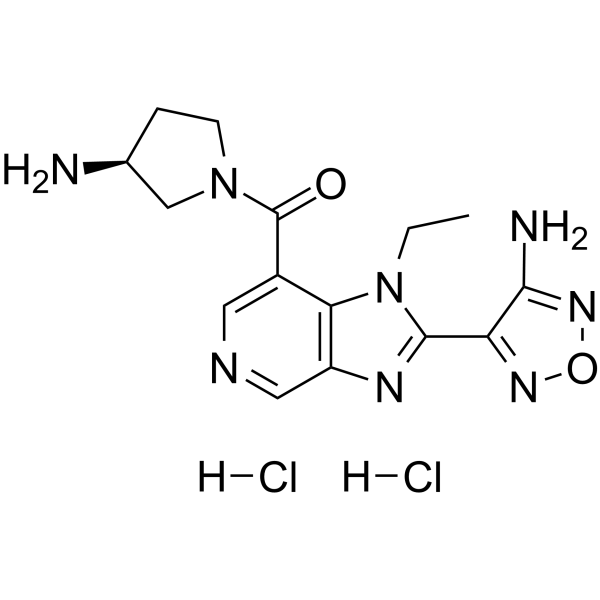
SB-772077B dihydrochloride -
HY-10583
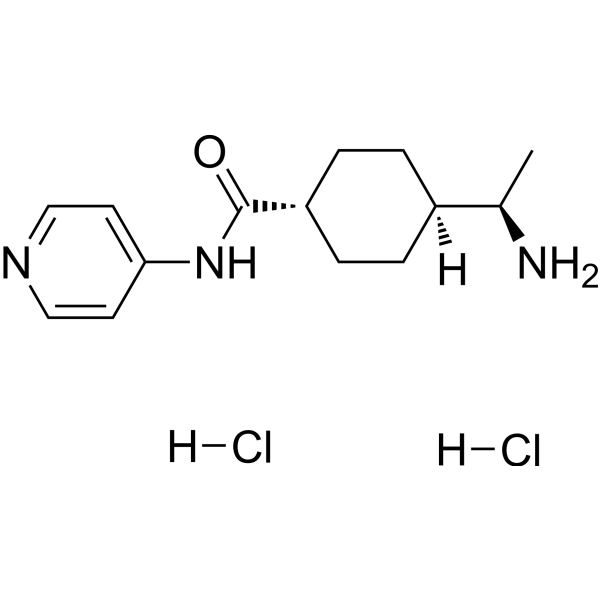
Y-27632 dihydrochloride -
HY-10583G
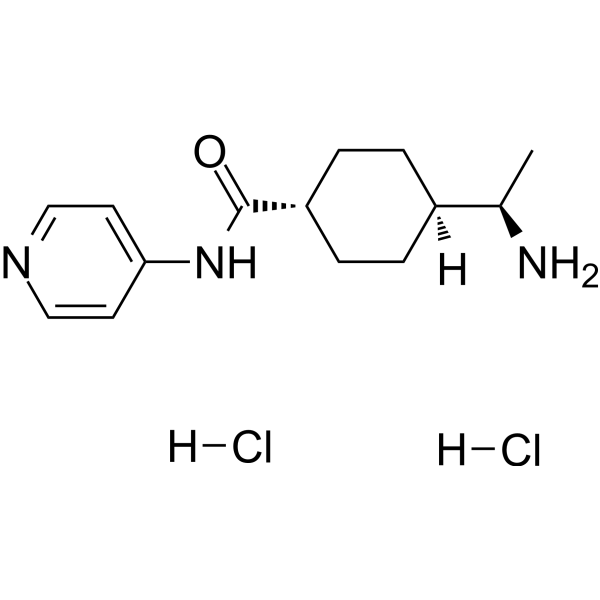
Y-27632 dihydrochloride (GMP) -

HY-10583R
Y-27632 dihydrochloride (Standard) -
HY-13257
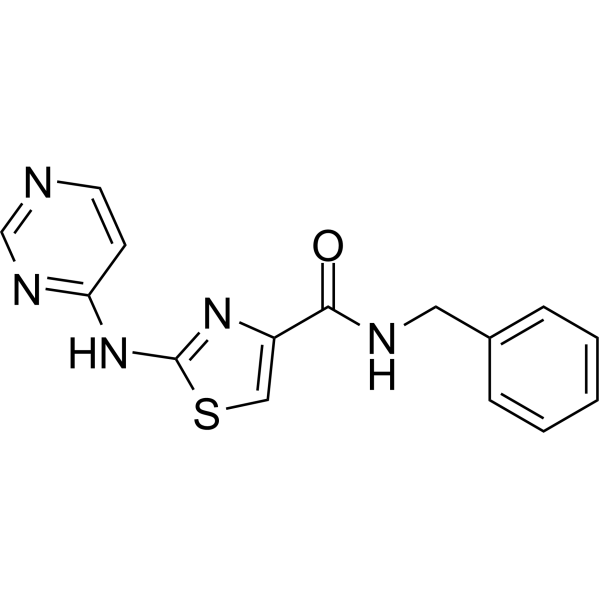
Thiazovivin -
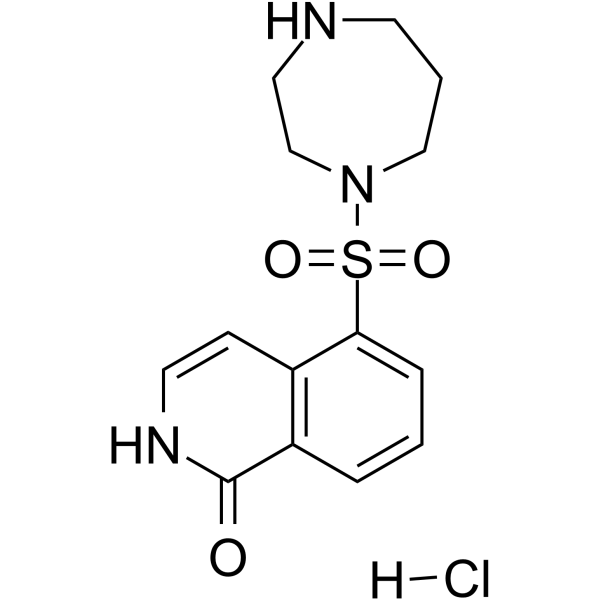
HY-13911A
Hydroxyfasudil hydrochloride -
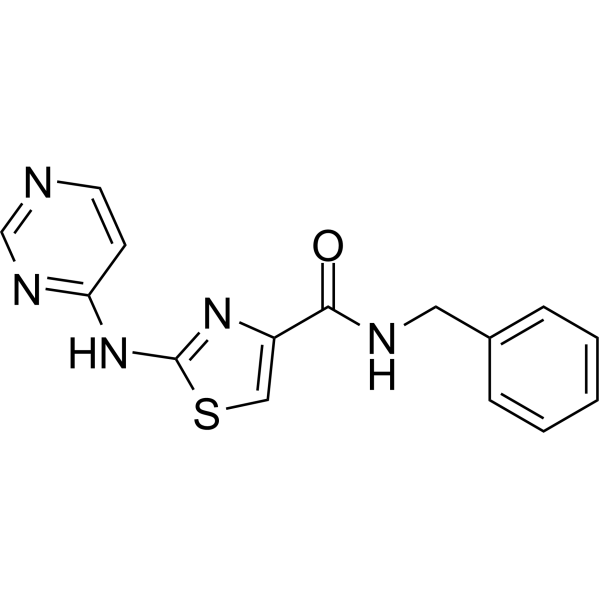
HY-13257G
Thiazovivin (GMP) -
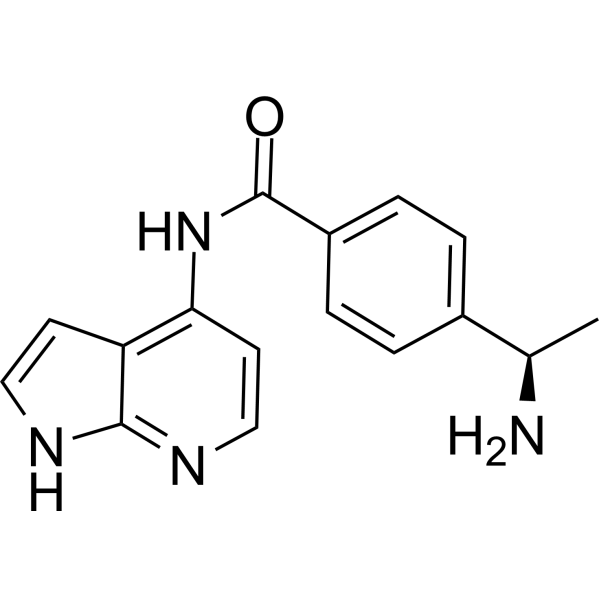
HY-10067
Y-33075 -
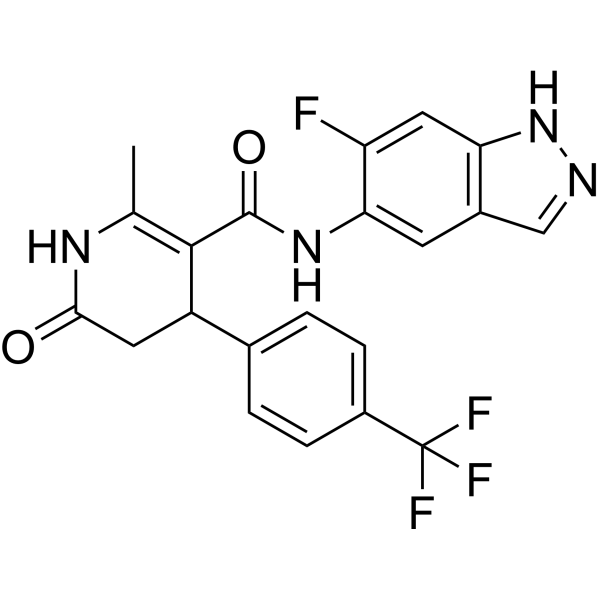
HY-11000
GSK429286A
Publications Citing Use of MedChemExpress (MCE) RKI-1447 dihydrochloride
More Customer Validation & Images

-
WB


Biological Activity
Description
|
ROCK1 14.5 nM (IC50) |
ROCK2 6.2 nM (IC50) |
Apoptosis |
In Vitro
RKI 1447 suppresses phosphorylation of the ROCK substrates MLC-2 and MYPT-1 in human cancer cells, but has no effect on the phosphorylation levels of the AKT, MEK, and S6 kinase at concentrations as high as 10 μM[1].
RKI 1447 (0.003-10 μM) is potent at inhibiting the phosphorylation of the ROCK substrates MLC-2 and MYPT-1 in human cancer cells[1].
RKI 1447 exhibits effective anticancer activity in colorectal carcinoma (CRC). RKI 1447 (10-320 μM; 24 hours) drastically suppresses HCT-8 and HCT-116 cell growth[2].
RKI 1447 (20-80 μM; 24 hours) induces apoptosis in a dose-dependent manner[2].
MedChemExpress (MCE) has not independently confirmed the accuracy of these methods. They are for reference only.
-
Cell Line:CRC cell lines HCT-8 and HCT-116 cells
-
Concentration:0, 10, 20, 40, 80, 160, 320 μM
-
Incubation Time:24 hours
-
Result:HCT-8 and HCT-116 viability was drastically decreased in a dose-dependent manner.
-
Cell Line:CRC cell lines HCT-8 and HCT-116 cells
-
Concentration:0, 20, 40, 80 μM
-
Incubation Time:24 hours
-
Result:Treatment promoted apoptosis.
-
Cell Line:MDA-MB-231 human breast cancer cells
-
Concentration:0.003, 0.01, 0.03, 0.1, 0.3, 1, 3 ,10 μM
-
Incubation Time:
-
Result:Decreased the levels of P-MLC-2, but not total MLC-2, in a concentration-dependent manner with significant effects starting at 100 nM.
In Vivo
RKI 1447 (100 mg/kg; i.p.; once every 3 days; for 14 days) exerts antitumor activity on CRC in vivo. RKI 1447 does not exert physiological toxicity on the mice[2].
MedChemExpress (MCE) has not independently confirmed the accuracy of these methods. They are for reference only.
-
Animal Model:MMTV/neu transgenic mice [FVB/N-Tg (MMTVneu) 202 Mul/J][1]
-
Dosage:200 mg/kg
-
Administration:Treated i.p. daily for 14 days
-
Result:Tumors from mice treated with vehicle increased in size with an average percent change in tumor volume of 68.3%. In contrast, tumors from mice treated with the RKI-1447 increased in size with an average percent change in tumor volume of only 8.8%. Thus, RKI-1447 inhibited mammary tumor growth by 87%.
-
Animal Model:5-week-old Male BALB/C nude mice[2]
-
Dosage:100 mg/kg
-
Administration:Intraperitoneally injected; once every 3 days; for 14 days
-
Result:Efficiently blocked CRC tumor growth in vivo.


Chemical Information
-
CAS No. 1782109-09-4
-
Appearance Solid
-
Molecular Weight 399.29
-
Formula C16H16Cl2N4O2S
-
Color Off-white to light yellow
-
SMILES
O=C(NC1=NC(C2=CC=NC=C2)=CS1)NCC3=CC=CC(O)=C3.[H]Cl.[H]Cl
-
Shipping
Room temperature in continental US; may vary elsewhere.
-
Storage
4°C, sealed storage, away from moisture and light
* In solvent : -80°C, 6 months; -20°C, 1 month (sealed storage, away from moisture and light)


Publications (4)
-
Journal Impact Factor
-
Most Recent
-
Int J Mol Sci
A Functional Pipeline of Genome-Wide Association Data Leads to Midostaurin as a Repurposed Drug for Alzheimer's Disease. [Abstract]2023 Jul 28;24(15):12079. PMID: 37569459 -
Cell Signal
ROCK1 drives colorectal cancer liver metastasis via PRKCH-mediated bioenergetic reprogramming. [Abstract]2025 Oct 18:112174. PMID: 41115563 -
Virology
2024 Dec:600:110233. PMID: 39255726 -
Med Sci Monit
The Effects of RKI-1447 in a Mouse Model of Nonalcoholic Fatty Liver Disease Induced by a High-Fat Diet and in HepG2 Human Hepatocellular Carcinoma Cells Treated with Oleic Acid. [Abstract]2020 Feb 6:26:e919220. PMID: 32026851
RKI-1447 dihydrochloride purchased from MedChemExpress. Usage Cited in: Med Sci Monit. 2020 Feb 6:26:e919220. [Abstract]
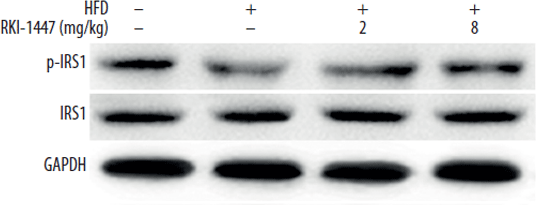
The effects of RKI-1447 on glucose tolerance and insulin resistance in a mouse model of nonalcoholic fatty liver disease (NAFLD) induced by a high-fat diet. The expression of the insulin receptor substrate-1 (IRS1) are shown. The mice were fed with a high-fat diet for 12 weeks. From the ninth week, the mice were treated orally with the ROCK inhibitor RKI-1447 (2 mg/kg to 8 mg/kg) twice weekly for three weeks.


Solvent & Solubility
In Vitro:
DMSO : 50 mg/mL (125.22 mM; Need ultrasonic; Hygroscopic DMSO has a significant impact on the solubility of product, please use newly opened DMSO)
H2O : < 0.1 mg/mL (insoluble)
Please refer to the solubility information to select the appropriate solvent. Once prepared, please aliquot and store the solution to prevent product inactivation from repeated freeze-thaw cycles.
Storage method and period of stock solution: -80°C, 6 months; -20°C, 1 month (sealed storage, away from moisture and light). When stored at -80°C, please use it within 6 months. When stored at -20°C, please use it within 1 month.
Please refer to the solubility information to select the appropriate solvent. Once prepared, please aliquot and store the solution to prevent product inactivation from repeated freeze-thaw cycles.
Storage method and period of stock solution: -80°C, 6 months; -20°C, 1 month (sealed storage, away from moisture and light). When stored at -80°C, please use it within 6 months. When stored at -20°C, please use it within 1 month.
Concentration (start) × Volume (start) = Concentration (final) × Volume (final)
In Vivo:
Select the appropriate dissolution method based on your experimental animal and administration route.
- For the following dissolution methods, please ensure to first prepare a clear stock solution using an In Vitro approach and then sequentially add co-solvents:
- To ensure reliable experimental results, the clarified stock solution can be appropriately stored based on storage conditions. As for the working solution for In Vivo experiments, it is recommended to prepare freshly and use it on the same day.
- The percentages shown for the solvents indicate their volumetric ratio in the final prepared solution. If precipitation or phase separation occurs during preparation, heat and/or sonication can be used to aid dissolution.
Add each solvent one by one: 10% DMSO 40% PEG300 5% Tween-80 45% Saline
Solubility: ≥ 2.5 mg/mL (6.26 mM); Clear solution
This protocol yields a clear solution of ≥ 2.5 mg/mL (saturation unknown).
Taking 1 mL working solution as an example, add 100 μL DMSO stock solution (25.0 mg/mL) to 400 μL PEG300, and mix evenly; then add 50 μL Tween-80 and mix evenly; then add 450 μL Saline to adjust the volume to 1 mL.
Preparation of Saline: Dissolve 0.9 g sodium chloride in ddH₂O and dilute to 100 mL to obtain a clear Saline solution.
Add each solvent one by one: 10% DMSO 90% (20% SBE-β-CD in Saline)
Solubility: ≥ 2.5 mg/mL (6.26 mM); Clear solution
This protocol yields a clear solution of ≥ 2.5 mg/mL (saturation unknown).
Taking 1 mL working solution as an example, add 100 μL DMSO stock solution (25.0 mg/mL) to 900 μL 20% SBE-β-CD in Saline, and mix evenly.
Preparation of 20% SBE-β-CD in Saline (4°C, storage for one week): 2 g SBE-β-CD powder is dissolved in 10 mL Saline, completely dissolve until clear.
In Vivo Dissolution Calculator
Please enter the basic information of animal experiments:
-
-
-
-
Recommended: Prepare an additional quantity of animals to account for potential losses during experiments.
Please enter your animal formula composition:
-
%DMSO +
Recommended: Keep the proportion of DMSO in working solution below 2% if your animal is weak.
-
%+
-
+%Tween-80 + +
-
%Saline +
The co-solvents required include: DMSO, . All of co-solvents are available by MedChemExpress (MCE). , Tween 80. All of co-solvents are available by MedChemExpress (MCE).
Working solution concentration: 0.22 mg/mL
Method for preparing stock solution: mg drug dissolved in μL DMSO. Stock solution concentration: mg/mL. * In solvent : -80°C, 6 months; -20°C, 1 month (sealed storage, away from moisture and light)
1. Take μL DMSO stock solution;
2. Add μL .
μL , mix evenly;
3. Then add μL Tween 80, mix evenly;
4. Then add μL
Please ensure that the stock solution in the first step is dissolved to a clear state, and add co-solvents in sequence. You can use ultrasonic heating (ultrasonic cleaner, recommended frequency 20-40 kHz), vortexing, etc. to assist dissolution.


Purity & Documentation
-
Data Sheet (278 KB)
-
SDS (393 KB)
- English - EN (393 KB)
- Français - FR (393 KB)
- Deutsch - DE (393 KB)
- Norwegian - NO (393 KB)
- Español - ES (393 KB)
- Swedish - SV (393 KB)
- Italian - IT (393 KB)
- Korean - KR (393 KB)
- Portuguese - PT (393 KB)
-
Handling Instructions (2659 KB)
References
[1]. Ronil A Patel, et al. RKI-1447 Is a Potent Inhibitor of the Rho-associated ROCK Kinases With Anti-Invasive and Antitumor Activities in Breast Cancer. Cancer Res. 2012 Oct 1;72(19):5025-34. [Content Brief]
[2]. Liyi Li, et al. RKI-1447 Suppresses Colorectal Carcinoma Cell Growth via Disrupting Cellular Bioenergetics and Mitochondrial Dynamics. J Cell Physiol. 2020 Jan;235(1):254-266. [Content Brief]


Complete Stock Solution Preparation Table
Please refer to the solubility information to select the appropriate solvent. Once prepared, please aliquot and store the solution to prevent product inactivation from repeated freeze-thaw cycles.
Storage method and period of stock solution: -80°C, 6 months; -20°C, 1 month (sealed storage, away from moisture and light). When stored at -80°C, please use it within 6 months. When stored at -20°C, please use it within 1 month.
| Optional Solvent | Concentration Solvent Mass | 1 mg | 5 mg | 10 mg | 25 mg |
|---|---|---|---|---|---|
| DMSO | 1 mM | 2.5044 mL | 12.5222 mL | 25.0445 mL | 62.6111 mL |
| 5 mM | 0.5009 mL | 2.5044 mL | 5.0089 mL | 12.5222 mL | |
| 10 mM | 0.2504 mL | 1.2522 mL | 2.5044 mL | 6.2611 mL | |
| 15 mM | 0.1670 mL | 0.8348 mL | 1.6696 mL | 4.1741 mL | |
| 20 mM | 0.1252 mL | 0.6261 mL | 1.2522 mL | 3.1306 mL | |
| 25 mM | 0.1002 mL | 0.5009 mL | 1.0018 mL | 2.5044 mL | |
| 30 mM | 0.0835 mL | 0.4174 mL | 0.8348 mL | 2.0870 mL | |
| 40 mM | 0.0626 mL | 0.3131 mL | 0.6261 mL | 1.5653 mL | |
| 50 mM | 0.0501 mL | 0.2504 mL | 0.5009 mL | 1.2522 mL | |
| 60 mM | 0.0417 mL | 0.2087 mL | 0.4174 mL | 1.0435 mL | |
| 80 mM | 0.0313 mL | 0.1565 mL | 0.3131 mL | 0.7826 mL | |
| 100 mM | 0.0250 mL | 0.1252 mL | 0.2504 mL | 0.6261 mL |


RKI-1447 dihydrochloride Related Classifications
HY-110339 Related Classifications
 Powered by Bioz