



RKI-1447
Based on 4 publication(s) in Google Scholar
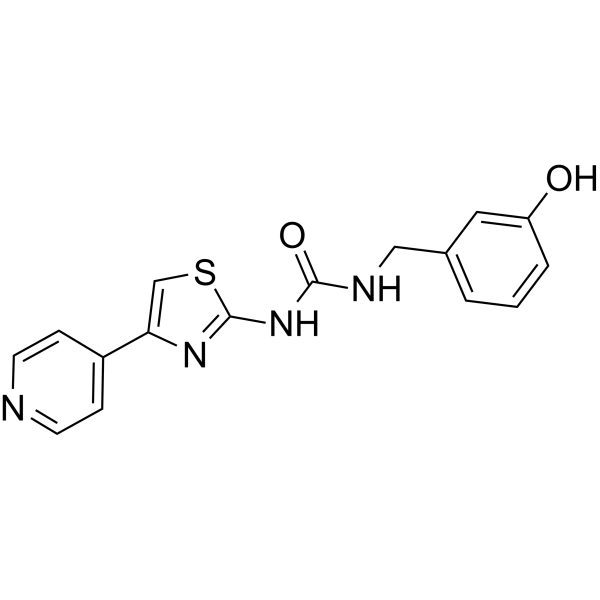
RKI-1447 is a potent small molecule inhibitor of ROCK1 and ROCK2 with IC50 values of 14.5 nM and 6.2 nM, respectively.
For research use only. We do not sell to patients.
- Purity : 98.02%
- CAS No.: 1342278-01-6
- Formula: C16H14N4O2S
- Molecular Weight:326.37
-
Storage:Powder -20°C, 3 years , 4°C, 2 years ; In solvent -80°C, 2 years , -20°C, 1 year

To place orders, for customer services and technical support, please contact: MedChemExpress USA
Tel: 609-228-6898 E-mail: [email protected] [email protected]


-
 Biological Activity
-
Chemical Information
-
Solvent & Solubility
- Protocols
- Purity & Documentation
- References
-
 Help & FAQs


-
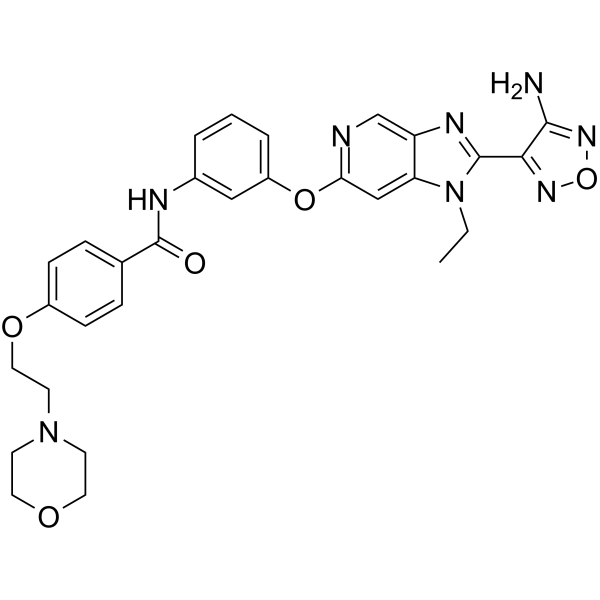
HY-15556
GSK269962AROCK Inhibitor -
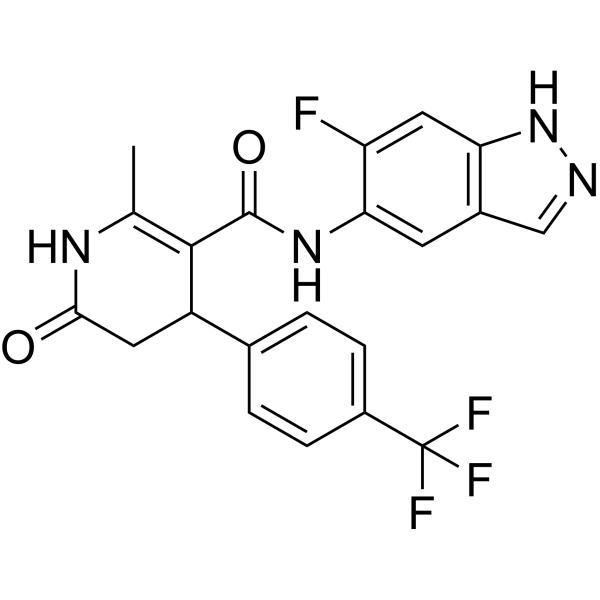
HY-11000
GSK429286AROCK Inhibitor -
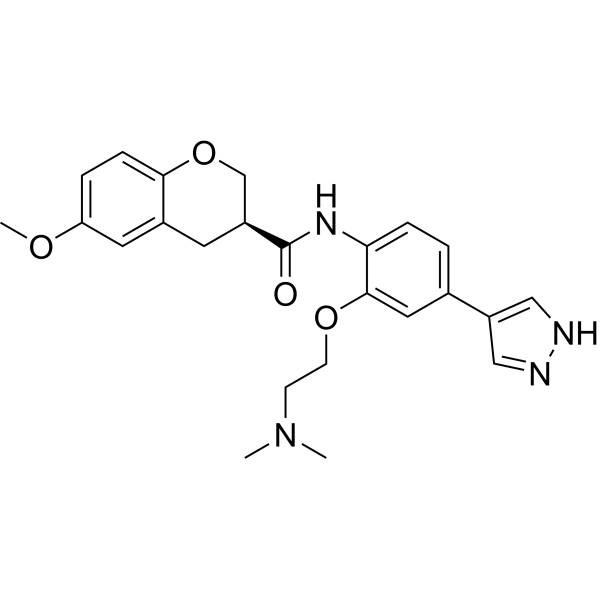
HY-15392
Chroman 1ROCK2 Inhibitor -
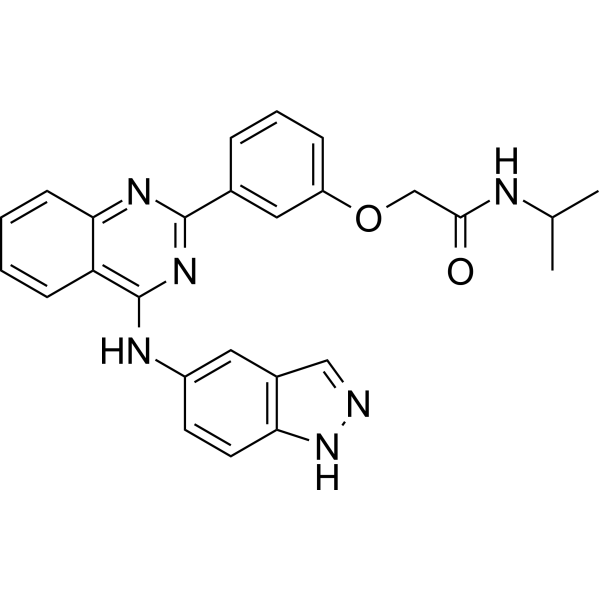
HY-15307
BelumosudilROCK2 Inhibitor -
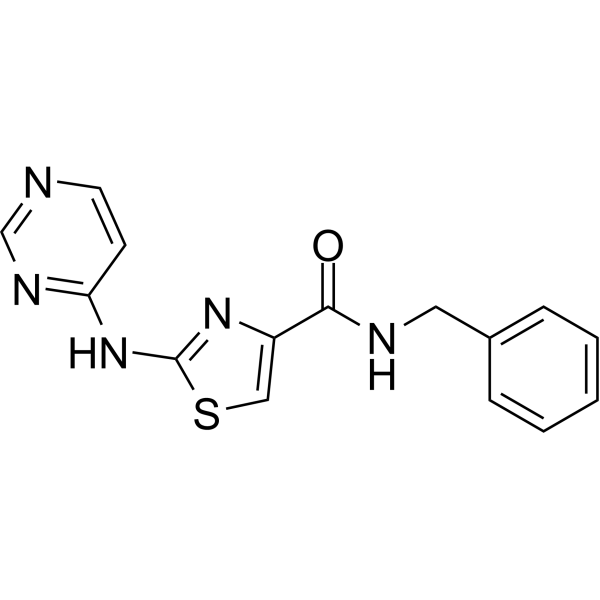
HY-13257
ThiazovivinROCK Inhibitor -
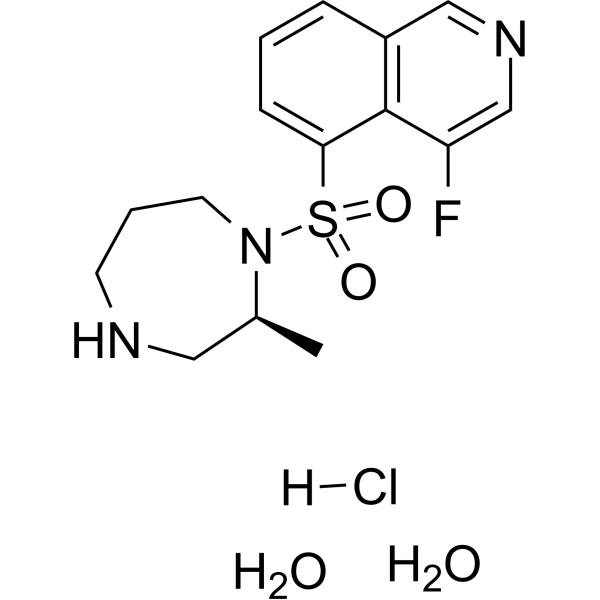
HY-15685
RipasudilROCK Inhibitor -
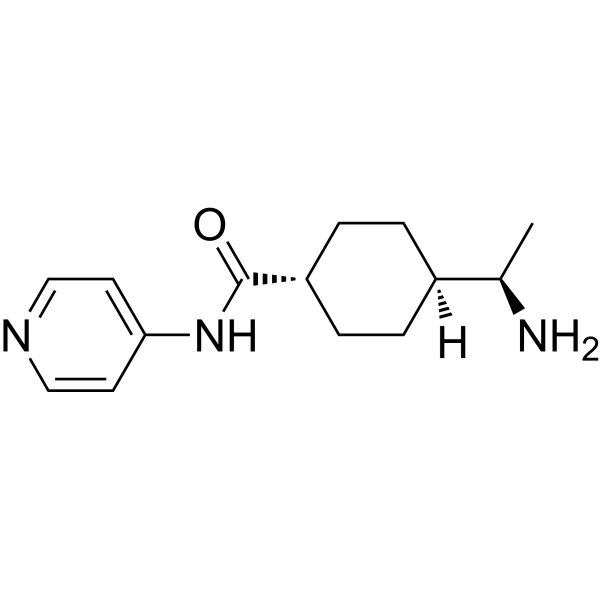
HY-10071
Y-27632ROCK Inhibitor -
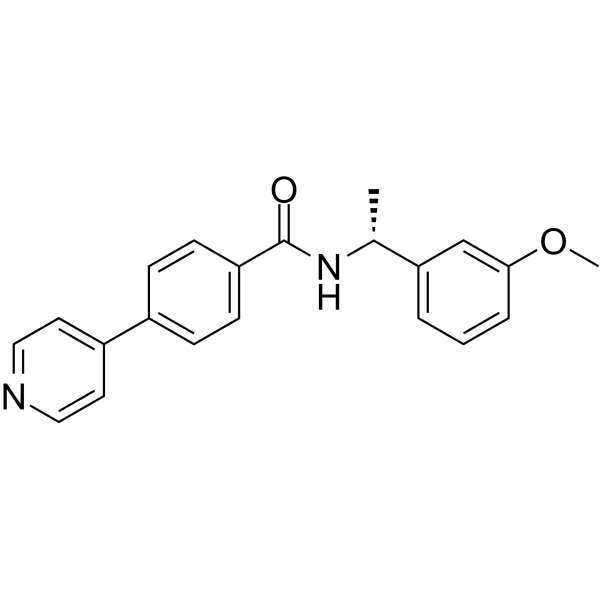
HY-119937
ROCK inhibitor-2ROCK Inhibitor -
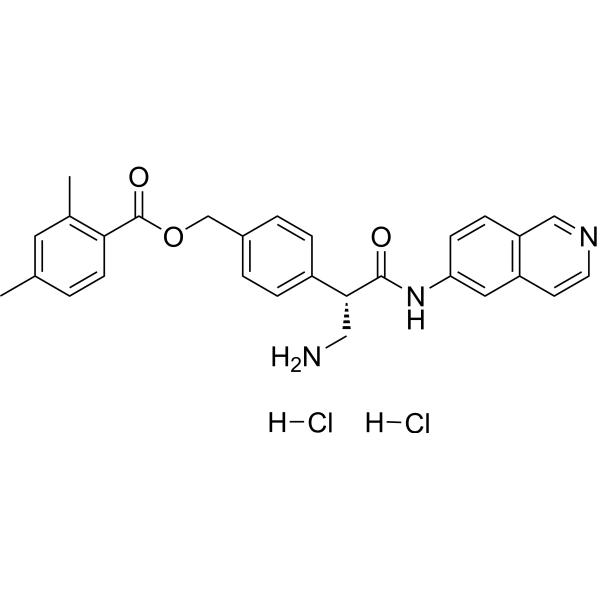
HY-12798B
Netarsudil hydrochlorideROCK/NET Inhibitor -
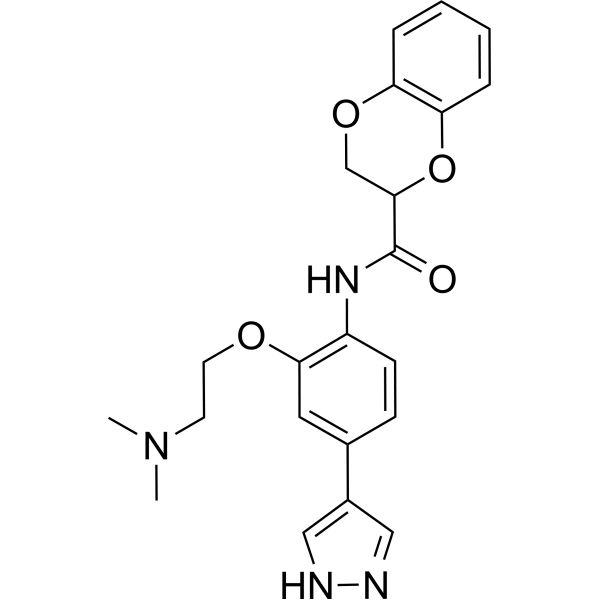
HY-13300
SR-3677Autophagy Inducer -
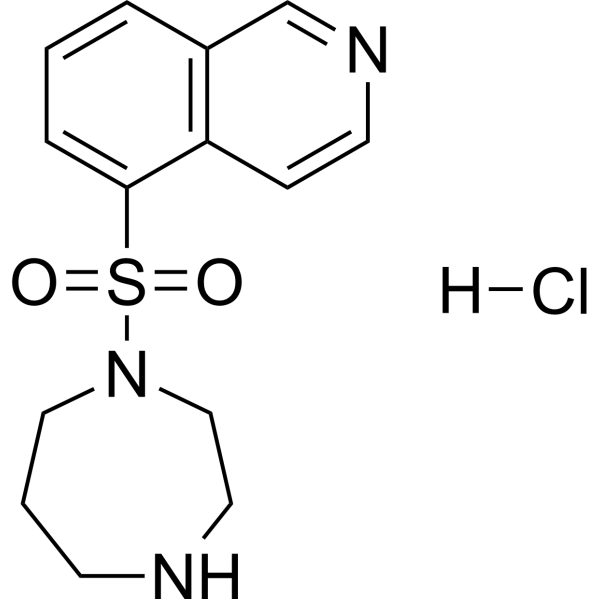
HY-10341
Fasudil HydrochlorideRhoA/ROCK Inhibitor -
HY-108518
SB-772077B dihydrochlorideROCK Inhibitor
Publications Citing Use of MedChemExpress (MCE) RKI-1447
More Customer Validation & Images

-
WB


Biological Activity
Description
IC50 & Target
[1]|
ROCK2 6.2 nM (IC50) |
ROCK1 14.5 nM (IC50) |
In Vitro
RKI-1447 is a Type I kinase inhibitor that binds the ATP binding site through interactions with the hinge region and the DFG motif. RKI-1447 suppresses phosphorylation of the ROCK substrates mLC-2 and MYPT-1 in human cancer cells, but has no effect on the phosphorylation levels of the AKT, MEK and S6 kinase at concentrations as high as 10 μM. RKI-1447 is also highly selective at inhibiting ROCK-mediated cytoskeleton re-organization. RKI-1447 inhibits migration, invasion and anchorage-independent tumor growth of breast cancer cells[1].
MedChemExpress (MCE) has not independently confirmed the accuracy of these methods. They are for reference only. Further protocols information, click here.
In Vivo
MedChemExpress (MCE) has not independently confirmed the accuracy of these methods. They are for reference only.


Chemical Information
-
CAS No. 1342278-01-6
-
Appearance Solid
-
Molecular Weight 326.37
-
Formula C16H14N4O2S
-
Color White to off-white
-
SMILES
O=C(NC1=NC(C2=CC=NC=C2)=CS1)NCC3=CC=CC(O)=C3
-
Shipping
Room temperature in continental US; may vary elsewhere.
-
Storage
Powder -20°C 3 years 4°C 2 years In solvent -80°C 2 years -20°C 1 year


Publications (4)
-
Journal Impact Factor
-
Most Recent
-
Int J Mol Sci
A Functional Pipeline of Genome-Wide Association Data Leads to Midostaurin as a Repurposed Drug for Alzheimer's Disease. [Abstract]2023 Jul 28;24(15):12079. PMID: 37569459 -
Cell Signal
ROCK1 drives colorectal cancer liver metastasis via PRKCH-mediated bioenergetic reprogramming. [Abstract]2025 Oct 18:112174. PMID: 41115563 -
Virology
2024 Dec:600:110233. PMID: 39255726 -
Med Sci Monit
The Effects of RKI-1447 in a Mouse Model of Nonalcoholic Fatty Liver Disease Induced by a High-Fat Diet and in HepG2 Human Hepatocellular Carcinoma Cells Treated with Oleic Acid. [Abstract]2020 Feb 6:26:e919220. PMID: 32026851
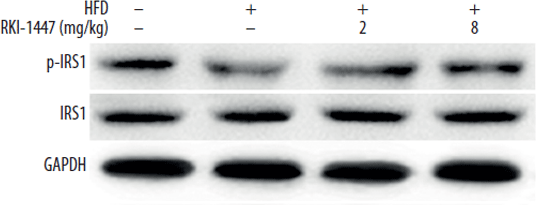
RKI-1447 purchased from MedChemExpress. Usage Cited in: Med Sci Monit. 2020 Feb 6:26:e919220. [Abstract]
The effects of RKI-1447 on glucose tolerance and insulin resistance in a mouse model of nonalcoholic fatty liver disease (NAFLD) induced by a high-fat diet. The expression of the insulin receptor substrate-1 (IRS1) are shown. The mice were fed with a high-fat diet for 12 weeks. From the ninth week, the mice were treated orally with the ROCK inhibitor RKI-1447 (2 mg/kg to 8 mg/kg) twice weekly for three weeks.


Solvent & Solubility
In Vitro:
DMSO : ≥ 50 mg/mL (153.20 mM; Hygroscopic DMSO has a significant impact on the solubility of product, please use newly opened DMSO)
* "≥" means soluble, but saturation unknown.
Please refer to the solubility information to select the appropriate solvent. Once prepared, please aliquot and store the solution to prevent product inactivation from repeated freeze-thaw cycles.
Storage method and period of stock solution: -80°C, 2 years; -20°C, 1 year. When stored at -80°C, please use it within 2 years. When stored at -20°C, please use it within 1 year.
Please refer to the solubility information to select the appropriate solvent. Once prepared, please aliquot and store the solution to prevent product inactivation from repeated freeze-thaw cycles.
Storage method and period of stock solution: -80°C, 2 years; -20°C, 1 year. When stored at -80°C, please use it within 2 years. When stored at -20°C, please use it within 1 year.
Concentration (start) × Volume (start) = Concentration (final) × Volume (final)
In Vivo:
Select the appropriate dissolution method based on your experimental animal and administration route.
- For the following dissolution methods, please ensure to first prepare a clear stock solution using an In Vitro approach and then sequentially add co-solvents:
- To ensure reliable experimental results, the clarified stock solution can be appropriately stored based on storage conditions. As for the working solution for In Vivo experiments, it is recommended to prepare freshly and use it on the same day.
- The percentages shown for the solvents indicate their volumetric ratio in the final prepared solution. If precipitation or phase separation occurs during preparation, heat and/or sonication can be used to aid dissolution.
Add each solvent one by one: 10% DMSO 40% PEG300 5% Tween-80 45% Saline
Solubility: ≥ 2.5 mg/mL (7.66 mM); Clear solution
This protocol yields a clear solution of ≥ 2.5 mg/mL (saturation unknown).
Taking 1 mL working solution as an example, add 100 μL DMSO stock solution (25.0 mg/mL) to 400 μL PEG300, and mix evenly; then add 50 μL Tween-80 and mix evenly; then add 450 μL Saline to adjust the volume to 1 mL.
Preparation of Saline: Dissolve 0.9 g sodium chloride in ddH₂O and dilute to 100 mL to obtain a clear Saline solution.
In Vivo Dissolution Calculator
Please enter the basic information of animal experiments:
-
-
-
-
Recommended: Prepare an additional quantity of animals to account for potential losses during experiments.
Please enter your animal formula composition:
-
%DMSO +
Recommended: Keep the proportion of DMSO in working solution below 2% if your animal is weak.
-
%+
-
+%Tween-80 + +
-
%Saline +
The co-solvents required include: DMSO, . All of co-solvents are available by MedChemExpress (MCE). , Tween 80. All of co-solvents are available by MedChemExpress (MCE).
Working solution concentration: 0.22 mg/mL
Method for preparing stock solution: mg drug dissolved in μL DMSO. Stock solution concentration: mg/mL.
1. Take μL DMSO stock solution;
2. Add μL .
μL , mix evenly;
3. Then add μL Tween 80, mix evenly;
4. Then add μL
Please ensure that the stock solution in the first step is dissolved to a clear state, and add co-solvents in sequence. You can use ultrasonic heating (ultrasonic cleaner, recommended frequency 20-40 kHz), vortexing, etc. to assist dissolution.

Protocols
-
Cell Cytotoxicity Assay
Cytotoxicity assays are usually based on the assessment of cell membrane damage, which can also be indirectly detected by measuring cell viability. Detection methods include MTT assay, CKK-8 assay, LDH assay and ATP assay, etc.


Purity & Documentation
-
Data Sheet (277 KB)
-
SDS (393 KB)
- English - EN (393 KB)
- Français - FR (393 KB)
- Deutsch - DE (393 KB)
- Norwegian - NO (393 KB)
- Español - ES (393 KB)
- Swedish - SV (393 KB)
- Italian - IT (393 KB)
- Korean - KR (393 KB)
- Portuguese - PT (393 KB)
-
Handling Instructions (2659 KB)
References


Complete Stock Solution Preparation Table
Please refer to the solubility information to select the appropriate solvent. Once prepared, please aliquot and store the solution to prevent product inactivation from repeated freeze-thaw cycles.
Storage method and period of stock solution: -80°C, 2 years; -20°C, 1 year. When stored at -80°C, please use it within 2 years. When stored at -20°C, please use it within 1 year.
| Optional Solvent | Concentration Solvent Mass | 1 mg | 5 mg | 10 mg | 25 mg |
|---|---|---|---|---|---|
| DMSO | 1 mM | 3.0640 mL | 15.3200 mL | 30.6401 mL | 76.6002 mL |
| 5 mM | 0.6128 mL | 3.0640 mL | 6.1280 mL | 15.3200 mL | |
| 10 mM | 0.3064 mL | 1.5320 mL | 3.0640 mL | 7.6600 mL | |
| 15 mM | 0.2043 mL | 1.0213 mL | 2.0427 mL | 5.1067 mL | |
| 20 mM | 0.1532 mL | 0.7660 mL | 1.5320 mL | 3.8300 mL | |
| 25 mM | 0.1226 mL | 0.6128 mL | 1.2256 mL | 3.0640 mL | |
| 30 mM | 0.1021 mL | 0.5107 mL | 1.0213 mL | 2.5533 mL | |
| 40 mM | 0.0766 mL | 0.3830 mL | 0.7660 mL | 1.9150 mL | |
| 50 mM | 0.0613 mL | 0.3064 mL | 0.6128 mL | 1.5320 mL | |
| 60 mM | 0.0511 mL | 0.2553 mL | 0.5107 mL | 1.2767 mL | |
| 80 mM | 0.0383 mL | 0.1915 mL | 0.3830 mL | 0.9575 mL | |
| 100 mM | 0.0306 mL | 0.1532 mL | 0.3064 mL | 0.7660 mL |


RKI-1447 Related Classifications
HY-15755 Related Classifications
 Powered by Bioz