Search Result
Results for "
5-HT7 receptor agonist
" in MedChemExpress (MCE) Product Catalog:
12
Isotope-Labeled Compounds
| Cat. No. |
Product Name |
Target |
Research Areas |
Chemical Structure |
-
- HY-15414
-
-
-
- HY-B0032A
-
Lurasidone
Maximum Cited Publications
11 Publications Verification
SM-13496
|
5-HT Receptor
Dopamine Receptor
|
Neurological Disease
|
|
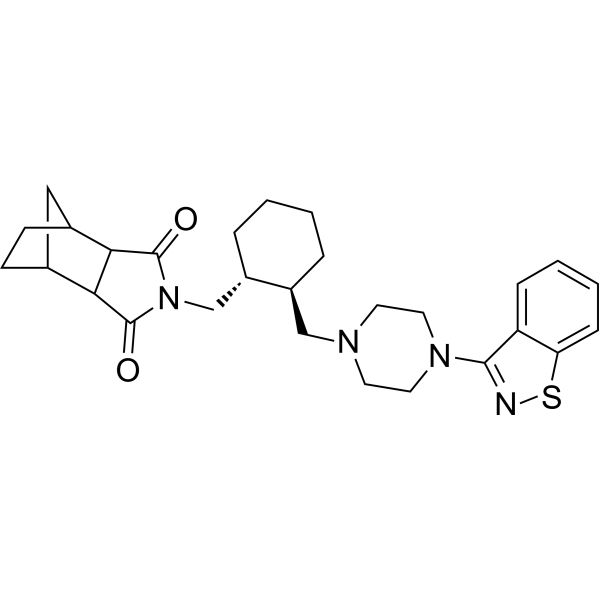
Lurasidone (SM-13496) is an antagonist of both dopamine D2 and 5-HT7 with IC50s of 1.68 and 0.495 nM, respectively. Lurasidone (SM-13496) is also a partial agonist of 5-HT1A receptor with an IC50 of 6.75 nM.
|
-
-
- HY-N0049
-
|
|
Parasite
5-HT Receptor
Dopamine Receptor
|
Neurological Disease
|
|
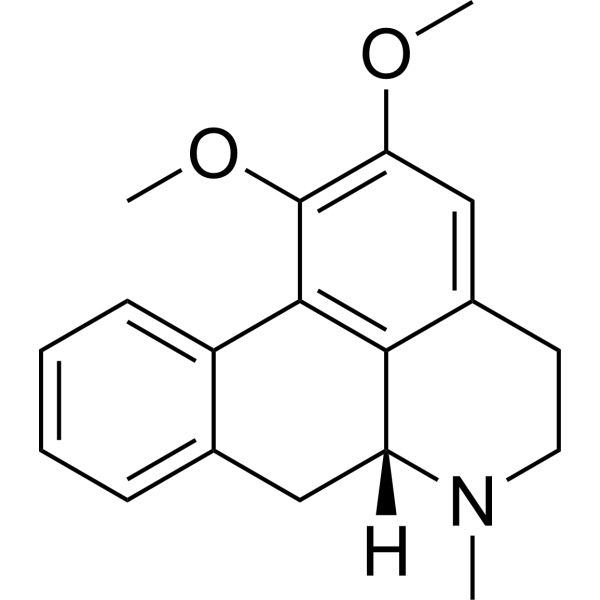
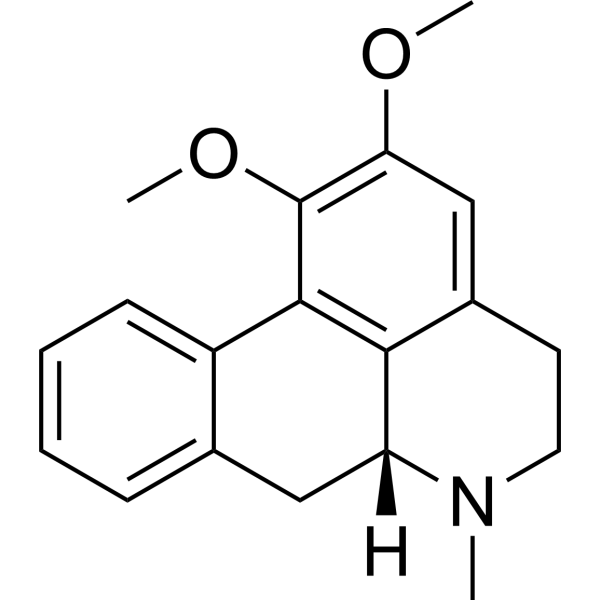
Nuciferine is an antagonist at 5-HT2A (IC50=478 nM), 5-HT2C (IC50=131 nM), and 5-HT2B (IC50=1 μM), an inverse agonist at 5-HT7 (IC50=150 nM), a partial agonist at D2 (EC50=64 nM), D5 (EC50=2.6 μM) and 5-HT6 (EC50=700 nM), an agonist at 5-HT1A (EC50=3.2 μM) and D4 (EC50=2 μM) receptor.
|
-
-
- HY-B0032
-
|
SM-13496 Hydrochloride
|
5-HT Receptor
Dopamine Receptor
|
Neurological Disease
|
|
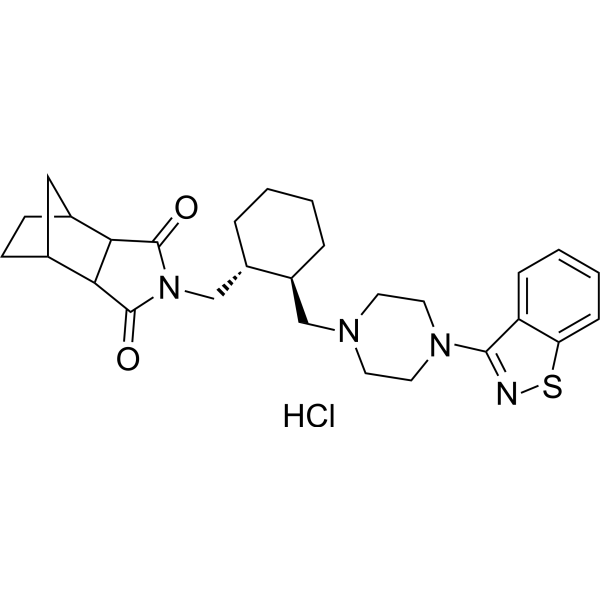
Lurasidone (Hydrochloride) (SM-13496 (Hydrochloride)) is an antagonist of both dopamine D2 and 5-HT7 with IC50s of 1.68 and 0.495 nM, respectively. Lurasidone (Hydrochloride) (SM-13496 (Hydrochloride)) is also a partial agonist of 5-HT1A receptor with an IC50 of 6.75 nM.
|
-
-
- HY-15414A
-
|
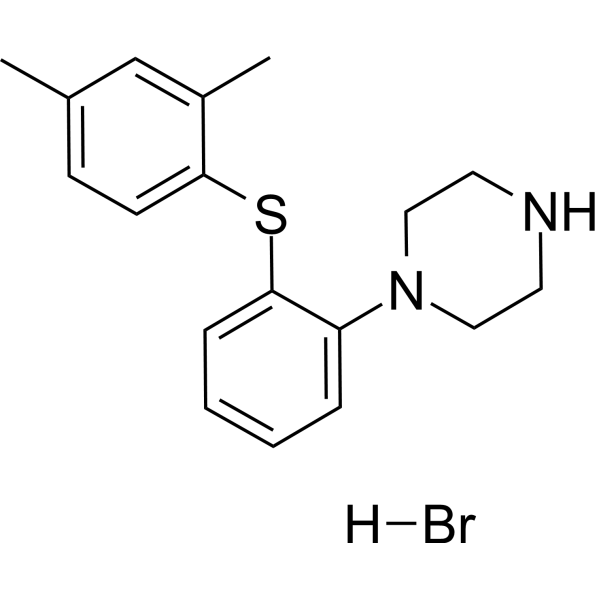
Lu AA21004 hydrobromide
|
5-HT Receptor
Serotonin Transporter
|
Neurological Disease
Cancer
|
|
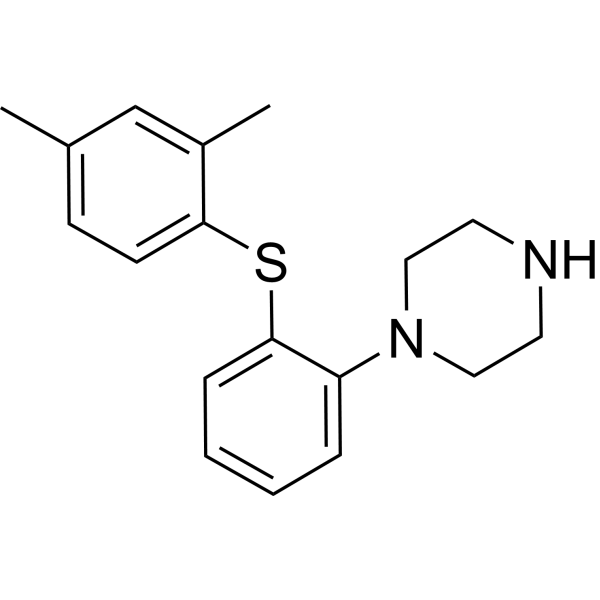
Vortioxetine (Lu AA 21004) hydrobromide is an antagonist of 5-HT3A and 5-HT7 receptors (Ki: 3.7 nM, 19 nM) and an inhibitor of 5-hydroxytryptamine transporter (SERT) (Ki: 1.6 nM), as well as a 5-HT1A agonist and a partial 5-HT1B agonist (Ki: 15 nM, 33 nM) .
|
-
-
- HY-W052508
-
|
N-Desalkylquetiapine
|
Drug Metabolite
5-HT Receptor
HCN Channel
Serotonin Transporter
|
Neurological Disease
|
|
Norquetiapine ( N-Desalkylauetiapine), a metabolite of Quetiapine (HY-14544), is a selective HCN1 channel inhibitor, with an IC50 of 13.9 μM. Norquetiapine selectively inhibits noradrenaline reuptake, is a partial 5-HT1A (Ki = 45 nM) receptor agonist, and acts as an antagonist at presynapticα2 (Ki = 237 nM), 5-HT2C(Ki = 107 nM), and 5-HT7 (Ki = 76 nM) receptors. Norquetiapine blocks the human cardiac sodium channel Nav1.5 in a state-dependent manner. Norquetiapine shows partial anti-inflammatory effects in LPS (HY-D1056) injected C57BL/6 mice. Norquetiapine can be used for the study of depression and inflammation .
|
-

-
- HY-109112
-
|
RP5063
|
Dopamine Receptor
5-HT Receptor
|
Neurological Disease
Inflammation/Immunology
|
|
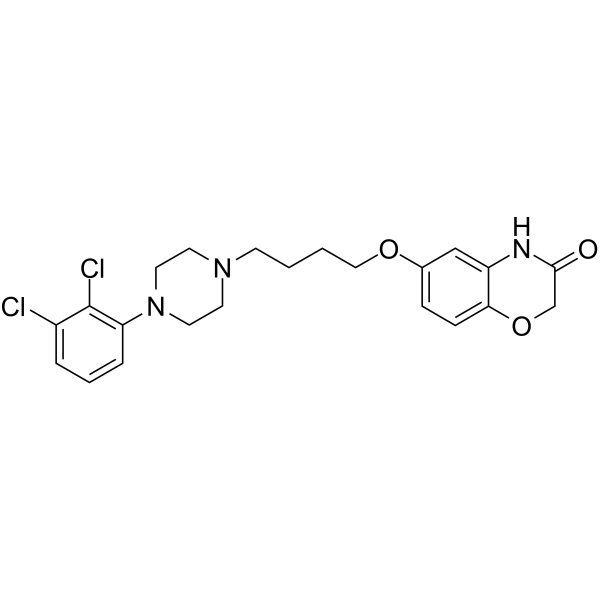
Brilaroxazine (RP5603) is a potent and orally active multimodal dopamine (DA)/serotonin (5-HT) modulator. Brilaroxazine is a partial agonist of dopamine (DA) D2, D3, and D4 receptors, 5-HT1A (Ki=1.5 nM) and 5-HT2A (Ki=2.5 nM), and has antagonist activity at 5-HT2B (Ki=0.19 nM), and 5-HT7 (Ki=2.7 nM) receptors . Brilaroxazine is an atypical antipsychotic agent, and has the potential to improve cognitive impairments in neuropsychiatric and neurological diseases in vivo .
|
-
-
- HY-B0383
-
|
PNU180638
|
5-HT Receptor
|
Neurological Disease
|
|
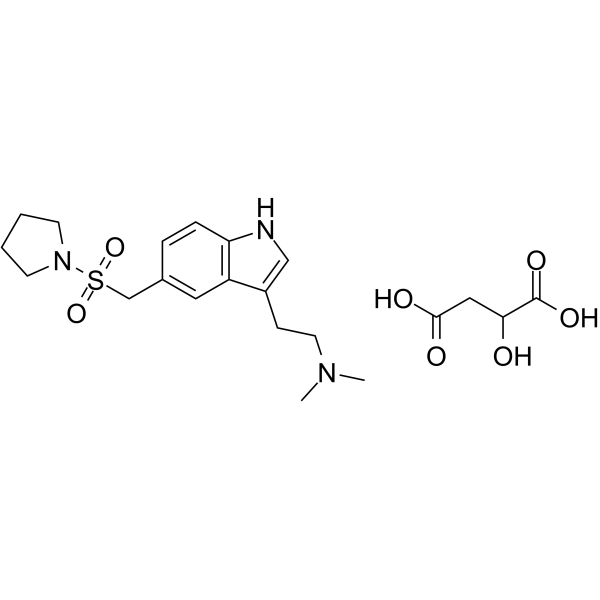
Almotriptan malate (PNU180638) is an orally active, highly selective agonist of the 5-HT1B/1D receptor (5-HT1B/1D receptor), with EC50 values of 1.6 nM and 3.1 nM, respectively. Almotriptan malate shows moderate affinity for the 5-HT1F receptor, and weak affinity for the 5-HT1A, 5-HT6 and 5-HT7 receptors. Almotriptan malate induces intracranial vasoconstriction, inhibits nociceptive neurotransmission in the trigeminocervical complex, and suppresses the release of vasoactive peptides from trigeminal nerve endings. Almotriptan malate can be used in research related to migraine .
|
-
-
- HY-111455
-
-
-
- HY-100942
-
|
5-CT maleate
|
5-HT Receptor
|
Neurological Disease
|
|
5-Carboxamidotryptamine maleate (5-CT maleate) is a potent 5-HT1A, 5-HT1B, 5-HT1D, 5-HT5 and 5-HT7 receptors agonist .
|
-

-
- HY-B1658A
-
|
(R)-Frovatriptan succinate hydrate; SB 209509 succinate hydrate; VML 251 succinate hydrate
|
5-HT Receptor
|
Neurological Disease
|
|
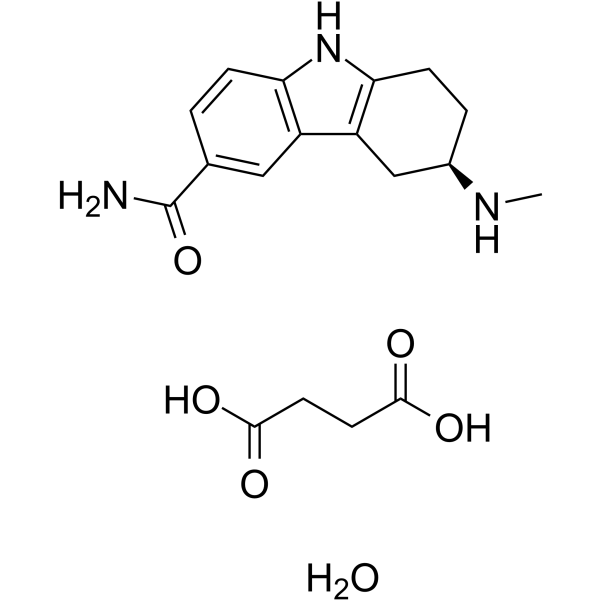
Frovatriptan succinate hydrate ((R)-Frovatriptan succinate hydrate) is a potent, high affinity, selective and orally active 5-HT1B (pK50 of 8.2) and 5-HT1D receptor agonist. Frovatriptan succinate hydrate exhibits >10-fold selectivity for 5-HT1B and 5-HT1D over 5-HT1A, 5-HT1F, and 5-HT7 and >1000-fold selectivity over other 5-HT, dopamine, histamine H1, and α1-adrenoceptor. Frovatriptan succinate hydrate has the potential for migraine research .
|
-
-
- HY-B0383A
-
|
PNU180638 free base
|
5-HT Receptor
|
Neurological Disease
|
|
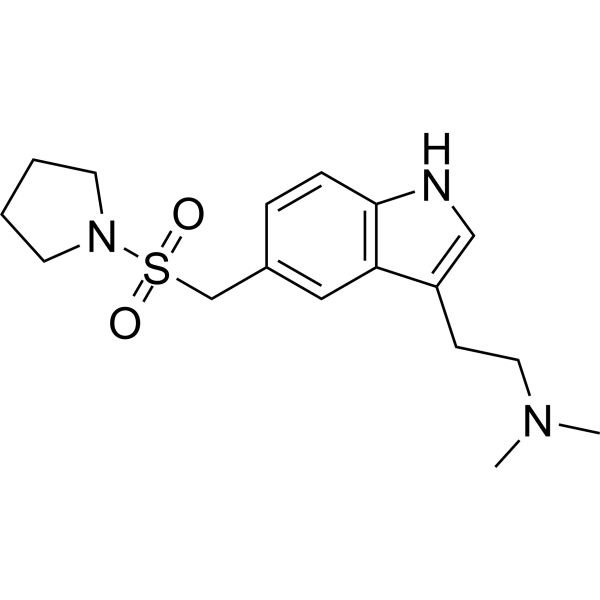
Almotriptan (PNU180638 free base) is an orally active, highly selective agonist of the 5-HT1B/1D receptor (5-HT1B/1D receptor), with EC50 values of 1.6 nM and 3.1 nM, respectively. Almotriptan shows moderate affinity for the 5-HT1F receptor, and weak affinity for the 5-HT1A, 5-HT6 and 5-HT7 receptors. Almotriptan induces intracranial vasoconstriction, inhibits nociceptive neurotransmission in the trigeminocervical complex, and suppresses the release of vasoactive peptides from trigeminal nerve endings. Almotriptan can be used in research related to migraine .
|
-
-
- HY-103142
-
AS19
1 Publications Verification
|
5-HT Receptor
|
Neurological Disease
|
|
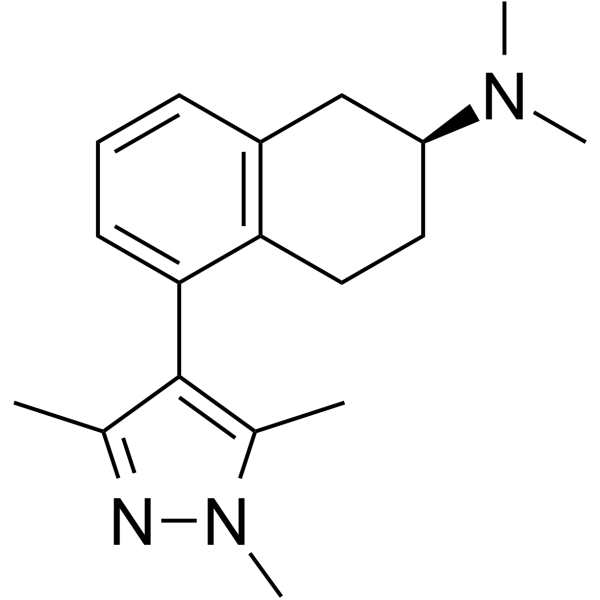
AS19 is a potent, selective 5-HT7 receptor agonist with an IC50 value of 0.83 nM and a Ki of 0.6 nM. AS19 is selective for 5-HT7 over 5-HT1A, 5-HT1B, 5-HT1D, and 5-HT5A receptors (Kis = 89.7 nM, 490 nM, 6.6 nM and 98.5 nM, respectively). AS19 enhances memory consolidation and reverses Scopolamine- or Dizocilpine-induced amnesia .
|
-
-
- HY-G0002
-
|
|
Drug Metabolite
Dopamine Receptor
5-HT Receptor
|
Neurological Disease
|
|
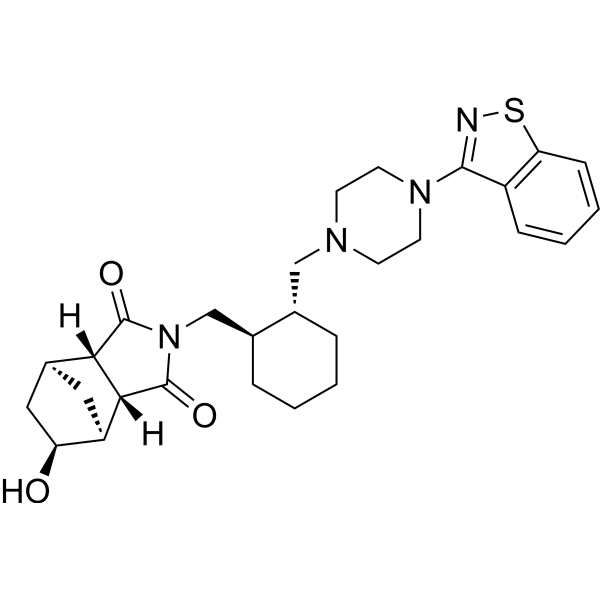
Lurasidone metabolite 14326 is a minor active metabolite of Lurasidone (HY-B0032A) generated via metabolism by CYP3A4. Lurasidone metabolite 14326 shares similar receptor-binding properties with Lurasidone, acting as an antagonist of the dopamine D2 receptor (dopamine D2 receptor), an antagonist of the serotonin 5-HT2A and 5-HT7 receptors (5-HT2A and 5-HT7 receptor), and a partial agonist of the serotonin 5-HT1A receptor. Lurasidone metabolite 14326 can be used in the research of schizophrenia and bipolar depression .
|
-
-
- HY-15414R
-
|
Lu AA 21004 (Standard)
|
Reference Standards
5-HT Receptor
Serotonin Transporter
|
Neurological Disease
Cancer
|
|
Vortioxetine (Standard) is an analytical standard for Vortioxetine. This product is intended for research and analytical applications. Vortioxetine (Lu AA 21004) is an antagonist of 5-HT3A and 5-HT7 receptors (Ki: 3.7 nM, 19 nM) and an inhibitor of serotonin transporter (SERT) (Ki: 1.6 nM), as well as a 5-HT1A agonist and a partial 5-HT1B agonist (Ki: 15 nM, 33 nM) .
|
-

-
- HY-103110
-
ST1936
1 Publications Verification
|
5-HT Receptor
Adrenergic Receptor
|
Neurological Disease
|
|
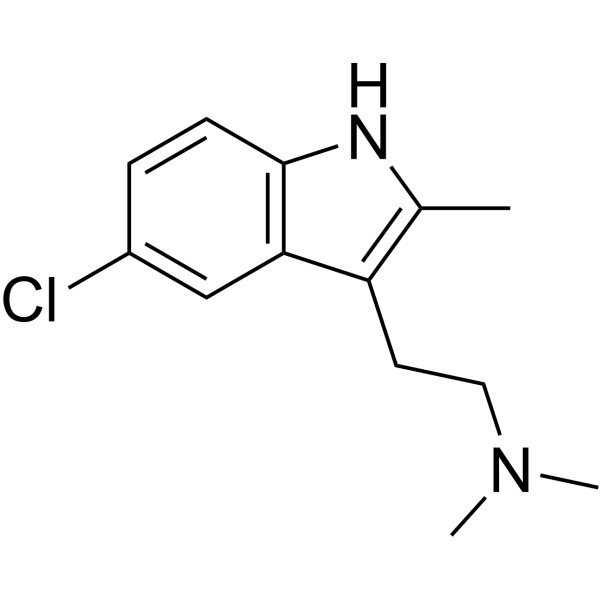
ST1936 is a selective, nanomolar affinity 5-HT6 receptor agonist with Ki values of 13 nM, 168 nM and 245 nM for human 5-HT6, 5-HT7 and 5-HT2B receptors, respectively. ST1936 also shows moderate affinity (Ki of 300 nM) for human and rat α2 adrenergic receptor .
|
-
-
- HY-135555
-
|
5-CT
|
5-HT Receptor
|
Neurological Disease
|
|
5-Carboxamidotryptamine (5-CT) is a 5-HT1A, 5-HT1B, 5-HT1D, 5-HT5A, 5-HT7 receptor agonist . 5-Carboxamidotryptamine has a Ki value of 4.6 nM for cloned human 5-HT5A receptor. 5-Carboxamidotryptamine causes a dose-dependent reduction in rectal temperature of mice .
|
-

-
- HY-W052508S
-
|
N-Desalkylquetiapine-d8
|
Isotope-Labeled Compounds
|
Others
Neurological Disease
Inflammation/Immunology
|
|
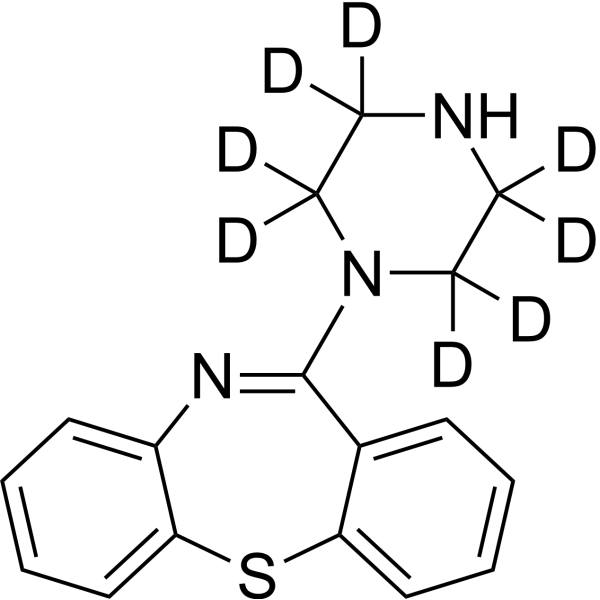
Norquetiapine-d8 (N-Desalkylquetiapine-d8) is the deuterium labeled Norquetiapine.Norquetiapine ( N-Desalkylauetiapine), a metabolite of Quetiapine (HY-14544), is a selective HCN1 channel inhibitor, with an IC50 of 13.9 μM. Norquetiapine selectively inhibits noradrenaline reuptake, is a partial 5-HT1A (Ki = 45 nM) receptor agonist, and acts as an antagonist at presynapticα2 (Ki = 237 nM), 5-HT2C(Ki = 107 nM), and 5-HT7 (Ki = 76 nM) receptors. Norquetiapine blocks the human cardiac sodium channel Nav1.5 in a state-dependent manner. Norquetiapine shows partial anti-inflammatory effects in LPS (HY-D1056) injected C57BL/6 mice. Norquetiapine can be used for the study of depression and inflammation .
|
-
-
- HY-15414AR
-
|
Lu AA21004 hydrobromide (Standard)
|
5-HT Receptor
Serotonin Transporter
Reference Standards
|
Neurological Disease
Cancer
|
|
Vortioxetine (hydrobromide) (Standard) is the analytical standard of Vortioxetine (hydrobromide). This product is intended for research and analytical applications. Vortioxetine (Lu AA 21004) hydrobromide is an antagonist of 5-HT3A and 5-HT7 receptors (Ki: 3.7 nM, 19 nM) and an inhibitor of 5-hydroxytryptamine transporter (SERT) (Ki: 1.6 nM), as well as a 5-HT1A agonist and a partial 5-HT1B agonist (Ki: 15 nM, 33 nM) .
|
-

-
- HY-15414S
-
|
Lu AA 21004 d8
|
Isotope-Labeled Compounds
5-HT Receptor
Serotonin Transporter
|
Neurological Disease
|
|
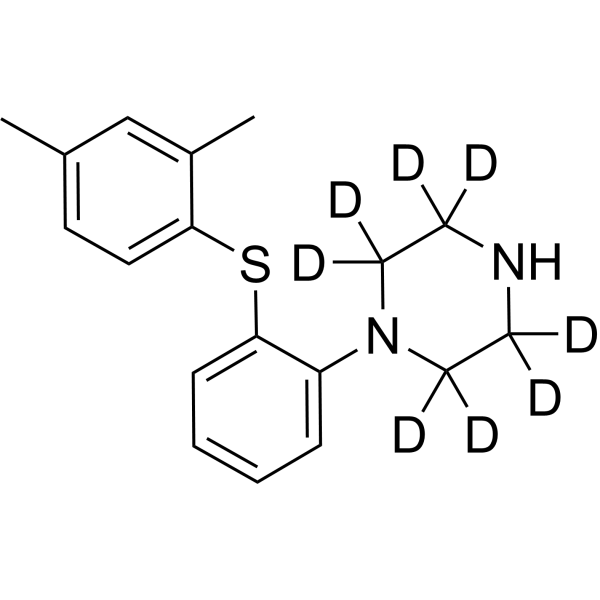
Vortioxetine-d8 (Lu AA 21004-d8) is a deuterated version of Vortioxetine. Vortioxetine (Lu AA 21004) is an antagonist of 5-HT3A and 5-HT7 receptors (Ki: 3.7 nM, 19 nM) and an inhibitor of 5-hydroxytryptamine transporter (SERT) (Ki: 1.6 nM), as well as a 5-HT1A agonist and a partial 5-HT1B agonist (Ki: 15 nM, 33 nM) .
|
-
-
- HY-W040555
-
|
N-Desalkylquetiapine dihydrochloride
|
Drug Metabolite
5-HT Receptor
HCN Channel
Serotonin Transporter
|
Neurological Disease
|
|
Norquetiapine ( N-Desalkylauetiapine) dihydrochloride, a metabolite of Quetiapine (HY-14544), is a selective HCN1 channel inhibitor, with an IC50 of 13.9 μM. Norquetiapine dihydrochloride selectively inhibits noradrenaline reuptake, is a partial 5-HT1A (Ki = 45 nM) receptor agonist, and acts as an antagonist at presynapticα2 (Ki = 237 nM), 5-HT2C(Ki = 107 nM), and 5-HT7 (Ki = 76 nM) receptors. Norquetiapine dihydrochloride blocks the human cardiac sodium channel Nav1.5 in a state-dependent manner. Norquetiapine dihydrochloride shows partial anti-inflammatory effects in LPS (HY-D1056) injected C57BL/6 mice. Norquetiapine dihydrochloride can be used for the study of depression and inflammation .
|
-

-
- HY-109527
-
|
|
5-HT Receptor
|
Neurological Disease
|
|
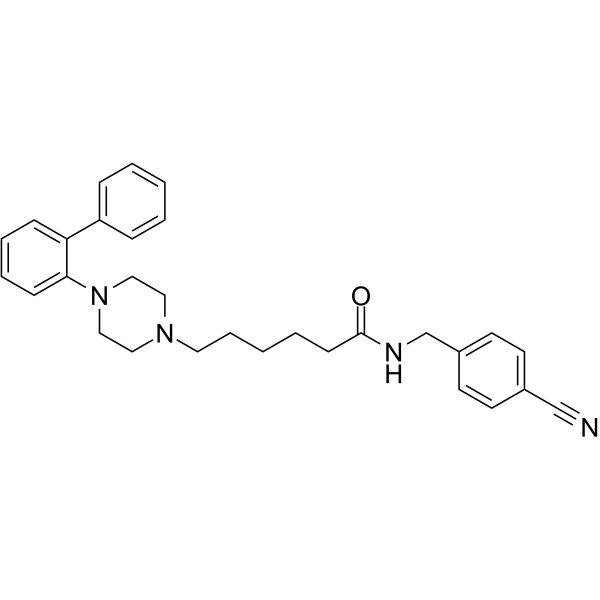
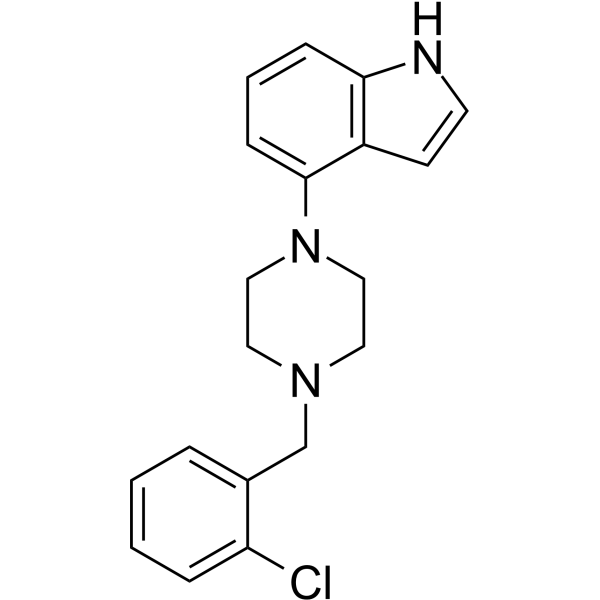
5-HT7 agonist 1 is a selective 5-HT7 receptor agonist, with an IC50 of 222.93 nM, can be used for the 5-HT7 receptor related disease, such as CNS disorders.
|
-
-
- HY-113866
-
|
|
5-HT Receptor
|
Neurological Disease
|
|
E-55888 is a selective and potent agonist of 5-HT7 receptor and 5-HT1A receptor with Ki values of 2.5 nM and 700 nM, respectively, which has analgesic and antinociceptive effects. E-55888 reduces the nociceptive response of Capsaicin (HY-10448) sensitized mice .
|
-

-
- HY-B0032AS
-
|
SM-13496-d8
|
5-HT Receptor
Dopamine Receptor
|
Neurological Disease
|
|
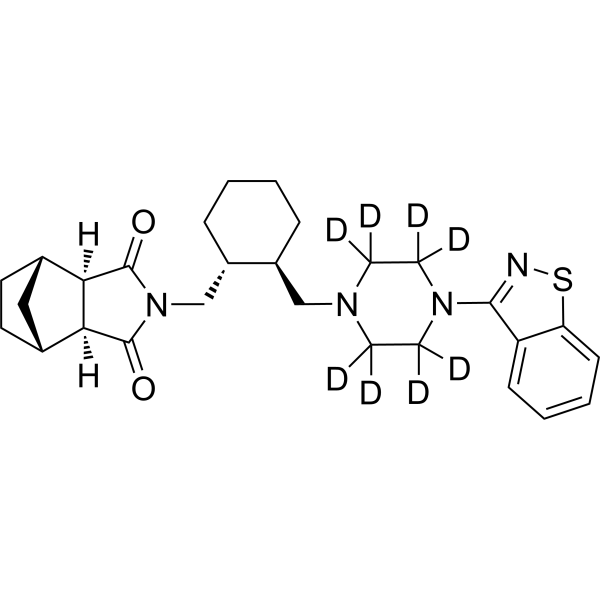
Lurasidone-d8 is deuterium labeled Lurasidone. Lurasidone (SM-13496) is an antagonist of both dopamine D2 and 5-HT7 with IC50s of 1.68 and 0.495 nM, respectively. Lurasidone (SM-13496) is also a partial agonist of 5-HT1A receptor with an IC50 of 6.75 nM.
|
-
-
- HY-15414AS
-
|
Lu AA21004-d8 hydrobromide
|
Isotope-Labeled Compounds
5-HT Receptor
Serotonin Transporter
|
Neurological Disease
|
|
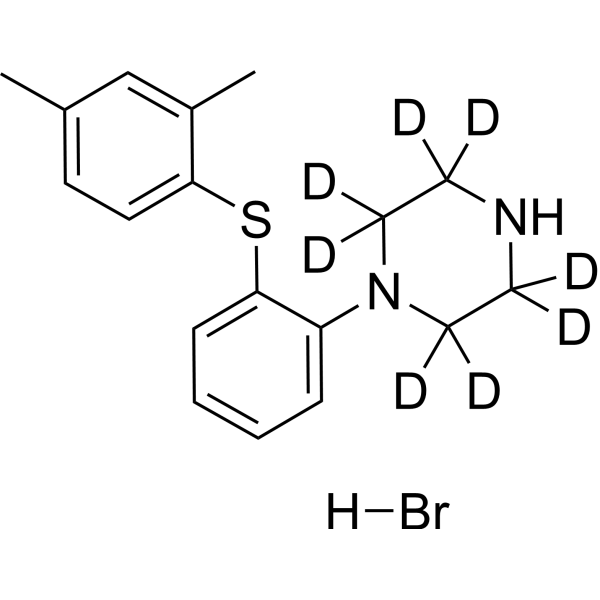
Vortioxetine-d8 (Lu AA 21004-d8) hydrobromide is the deuterated form of Vortioxetine. Vortioxetine (Lu AA 21004) is an antagonist of 5-HT3A and 5-HT7 receptors (Ki: 3.7 nM, 19 nM) and an inhibitor of 5-hydroxytryptamine transporter (SERT) (Ki: 1.6 nM), as well as a 5-HT1A agonist and a partial 5-HT1B agonist (Ki: 15 nM, 33 nM) .
|
-
-
- HY-W052508R
-
|
N-Desalkylquetiapine (Standard)
|
5-HT Receptor
Reference Standards
|
Neurological Disease
|
|
Norquetiapine is an antidepressant and neuroprotective agent and is the active metabolic component of Quetiapine (HY-14544). Norquetiapine is also a partial 5-HT1A receptor agonist, and a presynaptic α2, 5-HT2C and 5-HT7 b> Receptor antagonist. Norquetiapine can also selectively inhibit norepinephrine transporter (NET), inhibit norepinephrine reuptake, and has potential inhibitory effects on bipolar depression, major depressive disorder, and generalized anxiety disorder. Norquetiapine demonstrated in vivo activity in forced swimming in mice and learned helplessness tests in rats .
|
-

-
- HY-B1658B
-
|
(R)-Frovatriptan succinate; SB 209509 succinate; VML 251 succinate
|
5-HT Receptor
|
Neurological Disease
|
|
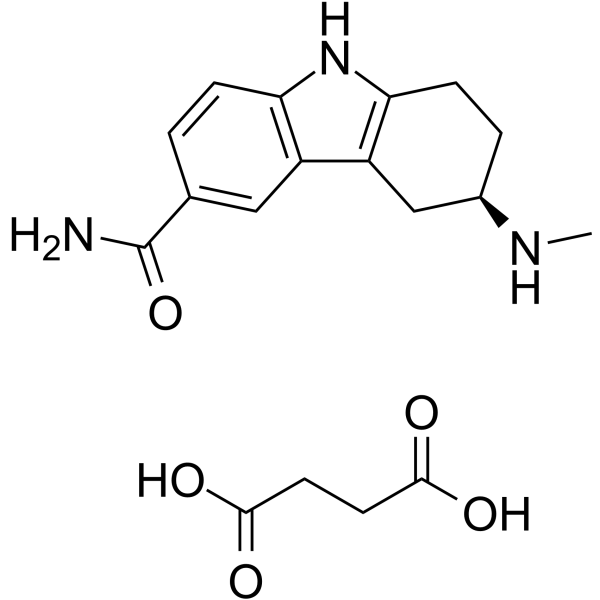
Frovatriptan succinate ((R)-Frovatriptan succinate) is a potent, high affinity, selective and orally active 5-HT1B (pK50 of 8.2) and 5-HT1D receptor agonist. Frovatriptan succinate exhibits >10-fold selectivity for 5-HT1B and 5-HT1D over 5-HT1A, 5-HT1F, and 5-HT7 and >1000-fold selectivity over other 5-HT, dopamine, histamine H1, and α1-adrenoceptor. Frovatriptan succinate has the potential for migraine research .
|
-
-
- HY-147399
-
|
|
5-HT Receptor
|
Neurological Disease
|
|
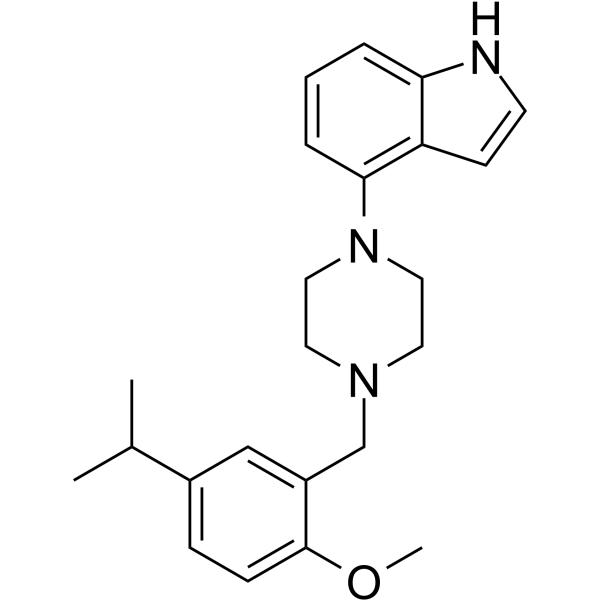
5-HT7 agonist 2 is a potent 5-HT7 receptor agonist with an IC50 value of 28.7 nM. 5-HT7 agonist 2 can be used for research of central nervous system (CNS) disorders .
|
-
-
- HY-103105A
-
|
|
5-HT Receptor
|
Neurological Disease
|
|
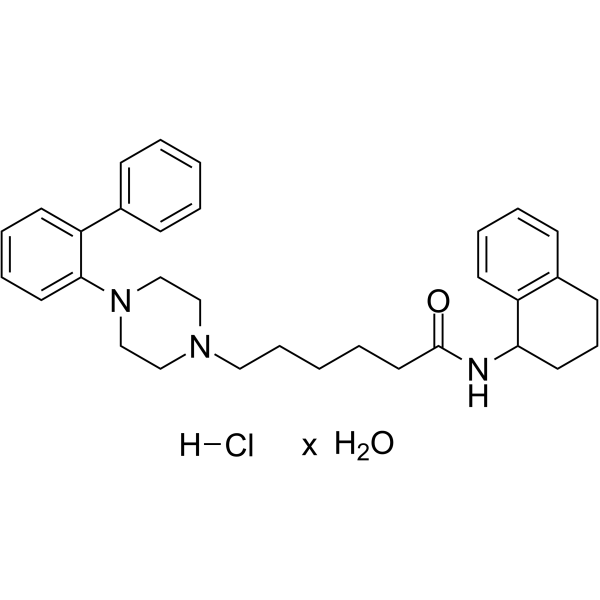
LP 12 hydrochloride hydrate is a potent and selective 5-HT7 receptor agonist with a Ki of 0.13 nM. LP 12 hydrochloride hydrate displays selectivity for 5-HT7 over D2, 5-HT1A and 5-HT2A receptors (Ki values are 224 nM, 60.9 nM and >1000 nM, respectively) .
|
-
-
- HY-103105
-
|
|
5-HT Receptor
|
Neurological Disease
|
|
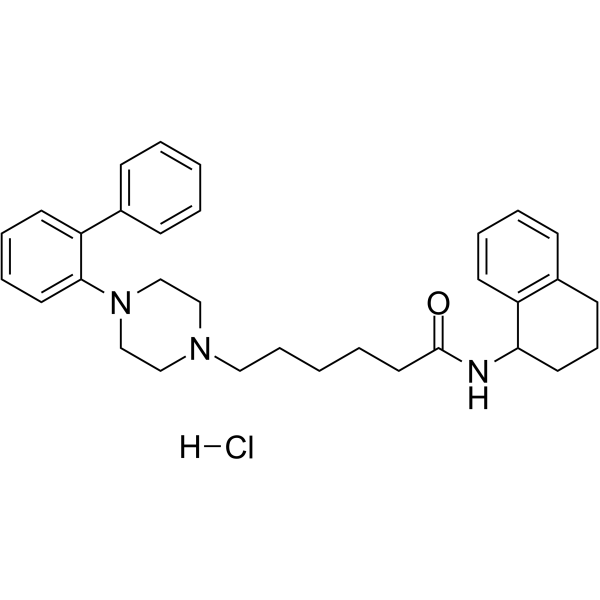
LP 12 hydrochloride (compound 21) is a potent and selective 5-HT7 receptor agonist with a Ki of 0.13 nM. LP 12 hydrochloride displays selectivity for 5-HT7 over D2, 5-HT1A and 5-HT2A receptors (Ki values are 224 nM, 60.9 nM and >1000 nM, respectively) .
|
-
-
- HY-167893
-
|
|
5-HT Receptor
|
Neurological Disease
|
|
AGH-107 is a high selective and brain-penetrant agonist of 5-HT7 receptor, with a Ki of 6 nM and EC50 of 19 nM. AGH-107 exhibits high selectivity over related CNS targets, high metabolic stability and low toxicity in HEK-293 and HepG2 cell cultures .
|
-

-
- HY-103110A
-
|
|
5-HT Receptor
Adrenergic Receptor
|
Neurological Disease
|
|
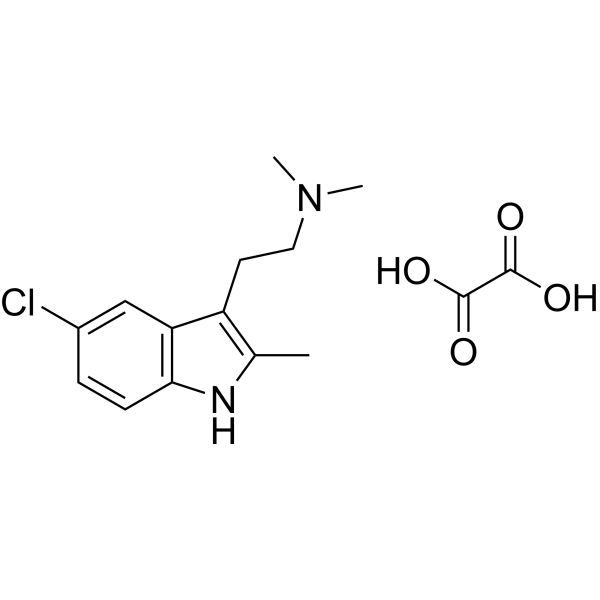
ST1936 oxalate is a selective, nanomolar affinity 5-HT6 receptor agonist with Ki values of 13 nM, 168 nM and 245 nM for human 5-HT6, 5-HT7 and 5-HT2B receptors, respectively. ST1936 oxalate also shows moderate affinity (Ki of 300 nM) for human and rat α2 adrenergic receptor .
|
-
-
- HY-W654010
-
|
SM-13496-d8-1 hydrochloride
|
Isotope-Labeled Compounds
5-HT Receptor
Dopamine Receptor
|
Neurological Disease
|
|
Lurasidone-d8-1 (hydrochloride) is deuterium labeled Lurasidone (Hydrochloride). Lurasidone (Hydrochloride) (SM-13496 (Hydrochloride)) is an antagonist of both dopamine D2 and 5-HT7 with IC50s of 1.68 and 0.495 nM, respectively. Lurasidone (Hydrochloride) (SM-13496 (Hydrochloride)) is also a partial agonist of 5-HT1A receptor with an IC50 of 6.75 nM .
|
-

-
- HY-B0032R
-
|
SM-13496 Hydrochloride (Standard)
|
Reference Standards
5-HT Receptor
Dopamine Receptor
|
Neurological Disease
|
|
Lurasidone (Hydrochloride) (Standard) is the analytical standard of Lurasidone (Hydrochloride). This product is intended for research and analytical applications. Lurasidone (Hydrochloride) (SM-13496 (Hydrochloride)) is an antagonist of both dopamine D2 and 5-HT7 with IC50s of 1.68 and 0.495 nM, respectively. Lurasidone (Hydrochloride) (SM-13496 (Hydrochloride)) is also a partial agonist of 5-HT1A receptor with an IC50 of 6.75 nM.
|
-

-
- HY-170908
-
|
|
5-HT Receptor
|
Neurological Disease
|
|
Pellotine is an alkaloid that can be isolated from Lophophora. Pellotine is the inverse agonist for 5-HT7 receptor with an EC50 of 291 nM. Pellotine exhibits good affinity to 5-HT1DR and 5-HT6R with Ki of 117 nM and 170 nM. Pellotine reduces intracellular cAMP levels, thereby reducing neuronal excitability and neurotransmitter release .
|
-

-
- HY-B0032AR
-
|
SM-13496 (Standard)
|
Reference Standards
5-HT Receptor
Dopamine Receptor
|
Neurological Disease
|
|
Lurasidone (Standard) is the analytical standard of Lurasidone. This product is intended for research and analytical applications. Lurasidone (SM-13496) is an antagonist of both dopamine D2 and 5-HT7 with IC50s of 1.68 and 0.495 nM, respectively. Lurasidone (SM-13496) is also a partial agonist of 5-HT1A receptor with an IC50 of 6.75 nM.
|
-

-
- HY-15414S2
-
|
Lu AA 21004-d4
|
Isotope-Labeled Compounds
5-HT Receptor
Serotonin Transporter
|
Neurological Disease
|
|
Vortioxetine-d4 (Lu AA 21004-d4) is the deuterium labeled Vortioxetine (HY-15414). Vortioxetine is an antagonist of 5-HT3A and 5-HT7 receptors (Ki: 3.7 nM, 19 nM) and an inhibitor of serotonin transporter (SERT) (Ki: 1.6 nM), as well as a 5-HT1A agonist and a partial agonist of 5-HT1B (Ki: 15 nM, 33 nM) .
|
-

-
- HY-15414S3
-
-

-
- HY-15414S1
-
|
Lu AA 21004-d6
|
Serotonin Transporter
5-HT Receptor
Isotope-Labeled Compounds
|
Neurological Disease
Cancer
|
|
Vortioxetine-d6 (Lu AA 21004-d6) is the deuterium labeled Vortioxetine (HY-B1490A). Vortioxetine (Lu AA 21004) is an antagonist of 5-HT3A and 5-HT7 receptors (Ki: 3.7 nM, 19 nM) and an inhibitor of serotonin transporter (SERT) (Ki: 1.6 nM), as well as a 5-HT1A agonist and a partial agonist of 5-HT1B (Ki: 15 nM, 33 nM) .
|
-

-
- HY-W394935
-
|
Disulfide,bis(2,4-dimethylphenyl)
|
Biochemical Assay Reagents
|
Others
|
|
Dixylyl disulphide (Disulfide, bis(2,4-dimethylphenyl)) is a 1,2-bis(2,4-dimethylphenyl) thioether that can serve as an impurity reference standard for hydrobromide vortioxetine, used for monitoring impurities in the synthesis process. Hydrobromide vortioxetine is a 5-HT3, 5-HT7, and 5-HT1D receptor antagonist and a 5-HT1A receptor agonist, exhibiting antidepressant activity .
|
-

-
- HY-120498
-
|
|
5-HT Receptor
|
Neurological Disease
|
|
RS-64459-193 is a 5-HT1A receptor partial agonist with a Ki of 24.9 nM. RS-64459-193 also shows high affinity for 5-HT2C, 5-HT2A and 5-HT7 with pKi values of 6.87, 7.02, and 7.18, respectively. RS-64459-193 is almost devoid of activity at the m 5-HT3 receptor .
|
-

-
- HY-W335976
-
|
|
5-HT Receptor
|
Neurological Disease
|
|
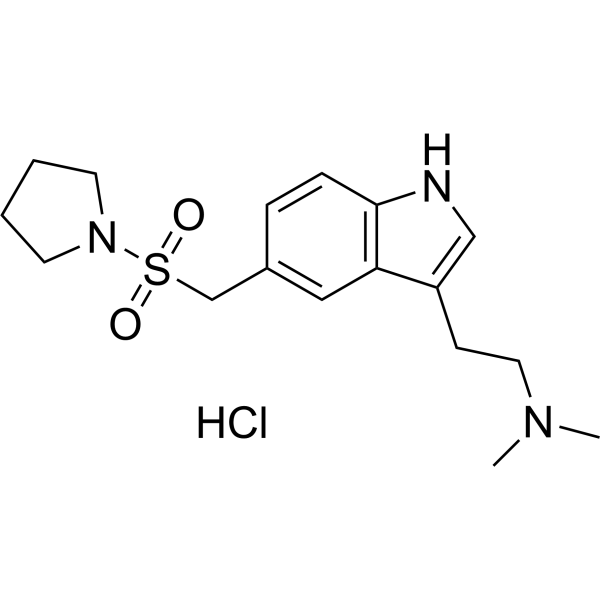
Almotriptan (PNU180638) hydrochloride is an orally active, highly selective agonist of the 5-HT1B/1D receptor (5-HT1B/1D receptor), with EC50 values of 1.6 nM and 3.1 nM, respectively. Almotriptan hydrochloride shows moderate affinity for the 5-HT1F receptor, and weak affinity for the 5-HT1A, 5-HT6 and 5-HT7 receptors. Almotriptan hydrochloride induces intracranial vasoconstriction, inhibits nociceptive neurotransmission in the trigeminocervical complex, and suppresses the release of vasoactive peptides from trigeminal nerve endings. Almotriptan hydrochloride can be used in research related to migraine.
|
-
-
- HY-N0049R
-
|
|
Reference Standards
5-HT Receptor
Dopamine Receptor
|
Neurological Disease
|
|
Nuciferine (Standard) is the analytical standard of Nuciferine. This product is intended for research and analytical applications. Nuciferine is an antagonist at 5-HT2A (IC50=478 nM), 5-HT2C (IC50=131 nM), and 5-HT2B (IC50=1 μM), an inverse agonist at 5-HT7 (IC50=150 nM), a partial agonist at D2 (EC50=64 nM), D5 (EC50=2.6 μM) and 5-HT6 (EC50=700 nM), an agonist at 5-HT1A (EC50=3.2 μM) and D4 (EC50=2 μM) receptor.
|
-
-
- HY-109112R
-
|
RP5063 (Standard)
|
Reference Standards
Dopamine Receptor
5-HT Receptor
|
Neurological Disease
Inflammation/Immunology
|
|
Brilaroxazine (Standard) is the analytical standard of Brilaroxazine. This product is intended for research and analytical applications. Brilaroxazine (RP5603) is a potent and orally active multimodal dopamine (DA)/serotonin (5-HT) modulator. Brilaroxazine is a partial agonist of dopamine (DA) D2, D3, and D4 receptors, 5-HT1A (Ki=1.5 nM) and 5-HT2A (Ki=2.5 nM), and has antagonist activity at 5-HT2B (Ki=0.19 nM), and 5-HT7 (Ki=2.7 nM) receptors . Brilaroxazine is an atypical antipsychotic agent, and has the potential to improve cognitive impairments in neuropsychiatric and neurological diseases in vivo .
|
-

-
- HY-181984
-
|
|
5-HT Receptor
|
Neurological Disease
|
|
AGH-194 is a 5-HT7 receptor agonist with a Ki value of 2 nM. AGH-194 activates Gs protein-coupled signaling pathways associated with neuroprotection and neurite outgrowth, and stimulates neurite outgrowth in neuronal cells. AGH-194 reduces cell damage in undifferentiated neuronal cells. AGH-194 can be used in the research of neurodegenerative diseases .
|
-

-
- HY-B0383AS
-
|
PNU180638 hydrochloride-d6
|
Isotope-Labeled Compounds
5-HT Receptor
|
Neurological Disease
|
|
Almotriptan-d6 (PNU180638-d6) hydrochloride is the deuterium labeled Almotriptan hydrochloride. Almotriptan hydrochloride is an orally active, highly selective agonist of the 5-HT1B/1D receptor (5-HT1B/1D receptor), with EC50 values of 1.6 nM and 3.1 nM, respectively. Almotriptan hydrochloride shows moderate affinity for the 5-HT1F receptor, and weak affinity for the 5-HT1A, 5-HT6 and 5-HT7 receptors. Almotriptan hydrochloride induces intracranial vasoconstriction, inhibits nociceptive neurotransmission in the trigeminocervical complex, and suppresses the release of vasoactive peptides from trigeminal nerve endings. Almotriptan hydrochloride can be used in research related to migraine.
|
-

-
- HY-B0383AS2
-
|
PNU180638 free base-d3 benzoate
|
Isotope-Labeled Compounds
5-HT Receptor
|
Neurological Disease
|
|
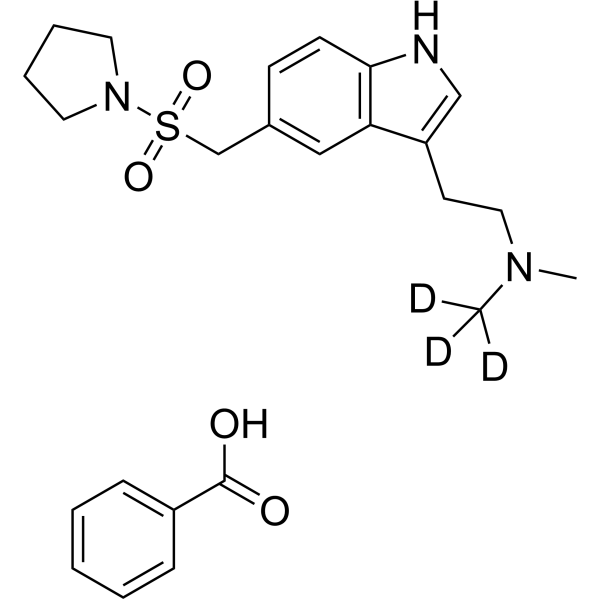
Almotriptan-d3 benzoate (PNU180638 free base-d3) is deuterated labeled Almotriptan benzoate. Almotriptan benzoate is an orally active, highly selective agonist of the 5-HT1B/1D receptor (5-HT1B/1D receptor), with EC50 values of 1.6 nM and 3.1 nM, respectively. Almotriptan benzoate shows moderate affinity for the 5-HT1F receptor, and weak affinity for the 5-HT1A, 5-HT6 and 5-HT7 receptors. Almotriptan benzoate induces intracranial vasoconstriction, inhibits nociceptive neurotransmission in the trigeminocervical complex, and suppresses the release of vasoactive peptides from trigeminal nerve endings. Almotriptan benzoate can be used in research related to migraine.
|
-
-
- HY-143797S
-
|
|
Isotope-Labeled Compounds
5-HT Receptor
|
Neurological Disease
|
|
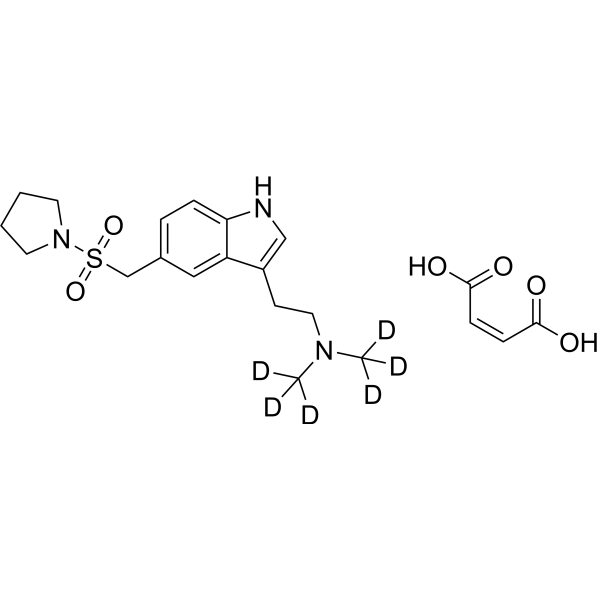
Almotriptan-d6 (PNU180638-d6) maleate is the deuterium labeled Almotriptan maleate. Almotriptan malate is an orally active, highly selective agonist of the 5-HT1B/1D receptor (5-HT1B/1D receptor), with EC50 values of 1.6 nM and 3.1 nM, respectively. Almotriptan malate shows moderate affinity for the 5-HT1F receptor, and weak affinity for the 5-HT1A, 5-HT6 and 5-HT7 receptors. Almotriptan malate induces intracranial vasoconstriction, inhibits nociceptive neurotransmission in the trigeminocervical complex, and suppresses the release of vasoactive peptides from trigeminal nerve endings. Almotriptan malate can be used in research related to migraine.
|
-
-
- HY-B1658BS
-
|
(R)-Frovatriptan-d3 succinate; SB 209509-d3 succinate; VML 251-d3 succinate
|
Isotope-Labeled Compounds
5-HT Receptor
|
Neurological Disease
|
|
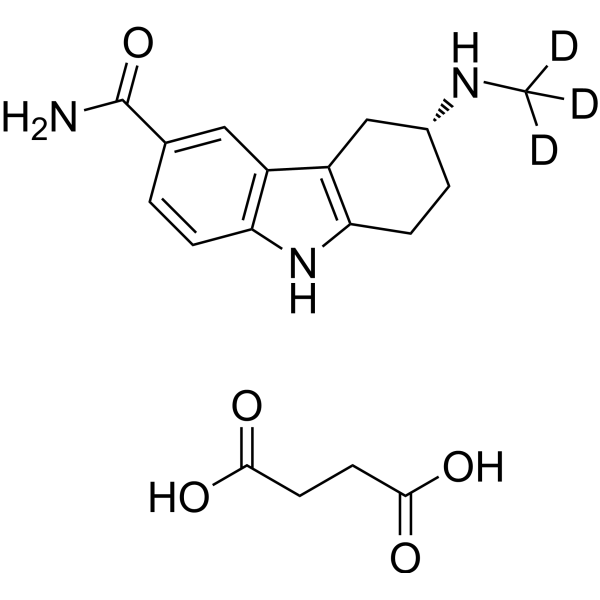
Frovatriptan-d3 (succinate) is deuterium labeled Frovatriptan (succinate). Frovatriptan succinate ((R)-Frovatriptan succinate) is a potent, high affinity, selective and orally active 5-HT1B (pK50 of 8.2) and 5-HT1D receptor agonist. Frovatriptan succinate exhibits >10-fold selectivity for 5-HT1B and 5-HT1D over 5-HT1A, 5-HT1F, and 5-HT7 and >1000-fold selectivity over other 5-HT, dopamine, histamine H1, and α1-adrenoceptor. Frovatriptan succinate has the potential for migraine research .
|
-
-
- HY-B1658AR
-
|
(R)-Frovatriptan succinate hydrate (Standard); SB 209509 succinate hydrate (Standard); VML 251 succinate hydrate (Standard)
|
Reference Standards
5-HT Receptor
|
Neurological Disease
|
|
Frovatriptan (succinate hydrate) (Standard) is the analytical standard of Frovatriptan (succinate hydrate). This product is intended for research and analytical applications. Frovatriptan succinate hydrate ((R)-Frovatriptan succinate hydrate) is a potent, high affinity, selective and orally active 5-HT1B (pK50 of 8.2) and 5-HT1D receptor agonist. Frovatriptan succinate hydrate exhibits >10-fold selectivity for 5-HT1B and 5-HT1D over 5-HT1A, 5-HT1F, and 5-HT7 and >1000-fold selectivity over other 5-HT, dopamine, histamine H1, and α1-adrenoceptor. Frovatriptan succinate hydrate has the potential for migraine research .
|
-

- HY-103142R
-
|
|
Reference Standards
5-HT Receptor
|
Neurological Disease
|
|
AS19 (Standard) is the analytical standard of AS19 (HY-103142). This product is intended for research and analytical applications. AS19 is a potent, selective 5-HT7 receptor agonist with an IC50 value of 0.83 nM and a Ki of 0.6 nM. AS19 is selective for 5-HT7 over 5-HT1A, 5-HT1B, 5-HT1D, and 5-HT5A receptors (Kis = 89.7 nM, 490 nM, 6.6 nM and 98.5 nM, respectively). AS19 enhances memory consolidation and reverses Scopolamine- or Dizocilpine-induced amnesia .
|
-

- HY-179724
-
|
|
5-HT Receptor
Dopamine Receptor
MMP
Cytochrome P450
|
Neurological Disease
|
|
PZ-1657 (Compound 57) is an orally active, blood-brain barrier permeable, highly selective, and metabolically stable 5-HT7 receptor inverse agonist with a Ki value of 5 nM. PZ-1657 inhibits constitutive cyclic adenosine monophosphate (cAMP) production mediated by the Gs signaling pathway (EC50 value of 2.93 nM). PZ-1657 inhibits CYP3A4 P450 (IC50 = 12.2 μM) and hERG channels. PZ-1657 reduces 5-HT7 receptor-mediated MMP-9 activity. PZ-1657 reverses Phencyclidine-induced cognitive impairment. PZ-1657 possesses antidepressant properties .
|
-

- HY-179724A
-
|
|
5-HT Receptor
Dopamine Receptor
MMP
Potassium Channel
|
Neurological Disease
|
|
PZ-1657 hydrochloride (Compound 57) is a potent, selective and orally active 5-HT7 receptor inverse agonist with a Ki of 5 nM. PZ-1657 hydrochloride can inhibit the constitutive cAMP production mediated by the Gs signaling pathway (EC50 = 2.93 nM). PZ-1657 hydrochloride can significantly reduce the MMP-9 activity mediated by 5-HT7 receptors in the hippocampus of mice, and the effect is comparable to that of SB-269970 (HY-15370). PZ-1657 hydrochloride can reverse the cognitive deficits observed in the rat novel object recognition test induced by Phencyclidine without affecting the animals' spontaneous activities. PZ-1657 hydrochloride can be used for the research of emotional disorders, such as depression and bipolar disorder .
|
-

- HY-134483
-
|
|
5-HT Receptor
|
Neurological Disease
|
|
5-HT7/5-HT2A receptor antagonist 1 is a high-affinity, orally active, brain-penetrant 5-HT7 and 5-HT2A receptor ligand having a pKi = 8.1 at both receptors. 5-HT7/5-HT2A receptor antagonist 1 behaves as an antagonist in an in vitro functional assay for 5-HT2A and as an inverse agonist in an in vitro functional assay for 5-HT7. 5-HT7/5-HT2A receptor antagonist 1 blockade of 5-Carboxamidotryptamine (5-CT) (HY-135555) induced hypothermia in rats, and blockade of 2,5-dimethoxy-4-iodoamphetamine (DOI) induced head-twitches in mice. 5-HT7/5-HT2A receptor antagonist 1 occupied 5-HT2A receptor binding sites in the frontal cortex of the rat brain. 5-HT7/5-HT2A receptor antagonist 1 can be used for the study of Neurological diseases .
|
-

- HY-103110R
-
|
|
Reference Standards
5-HT Receptor
Adrenergic Receptor
|
Neurological Disease
|
|
ST1936 (Standard) is the analytical standard of ST1936 (HY-103110). This product is intended for research and analytical applications. ST1936 is a selective, nanomolar affinity 5-HT6 receptor agonist with Ki values of 13 nM, 168 nM and 245 nM for human 5-HT6, 5-HT7 and 5-HT2B receptors, respectively. ST1936 also shows moderate affinity (Ki of 300 nM) for human and rat α2 adrenergic receptor .
|
-

- HY-100942R
-
|
5-CT maleate (Standard)
|
5-HT Receptor
Reference Standards
|
Neurological Disease
|
|
5-Carboxamidotryptamine (maleate) (Standard) is the analytical standard of 5-Carboxamidotryptamine (maleate) (HY-100942). This product is intended for research and analytical applications. 5-Carboxamidotryptamine maleate (5-CT maleate) is a potent 5-HT1A, 5-HT1B, 5-HT1D, 5-HT5 and 5-HT7 receptors agonist .
|
-

| Cat. No. |
Product Name |
Category |
Target |
Chemical Structure |
| Cat. No. |
Product Name |
Chemical Structure |
-
- HY-W052508S
-
|
|
|
Norquetiapine-d8 (N-Desalkylquetiapine-d8) is the deuterium labeled Norquetiapine.Norquetiapine ( N-Desalkylauetiapine), a metabolite of Quetiapine (HY-14544), is a selective HCN1 channel inhibitor, with an IC50 of 13.9 μM. Norquetiapine selectively inhibits noradrenaline reuptake, is a partial 5-HT1A (Ki = 45 nM) receptor agonist, and acts as an antagonist at presynapticα2 (Ki = 237 nM), 5-HT2C(Ki = 107 nM), and 5-HT7 (Ki = 76 nM) receptors. Norquetiapine blocks the human cardiac sodium channel Nav1.5 in a state-dependent manner. Norquetiapine shows partial anti-inflammatory effects in LPS (HY-D1056) injected C57BL/6 mice. Norquetiapine can be used for the study of depression and inflammation .
|
-
-
- HY-15414S
-
|
|
|
Vortioxetine-d8 (Lu AA 21004-d8) is a deuterated version of Vortioxetine. Vortioxetine (Lu AA 21004) is an antagonist of 5-HT3A and 5-HT7 receptors (Ki: 3.7 nM, 19 nM) and an inhibitor of 5-hydroxytryptamine transporter (SERT) (Ki: 1.6 nM), as well as a 5-HT1A agonist and a partial 5-HT1B agonist (Ki: 15 nM, 33 nM) .
|
-
-
- HY-B0032AS
-
|
|
|
Lurasidone-d8 is deuterium labeled Lurasidone. Lurasidone (SM-13496) is an antagonist of both dopamine D2 and 5-HT7 with IC50s of 1.68 and 0.495 nM, respectively. Lurasidone (SM-13496) is also a partial agonist of 5-HT1A receptor with an IC50 of 6.75 nM.
|
-
-
- HY-15414AS
-
|
|
|
Vortioxetine-d8 (Lu AA 21004-d8) hydrobromide is the deuterated form of Vortioxetine. Vortioxetine (Lu AA 21004) is an antagonist of 5-HT3A and 5-HT7 receptors (Ki: 3.7 nM, 19 nM) and an inhibitor of 5-hydroxytryptamine transporter (SERT) (Ki: 1.6 nM), as well as a 5-HT1A agonist and a partial 5-HT1B agonist (Ki: 15 nM, 33 nM) .
|
-
-
- HY-W654010
-
|
|
|
Lurasidone-d8-1 (hydrochloride) is deuterium labeled Lurasidone (Hydrochloride). Lurasidone (Hydrochloride) (SM-13496 (Hydrochloride)) is an antagonist of both dopamine D2 and 5-HT7 with IC50s of 1.68 and 0.495 nM, respectively. Lurasidone (Hydrochloride) (SM-13496 (Hydrochloride)) is also a partial agonist of 5-HT1A receptor with an IC50 of 6.75 nM .
|
-
-
- HY-15414S2
-
|
|
|
Vortioxetine-d4 (Lu AA 21004-d4) is the deuterium labeled Vortioxetine (HY-15414). Vortioxetine is an antagonist of 5-HT3A and 5-HT7 receptors (Ki: 3.7 nM, 19 nM) and an inhibitor of serotonin transporter (SERT) (Ki: 1.6 nM), as well as a 5-HT1A agonist and a partial agonist of 5-HT1B (Ki: 15 nM, 33 nM) .
|
-
-
- HY-15414S3
-
|
|
|
Vortioxetine-d3 (Lu AA 21004-d3) is a deuterium labeled Vortioxetine (HY-15414). Vortioxetine (Lu AA 21004) is an antagonist of 5-HT3A and 5-HT7 receptors (Ki: 3.7 nM, 19 nM) and an inhibitor of serotonin transporter (SERT) (Ki: 1.6 nM), as well as a 5-HT1A agonist and a partial agonist of 5-HT1B (Ki: 15 nM, 33 nM) .
|
-
-
- HY-15414S1
-
|
|
|
Vortioxetine-d6 (Lu AA 21004-d6) is the deuterium labeled Vortioxetine (HY-B1490A). Vortioxetine (Lu AA 21004) is an antagonist of 5-HT3A and 5-HT7 receptors (Ki: 3.7 nM, 19 nM) and an inhibitor of serotonin transporter (SERT) (Ki: 1.6 nM), as well as a 5-HT1A agonist and a partial agonist of 5-HT1B (Ki: 15 nM, 33 nM) .
|
-
-
- HY-B0383AS
-
|
|
|
Almotriptan-d6 (PNU180638-d6) hydrochloride is the deuterium labeled Almotriptan hydrochloride. Almotriptan hydrochloride is an orally active, highly selective agonist of the 5-HT1B/1D receptor (5-HT1B/1D receptor), with EC50 values of 1.6 nM and 3.1 nM, respectively. Almotriptan hydrochloride shows moderate affinity for the 5-HT1F receptor, and weak affinity for the 5-HT1A, 5-HT6 and 5-HT7 receptors. Almotriptan hydrochloride induces intracranial vasoconstriction, inhibits nociceptive neurotransmission in the trigeminocervical complex, and suppresses the release of vasoactive peptides from trigeminal nerve endings. Almotriptan hydrochloride can be used in research related to migraine.
|
-
-
- HY-B0383AS2
-
|
|
|
Almotriptan-d3 benzoate (PNU180638 free base-d3) is deuterated labeled Almotriptan benzoate. Almotriptan benzoate is an orally active, highly selective agonist of the 5-HT1B/1D receptor (5-HT1B/1D receptor), with EC50 values of 1.6 nM and 3.1 nM, respectively. Almotriptan benzoate shows moderate affinity for the 5-HT1F receptor, and weak affinity for the 5-HT1A, 5-HT6 and 5-HT7 receptors. Almotriptan benzoate induces intracranial vasoconstriction, inhibits nociceptive neurotransmission in the trigeminocervical complex, and suppresses the release of vasoactive peptides from trigeminal nerve endings. Almotriptan benzoate can be used in research related to migraine.
|
-
-
- HY-143797S
-
|
|
|
Almotriptan-d6 (PNU180638-d6) maleate is the deuterium labeled Almotriptan maleate. Almotriptan malate is an orally active, highly selective agonist of the 5-HT1B/1D receptor (5-HT1B/1D receptor), with EC50 values of 1.6 nM and 3.1 nM, respectively. Almotriptan malate shows moderate affinity for the 5-HT1F receptor, and weak affinity for the 5-HT1A, 5-HT6 and 5-HT7 receptors. Almotriptan malate induces intracranial vasoconstriction, inhibits nociceptive neurotransmission in the trigeminocervical complex, and suppresses the release of vasoactive peptides from trigeminal nerve endings. Almotriptan malate can be used in research related to migraine.
|
-
-
- HY-B1658BS
-
|
|
|
Frovatriptan-d3 (succinate) is deuterium labeled Frovatriptan (succinate). Frovatriptan succinate ((R)-Frovatriptan succinate) is a potent, high affinity, selective and orally active 5-HT1B (pK50 of 8.2) and 5-HT1D receptor agonist. Frovatriptan succinate exhibits >10-fold selectivity for 5-HT1B and 5-HT1D over 5-HT1A, 5-HT1F, and 5-HT7 and >1000-fold selectivity over other 5-HT, dopamine, histamine H1, and α1-adrenoceptor. Frovatriptan succinate has the potential for migraine research .
|
-
Your information is safe with us. * Required Fields.
Inquiry Information
- Product Name:
- Cat. No.:
- Quantity:
- MCE Japan Authorized Agent:








