
1. Search Result
Search Result
Results for "

CO release

" in MedChemExpress (MCE) Product Catalog:

25

Inhibitors & Agonists

1

Screening Libraries

2

Fluorescent Dyes

4

Biochemical Assay Reagents

4

Peptides

1

Inhibitory Antibodies

3

Oligonucleotides

Cat. No. Product Name Target Research Areas Chemical Structure
  • HY-P0084

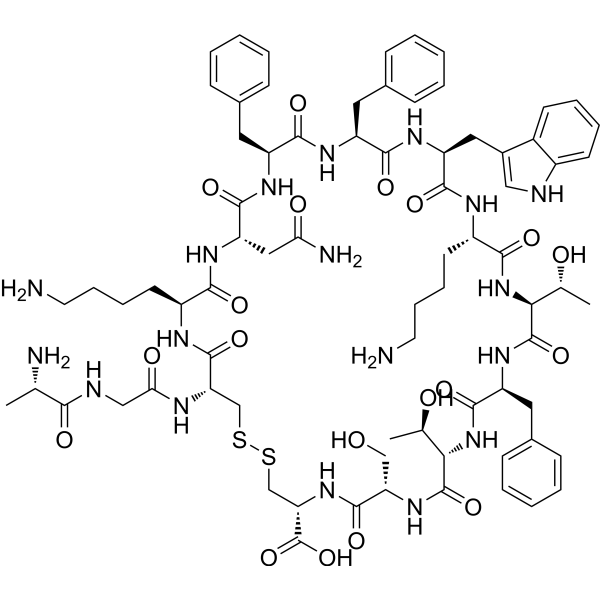
    SRIF-14; Somatostatin-14

    Endogenous Metabolite Cardiovascular Disease Neurological Disease
    Cyclic somatostatin (SRIF-14) is a growth hormone-release inhibiting factor used in the research of severe, acute hemorrhages of gastroduodenal ulcers. Cyclic somatostatin is a neuropeptide co-stored with acetylcholine in the cardiac parasympathetic innervation, exerts influences directly on contraction of ventricular cardiomyocytes. Cyclic somatostatin inhibits the contractile response of isoprenaline with an IC50 value of 13 nM. Cyclic somatostatin can be used for the research of cardiovascular disease .
    Cyclic somatostatin
  • HY-164899

    2-aminopyridine-3-carboxylic acid imidazolide

    Transmembrane Glycoprotein Cancer
    2A3 (2-aminopyridine-3-carboxylic acid imidazolide) is a T cell activator that specifically binds to CEACAM6 and CEACAM5. 2A3 exhibits enzymatic activity that catalyzes the glucuronidation of specific substrates (e.g., 1-naphthol), and possesses significant cytotoxic activity. When integrated into CAR T cells or used alone, 2A3 acts by inducing cytokine release, degranulation, and direct cytotoxicity. 2A3 kills pancreatic and breast cancer cells with high target antigen expression in vitro, and significantly inhibits the growth of pancreatic cancer xenografts in vivo. 2A3 broadly targets malignant tumors with overexpressed CEACAM5, CEACAM6, or co-expressed both, and shows high expression mainly in tissues such as the liver and colon. 2A3 serves as an important research tool for the immunotherapy of pancreatic and breast cancer . 2A3 is a novel SHAPE reagent, which can be used for the analysis of RNA structure both in vitro and in vivo . 2A3 is an electrophilic chemical probe that acylates the 2'-OH in the RNA backbone. 2A3 can be used for RNA SHAPE-MaP experiments and is capable of analyzing the RNA secondary structures at single nucleotide resolution.
    2A3
  • HY-109804
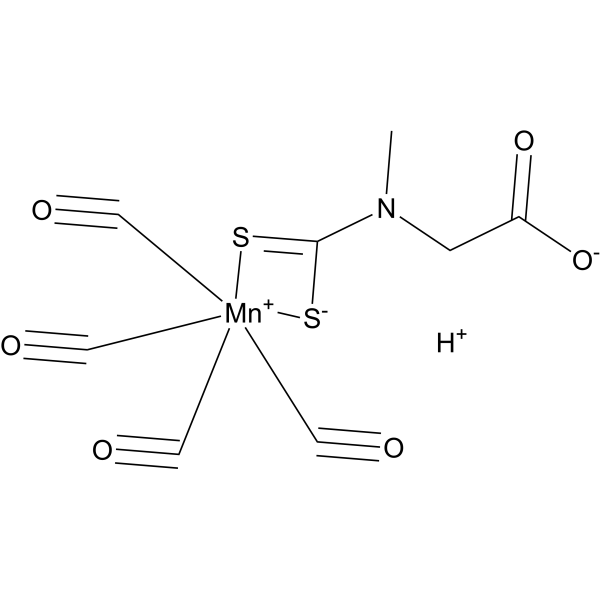
    CORM-401
    Maximum Cited Publications
    12 Publications Verification

    Reactive Oxygen Species (ROS) Inflammation/Immunology
    CORM-401 is an oxidant-sensitive CO-releasing molecule. CORM-401 induces NO increase in the regulation of endothelial calcium signalling. CORM-401 reduces TNF-α/CHX and H2O2-induced ROS production. CORM-401 uncouples mitochondrial respiration and inhibits glycolysis .
    CORM-401
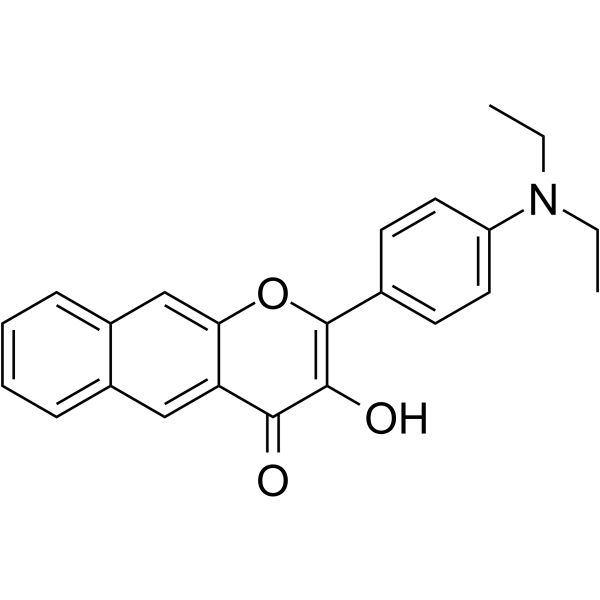
  • HY-D1244

    Fluorescent Dye Cardiovascular Disease Inflammation/Immunology
    CO probe 1 (probe 2) is a highly efficient fluorescent CO probe (Ex=493 nm) with an allyl ether reaction site. In the presence of PdCl₂, CO reduces Pd 2+ to Pd 0, triggering a Tsuji-Trost reaction that removes the allyl protecting group, releases fluorescein, and generates a significant fluorescence signal. CO probe 1 has high selectivity, rapid response (fluorescence enhancement of 150 times within 20 minutes), and low cytotoxicity, and can be used for real-time imaging of CO in living cells. CO probe 1 may be used to study pathological mechanisms involving CO signaling regulation, such as inflammation, vascular disease, or cancer .
    CO probe 1
  • HY-W011426

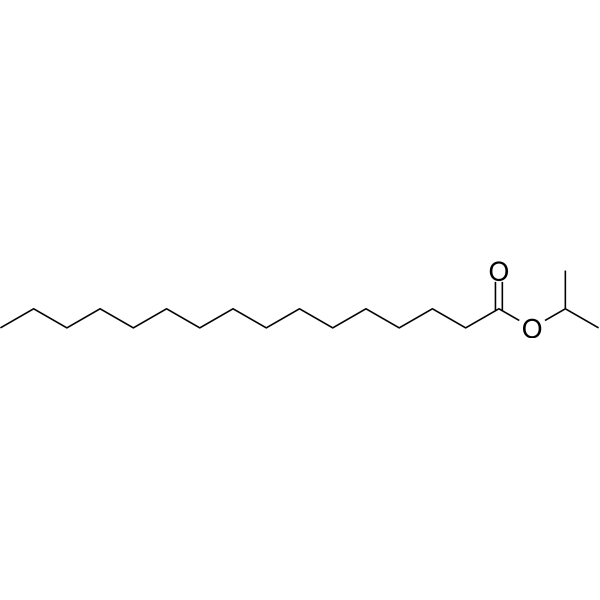
    Propan-2-yl hexadecanoate

    Environmental Pollutants Biochemical Assay Reagents Liposome Others
    Isopropyl palmitate is an fatty acid ester. Isopropyl palmitate can be used for design and characterization of bioactive bilayer films. The bilayer membrane not only has the ability to scavenge free radicals and inhibit lipid peroxidation, but also can inhibit the growth of known foodborne pathogens. Isopropyl palmitate can be used as an excipient, such as lubricant, oily carrier, solvent, controlled-release transdermal film. Pharmaceutical excipients, or pharmaceutical auxiliaries, refer to other chemical substances used in the pharmaceutical process other than pharmaceutical ingredients. Pharmaceutical excipients generally refer to inactive ingredients in pharmaceutical preparations, which can improve the stability, solubility and processability of pharmaceutical preparations. Pharmaceutical excipients also affect the absorption, distribution, metabolism, and elimination (ADME) processes of co-administered drugs .
    Isopropyl palmitate
  • HY-W033577
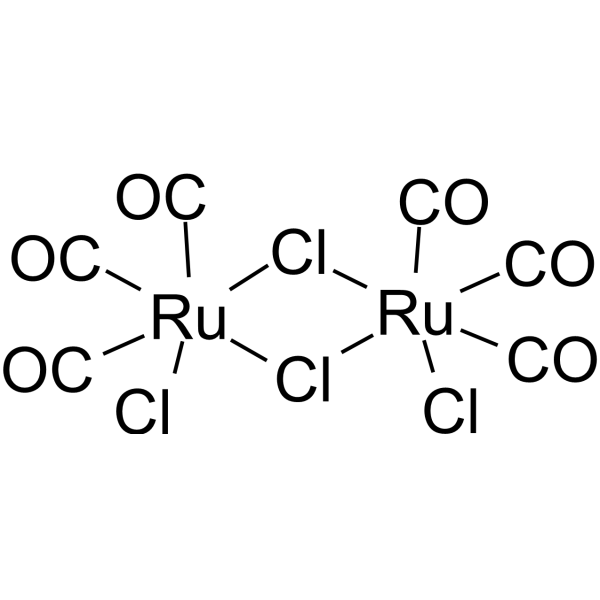
    Tricarbonyldichlororuthenium(II) dimer
    2 Publications Verification

    CORM-2

    P2X Receptor Potassium Channel NO Synthase STAT Interleukin Related Inflammation/Immunology
    Tricarbonyldichlororuthenium(II) dimer (CORM-2) is a CO-releasing molecule. Tricarbonyldichlororuthenium(II) dimer exhibits anti-inflammatory, antioxidant, and gastric mucosa-protective activities. Additionally, Tricarbonyldichlororuthenium(II) dimer has CO-independent functional effects on multiple potassium channels .
    Tricarbonyldichlororuthenium(II) dimer
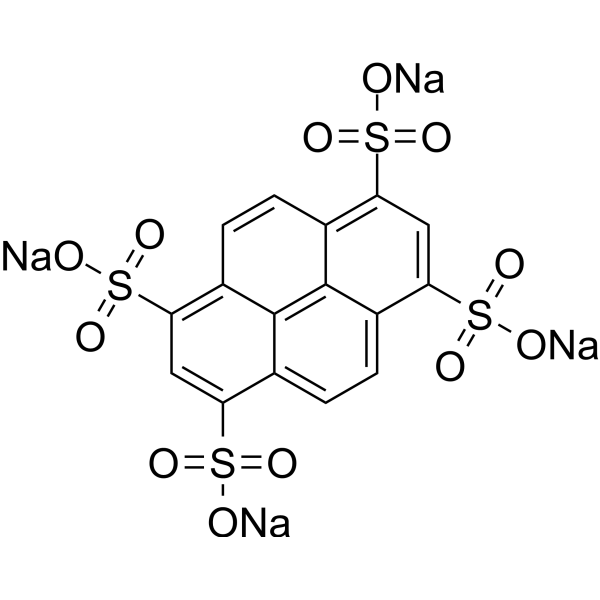
  • HY-D0142

    Environmental Pollutants Fluorescent Dye Others
    Pyrene-1,3,6,8-tetrasulfonic acid tetrasodium is a fluorescent dye and pH indicator, also as a ligand of multifunctional metal-organic framework. Pyrene-1,3,6,8-tetrasulfonic acid tetrasodium has been used to detect CO2 release .
    Pyrene-1,3,6,8-tetrasulfonic acid tetrasodium
  • HY-Y0850U5

    Polyvinyl alCOhol (Mw 27000, 98-99% hydrolyzed, ~600 polymerization); Poly(Ethenol) (Mw 27000, 98-99% hydrolyzed, ~600 polymerization)

    Biochemical Assay Reagents Fungal Infection
    PVA (Polyvinyl alcohol) (Mw 27000, 98-99% hydrolyzed, ~600 polymerization) is a nonionic ethanol homopolymer with hydrophilicity, water solubility and biodegradability. PVA (Mw 27000, 98-99% hydrolyzed, ~600 polymerization) exhibits biocompatibility, non-toxicity and non-carcinogenicity, as well as antibacterial activity against Gram-positive bacteria, Gram-negative bacteria and fungal strains. PVA (Mw 27000, 98-99% hydrolyzed, ~600 polymerization) can serve as a solubilizer, stabilizer, mucoadhesive agent and sustained-release agent, and has a synergistic solubilizing effect on voriconazole/sulfobutyl ether β-cyclodextrin complexes. By stabilizing such complexes, PVA (Mw 27000, 98-99% hydrolyzed, ~600 polymerization) forms freeze-thaw hydrogels with high mucoadhesion, sustained drug release and ex vivo corneal permeability. When compounded with hyaluronic acid hydrogels, PVA (Mw 27000, 98-99% hydrolyzed, ~600 polymerization) supports chondrocyte growth in vitro, and also forms complexes with Cu 2+, Co 2+, Ni 2+ and Zn 2+ ions. PVA (Mw 27000, 98-99% hydrolyzed, ~600 polymerization) can be used in studies related to fungal keratitis, bacterial infections and fungal infections .
    PVA (Mw 27000, 98-99% hydrolyzed, ~600 polymerization)
  • HY-148776

    Biochemical Assay Reagents Others
    PLGA-PEG-MAL (20kDA-5.0kDA, LA:GA ratio 50:50) is a kind of poly(lactide-co-glycolide)-block-poly(ethylene glycol) (PLGA-PEG-Mal) nanoparticles. PLGA-PEG-MAL (20kDA-5.0kDA, LA:GA ratio 50:50) has a molecular weight of 20kDA to 5.0kDA and contains a 50:50 ratio of lactic acid (LA) to glycolic acid (GA) molecules. The molecular ratio of LA to GA determines the rate of matrix degradation and protein re-release .
    PLGA-PEG-MAL (20kDA-5.0kDA, LA:GA ratio 50:50)
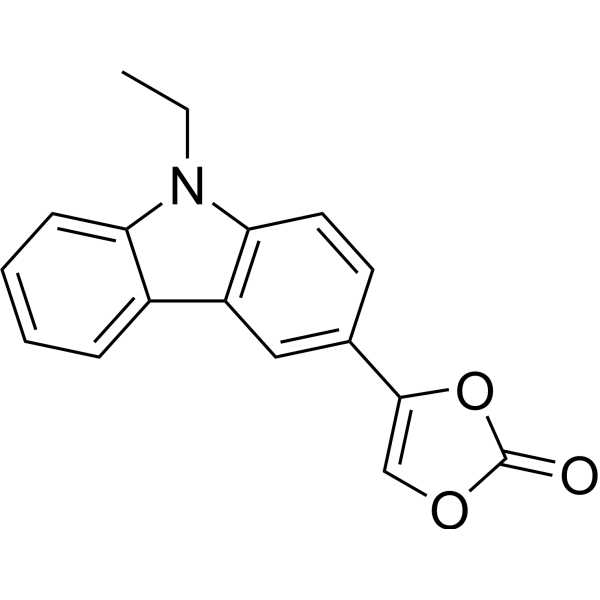
  • HY-144368

    TNF Receptor Inflammation/Immunology
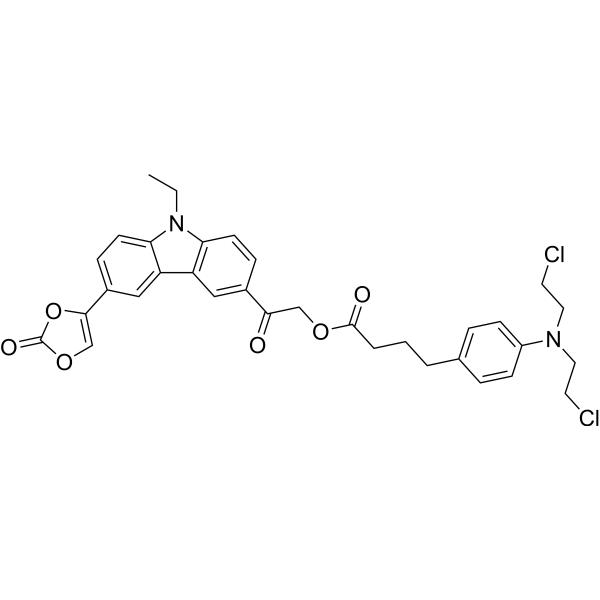
    CO delivery molecule 1 (compound 4) localizes to the endoplasmic reticulum, mitochondria, and lysosomes. Subcellular localization of CO delivery molecule 1 results in CO-induced toxicity effects. Anti-inflammatory effects of CO delivery molecule 1, as measured by TNF-α suppression, occur at the nanomolar level in the absence of CO release, and are enhanced with visible-light-induced CO release .
    CO delivery molecule 1
  • HY-143618

    Biochemical Assay Reagents Cancer
    photoCORM-2 (compound 3) is a single carbon monoxide releasing molecule (CORM). photoCORM-2 exhibits good cellular uptake and real-time monitoring ability of CO uncaging by a color change approach. photoCORM-2 has anti-tumor activity .
    photoCORM-2
  • HY-W250721E

    Carboxy polymethylene (COpolymer)

    Biochemical Assay Reagents Others
    Carbomer copolymer can be used as an excipient, such as Bioadhesives, emulsifiers, release modifiers, suspending agents, tablet binders, viscosity enhancers, etc. Pharmaceutical excipients, or pharmaceutical auxiliaries, refer to other chemical substances used in the pharmaceutical process other than pharmaceutical ingredients. Pharmaceutical excipients generally refer to inactive ingredients in pharmaceutical preparations, which can improve the stability, solubility and processability of pharmaceutical preparations. Pharmaceutical excipients also affect the absorption, distribution, metabolism, and elimination (ADME) processes of co-administered drugs .
    Carbomer copolymer
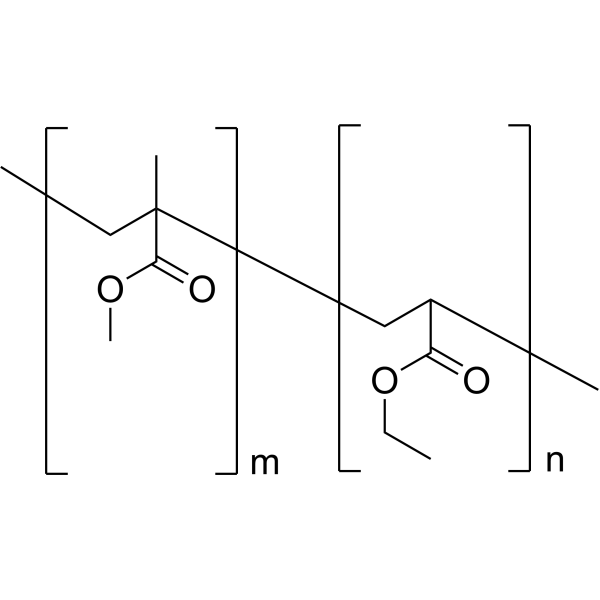
  • HY-27979

    Biochemical Assay Reagents Others
    Ethyl acrylate-methyl methacrylate copolymer can be used as an excipient, such as sustained-release coating materials, matrix sustained-release tablet binders and retarders. Pharmaceutical excipients, or pharmaceutical auxiliaries, refer to other chemical substances used in the pharmaceutical process other than pharmaceutical ingredients. Pharmaceutical excipients generally refer to inactive ingredients in pharmaceutical preparations, which can improve the stability, solubility and processability of pharmaceutical preparations. Pharmaceutical excipients also affect the absorption, distribution, metabolism, and elimination (ADME) processes of co-administered drugs .
    Ethyl acrylate-methyl methacrylate copolymer
  • HY-P0084A

    SRIF-14 acetate; Somatostatin-14 acetate

    Endogenous Metabolite Cardiovascular Disease Metabolic Disease
    Cyclic somatostatin (SRIF-14) acetate is a growth hormone-release inhibiting factor used in the research of severe, acute hemorrhages of gastroduodenal ulcers. Cyclic somatostatin acetate is a neuropeptide co-stored with acetylcholine in the cardiac parasympathetic innervation, exerts influences directly on contraction of ventricular cardiomyocytes. Cyclic somatostatin acetate inhibits the contractile response of isoprenaline with an IC50 value of 13 nM. Cyclic somatostatin acetate can be used for the research of cardiovascular disease .
    Cyclic somatostatin acetate
  • HY-W018475

    MK 462 free base

    5-HT Receptor Neurological Disease
    Rizatriptan (MK 462 free base) is an orally active 5-HT1B/5-HT1D receptor agonist, with BBB permeability. Rizatriptan exerts significant anti-migraine effects by constricting intracranial and extracranial blood vessels and inhibiting neuropeptide release. Rizatriptan exhibits species- and tissue-specific metabolic characteristics; for example, it undergoes oxidative deamination mainly by MAO-A in the liver of brown rats, so co-administration with MAO-A inhibitors is prohibited. Rizatriptan may also exacerbate nitroglycerin-induced cutaneous allodynia, prolong the duration of central sensitization, and increase anxiety-like behavior and active drug-seeking behavior in mice. Rizatriptan has been widely used in studies related to migraine and medication-overuse headache .
    Rizatriptan
  • HY-143617

    Photosensitizer Cancer
    photoCORM-1 (compound 8) is a combinatorial carbon monoxide releasing molecule (CORM). photoCORM-1 exhibits good cellular uptake and real-time monitoring ability of CO uncaging by a color change approach. photoCORM-1 has anti-tumor antivity .
    photoCORM-1
  • HY-P2229

    SDZ CO 611

    Somatostatin Receptor Cancer
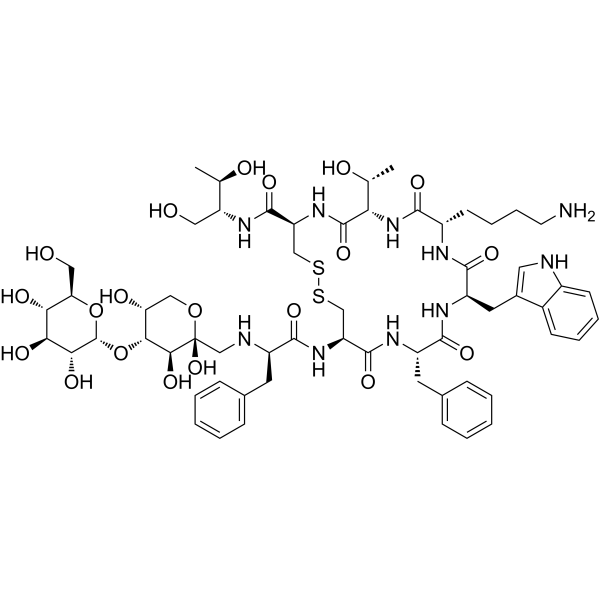
    Ilatreotide (SDZ CO61), glycated somatostatin derivative, is a highly potent glycated analog of somatostatin with improved oral activity. Ilatreotide can suppress the fasting level and postprandial release of several gastrointestinal and pancreatic hormones. Ilatreotide can be used for the research of gastroenteropancreatic tumors .
    Ilatreotide
  • HY-W012618R

    Drug Intermediate Reference Standards Others
    Isopropyl palmitate (Standard) is the analytical standard of Isopropyl palmitate. This product is intended for research and analytical applications. Isopropyl palmitate is an fatty acid ester. Isopropyl palmitate can be used for design and characterization of bioactive bilayer films. The bilayer membrane not only has the ability to scavenge free radicals and inhibit lipid peroxidation, but also can inhibit the growth of known foodborne pathogens. Isopropyl palmitate can be used as an excipient, such as lubricant, oily carrier, solvent, controlled-release transdermal film. Pharmaceutical excipients, or pharmaceutical auxiliaries, refer to other chemical substances used in the pharmaceutical process other than pharmaceutical ingredients. Pharmaceutical excipients generally refer to inactive ingredients in pharmaceutical preparations, which can improve the stability, solubility and processability of pharmaceutical preparations. Pharmaceutical excipients also affect the absorption, distribution, metabolism, and elimination (ADME) processes of co-administered drugs .
    1-Phenyl-1-propanol (Standard)
  • HY-W011426R

    Propan-2-yl hexadecanoate (Standard)

    Biochemical Assay Reagents Liposome Reference Standards Others
    Isopropyl palmitate (Standard) is the analytical standard of Isopropyl palmitate. This product is intended for research and analytical applications. Isopropyl palmitate is an fatty acid ester. Isopropyl palmitate can be used for design and characterization of bioactive bilayer films. The bilayer membrane not only has the ability to scavenge free radicals and inhibit lipid peroxidation, but also can inhibit the growth of known foodborne pathogens. Isopropyl palmitate can be used as an excipient, such as lubricant, oily carrier, solvent, controlled-release transdermal film. Pharmaceutical excipients, or pharmaceutical auxiliaries, refer to other chemical substances used in the pharmaceutical process other than pharmaceutical ingredients. Pharmaceutical excipients generally refer to inactive ingredients in pharmaceutical preparations, which can improve the stability, solubility and processability of pharmaceutical preparations. Pharmaceutical excipients also affect the absorption, distribution, metabolism, and elimination (ADME) processes of co-administered drugs .
    Isopropyl palmitate (Standard)
  • HY-179628

    Drug Derivative Cancer
    STING agonist-49-CO-C2-mal-Cys (compound 2), the derivative of STING agonist-49-CO-C2-mal (HY-179627), is the product of ADC catabolism and payload release, exhibits antitumor activity in vivo .
    STING agonist-49-CO-C2-mal-Cys
  • HY-179313

    Biochemical Assay Reagents Others
    PEG-DPCA conjugate 1 is a PEG-DPCA conjugate that can co-assemble with mPEG-Amide-tri(DPCA) (HY-179320) into a supramolecular polymer hydrogel with nanofiber structures. The supramolecular polymer hydrogel exhibits shear-thinning behavior for injectable delivery, high drug loading, and degrades in vivo to release only DPCA and PEG, induces in vivo earhole regeneration in adult non-healing mice. PEG-DPCA conjugate 1 can be used for tissue regeneration research .
    PEG-DPCA conjugate 1
  • HY-P11603

    Pyroptosis Inflammation/Immunology
    SK56 is a GSDMD-NT pore inhibitor. SK56 inhibits pyroptosis (Pyroptosis) and the release of pyroptosis-related cytokines in macrophages and human peripheral blood leukocytes. SK56 prevents extensive cell death in human alveolar organoids in an organoid-macrophage co-culture model. SK56 prevents death from infectious shock induced by LPS (HY-D1056) or cecal ligation and puncture in mice. SK56 can be used in studies related to sepsis .
    SK56
  • HY-180944

    REV-ERB Neurological Disease
    BE2012, SR8278 (HY-14415) derivative, is a potent and selective REV-ERBα/β Antagonist with EC50 values of 0.285 and 0.346 μM. BE2012 binds to the ligand-binding domain (LBD) of REV-ERB, preventing the receptor from recruiting co-inhibitory factors and thereby releasing the transcriptional repression on downstream target genes. BE2012 can upregulate the expression of myogenic transcription factors Myf5 and Myod, promoting muscle regeneration and repair in acute muscle injury micemodels .
    BE2012
  • HY-118506

    FLAP Inflammation/Immunology
    BRP-7 is a 5-lipoxygenase activating protein (FLAP) inhibitor with an IC50 of 0.31 μM. BRP-7 inhibits the co-localization of 5-lipoxygenase (5-LOX) and FLAP by targeting FLAP, thereby blocking the transfer of arachidonic acid (AA) to 5-LOX and suppressing the production of leukotrienes (LTs) (IC₅₀ = 0.15 μM). BRP-7 does not inhibit cyclooxygenase (COX-1/COX-2) or microsomal prostaglandin E₂ synthase-1 (mPGES-1), and does not affect cell viability or AA release. BRP-7 exhibits significant anti-inflammatory effects in rat pleurisy and mouse peritonitis models. BRP-7 can be used for the study of inflammatory diseases .
    BRP-7
  • HY-P992062

    PD-1/PD-L1 Inflammation/Immunology
    Anti-Mouse CD80 Antibody (TKMG48) is an antibody that targets mouse CD80. By specifically binding to and disrupting the CD80:PD-L1 complex to release PD-L1, Anti-Mouse CD80 Antibody (TKMG48) functions as an indirect PD-1 agonist without blocking CD28 co-stimulation or CD80-CTLA4 binding. Anti-Mouse CD80 Antibody (TKMG48) inhibits T cell activation, reduces T cell effector functions and antigen-specific CD8 + T cell populations, and does not interfere with the differentiation, migration, antigen presentation or surface marker expression of dendritic cells. Anti-Mouse CD80 Antibody (TKMG48) significantly attenuates disease severity in mouse models of arthritis, spondyloarthritis, multiple sclerosis and Sjögren's syndrome, and its activity depends on the expression of PD-1 and PD-L1 .
    Anti-Mouse CD80 Antibody (TKMG48)

Inquiry Online

Your information is safe with us. * Required Fields.

Salutation


Country or Region *

Applicant Name *


Organization Name *

Department *


Email Address *


Product Name *

Cat. No.


Requested quantity *

Phone Number *


Remarks

Inquiry Online

Inquiry Information

Product Name:
Cat. No.:
Quantity:
MCE Japan Authorized Agent:

