



Tricarbonyldichlororuthenium(II) dimer
Based on 4 publication(s) in Google Scholar
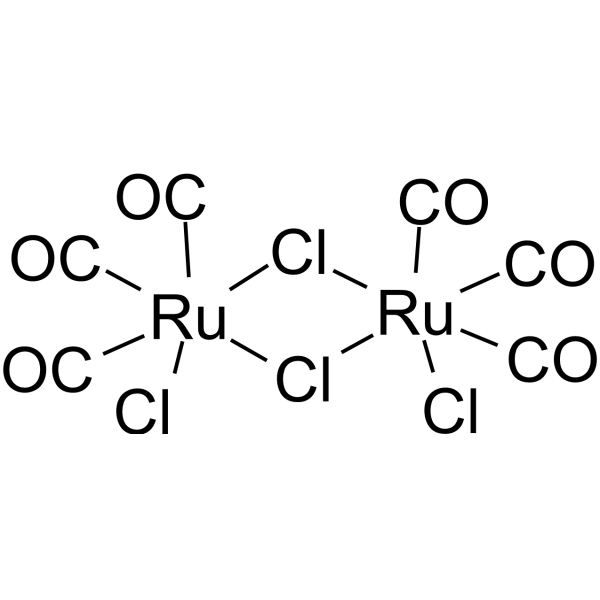
Tricarbonyldichlororuthenium(II) dimer (CORM-2) is a CO-releasing molecule. Tricarbonyldichlororuthenium(II) dimer exhibits anti-inflammatory, antioxidant, and gastric mucosa-protective activities. Additionally, Tricarbonyldichlororuthenium(II) dimer has CO-independent functional effects on multiple potassium channels.
For research use only. We do not sell to patients.
- Purity : 98.0%
- CAS No.: 22594-69-0
- Formula: C6H6Cl4O6Ru2
- Molecular Weight:512.01
-
Storage:
4°C, sealed storage, away from moisture and light
* In solvent : -80°C, 6 months; -20°C, 1 month (sealed storage, away from moisture and light)

To place orders, for customer services and technical support, please contact: MedChemExpress USA
Tel: 609-228-6898 E-mail: [email protected] [email protected]


-
 Biological Activity
-
Chemical Information
-
Solvent & Solubility
- Purity & Documentation
- References
-
 Help & FAQs


-
HY-100581
CORM-3 -
HY-135005
Biliverdin hydrochloride -

HY-Y1109
Dichloro(p-cymene)ruthenium(II) dimer -
HY-B1221
Flufenamic acid -
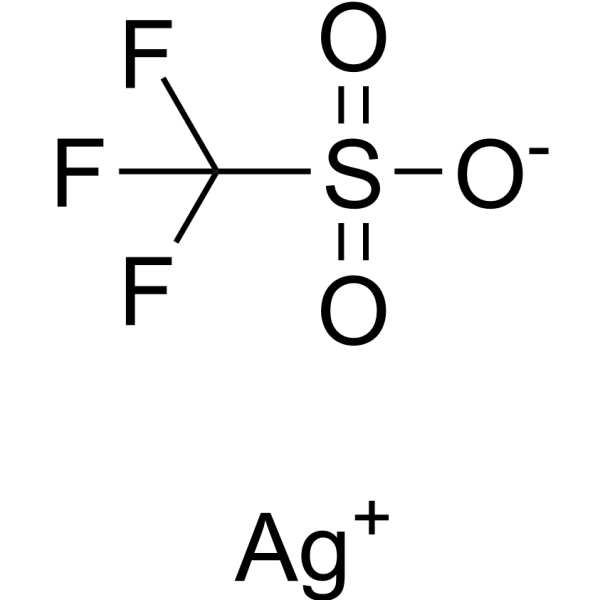
HY-W020983
Silver trifluoromethanesulfonate -
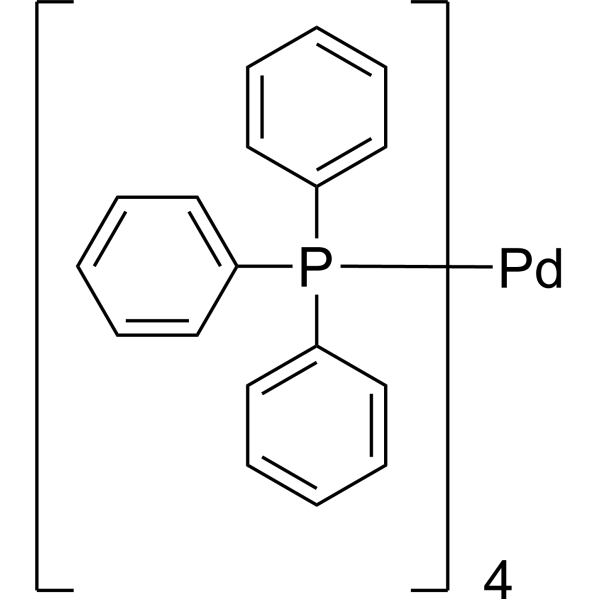
HY-Y1738
Tetrakis(triphenylphosphine)palladium -
![[Ir(cod)Cl]2](https://file.medchemexpress.com/product_pic/hy-w008260.gif)
HY-W008260
[Ir(cod)Cl]2 -
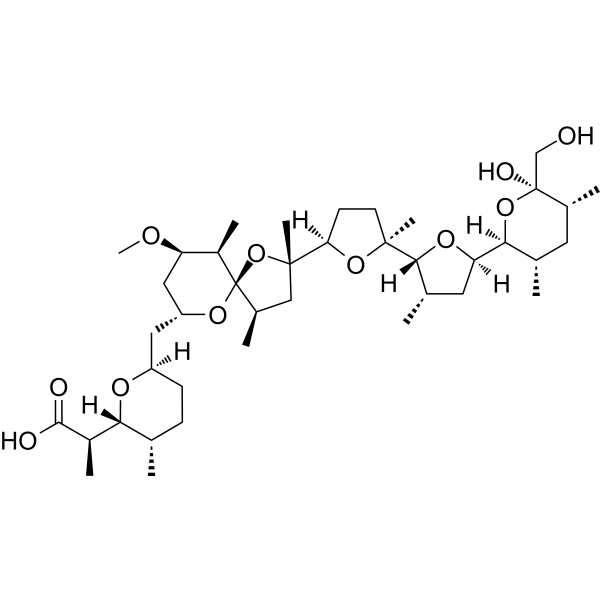
HY-127019
Nigericin -
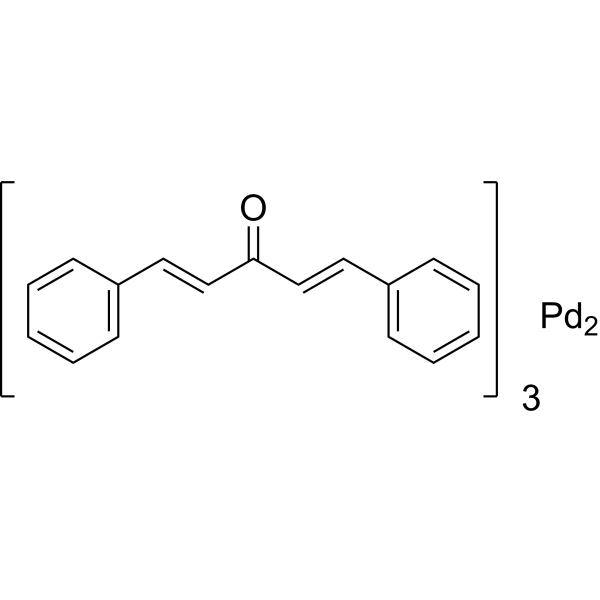
HY-W018864
Tris(dibenzylideneacetonyl)bis-palladium -
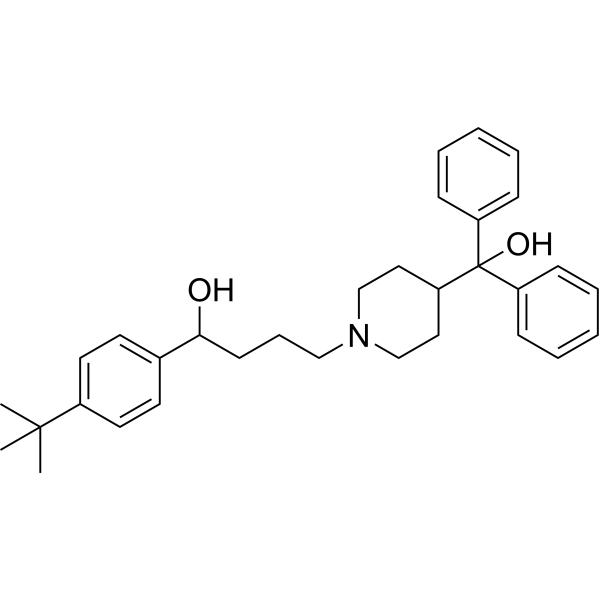
HY-B1193
Terfenadine -
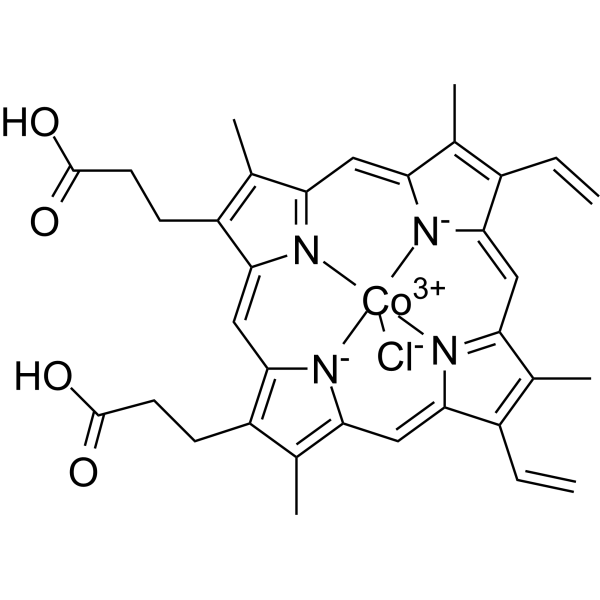
HY-W250116
Co(III) protoporphyrin IX chloride
Publications Citing Use of MedChemExpress (MCE) Tricarbonyldichlororuthenium(II) dimer
MoreAll P2X Receptor Isoforms
More

Biological Activity
Description
In Vitro
Tricarbonyldichlororuthenium(II) dimer (100 μM; 5-10 min) can activate non-selective cation currents in human umbilical vein endothelial cells, and this occurs independently of CO release[1].
Tricarbonyldichlororuthenium(II) dimer (12.5-100 μM; 3-48 h) exerts anti-inflammatory activity in RAW264.7 cells treated with LPS (Prevotella intermedia)[2].
MedChemExpress (MCE) has not independently confirmed the accuracy of these methods. They are for reference only.
-
Cell Line:LPS (Prevotella intermedia) treated RAW264.7 cells
-
Concentration:12.5, 25, 50 and 100 μM
-
Incubation Time:3 h
-
Result:Decreased the mRNA levels of iNOS and IL-1β.
-
Cell Line:LPS (Prevotella intermedia) treated RAW264.7 cells
-
Concentration:12.5, 25, 50 and 100 μM
-
Incubation Time:4 h
-
Result:Inhibited the phosphorylation levels of STAT1 and STAT3.
In Vivo
MedChemExpress (MCE) has not independently confirmed the accuracy of these methods. They are for reference only.
-
Animal Model:Acute I/R gastric lesions treated male Wistar rats (250-300 g)[3]
-
Dosage:1, 5 or 10 mg/kg
-
Administration:Oral gavage (i.g.); single dose
-
Result:Significantly decreased the area of I/R gastric damage and significantly increased GBF at doses of 1 or 5 mg/kg.
Significantly increased mRNA expression of HMOX-1 but not HMOX-2 in gastric mucosa and significantly increased blood concentration at dose of 5 mg/kg.
Significantly increased gastric mucosal PGE2 content at dose of 5 mg/kg.
Significantly decreased mRNA expression of iNOS but not eNOS in gastric mucosa at dose of 5 mg/kg.
Significantly decreased 8-hydroxyguanozine (8-OHG) concentration in gastric mucosa at dose of 5 mg/kg.
Decreased the expression of pro- and anti-inflammatory markers' mRNA and proteins at dose of 5 mg/kg.


Chemical Information
-
CAS No. 22594-69-0
-
Appearance Solid
-
Molecular Weight 512.01
-
Formula C6H6Cl4O6Ru2
-
Color Off-white to yellow
-
SMILES
[O]#C[Ru+2](C#[O])([Cl-])([Cl-][Ru+2]1(C#[O])(C#[O])([Cl-])C#[O])([Cl-]1)C#[O]
-
Synonyms
CORM-2
-
Shipping
Room temperature in continental US; may vary elsewhere.
-
Storage
4°C, sealed storage, away from moisture and light
* In solvent : -80°C, 6 months; -20°C, 1 month (sealed storage, away from moisture and light)


Publications (4)
-
Journal Impact Factor
-
Most Recent
-
Nat Commun
A labile sulfur ligand in a three-cysteine-coordinated [2Fe-2S] cluster mediates sulfide sensing in NreB. [Abstract]2026 May 30. PMID: 42218159 -
Brain Behav Immun
Regulation of macrophage efferocytosis by the CLCF1/NF-κB pathway improves neurological and cognitive impairment following CO poisoning. [Abstract]2025 Jul:127:126-146. PMID: 40081779 -
J Virol
Seneca Valley virus 3C protease targets the Nrf2/HO-1 pathway to antagonize its antiviral activity. [Abstract]2026 Feb 17;100(2):e0165625. PMID: 41489372 -
Curr Eye Res
HMOX1 Promotes Ferroptosis Induced by Erastin in Lens Epithelial Cell through Modulates Fe2+ Production. [Abstract]2023 Jan;48(1):25-33. PMID: 36300537


Solvent & Solubility
In Vitro:
DMSO : 30 mg/mL (58.59 mM; Need ultrasonic; Hygroscopic DMSO has a significant impact on the solubility of product, please use newly opened DMSO)
H2O : < 0.1 mg/mL (insoluble)
Please refer to the solubility information to select the appropriate solvent. Once prepared, please aliquot and store the solution to prevent product inactivation from repeated freeze-thaw cycles.
Storage method and period of stock solution: -80°C, 6 months; -20°C, 1 month (sealed storage, away from moisture and light). When stored at -80°C, please use it within 6 months. When stored at -20°C, please use it within 1 month.
Please refer to the solubility information to select the appropriate solvent. Once prepared, please aliquot and store the solution to prevent product inactivation from repeated freeze-thaw cycles.
Storage method and period of stock solution: -80°C, 6 months; -20°C, 1 month (sealed storage, away from moisture and light). When stored at -80°C, please use it within 6 months. When stored at -20°C, please use it within 1 month.
Concentration (start) × Volume (start) = Concentration (final) × Volume (final)
In Vivo:
Select the appropriate dissolution method based on your experimental animal and administration route.
- For the following dissolution methods, please ensure to first prepare a clear stock solution using an In Vitro approach and then sequentially add co-solvents:
- To ensure reliable experimental results, the clarified stock solution can be appropriately stored based on storage conditions. As for the working solution for In Vivo experiments, it is recommended to prepare freshly and use it on the same day.
- The percentages shown for the solvents indicate their volumetric ratio in the final prepared solution. If precipitation or phase separation occurs during preparation, heat and/or sonication can be used to aid dissolution.
Add each solvent one by one: 10% DMSO 40% PEG300 5% Tween-80 45% Saline
Solubility: ≥ 3 mg/mL (5.86 mM); Clear solution
This protocol yields a clear solution of ≥ 3 mg/mL (saturation unknown).
Taking 1 mL working solution as an example, add 100 μL DMSO stock solution (30.0 mg/mL) to 400 μL PEG300, and mix evenly; then add 50 μL Tween-80 and mix evenly; then add 450 μL Saline to adjust the volume to 1 mL.
Preparation of Saline: Dissolve 0.9 g sodium chloride in ddH₂O and dilute to 100 mL to obtain a clear Saline solution.
Add each solvent one by one: 10% DMSO 90% (20% SBE-β-CD in Saline)
Solubility: ≥ 3 mg/mL (5.86 mM); Clear solution
This protocol yields a clear solution of ≥ 3 mg/mL (saturation unknown).
Taking 1 mL working solution as an example, add 100 μL DMSO stock solution (30.0 mg/mL) to 900 μL 20% SBE-β-CD in Saline, and mix evenly.
Preparation of 20% SBE-β-CD in Saline (4°C, storage for one week): 2 g SBE-β-CD powder is dissolved in 10 mL Saline, completely dissolve until clear.
In Vivo Dissolution Calculator
Please enter the basic information of animal experiments:
-
-
-
-
Recommended: Prepare an additional quantity of animals to account for potential losses during experiments.
Please enter your animal formula composition:
-
%DMSO +
Recommended: Keep the proportion of DMSO in working solution below 2% if your animal is weak.
-
%+
-
+%Tween-80 + +
-
%Saline +
The co-solvents required include: DMSO, . All of co-solvents are available by MedChemExpress (MCE). , Tween 80. All of co-solvents are available by MedChemExpress (MCE).
Working solution concentration: 0.22 mg/mL
Method for preparing stock solution: mg drug dissolved in μL DMSO. Stock solution concentration: mg/mL. * In solvent : -80°C, 6 months; -20°C, 1 month (sealed storage, away from moisture and light)
1. Take μL DMSO stock solution;
2. Add μL .
μL , mix evenly;
3. Then add μL Tween 80, mix evenly;
4. Then add μL
Please ensure that the stock solution in the first step is dissolved to a clear state, and add co-solvents in sequence. You can use ultrasonic heating (ultrasonic cleaner, recommended frequency 20-40 kHz), vortexing, etc. to assist dissolution.


Purity & Documentation
-
Data Sheet (285 KB)
-
SDS (393 KB)
- English - EN (393 KB)
- Français - FR (393 KB)
- Deutsch - DE (393 KB)
- Norwegian - NO (393 KB)
- Español - ES (393 KB)
- Swedish - SV (393 KB)
- Italian - IT (393 KB)
- Korean - KR (393 KB)
- Portuguese - PT (393 KB)
-
Handling Instructions (2659 KB)
References
[1]. Dong DL, et al. Tricarbonyldichlororuthenium (II) dimer (CORM2) activates non-selective cation current in human endothelial cells independently of carbon monoxide releasing. Eur J Pharmacol. 2008 Aug 20;590(1-3):99-104. [Content Brief]
[2]. Choi EY, et al. Tricarbonyldichlororuthenium(II) dimer, the lipid-soluble carbon monoxide-releasing molecule, attenuates Prevotella intermedia lipopolysaccharide-induced production of nitric oxide and interleukin-1β in murine macrophages. Int Immunopharmacol. 2021 Jan;90:107190. [Content Brief]
[3]. Magierowska K, et, al. Oxidative gastric mucosal damage induced by ischemia/reperfusion and the mechanisms of its prevention by carbon monoxide-releasing tricarbonyldichlororuthenium (II) dimer. Free Radic Biol Med. 2019 Dec; 145:198-208. [Content Brief]
[4]. Gessner G, et al. CO-independent modification of K+ channels by tricarbonyldichlororuthenium(II) dimer (CORM-2). Eur J Pharmacol. 2017 Nov 15;815:33-41. [Content Brief]


Complete Stock Solution Preparation Table
Please refer to the solubility information to select the appropriate solvent. Once prepared, please aliquot and store the solution to prevent product inactivation from repeated freeze-thaw cycles.
Storage method and period of stock solution: -80°C, 6 months; -20°C, 1 month (sealed storage, away from moisture and light). When stored at -80°C, please use it within 6 months. When stored at -20°C, please use it within 1 month.
| Optional Solvent | Concentration Solvent Mass | 1 mg | 5 mg | 10 mg | 25 mg |
|---|---|---|---|---|---|
| DMSO | 1 mM | 1.9531 mL | 9.7654 mL | 19.5309 mL | 48.8272 mL |
| 5 mM | 0.3906 mL | 1.9531 mL | 3.9062 mL | 9.7654 mL | |
| 10 mM | 0.1953 mL | 0.9765 mL | 1.9531 mL | 4.8827 mL | |
| 15 mM | 0.1302 mL | 0.6510 mL | 1.3021 mL | 3.2551 mL | |
| 20 mM | 0.0977 mL | 0.4883 mL | 0.9765 mL | 2.4414 mL | |
| 25 mM | 0.0781 mL | 0.3906 mL | 0.7812 mL | 1.9531 mL | |
| 30 mM | 0.0651 mL | 0.3255 mL | 0.6510 mL | 1.6276 mL | |
| 40 mM | 0.0488 mL | 0.2441 mL | 0.4883 mL | 1.2207 mL | |
| 50 mM | 0.0391 mL | 0.1953 mL | 0.3906 mL | 0.9765 mL |


Tricarbonyldichlororuthenium(II) dimer Related Classifications
HY-W033577 Related Classifications
 Powered by Bioz