1. Search Result
Search Result
Results for "

CRF1

" in MedChemExpress (MCE) Product Catalog:

53

Inhibitors & Agonists

11

Peptides

1

Recombinant Proteins

1

Isotope-Labeled Compounds

3

Click Chemistry

2

Oligonucleotides

Cat. No. Product Name Target Research Areas Chemical Structure
  • HY-106203

    SSR-125543

    CFTR Metabolic Disease
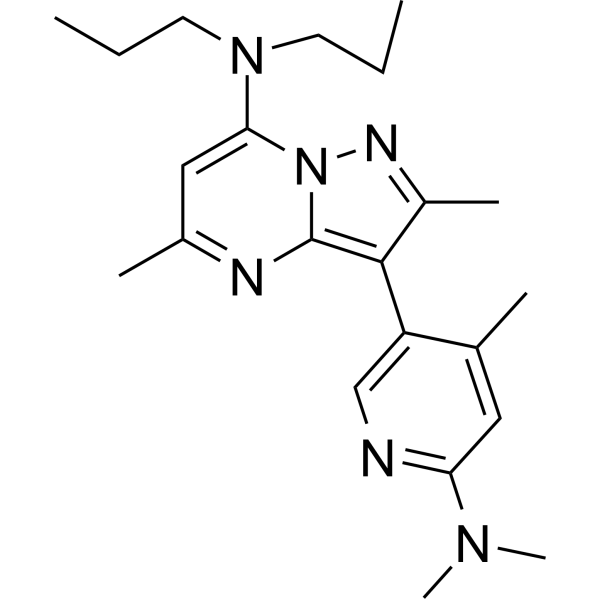
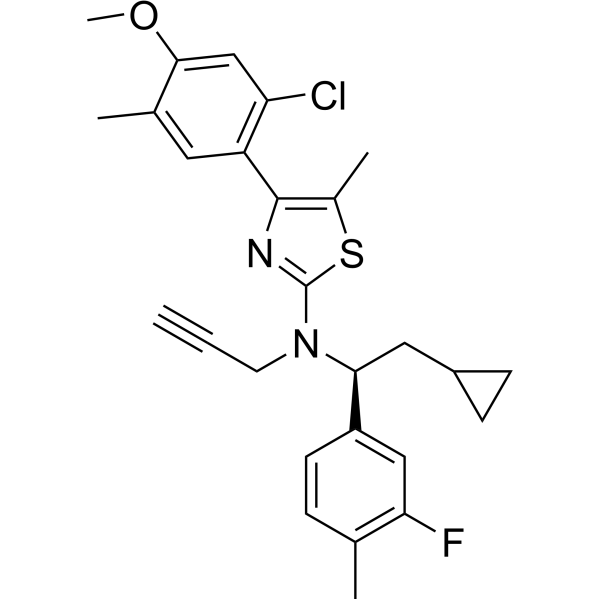
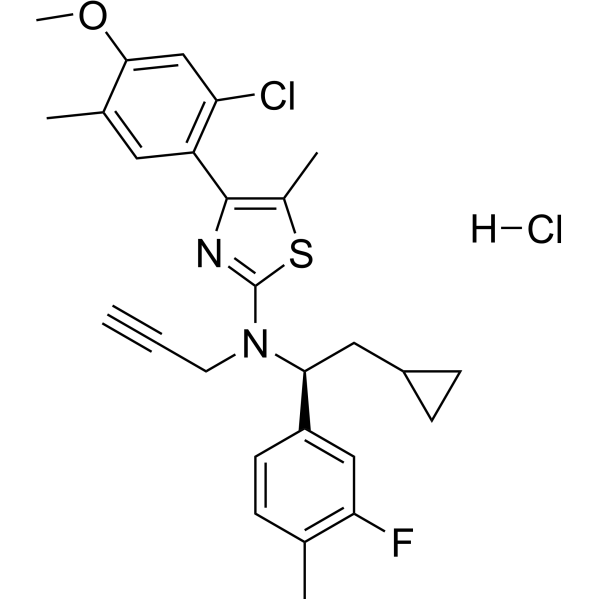
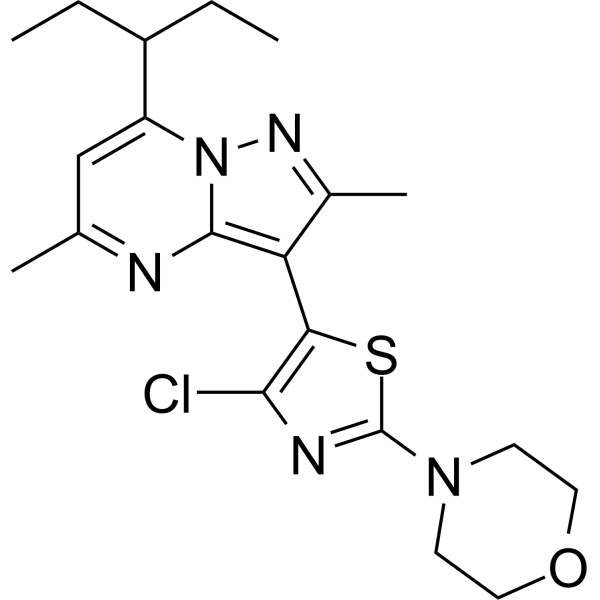
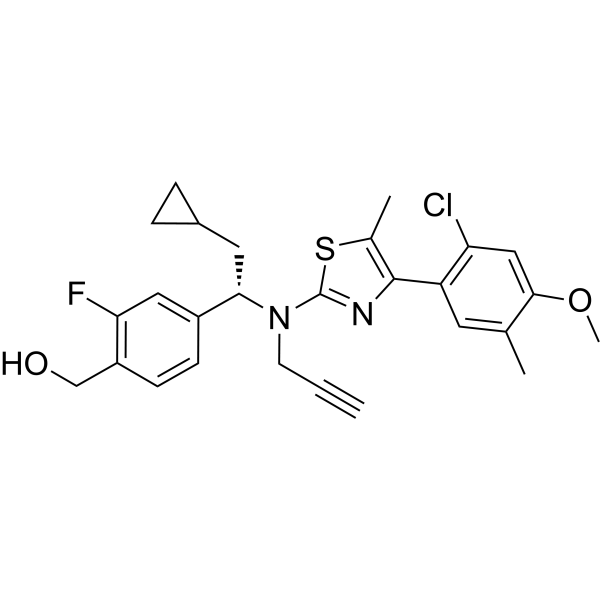
    Crinecerfont (SSR-125543) is an orally effective corticotropin-releasing factor receptor type-1 (CRF1 receptor) antagonist. Crinecerfont blocks CRF1 receptor signaling to reduce adrenocorticotropic hormone secretion. Crinecerfont improves hypothalamic-pituitary-adrenal axis negative feedback sensitivity in chronically stressed mice. Crinecerfont can be used for the research of chronic stress conditions and classic congenital adrenal hyperplasia due to 21-hydroxylase deficiency [1] . Crinecerfont is a click chemistry reagent, it contains an Alkyne group and can undergo copper-catalyzed azide-alkyne cycloaddition (CuAAc) with molecules containing Azide groups.
    Crinecerfont
  • HY-12129

    CFTR Neurological Disease
    CP 154526 hydrochloride is a potent, brain-penetrant and selective corticotropin-releasing factor receptor 1 (CRF1) antagonist with a Ki of 2.7 nM. CP 154526 hydrochloride shows selective for CRF1 over CRF2 (Ki = >10 μM). CP 154526 hydrochloride has anxiolytic activities [1] .
    CP 154526 hydrochloride
  • HY-12127

    BMS-562086

    CRFR Neurological Disease Endocrinology
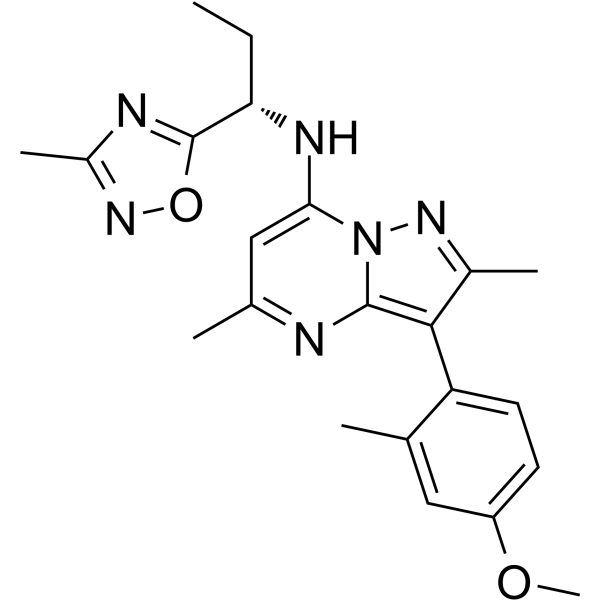
    Pexacerfont is a selective corticotropin-releasing factor (CRF1) receptor antagonist with IC50 of 6.1±0.6 nM for human CRF1 receptor.
    Pexacerfont
  • HY-14875

    GSK561679

    CRFR Neurological Disease Endocrinology
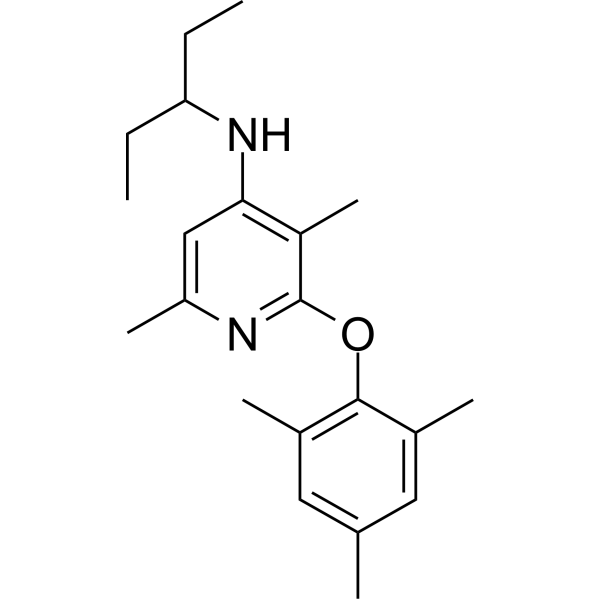
    Verucerfont is a corticotropin-releasing factor receptor 1 (CRF1) antagonist with IC50s of ~6.1, >1000 and >1000?nM for CRF1, CRF2, and CRF-BP, respectively.
    Verucerfont
  • HY-14130

    CRFR Neurological Disease Endocrinology
    CP 376395 is a potent, selective, and brain-penetrable Corticotropin releasing factor 1 (CRF1) receptor antagonist [1] .
    CP 376395
  • HY-106203A

    SSR-125543 hydrochloride

    CFTR Metabolic Disease
    Crinecerfont (SSR-125543) hydrochloride is an orally effective corticotropin-releasing factor receptor type-1 (CRF1 receptor) antagonist. Crinecerfont hydrochloride blocks CRF1 receptor signaling to reduce adrenocorticotropic hormone secretion. Crinecerfont hydrochloride improves hypothalamic-pituitary-adrenal axis negative feedback sensitivity in chronically stressed mice. Crinecerfont hydrochloride can be used for the research of chronic stress conditions and classic congenital adrenal hyperplasia due to 21-hydroxylase deficiency [1] . Crinecerfont hydrochloride is a click chemistry reagent, it contains an Alkyne group and can undergo copper-catalyzed azide-alkyne cycloaddition (CuAAc) with molecules containing Azide groups.
    Crinecerfont hydrochloride
  • HY-14127
    R121919
    Maximum Cited Publications
    7 Publications Verification

    NBI30775

    CRFR Neurological Disease Endocrinology
    R121919 (NBI30775) is a potent and selective CRF1R antagonist with a Ki of 2 to 5 nM. R121919 has antidepressant and anxiolytic effects. R121919 alleviates defensive withdrawal in rats [1] .
    R121919
  • HY-P1294

    CRFR Neurological Disease
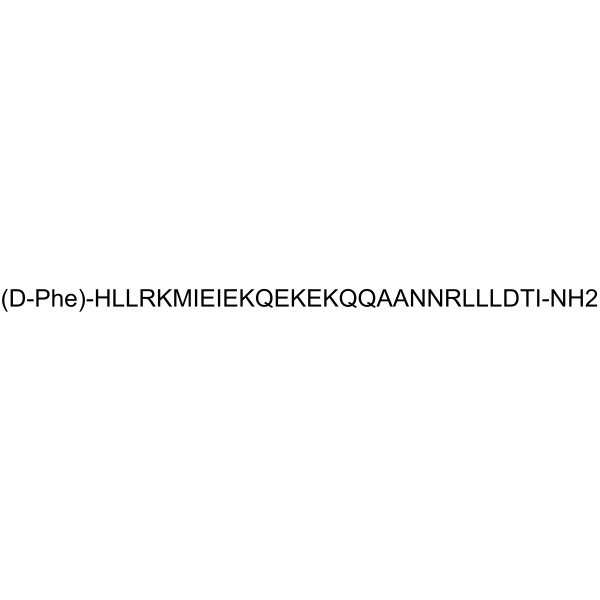
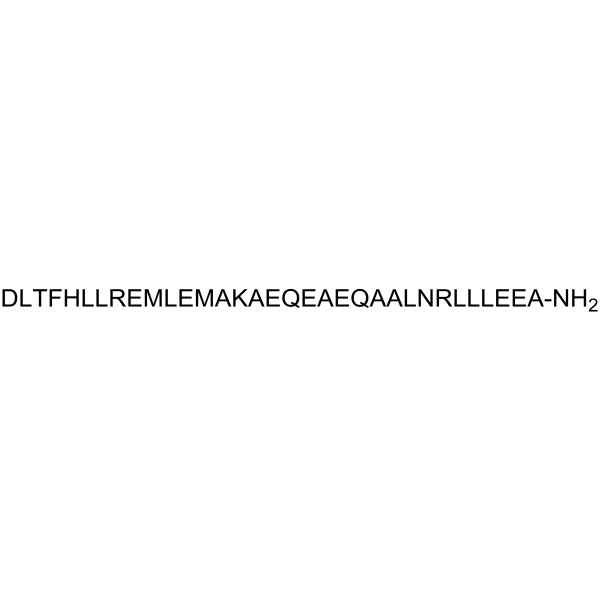
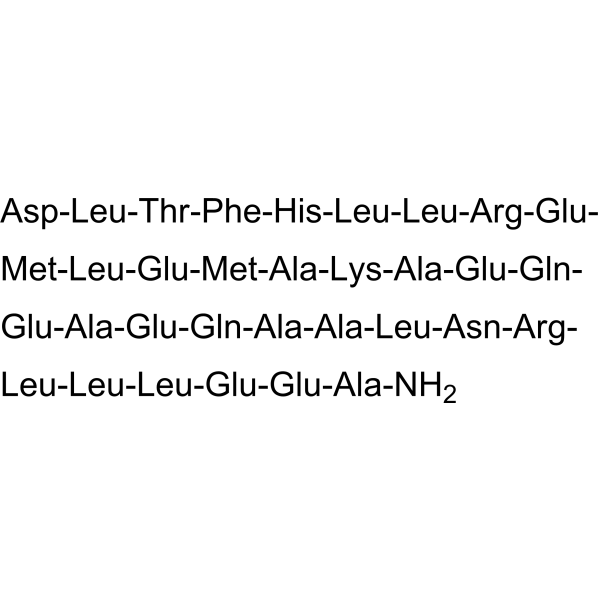
    α-Helical CRF(9-41) is a competitive CRF2 receptor antagonist with KB of ~100 nM. α-Helical CRF(9-41) is also a partial agonist of CRF1 receptor with an EC50 of 140 nM [1] .
    α-Helical CRF(9-41)
  • HY-P2287
    Cortagine
    3 Publications Verification

    CRFR Neurological Disease
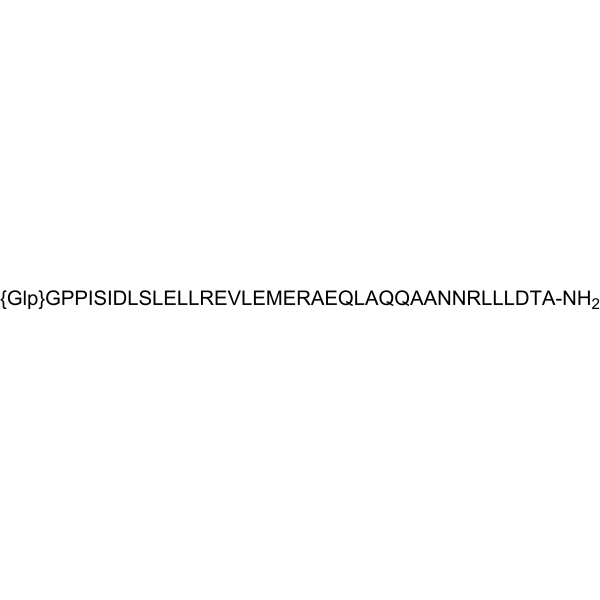
    Cortagine is a specific corticotropin-releasing factor receptor subtype 1 (CRF1) agonist with an EC50 of 2.6 nM for rCRF1. Cortagine is an anxiolytic and antidepressive agent in the mouse model [1].
    Cortagine
  • HY-P1108
    Astressin 2B
    1 Publications Verification

    CRFR Neurological Disease Inflammation/Immunology
    Astressin 2B is a blood-brain barrier-impermeable, highly selective CRFR2 antagonist (rCRFR2, IC50=0.57 nM). Astressin 2B blocks the protective effects mediated by CRFR2, thereby exacerbating indomethacin (HY-14397)-induced hemorrhagic intestinal injury in rats. Astressin 2B reverses the protective effects of Urocortin 1 against intestinal hypermotility, bacterial invasion and upregulation of inflammatory mediators. Astressin 2B also blocks the anxiogenic effect of Urocortin 2 and attenuates stress-induced anxiety-related behaviors. In the Clostridioides difficile toxin A (C. difficile toxin A)-mediated enteritis model, Astressin 2B mimics the phenotype of CRFR2-deficient mice, significantly exacerbating intestinal epithelial damage, edema, neutrophil migration and the expression of multiple proinflammatory cytokines. Astressin 2B is an important tool molecule for investigating the intestinal protective mechanisms of CRFR2 [1] .
    Astressin 2B
  • HY-113603

    SPR001; LY2371712

    CRFR Metabolic Disease
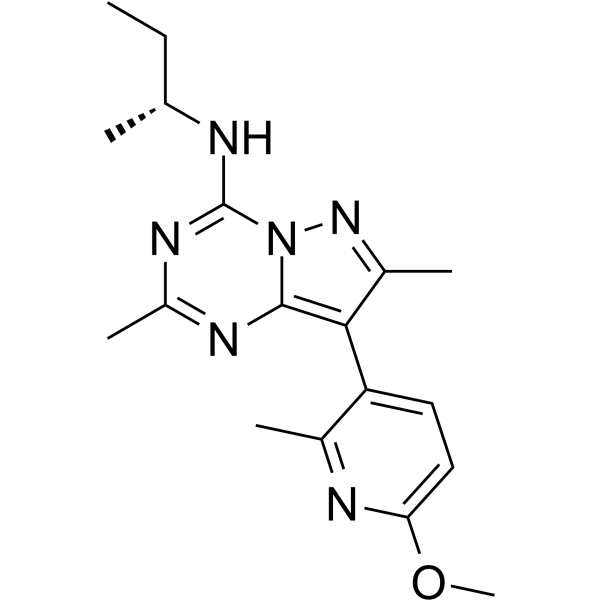
    Tildacerfont (SPR001; LY2371712) is an orally active, blood-brain barrier-penetrant selective corticotropin-releasing factor type 1 (CRF1) receptor antagonist. Tildacerfont selectively blocks CRF1 receptors, thereby inhibiting the release of pituitary adrenocorticotropic hormone (ACTH). Tildacerfont can be used in research related to congenital adrenal hyperplasia [1].
    Tildacerfont
  • HY-P1107
    Antisauvagine-30
    4 Publications Verification

    aSvg-30

    CRFR Neurological Disease
    Antisauvagine-30 (aSvg-30) is a potent, competitive and selective CRF2 receptor antagonist with Kd values of 1.4 nM and 153.6 nM for mouse CRF and rat CRF1 receptors, respectively [1].
    Antisauvagine-30
  • HY-P1294A

    CRFR Neurological Disease
    α-Helical CRF(9-41) TFA is a competitive CRF2 receptor antagonist with KB of ~100 nM. α-Helical CRF(9-41) TFA is also a partial agonist of CRF1 receptor with an EC50 of 140 nM [1] .
    α-Helical CRF(9-41) TFA
  • HY-P1296

    Urocortin (Rattus norvegicus); Rat urocortin

    CRFR Neurological Disease Endocrinology
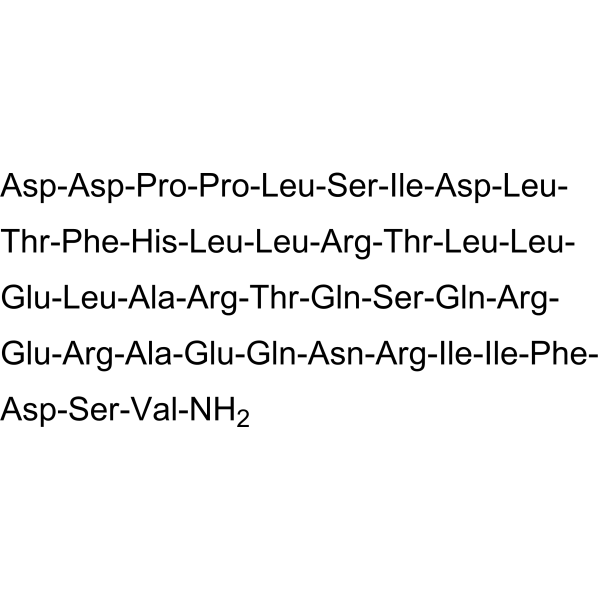
    Urocortin, rat (Urocortin (Rattus norvegicus)) is a neuropeptide and a potent endogenous CRFR agonist with Kis of 13 nM, 1.5 nM, and 0.97 nM for human CRF1, rat CRF and mouse CRF, respectively [1] .
    Urocortin, rat
  • HY-14367

    GW876008

    CRFR Neurological Disease Endocrinology
    Emicerfont is a corticotropin-releasing factor type 1 (CRF1) receptor antagonist with an IC50 of 66 nM.
    Emicerfont
  • HY-156522

    CFTR Endocrinology
    CRF1 receptor antagonist-1 (Compound 2) is a CRF1 receptor antagonist. CRF1 receptor antagonist-1 can be used for research of congenital adrenal hyperplasia (CAH) [1].
    CRF1 receptor antagonist-1
  • HY-P1368
    Stressin I
    1 Publications Verification

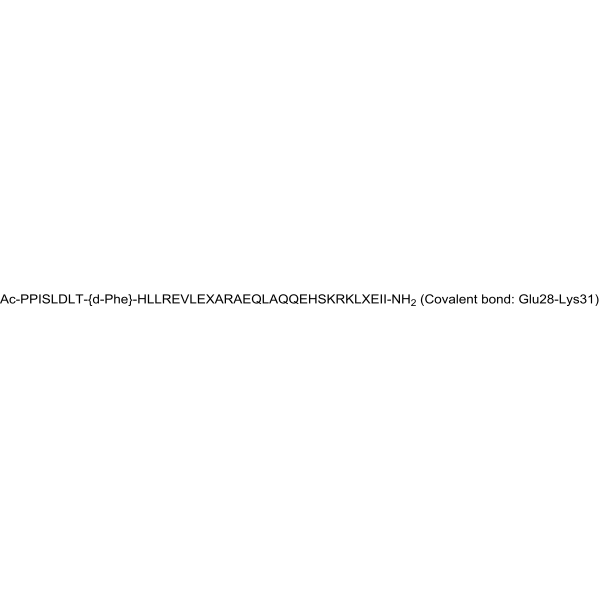
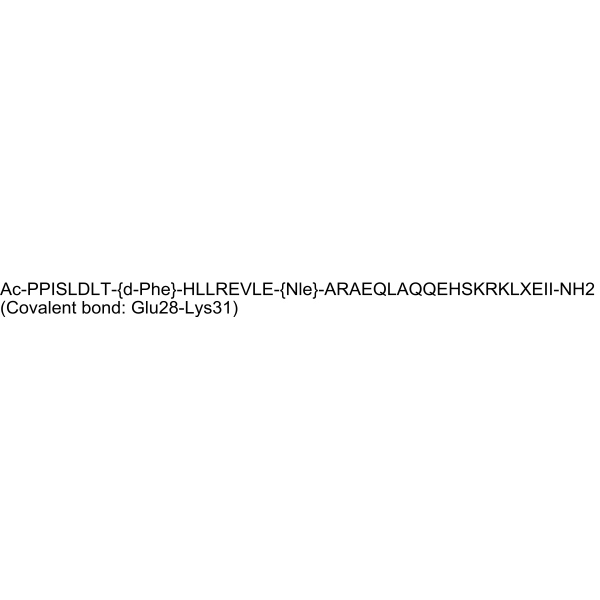
    Cyclo(31-34)[DPhe12,Nle21,38,Glu31,Lys34]Ac-hCRF(4-41)

    CRFR Endocrinology
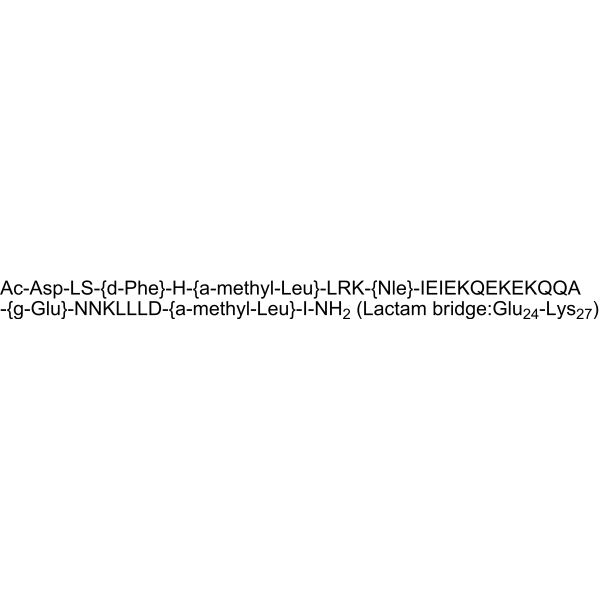
    Stressin I (Cyclo(31-34)[DPhe12,Nle21,38,Glu31,Lys34]Ac-hCRF(4-41)) is a potent CRF1 receptor-selective agonist with a Ki of 1.7 nM. Stressin I induces increases in adrenocorticotropic hormone (ACTH) levels in rats [1].
    Stressin I
  • HY-113603S

    SPR001-d8; LY2371712-d8

    Isotope-Labeled Compounds CRFR Cancer
    Tildacerfont-d8 (SPR001-d8; LY2371712-d8) is a deuterium labeled Tildacerfont (HY-113603). Tildacerfont (SPR001; LY2371712) is an orally active, blood-brain barrier-penetrant selective corticotropin-releasing factor type 1 (CRF1) receptor antagonist. Tildacerfont selectively blocks CRF1 receptors, thereby inhibiting the release of pituitary adrenocorticotropic hormone (ACTH). Tildacerfont can be used in research related to congenital adrenal hyperplasia [1].
    Tildacerfont-d8
  • HY-P1368A
    Stressin I TFA
    1 Publications Verification

    Cyclo(31-34)[DPhe12,Nle21,38,Glu31,Lys34]Ac-hCRF(4-41) TFA

    CRFR Endocrinology
    Stressin I (Cyclo(31-34)[DPhe12,Nle21,38,Glu31,Lys34]Ac-hCRF(4-41)) TFA is a potent CRF1 receptor selective agonist, Ki is 1.7 nM. Stressin I induces an increase in adrenocorticotropic hormone (ACTH) levels in rats [1] [1].
    Stressin I TFA
  • HY-12130

    CRFR Neurological Disease
    CP 154526 is a potent, brain-penetrant and selective corticotropin-releasing factor receptor 1 (CRF1) antagonist with a Ki of 2.7 nM. CP 154526 shows selective for CRF1 over CRF2 (Ki = >10 μM). CP 154526 has anxiolytic activities [1] .
    CP 154526
  • HY-182645

    CRFR Neurological Disease
    CRF1 receptor antagonist-2 is an orally active, blood-brain barrier permeable CRF1 receptor antagonist, with an IC50 of 4 nM in CHO-K1 cell membranes and an IC50 of 7 nM in rat brain cell membranes. CRF1 receptor antagonist-2 exerts anxiolytic effects in swim stress-loaded rats. CRF1 receptor antagonist-2 can be used in studies related to stress-induced anxiety [1].
    CRF1 receptor antagonist-2
  • HY-103378

    CRFR Neurological Disease
    NBI 35965 methanesulfonate is a selective, orally active and brain-penetrant corticotropin-releasing factor receptor 1 (CRF1) antagonist with a Ki value of 4 nM and a pKi value of 8.5. NBI 35965 methanesulfonate does not inhibit CRF2. NBI 35965 methanesulfonate reduces CRF or stress-induced adrenocorticotropic hormone (ACTH) production in vivo with pIC50 values of 7.1 and 6.9, respectively. NBI 35965 methanesulfonate shows anxiolytic effects [1] .
    NBI 35965 methanesulfonate
  • HY-14128

    SB-723620

    CRFR Neurological Disease
    NBI-34041 (SB-723620) is a selective and orally active nonpeptide CRF1 receptor antagonist with an IC50 of 58.9 nM and a Ki of 4.0 nM for human CRF1 receptor. NBI-34041 has no inhibitory effect on the CRF2 receptor. NBI-34041 can be used for depression and anxiety disorders research.
    NBI-34041
  • HY-119114

    CRFR Neurological Disease
    E-2508 free base is an orally active and highly selective corticotropin-releasing factor type 1 receptor (CRF1) antagonist with anxiolytic effects (Ki=11 nM). E-2508 free base blocks CRF-induced cAMP accumulation via CRF1 receptor inhibition. E-2508 free base is promising for research of stress-related psychiatric disorders, such as anxiety and depression [1].
    E-2508 free base
  • HY-14129

    CRFR Neurological Disease Endocrinology
    CP 316311 is a potent and selective CRF1 receptor antagonist with an IC50 value of 6.8 nM.
    CP 316311
  • HY-103379

    CRFR Neurological Disease Endocrinology
    CP 376395 hydrochloride is a potent, selective, and brain-penetrable Corticotropin releasing factor 1 (CRF1) receptor antagonist [1] .
    CP 376395 hydrochloride
  • HY-103376

    CRFR Neurological Disease
    NBI-27914 (hydrochloride) is a selective Corticotropin-Releasing Factor 1 (CRF1) receptor antagonist with a Ki value of 1.7 nM [1] .
    NBI-27914 hydrochloride
  • HY-177313

    NVP-AAG 561

    CFTR Neurological Disease
    AAG561 is a corticotropin-releasing factor receptor 1 (CRF1) antagonist. AAG561 can be used for the study of the underlying emotion dysregulation of a mental disease or disorder [1].
    AAG561
  • HY-P1542

    Catostomus urotensin I

    CRFR Cardiovascular Disease Endocrinology
    Urotensin I (Catostomus urotensin I), a CRF-like neuropeptide, acts as an agonist of CRF receptor with pEC50s of 11.46, 9.36 and 9.85 for human CRF1, human CRF2 and rat CRF receptors in CHO cells, and Kis of 0.4, 1.8, and 5.7 nM for hCRF1, rCRF and mCRF receptors, respectively [1] .
    Urotensin I
  • HY-P1542B

    Catostomus urotensin I TFA

    CRFR Cardiovascular Disease Endocrinology
    Urotensin I (Catostomus urotensin I) TFA, a CRF-like neuropeptide, acts as an agonist of CRF receptor with pEC50s of 11.46, 9.36 and 9.85 for human CRF1, human CRF2 and rat CRF receptors in CHO cells, and Kis of 0.4, 1.8, and 5.7 nM for hCRF1, rCRF and mCRF receptors, respectively [1] .
    Urotensin I TFA
  • HY-123677

    CRFR Neurological Disease
    E2508 is an orally active corticotropin-releasing factor 1 (CRF1) receptor antagonist with a Ki value of 11 nM for hCRF1 [1].
    E2508
  • HY-12127R

    BMS-562086 (Standard)

    CRFR Reference Standards Neurological Disease Endocrinology
    Pexacerfont (Standard) is the analytical standard of Pexacerfont. This product is intended for research and analytical applications. Pexacerfont is a selective corticotropin-releasing factor (CRF1) receptor antagonist with IC50 of 6.1±0.6 nM for human CRF1 receptor.
    Pexacerfont (Standard)
  • HY-P3785

    PKA Neurological Disease
    PKI(5-22)amide is the active inhibitory fragment of the inhibitor of the cyclic AMP-dependent protein kinase (PKA). PKI(5-22)amide inhibits PKA activation, but fails to attenuate homologous desensitization of CRF1 receptors [1] .
    PKI(5-22)amide
  • HY-114070

    CRFR Neurological Disease
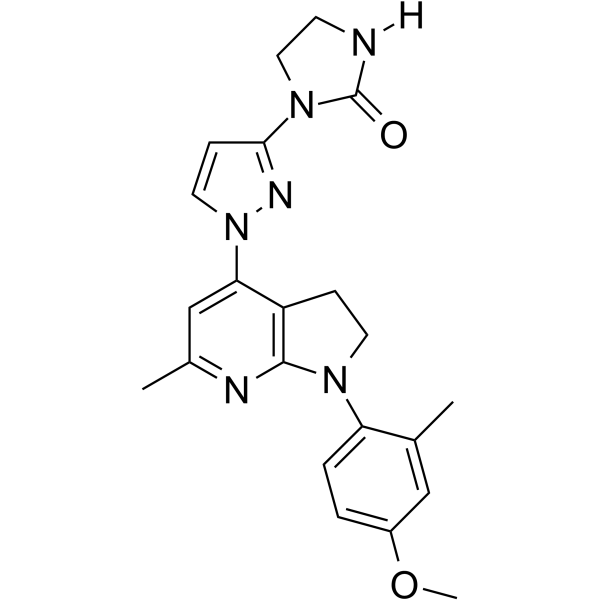
    NGD 98-2 is an orally active corticotropin releasing factor-1 (CRF-1) receptor antagonist
    NGD 98-2
  • HY-110310

    CRFR Neurological Disease
    NGD 98-2 hydrochloride is an orally active corticotropin releasing factor-1 (CRF-1) receptor antagonist
    NGD 98-2 hydrochloride
  • HY-P1296A

    Urocortin (Rattus norvegicus) TFA; Rat urocortin TFA

    CRFR Neurological Disease Endocrinology
    Urocortin, rat TFA (Urocortin (Rattus norvegicus) TFA) is a neuropeptide and a potent endogenous CRFR agonist with Kis of 13 nM, 1.5 nM, and 0.97 nM for human CRF1, rat CRF and mouse CRF, respectively [1] .
    Urocortin, rat TFA
  • HY-106203B

    (R)-SSR-125543

    CFTR Metabolic Disease
    (R)-Crinecerfont is the R-enantiomer of Crinecerfont (HY-106203). Crinecerfont (SSR-125543) is an orally effective corticotropin-releasing factor receptor type-1 (CRF1 receptor) antagonist. Crinecerfont blocks CRF1 receptor signaling to reduce adrenocorticotropic hormone secretion. Crinecerfont improves hypothalamic-pituitary-adrenal axis negative feedback sensitivity in chronically stressed mice. Crinecerfont can be used for the research of chronic stress conditions and classic congenital adrenal hyperplasia due to 21-hydroxylase deficiency [1] . Crinecerfont is a click chemistry reagent, it contains an Alkyne group and can undergo copper-catalyzed azide-alkyne cycloaddition (CuAAc) with molecules containing Azide groups.
    (R)-Crinecerfont
  • HY-120564

    CRFR Neurological Disease
    BMS-763534 is a CRF1 antagonist that inhibits neurological disorders such as depression and anxiety. [1].
    BMS-763534
  • HY-105332

    CRFR Neurological Disease
    CRA1000 is an orally active, selective and competitive CRF1 receptor antagonist with anxiolytic- and antidepressant-like properties [1].
    CRA1000
  • HY-12339

    CRFR Endocrinology
    NVS-CRF38 is a novel corticotropin-releasing factor receptor 1 (CRF1) antagonist with low water solubility.
    NVS-CRF38
  • HY-120148

    Endothelin-Converting Enzyme (ECE) Others
    SM19712 (free acid) is an endothelin-converting enzyme-1-related compound that affects corticotropin-releasing factor receptor 1 (CRF1).
    SM19712 free acid
  • HY-110056

    CRFR Neurological Disease
    NBI 35965 hydrochloride is a selective, orally active and brain-penetrant corticotropin-releasing factor receptor 1 (CRF1) antagonist with a Ki value of 4 nM and a pKi value of 8.5. NBI 35965 hydrochloride does not inhibit CRF2. NBI 35965 hydrochloride reduces CRF or stress-induced adrenocorticotropic hormone (ACTH) production in vivo with pIC50 values of 7.1 and 6.9, respectively. NBI 35965 hydrochloride shows anxiolytic effects [1] .
    NBI 35965 hydrochloride
  • HY-14225

    CRFR Cytochrome P450 Neurological Disease
    BMS-764459 is a CRF1 antagonist. BMS-764459 can be used for the research of neurological disorders such as depression and anxiety. BMS-764459 is also an atypical CYP1A1 inducer [1] .
    BMS-764459
  • HY-106203C

    SSR-125543 tosylate

    CFTR Metabolic Disease
    Crinecerfont (SSR-125543) tosylate is an orally effective corticotropin-releasing factor receptor type-1 (CRF1 receptor) antagonist. Crinecerfont tosylate blocks CRF1 receptor signaling to reduce adrenocorticotropic hormone secretion. Crinecerfont tosylate improves hypothalamic-pituitary-adrenal axis negative feedback sensitivity in chronically stressed mice. Crinecerfont tosylate can be used for the research of chronic stress conditions and classic congenital adrenal hyperplasia due to 21-hydroxylase deficiency [1] . Crinecerfont tosylate is a click chemistry reagent, it contains an Alkyne group and can undergo copper-catalyzed azide-alkyne cycloaddition (CuAAc) with molecules containing Azide groups.
    Crinecerfont tosylate
  • HY-107095

    R317573; CRA5626; TAI041

    CRFR Neurological Disease
    JNJ19567470 (R317573) is a selective, non-peptidergic CRF type 1 receptor (CRF1) antagonist. JNJ19567470 blocks NaLac-induced panic-like behaviour and cardiovascular responses. JNJ19567470 decreases regional glucose utilization in the amygdala, and attenuates anxiety responses [1] .
    JNJ19567470
  • HY-14132

    CRFR Neurological Disease
    BMS-665053 is a corticotropin-releasing factor-1 (CRF1) receptor antagonist (IC50 = 1.0 nM). BMS-665053)11 is a potent inhibitor of CRF-stimulated cyclic adenosine monophosphate (cAMP) production in human Y-79 retinoblastoma cells (IC50 = 4.9 nM) [1].
    BMS-665053
  • HY-118935

    Adrenergic Receptor Inflammation/Immunology
    NGD9002 free base is a new generation of selective corticotropin-releasing factor-1 (CRF-1) receptor antagonist with inhibitory activity on CRF-induced colonic function stimulation. NGD9002 free base can reduce CRF-induced fecal output response and show an inhibitory IC50 value of 4.3 mg/kg. NGD9002 free base can effectively block CRF-induced colonic secretory motility stimulation at the highest dose and reduce acute water avoidance-induced defecation. NGD9002 free base can also prevent the occurrence of pain hypersensitivity reactions to repeated colonic distension [1].
    NGD9002 free base
  • HY-106203R

    SSR-125543 (Standard)

    Reference Standards CFTR Metabolic Disease
    Crinecerfont (Standard) is the analytical standard of Crinecerfont (HY-106203). This product is intended for research and analytical applications. Crinecerfont (SSR-125543) is an orally effective corticotropin-releasing factor receptor type-1 (CRF1 receptor) antagonist. Crinecerfont blocks CRF1 receptor signaling to reduce adrenocorticotropic hormone secretion. Crinecerfont improves hypothalamic-pituitary-adrenal axis negative feedback sensitivity in chronically stressed mice. Crinecerfont can be used for the research of chronic stress conditions and classic congenital adrenal hyperplasia due to 21-hydroxylase deficiency. Crinecerfont is a click chemistry reagent, it contains an Alkyne group and can undergo copper-catalyzed azide-alkyne cycloaddition (CuAAc) with molecules containing Azide groups.
    Crinecerfont (Standard)
  • HY-RS03170

    Small Interfering RNA (siRNA) Others

    Crhr1 Rat Pre-designed siRNA Set A contains three designed siRNAs for Crhr1 gene (Rat), as well as a negative control, a positive control, and a FAM-labeled negative control.

    Crhr1 Rat Pre-designed siRNA Set A
    Crhr1 Rat Pre-designed siRNA Set A
  • HY-RS03168

    Small Interfering RNA (siRNA) Others

    CRHR1 Human Pre-designed siRNA Set A contains three designed siRNAs for CRHR1 gene (Human), as well as a negative control, a positive control, and a FAM-labeled negative control.

    CRHR1 Human Pre-designed siRNA Set A
    CRHR1 Human Pre-designed siRNA Set A

Inquiry Online

Your information is safe with us. * Required Fields.

Salutation


Country or Region *

Applicant Name *


Organization Name *

Department *


Email Address *


Product Name *

Cat. No.


Requested quantity *

Phone Number *


Remarks

Inquiry Online

Inquiry Information

Product Name:
Cat. No.:
Quantity:
MCE Japan Authorized Agent:

