



Crinecerfont hydrochloride

Based on 1 Customer Validation
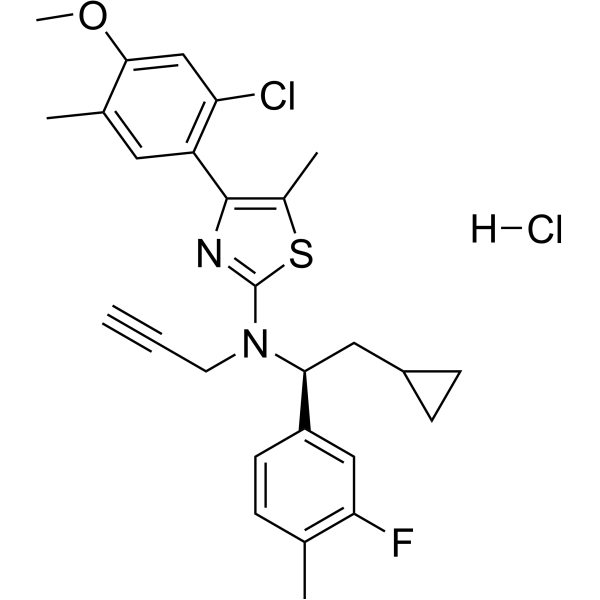
Crinecerfont (SSR-125543) hydrochloride is an orally effective corticotropin-releasing factor receptor type-1 (CRF1 receptor) antagonist. Crinecerfont hydrochloride blocks CRF1 receptor signaling to reduce adrenocorticotropic hormone secretion. Crinecerfont hydrochloride improves hypothalamic-pituitary-adrenal axis negative feedback sensitivity in chronically stressed mice. Crinecerfont hydrochloride can be used for the research of chronic stress conditions and classic congenital adrenal hyperplasia due to 21-hydroxylase deficiency. Crinecerfont hydrochloride is a click chemistry reagent, it contains an Alkyne group and can undergo copper-catalyzed azide-alkyne cycloaddition (CuAAc) with molecules containing Azide groups.
For research use only. We do not sell to patients.
- Purity : 98.82%
- CAS No.: 321839-75-2
- Formula: C27H29Cl2FN2OS
- Molecular Weight:519.50
-
Storage:
4°C, sealed storage, away from moisture and light
* In solvent : -80°C, 6 months; -20°C, 1 month (sealed storage, away from moisture and light)

To place orders, for customer services and technical support, please contact: MedChemExpress USA
Tel: 609-228-6898 E-mail: [email protected] [email protected]


-
 Biological Activity
-
Chemical Information
-
Solvent & Solubility
- Protocols
- Purity & Documentation
- References
-
 Help & FAQs


-
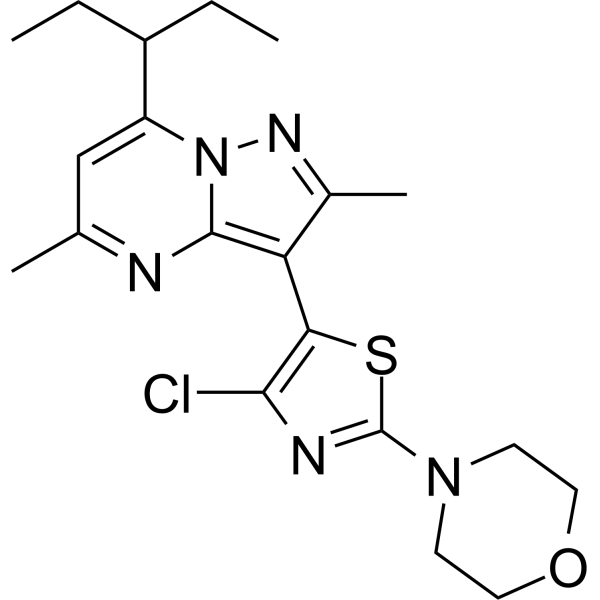
HY-113603
TildacerfontCRF1 Receptor Antagonist -
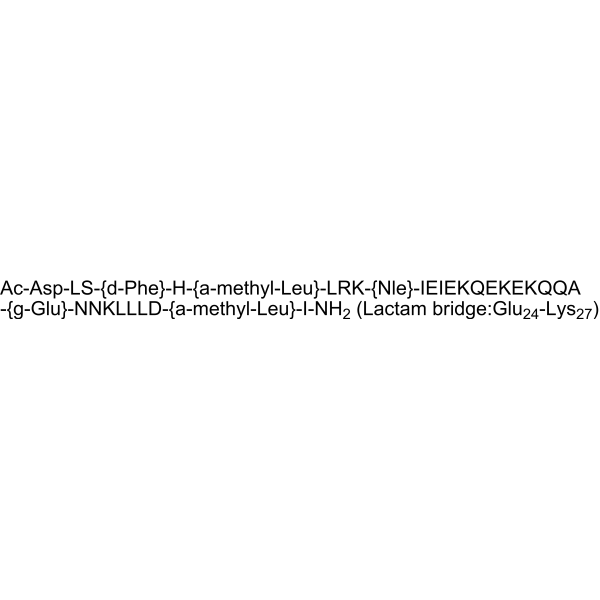
HY-P1108
Astressin 2BCRFR2 Antagonist -
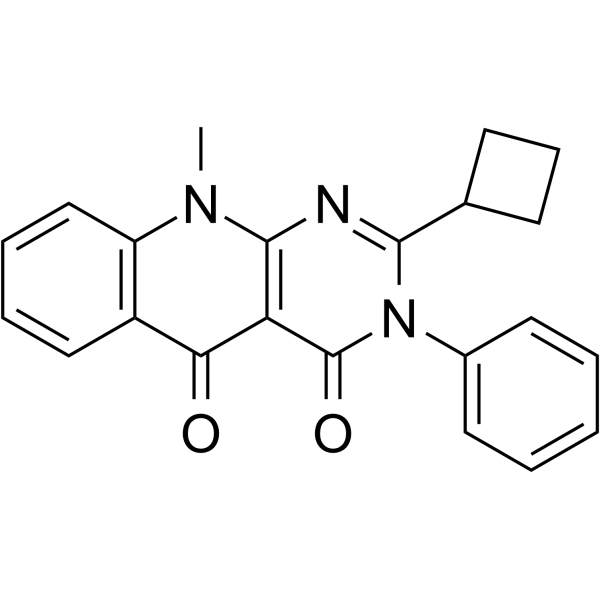
HY-150090
SRI-41315CFTR Activator -
HY-145603
VanzacaftorCFTR Modulator -
HY-109027
CavosonstatGSNOR Inhibitor -
HY-109177
IcenticaftorCFTR Potentiator -
HY-111772A
(R)-ElexacaftorCFTR Modulator -
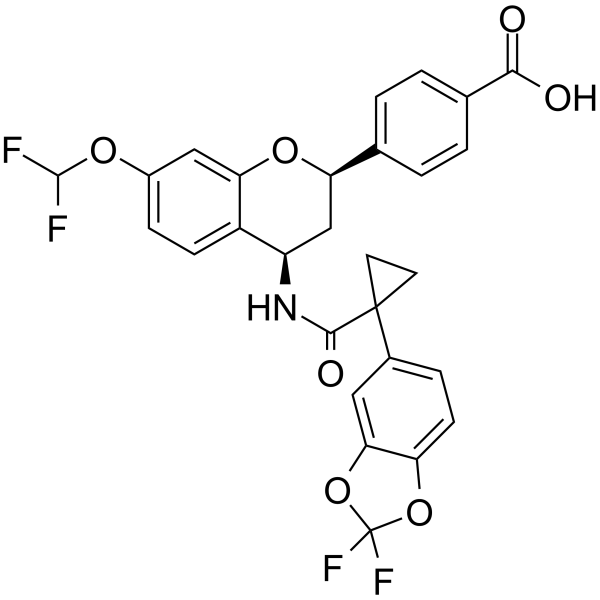
HY-111111
GalicaftorCFTR Corrector -
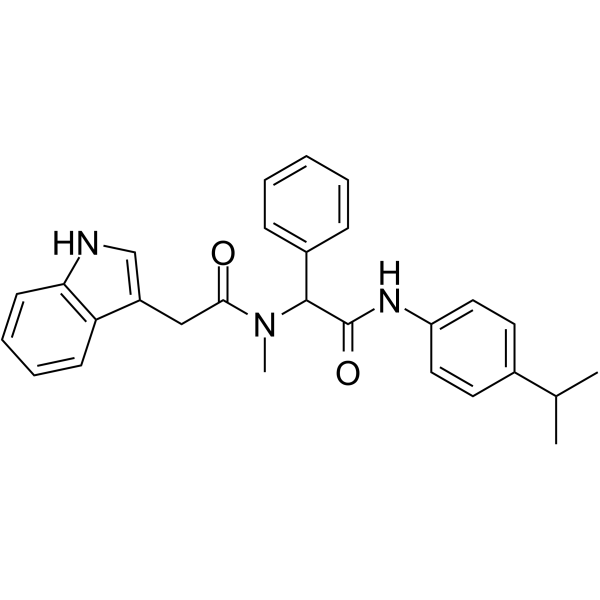
HY-103369
PG01CFTR Potentiator -
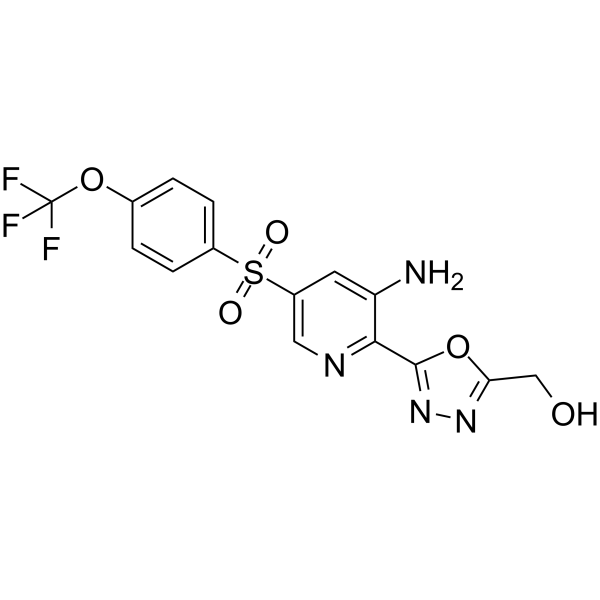
HY-109152
NavocaftorCystic Fibrosis Transmembrane Regulator -
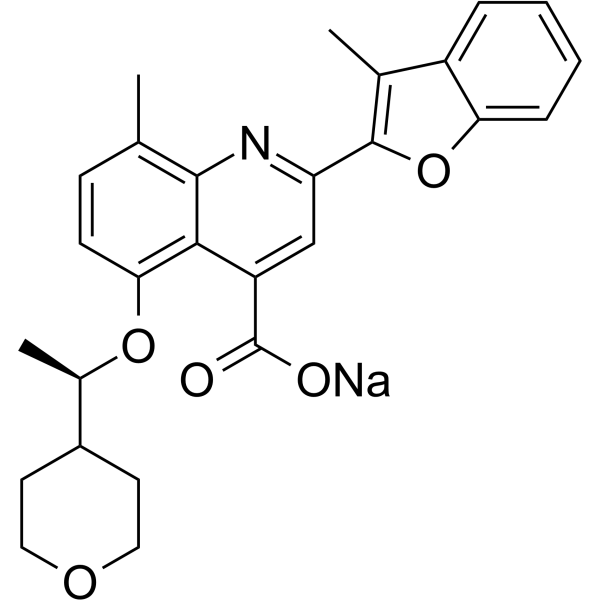
HY-109187A
Posenacaftor sodiumCFTR Modulator -
HY-136939
CFTR corrector 6CFTR Activator


Biological Activity
Description
IC50 & Target
IC50: CRF1 receptor
In Vivo
MedChemExpress (MCE) has not independently confirmed the accuracy of these methods. They are for reference only.
-
Animal Model:BALB/cByJ mice (male, 3-4 months old, chronic stress induced via unpredictable chronic mild stress for 7 weeks)[1]
-
Dosage:20 mg/kg
-
Administration:i.p.; daily; 5 weeks
-
Result:Exacerbated fecal corticosterone metabolite concentrations at six out of nine circadian time points; increased basal plasma corticosterone levels; restored corticosterone suppression in the dexamethasone suppression test to improve HPA axis negative feedback sensitivity.
-
Animal Model:BALB/cByJ mice (male, 3-4 months old)[1]
-
Dosage:20 mg/kg
-
Administration:i.p.; daily; 5 weeks
-
Result:Showed no effects on fecal corticosterone metabolite circadian activity; showed no effects on plasma corticosterone levels; showed no effects on HPA axis negative feedback sensitivity.


Chemical Information
-
CAS No. 321839-75-2
-
Appearance Solid
-
Molecular Weight 519.50
-
Formula C27H29Cl2FN2OS
-
Color Light yellow to yellow
-
SMILES
C#CCN(C1=NC(C2=C(C=C(C(C)=C2)OC)Cl)=C(S1)C)[C@H](C3=CC(F)=C(C=C3)C)CC4CC4.[H]Cl
-
Synonyms
SSR-125543 hydrochloride
-
Shipping
Room temperature in continental US; may vary elsewhere.
-
Storage
4°C, sealed storage, away from moisture and light
* In solvent : -80°C, 6 months; -20°C, 1 month (sealed storage, away from moisture and light)


Solvent & Solubility
In Vitro:
DMSO : 100 mg/mL (192.49 mM; Need ultrasonic; Hygroscopic DMSO has a significant impact on the solubility of product, please use newly opened DMSO)
Please refer to the solubility information to select the appropriate solvent. Once prepared, please aliquot and store the solution to prevent product inactivation from repeated freeze-thaw cycles.
Storage method and period of stock solution: -80°C, 6 months; -20°C, 1 month (sealed storage, away from moisture and light). When stored at -80°C, please use it within 6 months. When stored at -20°C, please use it within 1 month.
Please refer to the solubility information to select the appropriate solvent. Once prepared, please aliquot and store the solution to prevent product inactivation from repeated freeze-thaw cycles.
Storage method and period of stock solution: -80°C, 6 months; -20°C, 1 month (sealed storage, away from moisture and light). When stored at -80°C, please use it within 6 months. When stored at -20°C, please use it within 1 month.
Concentration (start) × Volume (start) = Concentration (final) × Volume (final)
In Vivo:
Select the appropriate dissolution method based on your experimental animal and administration route.
- For the following dissolution methods, please ensure to first prepare a clear stock solution using an In Vitro approach and then sequentially add co-solvents:
- To ensure reliable experimental results, the clarified stock solution can be appropriately stored based on storage conditions. As for the working solution for In Vivo experiments, it is recommended to prepare freshly and use it on the same day.
- The percentages shown for the solvents indicate their volumetric ratio in the final prepared solution. If precipitation or phase separation occurs during preparation, heat and/or sonication can be used to aid dissolution.
Add each solvent one by one: 10% DMSO 40% PEG300 5% Tween-80 45% Saline
Solubility: ≥ 2.5 mg/mL (4.81 mM); Clear solution
This protocol yields a clear solution of ≥ 2.5 mg/mL (saturation unknown).
Taking 1 mL working solution as an example, add 100 μL DMSO stock solution (25.0 mg/mL) to 400 μL PEG300, and mix evenly; then add 50 μL Tween-80 and mix evenly; then add 450 μL Saline to adjust the volume to 1 mL.
Preparation of Saline: Dissolve 0.9 g sodium chloride in ddH₂O and dilute to 100 mL to obtain a clear Saline solution.
In Vivo Dissolution Calculator
Please enter the basic information of animal experiments:
-
-
-
-
Recommended: Prepare an additional quantity of animals to account for potential losses during experiments.
Please enter your animal formula composition:
-
%DMSO +
Recommended: Keep the proportion of DMSO in working solution below 2% if your animal is weak.
-
%+
-
+%Tween-80 + +
-
%Saline +
The co-solvents required include: DMSO, . All of co-solvents are available by MedChemExpress (MCE). , Tween 80. All of co-solvents are available by MedChemExpress (MCE).
Working solution concentration: 0.22 mg/mL
Method for preparing stock solution: mg drug dissolved in μL DMSO. Stock solution concentration: mg/mL. * In solvent : -80°C, 6 months; -20°C, 1 month (sealed storage, away from moisture and light)
1. Take μL DMSO stock solution;
2. Add μL .
μL , mix evenly;
3. Then add μL Tween 80, mix evenly;
4. Then add μL
Please ensure that the stock solution in the first step is dissolved to a clear state, and add co-solvents in sequence. You can use ultrasonic heating (ultrasonic cleaner, recommended frequency 20-40 kHz), vortexing, etc. to assist dissolution.

Protocols
-
EdU Incorporation Assay (Click Chemistry-Based DNA Synthesis Measurement)
The EdU incorporation assay measures DNA synthesis by adding the thymidine analog 5-ethynyl-2′-deoxyuridine to cells or tissues, where it is incorporated into newly synthesized DNA during S phase. Incorporated EdU is detected by copper-catalyzed azide-alkyne cycloaddition, in which a fluorescent azide covalently reacts with the ethynyl group on EdU, allowing S-phase cells to be detected by fluorescence microscopy, flow cytometry, or high-content imaging. EdU detection does not require DNA denaturation or anti-BrdU antibody access, which preserves sample structure and improves compatibility with immunostaining and multiparameter cytometry compared with BrdU-based detection. EdU can be cytotoxic in a cell-type- and exposure-dependent manner, so pulse duration, concentration, and continuous-labeling designs should be validated for each cell type.
-
Research Protocol for Endocrine Diseases
Endocrine diseases often arise from disrupted hormone production, hormone signaling, or target-tissue responsiveness; for diabetes-focused endocrine disease models, insulin signaling regulates glucose uptake, hepatic glucose output, lipid metabolism, and β-cell compensation. Type 2 diabetes develops through interacting defects in insulin resistance, β-cell dysfunction, adipose inflammation, hepatic glucose overproduction, altered incretin signaling, and ectopic lipid metabolism. A major unresolved question is whether endocrine dysfunction is driven primarily by target-tissue insulin resistance, intrinsic β-cell failure, immune/inflammatory stress, or combined multi-organ failure that differs by disease stage.


Purity & Documentation
-
Data Sheet (277 KB)
-
SDS (252 KB)
- English - EN (252 KB)
- Français - FR (252 KB)
- Deutsch - DE (252 KB)
- Norwegian - NO (252 KB)
- Español - ES (252 KB)
- Swedish - SV (252 KB)
- Italian - IT (252 KB)
- Korean - KR (252 KB)
- Portuguese - PT (252 KB)
-
Handling Instructions (2659 KB)
References
[1]. Ibarguen-Vargas Y, et al. CRF-R1 Antagonist Treatment Exacerbates Circadian Corticosterone Secretion under Chronic Stress, but Preserves HPA Feedback Sensitivity. Pharmaceutics. 2021;13(12):2114. Published 2021 Dec 8. [Content Brief]
[2]. Newfield RS, et al. Crinecerfont, a CRF1 Receptor Antagonist, Lowers Adrenal Androgens in Adolescents With Congenital Adrenal Hyperplasia. J Clin Endocrinol Metab. 2023;108(11):2871-2878. [Content Brief]


Complete Stock Solution Preparation Table
Please refer to the solubility information to select the appropriate solvent. Once prepared, please aliquot and store the solution to prevent product inactivation from repeated freeze-thaw cycles.
Storage method and period of stock solution: -80°C, 6 months; -20°C, 1 month (sealed storage, away from moisture and light). When stored at -80°C, please use it within 6 months. When stored at -20°C, please use it within 1 month.
| Optional Solvent | Concentration Solvent Mass | 1 mg | 5 mg | 10 mg | 25 mg |
|---|---|---|---|---|---|
| DMSO | 1 mM | 1.9249 mL | 9.6246 mL | 19.2493 mL | 48.1232 mL |
| 5 mM | 0.3850 mL | 1.9249 mL | 3.8499 mL | 9.6246 mL | |
| 10 mM | 0.1925 mL | 0.9625 mL | 1.9249 mL | 4.8123 mL | |
| 15 mM | 0.1283 mL | 0.6416 mL | 1.2833 mL | 3.2082 mL | |
| 20 mM | 0.0962 mL | 0.4812 mL | 0.9625 mL | 2.4062 mL | |
| 25 mM | 0.0770 mL | 0.3850 mL | 0.7700 mL | 1.9249 mL | |
| 30 mM | 0.0642 mL | 0.3208 mL | 0.6416 mL | 1.6041 mL | |
| 40 mM | 0.0481 mL | 0.2406 mL | 0.4812 mL | 1.2031 mL | |
| 50 mM | 0.0385 mL | 0.1925 mL | 0.3850 mL | 0.9625 mL | |
| 60 mM | 0.0321 mL | 0.1604 mL | 0.3208 mL | 0.8021 mL | |
| 80 mM | 0.0241 mL | 0.1203 mL | 0.2406 mL | 0.6015 mL | |
| 100 mM | 0.0192 mL | 0.0962 mL | 0.1925 mL | 0.4812 mL |


Crinecerfont hydrochloride Related Classifications
HY-106203A Related Classifications
 Powered by Bioz
Keywords
- Crinecerfont
- 321839-75-2
- SSR-125543
- SSR125543
- SSR 125543
- CFTR
- chronic stress conditions
- classic congenital adrenal hyperplasia due to 21-hydroxylase deficiency
- adrenal androgens
- hypothalamic-pituitary-adrenal axis
- depression
- adrenocorticotropic hormone
- corticosterone
- corticotropin-releasing factor receptor type-1
- chronically stressed mice
- anxiety
- Inhibitor
- inhibitor
- inhibit