Search Result
Results for "
Cd40 Inhibitors
" in MedChemExpress (MCE) Product Catalog:
1
Isotope-Labeled Compounds
| Cat. No. |
상품명 |
Target |
연구분야 |
Chemical Structure |
-
- HY-122663A
-
|
|
TNF Receptor
Apoptosis
|
Metabolic Disease
|
|
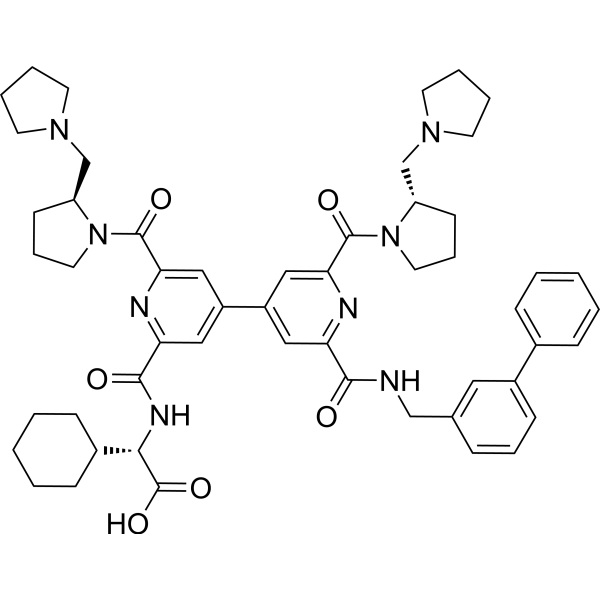
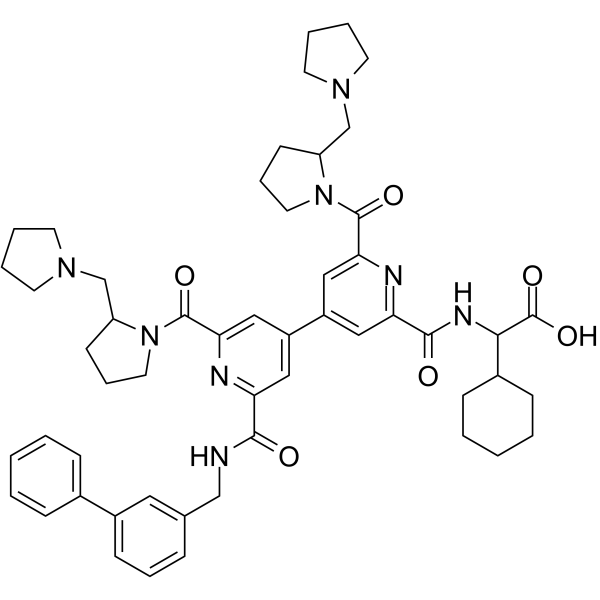
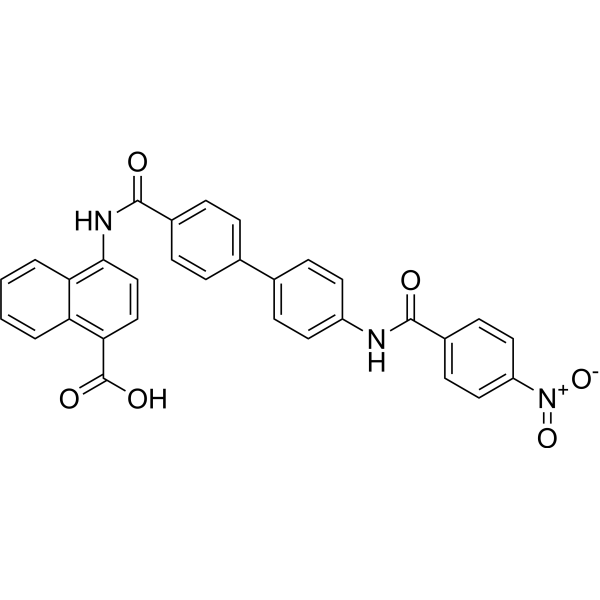
BIO8898 is a potent CD40-CD154 inhibitor. BIO8898 inhibits soluble CD40L binding to CD40-Ig with an IC50 value of 25 µM. BIO8898 inhibits CD40L-induced apoptosis .
|
-
-
- HY-N6664
-
|
Arabic gum
|
Environmental Pollutants
Parasite
Apoptosis
PERK
Transmembrane Glycoprotein
|
Infection
Cardiovascular Disease
Neurological Disease
Metabolic Disease
Cancer
|
|
Gum Arabic is an orally active complex branched polysaccharide. Gum Arabic can be isolated from the Acacia senegal tree. Gum Arabic upregulates the expression of maturation markers (CD86, CD40, and CD54), promotes ERK1/2 phosphorylation, and inhibits Apoptosis. Gum Arabic exhibits antimalarial effects against Plasmodium berghei ANKA. Gum Arabic exhibits hepatoprotective, renal, and cardiovascular protective activities. Gum Arabic improves obesity. Gum Arabic is commonly used as a stabilizer and thickener. Gum Arabic can be used in the research of brain tumor imaging .
|
-

-
- HY-120323
-
|
|
TNF Receptor
|
Inflammation/Immunology
|
|
DRI-C21045 (compound 10) is a potent and selective inhibitor of the CD40-CD40L costimulatory protein-protein interaction (PPI) with an IC50 of 0.17 μM. DRI-C21045 shows concentration-dependent inhibition of the activation of NF-κB and B cell proliferation all induced by CD40L with IC50s of 17.1 μM and 4.5 μM, respectively .
|
-
-
- HY-P990083
-
|
AT-1501
|
TNF Receptor
|
Inflammation/Immunology
|
|
Tegoprubart (AT-1501) is a CD40 ligand inhibitor (EC50=100 ng/mL) and immunosuppressant that selectively inhibits the CD40 ligand, a co-stimulatory molecule involved in T cell activation. Tegoprubart suppresses immune rejection, prevents rejection in animal transplantation models, and reduces cell-mediated and antibody-mediated immune responses to create a more immunotolerant environment. Tegoprubart preserves renal function when combined with Mycophenolate (HY-B0421) and Corticosteroids, and maintains graft function in preclinical studies. Tegoprubart is applicable to research related to kidney transplantation and kidney transplant rejection .
|
-

-
- HY-131968
-
|
|
JAK
Cytochrome P450
|
Inflammation/Immunology
|
|
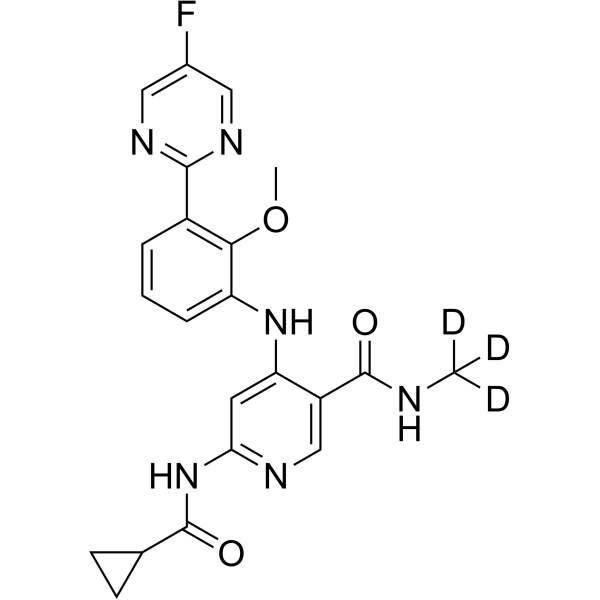
BMS-986202 is a potent, selective and orally active Tyk2 inhibitor that binds to Tyk2 JH2 with an IC50 value of 0.19 nM and a Ki of 0.02 nM. BMS-986202 is remarkably selective over other kinases including Jak family members. BMS-986202 is also a weak inhibitor of CYP2C19 with an IC50 value of 14 μM. BMS-986202 can be used for IL-23-driven acanthosis, anti-CD40-induced colitis, and spontaneous lupus research. BMS-986202 is a de novo deuterium .
|
-
-
- HY-110247
-
|
|
TNF Receptor
NF-κB
|
Cardiovascular Disease
Inflammation/Immunology
|
|
TRAF-STOP inhibitor 6877002 is a selective CD40-TRAF6 interaction inhibitor. TRAF-STOP inhibitor 6877002 exerts anti-atherosclerotic activity by blocking the CD40-TRAF6 signaling pathway, inhibiting classical monocyte activation, leukocyte recruitment, and macrophage activation and migration. TRAF-STOP inhibitor 6877002 reduces the phosphorylation levels of signaling intermediates in the canonical NF-κB pathway .
|
-
-
- HY-P99625
-
|
SAR441344; INX-021
|
TNF Receptor
|
Metabolic Disease
Inflammation/Immunology
|
|
Frexalimab (SAR441344) is a second-generation monoclonal antibody targeting the CD40 ligand (CD40L) with a good safety profile. Frexalimab inhibits the binding between CD40 and CD40L to modulate immune response. Frexalimab is likely to help prevent the process of β-cell destruction. Frexalimab is proming for multiple sclerosis, lupus erythematosus, Sj gren’s syndrome and type I diabetes research .
|
-

-
- HY-P99315
-
|
BG 9588; Anti-Human Cd40L Recombinant Antibody; Hu5c8
|
TNF Receptor
|
Inflammation/Immunology
|
|
Ruplizumab (BG 9588) is a humanized anti-CD40L IgG1κ monoclonal antibody. By binding to CD40L, Ruplizumab blocks its interaction with the CD40 receptor, inhibits T-B cell costimulatory signals, and mediates the depletion of activated T cells via the Fc segment. Ruplizumab has immunosuppressive effects. Ruplizumab can be used in the study of systemic lupus erythematosus, organ transplant rejection, and autoimmune diseases. Recommend Isotype Controls: Human IgG1 kappa, Isotype Control (HY-P99001) .
|
-

-
- HY-P99845
-
|
MEDI 4920; VIB 4920
|
TNF Receptor
|
Inflammation/Immunology
|
|
Dazodalibep (MEDI 4920; VIB 4920) is a non-antibody fusion protein that targets CD40L. Dazodalibep inhibits the co-stimulatory signals between immune cells (such as T cells, B cells, and antigen-presenting cells), thereby enabling the inhibition of a broader range of cellular and humoral responses. Dazodalibep can be used for research on rheumatoid arthritis and Sjögren's syndrome .
|
-

-
- HY-P99257
-
|
ASKP 1240
|
TNF Receptor
|
Inflammation/Immunology
|
|
Bleselumab (ASKP 1240) is a human anti-CD40 monoclonal antibody (mAb). Bleselumab binds to human CD40 with high affinity (Kd: 0.24 nM). Bleselumab inhibits immune responses by blocking the interaction of CD40 with its ligand CD40L. Bleselumab prevents organ transplant rejection .
|
-

-
- HY-122663
-
|
|
TNF Receptor
|
Cancer
|
|
(Rac)-BIO8898 is a CD40-CD154 co-stimulatory interaction inhibitor. (Rac)-BIO8898 inhibits CD154 binding to CD40-Ig with an IC50 of 25 μM .
|
-
-
- HY-118922
-
|
|
TNF Receptor
|
Neurological Disease
Inflammation/Immunology
Cancer
|
|
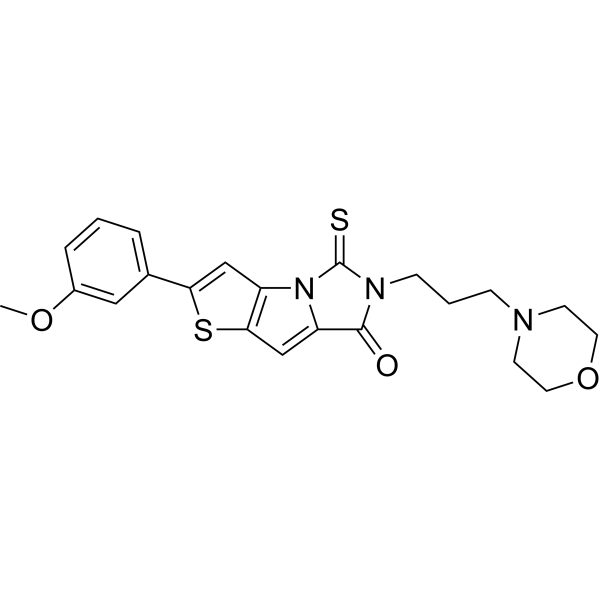
IW927 is a photochemically enhanced TNF-α-TNFR1 interaction inhibitor that blocks the binding of TNF-α to TNFRc1 with an IC50 value of 50 nM. IW927 binds reversibly to the TNFRc1 with weak affinity (Kd = 40-100 μM), covalently modifies the receptor via a photochemical reaction, and does not bind the related cytokine receptors TNFRc2 or CD40. IW927 disrupts TNFα-induced IκB phosphorylation with an IC50 value of 600 nM. IW927 can be used to develop light-independent inhibitors .
|
-
-
- HY-P990111
-
-
-
- HY-154821A
-
|
|
TNF Receptor
|
Inflammation/Immunology
|
|
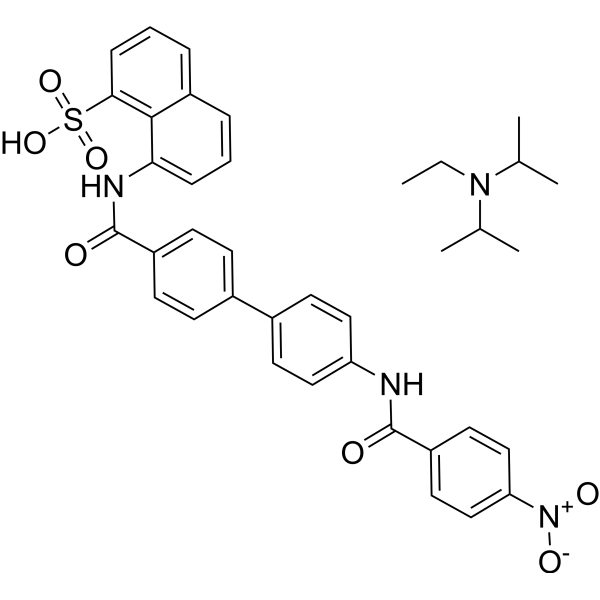
DRI-C21041 DIEA is a CD40/CD40L interaction inhibitor, with an IC50 of 0.31 μM. DRI-C21041 DIEA inhibits the immune response induced by alloantigen .
|
-
-
- HY-154822
-
|
|
TNF Receptor
NF-κB
|
Inflammation/Immunology
|
|
DRI-C25441 is a potent blocker of CD40 and CD40L interaction, with an IC50 of 0.36 μM. DRI-C25441 can inhibit the immune response induced by alloantigen. can inhibit CD40L induced activation of NF-κB signaling pathway. DRI-C25441 commonly is used in research on immune conditions .
|
-
-
- HY-P990133
-
|
|
TNF Receptor
|
Inflammation/Immunology
|
|
Anti-Monkey/Human CD40L/CD154 Antibody (5C8) is a mouse-derived IgG2a type antibody inhibitor, targeting to monkey/human CD40L/CD154. Anti-Monkey/Human CD40L/CD154 Antibody (5C8) blocks the interactionbetween CD154 and CD40. Anti-Monkey/Human CD40L/CD154 Antibody (5C8) can be used for the researches of inflammation and immunology, such as colitis and transplant .
|
-

-
- HY-P10399
-
|
Mouse KGYY15; KGYY15 peptide
|
TNF Receptor
|
Metabolic Disease
|
|
KGYY15 (Mouse KGYY15) is a CD40 targeting peptide, which weakly inhibits the CD40-CD40L interaction with IC50 of more than 1mM. KGYY15 activates 33% NF-κB pathway at 100 μM .
|
-

-
- HY-154821
-
|
|
TNF Receptor
|
Inflammation/Immunology
|
|
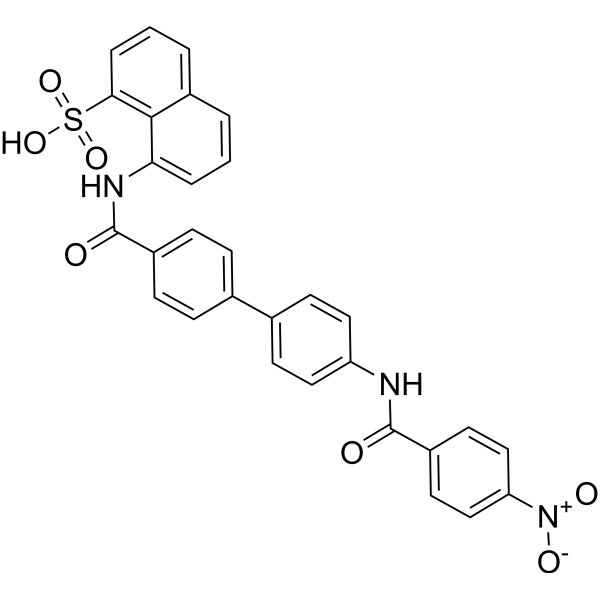
DRI-C21041 is a CD40/CD40L interaction inhibitor, with an IC50 of 0.31 μM. DRI-C21041 inhibits the immune response induced by alloantigen .
|
-
-
- HY-125025
-
-
-
- HY-16668
-
-
-
- HY-P990269
-
|
|
TNF Receptor
|
Inflammation/Immunology
Cancer
|
|
Anti-Mouse CD40L/CD154 (LALA-PG) Antibody (MR-1) is a mouse-derived IgG2a κ type antibody inhibitor, targeting to mouse CD40L/CD154. Anti-Mouse CD40L/CD154 (LALA-PG) Antibody (MR-1) is a chimeric version of the original MR-1 antibody (HY-P990134). The variable domain sequences are identical to the original MR-1 but the constant region sequences have been switched from Armenian hamster IgG to mouse IgG2a. Anti-Mouse CD40L/CD154 (LALA-PG) Antibody (MR-1) contains a LALA-PG mutation in the Fc fragment rendering it unable to bind to endogenous Fcγ receptors. Anti-Mouse CD40L/CD154 (LALA-PG) Antibody (MR-1) blocks CD40/CD40L signaling. Anti-Mouse CD40L/CD154 (LALA-PG) Antibody (MR-1) can be used for researches of cancer, inflammation and immunology.
|
-
-
- HY-P991557
-
|
|
TNF Receptor
|
Inflammation/Immunology
|
|
ABI793 is a human IgG1 anti-human CD154 (CD40 ligand) monoclonal antibody. ABI793 inhibits immune response by blocking the CD154-CD40 (IC50 = 75 nM) signaling pathway. ABI793 effectively prevents kidney transplant rejection. ABI793 can be used for research on immunological rejection .
|
-

-
- HY-120471
-
|
|
PI3K
|
Inflammation/Immunology
|
|
AM-0687 is a selective inhibitor for PI3Kδ with an IC50 of 2.9 nM. AM-0687 decreases the levels of IgG and IgM specific antibodies, inhibits the anti-IgM/CD40L-induced proliferation of human B cell (IC50=0.8 nM) and the phosphorylation of AKT (IC50=0.7 nM), and exhibits anti-inflammatory efficacy .
|
-

-
- HY-D1124
-
|
|
Fluorescent Dye
|
Others
|
|
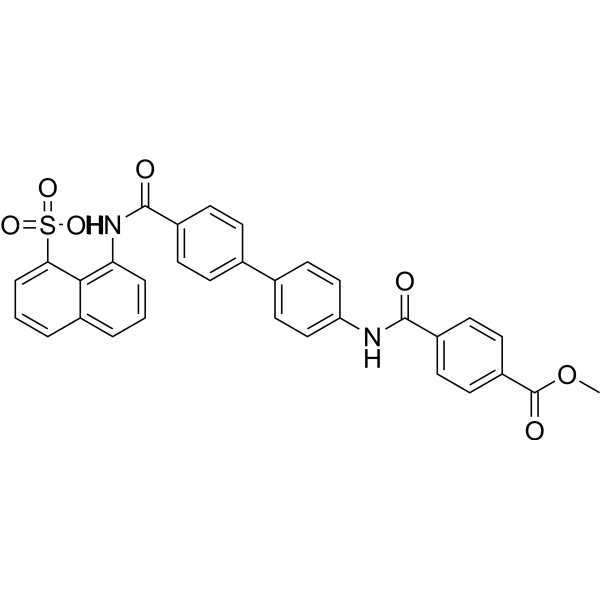
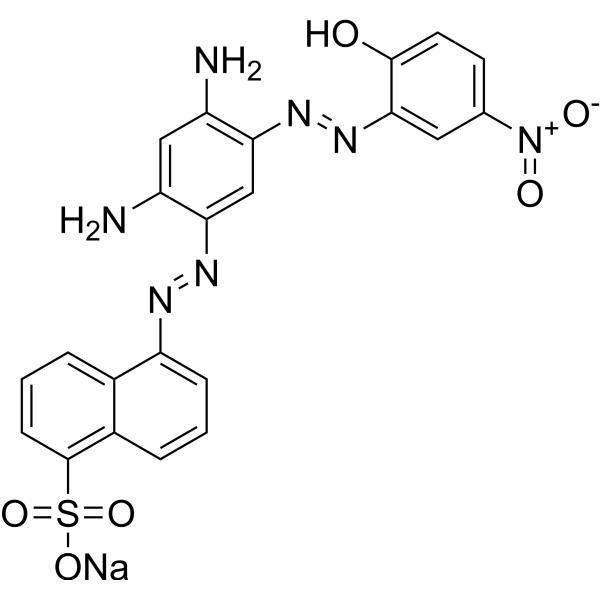
Mordant brown 1, a naphthalenesulphonic acid derivative, is an azo dye. Mordant brown 1 is also an effective and specific inhibitor of CD40-CD154 costimulatory protein-protein interaction .
|
-
-
- HY-P991554
-
|
|
TNF Receptor
|
Inflammation/Immunology
|
|
FFP-104 is a humanized IgG4 monoclonal antibody inhibitor targeting TNFRSF5/CD40. VX70 can be used for chronic autoimmune liver diseases research, such as primary biliary cholangitis (PBC) .
|
-

-
- HY-171590
-
|
|
Salt-inducible Kinase (SIK)
|
Inflammation/Immunology
|
|
SIK2-IN-3 is an orally active SIK1/2 selective inhibitor (IC50: 0.128/0.084 μM). SIK2-IN-3 inhibits CRTC3 phosphorylation and myeloid cell pro-inflammatory cytokine production. SIK2-IN-3 ameliorates systemic and tissue inflammatory responses in a mouse anti-CD40 colitis model .
|
-

-
- HY-P990270
-
|
|
TNF Receptor
|
Inflammation/Immunology
Cancer
|
|
Anti-Mouse CD40L/CD154 (D265A) Antibody (MR-1) is a mouse-derived IgG1 κ type antibody inhibitor, targeting to mouse CD40L/CD154. Anti-Mouse CD40L/CD154 (D265A) Antibody (MR-1) is a chimeric version of the original MR-1 antibody (HY-P990134). The variable domain sequences are identical to the original MR-1 but the constant region sequences have been switched from Armenian hamster IgG to mouse IgG1. Anti-Mouse CD40L/CD154 (D265A) Antibody (MR-1) contains a D265A mutation in the Fc fragment rendering it unable to bind to endogenous Fcγ receptors. Anti-Mouse CD40L/CD154 (D265A) Antibody (MR-1) blocks CD40/CD40L signaling. Anti-Mouse CD40L/CD154 (D265A) Antibody (MR-1) can be used for researches of cancer, inflammation and immunology.
|
-
-
- HY-P991555
-
|
|
TNF Receptor
Apoptosis
|
Cancer
|
|
XmAb5485 is an Fc-engineered humanized anti-CD40 monoclonal antibody with high affinity to Fc-γ receptors. XmAb5485 induces potent antibody-dependent cell-mediated cytotoxicity (ADCC) and antibody-dependent cellular phagocytosis (ADCP) against tumor cells. XmAb5485 inhibits proliferation and induces apoptosis of tumor cells. XmAb5485 shows highly cytotoxic against lymphoma, leukemia and multiple myeloma cell lines as well as primary cancer cells .
|
-

-
- HY-D1236
-
|
|
Parasite
Deubiquitinase
PARP
|
Cancer
|
|
Fluorescent brightener 71 (FB71) is an inhibitor targeting deubiquitinases UCHL5 and USP14, as well as a CD40 ligand. Fluorescent brightener 71 blocks enzymatic activity, induces apoptosis, inhibits cell growth and triggers reactive oxygen species production. Meanwhile, Fluorescent brightener 71 upregulates the expression of oxidative stress-related genes gpx-4 and sod-4, and reversibly increases the protein levels of UCHL5 and USP14 through a feedback response. Fluorescent brightener 71 inhibits the growth, movement and reproductive capacity of Caenorhabditis elegans, and also exhibits concentration-dependent toxic effects. Fluorescent brightener 71 can be applied to scientific research in related fields such as breast cancer .
|
-

-
- HY-16668R
-
|
Tyrphostin 1 (Standard); AG9 (Standard)
|
Interleukin Related
Reference Standards
|
Inflammation/Immunology
|
|
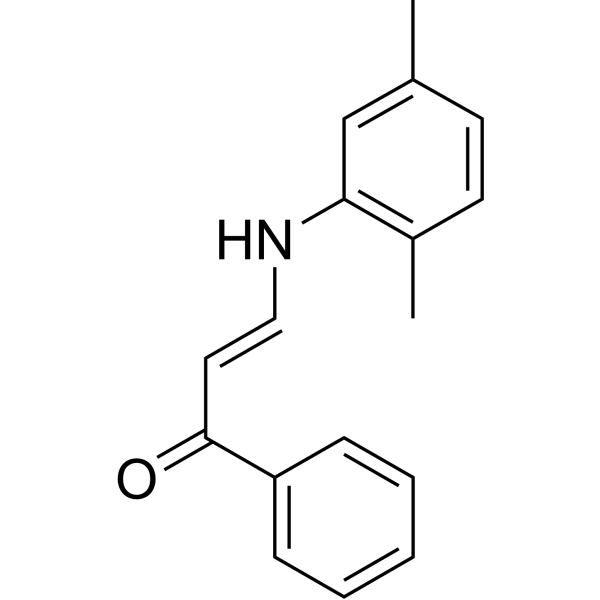
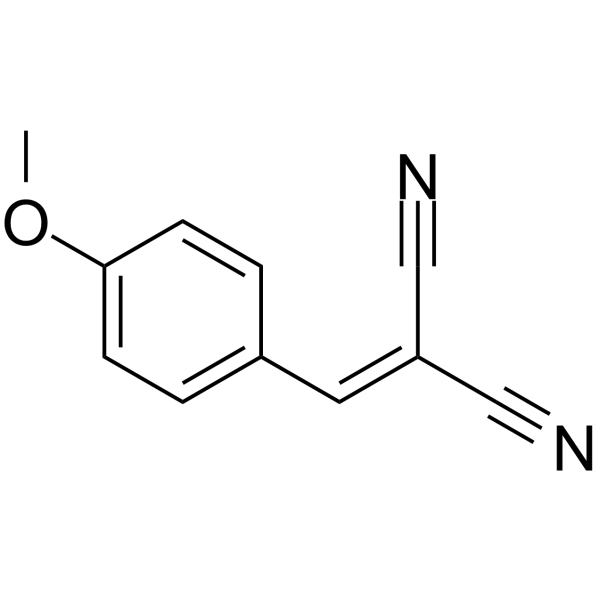
Tyrphostin A1 (Standard) is the analytical standard of Tyrphostin A1. This product is intended for research and analytical applications. Tyrphostin A1 (AG9) can inhibit CD40L-stimulated IL-12 production and antigen-induced Th1 cell production in macrophage culture.
|
-

-
- HY-D1124
-
|
|
Fluorescent Dyes
|
|
Mordant brown 1, a naphthalenesulphonic acid derivative, is an azo dye. Mordant brown 1 is also an effective and specific inhibitor of CD40-CD154 costimulatory protein-protein interaction .
|
-
- HY-D1236
-
|
|
Fluorescent Dyes
|
|
Fluorescent brightener 71 (FB71) is an inhibitor targeting deubiquitinases UCHL5 and USP14, as well as a CD40 ligand. Fluorescent brightener 71 blocks enzymatic activity, induces apoptosis, inhibits cell growth and triggers reactive oxygen species production. Meanwhile, Fluorescent brightener 71 upregulates the expression of oxidative stress-related genes gpx-4 and sod-4, and reversibly increases the protein levels of UCHL5 and USP14 through a feedback response. Fluorescent brightener 71 inhibits the growth, movement and reproductive capacity of Caenorhabditis elegans, and also exhibits concentration-dependent toxic effects. Fluorescent brightener 71 can be applied to scientific research in related fields such as breast cancer .
|
| Cat. No. |
상품명 |
Target |
Research Area |
-
- HY-P10399
-
|
Mouse KGYY15; KGYY15 peptide
|
TNF Receptor
|
Metabolic Disease
|
|
KGYY15 (Mouse KGYY15) is a CD40 targeting peptide, which weakly inhibits the CD40-CD40L interaction with IC50 of more than 1mM. KGYY15 activates 33% NF-κB pathway at 100 μM .
|
| Cat. No. |
상품명 |
Target |
Research Area |
Image |
-
- HY-P990083
-
|
AT-1501
|
TNF Receptor
|
Inflammation/Immunology
|
|
Tegoprubart (AT-1501) is a CD40 ligand inhibitor (EC50=100 ng/mL) and immunosuppressant that selectively inhibits the CD40 ligand, a co-stimulatory molecule involved in T cell activation. Tegoprubart suppresses immune rejection, prevents rejection in animal transplantation models, and reduces cell-mediated and antibody-mediated immune responses to create a more immunotolerant environment. Tegoprubart preserves renal function when combined with Mycophenolate (HY-B0421) and Corticosteroids, and maintains graft function in preclinical studies. Tegoprubart is applicable to research related to kidney transplantation and kidney transplant rejection .
|
-

(5)
-
- HY-P99625
-
|
SAR441344; INX-021
|
TNF Receptor
|
Metabolic Disease
Inflammation/Immunology
|
|
Frexalimab (SAR441344) is a second-generation monoclonal antibody targeting the CD40 ligand (CD40L) with a good safety profile. Frexalimab inhibits the binding between CD40 and CD40L to modulate immune response. Frexalimab is likely to help prevent the process of β-cell destruction. Frexalimab is proming for multiple sclerosis, lupus erythematosus, Sj gren’s syndrome and type I diabetes research .
|
-
(5)
-
- HY-P99315
-
|
BG 9588; Anti-Human Cd40L Recombinant Antibody; Hu5c8
|
TNF Receptor
|
Inflammation/Immunology
|
|
Ruplizumab (BG 9588) is a humanized anti-CD40L IgG1κ monoclonal antibody. By binding to CD40L, Ruplizumab blocks its interaction with the CD40 receptor, inhibits T-B cell costimulatory signals, and mediates the depletion of activated T cells via the Fc segment. Ruplizumab has immunosuppressive effects. Ruplizumab can be used in the study of systemic lupus erythematosus, organ transplant rejection, and autoimmune diseases. Recommend Isotype Controls: Human IgG1 kappa, Isotype Control (HY-P99001) .
|
-
(5)
-
- HY-P99845
-
|
MEDI 4920; VIB 4920
|
TNF Receptor
|
Inflammation/Immunology
|
|
Dazodalibep (MEDI 4920; VIB 4920) is a non-antibody fusion protein that targets CD40L. Dazodalibep inhibits the co-stimulatory signals between immune cells (such as T cells, B cells, and antigen-presenting cells), thereby enabling the inhibition of a broader range of cellular and humoral responses. Dazodalibep can be used for research on rheumatoid arthritis and Sjögren's syndrome .
|
-
(5)
-
- HY-P99257
-
|
ASKP 1240
|
TNF Receptor
|
Inflammation/Immunology
|
|
Bleselumab (ASKP 1240) is a human anti-CD40 monoclonal antibody (mAb). Bleselumab binds to human CD40 with high affinity (Kd: 0.24 nM). Bleselumab inhibits immune responses by blocking the interaction of CD40 with its ligand CD40L. Bleselumab prevents organ transplant rejection .
|
-
(5)
-
- HY-P990111
-
-
(5)
-
- HY-P990133
-
|
|
TNF Receptor
|
Inflammation/Immunology
|
|
Anti-Monkey/Human CD40L/CD154 Antibody (5C8) is a mouse-derived IgG2a type antibody inhibitor, targeting to monkey/human CD40L/CD154. Anti-Monkey/Human CD40L/CD154 Antibody (5C8) blocks the interactionbetween CD154 and CD40. Anti-Monkey/Human CD40L/CD154 Antibody (5C8) can be used for the researches of inflammation and immunology, such as colitis and transplant .
|
-
(5)
-
- HY-P990269
-
|
|
TNF Receptor
|
Inflammation/Immunology
Cancer
|
|
Anti-Mouse CD40L/CD154 (LALA-PG) Antibody (MR-1) is a mouse-derived IgG2a κ type antibody inhibitor, targeting to mouse CD40L/CD154. Anti-Mouse CD40L/CD154 (LALA-PG) Antibody (MR-1) is a chimeric version of the original MR-1 antibody (HY-P990134). The variable domain sequences are identical to the original MR-1 but the constant region sequences have been switched from Armenian hamster IgG to mouse IgG2a. Anti-Mouse CD40L/CD154 (LALA-PG) Antibody (MR-1) contains a LALA-PG mutation in the Fc fragment rendering it unable to bind to endogenous Fcγ receptors. Anti-Mouse CD40L/CD154 (LALA-PG) Antibody (MR-1) blocks CD40/CD40L signaling. Anti-Mouse CD40L/CD154 (LALA-PG) Antibody (MR-1) can be used for researches of cancer, inflammation and immunology.
|
-
(5)
-
- HY-P991557
-
|
|
TNF Receptor
|
Inflammation/Immunology
|
|
ABI793 is a human IgG1 anti-human CD154 (CD40 ligand) monoclonal antibody. ABI793 inhibits immune response by blocking the CD154-CD40 (IC50 = 75 nM) signaling pathway. ABI793 effectively prevents kidney transplant rejection. ABI793 can be used for research on immunological rejection .
|
-
(5)
-
- HY-P991554
-
|
|
TNF Receptor
|
Inflammation/Immunology
|
|
FFP-104 is a humanized IgG4 monoclonal antibody inhibitor targeting TNFRSF5/CD40. VX70 can be used for chronic autoimmune liver diseases research, such as primary biliary cholangitis (PBC) .
|
-
(5)
-
- HY-P990270
-
|
|
TNF Receptor
|
Inflammation/Immunology
Cancer
|
|
Anti-Mouse CD40L/CD154 (D265A) Antibody (MR-1) is a mouse-derived IgG1 κ type antibody inhibitor, targeting to mouse CD40L/CD154. Anti-Mouse CD40L/CD154 (D265A) Antibody (MR-1) is a chimeric version of the original MR-1 antibody (HY-P990134). The variable domain sequences are identical to the original MR-1 but the constant region sequences have been switched from Armenian hamster IgG to mouse IgG1. Anti-Mouse CD40L/CD154 (D265A) Antibody (MR-1) contains a D265A mutation in the Fc fragment rendering it unable to bind to endogenous Fcγ receptors. Anti-Mouse CD40L/CD154 (D265A) Antibody (MR-1) blocks CD40/CD40L signaling. Anti-Mouse CD40L/CD154 (D265A) Antibody (MR-1) can be used for researches of cancer, inflammation and immunology.
|
-
(5)
-
- HY-P991555
-
|
|
TNF Receptor
Apoptosis
|
Cancer
|
|
XmAb5485 is an Fc-engineered humanized anti-CD40 monoclonal antibody with high affinity to Fc-γ receptors. XmAb5485 induces potent antibody-dependent cell-mediated cytotoxicity (ADCC) and antibody-dependent cellular phagocytosis (ADCP) against tumor cells. XmAb5485 inhibits proliferation and induces apoptosis of tumor cells. XmAb5485 shows highly cytotoxic against lymphoma, leukemia and multiple myeloma cell lines as well as primary cancer cells .
|
-
(5)
| Cat. No. |
상품명 |
Category |
Target |
Chemical Structure |
| Cat. No. |
상품명 |
Chemical Structure |
-
- HY-131968
-
1 Publications Verification
|
|
BMS-986202 is a potent, selective and orally active Tyk2 inhibitor that binds to Tyk2 JH2 with an IC50 value of 0.19 nM and a Ki of 0.02 nM. BMS-986202 is remarkably selective over other kinases including Jak family members. BMS-986202 is also a weak inhibitor of CYP2C19 with an IC50 value of 14 μM. BMS-986202 can be used for IL-23-driven acanthosis, anti-CD40-induced colitis, and spontaneous lupus research. BMS-986202 is a de novo deuterium .
|
-
| Cat. No. |
상품명 |
|
Classification |
-
- HY-N6664
-
|
Arabic gum
|
|
Emulsifiers
Suspending Agents
|
|
Gum Arabic is an orally active complex branched polysaccharide. Gum Arabic can be isolated from the Acacia senegal tree. Gum Arabic upregulates the expression of maturation markers (CD86, CD40, and CD54), promotes ERK1/2 phosphorylation, and inhibits Apoptosis. Gum Arabic exhibits antimalarial effects against Plasmodium berghei ANKA. Gum Arabic exhibits hepatoprotective, renal, and cardiovascular protective activities. Gum Arabic improves obesity. Gum Arabic is commonly used as a stabilizer and thickener. Gum Arabic can be used in the research of brain tumor imaging .
|
Your information is safe with us. * Required Fields.
Inquiry Information
- 상품명:
- Cat. No.:
- 수량:
- MCE Japan Authorized Agent:








