



TRAF-STOP inhibitor 6877002
Based on 4 publication(s) in Google Scholar
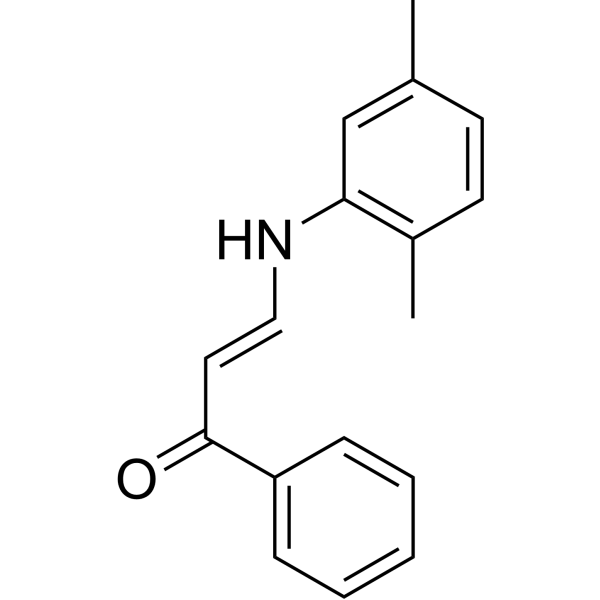
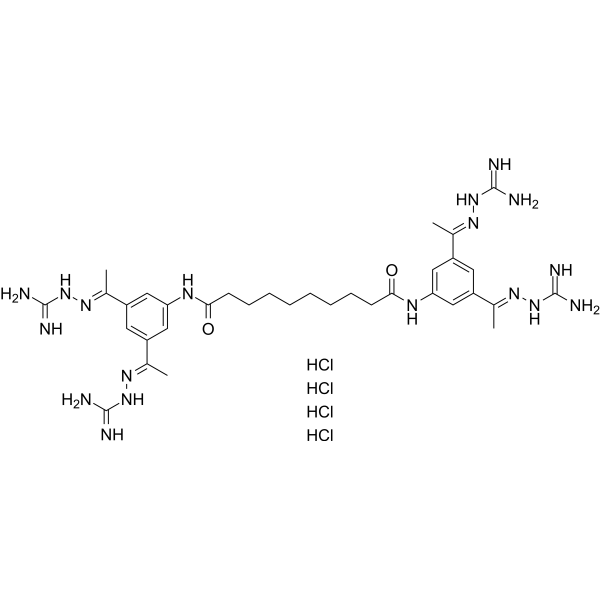
TRAF-STOP inhibitor 6877002 is a selective CD40-TRAF6 interaction inhibitor. TRAF-STOP inhibitor 6877002 exerts anti-atherosclerotic activity by blocking the CD40-TRAF6 signaling pathway, inhibiting classical monocyte activation, leukocyte recruitment, and macrophage activation and migration. TRAF-STOP inhibitor 6877002 reduces the phosphorylation levels of signaling intermediates in the canonical NF-κB pathway.
연구목적의 판매만을 진행합니다. 환자를 대상으로 한 판매는 하지 않습니다.
- Purity : 99.67%
- CAS No.: 433249-94-6
- 화학식: C17H17NO
- 분자량:251.32
-
보관:Powder -20°C, 3 years , 4°C, 2 years ; In solvent -80°C, 2 years , -20°C, 1 year

To place orders, for customer services and technical support, please contact: MedChemExpress USA
Tel: 609-228-6898 E-mail: [email protected] [email protected]


-
 Biological Activity
-
Chemical Information
-
용액&용해도
- Protocol
- 순도&문서
- References
-
 Help & FAQs



Publications Citing Use of MedChemExpress (MCE) TRAF-STOP inhibitor 6877002
More

Biological Activity
제품 설명
IC50 & Target
CD40-TRAF6 interaction; NF-κB
In Vitro
TRAF-STOP inhibitor 6877002 (10 μM; 10 min-24 h) reduces the CD40-induced expression of TNF-α, IL-1β, IL-6, IL-10, IL-12, and inducible nitric oxide synthase (iNOS) in bone marrow-derived macrophages (BMDMs). TRAF-STOP inhibitor 6877002 reduces the CD40-induced phosphorylation of Tak1 and NF-κB p65. TRAF-STOP inhibitor 6877002 also reduces the expression of the chemokine-chemokine receptor pairs CCL2-CCR2 and CCL5-CCR5 in bone marrow-derived macrophages (BMDMs)[1].
TRAF-STOP inhibitor 6877002 (10 μM) reduces CD36 expression in bone marrow-derived macrophages (BMDMs), resulting in decreased uptake of oxidized low-density lipoprotein and reduced macrophage foam cell formation[1].
MedChemExpress (MCE) has not independently confirmed the accuracy of these methods. They are for reference only. Further protocols information, click here.
-
Cell Line:BMDMs
-
Concentration:10 μM
-
Incubation Time:10 min, 24 hours
-
Result:Reduced the CD40-induced phosphorylation of Tak1 and NF-κB p65, whereas the levels of NF-κB2 p52 and the phosphorylation of ERK1/2 were not affected.
In Vivo
TRAF-STOP inhibitor 6877002 (10 μmol/kg; intraperitoneal injection; once a day; 6 weeks) halts the progression of established atherosclerosis, induces a stable plaque phenotype, reduces macrophage number and proliferation, decreases the size of necrotic cores, reduces the number of neutrophils and T cells, and increases collagen and αSMA+ smooth muscle cell content in atherosclerotic plaques in apolipoprotein E-deficient (Apoe-/-) mice[1].
TRAF-STOP inhibitor 6877002 (10 μmol/kg; administered via recombinant high-density lipoprotein nanoparticles; twice a week; 6 weeks) reduces plaque volume in the aortic root and the number of macrophages in plaques in apolipoprotein E-deficient (Apoe-/-) mice[1].
MedChemExpress (MCE) has not independently confirmed the accuracy of these methods. They are for reference only.
-
Animal Model:Male apolipoprotein E-deficient (Apoe-/-) mice (22 weeks old), with advanced atherosclerotic lesions already present in the aortic arch to establish an established atherosclerosis model[1].
-
Dosage:10 μmol/kg (vehicle: PBS, 0.05% Tween 80, 5% dimethylsulfoxide)
-
Administration:Intraperitoneal injection, once a day, for 6 weeks
-
Result:Halted the progression of established atherosclerosis, reduced the total atherosclerotic plaque area in the aortic arch and aortic root. The atherosclerotic plaques exhibited a stable phenotype with decreased macrophage number and proliferation, smaller necrotic cores, fewer neutrophils and T cells, and increased collagen and αSMA+ smooth muscle cell content.
-
Animal Model:Male apolipoprotein E-deficient (Apoe-/-) mice (12 weeks old), fed a normal chow diet to establish an atherosclerosis-prone model[1].
-
Dosage:10 μmol/kg (vehicle: PBS, 0.05% Tween 80, 5% dimethylsulfoxide)
-
Administration:Intraperitoneal injection, once a day, for 6 weeks
-
Result:Retarded the development of early atherosclerosis, reduced atherosclerotic plaque area in the aortic arch, and the plaques contained fewer macrophages, T cells, and neutrophils. There were no changes in the number of proliferating or apoptotic cells, plaque smooth muscle cell or collagen content.
-
Animal Model:Male apolipoprotein E-deficient (Apoe-/-) mice (12 weeks old) with atherosclerosis model[1].
-
Dosage:10 μmol/kg (packaged in recombinant high-density lipoprotein nanoparticles)
-
Administration:Administered via recombinant high-density lipoprotein nanoparticles, twice a week, for 6 weeks
-
Result:Reduced plaque volume in the aortic root and the number of macrophages in plaques.


Chemical Information
-
CAS No. 433249-94-6
-
Appearance Solid
-
분자량 251.32
-
화학식 C17H17NO
-
Color Light yellow to yellow
-
SMILES
O=C(C1=CC=CC=C1)/C=C/NC2=C(C=CC(C)=C2)C
-
선적
Room temperature in continental US; may vary elsewhere.
-
보관
Powder -20°C 3 years 4°C 2 years In solvent -80°C 2 years -20°C 1 year


Publications (4)
-
Journal Impact Factor
-
Most Recent
-
J Control Release
Fibrin gel-based co-delivery of self-adjuvant tumor vaccine and PD-1 blockade for post-surgical gastric cancer immunotherapy. [Abstract]2026 Mar 10:391:114629. PMID: 41544668 -
Cell Rep
2024 Aug 22;43(9):114664. PMID: 39178113 -
Front Immunol
Fusobacterium nucleatum drives CD40-mediated dendritic cell activation and Th17/Treg imbalance to exacerbate intestinal inflammation in Crohn's disease. [Abstract]2026 Jan 6:16:1712971. PMID: 41567217 -
Sci Rep
Mitigating cardiac allograft vasculopathy in a murine model via CD40-TRAF6 blockade and cyclosporin A synergy. [Abstract]2025 Jul 1;15(1):22327. PMID: 40595221


용액&용해도
In Vitro:
DMSO : 100 mg/mL (397.90 mM; Need ultrasonic; Hygroscopic DMSO has a significant impact on the solubility of product, please use newly opened DMSO)
Please refer to the solubility information to select the appropriate solvent. Once prepared, please aliquot and store the solution to prevent product inactivation from repeated freeze-thaw cycles.
Storage method and period of stock solution: -80°C, 2 years; -20°C, 1 year. When stored at -80°C, please use it within 2 years. When stored at -20°C, please use it within 1 year.
Please refer to the solubility information to select the appropriate solvent. Once prepared, please aliquot and store the solution to prevent product inactivation from repeated freeze-thaw cycles.
Storage method and period of stock solution: -80°C, 2 years; -20°C, 1 year. When stored at -80°C, please use it within 2 years. When stored at -20°C, please use it within 1 year.
Concentration (start) × Volume (start) = Concentration (final) × Volume (final)
In Vivo:
Select the appropriate dissolution method based on your experimental animal and administration route.
- For the following dissolution methods, please ensure to first prepare a clear stock solution using an In Vitro approach and then sequentially add co-solvents:
- To ensure reliable experimental results, the clarified stock solution can be appropriately stored based on storage conditions. As for the working solution for In Vivo experiments, it is recommended to prepare freshly and use it on the same day.
- The percentages shown for the solvents indicate their volumetric ratio in the final prepared solution. If precipitation or phase separation occurs during preparation, heat and/or sonication can be used to aid dissolution.
Add each solvent one by one: 10% DMSO 40% PEG300 5% Tween-80 45% Saline
Solubility: ≥ 2.08 mg/mL (8.28 mM); Clear solution
This protocol yields a clear solution of ≥ 2.08 mg/mL (saturation unknown).
Taking 1 mL working solution as an example, add 100 μL DMSO stock solution (20.8 mg/mL) to 400 μL PEG300, and mix evenly; then add 50 μL Tween-80 and mix evenly; then add 450 μL Saline to adjust the volume to 1 mL.
Preparation of Saline: Dissolve 0.9 g sodium chloride in ddH₂O and dilute to 100 mL to obtain a clear Saline solution.
In Vivo Dissolution Calculator
Please enter the basic information of animal experiments:
-
-
-
-
Recommended: Prepare an additional quantity of animals to account for potential losses during experiments.
Please enter your animal formula composition:
-
%DMSO +
Recommended: Keep the proportion of DMSO in working solution below 2% if your animal is weak.
-
%+
-
+%Tween-80 + +
-
%Saline +
The co-solvents required include: DMSO, . All of co-solvents are available by MedChemExpress (MCE). , Tween 80. All of co-solvents are available by MedChemExpress (MCE).
Working solution concentration: 0.22 mg/mL
Method for preparing stock solution: mg drug dissolved in μL DMSO. Stock solution concentration: mg/mL.
1. Take μL DMSO stock solution;
2. Add μL .
μL , mix evenly;
3. Then add μL Tween 80, mix evenly;
4. Then add μL
Please ensure that the stock solution in the first step is dissolved to a clear state, and add co-solvents in sequence. You can use ultrasonic heating (ultrasonic cleaner, recommended frequency 20-40 kHz), vortexing, etc. to assist dissolution.

Protocol
-
Kinase activity and phosphorylation assays
Kinase activity assays measure the ability of kinases to transfer phosphate groups from ATP to specific substrates, while phosphorylation assays detect the presence and levels of phosphorylated proteins. Common methods include radiolabeled ATP incorporation (e. g. ,), ADP release detection via bioluminescence (e. g. ,[3]), enzyme-linked immunosorbent assays (ELISA) for phospho-specific epitopes (e. g. ,[6]), and microtiter-based formats for high-throughput screening (e. g. ,[8]). The ADP-Glo assay quantifies kinase activity by measuring ADP produced during phosphorylation using a luciferase-based system. Radiometric assays involve autoradiography or scintillation counting after incorporation of 32P-labeled ATP into substrate proteins. ELISA-based approaches rely on phospho-specific antibodies to detect activated kinases in cell lysates or purified samples.
-
Western Blot
Western blotting (WB) is a commonly used experimental method in molecular biology, biochemistry, and immunogenetics for identifying and quantifying target proteins. It combines gel electrophoresis with immunoassay, enabling researchers to analyze protein expression, post-translational modifications, and molecular weight.
-
Cell migration
Cell migration is a method that plays an important role in wound healing, cell differentiation, embryonic development, etc.
-
Protocol for Kinase activity and phosphorylation assays
Kinase activity assays measure transfer of phosphate from ATP to a protein or peptide substrate, generating phosphorylated substrate, ADP, or incorporated radiolabeled phosphate as the readout; phosphorylation assays measure site-specific phosphorylation in cells or tissues as a proxy for kinase-pathway activation, inhibition, or substrate regulation. Phosphorylation can be detected by phospho-specific Western blot, immunoprecipitation kinase assay, phospho-immunofluorescence, phospho-flow cytometry, luminescent ADP detection, radiolabeled ATP incorporation, or reporter-based pathway assays, and these readouts can be applied to cancer cells, primary neurons, mouse tumors, organoids, inflammatory macrophages, ferroptosis studies, and mitophagy studies when the kinase target is biologically relevant.
-
Research Protocol for Inflammation-related Diseases
The NLRP3 inflammasome is a cytosolic innate immune signaling platform that integrates priming signals and danger-signal activation to promote caspase-1 activation, maturation of IL-1β and IL-18, and gasdermin D-mediated pyroptotic cell death. The core experimental logic is to determine whether inflammatory disease phenotypes are driven by increased NLRP3 expression, ASC-containing inflammasome assembly, caspase-1 cleavage, GSDMD cleavage, and extracellular release of IL-1β/IL-18 rather than by nonspecific cell injury alone. The pathway is strongly linked to inflammation-related disease phenotypes because monosodium urate crystals activate NALP3/NLRP3 inflammasome signaling in gout-like crystal inflammation, cholesterol crystals activate NLRP3 inflammasomes in atherogenesis models, and DSS-induced intestinal inflammation has been reported to involve NLRP3 inflammasome activity. However, experimental colitis studies also show context-dependent protective effects of NLRP3 inflammasome co


순도&문서
-
Data Sheet (280 KB)
-
SDS (398 KB)
- English - EN (398 KB)
- Français - FR (398 KB)
- Deutsch - DE (398 KB)
- Norwegian - NO (398 KB)
- Español - ES (398 KB)
- Swedish - SV (398 KB)
- Italian - IT (398 KB)
- Korean - KR (398 KB)
- Portuguese - PT (398 KB)
-
Handling Instructions (2659 KB)
References


Complete Stock Solution Preparation Table
Please refer to the solubility information to select the appropriate solvent. Once prepared, please aliquot and store the solution to prevent product inactivation from repeated freeze-thaw cycles.
Storage method and period of stock solution: -80°C, 2 years; -20°C, 1 year. When stored at -80°C, please use it within 2 years. When stored at -20°C, please use it within 1 year.
| Optional Solvent | Concentration Solvent Mass | 1 mg | 5 mg | 10 mg | 25 mg |
|---|---|---|---|---|---|
| DMSO | 1 mM | 3.9790 mL | 19.8950 mL | 39.7899 mL | 99.4748 mL |
| 5 mM | 0.7958 mL | 3.9790 mL | 7.9580 mL | 19.8950 mL | |
| 10 mM | 0.3979 mL | 1.9895 mL | 3.9790 mL | 9.9475 mL | |
| 15 mM | 0.2653 mL | 1.3263 mL | 2.6527 mL | 6.6317 mL | |
| 20 mM | 0.1989 mL | 0.9947 mL | 1.9895 mL | 4.9737 mL | |
| 25 mM | 0.1592 mL | 0.7958 mL | 1.5916 mL | 3.9790 mL | |
| 30 mM | 0.1326 mL | 0.6632 mL | 1.3263 mL | 3.3158 mL | |
| 40 mM | 0.0995 mL | 0.4974 mL | 0.9947 mL | 2.4869 mL | |
| 50 mM | 0.0796 mL | 0.3979 mL | 0.7958 mL | 1.9895 mL | |
| 60 mM | 0.0663 mL | 0.3316 mL | 0.6632 mL | 1.6579 mL | |
| 80 mM | 0.0497 mL | 0.2487 mL | 0.4974 mL | 1.2434 mL | |
| 100 mM | 0.0398 mL | 0.1989 mL | 0.3979 mL | 0.9947 mL |


TRAF-STOP inhibitor 6877002 Related Classifications
HY-110247 Related Classifications
 Powered by Bioz