Search Result
Results for "
Coating agents
" in MedChemExpress (MCE) Product Catalog:
20
Biochemical Assay Reagents
3
Isotope-Labeled Compounds
| Cat. No. |
Product Name |
Target |
Research Areas |
Chemical Structure |
-
- HY-B1620L
-
|
PVP, average Mw~40000; Polyvidone, average Mw~40000; Povidone, average Mw~40000
|
Environmental Pollutants
Biochemical Assay Reagents
|
Others
|
|
Polyvinylpyrrolidone, average Mw~40000 is a multifunctional synthetic polymer with an average molecular weight of 40,000 Da. Polyvinylpyrrolidone, average Mw~40000 is widely used to synthesize nanoparticles. Polyvinylpyrrolidone, average Mw~40000 is a versatile excipient for both conventional formulations and novel controlled or targeted delivery systems, serving as a binder, coating agent, suspending agent, pore-former, solubilizer, stabilizer, etc .
|
-

-
- HY-B1620E
-
|
PVP K60; Polyvidone K60; Povidone K60
|
Biochemical Assay Reagents
|
Others
|
|
Polyvinylpyrrolidone K60 is one of the polymers in pharmaceutical preparations. Polyvinylpyrrolidone K60 promotes amorphous dispersion and inhibits crystallization of the drug .
|
-

-
- HY-126436A
-
|
L-Ornithine homopolymer hydrobromide (MW 30000-70000)
|
Biochemical Assay Reagents
|
Neurological Disease
|
|
Poly-L-ornithine hydrobromide (MW 30000-70000) is a poly-lysine derivative with a molecular weight of 30000-70000. Poly-L-ornithine hydrobromide (MW 30000-70000) binds to the surface of cell culture vessels through positively charged amino acid residues to form a coating that promotes cell adhesion and provides cells with a matrix environment required for growth. Poly-L-ornithine hydrobromide (MW 30000-70000) is used as a coating agent in cell culture and can be used for the study of primary culture of neurons (such as dopaminergic neurons and oligodendrocytes) .
|
-

-
- HY-W051271
-
|
Titanium dioxide
|
Environmental Pollutants
Reactive Oxygen Species (ROS)
Photosensitizer
|
Others
|
|
Titanium(IV) oxide is a photosensitizer and photocatalyst. Titanium(IV) oxide can be used as a pharmaceutical excipient such as a flow aid, coating agent, sunscreen, colorant, etc. Pharmaceutical excipients or pharmaceutical excipients refer to other chemical substances used in the pharmaceutical process other than the drug ingredients. Pharmaceutical excipients generally refer to inactive ingredients in pharmaceutical preparations that can improve the stability, solubility and processability of pharmaceutical preparations. Pharmaceutical excipients also affect the absorption, distribution, metabolism and elimination (ADME) process of co-administered drugs. Titanium(IV) oxide can use light energy to generate electron-hole pairs to degrade pollutants. Photons excite electrons in TiO2 to generate active oxygen species (such as ·OH and ·O2 -), thereby oxidizing and mineralizing pollutants such as organic compounds and heavy metals. TiO2 can be used in the research of environmental remediation fields such as water treatment, air purification and self-cleaning materials .
|
-

-
- HY-B1620C
-
|
PVP K17; Polyvidone K17; Povidone K17
|
Biochemical Assay Reagents
|
Others
|
|
Polyvinylpyrrolidone K17 is one of the polymers in pharmaceutical preparations. Polyvinylpyrrolidone K17 is a versatile excipient for both conventional formulations and novel controlled or targeted delivery systems, serving as a binder, coating agent, suspending agent, pore-former, solubilizer, stabilizer, etc .
|
-

-
- HY-B1620D
-
|
PVP K25; Polyvidone K25; Povidone K25
|
Biochemical Assay Reagents
|
Others
|
|
Polyvinylpyrrolidone K25 is a multifunctional synthetic polymer. Polyvinylpyrrolidone K25 is a versatile excipient for both conventional formulations and novel controlled or targeted delivery systems. Polyvinylpyrrolidone K25 is a preferable binder for granules and tablets .
|
-

-
- HY-100557
-
|
|
Environmental Pollutants
Biochemical Assay Reagents
Interleukin Related
|
Metabolic Disease
Inflammation/Immunology
|
|
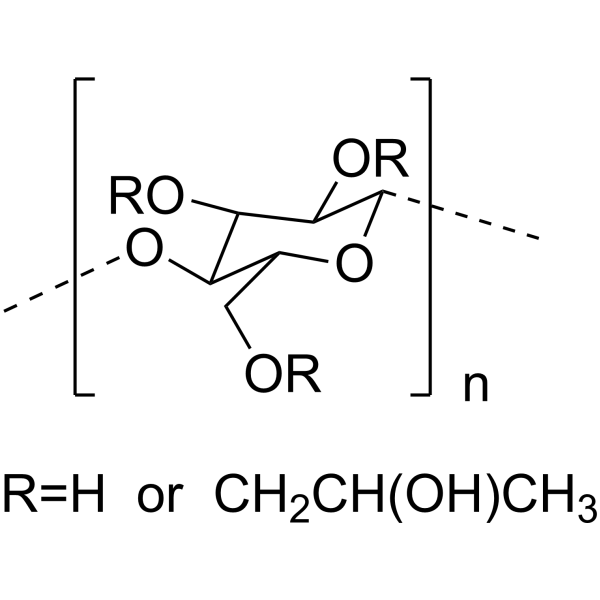
Hydroxypropyl Cellulose is an orally active cellulose ether and surfactant. Hydroxypropyl cellulose is divided into high-substituted HPC (HHPC) and low-substituted HPC (LHPC). Hydroxypropyl Cellulose reduces inflammatory mediators (IL-6, IL-1β). Hydroxypropyl Cellulose improves colitis and obesity. Hydroxypropyl Cellulose can be used as a pharmaceutical excipient, such as coating agent, emulsifier, suspension, tablet, thickener, viscosifier .
|
-
-
- HY-W115746
-
|
Ethyl cellulose N-200
|
Environmental Pollutants
Biochemical Assay Reagents
|
Infection
Cancer
|
|
Ethyl cellulose is a derivative of cellulose. Ethyl cellulose is a non-toxic, biodegradable polymer. Ethyl cellulose has unique properties such as oil gel formation, active ingredient delivery and film formation. Ethyl cellulose can be used as a pharmaceutical excipient, such as a coating agent, flavoring agent, tablet filler, etc. Ethyl cellulose can be used to prepare nanoparticles for active compound delivery .
|
-

-
- HY-B1620J
-
|
PVP, average Mw~10000; Polyvidone, average Mw~10000; Povidone, average Mw~10000
|
Environmental Pollutants
Biochemical Assay Reagents
|
Others
|
|
Polyvinylpyrrolidone, average Mw~10000 is a multifunctional synthetic polymer with an average molecular weight of 10000 Da. Polyvinylpyrrolidone, average Mw~10000 is widely used to synthesize nanoparticlesPolyvinylpyrrolidone, average Mw~10000 is a versatile excipient for both conventional formulations and novel controlled or targeted delivery systems, serving as a binder, coating agent, suspending agent, pore-former, solubilizer, stabilizer, etc .
|
-

-
- HY-B1620N
-
|
PVP, average Mw~360000; Polyvidone, average Mw~360000; Povidone, average Mw~360000
|
Environmental Pollutants
Biochemical Assay Reagents
|
Others
|
|
Polyvinylpyrrolidone, average Mw~360000 is a multifunctional synthetic polymer with an average molecular weight of 360000 Da. Polyvinylpyrrolidone, average Mw~360000 is widely used to synthesize nanoparticlesPolyvinylpyrrolidone, average Mw~360000 is a versatile excipient for both conventional formulations and novel controlled or targeted delivery systems, serving as a binder, coating agent, suspending agent, pore-former, solubilizer, stabilizer, etc .
|
-

-
- HY-A0104K
-
|
Hypromellose (Type II,Viscosity:3mPa.s); (Hydroxypropyl)methyl cellulose (Type II,Viscosity:3mPa.s); Celacol HPM 5000 (Type II,Viscosity:3mPa.s)
|
Environmental Pollutants
Biochemical Assay Reagents
|
Others
|
|
HPMC (Type II, Viscosity: 3 mPa.s) is a nonionic polymer prepared via synthetic modification of cellulose. As a hydrophilic matrix material, HPMC prolongs drug release through non-Fickian diffusion, which includes the diffusion of drugs in the hydrated matrix and the polymer relaxation process .
|
-

-
- HY-B1620K
-
|
PVP, average Mw~29000; Polyvidone, average Mw~29000; Povidone, average Mw~29000
|
Environmental Pollutants
Biochemical Assay Reagents
|
Others
|
|
Polyvinylpyrrolidone, average Mw~29000 is a multifunctional synthetic polymer with an average molecular weight of 29,000 Da. Polyvinylpyrrolidone, average Mw~29000 is a versatile excipient for both conventional formulations and novel controlled or targeted delivery systems, serving as a binder, coating agent, suspending agent, pore-former, solubilizer, stabilizer, etc .
|
-

-
- HY-B1620I
-
|
PVP K120; Polyvidone K120; Povidone K120
|
Environmental Pollutants
Biochemical Assay Reagents
|
Others
|
|
Polyvinylpyrrolidone K120 is a multifunctional synthetic polymer with excellent adhesiveness and thickening properties. Polyvinylpyrrolidone K120 is a versatile excipient for both conventional formulations and novel controlled or targeted delivery systems. Polyvinylpyrrolidone K120 can be used to prepare drug-loaded hydrogel patches .
|
-

-
- HY-W018574
-
|
|
Biochemical Assay Reagents
|
Others
|
|
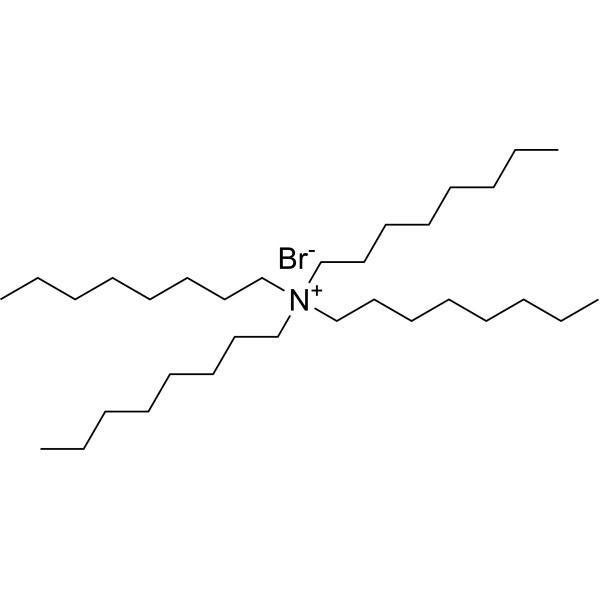
Tetraoctylammonium bromide (TOAB) is a quaternary ammonium salt consisting of a positively charged tetraoctylammonium cation and a negatively charged bromide anion. This compound is commonly used as a phase transfer catalyst in organic chemical reactions, facilitating the transfer of reactants between immiscible phases. It is also used as a surfactant and dispersant in various industrial applications, for example in the production of coatings, adhesives and polymers. Additionally, Tetraoctylammonium bromide has been investigated for potential applications in energy storage devices and as an antimicrobial agent.
|
-
-
- HY-W250309
-
|
|
Biochemical Assay Reagents
|
Others
|
|
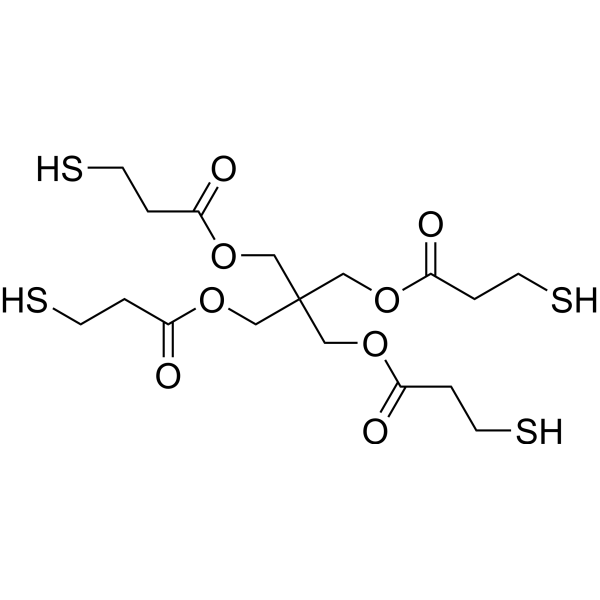
Pentaerythritol tetra(3-mercaptopropionate)It is a class of organic compounds containing both pentaerythritol and mercaptopropionate groups. It is commonly used as a stabilizer and crosslinking agent in various chemical and industrial applications. Pentaerythritol tetra(3-mercaptopropionate)Has a variety of properties that make it suitable for these applications, including the ability to increase the mechanical strength, thermal stability and weatherability of polymers and coatings. Additionally, it can be used as a feedstock for the production of other specialty chemicals and materials.
|
-
-
- HY-B1620O
-
|
PVP, average Mw~1300000; Polyvidone, average Mw~1300000; Povidone, average Mw~1300000
|
Environmental Pollutants
Biochemical Assay Reagents
|
Others
|
|
Polyvinylpyrrolidone, average Mw~1300000 is a multifunctional synthetic polymer with an average molecular weight of 1300000 Da. Polyvinylpyrrolidone, average Mw~1300000 shows the higher viscosity to form the fine polymer network as the molecular sieve .
|
-

-
- HY-B1620M
-
|
PVP, average Mw~55000; Polyvidone, average Mw~55000; Povidone, average Mw~55000
|
Biochemical Assay Reagents
|
Others
|
|
Polyvinylpyrrolidone, average Mw~55000 is a multifunctional synthetic polymer with an average molecular weight of 55000 Da. Polyvinylpyrrolidone, average Mw~55000 is widely used to synthesize nanoparticlesPolyvinylpyrrolidone, average Mw~55000 is a versatile excipient for both conventional formulations and novel controlled or targeted delivery systems, serving as a binder, coating agent, suspending agent, pore-former, solubilizer, stabilizer, etc .
|
-

-
- HY-159067
-
|
DEAE-dextran, MW 500000 hydrochloride, from bacterial (Leuconostoc mesenteroides); Diethylaminoethyl-dextran, MW 500000 hydrochloride
|
Biochemical Assay Reagents
|
Cancer
|
|
DEAE-dextran, MW 500000 hydrochloride (DEAE-dextran, MW 500000 hydrochloride, from bacterial (Leuconostoc mesenteroides)) is a high-molecular-weight positively charged polymer that significantly enhances the uptake of viral RNA by tissue culture cells. When employed in the delivery system for "tumor immunity" RNA-splenocyte transfer, DEAE-dextran can markedly extend the lifespan of tumor-bearing animals, comparable to that of actively immunized animals. Furthermore, DEAE-dextran serves as a complexing agent for nucleic acids, forming composite particles with DNA/RNA for extensive applications in gene delivery. Additionally, DEAE-dextran can be utilized as a coating for liposomes .
|
-

-
- HY-100557A
-
|
|
Biochemical Assay Reagents
|
Others
|
|
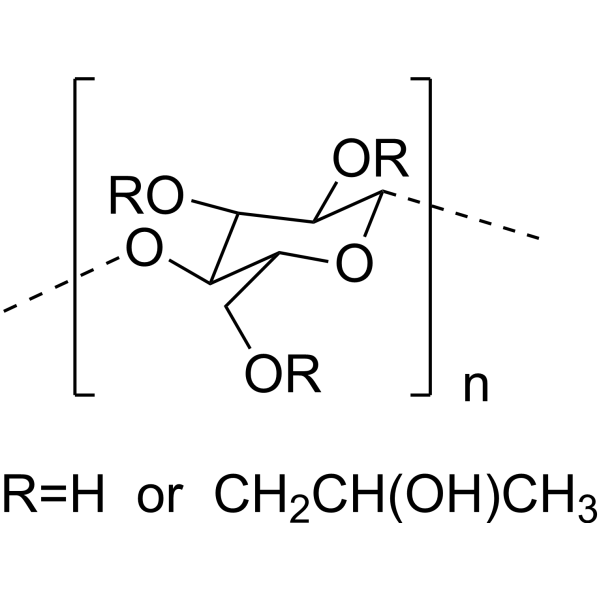
Low-Substituted Hydroxypropyl Cellulose can be used as an excipient, such as Coating agents, emulsifiers, suspensions, tablets, thickeners, thickeners, etc. Pharmaceutical excipients, or pharmaceutical auxiliaries, refer to other chemical substances used in the pharmaceutical process other than pharmaceutical ingredients. Pharmaceutical excipients generally refer to inactive ingredients in pharmaceutical preparations, which can improve the stability, solubility and processability of pharmaceutical preparations. Pharmaceutical excipients also affect the absorption, distribution, metabolism, and elimination (ADME) processes of co-administered drugs .
|
-
-
- HY-117112
-
|
Hexakis(methoxymethyl)melamine; HMMM
|
Biochemical Assay Reagents
|
Others
|
|
Hexamethoxymethylmelamine (Hexakis(methoxymethyl)melamine; HMMM) is a crosslinking agent, which can be used with polyester resins to produce thermosetting coating .
|
-

-
- HY-W115746B
-
|
|
Biochemical Assay Reagents
|
Others
|
|
Ethyl cellulose (viscosity 300 cP) serves as a non-toxic and biodegradable polymer, with unique properties such as oleogel formation, delivery of active component, and film-forming ability in the food and pharmaceutical sectors. Ethyl cellulose (viscosity 300 cP) can be used as an excipient, such as coating agent, flavoring agent, tablet filler .
|
-

-
- HY-W115746A
-
|
|
Biochemical Assay Reagents
|
Others
|
|
Ethyl cellulose (viscosity 10 cP) serves as a non-toxic and biodegradable polymer, with unique properties such as oleogel formation, delivery of active component, and film-forming ability in the food and pharmaceutical sectors. Ethyl cellulose (viscosity 10 cP) can be used as an excipient, such as coating agent, flavoring agent, tablet filler .
|
-

-
- HY-W099569
-
|
Zinc octadecanoate
|
Biochemical Assay Reagents
Fungal
Bacterial
Parasite
|
Infection
|
|
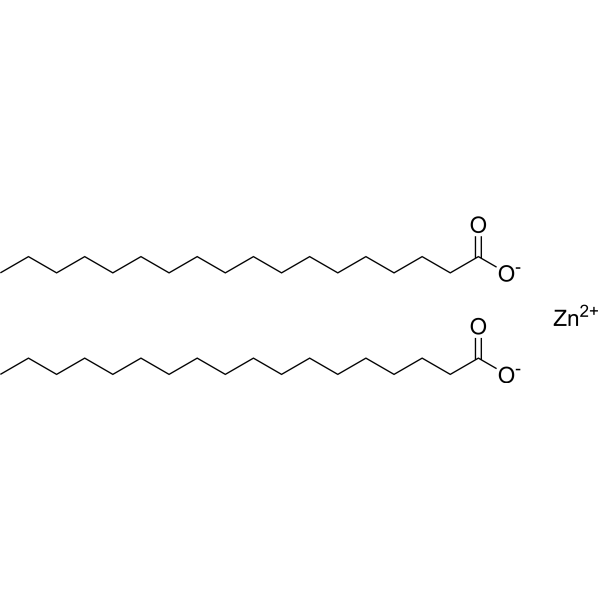
Zinc stearate is a metal stearate that acts as a preservative, bactericide, fungicide, and larvicide. Zinc stearate inhibits larval reproduction in animal feces. Zinc stearate exhibits extremely low systemic toxicity. Zinc stearate is a common component of pharmaceutical excipients, lubricants, mold release agents, polymer stabilizers, and coating matting agents .
|
-
-
- HY-W127565
-
|
|
Biochemical Assay Reagents
|
Others
|
|
HexatetracontaneIt is an organic compound belonging to hydrocarbons. It has a high melting point. HexatetracontaneIt has a variety of applications in the cosmetic and personal care industries, especially as an emollient and humectant in skin and hair care products. In addition, it is used as a lubricant and coating agent in industrial environments.
|
-

-
- HY-23497
-
|
|
Others
|
Others
|
|
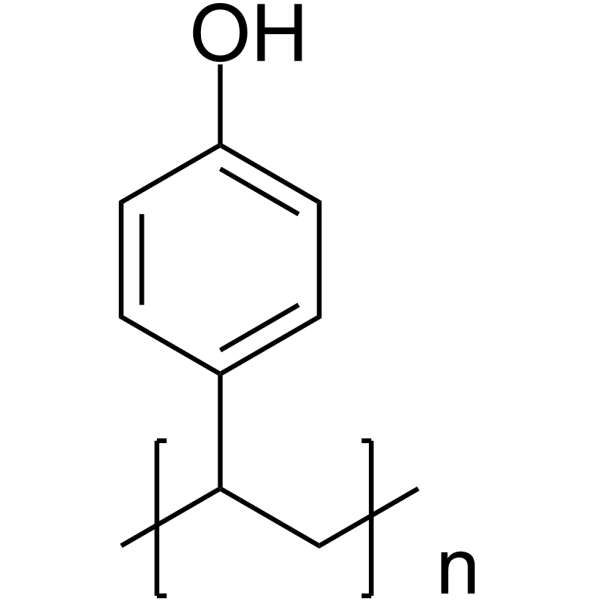
Poly(4-vinylphenol) is a polymer cross-linking agent that can be used to prepare non-toxic films. Poly(4-vinylphenol) is a sensitizer of titania for visible light photocatalysis. Poly(4-vinylphenol) also can be used as a water resistive wood adhesive, as a gate dielectric insulator in organic field effect transistors, and as a responsive surface coating .
|
-
-
- HY-W099437
-
|
|
Environmental Pollutants
Biochemical Assay Reagents
|
Others
|
|
Diethylene glycol monobutyl ether acetate is an orally available high molecular weight glycol ether solvent that can be used as a coalescing agent for polyvinyl acetate (latex) coatings, the acute oral LD in mice and rats is about 7 g/kg .
|
-

-
- HY-W127740
-
|
Isomethyl-α-ionone; α-Isomethylionone
|
Environmental Pollutants
Biochemical Assay Reagents
|
Others
|
|
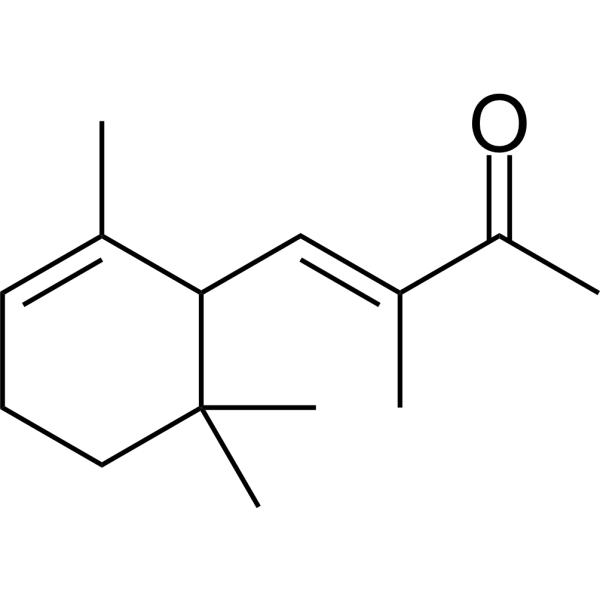
Isonaline 70 is an industrial solvent that belongs to the family of high flash point aromatic naphtha solvents. It is commonly used in a variety of industries including paints and coatings, adhesives and rubber manufacturing, as a thinner and thinner for resins and polymers. Isonaline 70 has various properties that make it suitable for these applications, including its low viscosity, high solvency and good compatibility with other materials. In addition, it can also be used as a cleaning agent for mechanical equipment.
|
-
-
- HY-D0898
-
|
|
Biochemical Assay Reagents
|
Others
|
|
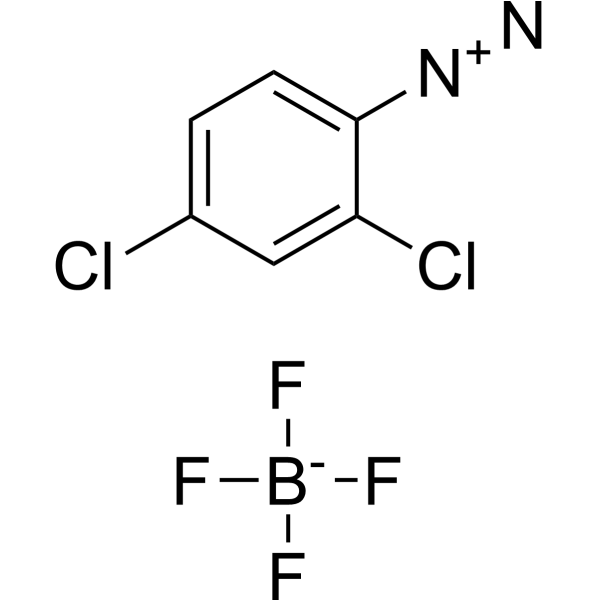
2,4-Dichlorobenzenediazonium tetrafluoroborate is an organic compound commonly used in organic synthesis and dye preparation reactions. It can be used as an azotating agent to form azo dyes with other organic substances, and can be used in coatings, pigments and paints and other industries. In addition, the compound is widely used in certain chemical analysis and detection methods, such as in scientific instruments such as electron microscopes and mass spectrometers. Although the compound has no direct medical applications, it plays an important role in chemical research and laboratory studies.
|
-
-
- HY-151744
-
|
|
ADC Linker
|
Others
|
|
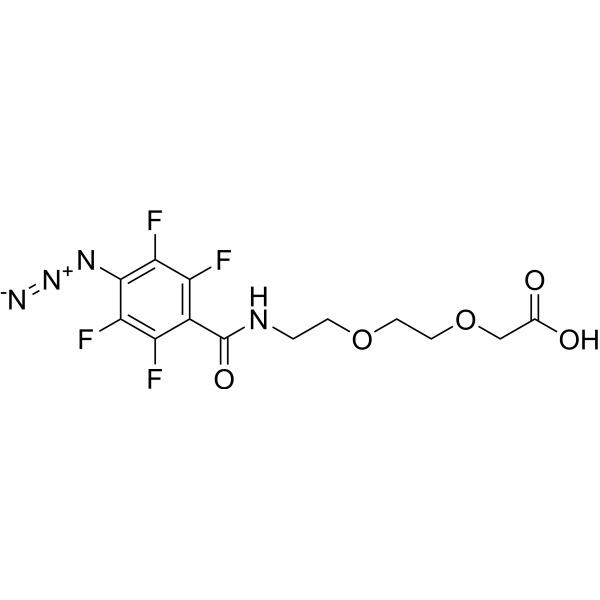
N3-TFBA-O2Oc is a click chemistry reagent containing an azide group and an aryl group. Aryl azides are well-known precursors of nitrenes and have been introduced by Fleet et al. as versatile photoaffinity labeling agents to probe biological receptors. This type of compounds has been used as photo-cross linker (λmax=258 nm) in estrogen receptor studies and for direct surface coating of carbon and organic based polymers . N3-TFBA-O2Oc is a click chemistry reagent, it contains an Azide group and can undergo copper-catalyzed azide-alkyne cycloaddition reaction (CuAAc) with molecules containing Alkyne groups. It can also undergo strain-promoted alkyne-azide cycloaddition (SPAAC) reactions with molecules containing DBCO or BCN groups.
|
-
-
- HY-132916
-
|
|
SARS-CoV
|
Infection
|
|
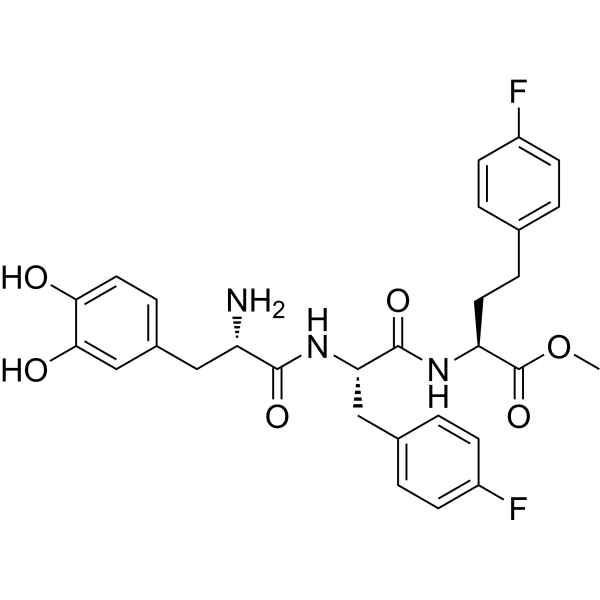
Antiviral agent 7 is a peptide-based coating that can kill viruses.
|
-
-
- HY-W011188S
-
|
|
Isotope-Labeled Compounds
Biochemical Assay Reagents
|
Others
|
|
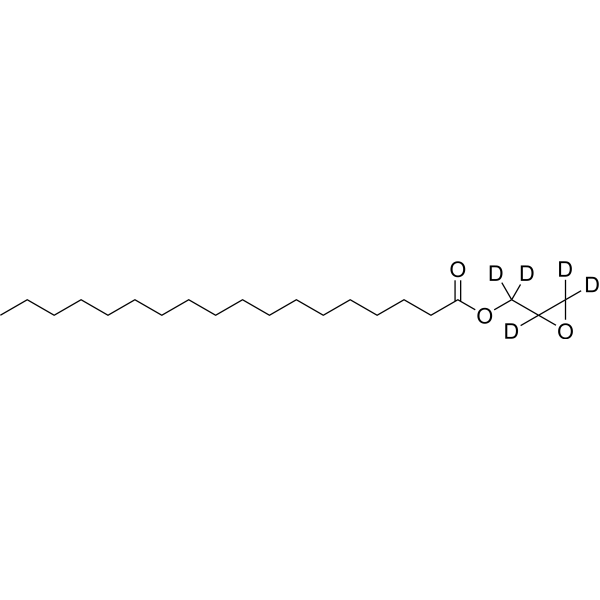
Glycidyl stearate-d5 is a deuterium labeled Glycidyl stearate (HY-W011188). Oxiran-2-ylmethyl stearate is a compound belonging to the class of esters. It contains reactive oxirane or epoxy groups that give the molecule its unique properties. Oxiran-2-ylmethyl stearate is derived from stearic acid and epichlorohydrin, which are naturally occurring substances. Glycidyl stearate is commonly used in various industrial applications such as the production of coatings, adhesives and surfactants. It can also be used as a crosslinking agent in the manufacture of polymers and resins.
|
-
-
- HY-W747639
-
|
|
Isotope-Labeled Compounds
Biochemical Assay Reagents
|
Others
|
|
Glycidyl Stearate- 13C3 is 13C labeled Glycidyl stearate. Oxiran-2-ylmethyl stearate is a compound belonging to the class of esters. It contains reactive oxirane or epoxy groups that give the molecule its unique properties. Oxiran-2-ylmethyl stearate is derived from stearic acid and epichlorohydrin, which are naturally occurring substances. Glycidyl stearate is commonly used in various industrial applications such as the production of coatings, adhesives and surfactants. It can also be used as a crosslinking agent in the manufacture of polymers and resins .
|
-

-
- HY-W701446
-
|
|
Isotope-Labeled Compounds
Biochemical Assay Reagents
|
Others
|
|
Oxiran-2-ylmethyl octadecanoate-d35 is the deuterium labeled Glycidyl stearate (HY-W011188). Oxiran-2-ylmethyl stearate is a compound belonging to the class of esters. It contains reactive oxirane or epoxy groups that give the molecule its unique properties. Oxiran-2-ylmethyl stearate is derived from stearic acid and epichlorohydrin, which are naturally occurring substances. Glycidyl stearate is commonly used in various industrial applications such as the production of coatings, adhesives and surfactants. It can also be used as a crosslinking agent in the manufacture of polymers and resins.
|
-

-
- HY-W127565R
-
|
|
Biochemical Assay Reagents
Reference Standards
|
Others
|
|
Hexatetracontane (Standard) is the analytical standard of Hexatetracontane. This product is intended for research and analytical applications. HexatetracontaneIt is an organic compound belonging to hydrocarbons. It has a high melting point. HexatetracontaneIt has a variety of applications in the cosmetic and personal care industries, especially as an emollient and humectant in skin and hair care products. In addition, it is used as a lubricant and coating agent in industrial environments.
|
-

-
- HY-W010790
-
|
|
Bacterial
Fungal
|
Infection
|
|
Dimethyloctadecyl[3-(trimethoxysilyl) propyl]ammonium chloride is a quaternary ammonium silane monomer-based disinfectant/antimicrobial agent. Dimethyloctadecylammonium chloride exhibits bactericidal activity against Gram-positive and Gram-negative bacteria, as well as fungicidal activity against Candida albicans in solution; it can form a hydrophobic glass coating that displays bactericidal activity against Gram-positive and Gram-negative bacteria but has limited fungicidal activity against Candida albicans .
|
-
![Dimethyloctadecyl[3-(trimethoxysilyl)propyl]ammonium chloride](//file.medchemexpress.com/product_pic/hy-w010790.gif)
| Cat. No. |
Product Name |
Type |
-
- HY-B1620L
-
|
PVP, average Mw~40000; Polyvidone, average Mw~40000; Povidone, average Mw~40000
|
Biochemical Assay Reagents
|
|
Polyvinylpyrrolidone, average Mw~40000 is a multifunctional synthetic polymer with an average molecular weight of 40,000 Da. Polyvinylpyrrolidone, average Mw~40000 is widely used to synthesize nanoparticles. Polyvinylpyrrolidone, average Mw~40000 is a versatile excipient for both conventional formulations and novel controlled or targeted delivery systems, serving as a binder, coating agent, suspending agent, pore-former, solubilizer, stabilizer, etc .
|
-
- HY-B1620E
-
|
PVP K60; Polyvidone K60; Povidone K60
|
Biochemical Assay Reagents
|
|
Polyvinylpyrrolidone K60 is one of the polymers in pharmaceutical preparations. Polyvinylpyrrolidone K60 promotes amorphous dispersion and inhibits crystallization of the drug .
|
-
- HY-126436A
-
|
L-Ornithine homopolymer hydrobromide (MW 30000-70000)
|
Biochemical Assay Reagents
|
|
Poly-L-ornithine hydrobromide (MW 30000-70000) is a poly-lysine derivative with a molecular weight of 30000-70000. Poly-L-ornithine hydrobromide (MW 30000-70000) binds to the surface of cell culture vessels through positively charged amino acid residues to form a coating that promotes cell adhesion and provides cells with a matrix environment required for growth. Poly-L-ornithine hydrobromide (MW 30000-70000) is used as a coating agent in cell culture and can be used for the study of primary culture of neurons (such as dopaminergic neurons and oligodendrocytes) .
|
-
- HY-B1620C
-
|
PVP K17; Polyvidone K17; Povidone K17
|
Biochemical Assay Reagents
|
|
Polyvinylpyrrolidone K17 is one of the polymers in pharmaceutical preparations. Polyvinylpyrrolidone K17 is a versatile excipient for both conventional formulations and novel controlled or targeted delivery systems, serving as a binder, coating agent, suspending agent, pore-former, solubilizer, stabilizer, etc .
|
-
- HY-B1620D
-
|
PVP K25; Polyvidone K25; Povidone K25
|
Biochemical Assay Reagents
|
|
Polyvinylpyrrolidone K25 is a multifunctional synthetic polymer. Polyvinylpyrrolidone K25 is a versatile excipient for both conventional formulations and novel controlled or targeted delivery systems. Polyvinylpyrrolidone K25 is a preferable binder for granules and tablets .
|
-
- HY-B1620J
-
|
PVP, average Mw~10000; Polyvidone, average Mw~10000; Povidone, average Mw~10000
|
Biochemical Assay Reagents
|
|
Polyvinylpyrrolidone, average Mw~10000 is a multifunctional synthetic polymer with an average molecular weight of 10000 Da. Polyvinylpyrrolidone, average Mw~10000 is widely used to synthesize nanoparticlesPolyvinylpyrrolidone, average Mw~10000 is a versatile excipient for both conventional formulations and novel controlled or targeted delivery systems, serving as a binder, coating agent, suspending agent, pore-former, solubilizer, stabilizer, etc .
|
-
- HY-B1620N
-
|
PVP, average Mw~360000; Polyvidone, average Mw~360000; Povidone, average Mw~360000
|
Biochemical Assay Reagents
|
|
Polyvinylpyrrolidone, average Mw~360000 is a multifunctional synthetic polymer with an average molecular weight of 360000 Da. Polyvinylpyrrolidone, average Mw~360000 is widely used to synthesize nanoparticlesPolyvinylpyrrolidone, average Mw~360000 is a versatile excipient for both conventional formulations and novel controlled or targeted delivery systems, serving as a binder, coating agent, suspending agent, pore-former, solubilizer, stabilizer, etc .
|
-
- HY-B1620K
-
|
PVP, average Mw~29000; Polyvidone, average Mw~29000; Povidone, average Mw~29000
|
Biochemical Assay Reagents
|
|
Polyvinylpyrrolidone, average Mw~29000 is a multifunctional synthetic polymer with an average molecular weight of 29,000 Da. Polyvinylpyrrolidone, average Mw~29000 is a versatile excipient for both conventional formulations and novel controlled or targeted delivery systems, serving as a binder, coating agent, suspending agent, pore-former, solubilizer, stabilizer, etc .
|
-
- HY-B1620I
-
|
PVP K120; Polyvidone K120; Povidone K120
|
Biochemical Assay Reagents
|
|
Polyvinylpyrrolidone K120 is a multifunctional synthetic polymer with excellent adhesiveness and thickening properties. Polyvinylpyrrolidone K120 is a versatile excipient for both conventional formulations and novel controlled or targeted delivery systems. Polyvinylpyrrolidone K120 can be used to prepare drug-loaded hydrogel patches .
|
-
- HY-W018574
-
|
|
Biochemical Assay Reagents
|
|
Tetraoctylammonium bromide (TOAB) is a quaternary ammonium salt consisting of a positively charged tetraoctylammonium cation and a negatively charged bromide anion. This compound is commonly used as a phase transfer catalyst in organic chemical reactions, facilitating the transfer of reactants between immiscible phases. It is also used as a surfactant and dispersant in various industrial applications, for example in the production of coatings, adhesives and polymers. Additionally, Tetraoctylammonium bromide has been investigated for potential applications in energy storage devices and as an antimicrobial agent.
|
-
- HY-W250309
-
|
|
Biochemical Assay Reagents
|
|
Pentaerythritol tetra(3-mercaptopropionate)It is a class of organic compounds containing both pentaerythritol and mercaptopropionate groups. It is commonly used as a stabilizer and crosslinking agent in various chemical and industrial applications. Pentaerythritol tetra(3-mercaptopropionate)Has a variety of properties that make it suitable for these applications, including the ability to increase the mechanical strength, thermal stability and weatherability of polymers and coatings. Additionally, it can be used as a feedstock for the production of other specialty chemicals and materials.
|
-
- HY-B1620O
-
|
PVP, average Mw~1300000; Polyvidone, average Mw~1300000; Povidone, average Mw~1300000
|
Biochemical Assay Reagents
|
|
Polyvinylpyrrolidone, average Mw~1300000 is a multifunctional synthetic polymer with an average molecular weight of 1300000 Da. Polyvinylpyrrolidone, average Mw~1300000 shows the higher viscosity to form the fine polymer network as the molecular sieve .
|
-
- HY-B1620M
-
|
PVP, average Mw~55000; Polyvidone, average Mw~55000; Povidone, average Mw~55000
|
Biochemical Assay Reagents
|
|
Polyvinylpyrrolidone, average Mw~55000 is a multifunctional synthetic polymer with an average molecular weight of 55000 Da. Polyvinylpyrrolidone, average Mw~55000 is widely used to synthesize nanoparticlesPolyvinylpyrrolidone, average Mw~55000 is a versatile excipient for both conventional formulations and novel controlled or targeted delivery systems, serving as a binder, coating agent, suspending agent, pore-former, solubilizer, stabilizer, etc .
|
-
- HY-159067
-
|
DEAE-dextran, MW 500000 hydrochloride, from bacterial (Leuconostoc mesenteroides); Diethylaminoethyl-dextran, MW 500000 hydrochloride
|
Biochemical Assay Reagents
|
|
DEAE-dextran, MW 500000 hydrochloride (DEAE-dextran, MW 500000 hydrochloride, from bacterial (Leuconostoc mesenteroides)) is a high-molecular-weight positively charged polymer that significantly enhances the uptake of viral RNA by tissue culture cells. When employed in the delivery system for "tumor immunity" RNA-splenocyte transfer, DEAE-dextran can markedly extend the lifespan of tumor-bearing animals, comparable to that of actively immunized animals. Furthermore, DEAE-dextran serves as a complexing agent for nucleic acids, forming composite particles with DNA/RNA for extensive applications in gene delivery. Additionally, DEAE-dextran can be utilized as a coating for liposomes .
|
-
- HY-W115746B
-
|
|
Biochemical Assay Reagents
|
|
Ethyl cellulose (viscosity 300 cP) serves as a non-toxic and biodegradable polymer, with unique properties such as oleogel formation, delivery of active component, and film-forming ability in the food and pharmaceutical sectors. Ethyl cellulose (viscosity 300 cP) can be used as an excipient, such as coating agent, flavoring agent, tablet filler .
|
-
- HY-W115746A
-
|
|
Biochemical Assay Reagents
|
|
Ethyl cellulose (viscosity 10 cP) serves as a non-toxic and biodegradable polymer, with unique properties such as oleogel formation, delivery of active component, and film-forming ability in the food and pharmaceutical sectors. Ethyl cellulose (viscosity 10 cP) can be used as an excipient, such as coating agent, flavoring agent, tablet filler .
|
-
- HY-W127565
-
|
|
Biochemical Assay Reagents
|
|
HexatetracontaneIt is an organic compound belonging to hydrocarbons. It has a high melting point. HexatetracontaneIt has a variety of applications in the cosmetic and personal care industries, especially as an emollient and humectant in skin and hair care products. In addition, it is used as a lubricant and coating agent in industrial environments.
|
-
- HY-W127740
-
|
Isomethyl-α-ionone; α-Isomethylionone
|
Biochemical Assay Reagents
|
|
Isonaline 70 is an industrial solvent that belongs to the family of high flash point aromatic naphtha solvents. It is commonly used in a variety of industries including paints and coatings, adhesives and rubber manufacturing, as a thinner and thinner for resins and polymers. Isonaline 70 has various properties that make it suitable for these applications, including its low viscosity, high solvency and good compatibility with other materials. In addition, it can also be used as a cleaning agent for mechanical equipment.
|
-
- HY-D0898
-
|
|
Biochemical Assay Reagents
|
|
2,4-Dichlorobenzenediazonium tetrafluoroborate is an organic compound commonly used in organic synthesis and dye preparation reactions. It can be used as an azotating agent to form azo dyes with other organic substances, and can be used in coatings, pigments and paints and other industries. In addition, the compound is widely used in certain chemical analysis and detection methods, such as in scientific instruments such as electron microscopes and mass spectrometers. Although the compound has no direct medical applications, it plays an important role in chemical research and laboratory studies.
|
-
- HY-W127565R
-
|
|
Biochemical Assay Reagents
|
|
Hexatetracontane (Standard) is the analytical standard of Hexatetracontane. This product is intended for research and analytical applications. HexatetracontaneIt is an organic compound belonging to hydrocarbons. It has a high melting point. HexatetracontaneIt has a variety of applications in the cosmetic and personal care industries, especially as an emollient and humectant in skin and hair care products. In addition, it is used as a lubricant and coating agent in industrial environments.
|
| Cat. No. |
Product Name |
Category |
Target |
Chemical Structure |
-
- HY-23497
-
-
-
- HY-W127740
-
|
Isomethyl-α-ionone; α-Isomethylionone
|
Source Classification
|
Environmental Pollutants
Biochemical Assay Reagents
|
|
Isonaline 70 is an industrial solvent that belongs to the family of high flash point aromatic naphtha solvents. It is commonly used in a variety of industries including paints and coatings, adhesives and rubber manufacturing, as a thinner and thinner for resins and polymers. Isonaline 70 has various properties that make it suitable for these applications, including its low viscosity, high solvency and good compatibility with other materials. In addition, it can also be used as a cleaning agent for mechanical equipment.
|
-
| Cat. No. |
Product Name |
Chemical Structure |
-
- HY-W011188S
-
|
|
|
Glycidyl stearate-d5 is a deuterium labeled Glycidyl stearate (HY-W011188). Oxiran-2-ylmethyl stearate is a compound belonging to the class of esters. It contains reactive oxirane or epoxy groups that give the molecule its unique properties. Oxiran-2-ylmethyl stearate is derived from stearic acid and epichlorohydrin, which are naturally occurring substances. Glycidyl stearate is commonly used in various industrial applications such as the production of coatings, adhesives and surfactants. It can also be used as a crosslinking agent in the manufacture of polymers and resins.
|
-
-
- HY-W747639
-
|
|
|
Glycidyl Stearate- 13C3 is 13C labeled Glycidyl stearate. Oxiran-2-ylmethyl stearate is a compound belonging to the class of esters. It contains reactive oxirane or epoxy groups that give the molecule its unique properties. Oxiran-2-ylmethyl stearate is derived from stearic acid and epichlorohydrin, which are naturally occurring substances. Glycidyl stearate is commonly used in various industrial applications such as the production of coatings, adhesives and surfactants. It can also be used as a crosslinking agent in the manufacture of polymers and resins .
|
-
-
- HY-W701446
-
|
|
|
Oxiran-2-ylmethyl octadecanoate-d35 is the deuterium labeled Glycidyl stearate (HY-W011188). Oxiran-2-ylmethyl stearate is a compound belonging to the class of esters. It contains reactive oxirane or epoxy groups that give the molecule its unique properties. Oxiran-2-ylmethyl stearate is derived from stearic acid and epichlorohydrin, which are naturally occurring substances. Glycidyl stearate is commonly used in various industrial applications such as the production of coatings, adhesives and surfactants. It can also be used as a crosslinking agent in the manufacture of polymers and resins.
|
-
| Cat. No. |
Product Name |
|
Classification |
-
- HY-151744
-
|
|
|
Azide
Labeling and Fluorescence Imaging
|
|
N3-TFBA-O2Oc is a click chemistry reagent containing an azide group and an aryl group. Aryl azides are well-known precursors of nitrenes and have been introduced by Fleet et al. as versatile photoaffinity labeling agents to probe biological receptors. This type of compounds has been used as photo-cross linker (λmax=258 nm) in estrogen receptor studies and for direct surface coating of carbon and organic based polymers . N3-TFBA-O2Oc is a click chemistry reagent, it contains an Azide group and can undergo copper-catalyzed azide-alkyne cycloaddition reaction (CuAAc) with molecules containing Alkyne groups. It can also undergo strain-promoted alkyne-azide cycloaddition (SPAAC) reactions with molecules containing DBCO or BCN groups.
|
| Cat. No. |
Product Name |
|
Classification |
-
- HY-100557
-
|
|
|
Emulsifiers
Thickeners
|
|
Hydroxypropyl Cellulose is an orally active cellulose ether and surfactant. Hydroxypropyl cellulose is divided into high-substituted HPC (HHPC) and low-substituted HPC (LHPC). Hydroxypropyl Cellulose reduces inflammatory mediators (IL-6, IL-1β). Hydroxypropyl Cellulose improves colitis and obesity. Hydroxypropyl Cellulose can be used as a pharmaceutical excipient, such as coating agent, emulsifier, suspension, tablet, thickener, viscosifier .
|
-
- HY-W115746
-
|
Ethyl cellulose N-200
|
|
Fillers
|
|
Ethyl cellulose is a derivative of cellulose. Ethyl cellulose is a non-toxic, biodegradable polymer. Ethyl cellulose has unique properties such as oil gel formation, active ingredient delivery and film formation. Ethyl cellulose can be used as a pharmaceutical excipient, such as a coating agent, flavoring agent, tablet filler, etc. Ethyl cellulose can be used to prepare nanoparticles for active compound delivery .
|
-
- HY-100557A
-
|
|
|
Disintegrants
|
|
Low-Substituted Hydroxypropyl Cellulose can be used as an excipient, such as Coating agents, emulsifiers, suspensions, tablets, thickeners, thickeners, etc. Pharmaceutical excipients, or pharmaceutical auxiliaries, refer to other chemical substances used in the pharmaceutical process other than pharmaceutical ingredients. Pharmaceutical excipients generally refer to inactive ingredients in pharmaceutical preparations, which can improve the stability, solubility and processability of pharmaceutical preparations. Pharmaceutical excipients also affect the absorption, distribution, metabolism, and elimination (ADME) processes of co-administered drugs .
|
-
- HY-W099569
-
|
Zinc octadecanoate
|
|
Others
|
|
Zinc stearate is a metal stearate that acts as a preservative, bactericide, fungicide, and larvicide. Zinc stearate inhibits larval reproduction in animal feces. Zinc stearate exhibits extremely low systemic toxicity. Zinc stearate is a common component of pharmaceutical excipients, lubricants, mold release agents, polymer stabilizers, and coating matting agents .
|
Your information is safe with us. * Required Fields.
Inquiry Information
- Product Name:
- Cat. No.:
- Quantity:
- MCE Japan Authorized Agent:





![Dimethyloctadecyl[3-(trimethoxysilyl)propyl]ammonium chloride](http://file.medchemexpress.com/product_pic/hy-w010790.gif)





