1. Search Result
Search Result
Pathways Recommended: Cell Cycle/DNA Damage
Results for "

DNA polymerase-β

" in MedChemExpress (MCE) Product Catalog:

15

Inhibitors & Agonists

7

Natural
Products

1

Recombinant Proteins

1

Antibodies

1

Oligonucleotides

Cat. No. Product Name Target Research Areas Chemical Structure
  • HY-N1548
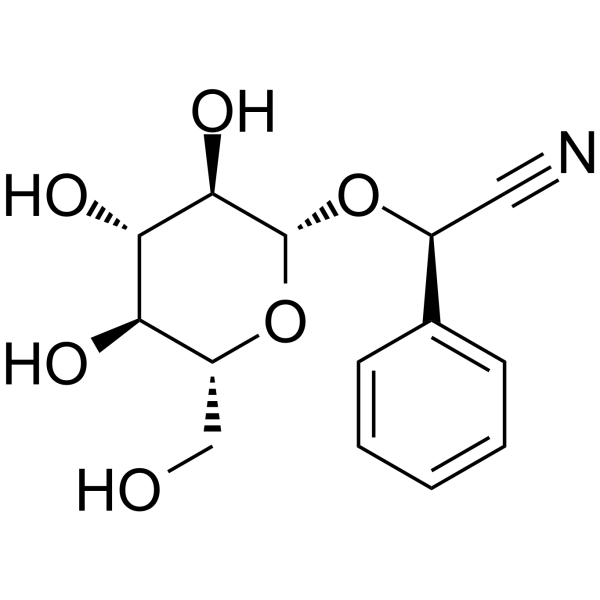
    Prunasin
    1 Publications Verification

    DNA/RNA Synthesis Inflammation/Immunology
    Prunasin is an orally active cyanogenic glucoside and the main metabolite of Amygdalin (HY-N0190). Prunasin can specifically inhibit rat DNA polymerase β (IC50: 98 μM). Prunasin has anti-inflammatory and anti-fibrotic activities. Prunasin can be used in the research of diseases such as liver fibrosis .
    Prunasin
  • HY-N2566
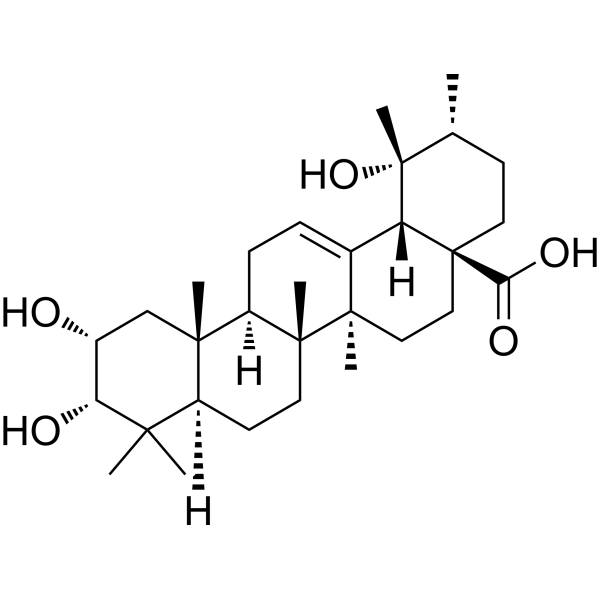
    Euscaphic acid
    1 Publications Verification

    DNA/RNA Synthesis PI3K Apoptosis Cancer
    Euscaphic acid, a DNA polymerase inhibitor, is a triterpene from the root of the R. alceaefolius Poir. Euscaphic inhibits calf DNA polymerase α (pol α) and rat DNA polymerase β (pol β) with IC50 values of 61 and 108 μM . Euscaphic acid induces apoptosis .
    Euscaphic acid
  • HY-107790
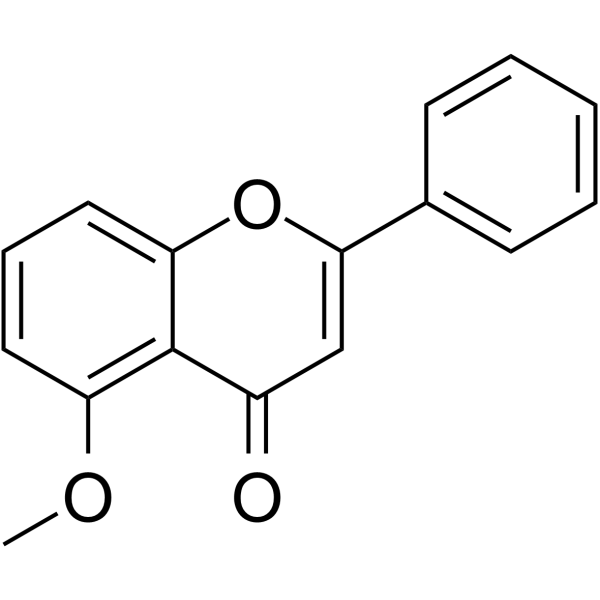
    5-Methoxyflavone
    2 Publications Verification

    DNA/RNA Synthesis Neurological Disease
    5-Methoxyflavone, belonged to Flavonoid family, is a DNA polymerase-beta inhibitor and neuroprotective agent against beta-amyloid toxicity. possess central nervous system (CNS) depressant effect mediated through the ionotropic GABAA receptors.
    5-Methoxyflavone
  • HY-120105

    DNA/RNA Synthesis Apoptosis MDM-2/p53 Bcl-2 Family Caspase PARP Cancer
    NSC666715 is a DNA polymerase β (Pol-β) inhibitor. NSC666715 directly and specifically interacts with Pol-β, interferes with its binding to damaged DNA, blocks its dRP lyase activity, and inhibits Pol-β-mediated SN- and LP-BER. NSC666715 induces AP site accumulation and S-phase cell cycle arrest, and triggers senescence and apoptosis (apoptosis) via the p53/p21 pathway in colorectal cancer cells. NSC666715 enhances TMZ (HY-17364)-induced DNA damage, senescence and apoptosis, and potentiates the cytotoxicity of TMZ. NSC666715 inhibits tumor growth in colon cancer xenograft models. NSC666715 can be used in research related to colorectal cancer .
    NSC666715
  • HY-N9454

    Pregnane X Receptor (PXR) COX NF-κB Amylases β-glucuronidase DNA/RNA Synthesis Amyloid-β NOD-like Receptor (NLR) Pyroptosis Cancer
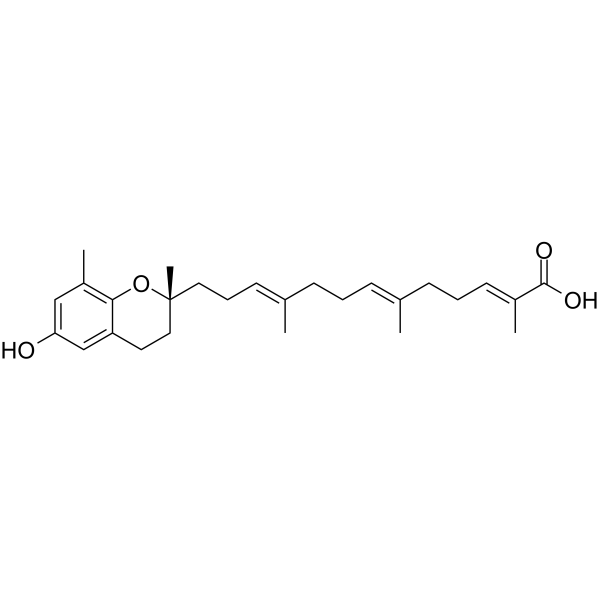
    Garcinoic acid is an orally active anti-inflammatory agent that crosses the blood-brain barrier. Garcinoic acid also enhances efferocytosis and enzyme/receptor regulation, and selectively inhibits human COX-2, porcine α-amylase, Saccharomyces cerevisiae α-glucosidase and human DNA polymerase β (IC50=11 μM), as well as activates human PXR. Garcinoic acid enhances macrophage efferocytosis via receptors such as MerTK and LRP-1, and promotes the production of pro-resolving lipid mediators. Garcinoic acid inhibits NF-κB activation and pro-inflammatory cytokine secretion, interferes with aggregation, downregulates NLRP3 inflammasome activity, and binds to targets including CD44 and EGFR to inhibit leukemia cell proliferation. The pharmacological activities of Garcinoic acid, such as antioxidant, anti-inflammatory and lipid metabolism-regulating effects, are widely used in studies related to various diseases including atherosclerosis, Alzheimer's disease, type 2 diabetes, inflammatory bowel disease and viral pneumonia .
    Garcinoic acid
  • HY-N13716

    DNA/RNA Synthesis HIV Reverse Transcriptase Infection
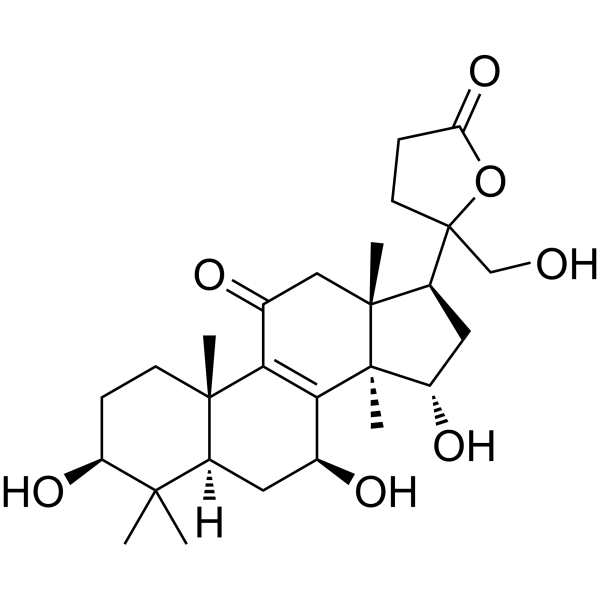
    Lucidenic acid O is a terpene compound, is a DNA polymerases inhibitor. Lucidenic lactone inhibits calf DNA polymerase-α, rat DNA polymerase-β, and HIV-1 reverse transcriptase with IC50 values of 42 μM, 99 μM, and 69 μM, respectively .
    Lucidenic acid O
  • HY-N13712

    DNA/RNA Synthesis HIV Reverse Transcriptase Infection
    Lucidenic lactone is a terpene compound, is a DNA polymerase inhibitor. Lucidenic lactone inhibits calf DNA polymerase-α, rat DNA polymerase-β, and HIV-1 reverse transcriptase with IC50 values of 42 μM, 99 μM, and 69 μM, respectively .
    Lucidenic lactone
  • HY-180545

    DNA/RNA Synthesis Neurological Disease
    S-Chromene is a selective DNA polymerase-β (DNA pol-β) inhibitor. S-Chromene exhibits strong electrostatic complementarity with DNA pol-β but weak interaction with primase p58 .
    S-Chromene
  • HY-164402

    DNA/RNA Synthesis Cancer
    NSC-124854 is a DNA polymerase β (Pol-β) inhibitor with an IC50 of 5.3 μM. NSC-124854 has antitumor activity .
    NSC-124854
  • HY-178063

    DNA/RNA Synthesis Cancer
    DNA polymerase-IN-7 is a noncompetitive inhibition of DNA Polymerase β with an IC50 of 112 nM and a Ki of 35 nM. DNA polymerase-IN-7 can inhibit DNA pol β lyase activity and the binding of the lyase domain of Pol β to DNA. DNA polymerase-IN-7 can be used for the research of cancer, such as cervical cancer .
    DNA polymerase-IN-7
  • HY-N7821

    Aphidicolin 17-monoacetate

    DNA/RNA Synthesis Cancer
    Aphidicolin 17-acetate is a selective eukaryotic DNA polymerase α inhibitor. Aphidicolin 17-acetate does not inhibit DNA polymerase β and γ. Aphidicolin 17-acetate markedly inhibits the in vivo DNA synthesis of sea urchin embryos and HeLa cells but not RNA and protein syntheses .
    Aphidicolin 17-acetate
  • HY-171578

    Nucleoside Antimetabolite/Analog DNA/RNA Synthesis Others
    3′-Amino-2′,3′-dideoxy-CTP is an analogue of nucleoside triphosphate. 3′-Amino-2′,3′-dideoxy-CTP can selectively inhibit DNA polymerase β .
    3′-Amino-2′,3′-dideoxy-CTP
  • HY-107790R

    Reference Standards DNA/RNA Synthesis Neurological Disease
    5-Methoxyflavone (Standard) is the analytical standard of 5-Methoxyflavone (HY-107790). This product is intended for research and analytical applications. 5-Methoxyflavone, belonged to Flavonoid family, is a DNA polymerase-beta inhibitor and neuroprotective agent against beta-amyloid toxicity. possess central nervous system (CNS) depressant effect mediated through the ionotropic GABAA receptors.
    5-Methoxyflavone (Standard)
  • HY-182552

    HIV Reverse Transcriptase DNA/RNA Synthesis Infection Neurological Disease Inflammation/Immunology
    Soulattrolide is a non-nucleoside HIV-1 reverse transcriptase (RT) inhibitor with IC50 values of 0.34 µM for HIV-1 RT, 69.5 µM for E. coli RNase H, and >495 µM for human DNA polymerase β, and can be found in Calophyllum teysmannii latex. Soulattrolide can be used for the research of HIV-1 infection, pain, inflammation, and Mycobacterium tuberculosis infection .
    Soulattrolide
  • HY-182037

    DNA/RNA Synthesis Pyruvate Kinase Cancer
    Multi-target kinase-IN-9 is a multi-target enzyme inhibitor with antiproliferative and antiangiogenic activities, and exhibits remarkable selectivity against hepatocellular carcinoma cells. By broadly binding to the active sites or ATP-binding regions of multiple key enzymes including DNA polymerase β, Pyruvate Kinase M2 (PKM2), Multi-target kinase-IN-9 comprehensively disrupts DNA repair and replication, glycolysis, chromatin dynamics and transcriptional programs, and blocks the self-renewal of cancer stem cells. Multi-target kinase-IN-9 induces genomic instability, lysosomal dysfunction and autophagic flux impairment, thereby triggering tumor cell death, effectively inhibiting tumor proliferation, invasion, metastasis and angiogenesis, and significantly reducing tumor volume in xenograft models. Multi-target kinase-IN-9 is applicable to hepatocellular carcinoma-related research .
    Multi-target kinase-IN-9

Inquiry Online

Your information is safe with us. * Required Fields.

Salutation


Country or Region *

Applicant Name *


Organization Name *

Department *


Email Address *


Product Name *

Cat. No.


Requested quantity *

Phone Number *


Remarks

Inquiry Online

Inquiry Information

Product Name:
Cat. No.:
Quantity:
MCE Japan Authorized Agent:

