



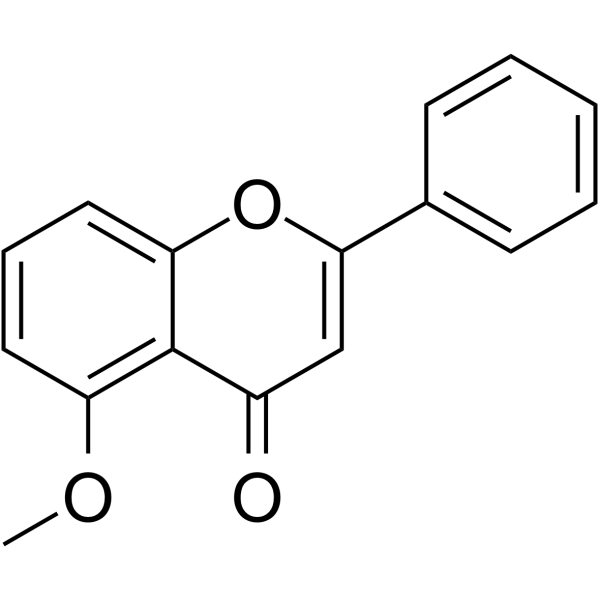
5-Methoxyflavone
Based on 2 publication(s) in Google Scholar
5-Methoxyflavone, belonged to Flavonoid family, is a DNA polymerase-beta inhibitor and neuroprotective agent against beta-amyloid toxicity. possess central nervous system (CNS) depressant effect mediated through the ionotropic GABAA receptors.
Nur für Forschungszwecke. Wir verkaufen nicht an Patienten.
- Reinheit : 99.97%
- CAS. Nr.: 42079-78-7
- Formel: C16H12O3
- Molecular Weight:252.26
-
Speicherung:Powder -20°C, 3 years , 4°C, 2 years ; In solvent -80°C, 2 years , -20°C, 1 year

To place orders, for customer services and technical support, please contact: MedChemExpress USA
Tel: 609-228-6898 E-mail: [email protected] [email protected]


-
 Biologische Aktivität
-
Chemical Information
-
Lösungsmittel & Löslichkeit
- Protokoll
- Reinheit & Dokumentation
- Verweise
-
 Help & FAQs


-

HY-107790R
5-Methoxyflavone (Standard)Reference Standard -
HY-N0393
GlabridinPPARγ Activator -
HY-B0272
RifampicinAntivirus Agent -
HY-32735
TriptolideImmunosuppressive Agent -
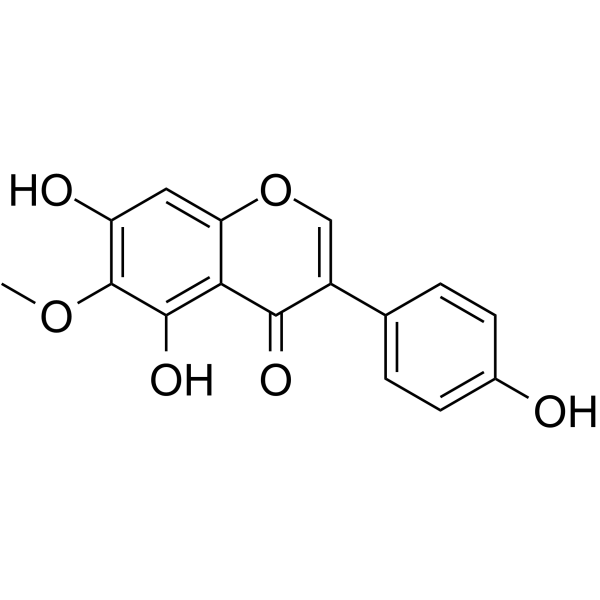
HY-N0792
TectorigeninPlant Isoflavonoid -
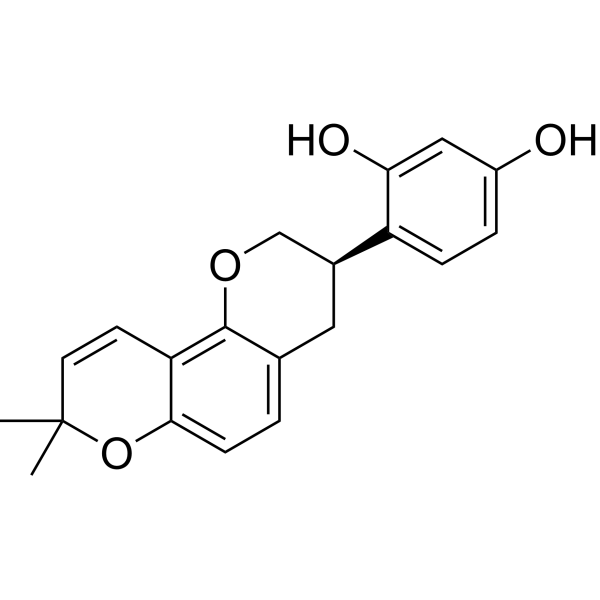
HY-N0393R
Glabridin (Standard) -
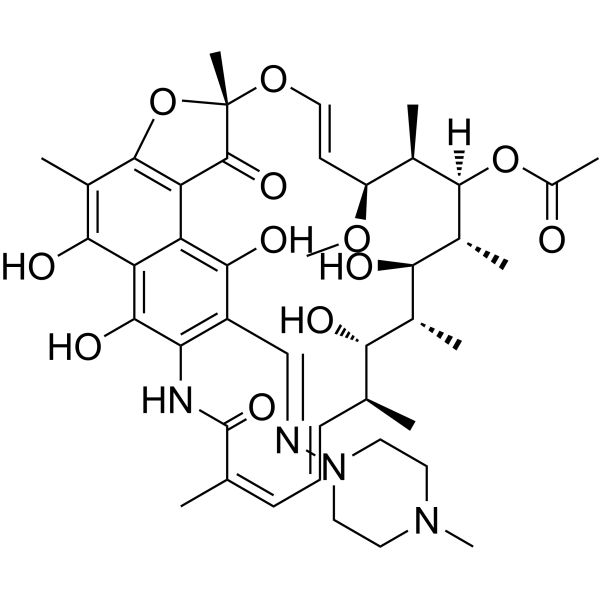
HY-B0272R
Rifampicin (Standard)Antivirus Agent -
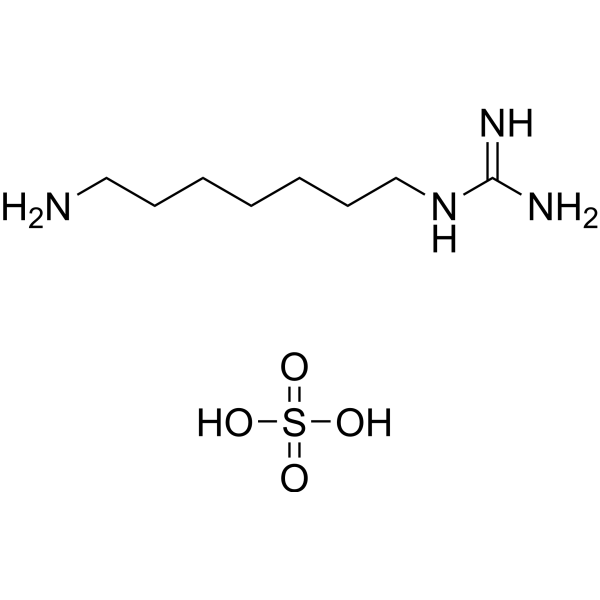
HY-108314A
GC7 SulfateDHPS Inhibitor -
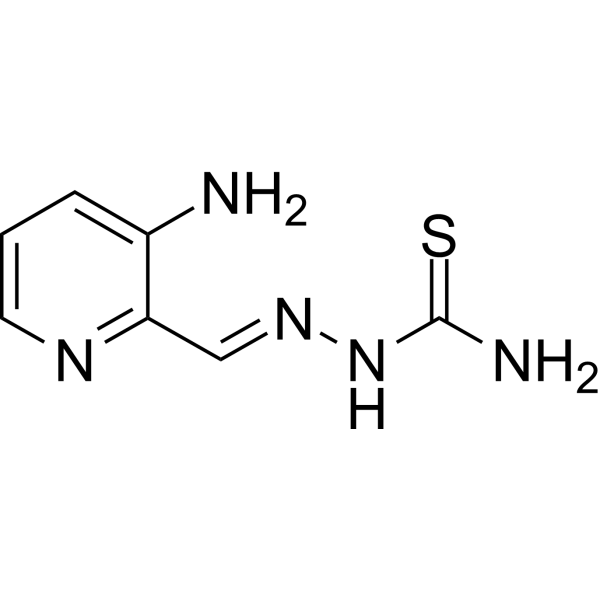
HY-10082
TriapineRibonucleotide Reductase Inhibitor -
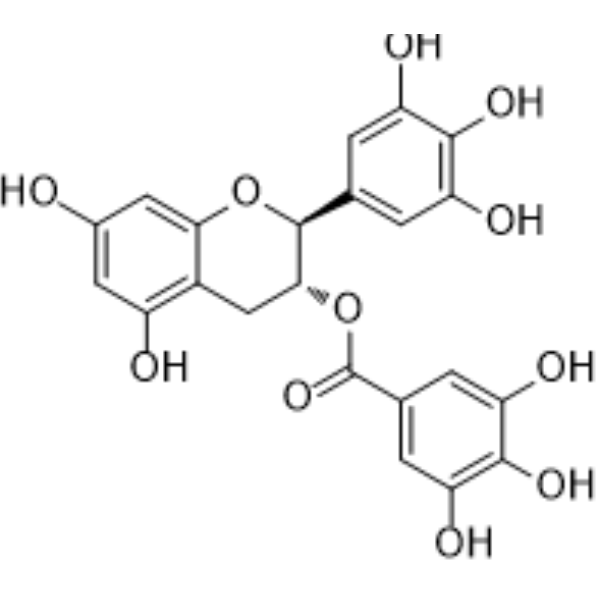
HY-N0522
(-)-Gallocatechin gallateAnticancer Agent -
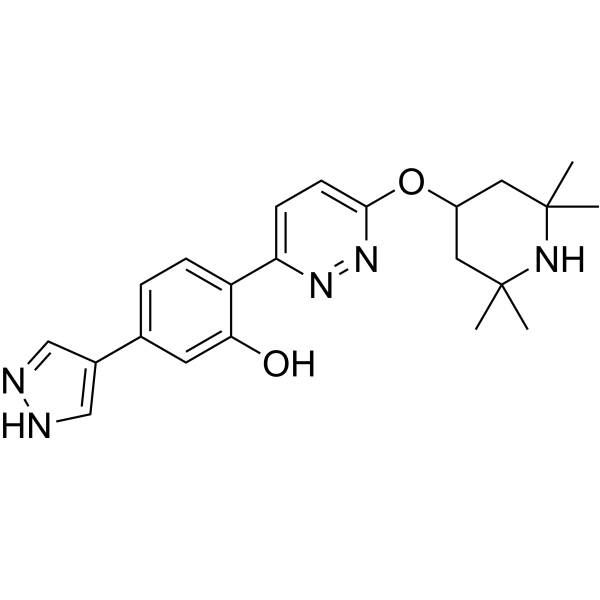
HY-19620
BranaplamSMN2 Splicing Modulator
Publications Citing Use of MedChemExpress (MCE) 5-Methoxyflavone
MoreAlle DNA/RNA Synthesis Isoform-spezifische Produkte anzeigen
More

Biologische Aktivität
Beschreibung
IC50 & Target
|
DNA Polymerase |
In Vitro
5-Methoxyflavone (compound 1) is identified as a candidate compound endowed with the ability to inhibit DNA pol-β in multiple and to prevent cell-cycle initiation and subsequent neuronal apoptosis in Aβ-challenged primary neuronal cultures. 5-methoxyflavone (10-30 μM) is able to significantly enhance toxicity of MMS on 92TAg cells. 5-Methoxyflavone (1 or 10 μM) significantly reduces polymerase activity on a gapped substrate[1].
5-Methoxyflavone (5-MF, 0-100 μg/mL) results in a time dependent reduction in the levels of antiapoptotic proteins cFLIP, Mcl-1 and an increase in the proapoptotic protein BAX. 5-MF induces both TRAIL-R1(DR4) and TRAIL-R2 (DR5) in a time-dependent manner[2].
MedChemExpress (MCE) has not independently confirmed the accuracy of these methods. They are for reference only.
In Vivo
MedChemExpress (MCE) has not independently confirmed the accuracy of these methods. They are for reference only.


Chemical Information
-
CAS. Nr. 42079-78-7
-
Appearance Solid
-
Molecular Weight 252.26
-
Formel C16H12O3
-
Color White to off-white
-
SMILES
O=C1C=C(C2=CC=CC=C2)OC3=CC=CC(OC)=C13
-
Versand
Room temperature in continental US; may vary elsewhere.
-
Speicherung
Powder -20°C 3 years 4°C 2 years In solvent -80°C 2 years -20°C 1 year


Publications (2)
-
Journal Impact Factor
-
Most Recent
-
Food Chem
Effects of sun drying combined with baking processes on the flavor quality of Chongqing Tuocha raw tea. [Abstract]2025 Dec 30:497:146992. PMID: 41285060 -
Food Chem
Flavonoid-mediated metabolic underpinning quality variation in red bud-sport pear mutants. [Abstract]2025 Oct 15:489:144992. PMID: 40466530


Lösungsmittel & Löslichkeit
In Vitro:
DMSO : 125 mg/mL (495.52 mM; Need ultrasonic; Hygroscopic DMSO has a significant impact on the solubility of product, please use newly opened DMSO)
Please refer to the solubility information to select the appropriate solvent. Once prepared, please aliquot and store the solution to prevent product inactivation from repeated freeze-thaw cycles.
Storage method and period of stock solution: -80°C, 2 years; -20°C, 1 year. When stored at -80°C, please use it within 2 years. When stored at -20°C, please use it within 1 year.
Please refer to the solubility information to select the appropriate solvent. Once prepared, please aliquot and store the solution to prevent product inactivation from repeated freeze-thaw cycles.
Storage method and period of stock solution: -80°C, 2 years; -20°C, 1 year. When stored at -80°C, please use it within 2 years. When stored at -20°C, please use it within 1 year.
Konzentration (Stammlösung) × Volumen (Stammlösung) = Konzentration (Ziellösung) × Volumen (Ziellösung)
In Vivo:
Select the appropriate dissolution method based on your experimental animal and administration route.
- For the following dissolution methods, please ensure to first prepare a clear stock solution using an In Vitro approach and then sequentially add co-solvents:
- To ensure reliable experimental results, the clarified stock solution can be appropriately stored based on storage conditions. As for the working solution for In Vivo experiments, it is recommended to prepare freshly and use it on the same day.
- The percentages shown for the solvents indicate their volumetric ratio in the final prepared solution. If precipitation or phase separation occurs during preparation, heat and/or sonication can be used to aid dissolution.
Add each solvent one by one: 10% DMSO 40% PEG300 5% Tween-80 45% Saline
Solubility: ≥ 2.08 mg/mL (8.25 mM); Clear solution
This protocol yields a clear solution of ≥ 2.08 mg/mL (saturation unknown).
Taking 1 mL working solution as an example, add 100 μL DMSO stock solution (20.8 mg/mL) to 400 μL PEG300, and mix evenly; then add 50 μL Tween-80 and mix evenly; then add 450 μL Saline to adjust the volume to 1 mL.
Preparation of Saline: Dissolve 0.9 g sodium chloride in ddH₂O and dilute to 100 mL to obtain a clear Saline solution.
Add each solvent one by one: 10% DMSO 90% (20% SBE-β-CD in Saline)
Solubility: ≥ 2.08 mg/mL (8.25 mM); Clear solution
This protocol yields a clear solution of ≥ 2.08 mg/mL (saturation unknown).
Taking 1 mL working solution as an example, add 100 μL DMSO stock solution (20.8 mg/mL) to 900 μL 20% SBE-β-CD in Saline, and mix evenly.
Preparation of 20% SBE-β-CD in Saline (4°C, storage for one week): 2 g SBE-β-CD powder is dissolved in 10 mL Saline, completely dissolve until clear.
In Vivo Dissolution Calculator
Please enter the basic information of animal experiments:
-
-
-
-
Recommended: Prepare an additional quantity of animals to account for potential losses during experiments.
Please enter your animal formula composition:
-
%DMSO +
Recommended: Keep the proportion of DMSO in working solution below 2% if your animal is weak.
-
%+
-
+%Tween-80 + +
-
%Saline +
The co-solvents required include: DMSO, . All of co-solvents are available by MedChemExpress (MCE). , Tween 80. All of co-solvents are available by MedChemExpress (MCE).
Working solution concentration: 0.22 mg/mL
Method for preparing stock solution: mg drug dissolved in μL DMSO. Stock solution concentration: mg/mL.
1. Take μL DMSO stock solution;
2. Add μL .
μL , mix evenly;
3. Then add μL Tween 80, mix evenly;
4. Then add μL
Please ensure that the stock solution in the first step is dissolved to a clear state, and add co-solvents in sequence. You can use ultrasonic heating (ultrasonic cleaner, recommended frequency 20-40 kHz), vortexing, etc. to assist dissolution.


Reinheit & Dokumentation
-
Data Sheet (278 KB)
-
SDS (394 KB)
- English - EN (394 KB)
- Français - FR (394 KB)
- Deutsch - DE (394 KB)
- Norwegian - NO (394 KB)
- Español - ES (394 KB)
- Swedish - SV (394 KB)
- Italian - IT (394 KB)
- Korean - KR (394 KB)
- Portuguese - PT (394 KB)
-
Handling Instructions (2659 KB)
Verweise
[1]. Merlo S, et al. Identification of 5-Methoxyflavone as a Novel DNA Polymerase-Beta Inhibitor and Neuroprotective Agent against Beta-Amyloid Toxicity. J Nat Prod. 2015 Nov 25;78(11):2704-11. [Content Brief]
[2]. Shanmugasundaram J, et al. Sedative-hypnotic like effect of 5-methoxyflavone in mice and investigation on possible mechanisms by in vivo and in silico methods. Biomed Pharmacother. 2018 Dec;108:85-94. [Content Brief]
[3]. Wudtiwai B, et al. Methoxyflavone derivatives modulate the effect of TRAIL-induced apoptosis in human leukemic cell lines. J Hematol Oncol. 2011 Dec 21;4:52. [Content Brief]


Complete Stock Solution Preparation Table
Please refer to the solubility information to select the appropriate solvent. Once prepared, please aliquot and store the solution to prevent product inactivation from repeated freeze-thaw cycles.
Storage method and period of stock solution: -80°C, 2 years; -20°C, 1 year. When stored at -80°C, please use it within 2 years. When stored at -20°C, please use it within 1 year.
| Optional Solvent | Concentration Solvent Mass | 1 mg | 5 mg | 10 mg | 25 mg |
|---|---|---|---|---|---|
| DMSO | 1 mM | 3.9642 mL | 19.8208 mL | 39.6416 mL | 99.1041 mL |
| 5 mM | 0.7928 mL | 3.9642 mL | 7.9283 mL | 19.8208 mL | |
| 10 mM | 0.3964 mL | 1.9821 mL | 3.9642 mL | 9.9104 mL | |
| 15 mM | 0.2643 mL | 1.3214 mL | 2.6428 mL | 6.6069 mL | |
| 20 mM | 0.1982 mL | 0.9910 mL | 1.9821 mL | 4.9552 mL | |
| 25 mM | 0.1586 mL | 0.7928 mL | 1.5857 mL | 3.9642 mL | |
| 30 mM | 0.1321 mL | 0.6607 mL | 1.3214 mL | 3.3035 mL | |
| 40 mM | 0.0991 mL | 0.4955 mL | 0.9910 mL | 2.4776 mL | |
| 50 mM | 0.0793 mL | 0.3964 mL | 0.7928 mL | 1.9821 mL | |
| 60 mM | 0.0661 mL | 0.3303 mL | 0.6607 mL | 1.6517 mL | |
| 80 mM | 0.0496 mL | 0.2478 mL | 0.4955 mL | 1.2388 mL | |
| 100 mM | 0.0396 mL | 0.1982 mL | 0.3964 mL | 0.9910 mL |


5-Methoxyflavone Related Classifications
HY-107790 Related Classifications
 Powered by Bioz