


1. Search Result
Search Result
Results for "

Fe3

" in MedChemExpress (MCE) Product Catalog:

30

Inhibitors & Agonists

4

Fluorescent Dye

3

Biochemical Assay Reagents

1

Peptides

7

Natural
Products

1

Isotope-Labeled Compounds

Cat. No. Product Name Target Research Areas Chemical Structure
  • HY-W075707
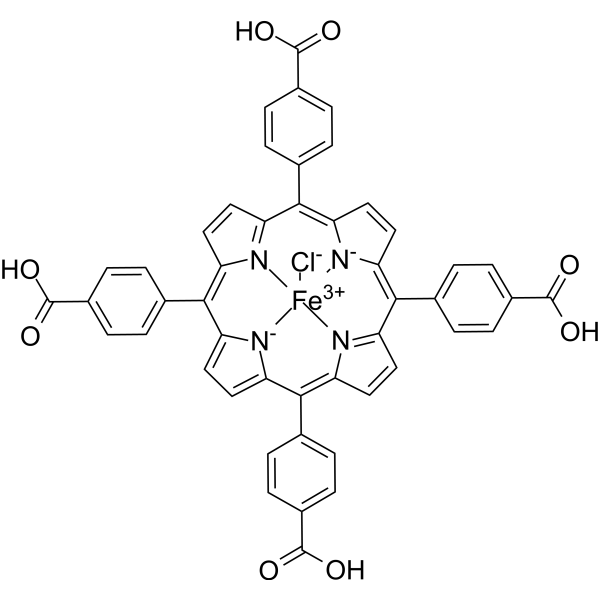
    FeTCPP chloride
    1 Publications Verification

    Iron(III) meso-Tetra(4-carboxyphenyl)porphine chloride

    MOFs Others
    FeTCPP chloride (Iron(III) meso-Tetra(4-carboxyphenyl)porphine chloride) is a metallic porphyrin compound formed by the coordination of a central iron ion (Fe 3+) with four 4-carboxyphenylporphyrins (TCPP). FeTCPP chloride can be used as a catalyst for catalytic, electrochemical, photochemical and biomedical research. FeTCPP chloride has high photocatalytic performance for p-nitrophenol under visible light. FeTCPP chloride also has peroxisase-like activity, which is used in bionic catalysis research .
    FeTCPP chloride
  • HY-16564

    Ferroptosis Bacterial Others
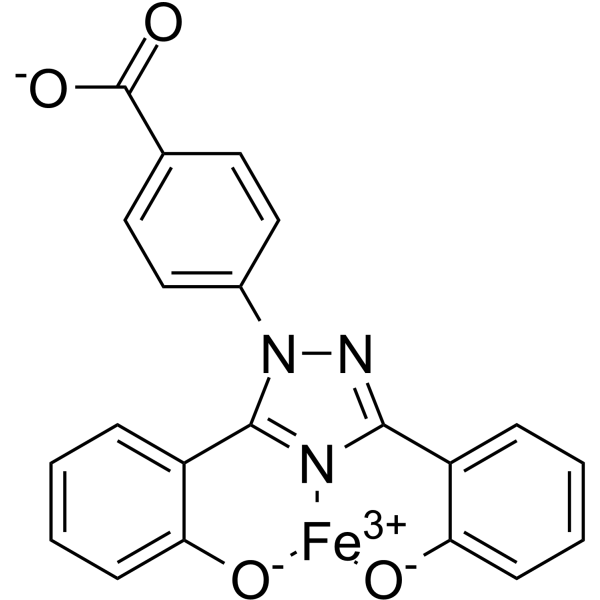
    Deferasirox Fe3+ Chelate is an iron chelating agent extracted from patent WO2003053986 .
    Deferasirox (Fe3+ chelate)
  • HY-160238

    Corynebactin

    Bacterial Fungal Infection
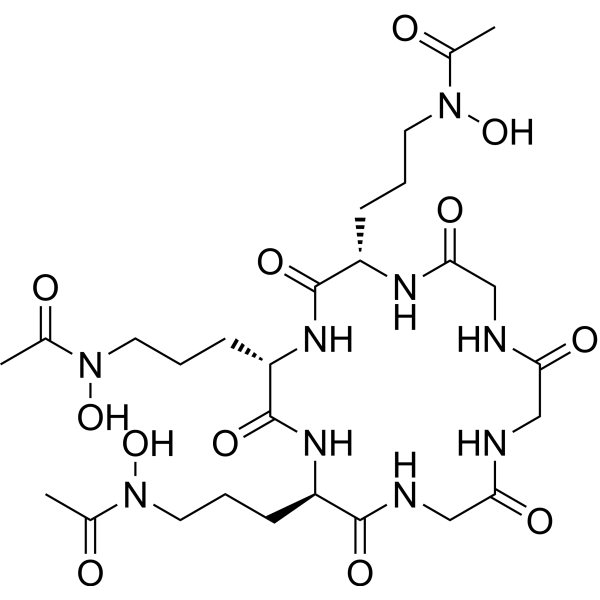
    Bacillibactin (Corynebactin) is a cyclic tricatecholate siderophore. Bacillibactin’s primary function is to facilitate bacterial iron acquisition by chelating iron ions (Fe 3+) from the environment, thereby aiding bacterial survival under iron-limited conditions. Bacillibactin exhibits direct antimicrobial activity, such as inhibition of the growth of the producing bacteria Pseudomonas aeruginosa and Aeromonas veronae, as well as plant pathogens such as Pseudomonas syringae.Bacillibactin can be used in antibacterial and antifungal research [3] .
    Bacillibactin
  • HY-B1306
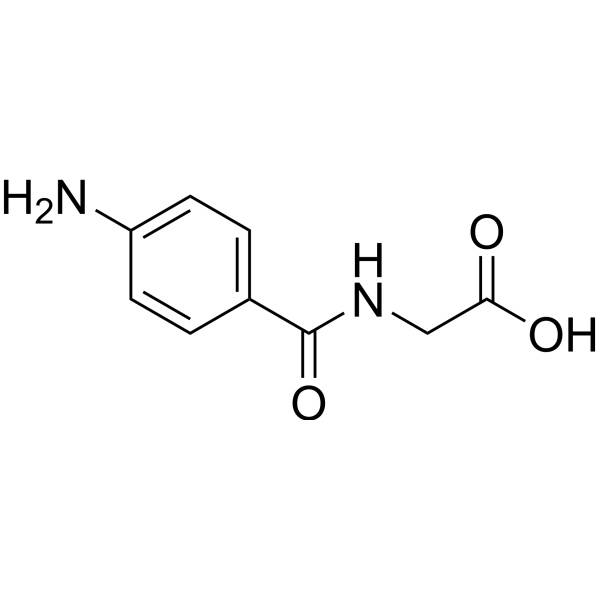
    4-Aminohippuric acid
    4 Publications Verification

    p-Aminohippuric acid

    Others Neurological Disease Metabolic Disease
    4-Aminohippuric acid (p-Aminohippuric acid) is a coordination ligand for metal ions (such as Cu 2+, Fe 3+, Hg 2+) and a functionalization reagent for nanomaterials. 4-Aminohippuric acid can coordinate with metal ions or modify the surface of materials such as carbon nanotubes and gold nanoparticles through amino and carboxyl groups. 4-Aminohippuric acid can form stable complexes with metal ions or participate in the synthesis of nanomaterials as a reducing agent/stabilizer, enriching metal ions or giving nanoparticles peroxidase-mimicking activity. 4-Aminohippuric acid can be used to construct highly sensitive electrochemical sensors or colorimetric sensors to detect and quantitatively analyze heavy metal ions such as copper, iron, and mercury in environmental water samples and biological samples. 4-Aminohippuric acid may also be a biomarker for attention-deficit/hyperactivity disorder (ADHD) [3].
    4-Aminohippuric acid
  • HY-108017

    Biochemical Assay Reagents Metabolic Disease Cancer
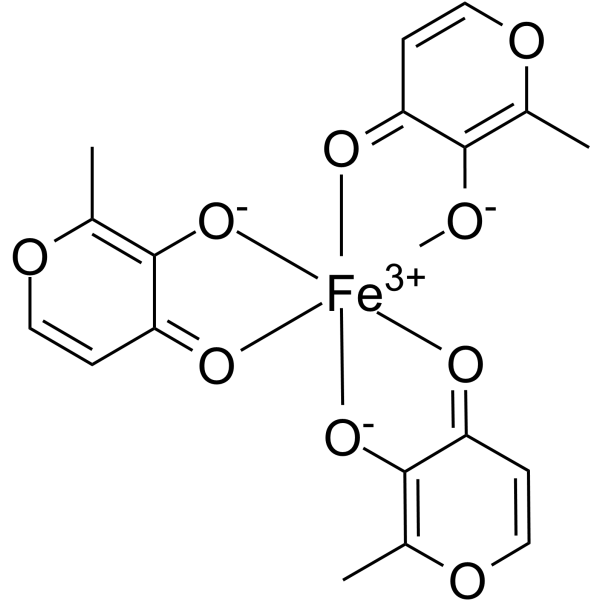
    Ferric maltol is an orally active monovalent iron (Fe 3+) complex. Ferric maltol is used in the study of iron deficiency anemia in inflammatory bowel disease .
    Ferric maltol
  • HY-N10473
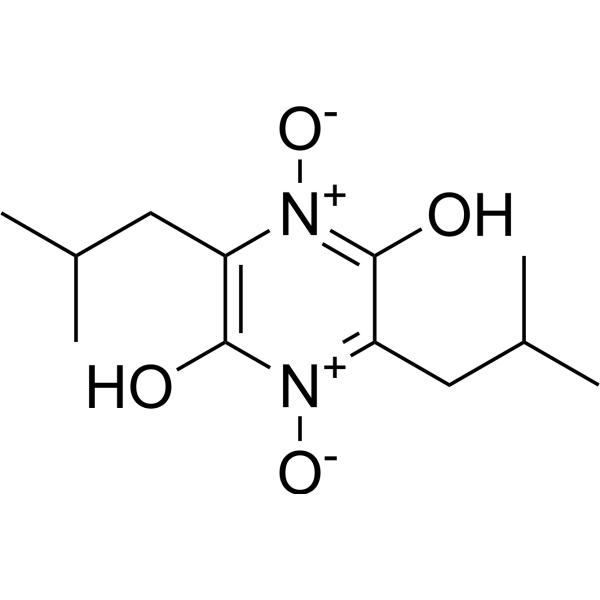
    Pulcherriminic acid
    3 Publications Verification

    Bacterial Fungal Infection
    Pulcherriminic acid is a cyclic dipeptide antimicrobial agent with high affinity for Fe 3+, found mainly in Bacillus and yeast. Pulcherriminic acid chelates iron ions through a non-enzymatic reaction to form the extracellular red pigment pulcherrimin, which competes for iron nutrition and thus achieves an antibacterial effect. Pulcherriminic acid has great applications in food, agriculture and medical industries .
    Pulcherriminic acid
  • HY-P3267A

    Ferroportin Transferrin Receptor Neurological Disease
    Apo-Bovine Transferrin refers to iron free Transferrin (HY-P3267), serves as Transferrin receptor ligand and mediates iron release from endothelial cells. Apo-Transferrin can directly bind to hephaestin, which can convert Fe 2+ to Fe 3+. Apo-Transferrin mediates iron efflux most likely in cooperation with ferroportin 1. Apo-Bovine Transferrin can be used in neuroretinal research .
    Apo-Bovine Transferrin
  • HY-Y0102

    2-Mercaptobenzoic acid

    Biochemical Assay Reagents Drug Intermediate Infection
    Thiosalicylic acid (2-Mercaptobenzoic acid) is an organosulfur compound bearing both sulfhydryl and carboxyl functional groups. Thiosalicylic acid acts as a desulfurizing agent. Thiosalicylic acid also serves as a ligand to synthesize azosulfonamide derivatives with antibacterial and antifungal activities, as well as their Fe 3+, Cu 2+ and Hg 2+ chelates .
    Thiosalicylic acid
  • HY-Y1422I

    Environmental Pollutants Biochemical Assay Reagents Lipase Others
    Lipase, Pseudomonas fluorescens (Immobilized) is an immobilized biocatalyst derived from Pseudomonas fluorescens. Lipase, Pseudomonas fluorescens (Immobilized) efficiently catalyzes the hydrolysis, esterification and transesterification of triacylglycerols in solvent-free systems, and is particularly suitable for biodiesel production from soybean oil and selective modification of oils rich in EPA and DHA. Lipase, Pseudomonas fluorescens (Immobilized) exhibits optimal activity at pH 8.5 and 45°C, and retains residual activity after repeated cycles of use. Lipase, Pseudomonas fluorescens (Immobilized) is activated by Ca 2+, but inhibited by Co 2+, Ni 2+, Fe 3+, Fe 2+ and EDTA .
    Lipase,Pseudomonas fluorescens (Immobilized)
  • HY-P2777

    Biochemical Assay Reagents Neurological Disease Metabolic Disease Inflammation/Immunology
    Ceruloplasmin is a copper-containing multifunctional ferrous oxidase glycoprotein. Ceruloplasmin specifically oxidizes Fe 2+ to Fe 3+, promoting the binding of Fe 3+ to transferrin. Ceruloplasmin can bind to copper ions to prevent the toxicity of free copper to cells. Ceruloplasmin can be used for the research of inflammation, metabolic and neurological disease such as Parkinson’s disease .
    Ceruloplasmin
  • HY-158739

    Fluorescent Dye Cancer
    Rhodamine dithenoyl hydrazide (probe 1) possesses excellent recognition and selectivity for Fe 3+ ion. Rhodamine dithenoyl hydrazide exhibits Excitation/Emission maxima of 543/550-700 nm, respectively .
    Rhodamine dithenoyl hydrazide
  • HY-158779

    SSP4

    Fluorescent Dye Others
    Sulfane sulfur probe 4 (SSP4) is a fluorescent probe used to detect sulfane sulfur species (Ex/Em=494/515 nm). Sulfane sulfur probe 4 exhibits high sensitivity in detecting sulfane sulfur, even in the presence of other substances such as homocysteine, methionine, cysteine, glutathione, N-acetyl-L-cysteine, glycine, tyrosine, tryptophan, arginine, and metal ions (Fe 2+, Fe 3+, Mg 2+, Ca 2+, and Zn 2+) .
    Sulfane sulfur probe 4
  • HY-138075

    Antibiotic Bacterial Parasite Infection
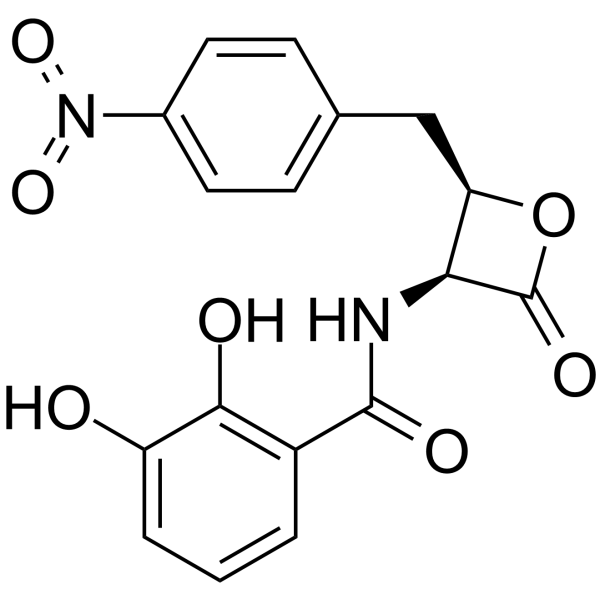
    Obafluorin is a β-lactone antibiotic. Obafluorin inhibits threonyl-tRNA synthetase (PfThrRS) with an IC50 of 4.3 nM. Obafluorin inhibits the aminoacylation activity of EcThrRS and ObaO. Obafluorin exhibits Fe 3+-enhanced antibacterial activity. Obafluorin can be used in studies related to infections caused by bacterial and parasites such as Plasmodium .
    Obafluorin
  • HY-B1306R

    p-Aminohippuric acid (Standard)

    Reference Standards Biochemical Assay Reagents Neurological Disease Metabolic Disease
    4-Aminohippuric acid (p-Aminohippuric acid) (Standard) is the analytical standard of 4-Aminohippuric acid (HY-B1306). This product is intended for research and analytical applications. 4-Aminohippuric acid (p-Aminohippuric acid) is a coordination ligand for metal ions (such as Cu 2+, Fe 3+, Hg 2+) and a functionalization reagent for nanomaterials. 4-Aminohippuric acid can coordinate with metal ions or modify the surface of materials such as carbon nanotubes and gold nanoparticles through amino and carboxyl groups. 4-Aminohippuric acid can form stable complexes with metal ions or participate in the synthesis of nanomaterials as a reducing agent/stabilizer, enriching metal ions or giving nanoparticles peroxidase-mimicking activity. 4-Aminohippuric acid can be used to construct highly sensitive electrochemical sensors or colorimetric sensors to detect and quantitatively analyze heavy metal ions such as copper, iron, and mercury in environmental water samples and biological samples. 4-Aminohippuric acid may also be a biomarker for attention-deficit/hyperactivity disorder (ADHD) [3].
    4-Aminohippuric acid (Standard)
  • HY-N13871

    Antibiotic Bacterial Infection
    Anguibactin is an antibiotic that acts as a siderophore. Anguibactin has a strong affinity with Fe 3+ .
    Anguibactin
  • HY-W011816

    Biochemical Assay Reagents Others
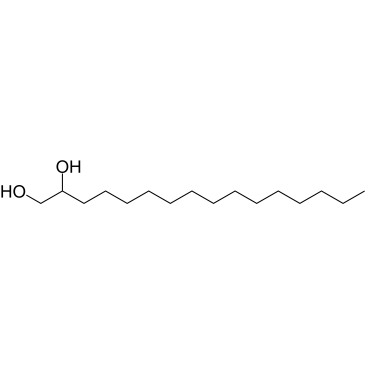
    1,2-Hexadecanediol is a reducing agent. 1,2-Hexadecanediol facilitates the decomposition of the metal-organic precursor, forms an intermediate Co 2+Fe 3+-oleate complex .
    1,2-Hexadecanediol
  • HY-174867

    PROTACs Ferroptosis Cancer
    AY-4 (Compound AY-4) is an efficient PROTAC degrader targeting FTH1 (Kd = 3.17 nM). AY-4 effectively upregulates the levels of ferrous (Fe 2+) and ferric (Fe 3+) ions in cells. AY-4 is a potential anticancer candidate compound that regulates iron homeostasis through ferritin degradation and enhances the efficacy of existing drugs. AY-4 can effectively reduce the level of FTH1 in breast cancer cells (Pink: FTH1 ligand AY-2 (HY-174871); Blue: E3 ligand Pomalidomide (HY-10984); Black: Linker, Pomalidomide-PEG3-acid (HY-174872)) .
    AY-4
  • HY-B1306S

    p-Aminohippuric acid-d4

    Biochemical Assay Reagents Neurological Disease Metabolic Disease
    4-Aminohippuric acid-d4 (p-Aminohippuric acid-d4) is the deuterium labeled 4-Aminohippuric acid (HY-B1306). 4-Aminohippuric acid (p-Aminohippuric acid) is a coordination ligand for metal ions (such as Cu 2+, Fe 3+, Hg 2+) and a functionalization reagent for nanomaterials. 4-Aminohippuric acid can coordinate with metal ions or modify the surface of materials such as carbon nanotubes and gold nanoparticles through amino and carboxyl groups. 4-Aminohippuric acid can form stable complexes with metal ions or participate in the synthesis of nanomaterials as a reducing agent/stabilizer, enriching metal ions or giving nanoparticles peroxidase-mimicking activity. 4-Aminohippuric acid can be used to construct highly sensitive electrochemical sensors or colorimetric sensors to detect and quantitatively analyze heavy metal ions such as copper, iron, and mercury in environmental water samples and biological samples. 4-Aminohippuric acid may also be a biomarker for attention-deficit/hyperactivity disorder (ADHD) [3] .
    4-Aminohippuric acid-d4
  • HY-100332

    Biochemical Assay Reagents Others
    CP 375 is a Fe 3+ chelating agent, with a log K1 value of 14.50.
    CP 375
  • HY-E70311

    Thermomyces lanuginosus lipase

    Endogenous Metabolite Others
    1,3-specific lipase,Bacillus lanolin (Immobilized)(Thermomyces lanuginosus lipase) is a high-efficiency biocatalyst, a lipase from Thermomyces lanuginosus. 1,3-specific lipase,Bacillus lanolin (Immobilized) can be conjugated to magnetic nanoparticles and coupled to the surface of Fe(3)O(4)-COOH to obtain better temperature resistance and pH resistance. The activity unit (U) of lipase is defined as the amount of enzyme that produces 1 μmol of fatty acid per minute under experimental conditions .
    1,3-specific lipase,Bacillus lanolin (Immobilized)
  • HY-159943

    Cholinesterase (ChE) Neurological Disease
    ROS151 is an AChE inhibitor, with IC50s of 14 nM (hAChE), 1.68 μM (eqBChE), 8.17 μM (hFAAH) respectively. ROS151 is also a chelator of Fe 3+ and Cu 2+. ROS151 can be used for research of Alzheimer's disease .
    ROS151
  • HY-D2730

    Bacterial Infection
    N14G-Fe, the Fe 3+-chelated form of N14G, identifies Mtb in sputum samples with tuberculosis, exhibiting exceptional fluorescence. N14G-Fe can effectively traverse the cell wall and inner membrane region where IrtAB is located .
    N14G-Fe
  • HY-D2204

    Phosphatase SHP1 Fluorescent Dye Cancer
    SHP1-IN-1 (compound 5p) is a fluorescent probe for the protein tyrosine phosphatase SHP1 containing the Src homology 2 domain. SHP1-IN-1 has SHP1 inhibitory activity, selectivity for Fe 3+ ions and good fluorescence properties. SHP1-IN-1 exhibits aggregation post-quenching (ACQ) effect, good interference immunity and low detection limit (5.55 μM) .
    SHP1-IN-1
  • HY-153217

    Biochemical Assay Reagents Others
    Arsonic acid is a robust anchor group for the surface modification of Fe3O4. Arsonic acid binds strongly to the surface of iron oxide nanoparticles .
    Arsonic acid
  • HY-N17362

    Others Others
    Anhydroevoxine is a furoquinoline alkaloid that can be found in Vepris glomerata. Anhydroevoxine demonstrates in vitro antioxidant activity, reducing Fe 3+ to Fe 2+ and scavenging DPPH radicals .
    Anhydroevoxine
  • HY-162933

    Cholinesterase (ChE) Metabolic Disease
    AChE-IN-77 (5d) is a potent AChE and BACE1 inhibitor, with IC50 values of 29.46 µM ans 2.85 µM for AChE and BACE1 in vitro metal chelating ability against Fe 3+ .
    AChE-IN-77
  • HY-P11504

    Biochemical Assay Reagents Others
    Fmoc-Lys-Gly-Dopa-OH is a tripeptide. Fmoc-Lys-Gly-Dopa-OH forms coacervates in aqueous solution via phase separation. Fmoc-Lys-Gly-Dopa-OH coacervates, with the assistance of Fe 3+, provide a viable material to engineer the surface of mammalian cells .
    Fmoc-Lys-Gly-Dopa-OH
  • HY-W008952

    Environmental Pollutants Biochemical Assay Reagents Others
    Tributyltetradecyl phosphonium chloride is a quaternary phosphonium salt cation. Tributyltetradecyl phosphonium chloride can form an acidic aqueous biphasic system with acid and water, exhibits temperature-induced phase separation behavior with a lower critical solution temperature, enables the partitioning of Co 2+, Fe 3+, Pt 4+ and Ni 2+ between the two phases, and also promotes the separation of Co 2+ and Ni 2+ .
    Tributyltetradecyl phosphonium chloride
  • HY-W722245

    Endogenous Metabolite Bacterial Infection
    Pyochelin is a salicylate-based nonribosomal peptide siderophore produced by Pseudomonas aeruginosa. Pyochelin chelates Fe 3+ and transports it back into bacterial cells, providing the iron essential for bacterial survival. Pyochelin can also chelate other metals such as Zn 2+, Co 2+, and Ni 2+, which helps bacteria maintain intracellular metal ion homeostasis by chelating and excreting excess metals in response to toxic metal stress. Pyochelin can be used in studies related to Pseudomonas aeruginosa infection [3].
    Pyochelin
  • HY-W094110

    Environmental Pollutants Biochemical Assay Reagents Others
    Iron (III) sulfate is a stable rhombohedral NASICON compound. Iron (III) sulfate can serve as a sodium ion intercalation host, enabling sodium ion intercalation and deintercalation via a single-phase mechanism relying on the Fe 2+/Fe 3+ redox couple. Iron (III) sulfate exhibits reversible electrochemical behavior and moderate polarization in cyclic voltammetry tests, and its charge transfer resistance changes during charge-discharge cycles. Iron (III) sulfate possesses a high redox potential, excellent rate capability, and long-cycle stability .
    Iron(III) sulfate

Inquiry Online

Your information is safe with us. * Required Fields.

Salutation


Country or Region *

Applicant Name *


Organization Name *

Department *


Email Address *


Product Name *

Cat. No.


Requested quantity *

Phone Number *


Remarks

Inquiry Online

Inquiry Information

Product Name:
Cat. No.:
Quantity:
MCE Japan Authorized Agent:

