
1. Search Result
Search Result
Results for "

Iron chelating activity

" in MedChemExpress (MCE) Product Catalog:

17

Inhibitors & Agonists

5

Natural
Products

1

Isotope-Labeled Compounds

Targets Recommended:
Cat. No. Product Name Target Research Areas Chemical Structure
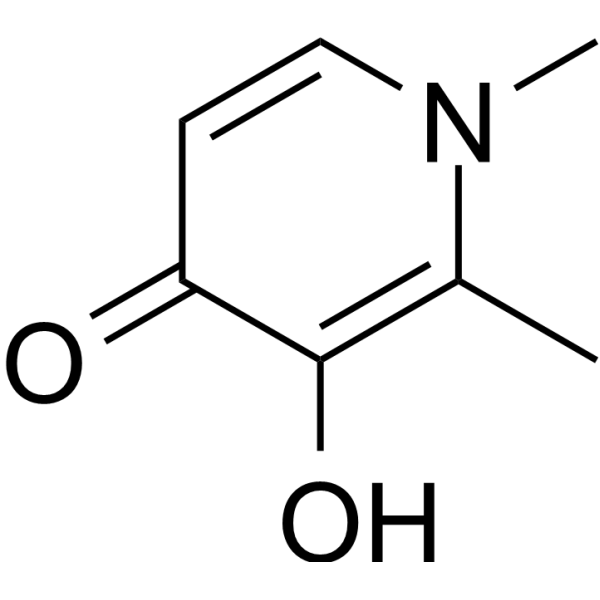
  • HY-B0568
    Deferiprone
    Maximum Cited Publications
    47 Publications Verification

    Ferroptosis HCV Apoptosis COX Histone Demethylase Cardiovascular Disease Infection Neurological Disease Metabolic Disease Inflammation/Immunology Cancer
    Deferiprone is a potent, orally active, brain-penetrant, cell-penetrant, skin-permeable, free iron chelating agent. Deferiprone inhibits the proliferation and migration, and stimulates apoptosis in tumor cell. Deferiprone can inhibit KDM. Deferiprone has antianemic, neuroprotective, anti-inflammatory, antioxidant, and antidotal activity. Deferiprone can be used in cancer, cardiovascular disease, infection, inflammation, and neurological disease study .
    Deferiprone
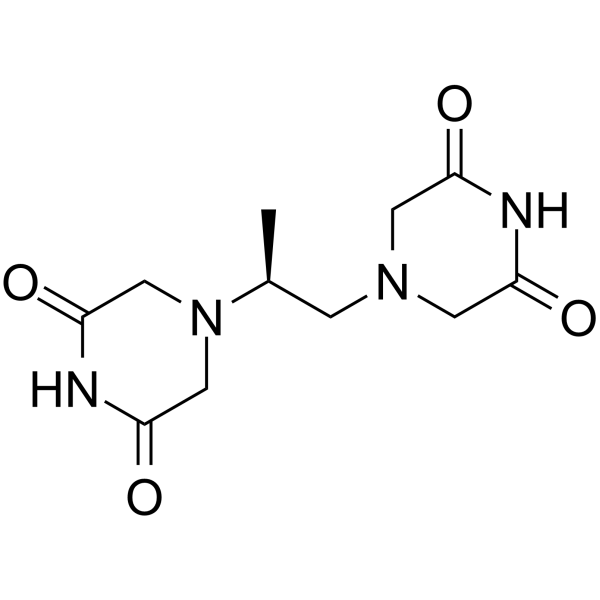
  • HY-B0581
    Dexrazoxane
    15+ Cited Publications

    ICRF-187; ADR-529; NSC-169780

    Ferroptosis Apoptosis Cardiovascular Disease Neurological Disease Inflammation/Immunology Cancer
    Dexrazoxane, as an intracellular iron chelating agent, reduces the formation of superoxide radicals and has cardioprotective, anti-inflammatory, antioxidant, anti-tumor and neuroprotective activities. Dexrazoxane inhibits ferroptosis of H9c2 cells by inhibiting HMGB1. Dexrazoxane induces DNA damage and apoptosis in human fibrosarcoma cells .
    Dexrazoxane
  • HY-160238

    Corynebactin

    Bacterial Fungal Infection
    Bacillibactin (Corynebactin) is a cyclic tricatecholate siderophore. Bacillibactin’s primary function is to facilitate bacterial iron acquisition by chelating iron ions (Fe 3+) from the environment, thereby aiding bacterial survival under iron-limited conditions. Bacillibactin exhibits direct antimicrobial activity, such as inhibition of the growth of the producing bacteria Pseudomonas aeruginosa and Aeromonas veronae, as well as plant pathogens such as Pseudomonas syringae.Bacillibactin can be used in antibacterial and antifungal research .
    Bacillibactin
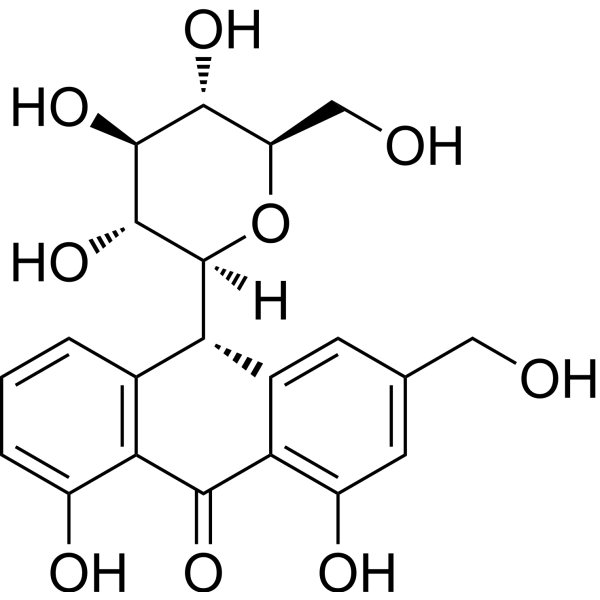
  • HY-N0123
    Aloin-A
    5+ Cited Publications

    Barbaloin-A

    Wnt Cancer
    Aloin (Aloin-A; Barbaloin-A) is a natural anti-tumor anthraquinone glycoside with iron chelating activity. Aloin induces the differentiation of MC3T3-E1 cells into osteoblasts through MAPK-mediated Wnt and Bmp signaling pathways. Alkaline phosphatase (ALP) is an early marker of osteoblast differentiation, and the activity of ALP is also enhanced by Aloin. Aloin also reduces brain edema, reduces blood-brain barrier disruption and improves cortical impact injuries. Aloin is used in research into osteoporosis and traumatic brain injury (TBI) .
    Aloin-A
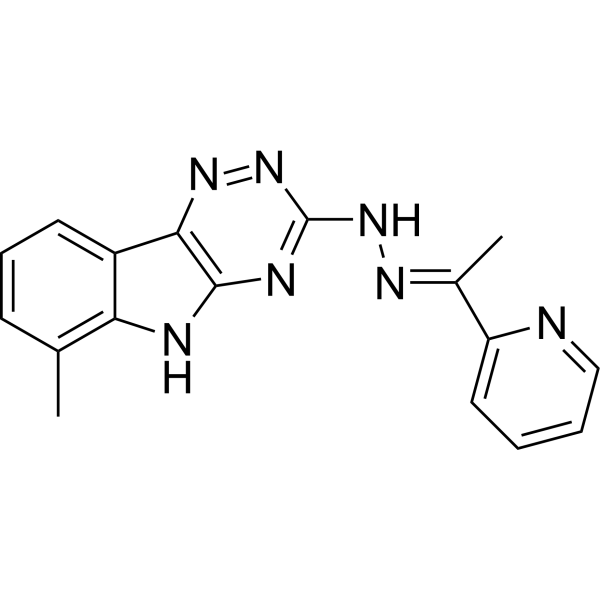
  • HY-12406
    VLX600
    2 Publications Verification

    Oxidative Phosphorylation Mitochondrial Metabolism Autophagy Cancer
    VLX600 is an iron-chelating inhibitor of oxidative phosphorylation (OXPHOS). VLX600 causes mitochondrial dysfunction and induces a strong shift to glycolysis. VLX600 displays selective cytotoxic activity against malignant cell and induces autophagy. Anticancer activity .
    VLX600
  • HY-114243

    NF-κB JNK Caspase Apoptosis Neurological Disease Cancer
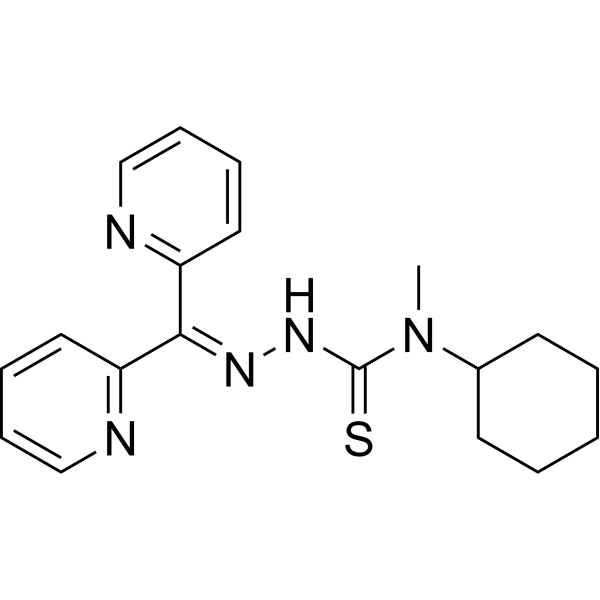
    DpC is a selective, orally active iron chelator with anticancer activity. DpC acts on signaling pathway-related targets such as JNK, NF-κB, and its activity is competitively inhibited by another iron chelator Dp44mT (HY-18973). By chelating intracellular iron and copper ions in tumor cells to form redox-active complexes, DpC induces oxidative stress, activates the JNK, NF-κB pathways and downregulates IκBα, upregulates the expressions of neuroglobin and cytoglobin, activates caspase 3/9 to induce tumor cell apoptosis. It also overcomes P-glycoprotein-mediated multidrug resistance through a lysosome-targeting mechanism, and exhibits broad-spectrum synergistic effects when combined with various chemotherapeutic agents. DpC inhibits tumor metastasis and increases TNF-α levels in the tumor microenvironment to enhance endogenous immune responses. DpC is applicable to the research of various malignancies including neuroblastoma, pancreatic cancer, prostate cancer, lung cancer, and breast cancer .
    DpC
  • HY-103249

    Reutericycline

    Bacterial Infection Metabolic Disease
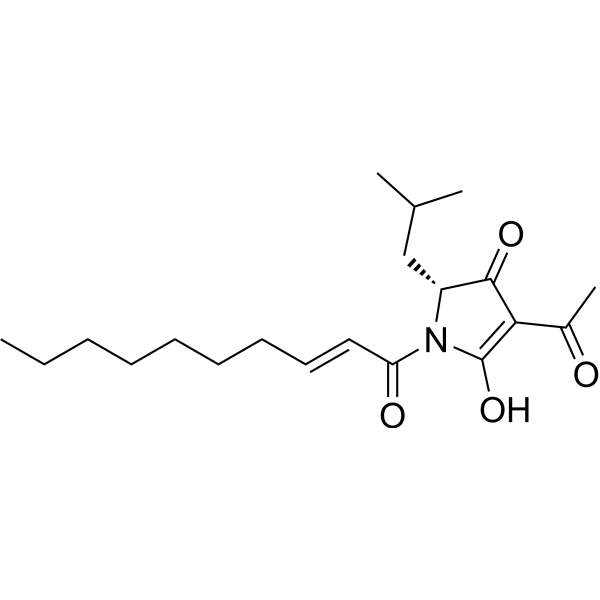
    Reutericyclin (Reutericycline) is an orally active antibacterial and anti-obesity agent that selectively inhibits Gram-positive bacteria. By selectively dissipating transmembrane potential, Reutericyclin exerts non-lytic bactericidal or bacteriostatic activity against pathogens such as Clostridium difficile and Staphylococcus aureus, and rapidly kills vegetative cells and spores of Clostridium difficile. Reutericyclin possesses favorable properties including resistance to enzymatic hydrolysis, iron-chelating function, and poor absorption by colonic epithelium. Reutericyclin not only eradicates staphylococcal biofilms and inhibits drug-resistant strains, but also counteracts Risperidone (HY-11018)-induced weight gain by inducing changes in gut microbiota composition and restoring energy utilization efficiency. Reutericyclin can be used in research related to Clostridium difficile infection, Risperidone-induced weight gain, and staphylococcal superficial skin infections .
    Reutericyclin
  • HY-B0568R

    Reference Standards Ferroptosis HCV Apoptosis COX Infection Cardiovascular Disease Neurological Disease Inflammation/Immunology Endocrinology Cancer
    Deferiprone (Standard) is the analytical standard of Deferiprone. This product is intended for research and analytical applications. Deferiprone is a potent, orally active, brain-penetrant, cell-penetrant, skin-permeable, free iron chelating agent. Deferiprone inhibits the proliferation and migration, and stimulates apoptosis in tumor cell. Deferiprone has antianemic, neuroprotective, anti-inflammatory, antioxidant, and antidotal activity. Deferiprone can be used in cancer, cardiovascular disease, infection, inflammation, and neurological disease study .
    Deferiprone (Standard)
  • HY-131300

    Parasite Infection
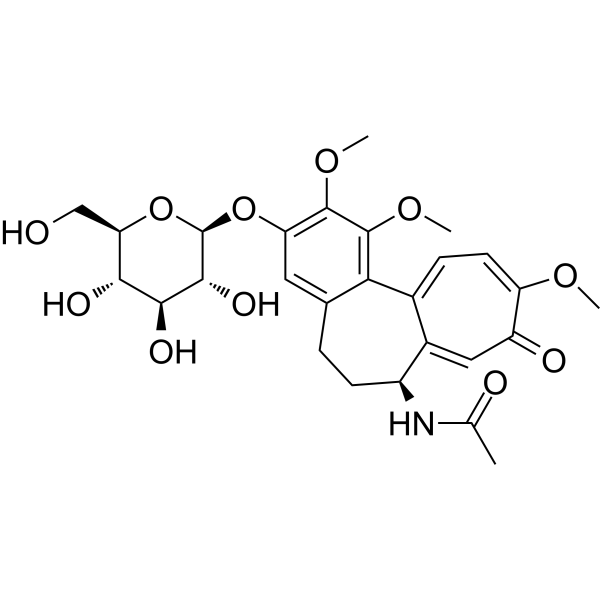
    Colchicoside is a bioactive tropolone alkaloid with anti-leishmanial and anti-leishmanial?activities .
    Colchicoside
  • HY-180521

    Fungal Infection Cancer
    Piroctone is a potent hydroxypyridone antimicrobial agent that shows remarkable activity against fungi including Candida species. Piroctone inhibits hyphal induction of Candida albicans. Piroctone can efficiently chelate intracellular iron to induce relevant cytotoxicity in neuroblastoma cells. Piroctone can be used for antimicrobial and neuroblastoma research .
    Piroctone
  • HY-N0123R

    Barbaloin-A (Standard)

    Reference Standards Wnt Cancer
    Aloin (Standard) is the analytical standard of Aloin. This product is intended for research and analytical applications. Aloin (Aloin-A; Barbaloin-A) is a natural anti-tumor anthraquinone glycoside with iron chelating activity. Aloin induces the differentiation of MC3T3-E1 cells into osteoblasts through MAPK-mediated Wnt and Bmp signaling pathways. Alkaline phosphatase (ALP) is an early marker of osteoblast differentiation, and the activity of ALP is also enhanced by Aloin. Aloin also reduces brain edema, reduces blood-brain barrier disruption and improves cortical impact injuries. Aloin is used in research into osteoporosis and traumatic brain injury (TBI) .
    Aloin-A (Standard)
  • HY-149723

    Ferroptosis Cancer
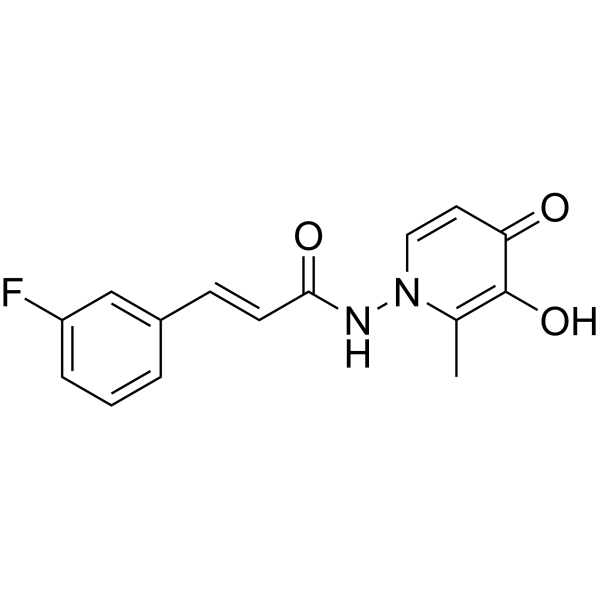
    Ferroptosis-IN-5 (compound 9c) is a ferroptosis inhibitor with iron-chelating and reactive oxygen species (ROS) scavenging activities .
    Ferroptosis-IN-5
  • HY-B0581R

    ICRF-187 (Standard); ADR-529 (Standard); NSC-169780 (Standard)

    Ferroptosis Apoptosis Reference Standards Cardiovascular Disease Neurological Disease Inflammation/Immunology Cancer
    Dexrazoxane (Standard) is the analytical standard of Dexrazoxane. This product is intended for research and analytical applications. Dexrazoxane, as an intracellular iron chelating agent, reduces the formation of superoxide radicals and has cardioprotective, anti-inflammatory, antioxidant, anti-tumor and neuroprotective activities. Dexrazoxane inhibits ferroptosis of H9c2 cells by inhibiting HMGB1. Dexrazoxane induces DNA damage and apoptosis in human fibrosarcoma cells .
    Dexrazoxane (Standard)
  • HY-B0568S

    Isotope-Labeled Compounds HCV Ferroptosis Cardiovascular Disease Infection Neurological Disease Metabolic Disease Inflammation/Immunology Cancer
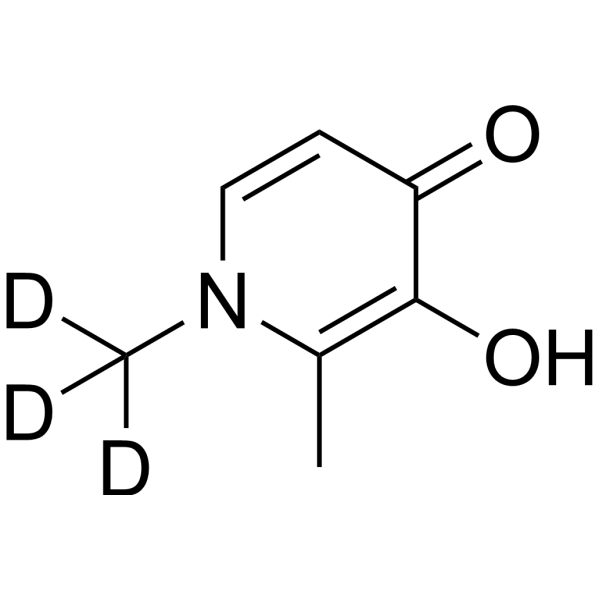
    Deferiprone-d3 is the deuterium labeled Deferiprone (HY-B0568). Deferiprone is a potent, orally active, brain-penetrant, cell-penetrant, skin-permeable, free iron chelating agent. Deferiprone inhibits the proliferation and migration, and stimulates apoptosis in tumor cell. Deferiprone can inhibit KDM. Deferiprone has antianemic, neuroprotective, anti-inflammatory, antioxidant, and antidotal activity. Deferiprone can be used in cancer, cardiovascular disease, infection, inflammation, and neurological disease study .
    Deferiprone-d3
  • HY-181713

    Bacterial G-quadruplex Infection
    Antibiofilm agent-19 is an antibiofilm agent with iron-chelating activity. Antibiofilm agent-19 potently inhibits biofilm formation by wild-type PAO1 and the hyper-biofilm mutant strain PAO1-ΔwspF. Antibiofilm agent-19 promotes the formation of c-di-GMP G-quadruplexes and disrupts iron acquisition systems. It can be used in studies on antibacterial adjuvants .
    Antibiofilm agent-19
  • HY-183552

    HIF/HIF Prolyl-Hydroxylase EBV Drug Intermediate Infection Cancer
    mCPX is a prodrug of the antifungal agent Ciclopirox olamine (CPX) (HY-B0450A). CPX exhibits bacteriostatic and iron-chelating activities, while mCPX enhances the iron stability of CPX. mCPX inherits the core mechanism pathway of CPX and can induce EBV lytic reactivation in EBV + gastric cancer cells via the hypoxia pathway (HIF‑1α). mCPX is applicable to research related to EBV-positive gastric cancer .
    mCPX
  • HY-182001

    Cholinesterase (ChE) GSK-3 Neurological Disease
    Multi-kinase-IN-13 (Compound 10F) is an inhibitor of AChE, BuChE, and GSK-3β, with an IC50 of 3 nM against hAChE, 303 nM against hBuChE, and 7.58 nM against GSK-3β. Multi-kinase-IN-13 exhibits in vitro iron chelating activity. AChE-IN-110 can be used in the research of Alzheimer's disease .
    Multi-kinase-IN-13

Inquiry Online

Your information is safe with us. * Required Fields.

Salutation


Country or Region *

Applicant Name *


Organization Name *

Department *


Email Address *


Product Name *

Cat. No.


Requested quantity *

Phone Number *


Remarks

Inquiry Online

Inquiry Information

Product Name:
Cat. No.:
Quantity:
MCE Japan Authorized Agent:

