



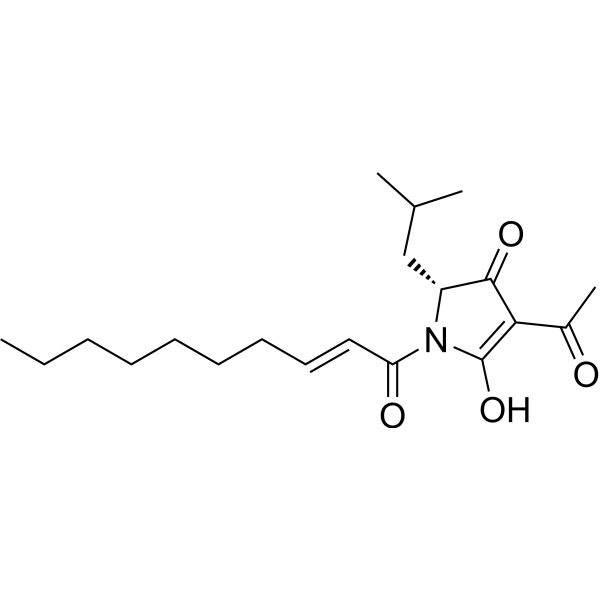
Reutericyclin

Based on 1 Customer Validation
Reutericyclin (Reutericycline) is an orally active antibacterial and anti-obesity agent that selectively inhibits Gram-positive bacteria. By selectively dissipating transmembrane potential, Reutericyclin exerts non-lytic bactericidal or bacteriostatic activity against pathogens such as Clostridium difficile and Staphylococcus aureus, and rapidly kills vegetative cells and spores of Clostridium difficile. Reutericyclin possesses favorable properties including resistance to enzymatic hydrolysis, iron-chelating function, and poor absorption by colonic epithelium. Reutericyclin not only eradicates staphylococcal biofilms and inhibits drug-resistant strains, but also counteracts Risperidone (HY-11018)-induced weight gain by inducing changes in gut microbiota composition and restoring energy utilization efficiency. Reutericyclin can be used in research related to Clostridium difficile infection, Risperidone-induced weight gain, and staphylococcal superficial skin infections.
Nur für Forschungszwecke. Wir verkaufen nicht an Patienten.
- Reinheit : 98.08%
- CAS. Nr.: 303957-69-9
- Formel: C20H31NO4
- Molecular Weight:349.46
-
Speicherung:Powder -20°C, 3 years , 4°C, 2 years ; In solvent -80°C, 6 months , -20°C, 1 month

To place orders, for customer services and technical support, please contact: MedChemExpress USA
Tel: 609-228-6898 E-mail: [email protected] [email protected]


-
 Biologische Aktivität
-
Chemical Information
-
Lösungsmittel & Löslichkeit
- Protokoll
- Reinheit & Dokumentation
- Verweise
-
 Help & FAQs




Biologische Aktivität
Beschreibung
In Vitro
The MIC values of Reutericyclin for inhibiting and killing Clostridioides difficile strains 9689, BAA-1803 and BAA-1875 in logarithmic growth phase range from 0.09 to 0.19 mg/L, while its MBC values for the bacteria in stationary phase range from 0.19 to 0.5 mg/L[1].
Reutericyclin (200 mg/L) exhibits no cytotoxicity against Caco-2 colon cancer cells[1].
Reutericyclin (0.1-1.6 μg/mL) inhibits the growth of Methicillin (HY-121544)-susceptible and Methicillin-resistant clinical isolates of Staphylococcus aureus, with MIC50 values of 0.8 μg/mL and 3.12 μg/mL, and MIC90 values of 1.6 μg/mL and 6.25 μg/mL, respectively[3].
Reutericyclin (0.8-3.12 μg/mL) inhibits the growth of mupirocin (HY-B0958)-resistant clinical isolates of Staphylococcus aureus, with an MIC50 of 1.6 μg/mL and an MIC90 of 3.12 μg/mL[3].
Reutericyclin (0.012-0.4 μg/mL) inhibits the growth of clinical isolates of Streptococcus pyogenes, with an MIC50 of 0.4 μg/mL and an MIC90 of 0.4 μg/mL[3].
Reutericyclin shows no activity against Staphylococcus aureus in an environment containing 50% human serum, with an MIC of ≥200 μg/mL[3].
Reutericyclin (6.4 mg/L; 60 min; 600 MPa; 90 °C) induces a tailing effect during the inactivation of spores of Clostridium perfringens ATCC 7955 and Clostridium beijerinckii ATCC 8260, but shows no effect on spores of Bacillus amyloliquefaciens FAD 11/2[4].
MedChemExpress (MCE) has not independently confirmed the accuracy of these methods. They are for reference only. Further protocols information, click here.
-
Cell Line:Caco-2 colonic carcinoma cells
-
Concentration:200 mg/L
-
Incubation Time:24 h
-
Result:Showed non-cytotoxic to Caco-2 colonic carcinoma cells, with >80% cell viability observed at a concentration of 200 mg/L.
In Vivo
Reutericyclin (2.5 μg per day; oral gavage; daily; 50 days) restores energy efficiency and significantly reduces risperidone-induced weight gain in female C57BL/6J mice, even when co-administered with a reutericyclin-deficient L. reuteri mutant[2].
(R)-reutericyclin (2.5 μg per day; oral gavage; daily) mitigates risperidone-induced weight gain in female C57BL/6J mice, with efficacy lower than that of (S)-reutericyclin[2].
MedChemExpress (MCE) has not independently confirmed the accuracy of these methods. They are for reference only.
-
Animal Model:C57BL/6J (female)[2]
-
Dosage:2.5 μg per day
-
Administration:oral gavage; daily; 50 days
-
Result:Reduced average weight gain from ~8 g to ~4 g compared to risperidone-only treated mice (ANOVA, interaction p<0.05).
Restored energy efficiency to levels similar to vehicle control mice; risperidone-only treated mice had significantly higher energy efficiency compared to reutericyclin-treated cohorts (pairwise Mann-Whitney, p<0.05).
Showed no differences in food intake, water consumption, or digestive efficiency across groups.


Chemical Information
-
CAS. Nr. 303957-69-9
-
Appearance Solid
-
Molecular Weight 349.46
-
Formel C20H31NO4
-
Color Yellow to orange
-
SMILES
O=C1[C@@H](CC(C)C)N(C(/C=C/CCCCCCC)=O)C(O)=C1C(C)=O
-
Synonyms
Reutericycline
-
Structure Classification
-
Initial Source
Lactobacillus reuteri
-
Versand
Room temperature in continental US; may vary elsewhere.
-
Speicherung
Powder -20°C 3 years 4°C 2 years In solvent -80°C 6 months -20°C 1 month


Lösungsmittel & Löslichkeit
In Vitro:
DMSO : 33.33 mg/mL (95.38 mM; Need ultrasonic; Hygroscopic DMSO has a significant impact on the solubility of product, please use newly opened DMSO)
Please refer to the solubility information to select the appropriate solvent. Once prepared, please aliquot and store the solution to prevent product inactivation from repeated freeze-thaw cycles.
Storage method and period of stock solution: -80°C, 6 months; -20°C, 1 month. When stored at -80°C, please use it within 6 months. When stored at -20°C, please use it within 1 month.
Please refer to the solubility information to select the appropriate solvent. Once prepared, please aliquot and store the solution to prevent product inactivation from repeated freeze-thaw cycles.
Storage method and period of stock solution: -80°C, 6 months; -20°C, 1 month. When stored at -80°C, please use it within 6 months. When stored at -20°C, please use it within 1 month.
Konzentration (Stammlösung) × Volumen (Stammlösung) = Konzentration (Ziellösung) × Volumen (Ziellösung)
In Vivo:
Select the appropriate dissolution method based on your experimental animal and administration route.
- For the following dissolution methods, please ensure to first prepare a clear stock solution using an In Vitro approach and then sequentially add co-solvents:
- To ensure reliable experimental results, the clarified stock solution can be appropriately stored based on storage conditions. As for the working solution for In Vivo experiments, it is recommended to prepare freshly and use it on the same day.
- The percentages shown for the solvents indicate their volumetric ratio in the final prepared solution. If precipitation or phase separation occurs during preparation, heat and/or sonication can be used to aid dissolution.
Add each solvent one by one: 10% DMSO 40% PEG300 5% Tween-80 45% Saline
Solubility: 2.5 mg/mL (7.15 mM); Suspended solution; Need ultrasonic
This protocol yields a suspended solution of 2.5 mg/mL. Suspended solution can be used for oral and intraperitoneal injection.
Taking 1 mL working solution as an example, add 100 μL DMSO stock solution (25.0 mg/mL) to 400 μL PEG300, and mix evenly; then add 50 μL Tween-80 and mix evenly; then add 450 μL Saline to adjust the volume to 1 mL.
Preparation of Saline: Dissolve 0.9 g sodium chloride in ddH₂O and dilute to 100 mL to obtain a clear Saline solution.
Add each solvent one by one: 10% DMSO 90% (20% SBE-β-CD in Saline)
Solubility: 2.5 mg/mL (7.15 mM); Suspended solution; Need ultrasonic
This protocol yields a suspended solution of 2.5 mg/mL. Suspended solution can be used for oral and intraperitoneal injection.
Taking 1 mL working solution as an example, add 100 μL DMSO stock solution (25.0 mg/mL) to 900 μL 20% SBE-β-CD in Saline, and mix evenly.
Preparation of 20% SBE-β-CD in Saline (4°C, storage for one week): 2 g SBE-β-CD powder is dissolved in 10 mL Saline, completely dissolve until clear.
In Vivo Dissolution Calculator
Please enter the basic information of animal experiments:
-
-
-
-
Recommended: Prepare an additional quantity of animals to account for potential losses during experiments.
Please enter your animal formula composition:
-
%DMSO +
Recommended: Keep the proportion of DMSO in working solution below 2% if your animal is weak.
-
%+
-
+%Tween-80 + +
-
%Saline +
The co-solvents required include: DMSO, . All of co-solvents are available by MedChemExpress (MCE). , Tween 80. All of co-solvents are available by MedChemExpress (MCE).
Working solution concentration: 0.22 mg/mL
Method for preparing stock solution: mg drug dissolved in μL DMSO. Stock solution concentration: mg/mL.
1. Take μL DMSO stock solution;
2. Add μL .
μL , mix evenly;
3. Then add μL Tween 80, mix evenly;
4. Then add μL
Please ensure that the stock solution in the first step is dissolved to a clear state, and add co-solvents in sequence. You can use ultrasonic heating (ultrasonic cleaner, recommended frequency 20-40 kHz), vortexing, etc. to assist dissolution.

Protokoll
-
Research Protocol for Infectious Diseases
Infectious-disease experiments test how pathogens interact with host barriers, innate immune receptors, inflammatory signaling, pathogen replication, and tissue injury; pattern-recognition receptors such as TLRs, RIG-I-like receptors, NOD-like receptors, and inflammasomes detect microbial molecules and activate NF-κB, interferon, and cytokine responses. The central hypothesis is that infection severity reflects the balance between pathogen burden and host response: protective inflammation restricts pathogen growth, whereas excessive or mislocalized inflammation contributes to tissue damage and disease phenotype. Unresolved questions include which host pathways are protective versus pathogenic, why some infection models fail to translate to human disease, and which combined readouts best predict clinically relevant infection outcomes.
-
Research Protocol for Microbiome Analysis
Microbiome analysis characterizes microbial communities in biological or environmental samples by measuring community composition, diversity, taxonomic structure, functional potential, and associations with host or environmental phenotypes. 16S rRNA gene amplicon sequencing is commonly used for bacterial and archaeal taxonomic profiling, while shotgun metagenomics provides higher taxonomic resolution and direct functional information, including microbial genes, pathways, viruses, fungi, and antimicrobial-resistance genes when sequencing depth and host-DNA contamination are adequately controlled. Microbiome results are strongly affected by sample collection, storage, DNA extraction, contamination, sequencing method, reference database, and bioinformatic pipeline; therefore, standardized protocols, negative controls, mock communities, and transparent analysis workflows are required. Unresolved issues include low-biomass contamination, compositional-data bias, inconsistent species-level c
-
Gram Staining of Tissue Sections
Gram staining of tissue sections is a histochemical technique used to differentiate Gram-positive and Gram-negative bacteria within histological specimens based on differences in bacterial cell wall structure and dye retention, adapted from classical bacteriological Gram staining into tissue-compatible “histological Gram stain” variants. In tissue applications, modifications of the Brown-Hopps and Brown-Brenn methods are commonly used to improve differentiation of microorganisms embedded within host connective tissue and to reduce overstaining or loss of Gram-negative signal, which are known limitations of earlier approaches. The principle relies on crystal violet-iodine complex retention in Gram-positive organisms and subsequent decolorization and counterstaining steps that allow contrast visualization of Gram-negative organisms against tissue background.
-
Research Protocol for Metabolic Diseases
AMP-activated protein kinase, AMPK, is a conserved cellular energy sensor that responds to reduced cellular energy status and coordinates metabolism by increasing ATP-generating catabolic pathways while suppressing ATP-consuming anabolic processes. In metabolic disease research, the AMPK pathway is experimentally relevant because it regulates hepatic lipid synthesis, fatty acid oxidation, glucose production, skeletal-muscle glucose disposal, mTORC1-linked biosynthesis, autophagy, mitochondrial homeostasis, and whole-body energy balance. The central pathway logic is that energy stress, metformin, exercise-like stimulation, or direct AMPK activators increase AMPKα Thr172 phosphorylation and downstream substrate phosphorylation, including ACC and RAPTOR. Phosphorylation of ACC suppresses lipogenesis and supports fatty acid oxidation, whereas phosphorylation of RAPTOR suppresses mTORC1 signaling and links cellular energy status to growth and protein synthesis control. The pathway is linked


Reinheit & Dokumentation
-
Data Sheet (277 KB)
-
SDS (254 KB)
- English - EN (254 KB)
- Français - FR (254 KB)
- Deutsch - DE (254 KB)
- Norwegian - NO (254 KB)
- Español - ES (254 KB)
- Swedish - SV (254 KB)
- Italian - IT (254 KB)
- Korean - KR (254 KB)
- Portuguese - PT (254 KB)
-
Handling Instructions (2659 KB)
Verweise
[1]. Hurdle JG, et al. Reutericyclin and related analogues kill stationary phase Clostridium difficile at achievable colonic concentrations. J Antimicrob Chemother. 2011;66(8):1773-1776. [Content Brief]
[3]. Hurdle JG, et al. Evaluation of analogs of reutericyclin as prospective candidates for treatment of staphylococcal skin infections. Antimicrob Agents Chemother. 2009;53(9):4028-4031. [Content Brief]
[4]. Hofstetter S, et al. Effects of nisin and reutericyclin on resistance of endospores of Clostridium spp. to heat and high pressure. Food Microbiol. 2013;34(1):46-51. [Content Brief]


Complete Stock Solution Preparation Table
Please refer to the solubility information to select the appropriate solvent. Once prepared, please aliquot and store the solution to prevent product inactivation from repeated freeze-thaw cycles.
Storage method and period of stock solution: -80°C, 6 months; -20°C, 1 month. When stored at -80°C, please use it within 6 months. When stored at -20°C, please use it within 1 month.
| Optional Solvent | Concentration Solvent Mass | 1 mg | 5 mg | 10 mg | 25 mg |
|---|---|---|---|---|---|
| DMSO | 1 mM | 2.8616 mL | 14.3078 mL | 28.6156 mL | 71.5389 mL |
| 5 mM | 0.5723 mL | 2.8616 mL | 5.7231 mL | 14.3078 mL | |
| 10 mM | 0.2862 mL | 1.4308 mL | 2.8616 mL | 7.1539 mL | |
| 15 mM | 0.1908 mL | 0.9539 mL | 1.9077 mL | 4.7693 mL | |
| 20 mM | 0.1431 mL | 0.7154 mL | 1.4308 mL | 3.5769 mL | |
| 25 mM | 0.1145 mL | 0.5723 mL | 1.1446 mL | 2.8616 mL | |
| 30 mM | 0.0954 mL | 0.4769 mL | 0.9539 mL | 2.3846 mL | |
| 40 mM | 0.0715 mL | 0.3577 mL | 0.7154 mL | 1.7885 mL | |
| 50 mM | 0.0572 mL | 0.2862 mL | 0.5723 mL | 1.4308 mL | |
| 60 mM | 0.0477 mL | 0.2385 mL | 0.4769 mL | 1.1923 mL | |
| 80 mM | 0.0358 mL | 0.1788 mL | 0.3577 mL | 0.8942 mL |


Reutericyclin Related Classifications
HY-103249 Related Classifications
 Powered by Bioz
Keywords
- Reutericyclin
- 303957-69-9
- Reutericycline
- Bacterial
- Staphylococcus epidermidis
- Clostridium difficile infection
- C57BL/6J mice
- Caco-2 colonic carcinoma cells
- Staphylococcus aureus
- Clostridium difficile
- Lactobacillus sanfranciscensis
- staphylococcal superficial skin infections
- Clostridium spp.
- Gram-positive bacteria
- Inhibitor
- inhibitor
- inhibit