



Risperidone
Based on 7 publication(s) in Google Scholar
Risperidone is a serotonin 5-HT2 receptor blocker, P-Glycoprotein inhibitor and potent dopamine D2 receptor antagonist, with Kis of 4.8, 5.9 nM for 5-HT2A and dopamine D2 receptor, respectively.
연구목적의 판매만을 진행합니다. 환자를 대상으로 한 판매는 하지 않습니다.
- Purity : 99.87%
- CAS No.: 106266-06-2
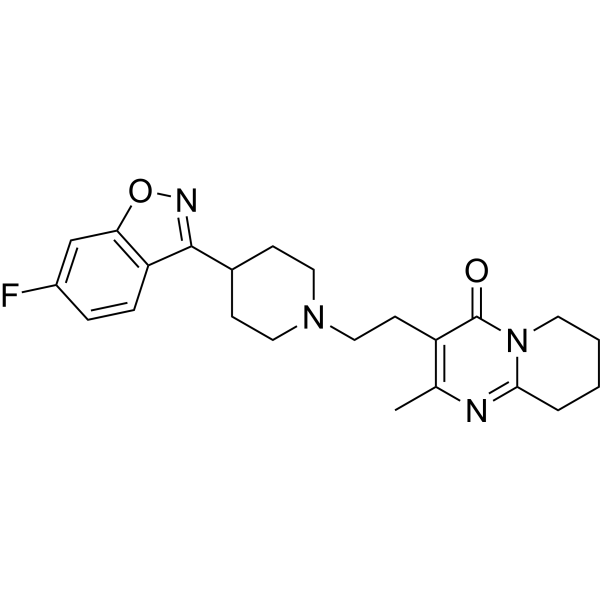
- 화학식: C23H27FN4O2
- 분자량:410.48
-
보관:Powder -20°C, 3 years , 4°C, 2 years ; In solvent -80°C, 1 year , -20°C, 6 months

To place orders, for customer services and technical support, please contact: MedChemExpress USA
Tel: 609-228-6898 E-mail: [email protected] [email protected]


-
 Biological Activity
-
Chemical Information
-
용액&용해도
- 순도&문서
- References
-
 Help & FAQs


-
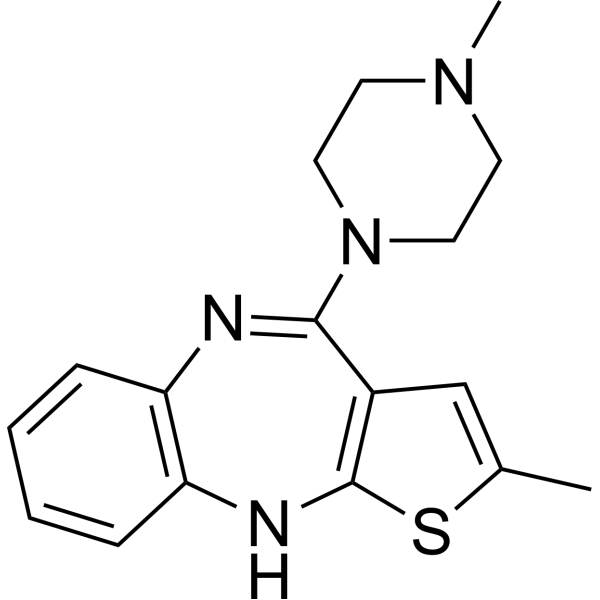
HY-14541
Olanzapine5-HT2/D1/D2 Antagonist -
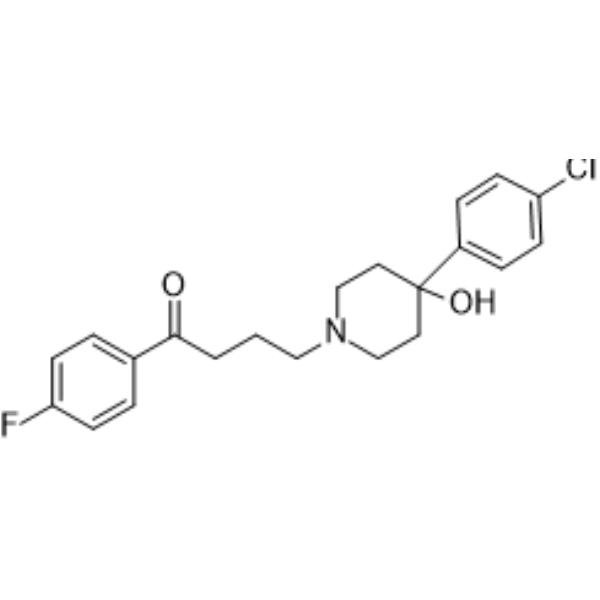
HY-14538
HaloperidolDopamine Receptor Antagonist -
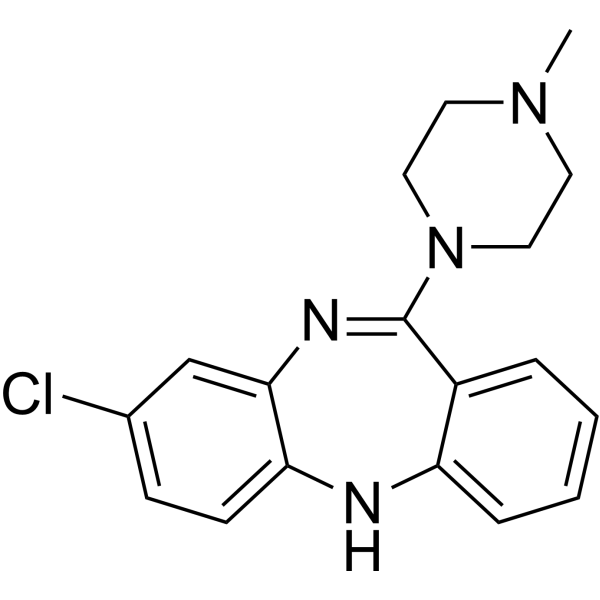
HY-14539
ClozapineAntipsychotic Agent -
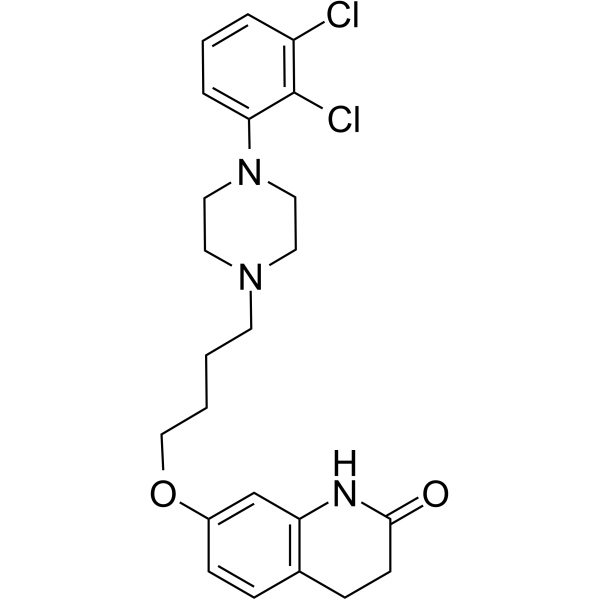
HY-14546
AripiprazoleD2/5-HT1A Agonist -
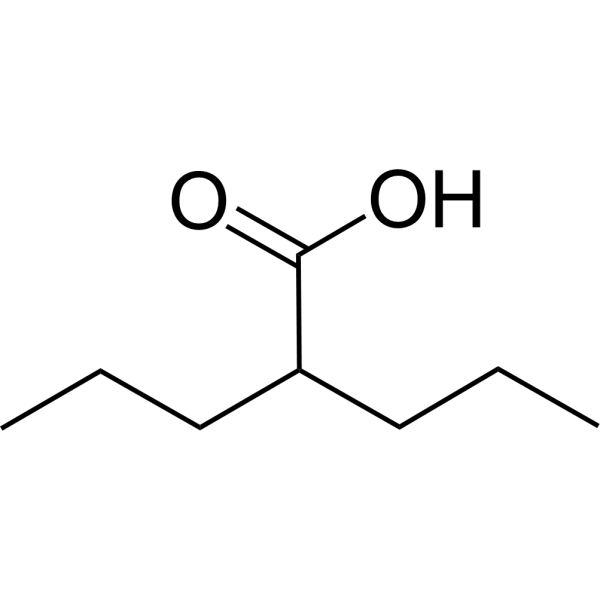
HY-10585
Valproic acidHDAC Inhibitor -
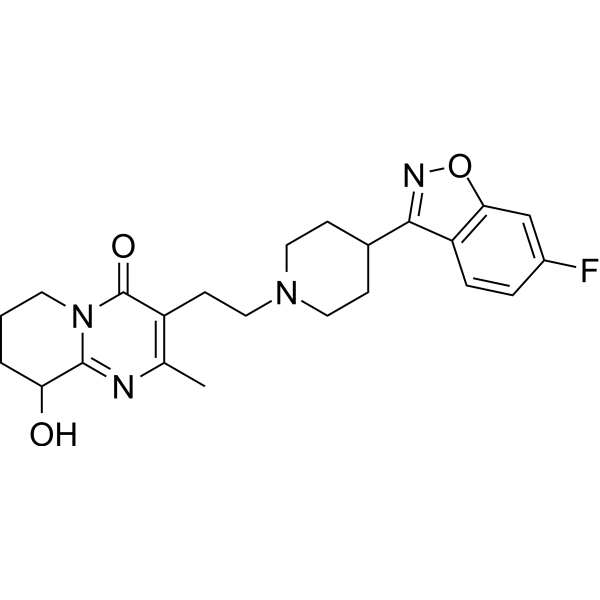
HY-A0019
PaliperidoneDopamine D2/5-HT2A Antagonist -
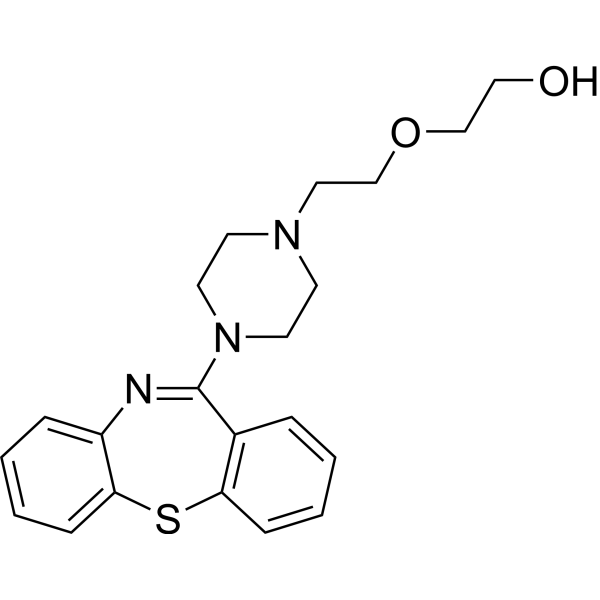
HY-14544
Quetiapine5-HT Agonist/D2 Antagonist -
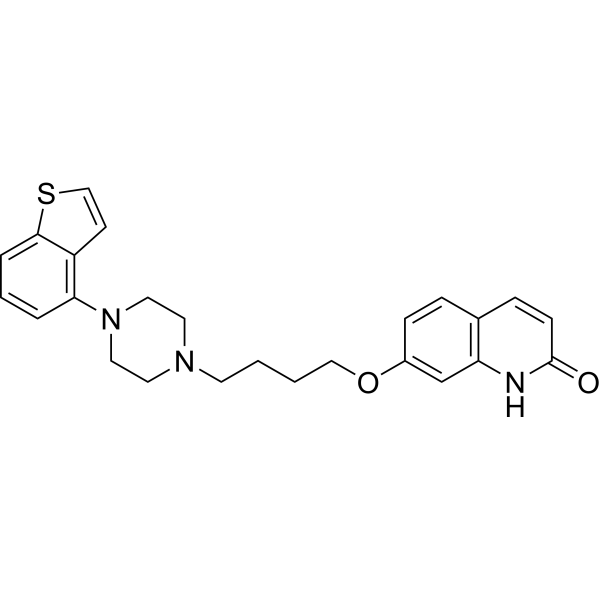
HY-15780
BrexpiprazoleAntipsychotic Agent -
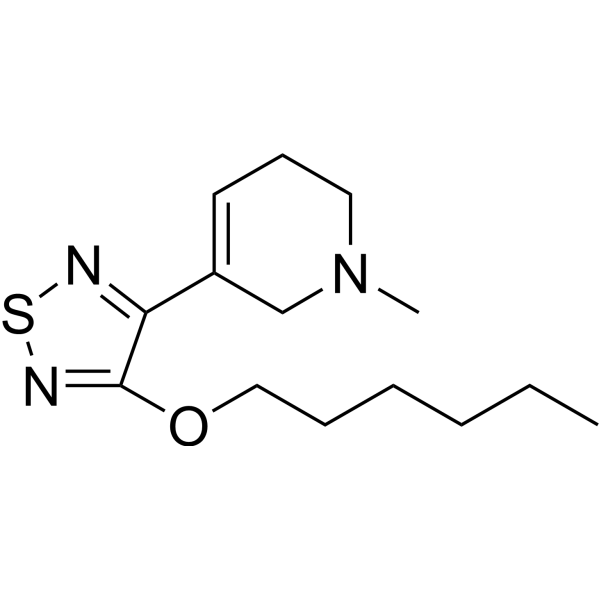
HY-105182
XanomelineM1/M4 receptor Agonist -
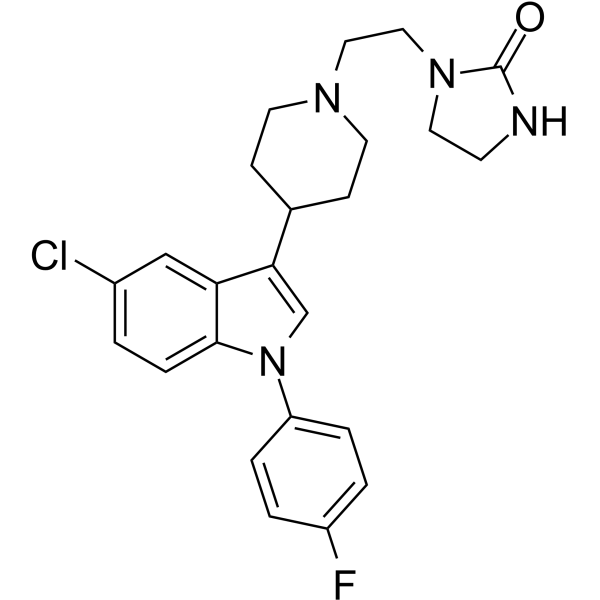
HY-14543
Sertindole5-HT/DA Receptor Antagonist -
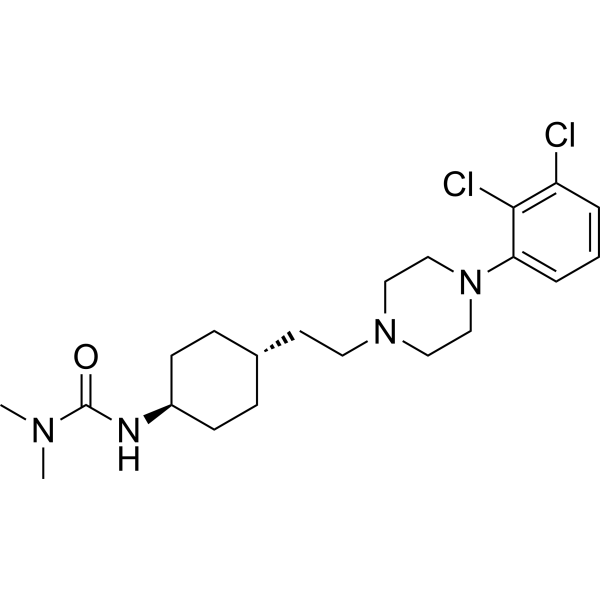
HY-14763
CariprazineD3/D2/5-HT Modulator
Publications Citing Use of MedChemExpress (MCE) Risperidone
More- Int J Nanomedicine. 2023 Feb 11:18:693-709. [Abstract]
- Emerg Contam. 2026 Feb 23.
- J Med Chem. 2021 Mar 11;64(5):2725-2738. [Abstract]
- Front Pharmacol. 2023 Apr 21:14:1161964. [Abstract]
- Eur J Pharm Sci. 2023 Aug 1:187:106475. [Abstract]
- Toxicol Appl Pharmacol. 2026 Oct:515:117973.
- Psychoneuroendocrinology. 2024 Oct:168:107138. [Abstract]
 Customer Validation & Images

-
RT-PCR
-
WB
-
In Vivo Efficacy Study
-
In Vivo Efficacy Study
-
Bio/Physico-chemical Assay
All 5-HT Receptor Isoforms
MoreAll Dopamine Receptor Isoforms
More

Biological Activity
제품 설명
IC50 & Target
|
D2 Receptor 5.9 nM (Ki) |
5-HT2A Receptor |
5-HT2A Receptor 4.8 nM (Ki) |
P-Glycoprotein |
Cellular Effect
|
Cell Line

|
Type | Value | Description | References |
|---|---|---|---|---|
| CHO | IC50 |
34.2 μM
Compound: risperidone
|
Inhibition of Cav1.2 current measured using QPatch automatic path clamp system in CHO cells expressing Cav1.2, beta-2 and alpha-2/delta-1 subunits
Inhibition of Cav1.2 current measured using QPatch automatic path clamp system in CHO cells expressing Cav1.2, beta-2 and alpha-2/delta-1 subunits
|
[PMID: 23812503] |
| HEK293 | IC50 |
102 μM
Compound: Risperidone
|
Inhibition of sodium current measured using whole-cell patch clamp experiments in HEK-293 cells stably transfected with hNaV1.5 cDNA
Inhibition of sodium current measured using whole-cell patch clamp experiments in HEK-293 cells stably transfected with hNaV1.5 cDNA
|
[PMID: 21300721] |
| HEK293 | IC50 |
125 μM
Compound: Risperidone
|
Inhibition of L-type calcium channel measured using 2-electrode voltage-clamp in human embryonic kidney cells heterologically expressing alpha-1C subunit
Inhibition of L-type calcium channel measured using 2-electrode voltage-clamp in human embryonic kidney cells heterologically expressing alpha-1C subunit
|
[PMID: 22761000] |
| HEK293 | IC50 |
1.6 μM
Compound: risperidone
|
Inhibition of human MATE1-mediated ASP+ uptake expressed in HEK293 cells after 1.5 mins by fluorescence assay
Inhibition of human MATE1-mediated ASP+ uptake expressed in HEK293 cells after 1.5 mins by fluorescence assay
|
[PMID: 23241029] |
| HEK293 | IC50 |
11 μM
Compound: risperidone
|
Inhibition of human OCT2-mediated ASP+ uptake expressed in HEK293 cells after 3 mins by fluorescence assay
Inhibition of human OCT2-mediated ASP+ uptake expressed in HEK293 cells after 3 mins by fluorescence assay
|
[PMID: 23241029] |
| HEK293 | IC50 |
291 μM
Compound: risperidone
|
Inhibition of human MATE2K-mediated ASP+ uptake expressed in HEK293 cells after 1.5 mins by fluorescence assay
Inhibition of human MATE2K-mediated ASP+ uptake expressed in HEK293 cells after 1.5 mins by fluorescence assay
|
[PMID: 23241029] |
| HEK293 | IC50 |
581 nM
Compound: Risperidone
|
Inhibition of human ERG expressed in HEK293 cells by electrophysiology assay
Inhibition of human ERG expressed in HEK293 cells by electrophysiology assay
|
[PMID: 23675993] |
| HEK293 | IC50 |
>600 μg/mL
Compound: Risperidone
|
Cytotoxicity against human HEK293 cells assessed as reduction in cell viability
Cytotoxicity against human HEK293 cells assessed as reduction in cell viability
|
[PMID: 32122737] |
| Ventricular myocyte | IC50 |
73 μM
Compound: Risperidone
|
Inhibition of calcium current (ICaL) measured using whole-cell patch clamp experiments in isolated guinea pig ventricular myocytes
Inhibition of calcium current (ICaL) measured using whole-cell patch clamp experiments in isolated guinea pig ventricular myocytes
|
[PMID: 21300721] |
| WI-38 | CC50 |
25 μM
Compound: Risperidone
|
Cytotoxicity against human WI38 cells assessed as reduction in cellular DNA level preincubated for 2 hrs before viral infection measured after 7 days by real time PCR assay
Cytotoxicity against human WI38 cells assessed as reduction in cellular DNA level preincubated for 2 hrs before viral infection measured after 7 days by real time PCR assay
|
[PMID: 17893158] |
| WI-38 | EC50 |
>25 μM
Compound: Risperidone
|
Antiviral activity against BKV Gardner ATCC VR837 infected in human WI38 cells assessed as reduction in viral DNA level preincubated for 2 hrs before viral infection measured after 7 days by real time PCR assay
Antiviral activity against BKV Gardner ATCC VR837 infected in human WI38 cells assessed as reduction in viral DNA level preincubated for 2 hrs before viral infection measured after 7 days by real time PCR assay
|
[PMID: 17893158] |
In Vitro
Risperidone is a serotonin 5-HT2 receptor blocker, P-Glycoprotein inhibitor and potent dopamine D2 receptor antagonist, with Kis of 4.8, 5.9 nM for 5-HT2A and dopamine D2 receptor, respectively. Risperidone dose-dependently inhibited the release of IL-12 in mature DCs, while the production of IL-10 is dose-dependently increased by Risperidone. A high dose of risperidone can induce TNF-α release from mature DCs[3].
MedChemExpress (MCE) has not independently confirmed the accuracy of these methods. They are for reference only.
In Vivo
MedChemExpress (MCE) has not independently confirmed the accuracy of these methods. They are for reference only.


Chemical Information
-
CAS No. 106266-06-2
-
Appearance Solid
-
분자량 410.48
-
화학식 C23H27FN4O2
-
Color White to off-white
-
SMILES
O=C1C(CCN2CCC(C3=NOC4=C3C=CC(F)=C4)CC2)=C(C)N=C5N1CCCC5
-
Synonyms
R 64 766
-
선적
Room temperature in continental US; may vary elsewhere.
-
보관
Powder -20°C 3 years 4°C 2 years In solvent -80°C 1 year -20°C 6 months


Publications (7)
-
Journal Impact Factor
-
Most Recent
-
Int J Nanomedicine
Nano Parthenolide Improves Intestinal Barrier Function of Sepsis by Inhibiting Apoptosis and ROS via 5-HTR2A. [Abstract]2023 Feb 11:18:693-709. PMID: 36816330 -
-
J Med Chem
Development of an In Silico Prediction Model for P-glycoprotein Efflux Potential in Brain Capillary Endothelial Cells toward the Prediction of Brain Penetration. [Abstract]2021 Mar 11;64(5):2725-2738. PMID: 33619967 -
Front Pharmacol
Biological evaluation and in silico studies of novel compounds as potent TAAR1 agonists that could be used in schizophrenia treatment. [Abstract]2023 Apr 21:14:1161964. PMID: 37153799
Risperidone purchased from MedChemExpress. Usage Cited in: Front Pharmacol. 2023 Apr 21:14:1161964. [Abstract]
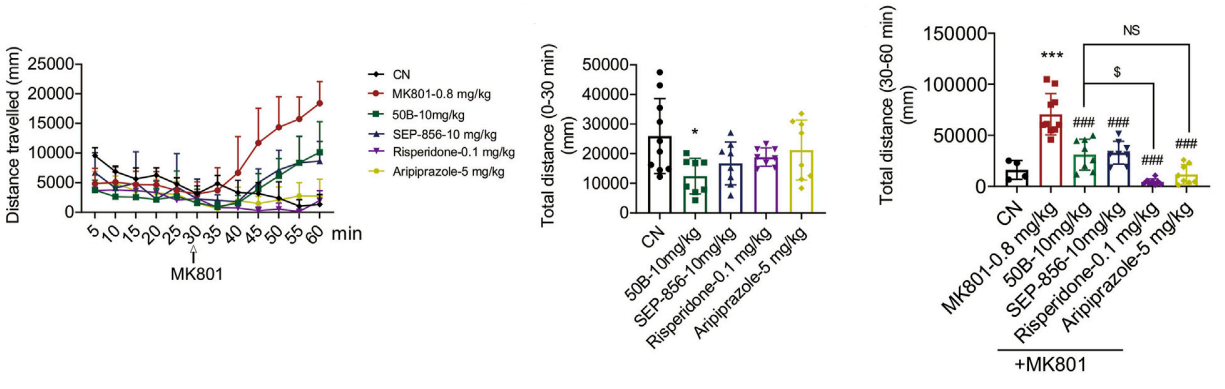
Risperidone (0.1 mg/kg, p.o.; 0.1 ml/g) or aripiprazole also reduced MK801-induced schizophrenia-like behavior, 50B had a lower impact on reducing the distance mice traveled compared with risperidone, but had similar effects compared with aripiprazole.
Risperidone purchased from MedChemExpress. Usage Cited in: Front Pharmacol. 2023 Apr 21:14:1161964. [Abstract]
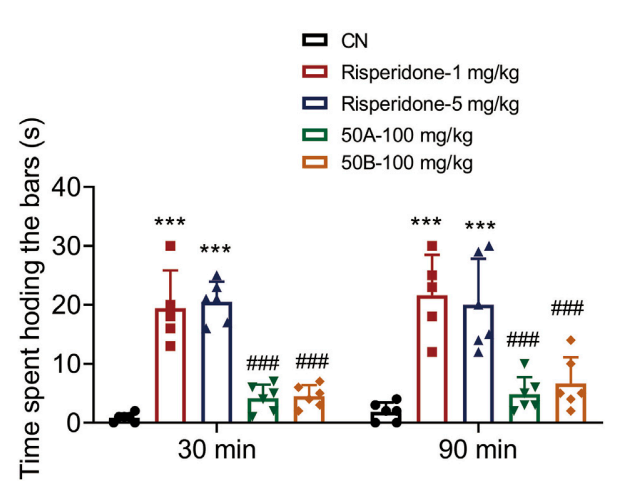
Risperidone (1 or 5 mg/kg, p.o.; 0.1 ml/10 g). 50A and 50B did not induce catalepsy in male mouse bar test. Results are expressed as mean ± SD (n = 5–6).
-
Eur J Pharm Sci
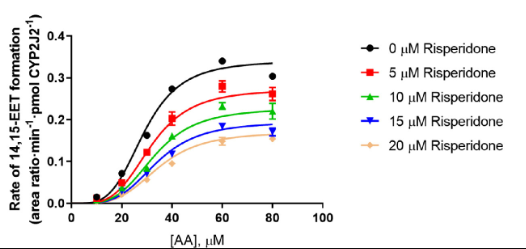
Investigating the relevance of CYP2J2 inhibition for drugs known to cause intermediate to high risk torsades de pointes. [Abstract]2023 Aug 1:187:106475. PMID: 37225005
Risperidone purchased from MedChemExpress. Usage Cited in: Eur J Pharm Sci. 2023 Aug 1:187:106475. [Abstract]
Reversible inhibition of CYP2J2 metabolism of arachidonic acid (AA) to 14,15-epoxyeicosatrienoic acid (14,15-EET) by Risperidone (0-20 μM).
-
-
Psychoneuroendocrinology
Chronic intranasal oxytocin alleviates cognitive impairment and reverses oxytocin signaling upregulation in MK801-induced mice. [Abstract]2024 Oct:168:107138. PMID: 39068687
Risperidone purchased from MedChemExpress. Usage Cited in: Psychoneuroendocrinology. 2024 Oct:168:107138. [Abstract]
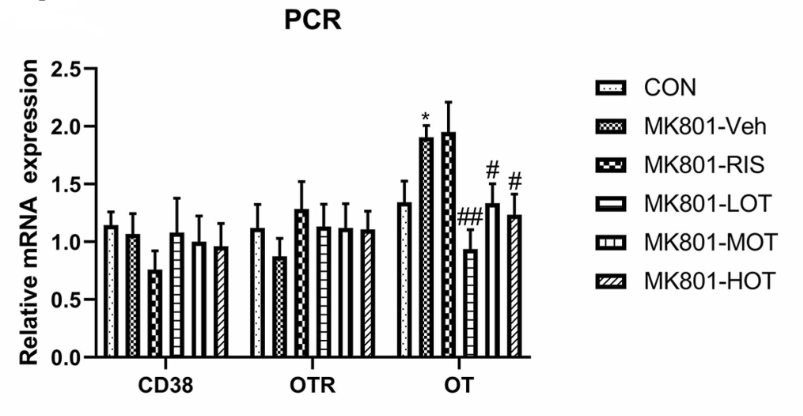
Risperidone (0.3 mg/kg, i.p.). Expression of OT signaling related genes in the hippocampus. RT-PCR (n=8–10) analysis were performed on brain tissues from the hippocampus of each group. The mRNA level of CD38, OTR and OT in the hippocampus are presented.
Risperidone purchased from MedChemExpress. Usage Cited in: Psychoneuroendocrinology. 2024 Oct:168:107138. [Abstract]
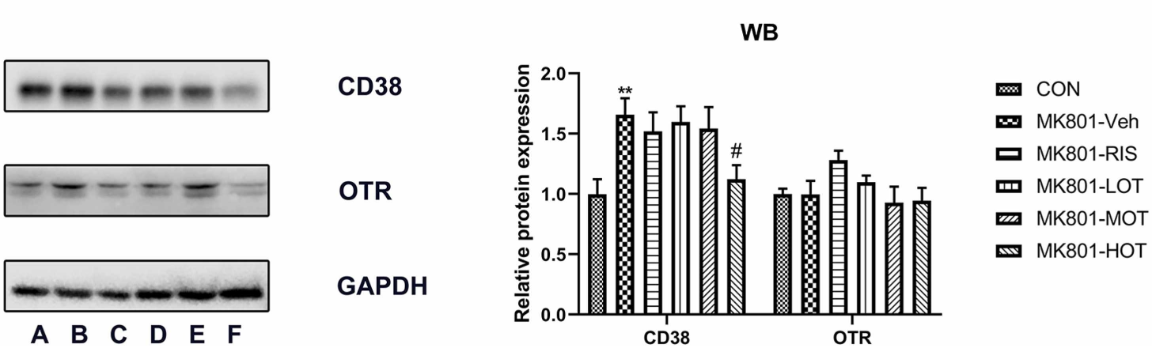
Expression of OT signaling related genes in the hippocampus. Western blot (n=6–8) analysis were performed on brain tissues from the hippocampus of each group. Western blot images and quantification of the band intensity compared to the basal level.


용액&용해도
In Vitro:
DMSO : 10 mg/mL (24.36 mM; ultrasonic and warming and heat to 60°C; Hygroscopic DMSO has a significant impact on the solubility of product, please use newly opened DMSO)
Please refer to the solubility information to select the appropriate solvent. Once prepared, please aliquot and store the solution to prevent product inactivation from repeated freeze-thaw cycles.
Storage method and period of stock solution: -80°C, 1 year; -20°C, 6 months. When stored at -80°C, please use it within 1 year. When stored at -20°C, please use it within 6 months.
Please refer to the solubility information to select the appropriate solvent. Once prepared, please aliquot and store the solution to prevent product inactivation from repeated freeze-thaw cycles.
Storage method and period of stock solution: -80°C, 1 year; -20°C, 6 months. When stored at -80°C, please use it within 1 year. When stored at -20°C, please use it within 6 months.
Concentration (start) × Volume (start) = Concentration (final) × Volume (final)
In Vivo:
Select the appropriate dissolution method based on your experimental animal and administration route.
- For the following dissolution methods, please ensure to first prepare a clear stock solution using an In Vitro approach and then sequentially add co-solvents:
- To ensure reliable experimental results, the clarified stock solution can be appropriately stored based on storage conditions. As for the working solution for In Vivo experiments, it is recommended to prepare freshly and use it on the same day.
- The percentages shown for the solvents indicate their volumetric ratio in the final prepared solution. If precipitation or phase separation occurs during preparation, heat and/or sonication can be used to aid dissolution.
Add each solvent one by one: 10% DMSO 40% PEG300 5% Tween-80 45% Saline
Solubility: ≥ 1 mg/mL (2.44 mM); Clear solution
This protocol yields a clear solution of ≥ 1 mg/mL (saturation unknown).
Taking 1 mL working solution as an example, add 100 μL DMSO stock solution (10.0 mg/mL) to 400 μL PEG300, and mix evenly; then add 50 μL Tween-80 and mix evenly; then add 450 μL Saline to adjust the volume to 1 mL.
Preparation of Saline: Dissolve 0.9 g sodium chloride in ddH₂O and dilute to 100 mL to obtain a clear Saline solution.
Add each solvent one by one: 10% DMSO 90% (20% SBE-β-CD in Saline)
Solubility: ≥ 1 mg/mL (2.44 mM); Clear solution
This protocol yields a clear solution of ≥ 1 mg/mL (saturation unknown).
Taking 1 mL working solution as an example, add 100 μL DMSO stock solution (10.0 mg/mL) to 900 μL 20% SBE-β-CD in Saline, and mix evenly.
Preparation of 20% SBE-β-CD in Saline (4°C, storage for one week): 2 g SBE-β-CD powder is dissolved in 10 mL Saline, completely dissolve until clear.
In Vivo Dissolution Calculator
Please enter the basic information of animal experiments:
-
-
-
-
Recommended: Prepare an additional quantity of animals to account for potential losses during experiments.
Please enter your animal formula composition:
-
%DMSO +
Recommended: Keep the proportion of DMSO in working solution below 2% if your animal is weak.
-
%+
-
+%Tween-80 + +
-
%Saline +
The co-solvents required include: DMSO, . All of co-solvents are available by MedChemExpress (MCE). , Tween 80. All of co-solvents are available by MedChemExpress (MCE).
Working solution concentration: 0.22 mg/mL
Method for preparing stock solution: mg drug dissolved in μL DMSO. Stock solution concentration: mg/mL.
1. Take μL DMSO stock solution;
2. Add μL .
μL , mix evenly;
3. Then add μL Tween 80, mix evenly;
4. Then add μL
Please ensure that the stock solution in the first step is dissolved to a clear state, and add co-solvents in sequence. You can use ultrasonic heating (ultrasonic cleaner, recommended frequency 20-40 kHz), vortexing, etc. to assist dissolution.


순도&문서
-
Data Sheet (277 KB)
-
SDS (420 KB)
- English - EN (420 KB)
- Français - FR (420 KB)
- Deutsch - DE (420 KB)
- Norwegian - NO (420 KB)
- Español - ES (420 KB)
- Swedish - SV (420 KB)
- Italian - IT (420 KB)
- Korean - KR (420 KB)
- Portuguese - PT (420 KB)
-
Handling Instructions (2659 KB)
References
[1]. Nyberg S, et al. 5-HT2 and D2 dopamine receptor occupancy in the living human brain. A PET study with risperidone. Psychopharmacology (Berl). 1993;110(3):265-72. [Content Brief]
[2]. Chen ML, et al. Risperidone modulates the cytokine and chemokine release of dendritic cells and induces TNF-α-directed cell apoptosis in neutrophils. Int Immunopharmacol. 2012 Jan;12(1):197-204. [Content Brief]
[3]. Zhu HJ, et al. Risperidone and paliperidone inhibit p-glycoprotein activity in vitro. Neuropsychopharmacology. 2007 Apr;32(4):757-64. [Content Brief]
[4]. Bardgett ME, et al. Adult rats treated with risperidone during development are hyperactive. Exp Clin Psychopharmacol. 2013 Jun;21(3):259-67. [Content Brief]


Complete Stock Solution Preparation Table
Please refer to the solubility information to select the appropriate solvent. Once prepared, please aliquot and store the solution to prevent product inactivation from repeated freeze-thaw cycles.
Storage method and period of stock solution: -80°C, 1 year; -20°C, 6 months. When stored at -80°C, please use it within 1 year. When stored at -20°C, please use it within 6 months.
| Optional Solvent | Concentration Solvent Mass | 1 mg | 5 mg | 10 mg | 25 mg |
|---|---|---|---|---|---|
| DMSO | 1 mM | 2.4362 mL | 12.1809 mL | 24.3617 mL | 60.9043 mL |
| 5 mM | 0.4872 mL | 2.4362 mL | 4.8723 mL | 12.1809 mL | |
| 10 mM | 0.2436 mL | 1.2181 mL | 2.4362 mL | 6.0904 mL | |
| 15 mM | 0.1624 mL | 0.8121 mL | 1.6241 mL | 4.0603 mL | |
| 20 mM | 0.1218 mL | 0.6090 mL | 1.2181 mL | 3.0452 mL |


Risperidone Related Classifications
HY-11018 Related Classifications
 Powered by Bioz