20 Results for "

LDL-oxidation

" in MedChemExpress (MCE) Product Catalog:
Products (20)

20 Results for "LDL-oxidation" in MCE Product Catalog:

2
2 Cited Publications
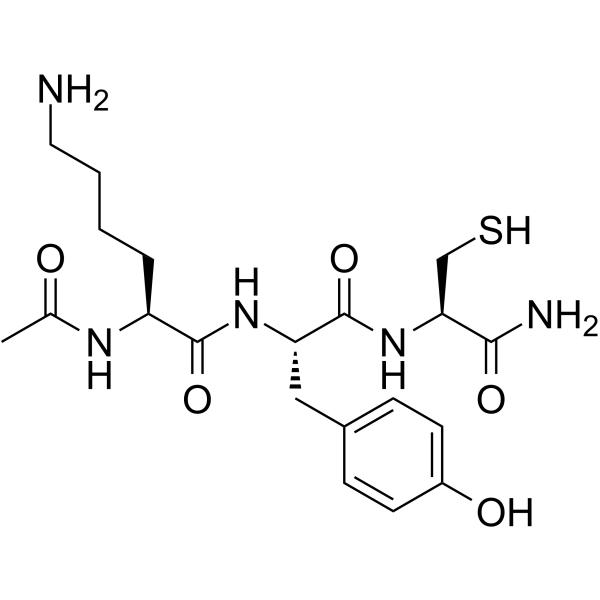
Cat. No.: HY-125039
CAS No.: 1287585-40-3
Purity:  99.57%
N-Acetyl lysyltyrosylcysteine amide is a potent, reversible, specific, and non-toxic tripeptide inhibitor of myeloperoxidase (MPO). N-Acetyl lysyltyrosylcysteine amide effectively inhibits MPO generation of toxic oxidants in vivo. N-Acetyl lysyltyrosylcysteine amide reduces neuronal damage and preserves brain tissue and neurological function in the stroked brain. N-Acetyl lysyltyrosylcysteine amide inhibits MPO-dependent hypochlorous acid (HOCl) generation, protein nitration, and LDL oxidation .
loading...
    loading...
1
1 Cited Publications
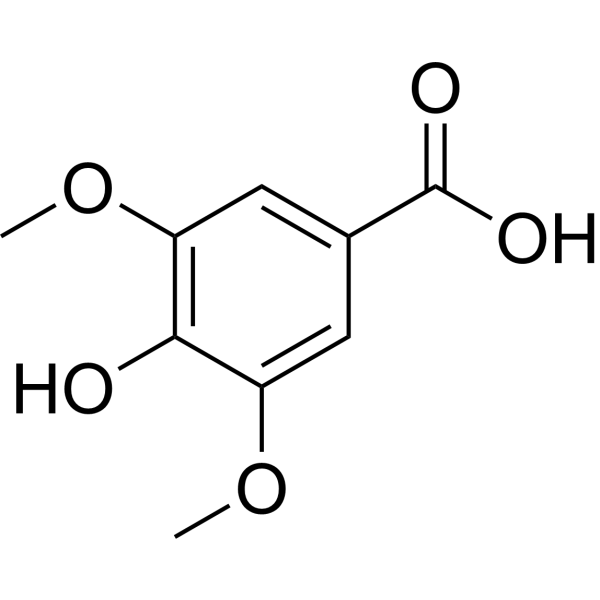
Cat. No.: HY-N0339
CAS No.: 530-57-4
Syringic acid is correlated with high antioxidant activity and inhibition of LDL oxidation.
loading...
    loading...
1
1 Cited Publications
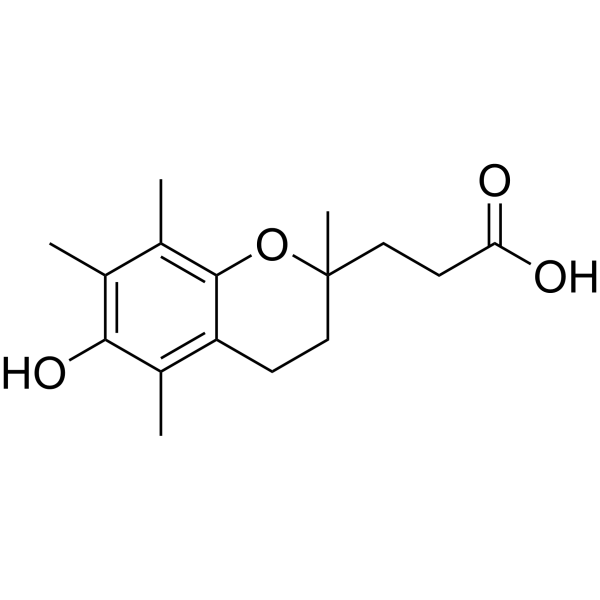
Cat. No.: HY-113269
CAS No.: 4072-32-6
Category:  

Microorganisms

Target:  

Drug Metabolite

alpha-CEHC is a water-soluble metabolite of alpha-tocopherol (α-TOH) with potential antioxidant activity. alpha-CEHC slightly inhibits macrophage-induced low-density lipoprotein (LDL) oxidation, and its inhibitory potency is concentration-dependent .
loading...
    loading...
1
1 Cited Publications
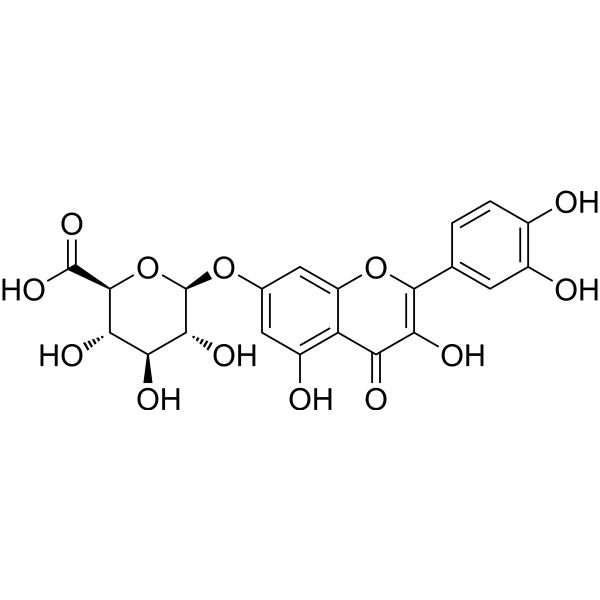
Cat. No.: HY-W778608
CAS No.: 38934-20-2
Synonyms: Quercetin 7-O-β-glucuronide
Quercetin 7-glucuronide (Quercetin 7-O-β-glucuronide), a metabolite of Quercetin (HY-18085), can be isolated from Madagascarian Uncarina species. Quercetin 7-glucuronide can inhibit LDL oxidation .
loading...
    loading...
1
1 Cited Publications
Cat. No.: HY-N11077
CAS No.: 89886-30-6
Synonyms: 4,5-di-O-CQA
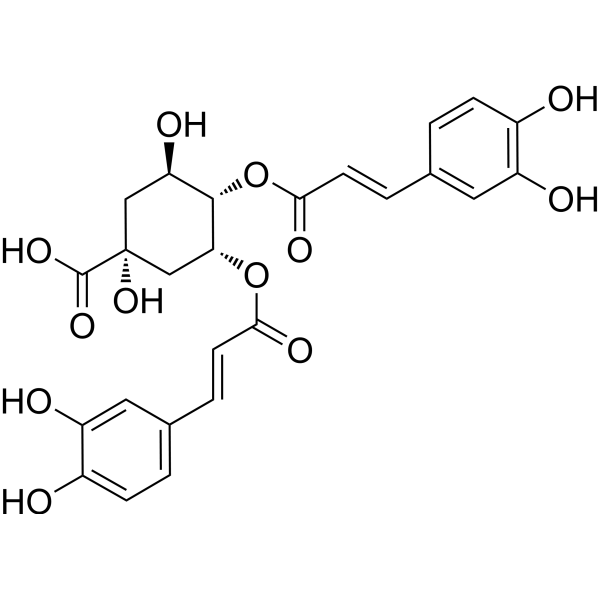
4,5-Di-O-caffeoylquinic acid (4,5-di-O-CQA) is a natural product with multiple activities including anti-inflammatory, antioxidant, and antibacterial properties. 4,5-Di-O-caffeoylquinic acid induces intracellular Ca 2+ influx, and inhibits hypoxia-induced COX-2 expression and cell migration via the TRPV1-mediated pathway. 4,5-Di-O-caffeoylquinic acid scavenges DPPH free radicals, inhibits Cu 2+-mediated LDL oxidation, and reduces the production of TBARS. 4,5-Di-O-caffeoylquinic acid promotes intracellular ATP production, inhibits Aβ42 aggregation and β-sheet conversion, and protects neuroblastoma cells. 4,5-Di-O-caffeoylquinic acid inhibits the growth of Bacillus shigae. 4,5-Di-O-caffeoylquinic acid can be used in studies related to atherosclerosis, Alzheimer's disease, and bacterial infections .
loading...
    loading...
Cat. No.: HY-N0521
CAS No.: 3371-27-5
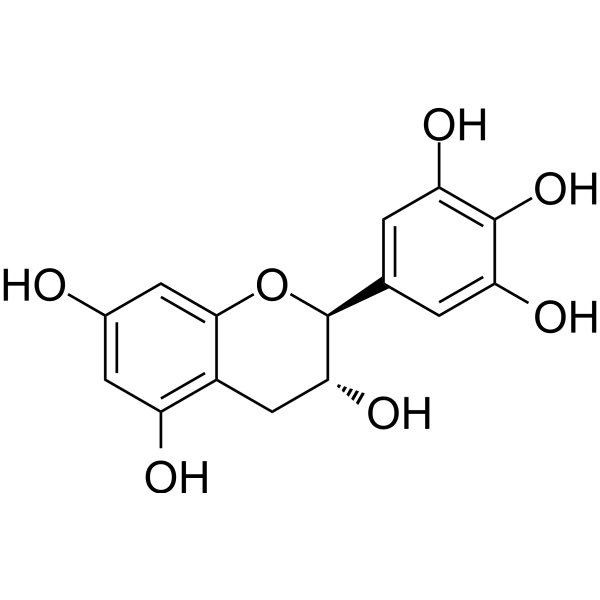
(-)-Gallocatechin, an epimer of (-)-Epigallocatechin (EGC) (HY-N0225), is contained in various tea products. (-)-Gallocatechin demonstrates antioxidant activity in vitro, including inhibition of LDL oxidation and DPPH radical scavenging .
loading...
    loading...
Cat. No.: HY-N0859
CAS No.: 69363-14-0
Synonyms: Schizanhenol; Gomisin-K3
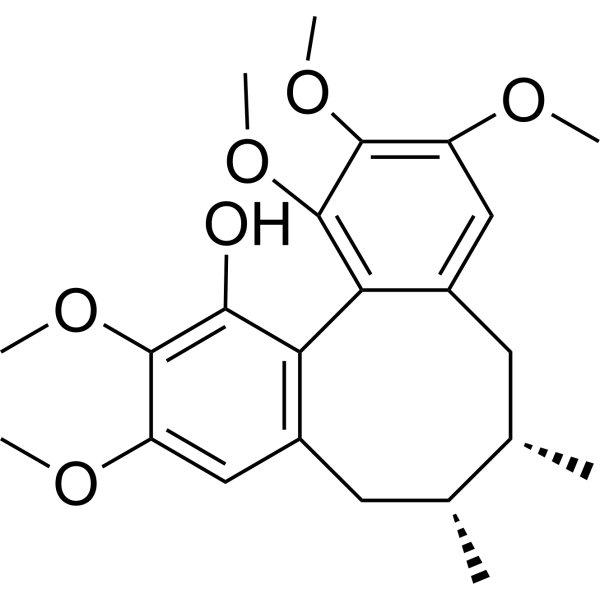
Schisanhenol (Schizanhenol), a lignan, is an orally active antioxidant. Schisanhenol reduces AChE activity, increases SIRT1 and PGC-1α expression, and decreases phosphorylated Tau (Ser 396) levels. Schisanhenol increases SOD and glutathione peroxidase activity, decreases malondialdehyde (MDA) content, and inhibits UGT2B7 activitY. Schisanhenol attenuates ox-LDL-induced apoptosis, intracellular reactive oxygen species generation, and cytotoxicity in endothelial cells. Schisanhenol inhibits LDL oxidation, brain mitochondrial and membrane peroxidative damage, and brain mitochondrial swelling and disintegration. Schisanhenol can be used for the research of Alzheimer’s disease, atherosclerosis, brain ischemia, and age-related brain deterioration .
loading...
    loading...
Cat. No.: HY-N0339R
CAS No.: 530-57-4
Syringic acid (Standard) is the analytical standard of Syringic acid. This product is intended for research and analytical applications. Syringic acid is correlated with high antioxidant activity and inhibition of LDL oxidation.
loading...
    loading...
Cat. No.: HY-120651
CAS No.: 778624-05-8
Purity:  ≥99.0%
Target:  

LDLR

Research Areas:  

Metabolic Disease

LDL-IN-2 (compound 3) is an antioxidant against copper mediated low-density lipoproteins (LDL) oxidation .
loading...
    loading...
Cat. No.: HY-N3596
CAS No.: 84575-10-0
Synonyms: Aquillochin
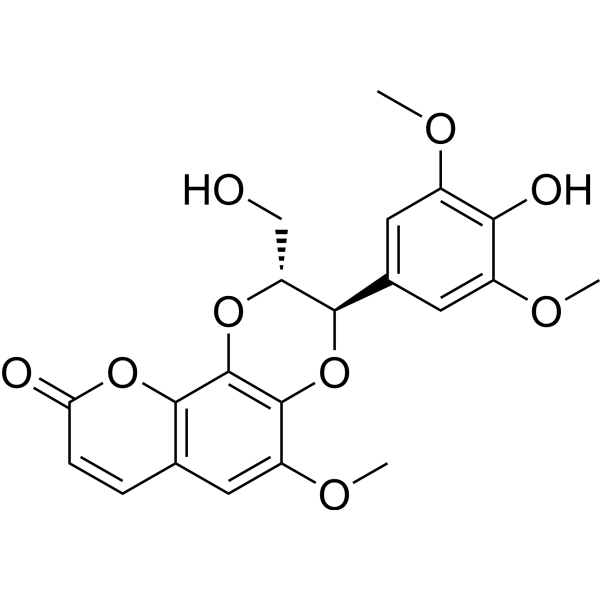
Cleomiscosin C (Aquillochin) can be isolated from Aquilaria agallocha. Cleomiscosin C has antioxidant activity. Cleomiscosin C inhibits LDL oxidation and free radicals generation .
loading...
    loading...
Cat. No.: HY-N10638
CAS No.: 916888-49-8
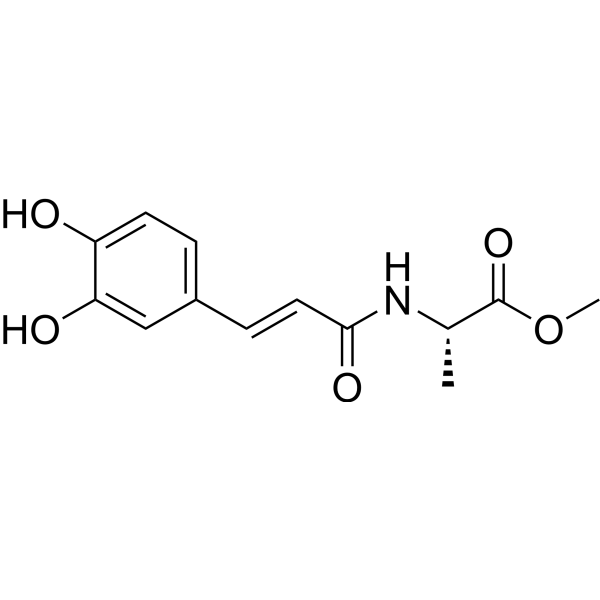
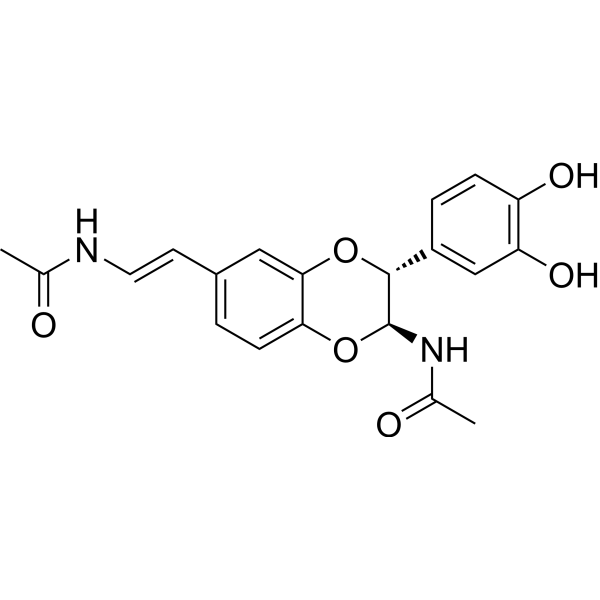
N-Acetyldopamine dimer-2 (compound 2) is a N-acetyldopamine dimer that can be isolated from the yellow powder form Periostracum Cicadae with antioxidant and anti-inflammatory activities. N-Acetyldopamine dimer-2 inhibits oxidized low-density lipoprotein (LDL) oxidation, ROS generation, NO production, and NF-κB activity .
loading...
    loading...
Cat. No.: HY-N15706
CAS No.: 76939-42-9
Luteolin-7-O-β-D-glucuronide methyl ester is a flavonoid with antioxidative activity. Luteolin-7-O-β-D-glucuronide methyl ester exhibits potent antioxidative activity with an IC50 of 3.05 μg/mL in the NBT superoxide scavenging assay. Luteolin-7-O-β-D-glucuronide methyl ester inhibits LDL oxidation induced by Cu 2+ with the IC50 value is 71.13 μg/mL .
loading...
    loading...
Cat. No.: HY-N0339S
CAS No.: 84759-06-8
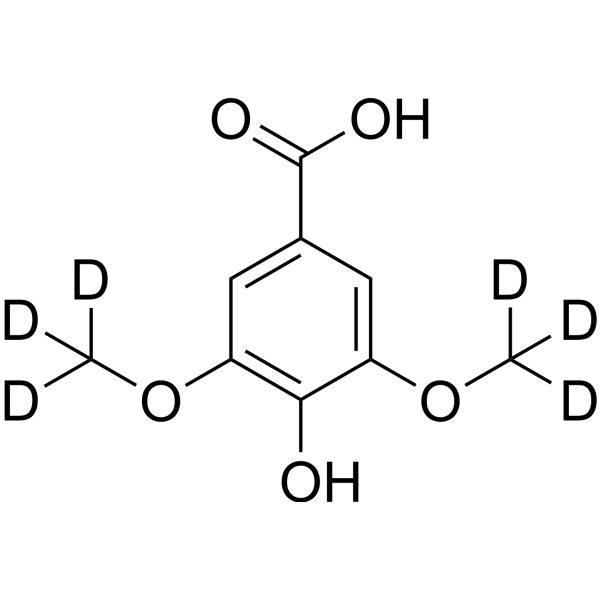
Syringic acid-d6 is the deuterium labeled Syringic acid . Syringic acid is correlated with high antioxidant activity and inhibition of LDL oxidation .
loading...
    loading...
Cat. No.: HY-119265
CAS No.: 615264-62-5
Target:  

Acyltransferase

Research Areas:  

Metabolic Disease

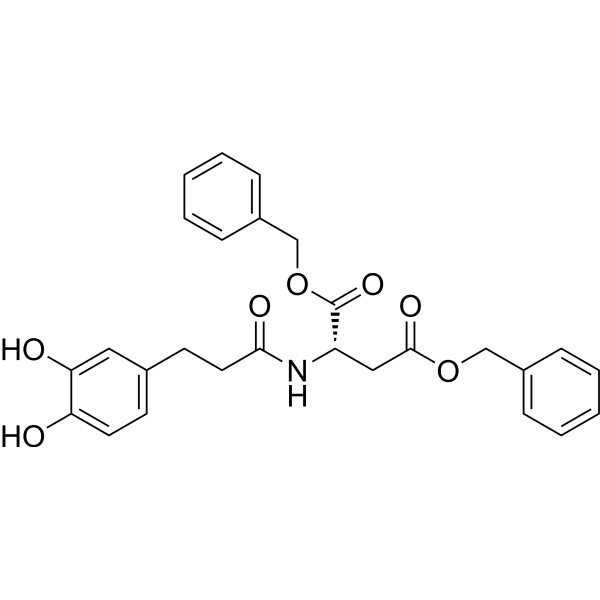
LDL-IN-4 (Compound 2) inhibits human acyl-CoA:cholesterol acyltransferase-1 and -2 activities. LDL-IN-4 inhibits copper-mediated low density lipoprotein (LDL) oxidation, with an IC50 of 3 μM. LDL-IN-4 has anti-atherosclerotic biological activity .
loading...
    loading...
Cat. No.: HY-118486
CAS No.: 615264-52-3
Purity:  ≥99.0%
Target:  

Acyltransferase

Research Areas:  

Metabolic Disease

LDL-IN-1 (Compound 1) is an antioxidant, and is active against copper mediated LDL oxidation (IC50 = 52 μM). LDL-IN-1 is also an Acyl-CoA:cholesterol acyltransferase-1 and -2 (ACAT-1/2) inhibitor, with IC50s of 60 μM. LDL-IN-1 can be used for anti-atherosclerotic research .
loading...
    loading...
Cat. No.: HY-137390A
CAS No.: 1009811-63-5
(3S,5R)-Fluvastatin (potassium) is a synthetic hypolipidemic drug that inhibits HMG-CoA reductase activity. (3S,5R)-Fluvastatin (potassium) has similar antioxidative effects on copper ion-induced LDL oxidation compared to its 3R,5S enantiomer. (3S,5R)-Fluvastatin (potassium) and its metabolites demonstrate a potential to exhibit anti-atherosclerotic effects through their antioxidative activities. (3S,5R)-Fluvastatin (potassium) is clinically utilized as part of a racemic mixture for reducing plasma cholesterol levels.
loading...
    loading...
Cat. No.: HY-N0859R
CAS No.: 69363-14-0
Synonyms: Schizanhenol (Standard); Gomisin-K3 (Standard)
Schisanhenol (Standard) (Schizanhenol (Standard)) is the analytical standard of Schisanhenol (HY-N0859). This product is intended for research and analytical applications. Schisanhenol, a lignan, is an orally active antioxidant. Schisanhenol reduces AChE activity, increases SIRT1 and PGC-1α expression, and decreases phosphorylated Tau (Ser 396) levels. Schisanhenol increases SOD and glutathione peroxidase activity, decreases malondialdehyde (MDA) content, and inhibits UGT2B7 activitY. Schisanhenol attenuates ox-LDL-induced apoptosis, intracellular reactive oxygen species generation, and cytotoxicity in endothelial cells. Schisanhenol inhibits LDL oxidation, brain mitochondrial and membrane peroxidative damage, and brain mitochondrial swelling and disintegration. Schisanhenol can be used for the research of Alzheimer’s disease, atherosclerosis, brain ischemia, and age-related brain deterioration.
loading...
    loading...
Cat. No.: HY-106621A
CAS No.: 158513-06-5
Target:  

Potassium Channel

Research Areas:  

Metabolic Disease

AL 0671 is a potassium channel opener. AL 0671 can inhibit nonenzymatic glycation of protein and LDL oxidation. AL 0671 can be used for the researches of cardiovascular and metabolic disease, such as hypertensive diabetes .
loading...
    loading...
Cat. No.: HY-182603
CAS No.: 157360-23-1
BO-653 is an orally active anti-atherosclerotic antioxidant that exhibits high binding affinity for LDL. BO-653 scavenges linoleic acid peroxyl radicals, inhibits lipid peroxidation during the auto-oxidation of linoleic acid, and potently suppresses LDL oxidation. BO-653 inhibits Hepatitis C Virus (HCV) replication in a concentration-dependent manner, with an IC50 of 36.0 μM against the HCV subgenomic replicon in FLR3-1 cells. BO-653 demonstrates significant anti-atherosclerotic effects in various animal models, including the Watanabe heritable hyperlipidemic rabbit. BO-653 is suitable for use in research related to atherosclerosis and Hepatitis C Virus infection .
loading...
    loading...
Cat. No.: HY-N11846
CAS No.: 68978-09-6
4′-O-Methylglabridin is an apoptosis inducer with antioxidant, cell cycle-disrupting and anticancer cytotoxic activities. 4′-O-Methylglabridin inhibits various cancer cell lines including liver cancer, breast cancer and colorectal cancer cell lines. By reducing the expression levels of phosphorylated Rb (Ser807/811) and p21 proteins, 4′-O-Methylglabridin promotes cell accumulation at the subG1 and G2/M phases, and triggers caspase-dependent apoptosis via cytochrome C release and caspase-9 activation. 4′-O-Methylglabridin also exerts antioxidant effects by inhibiting lipid peroxide levels and reducing β-carotene consumption, thereby blocking LDL oxidation. 4′-O-Methylglabridin can be used in the research of various cancers and atherosclerotic diseases .
loading...
    loading...
  • 1

