Search Result
Results for "
M2/M3 antagonist
" in MedChemExpress (MCE) Product Catalog:
11
Isotope-Labeled Compounds
| Cat. No. |
Product Name |
Target |
Research Areas |
Chemical Structure |
-
- HY-A0034
-
|
YM905 free base
|
mAChR
|
Neurological Disease
Cancer
|
|
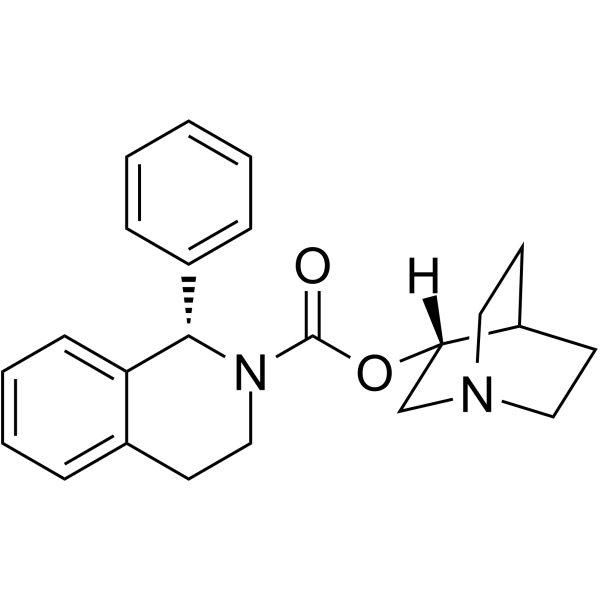
Solifenacin (YM905 free base) is a novel muscarinic receptor antagonist with pKis of 7.6, 6.9 and 8.0 for M1, M2 and M3 receptors, respectively.
|
-
-
- HY-B0461
-
|
|
mAChR
|
Neurological Disease
|
|
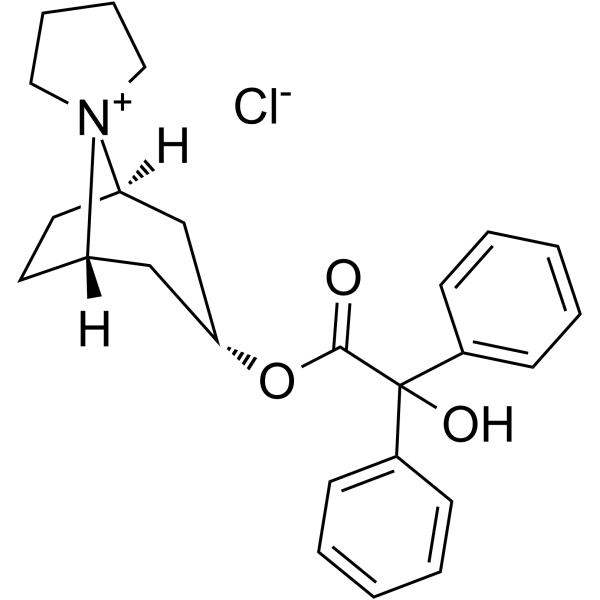
Trospium chloride is an orally active, specific and competitive antagonist of muscarinic cholinergic receptors (mAChRs), with antimuscarinic activity. Trospium chloride binds to muscarinic receptors M1, M2 and M3 with high affinity, but not nicotinic, cholinergic receptors .
|
-
-
- HY-A0030
-
|
|
mAChR
|
Neurological Disease
Metabolic Disease
Cancer
|
|
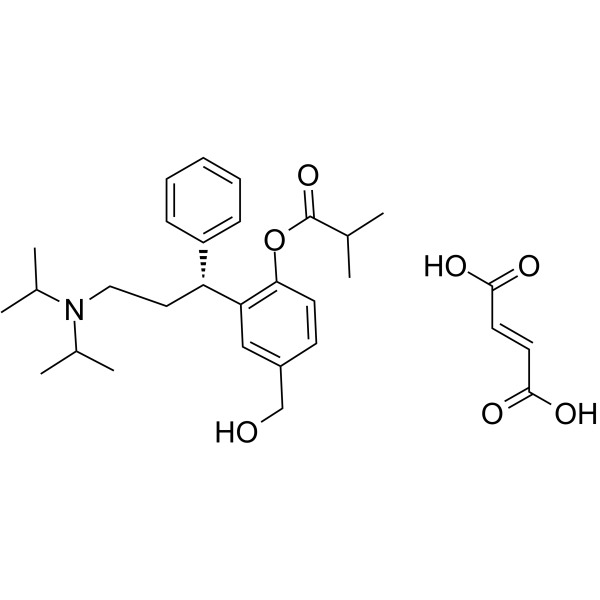
Fesoterodine Fumarate is an orally active, nonsubtype selective, competitive muscarinic receptor (mAChR) antagonist with pKi values of 8.0, 7.7, 7.4, 7.3, 7.5 for M1, M2, M3, M4, M5 receptors, respectively. Fesoterodine Fumarate is used for the overactive bladder (OAB) .
|
-
-
- HY-N0340
-
|
Hyoscine butylbromide; (-)-Scopolamine butylbromide; Butylscopolamine bromide
|
mAChR
|
Neurological Disease
Inflammation/Immunology
|
|
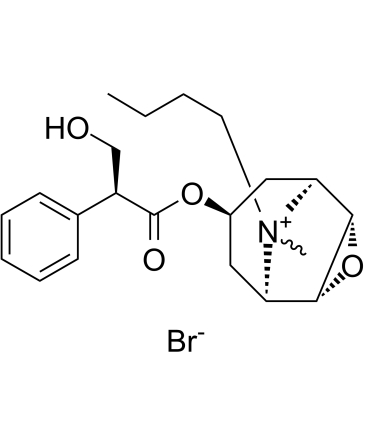
Scopolamine butylbromide (Hyoscine butylbromide) is an orally active anticholinergic agent and spasmolytic. Scopolamine butylbromide binds with high affinity to rat cardiac M2 (Ki 83 nmol/L), hM2 (Ki 233 nmol/L), rat intestinal M3 (Ki 290 nmol/L) and hM3 (Ki 643 nmol/L) muscarinic receptors. Scopolamine butylbromide exerts a dose-dependent antagonistic effect on Carbachol-induced gastrointestinal smooth muscle spasm. Scopolamine butylbromide can be used for the research of abdominal colic and pain associated with gastrointestinal spasm, functional abdominal pain, chronic gastropathy and gastric ulcer .
|
-
-
- HY-A0002
-
|
YM905
|
mAChR
|
Neurological Disease
Cancer
|
|
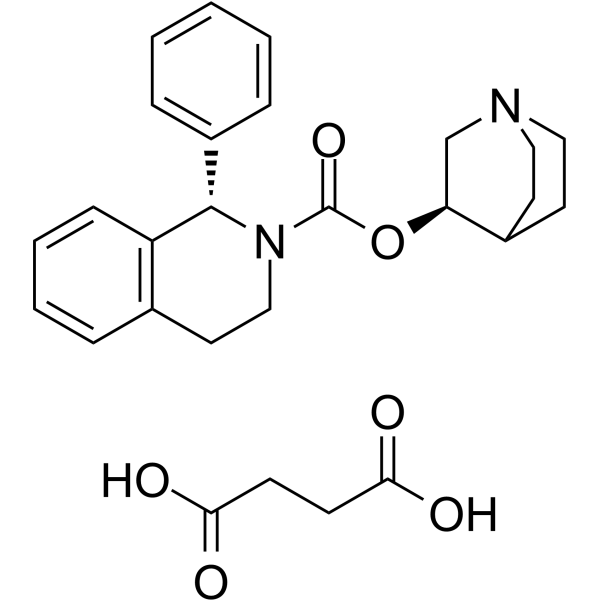
Solifenacin Succinate (YM905) is a novel muscarinic receptor antagonist with pKis of 7.6, 6.9 and 8.0 for M1, M2 and M3 receptors, respectively.
|
-
-
- HY-107646
-
|
|
mAChR
|
Neurological Disease
|
|
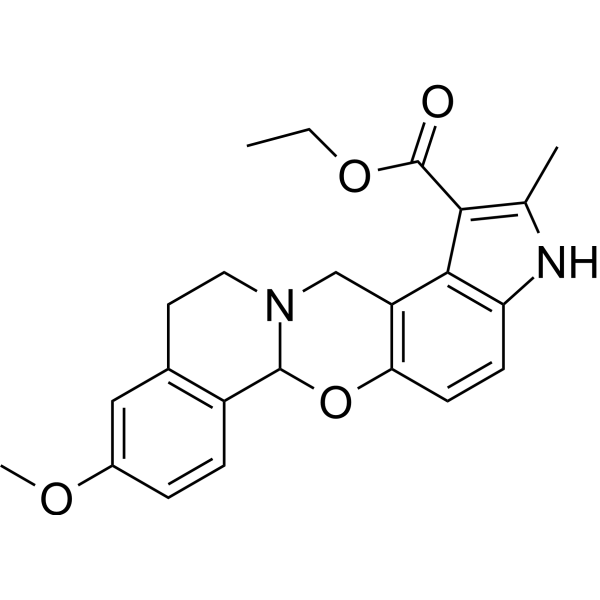
PD 102807 is a M4 muscarinic receptor antagonist with an IC50 of 90.7 nM. PD 102807 inhibits M1, M2, M3, M5 muscarinic receptor with IC50s of 6558.7, 3440.7, 950.0, and 7411.7 nM, respectively . Antidyskinetic effect.
|
-
-
- HY-107647
-
|
|
mAChR
Histamine Receptor
|
Inflammation/Immunology
|
|
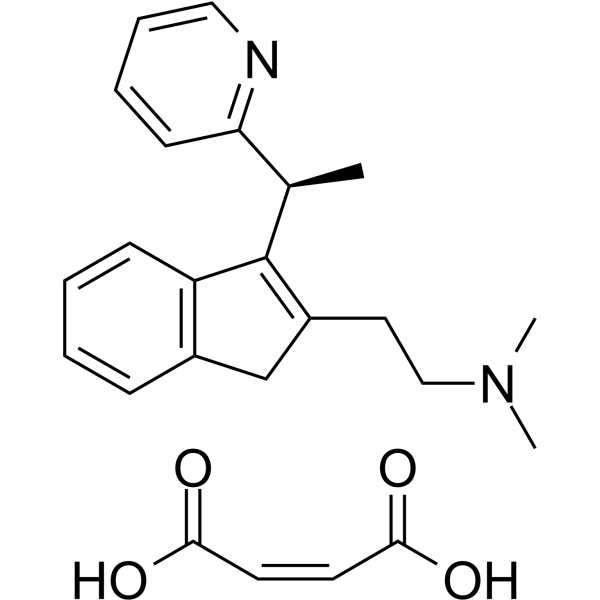
(S)-(+)-Dimethindene maleate, an enantiomer, is a potent M2-selective muscarinic receptor antagonist (pA2 = 7.86/7.74; pKi = 7.78). (S)-(+)-Dimethindene maleate shows lower affinities for the muscarinic M1 (pA2 = 6.83/6.36; pKi = 7.08), the M3 (pA2 = 6.92/6.96; pKi = 6.70) and the M4 receptors (pKi = 7.00), respectively. (S)-(+)-Dimethindene maleate also is a histamine H1 receptor antagonist (pA2 = 7.48) .
|
-
-
- HY-70053
-
|
|
mAChR
|
Neurological Disease
Metabolic Disease
|
|
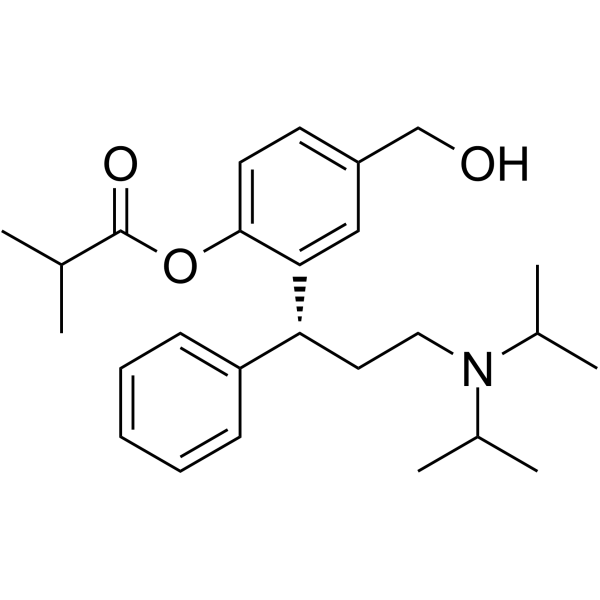
Fesoterodine is an orally active, nonsubtype selective, competitive muscarinic receptor (mAChR) antagonist with pKi values of 8.0, 7.7, 7.4, 7.3, 7.5 for M1, M2, M3, M4, M5 receptors, respectively. Fesoterodine is used for the overactive bladder (OAB) .
|
-
-
- HY-B0241
-
|
Sch 1000
|
mAChR
|
Neurological Disease
Inflammation/Immunology
|
|
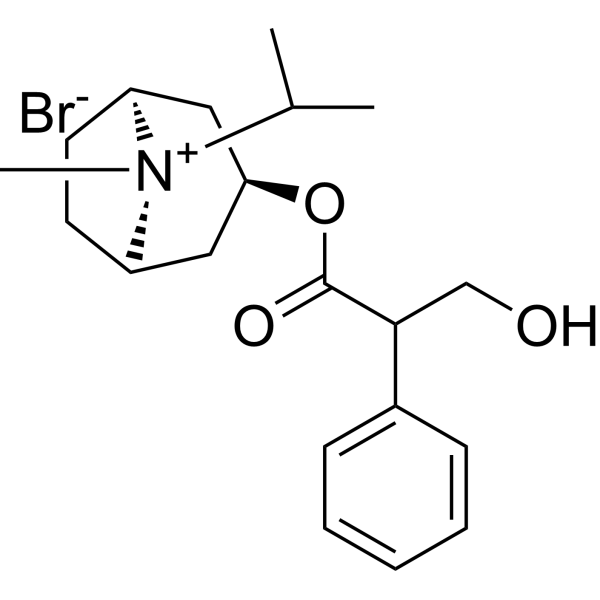
Ipratropium bromide (Sch 1000) is a muscarinic receptor antagonist, with IC50s of 2.9 nM, 2 nM, and 1.7 nM for M1, M2, and M3 receptors, respectively. Ipratropium bromide relaxes smooth muscle, can be used in the research for COPD (chronic obstructive pulmonary disease) and asthma .
|
-
-
- HY-B1332
-
|
Sch 1000 bromide hydrate
|
mAChR
|
Neurological Disease
Inflammation/Immunology
|
|
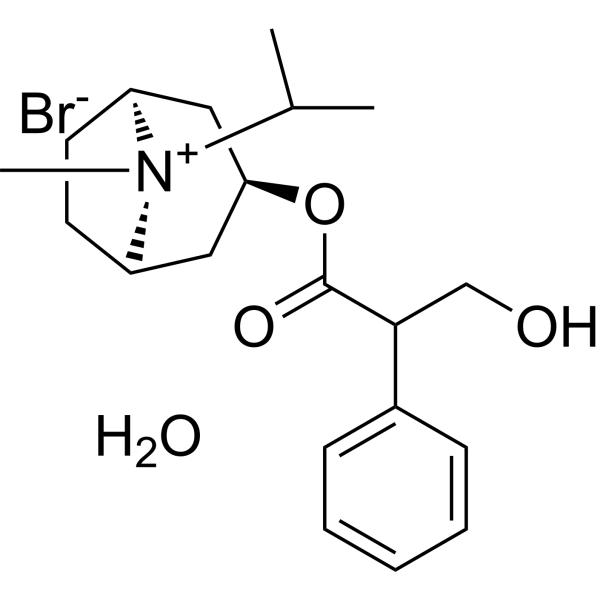
Ipratropium bromide (Sch 1000) hydrate is a muscarinic receptor antagonist, with IC50s of 2.9 nM, 2 nM, and 1.7 nM for M1, M2, and M3 receptors, respectively. Ipratropium bromide hydrate relaxes smooth muscle, can be used in the research for COPD (chronic obstructive pulmonary disease) and asthma .
|
-
-
- HY-I0230
-
|
YM905 hydrochloride
|
mAChR
|
Neurological Disease
Cancer
|
|
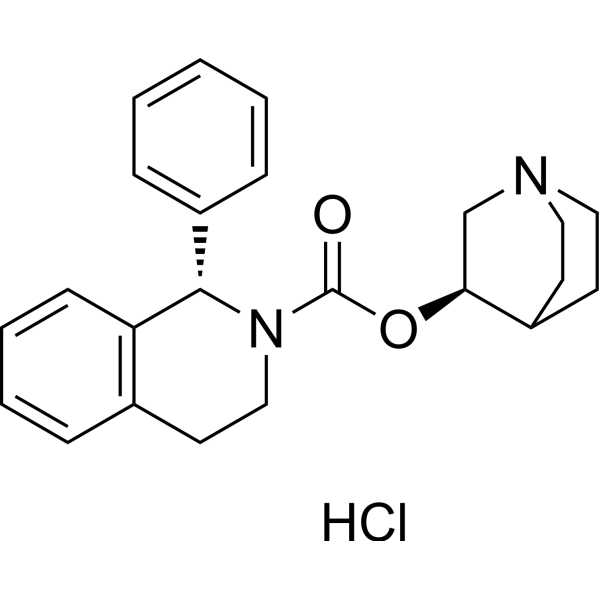
Solifenacin hydrochloride (YM905 hydrochloride) is a muscarinic receptor antagonist, with pKis of 7.6, 6.9 and 8.0 for M1, M2 and M3 receptors, respectively.
|
-
-
- HY-122203
-
|
|
mAChR
Cholinesterase (ChE)
|
Neurological Disease
|
|
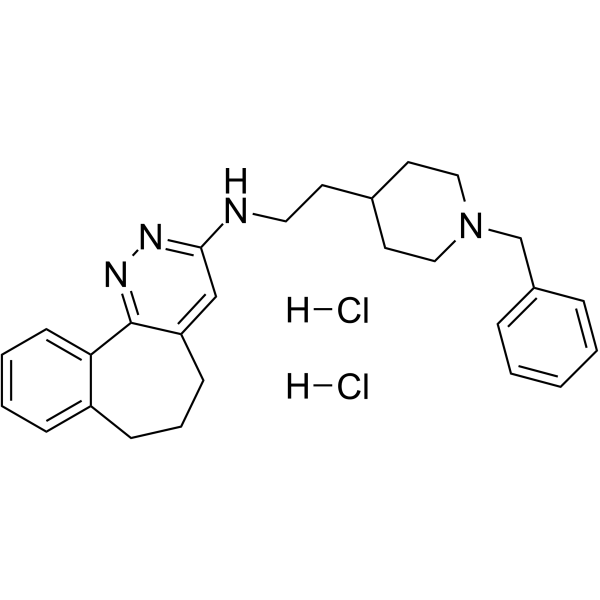
PCS1055 dihydrochloride is a potent, selective and competitive muscarinic M4 receptor antagonist with an IC50 of 18.1 nM and a Kd of 5.72 nM. PCS1055 dihydrochloride inhibits radioligand [ 3H]-NMS binding to the M4 receptor with a Ki of 6.5 nM. PCS1055 dihydrochloride exhibits >100-fold selectivity over M1-, M3-, and M5-receptors and 30-fold selectivity at the M2 receptor. PCS1055 dihydrochloride is also a potent AChE inhibitor with IC50 s of 22 nM and 120 nM for electric eel and human AChE, respectively .
|
-
-
- HY-14825A
-
|
SVT-40776 D-tartrate
|
mAChR
|
Inflammation/Immunology
|
|
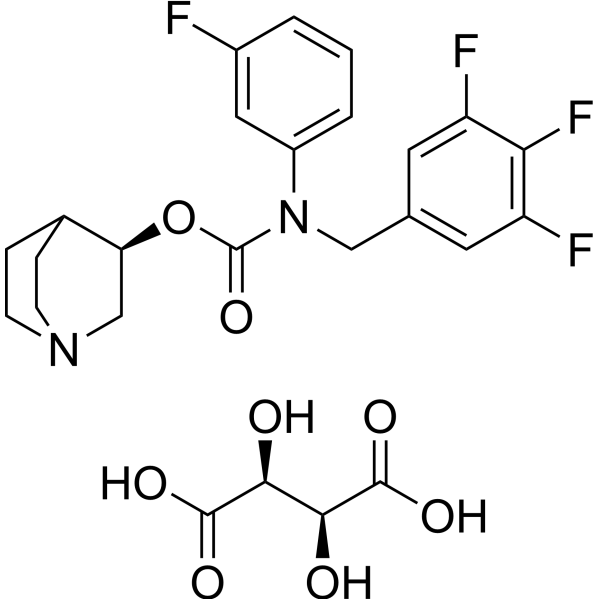
Tarafenacin (SVT-40776) D-tartrate is an orally active, selective M3 muscarinic receptor (M3 muscarinic receptor) antagonist with 203-fold selectivity over the M2 muscarinic receptor. Tarafenacin D-tartrate does not affect atrial contraction, arterial blood pressure or arterial pressure at high doses. Tarafenacin D-tartrate can be used in the research of overactive bladder .
|
-
-
- HY-B0461R
-
|
|
mAChR
Reference Standards
|
Neurological Disease
|
|
Trospium (chloride) (Standard) is the analytical standard of Trospium (chloride). This product is intended for research and analytical applications. Trospium chloride is an orally active, specific and competitive antagonist of muscarinic cholinergic receptors (mAChRs), with antimuscarinic activity. Trospium chloride binds to muscarinic receptors M1, M2 and M3 with high affinity, but not nicotinic, cholinergic receptors .
|
-

-
- HY-76570
-
|
(Rac)-Desfesoterodine; (Rac)-PNU-200577
|
mAChR
|
Neurological Disease
|
|
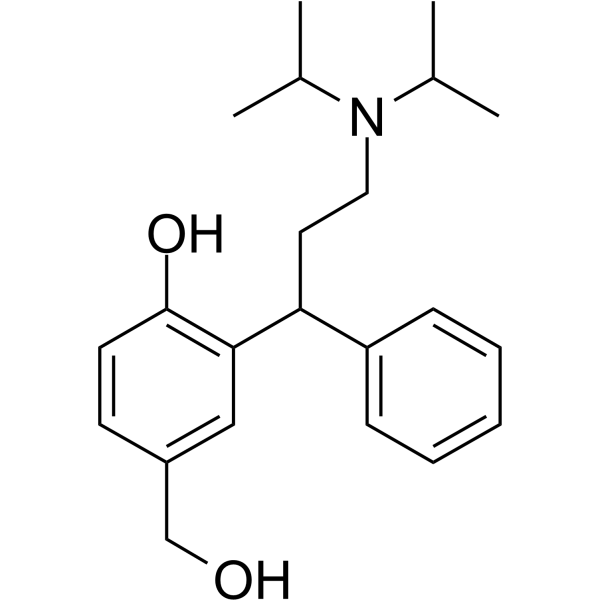
(Rac)-5-Hydroxymethyl Tolterodine ((Rac)-Desfesoterodine), an active metabolite of Tolterodine, is a mAChR antagonist (Ki values of 2.3 nM, 2 nM, 2.5 nM, 2.8 nM, and 2.9 nM for M1, M2, M3, M4, and M5 receptors, respectively). (Rac)-5-Hydroxymethyl Tolterodine can be used for overactive bladder research .
|
-
-
- HY-101586
-
-
-
- HY-B0461S
-
|
|
Isotope-Labeled Compounds
mAChR
|
Neurological Disease
|
|
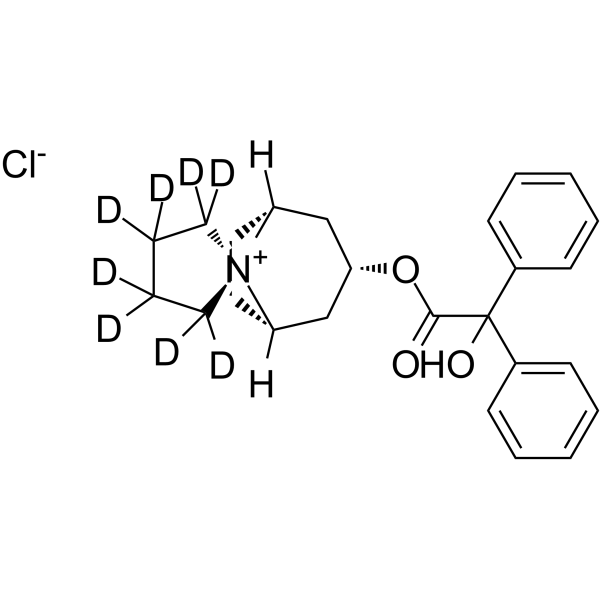
Trospium-d8 (chloride) is the deuterium labeled Trospium chloride. Trospium chloride is an orally active, specific and competitive antagonist of muscarinic cholinergic receptors (mAChRs), with antimuscarinic activity. Trospium chloride binds to muscarinic receptors M1, M2 and M3 with high affinity, but not nicotinic, cholinergic receptors .
|
-
-
- HY-70053A
-
|
|
mAChR
|
Neurological Disease
Metabolic Disease
Cancer
|
|
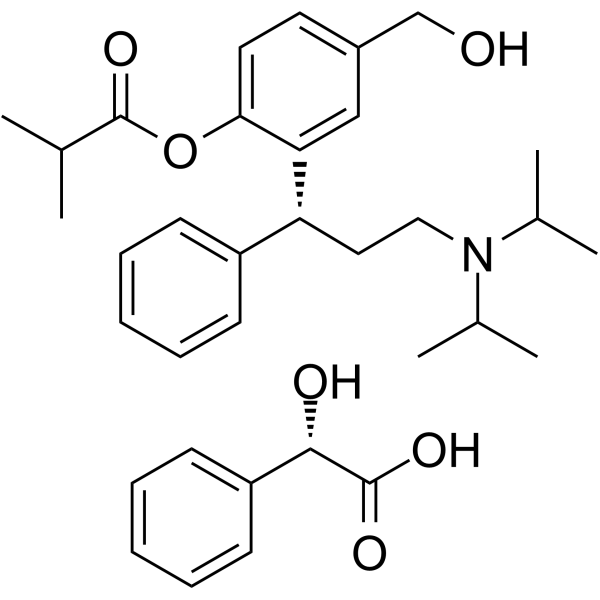
Fesoterodine L-mandelate is an orally active, nonsubtype selective, competitive muscarinic receptor (mAChR) antagonist with pKi values of 8.0, 7.7, 7.4, 7.3, 7.5 for M1, M2, M3, M4, M5 receptors, respectively. Fesoterodine L-mandelate is used for the overactive bladder (OAB) .
|
-
-
- HY-148527
-
|
AZD8999
|
Adrenergic Receptor
mAChR
|
Others
|
|
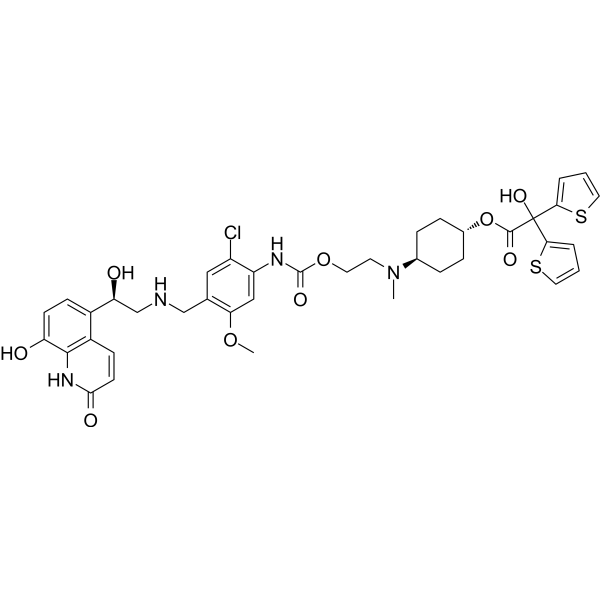
LAS190792 (AZD8999) is a potent muscarinic antagonist and β2-adrenoceptor agonist with pIC50 8.9, 8.8, 8.8, 9.2, 8.2, 7.5, 9.1, 5.6 for M1, M2, M3, M4, M5, β1, β2, β3, respectively. LAS190792 can be used as a bronchodilator .
|
-
-
- HY-107656
-
|
|
mAChR
|
Neurological Disease
|
|
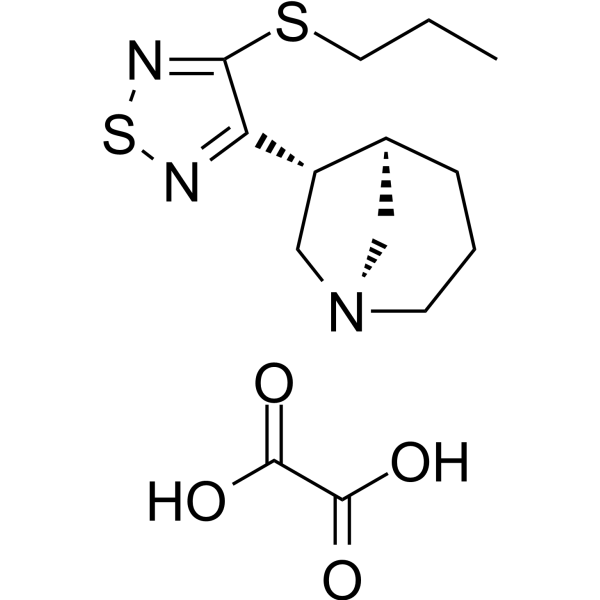
PTAC oxalate is a selective muscarinic receptor ligand. PTAC oxalate is an partial agonist of M2 and M4 but antagonist of M1, M3, and M5 (Ki values of 0.2-2.8 nM for hM1-5 in CHO cells). PTAC oxalate alleviates the mechanical allodynia on the neuropathic pain and has antidepression effects .
|
-
-
- HY-A0030S
-
|
|
mAChR
|
Metabolic Disease
|
|
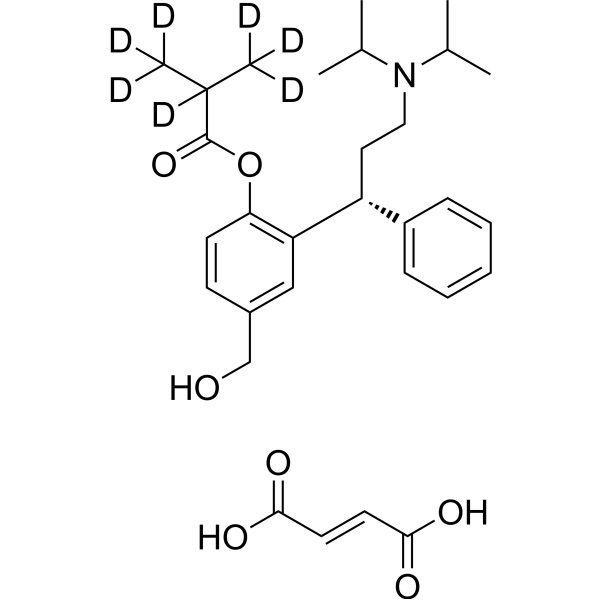
Fesoterodine-d7 (fumarate) is the deuterium labeled Fesoterodine fumarate . Fesoterodine Fumarate is an orally active, nonsubtype selective, competitive muscarinic receptor (mAChR) antagonist with pKi values of 8.0, 7.7, 7.4, 7.3, 7.5 for M1, M2, M3, M4, M5 receptors, respectively. Fesoterodine Fumarate is used for the overactive bladder (OAB) .
|
-
-
- HY-107653
-
|
|
mAChR
|
Neurological Disease
|
|
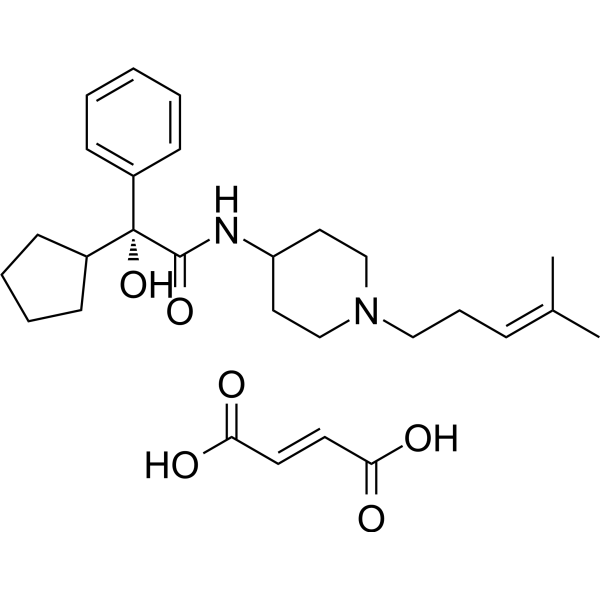
J 104129 fumarate is a selective and orally active muscarinic M3 antagonist with Ki values of 4.2 nM and 490 nM for M3 and M2, respectively. J 104129 fumarate antagonized ACh-induced bronchoconstriction. J 104129 fumarate has the potential for the research of obstructive airway disease .
|
-
-
- HY-U00302
-
|
|
mAChR
|
Inflammation/Immunology
|
|
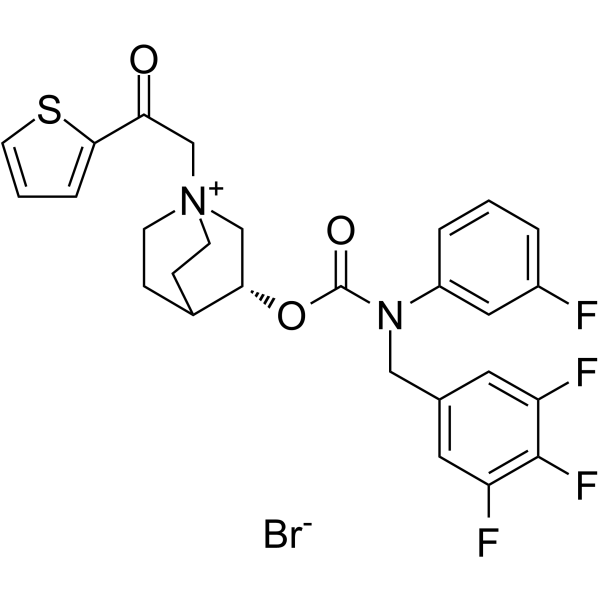
CHF5407 is a selective, long-acting and competitive muscarinic M3 receptor antagonist. CHF5407 shows subnanomolar affinities for human muscarinic M1 (hM1), M2 (hM2) and M3 (hM3) receptors. CHF5407 shows a prolonged antibronchospastic activity .
|
-
-
- HY-108171A
-
|
|
mAChR
|
Inflammation/Immunology
|
|
Hexocyclium methylsulfate is a potent mAChR antagonist with pKi values of 8.9, 7.7, 8.4, 8.8 for M1, M2, M3, and M4 subtype, respectively. Hexocyclium methylsulfate has the potential for the research of duodenal ulcer and irritable bowel syndrome .
|
-

-
- HY-101679A
-
|
|
mAChR
|
Neurological Disease
|
|
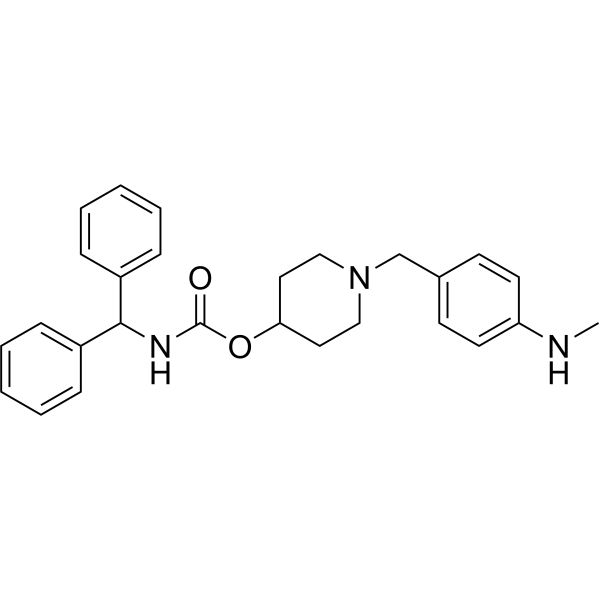
YM-58790 free base is a potent antagonist of mAChR. YM-58790 free base binds M1, M2, M3 with Ki values of 28 nM, 260 nM, and 15 nM. YM-58790 free base exhibits potent inhibitory activity on bladder pressuer in reflexly-evoked rhythmic contraction in rats .
|
-
-
- HY-B0241S
-
|
Sch 1000-d3
|
mAChR
|
Neurological Disease
Inflammation/Immunology
|
|
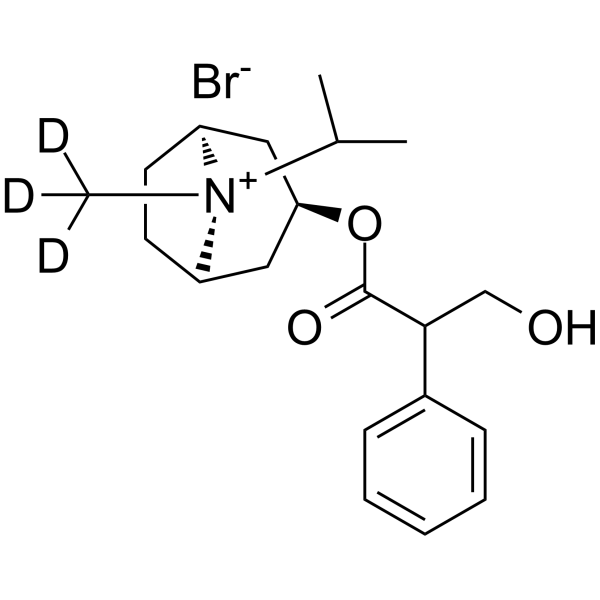
Ipratropium-d3 (bromide) is the deuterium labeled Ipratropium bromide. Ipratropium bromide (Sch 1000) is a muscarinic receptor antagonist, with binding IC50 values of 2.9 nM, 2 nM, and 1.7 nM for M1, M2, and M3 receptors, respectively. Ipratropium bromide can be used in the research for COPD (chronic obstructive pulmonary disease) and asthma .
|
-
-
- HY-U00104
-
|
|
mAChR
|
Endocrinology
|
|
YM-46303 is an mAChR antagonist which exhibits the highest affinities for M1 and M3 receptors, and selectivity for M3 over M2 receptor.
|
-
-
- HY-134971
-
|
|
mAChR
|
Neurological Disease
|
|
AE9C90CB, muscarinic receptor antagonist, has greater affinity for M3 muscarinic receptors with pKi of 9.90 and was 20-fold more selective for M3 than for M2 muscarinic receptors .
|
-

-
- HY-123566
-
|
RO 3202904
|
mAChR
|
Metabolic Disease
|
|
PSD-506 (RO 3202904) is a muscarinic M2/M3 antagonist. PSD-506 has the potential to be used in studies of bladder overactivity and urinary incontinence .
|
-

-
- HY-W076756
-
|
|
mAChR
|
Inflammation/Immunology
|
|
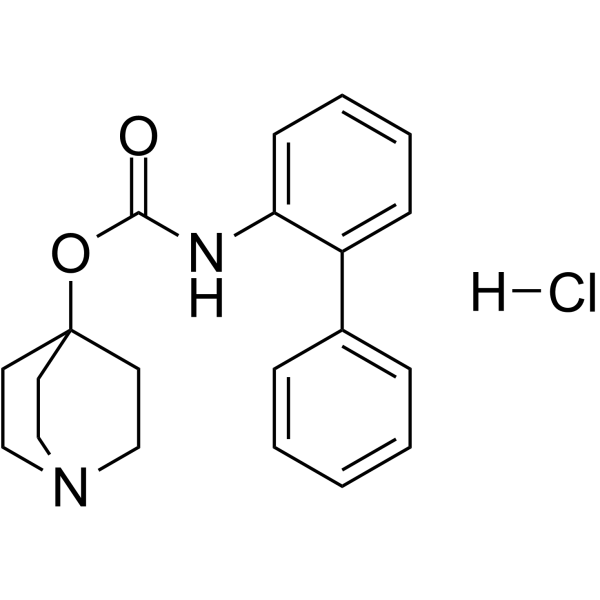
4-Piperidyl N-(2-biphenyl)carbamate (compound MA) is a competitive muscarinic acetylcholine receptor (mAChR) antagonist. 4-Piperidyl N-(2-biphenyl)carbamate exhibits higher affinity for M2 and M3 mAChR than β2AR (M2 pKi = 7.33; M3 pKi = 7.51; β2AR pKi = 4.94) .
|
-

-
- HY-135329
-
|
|
mAChR
|
Neurological Disease
|
|
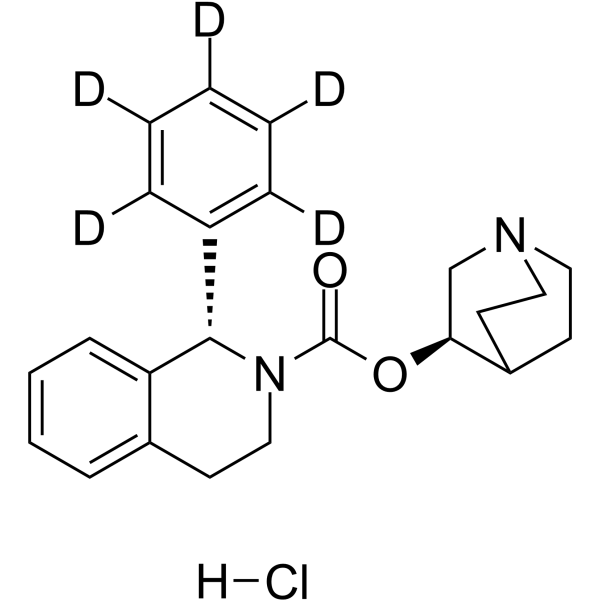
Solifenacin D5 hydrochloride is a deuterium labeled Solifenacin hydrochloride. Solifenacin hydrochloride is a muscarinic receptor antagonist with pKis of 7.6, 6.9 and 8.0 for M1, M2 and M3 receptors, respectively .
|
-
-
- HY-169814
-
|
|
mAChR
|
Neurological Disease
|
|
Lu 25-077 is a brain-penetrant and pharmacologically active N-demethyl metabolite of Lu 25-109 (HY-101586), a partial M1 agonist and M2/M3 antagonist. Lu 25-077 can be utilized in neurological research .
|
-

-
- HY-I0230S
-
|
|
Isotope-Labeled Compounds
mAChR
|
Neurological Disease
|
|
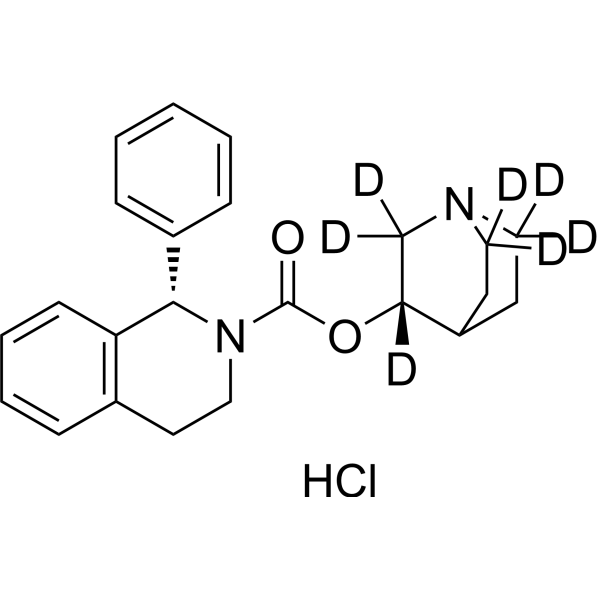
Solifenacin-d7 (hydrochloride) is the deuterium labeled Solifenacin hydrochloride. Solifenacin hydrochloride (YM905 hydrochloride) is a muscarinic receptor antagonist, with pKis of 7.6, 6.9 and 8.0 for M1, M2 and M3 receptors, respectively.
|
-
-
- HY-16489A
-
|
|
mAChR
Calcium Channel
|
Neurological Disease
|
|
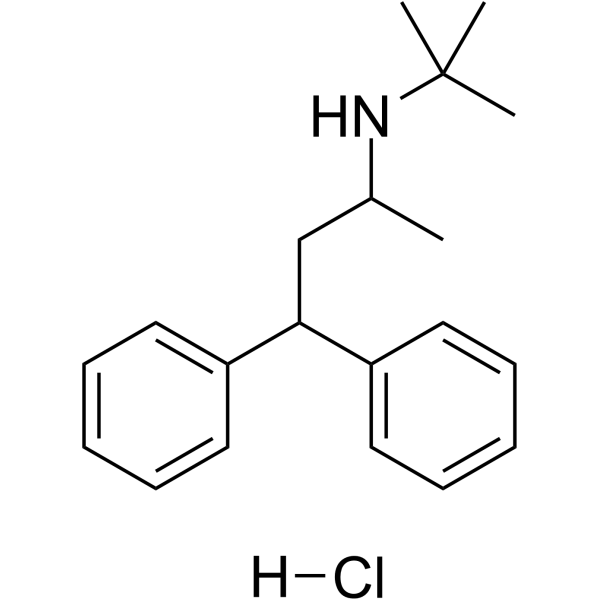
Terodiline hydrochloride is an M1-selective muscarinic receptor (mAChR) antagonist with Kbs of 15, 160, 280, and 198 nM in rabbit vas deferens (M1), atria (M2), bladder (M3) and ileal muscle (M3), respectively. Terodiline hydrochloride also is a Ca 2+ blocker. Terodiline hydrochloride acts as a treatment for urinary frequency and urge incontinence .
|
-
-
- HY-122510
-
|
Atropine oxidation
|
Parasite
|
Neurological Disease
|
|
Atropine Oxide (Atropine oxidation), a derivative of Atropine, acts as a competitive antagonist to the muscarinic acetylcholine receptors M1, M2, M3, M4, and M5, and is utilized in the treatment of specific nerve agent and pesticide poisonings.
|
-

-
- HY-14825
-
|
SVT-40776
|
mAChR
|
Inflammation/Immunology
|
|
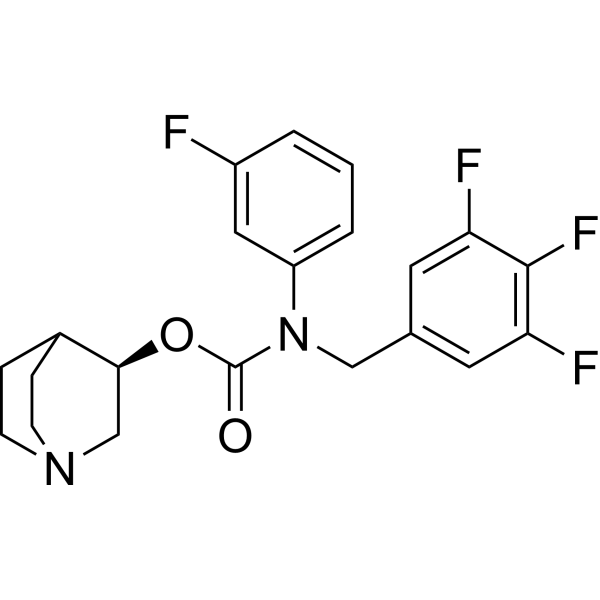
Tarafenacin (SVT-40776) is an orally active, selective M3 muscarinic receptor (M3 muscarinic receptor) antagonist with 203-fold selectivity over the M2 muscarinic receptor. Tarafenacin does not affect atrial contraction, arterial blood pressure or arterial pressure at high doses. Tarafenacin can be used in the research of overactive bladder .
|
-
-
- HY-122510A
-
|
Atropine oxidation hydrochloride
|
mAChR
|
|
|
Atropine Oxide (Atropine oxidation) hydrochloride, a derivative of Atropine, acts as a competitive antagonist to the muscarinic acetylcholine receptors M1, M2, M3, M4, and M5, and is utilized in the treatment of specific nerve agent and pesticide poisonings .
|
-

-
- HY-A0002S
-
|
YM905-d5
|
Isotope-Labeled Compounds
mAChR
|
Neurological Disease
|
|
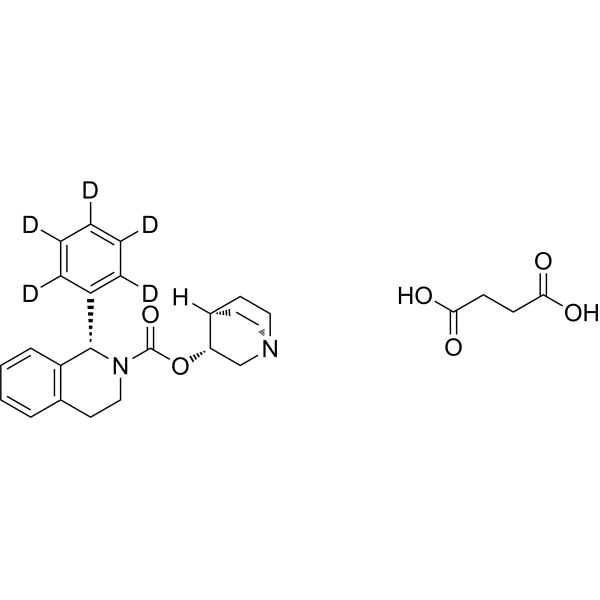
Solifenacin-d5 (succinate) is deuterium labeled Solifenacin (Succinate). Solifenacin Succinate (YM905) is a novel muscarinic receptor antagonist with pKis of 7.6, 6.9 and 8.0 for M1, M2 and M3 receptors, respectively.
|
-
-
- HY-120329
-
|
|
mAChR
|
Others
|
|
Lu 26-046 is the agonist for muscarinic M1 receptor and M2 receptor and a weak antagonist for M3 receptor, with Ki of 0.51, 26 and 5 nM, respectively. Lu 26-046 exhibits specific stimulus property, that can be recognized by rats .
|
-

-
- HY-A0034R
-
|
YM905 free base (Standard)
|
Reference Standards
mAChR
|
Neurological Disease
Cancer
|
|
Solifenacin (Standard) is the analytical standard of Solifenacin. This product is intended for research and analytical applications. Solifenacin (YM905 free base) is a novel muscarinic receptor antagonist with pKis of 7.6, 6.9 and 8.0 for M1, M2 and M3 receptors, respectively.
|
-

-
- HY-101679
-
|
|
mAChR
|
Neurological Disease
|
|
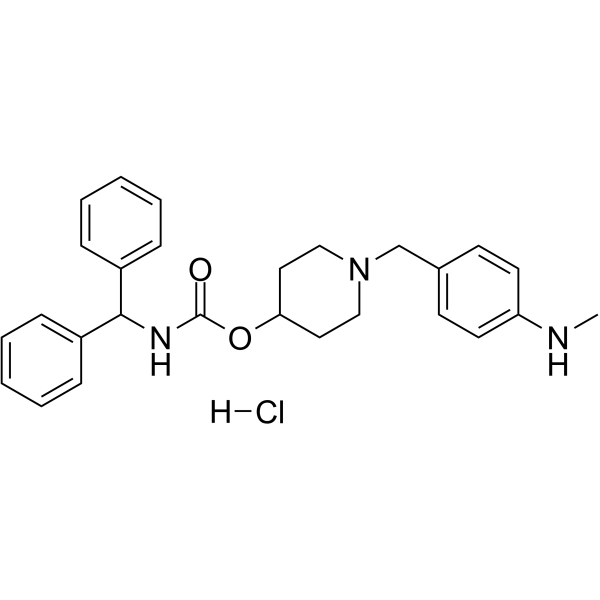
YM-58790 is a potent antagonist of mAChR. YM-58790 binds M1, M2, M3 with Ki values of 28 nM, 260 nM, and 15 nM. YM-58790 exhibits potent inhibitory activity on bladder pressuer in reflexly-evoked rhythmic contraction in rats .
|
-
-
- HY-A0002R
-
|
YM905 (Standard)
|
Reference Standards
mAChR
|
Neurological Disease
Cancer
|
|
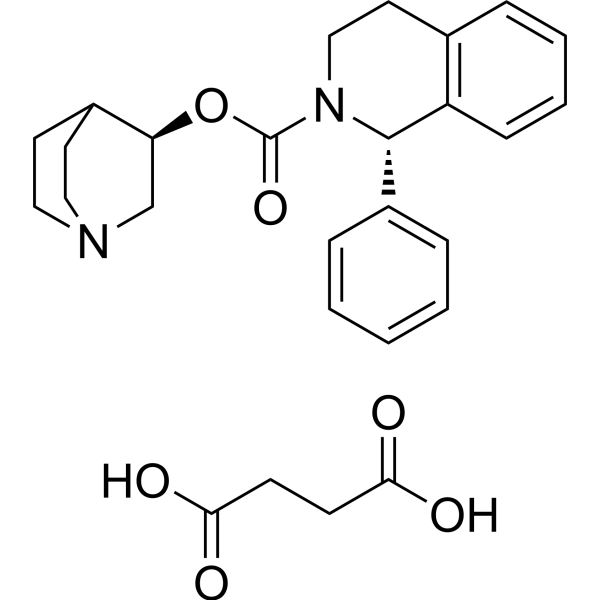
Solifenacin (Succinate) (Standard) is the analytical standard of Solifenacin (Succinate). This product is intended for research and analytical applications. Solifenacin Succinate (YM905) is a novel muscarinic receptor antagonist with pKis of 7.6, 6.9 and 8.0 for M1, M2 and M3 receptors, respectively.
|
-
-
- HY-120418
-
|
|
mAChR
|
Others
|
|
L-687306 is a high affinity muscarinic M1 receptor partial agonist with activity as a partial agonist of M1 receptors in rat ganglia and as a high affinity competitive antagonist at guinea pig cardiac M2 and ileal M3 muscarinic receptors, useful for studying the receptor reserve of muscarinic receptors.
|
-

-
- HY-101586A
-
|
Lu 25-109 maleate
|
mAChR
|
Neurological Disease
|
|
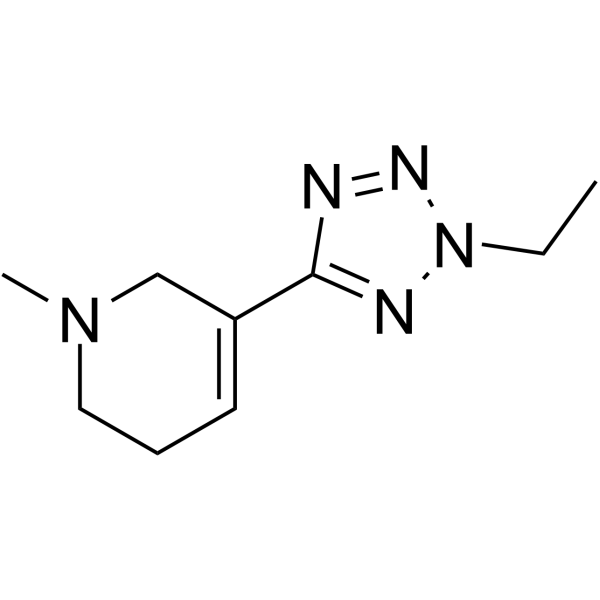
Alvameline (Lu 25-109) maleate is a partial agonist of M1 and an antagonist of M2/M3. Alvameline maleate competitively antagonizes contractions induced by ammonium chloride (HY-Y1269) and electrical field stimulation in human detrusor muscle, indicating its potential application in regulating bladder function. Additionally, alvameline maleate can improve cognitive function following traumatic brain injury in rats .
|
-

-
- HY-135329S
-
|
|
Isotope-Labeled Compounds
mAChR
|
Neurological Disease
|
|
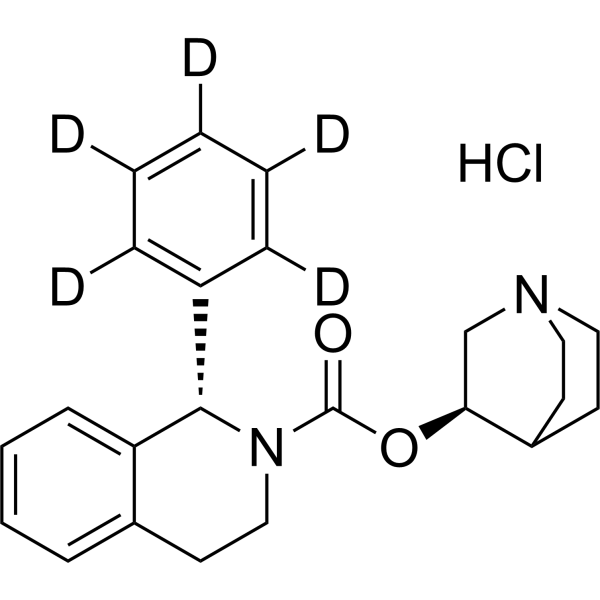
(1R,3S-)Solifenacin-d5 hydrochloride is the deuterium labeled Solifenacin hydrochloride. Solifenacin D5 hydrochloride is a deuterium labeled Solifenacin hydrochloride. Solifenacin hydrochloride is a muscarinic receptor antagonist with pKis of 7.6, 6.9 and 8.0 for M1, M2 and M3 receptors, respectively .
|
-
-
- HY-B0241S1
-
|
Sch 1000-d7 bromide
|
Isotope-Labeled Compounds
mAChR
|
Neurological Disease
Inflammation/Immunology
|
|
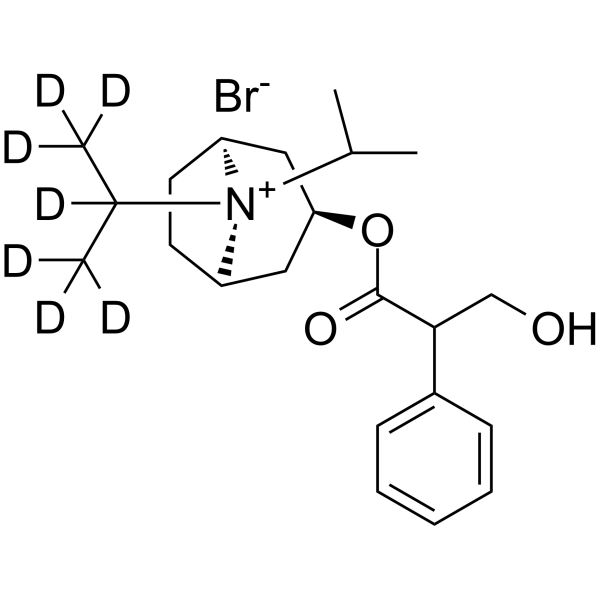
Ipratropium-d7 (bromide)eis the deuterium labeled Ipratropium bromide. Ipratropium bromide (Sch 1000) is a muscarinic receptor antagonist, with binding IC50 values of 2.9 nM, 2 nM, and 1.7 nM for M1, M2, and M3 receptors, respectively. Ipratropium bromide can be used in the research for COPD (chronic obstructive pulmonary disease) and asthma .
|
-
-
- HY-76570A
-
|
(Rac)-Desfesoterodine hydrochloride; (Rac)-PNU-200577 hydrochloride
|
mAChR
|
Neurological Disease
|
|
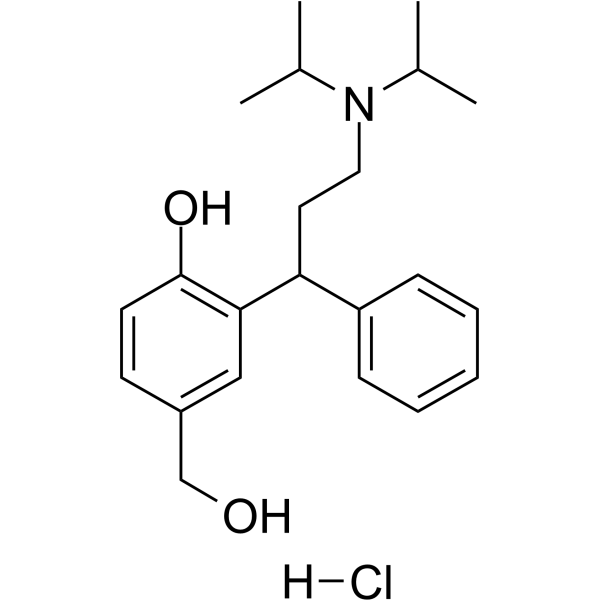
(Rac)-5-Hydroxymethyl Tolterodine ((Rac)-Desfesoterodine) hydrochloride, an active metabolite of Tolterodine, is a mAChR antagonist (Ki values of 2.3 nM, 2 nM, 2.5 nM, 2.8 nM, and 2.9 nM for M1, M2, M3, M4, and M5 receptors, respectively). (Rac)-5-Hydroxymethyl Tolterodine hydrochloride can be used for overactive bladder research .
|
-
-
- HY-70053S
-
|
|
Isotope-Labeled Compounds
mAChR
|
Neurological Disease
Metabolic Disease
|
|
(Rac)-Fesoterodine-d14 fumarate is a labelled racemic Fesoterodine. Fesoterodine is an orally active, nonsubtype selective, competitive muscarinic receptor (mAChR) antagonist with pKivalues of 8.0, 7.7, 7.4, 7.3, 7.5 for M1, M2, M3, M4, M5 receptors, respectively. Fesoterodine is used for the overactive bladder (OAB) .
|
-

-
- HY-A0030R
-
|
|
Reference Standards
mAChR
|
Neurological Disease
Metabolic Disease
Cancer
|
|
Fesoterodine (fumarate) (Standard) is the analytical standard of Fesoterodine (fumarate). This product is intended for research and analytical applications. Fesoterodine Fumarate is an orally active, nonsubtype selective, competitive muscarinic receptor (mAChR) antagonist with pKi values of 8.0, 7.7, 7.4, 7.3, 7.5 for M1, M2, M3, M4, M5 receptors, respectively. Fesoterodine Fumarate is used for the overactive bladder (OAB) .
|
-

-
- HY-W720879
-
|
|
Isotope-Labeled Compounds
mAChR
|
Metabolic Disease
|
|
Fesoterodine-d3 is the deuterium labeled Fesoterodine (HY-70053). Fesoterodine is an orally active, nonsubtype selective, competitive muscarinic receptor (mAChR) antagonist with pKi values of 8.0, 7.7, 7.4, 7.3, 7.5 for M1, M2, M3, M4, M5 receptors, respectively. Fesoterodine is used for the overactive bladder (OAB) .
|
-

- HY-B1332R
-
|
Sch 1000 bromide hydrate (Standard)
|
Reference Standards
mAChR
|
Neurological Disease
Inflammation/Immunology
|
|
Ipratropium (bromide hydrate) (Standard) is the analytical standard of Ipratropium (bromide hydrate). This product is intended for research and analytical applications. Ipratropium bromide (Sch 1000) hydrate is a muscarinic receptor antagonist, with IC50s of 2.9 nM, 2 nM, and 1.7 nM for M1, M2, and M3 receptors, respectively. Ipratropium bromide hydrate relaxes smooth muscle, can be used in the research for COPD (chronic obstructive pulmonary disease) and asthma .
|
-

- HY-183932
-
|
|
mAChR
|
Neurological Disease
Inflammation/Immunology
|
|
NPC-14695 is a competitive and selective M3 muscarinic receptor antagonist, with a Kd value of 15 nM for guinea pig M3, 60 nM for guinea pig M2, and 25 nM for rabbit M1. NPC-14695 exhibits higher activity towards M3 receptors in bronchial smooth muscle than towards those regulating salivary secretion. NPC-14695 inhibits Carbachol (HY-B1208)-induced contraction of isolated rabbit iris smooth muscle .
|
-

- HY-76570S1
-
|
|
Isotope-Labeled Compounds
mAChR
|
Neurological Disease
|
|
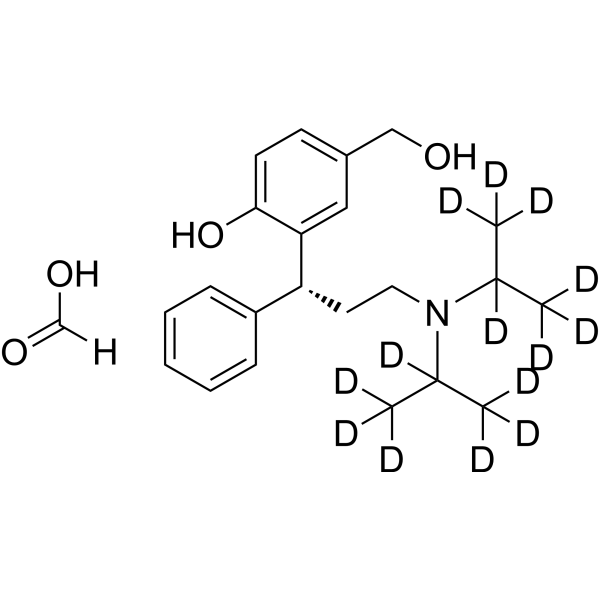
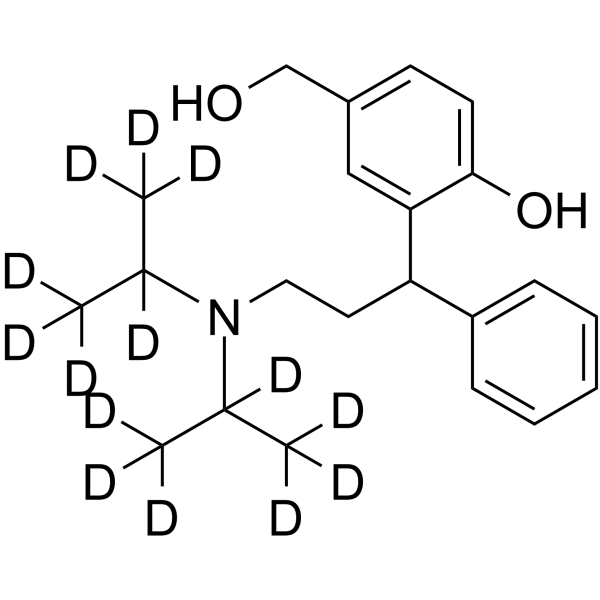
5-Hydroxymethyl Tolterodine-d14 (formate) is deuterium labeled (Rac)-5-Hydroxymethyl Tolterodine. (Rac)-5-Hydroxymethyl Tolterodine ((Rac)-Desfesoterodine), an active metabolite of Tolterodine, is a mAChR antagonist (Ki values of 2.3 nM, 2 nM, 2.5 nM, 2.8 nM, and 2.9 nM for M1, M2, M3, M4, and M5 receptors, respectively). (Rac)-5-Hydroxymethyl Tolterodine can be used for overactive bladder research .
|
-
- HY-76570S
-
|
(Rac)-Desfesoterodine-d14; (Rac)-PNU-200577-d14
|
Isotope-Labeled Compounds
mAChR
|
Neurological Disease
|
|
(Rac)-5-Hydroxymethyl Tolterodine-d14 is the deuterium labeled (Rac)-5-Hydroxymethyl Tolterodine. (Rac)-5-Hydroxymethyl Tolterodine ((Rac)-Desfesoterodine), an active metabolite of Tolterodine, is a mAChR antagonist (Ki values of 2.3 nM, 2 nM, 2.5 nM, 2.8 nM, and 2.9 nM for M1, M2, M3, M4, and M5 receptors, respectively). (Rac)-5-Hydroxymethyl Tolterodine can be used for overactive bladder research .
|
-
- HY-N0340R
-
|
Hyoscine butylbromide (Standard); (-)-Scopolamine butylbromide (Standard); Butylscopolamine bromide (Standard)
|
Reference Standards
mAChR
|
Neurological Disease
Inflammation/Immunology
|
|
Scopolamine butylbromide (Standard) is the analytical standard of Scopolamine butylbromide (HY-N0340). This product is intended for research and analytical applications. Scopolamine butylbromide (Hyoscine butylbromide) is an orally active anticholinergic agent and spasmolytic. Scopolamine butylbromide binds with high affinity to rat cardiac M2 (Ki 83 nmol/L), hM2 (Ki 233 nmol/L), rat intestinal M3 (Ki 290 nmol/L) and hM3 (Ki 643 nmol/L) muscarinic receptors. Scopolamine butylbromide exerts a dose-dependent antagonistic effect on Carbachol-induced gastrointestinal smooth muscle spasm. Scopolamine butylbromide can be used for the research of abdominal colic and pain associated with gastrointestinal spasm, functional abdominal pain, chronic gastropathy and gastric ulcer .
|
-

- HY-126862
-
|
|
mAChR
|
Others
|
|
AQ-RA 721 is a muscarinic receptor antagonist with differential affinity for the m4 and M2 sites, which can be used to characterize muscarinic receptor subtypes. Other muscarinic receptor antagonists have differential affinity for the M1 (rat cerebral cortex), M2 (rat heart), M3 (rat submandibular gland), m4 (receptor expressed in Chinese hamster ovary cells transfected with CHO), and guinea pig uterine smooth muscle at the muscarinic binding site .
|
-

- HY-101679R
-
|
|
mAChR
Reference Standards
|
Neurological Disease
|
|
YM-58790 (Standard) is the analytical standard of YM-58790 (HY-101679). This product is intended for research and analytical applications. YM-58790 is a potent antagonist of mAChR. YM-58790 binds M1, M2, M3 with Ki values of 28 nM, 260 nM, and 15 nM. YM-58790 exhibits potent inhibitory activity on bladder pressuer in reflexly-evoked rhythmic contraction in rats .
|
-

- HY-107647R
-
|
|
Reference Standards
mAChR
Histamine Receptor
|
Inflammation/Immunology
|
|
(S)-(+)-Dimethindene maleate (Standard) is the analytical standard of (S)-(+)-Dimethindene (maleate) (HY-107647). This product is intended for research and analytical applications. (S)-(+)-Dimethindene maleate, an enantiomer, is a potent M2-selective muscarinic receptor antagonist (pA2 = 7.86/7.74; pKi = 7.78). (S)-(+)-Dimethindene maleate shows lower affinities for the muscarinic M1 (pA2 = 6.83/6.36; pKi = 7.08), the M3 (pA2 = 6.92/6.96; pKi = 6.70) and the M4 receptors (pKi = 7.00), respectively. (S)-(+)-Dimethindene maleate also is a histamine H1 receptor antagonist (pA2 = 7.48) .
|
-

| Cat. No. |
Product Name |
Category |
Target |
Chemical Structure |
-
- HY-N0340
-
|
Hyoscine butylbromide; (-)-Scopolamine butylbromide; Butylscopolamine bromide
|
Alkaloids
Structural Classification
Other Alkaloids
Datura metel L.
Solanaceae
Plants
Source Classification
|
mAChR
|
|
Scopolamine butylbromide (Hyoscine butylbromide) is an orally active anticholinergic agent and spasmolytic. Scopolamine butylbromide binds with high affinity to rat cardiac M2 (Ki 83 nmol/L), hM2 (Ki 233 nmol/L), rat intestinal M3 (Ki 290 nmol/L) and hM3 (Ki 643 nmol/L) muscarinic receptors. Scopolamine butylbromide exerts a dose-dependent antagonistic effect on Carbachol-induced gastrointestinal smooth muscle spasm. Scopolamine butylbromide can be used for the research of abdominal colic and pain associated with gastrointestinal spasm, functional abdominal pain, chronic gastropathy and gastric ulcer .
|
-
-
- HY-N0340R
-
|
Hyoscine butylbromide (Standard); (-)-Scopolamine butylbromide (Standard); Butylscopolamine bromide (Standard)
|
Alkaloids
Structural Classification
Other Alkaloids
Datura metel L.
Solanaceae
Plants
Source Classification
|
Reference Standards
mAChR
|
|
Scopolamine butylbromide (Standard) is the analytical standard of Scopolamine butylbromide (HY-N0340). This product is intended for research and analytical applications. Scopolamine butylbromide (Hyoscine butylbromide) is an orally active anticholinergic agent and spasmolytic. Scopolamine butylbromide binds with high affinity to rat cardiac M2 (Ki 83 nmol/L), hM2 (Ki 233 nmol/L), rat intestinal M3 (Ki 290 nmol/L) and hM3 (Ki 643 nmol/L) muscarinic receptors. Scopolamine butylbromide exerts a dose-dependent antagonistic effect on Carbachol-induced gastrointestinal smooth muscle spasm. Scopolamine butylbromide can be used for the research of abdominal colic and pain associated with gastrointestinal spasm, functional abdominal pain, chronic gastropathy and gastric ulcer .
|
-
| Cat. No. |
Product Name |
Chemical Structure |
-
- HY-B0461S
-
|
|
|
Trospium-d8 (chloride) is the deuterium labeled Trospium chloride. Trospium chloride is an orally active, specific and competitive antagonist of muscarinic cholinergic receptors (mAChRs), with antimuscarinic activity. Trospium chloride binds to muscarinic receptors M1, M2 and M3 with high affinity, but not nicotinic, cholinergic receptors .
|
-
-
- HY-A0030S
-
|
|
|
Fesoterodine-d7 (fumarate) is the deuterium labeled Fesoterodine fumarate . Fesoterodine Fumarate is an orally active, nonsubtype selective, competitive muscarinic receptor (mAChR) antagonist with pKi values of 8.0, 7.7, 7.4, 7.3, 7.5 for M1, M2, M3, M4, M5 receptors, respectively. Fesoterodine Fumarate is used for the overactive bladder (OAB) .
|
-
-
- HY-B0241S
-
|
|
|
Ipratropium-d3 (bromide) is the deuterium labeled Ipratropium bromide. Ipratropium bromide (Sch 1000) is a muscarinic receptor antagonist, with binding IC50 values of 2.9 nM, 2 nM, and 1.7 nM for M1, M2, and M3 receptors, respectively. Ipratropium bromide can be used in the research for COPD (chronic obstructive pulmonary disease) and asthma .
|
-
-
- HY-I0230S
-
|
|
|
Solifenacin-d7 (hydrochloride) is the deuterium labeled Solifenacin hydrochloride. Solifenacin hydrochloride (YM905 hydrochloride) is a muscarinic receptor antagonist, with pKis of 7.6, 6.9 and 8.0 for M1, M2 and M3 receptors, respectively.
|
-
-
- HY-A0002S
-
|
|
|
Solifenacin-d5 (succinate) is deuterium labeled Solifenacin (Succinate). Solifenacin Succinate (YM905) is a novel muscarinic receptor antagonist with pKis of 7.6, 6.9 and 8.0 for M1, M2 and M3 receptors, respectively.
|
-
-
- HY-135329S
-
|
|
|
(1R,3S-)Solifenacin-d5 hydrochloride is the deuterium labeled Solifenacin hydrochloride. Solifenacin D5 hydrochloride is a deuterium labeled Solifenacin hydrochloride. Solifenacin hydrochloride is a muscarinic receptor antagonist with pKis of 7.6, 6.9 and 8.0 for M1, M2 and M3 receptors, respectively .
|
-
-
- HY-B0241S1
-
|
|
|
Ipratropium-d7 (bromide)eis the deuterium labeled Ipratropium bromide. Ipratropium bromide (Sch 1000) is a muscarinic receptor antagonist, with binding IC50 values of 2.9 nM, 2 nM, and 1.7 nM for M1, M2, and M3 receptors, respectively. Ipratropium bromide can be used in the research for COPD (chronic obstructive pulmonary disease) and asthma .
|
-
-
- HY-70053S
-
|
|
|
(Rac)-Fesoterodine-d14 fumarate is a labelled racemic Fesoterodine. Fesoterodine is an orally active, nonsubtype selective, competitive muscarinic receptor (mAChR) antagonist with pKivalues of 8.0, 7.7, 7.4, 7.3, 7.5 for M1, M2, M3, M4, M5 receptors, respectively. Fesoterodine is used for the overactive bladder (OAB) .
|
-
-
- HY-W720879
-
|
|
|
Fesoterodine-d3 is the deuterium labeled Fesoterodine (HY-70053). Fesoterodine is an orally active, nonsubtype selective, competitive muscarinic receptor (mAChR) antagonist with pKi values of 8.0, 7.7, 7.4, 7.3, 7.5 for M1, M2, M3, M4, M5 receptors, respectively. Fesoterodine is used for the overactive bladder (OAB) .
|
-
-
- HY-76570S1
-
|
|
|
5-Hydroxymethyl Tolterodine-d14 (formate) is deuterium labeled (Rac)-5-Hydroxymethyl Tolterodine. (Rac)-5-Hydroxymethyl Tolterodine ((Rac)-Desfesoterodine), an active metabolite of Tolterodine, is a mAChR antagonist (Ki values of 2.3 nM, 2 nM, 2.5 nM, 2.8 nM, and 2.9 nM for M1, M2, M3, M4, and M5 receptors, respectively). (Rac)-5-Hydroxymethyl Tolterodine can be used for overactive bladder research .
|
-
-
- HY-76570S
-
|
|
|
(Rac)-5-Hydroxymethyl Tolterodine-d14 is the deuterium labeled (Rac)-5-Hydroxymethyl Tolterodine. (Rac)-5-Hydroxymethyl Tolterodine ((Rac)-Desfesoterodine), an active metabolite of Tolterodine, is a mAChR antagonist (Ki values of 2.3 nM, 2 nM, 2.5 nM, 2.8 nM, and 2.9 nM for M1, M2, M3, M4, and M5 receptors, respectively). (Rac)-5-Hydroxymethyl Tolterodine can be used for overactive bladder research .
|
-
| Cat. No. |
Product Name |
|
Classification |
-
- HY-120329
-
|
|
|
Alkynes
|
|
Lu 26-046 is the agonist for muscarinic M1 receptor and M2 receptor and a weak antagonist for M3 receptor, with Ki of 0.51, 26 and 5 nM, respectively. Lu 26-046 exhibits specific stimulus property, that can be recognized by rats .
|
Your information is safe with us. * Required Fields.
Inquiry Information
- Product Name:
- Cat. No.:
- Quantity:
- MCE Japan Authorized Agent:








