



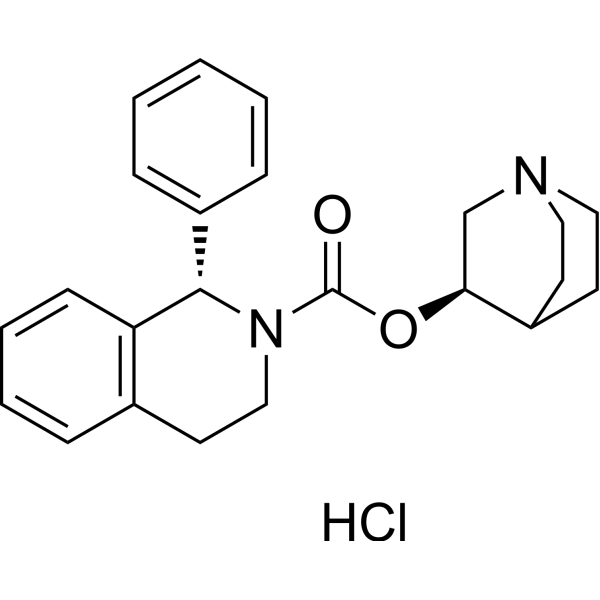
Solifenacin hydrochloride
Based on 3 publication(s) in Google Scholar
Solifenacin hydrochloride (YM905 hydrochloride) is a muscarinic receptor antagonist, with pKis of 7.6, 6.9 and 8.0 for M1, M2 and M3 receptors, respectively.
For research use only. We do not sell to patients.
- Purity : 98.86%
- CAS No.: 180468-39-7
- Formula: C23H27ClN2O2
- Molecular Weight:398.93
-
Storage:
4°C, sealed storage, away from moisture
* In solvent : -80°C, 6 months; -20°C, 1 month (sealed storage, away from moisture)

To place orders, for customer services and technical support, please contact: MedChemExpress USA
Tel: 609-228-6898 E-mail: [email protected] [email protected]


-
 Biological Activity
-
Chemical Information
-
Solvent & Solubility
- Purity & Documentation
- References
-
 Help & FAQs


-
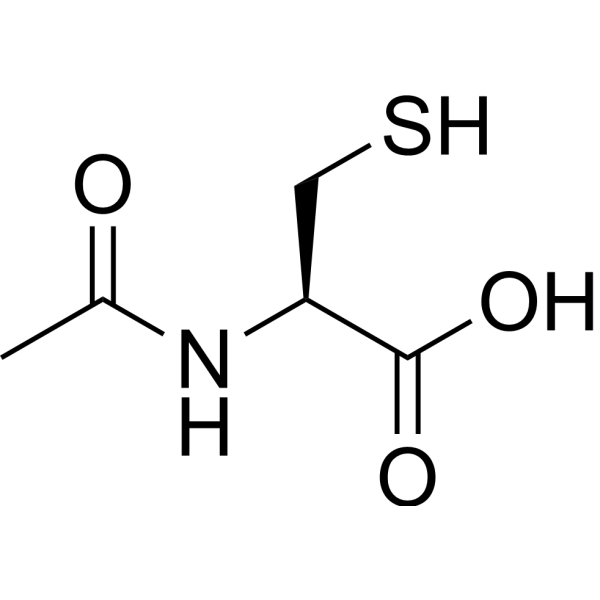
HY-B0215
AcetylcysteineMucolytic Agent -
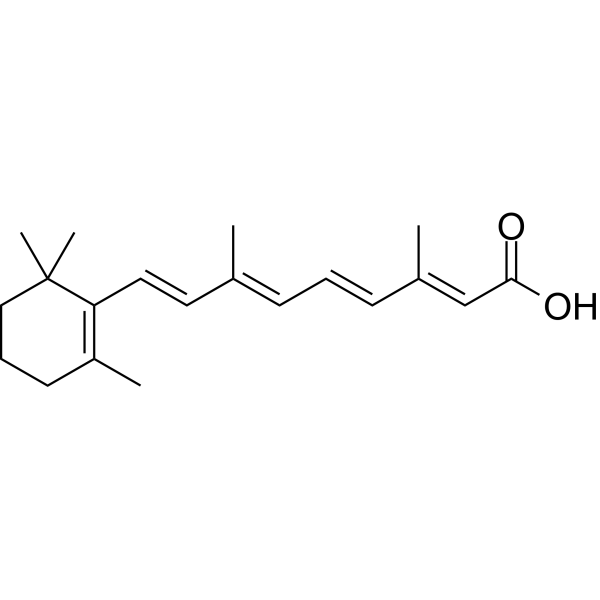
HY-14649
Retinoic acidRAR Agonist -
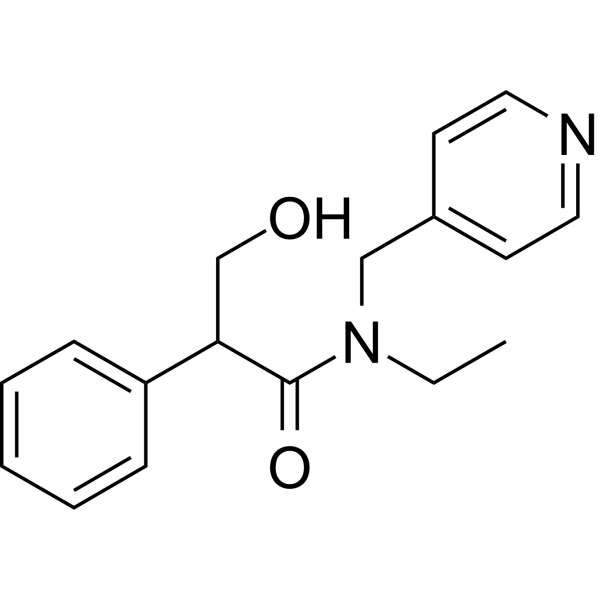
HY-B0321
TropicamidemAChR M4 Antagonist -
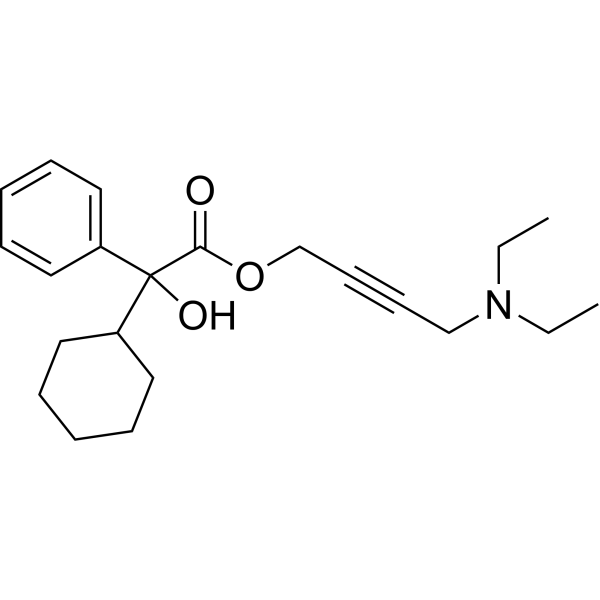
HY-B0267
OxybutyninmAChR Antagonist -
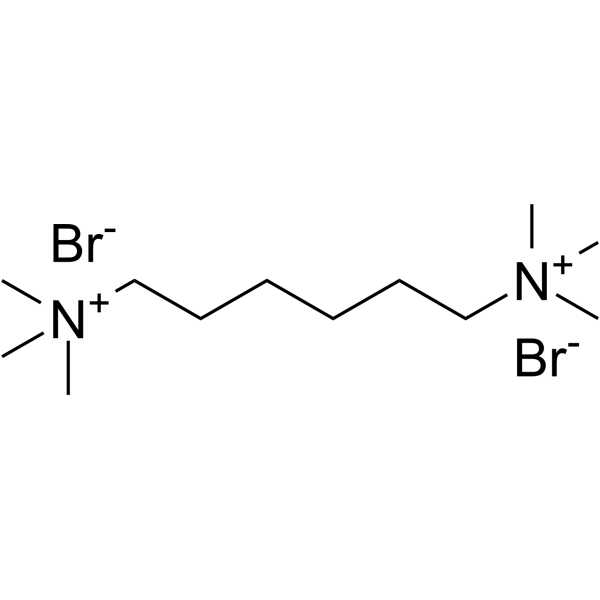
HY-B0569
Hexamethonium BromidenAChR Antagonist -
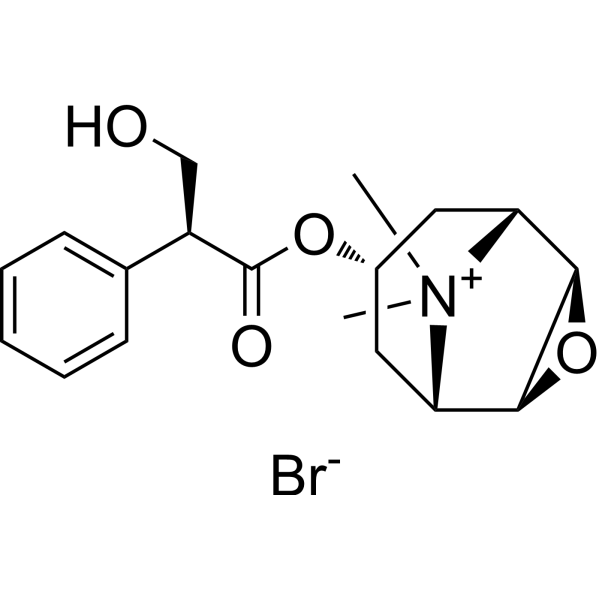
HY-B0344
Methscopolamine bromidemAChR Antagonist -
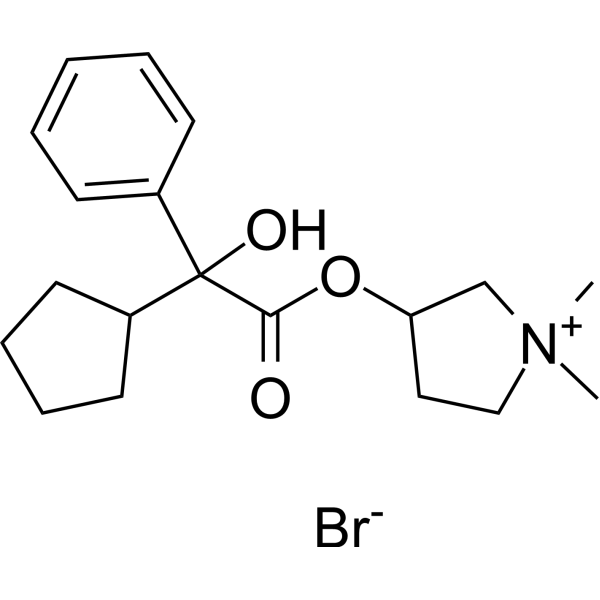
HY-17465
GlycopyrrolateMuscarinic Receptor Antagonist -
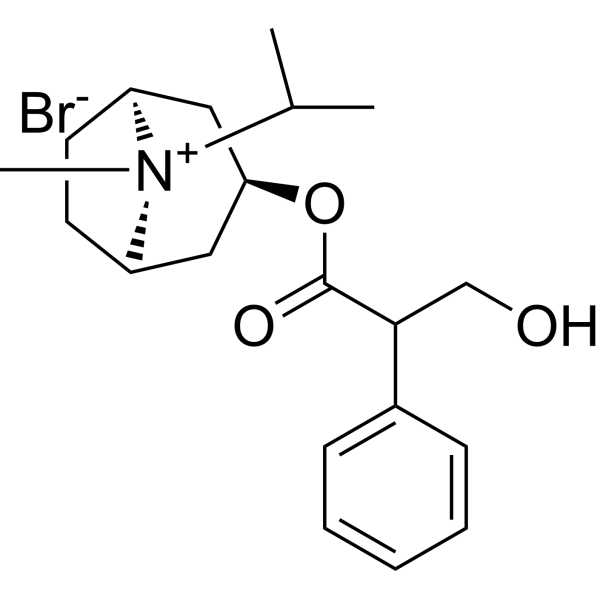
HY-B0241
Ipratropium bromidemAChR Antagonist -
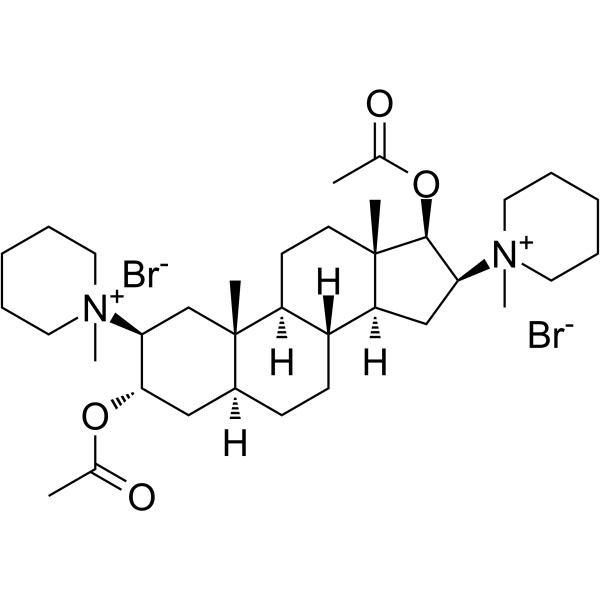
HY-B0429
Pancuronium dibromideNeuromuscular Relaxant -
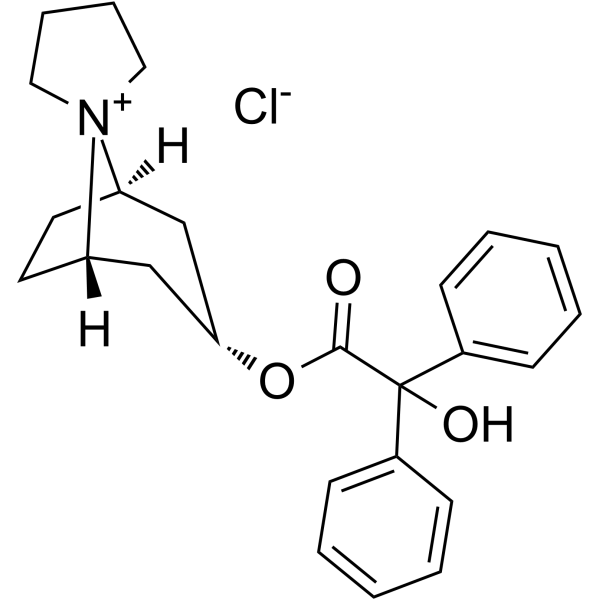
HY-B0461
Trospium chloridemAChR Inhibitor -
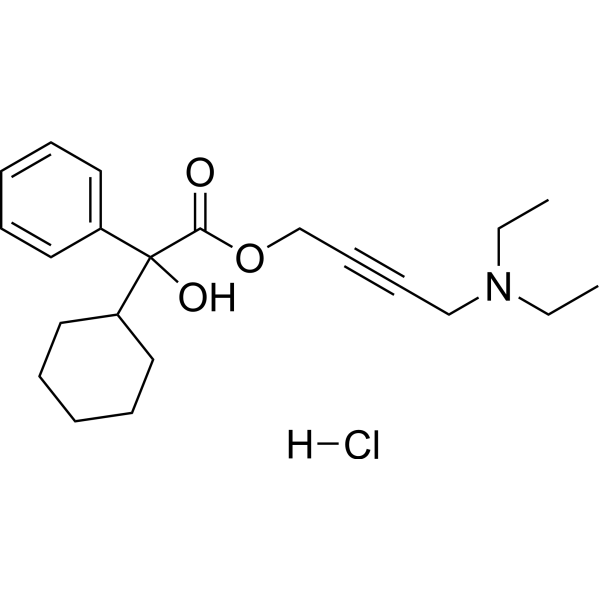
HY-B0267A
Oxybutynin chloridemAChR Antagonist -
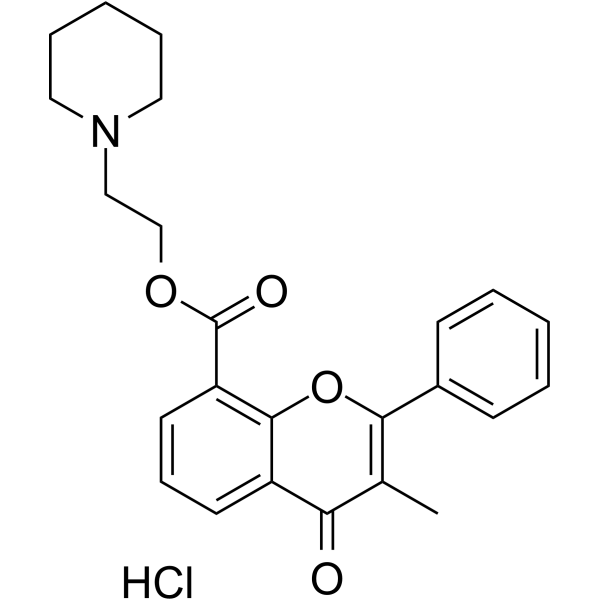
HY-B0549A
Flavoxate hydrochlorideCa Channel Inhibitor
Publications Citing Use of MedChemExpress (MCE) Solifenacin hydrochloride
More

Biological Activity
Description
IC50 & Target
|
mAChR2 |
mAChR1 |
mAChR3 |
In Vitro
Solifenacin hydrochloride (YM905 hydrochloride) is a novel muscarinic receptor antagonist with pKis of 7.6±0.056, 6.9±0.034 and 8.0±0.021 for M1, M2 and M3 receptors, respectively. In murine submandibular gland cells, the antagonistic effects of 100 nM Solifenacin hydrochloride and oxybutynin on Ca2+ mobilization evoked by varying doses of carbachol (CCh) are examined. Solifenacin hydrochloride does not shift the CCh dose-activation curve in a parallel manner whereas oxybutynin shows insurmountable antagonism. The pKb values are obtained as 7.4±0.17 for Solifenacin hydrochloride and 8.8±0.21 for oxybutynin[1].
MedChemExpress (MCE) has not independently confirmed the accuracy of these methods. They are for reference only. .
In Vivo
MedChemExpress (MCE) has not independently confirmed the accuracy of these methods. They are for reference only.


Chemical Information
-
CAS No. 180468-39-7
-
Appearance Solid
-
Molecular Weight 398.93
-
Formula C23H27ClN2O2
-
Color Light yellow to yellow
-
SMILES
O=C(O[C@H]1CN2CCC1CC2)N3[C@H](C4=C(CC3)C=CC=C4)C5=CC=CC=C5.Cl
-
Synonyms
YM905 hydrochloride
-
Shipping
Room temperature in continental US; may vary elsewhere.
-
Storage
4°C, sealed storage, away from moisture
* In solvent : -80°C, 6 months; -20°C, 1 month (sealed storage, away from moisture)


Publications (3)
-
Journal Impact Factor
-
Most Recent
-
Int J Nanomedicine
Lactobacillus-Polydopamine System for Targeted Drug Delivery in Overactive Bladder: Evidence from Bladder Cell Spheroids, Rat Models, and Urinary Microbiome Profiling. [Abstract]2024 Aug 15:19:8353-8371. PMID: 39161357 -
J Chem Neuroanat
Solifenacin promotes remyelination in cuprizone mouse model by inhibiting the Wnt/β-catenin signaling pathway. [Abstract]2024 Mar:136:102375. PMID: 38123002 -
Neurourol Urodyn
Combined treatment with a β3 -adrenergic receptor agonist and a muscarinic receptor antagonist inhibits detrusor overactivity induced by cold stress in spontaneously hypertensive rats. [Abstract]2017 Apr;36(4):1026-1033. PMID: 27367573


Solvent & Solubility
In Vitro:
DMSO : 50 mg/mL (125.34 mM; Need ultrasonic; Hygroscopic DMSO has a significant impact on the solubility of product, please use newly opened DMSO)
H2O : 50 mg/mL (125.34 mM; Need ultrasonic)
Please refer to the solubility information to select the appropriate solvent. Once prepared, please aliquot and store the solution to prevent product inactivation from repeated freeze-thaw cycles.
Storage method and period of stock solution: -80°C, 6 months; -20°C, 1 month (sealed storage, away from moisture). When stored at -80°C, please use it within 6 months. When stored at -20°C, please use it within 1 month.
* Note: If you choose water as the stock solution, please dilute it to the working solution, then filter and sterilize it with a 0.22 μm filter before use.
Please refer to the solubility information to select the appropriate solvent. Once prepared, please aliquot and store the solution to prevent product inactivation from repeated freeze-thaw cycles.
Storage method and period of stock solution: -80°C, 6 months; -20°C, 1 month (sealed storage, away from moisture). When stored at -80°C, please use it within 6 months. When stored at -20°C, please use it within 1 month.
* Note: If you choose water as the stock solution, please dilute it to the working solution, then filter and sterilize it with a 0.22 μm filter before use.
Concentration (start) × Volume (start) = Concentration (final) × Volume (final)
In Vivo:
Select the appropriate dissolution method based on your experimental animal and administration route.
- For the following dissolution methods, please ensure to first prepare a clear stock solution using an In Vitro approach and then sequentially add co-solvents:
- To ensure reliable experimental results, the clarified stock solution can be appropriately stored based on storage conditions. As for the working solution for In Vivo experiments, it is recommended to prepare freshly and use it on the same day.
- The percentages shown for the solvents indicate their volumetric ratio in the final prepared solution. If precipitation or phase separation occurs during preparation, heat and/or sonication can be used to aid dissolution.
Add each solvent one by one: 10% DMSO 40% PEG300 5% Tween-80 45% Saline
Solubility: ≥ 2.75 mg/mL (6.89 mM); Clear solution
This protocol yields a clear solution of ≥ 2.75 mg/mL (saturation unknown).
Taking 1 mL working solution as an example, add 100 μL DMSO stock solution (27.5 mg/mL) to 400 μL PEG300, and mix evenly; then add 50 μL Tween-80 and mix evenly; then add 450 μL Saline to adjust the volume to 1 mL.
Preparation of Saline: Dissolve 0.9 g sodium chloride in ddH₂O and dilute to 100 mL to obtain a clear Saline solution.
Add each solvent one by one: 10% DMSO 90% (20% SBE-β-CD in Saline)
Solubility: ≥ 2.75 mg/mL (6.89 mM); Clear solution
This protocol yields a clear solution of ≥ 2.75 mg/mL (saturation unknown).
Taking 1 mL working solution as an example, add 100 μL DMSO stock solution (27.5 mg/mL) to 900 μL 20% SBE-β-CD in Saline, and mix evenly.
Preparation of 20% SBE-β-CD in Saline (4°C, storage for one week): 2 g SBE-β-CD powder is dissolved in 10 mL Saline, completely dissolve until clear.
For the following dissolution methods, please prepare the working solution directly:
It is recommended to prepare fresh solutions and use them promptly within a short period of time.
The percentages shown for the solvents indicate their volumetric ratio in the final prepared solution. If precipitation or phase separation occurs during preparation, heat and/or sonication can be used to aid dissolution.
Add each solvent one by one: PBS
Solubility: 100 mg/mL (250.67 mM); Clear solution; Need ultrasonic
In Vivo Dissolution Calculator
Please enter the basic information of animal experiments:
-
-
-
-
Recommended: Prepare an additional quantity of animals to account for potential losses during experiments.
Working solution concentration: 0.22 mg/mL
This product has good water solubility, please refer to the measured solubility data in water/PBS/Saline for details.


Purity & Documentation
-
Data Sheet (277 KB)
-
SDS (252 KB)
- English - EN (252 KB)
- Français - FR (252 KB)
- Deutsch - DE (252 KB)
- Norwegian - NO (252 KB)
- Español - ES (252 KB)
- Swedish - SV (252 KB)
- Italian - IT (252 KB)
- Korean - KR (252 KB)
- Portuguese - PT (252 KB)
-
Handling Instructions (2659 KB)
References
[2]. Krishna SR, Rao BM, Rao NS.A validated rapid stability-indicating method for the determination of related substances in solifenacin succinate by ultra-fast liquid chromatography.J Chromatogr Sci. 2010 Nov;48(10):807-10. [Content Brief]
[3]. Ohtake A, Sato S, Sasamata M, Miyata K.The forefront for novel therapeutic agents based on the pathophysiology of lower urinary tract dysfunction: ameliorative effect of solifenacin succinate (Vesicare), a bladder-selective antimuscarinic agent, on overactive bladder symptoms, especially urgency episodes.J Pharmacol Sci. 2010;112(2):135-41. Epub 2010 Feb 4. [Content Brief]
[4]. Hoffstetter S, Leong FC.Solifenacin succinate for the treatment of overactive bladder.Expert Opin Drug Metab Toxicol. 2009 Mar;5(3):345-50. [Content Brief]
[5]. Choo MS, Lee JZ, Lee JB, Kim YH, Jung HC, Lee KS, Kim JC, Seo JT, Paick JS, Kim HJ, Na YG, Lee JG.Efficacy and safety of solifenacin succinate in Korean patients with overactive bladder: a randomised, prospective, double-blind, multicentre study.Int J Clin Pract. 2008 Nov;62(11):1675-83. [Content Brief]


Complete Stock Solution Preparation Table
Please refer to the solubility information to select the appropriate solvent. Once prepared, please aliquot and store the solution to prevent product inactivation from repeated freeze-thaw cycles.
Storage method and period of stock solution: -80°C, 6 months; -20°C, 1 month (sealed storage, away from moisture). When stored at -80°C, please use it within 6 months. When stored at -20°C, please use it within 1 month.
| Optional Solvent | Concentration Solvent Mass | 1 mg | 5 mg | 10 mg | 25 mg |
|---|---|---|---|---|---|
| DMSO / H2O | 1 mM | 2.5067 mL | 12.5335 mL | 25.0671 mL | 62.6676 mL |
| 5 mM | 0.5013 mL | 2.5067 mL | 5.0134 mL | 12.5335 mL | |
| 10 mM | 0.2507 mL | 1.2534 mL | 2.5067 mL | 6.2668 mL | |
| 15 mM | 0.1671 mL | 0.8356 mL | 1.6711 mL | 4.1778 mL | |
| 20 mM | 0.1253 mL | 0.6267 mL | 1.2534 mL | 3.1334 mL | |
| 25 mM | 0.1003 mL | 0.5013 mL | 1.0027 mL | 2.5067 mL | |
| 30 mM | 0.0836 mL | 0.4178 mL | 0.8356 mL | 2.0889 mL | |
| 40 mM | 0.0627 mL | 0.3133 mL | 0.6267 mL | 1.5667 mL | |
| 50 mM | 0.0501 mL | 0.2507 mL | 0.5013 mL | 1.2534 mL | |
| 60 mM | 0.0418 mL | 0.2089 mL | 0.4178 mL | 1.0445 mL | |
| 80 mM | 0.0313 mL | 0.1567 mL | 0.3133 mL | 0.7833 mL | |
| 100 mM | 0.0251 mL | 0.1253 mL | 0.2507 mL | 0.6267 mL |
* Note: If you choose water as the stock solution, please dilute it to the working solution, then filter and sterilize it with a 0.22 μm filter before use.


Solifenacin hydrochloride Related Classifications
HY-I0230 Related Classifications
 Powered by Bioz