Search Result
Results for "
Mrp2 Inhibitors
" in MedChemExpress (MCE) Product Catalog:
2
Biochemical Assay Reagents
3
Isotope-Labeled Compounds
| Cat. No. |
Product Name |
Target |
Research Areas |
Chemical Structure |
-
- HY-N1423
-
|
|
P-glycoprotein
Bcl-2 Family
G protein-coupled Bile Acid Receptor 1
Endogenous Metabolite
Bacterial
Apoptosis
FXR
Caspase
MDM-2/p53
LPL Receptor
|
Metabolic Disease
Inflammation/Immunology
Cancer
|
|
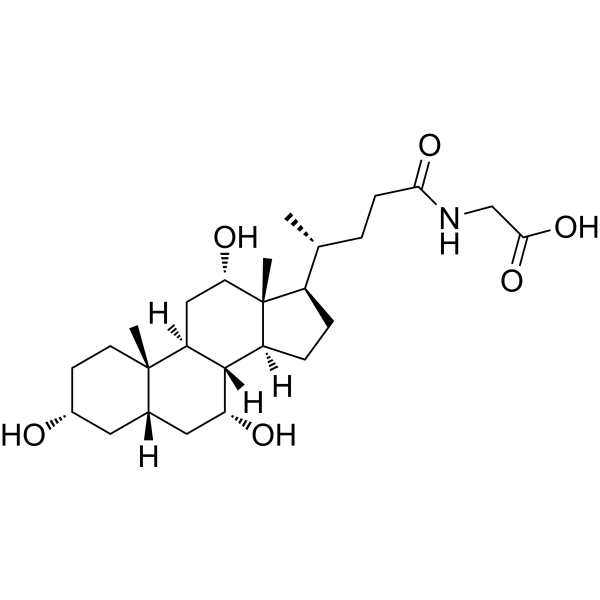
Glycocholic acid is a bile acid derivative. Glycocholic acid downregulates MDR1, Bcl-2, MRP1, MRP2 and FXR, upregulates Bax, p53, caspase-9, caspase-3, TGR5 and S1PR2. Glycocholic acid inhibits multidrug resistance and efflux pumps, induces mitochondrial apoptosis, and enhances chemosensitivity. Glycocholic acid modulates related bile acid receptor signaling. Glycocholic acid suppresses growth and conjugation of Enterobacteriaceae and increases their antibiotic susceptibility. Glycocholic acid can be used for the research of colon adenocarcinoma and cholangiocarcinoma (CCA) .
|
-
-
- HY-N0217
-
-
-
- HY-108347
-
|
|
P-glycoprotein
BCRP
|
Metabolic Disease
|
|
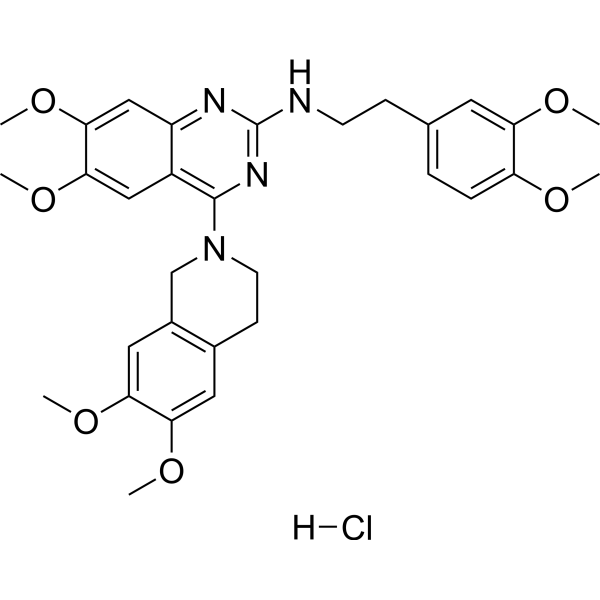
CP-100356 hydrochloride is an orally active dual MDR1 (P-gp)/BCRP inhibitor, with an IC50s of 0.5 and 1.5 µM for inhibiting MDR1-mediated Calcein-AM transport and BCRP-mediated Prazosin transport, respectively. CP-100356 hydrochloride is also a weak inhibitor of OATP1B1 (IC50=∼66 µM). CP-100356 hydrochloride is devoid of inhibition against MRP2 and major human P450 enzymes (IC50>15 µM) .
|
-
-
- HY-N1423A
-
|
|
P-glycoprotein
Bcl-2 Family
G protein-coupled Bile Acid Receptor 1
Bacterial
Apoptosis
FXR
Caspase
MDM-2/p53
LPL Receptor
Endogenous Metabolite
|
Metabolic Disease
Cancer
|
|
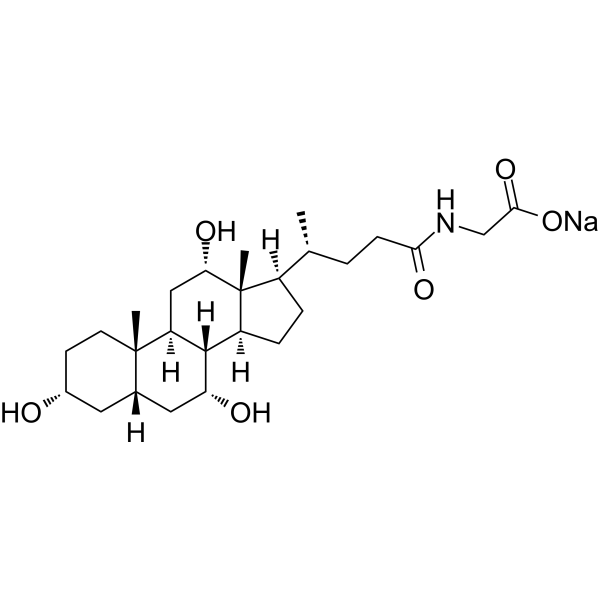
Glycocholic acid sodium is a bile acid derivative. Glycocholic acid downregulates MDR1, Bcl-2, MRP1, MRP2 and FXR, upregulates Bax, p53, caspase-9, caspase-3, TGR5 and S1PR2. Glycocholic acid sodium inhibits multidrug resistance and efflux pumps, induces mitochondrial apoptosis, and enhances chemosensitivity. Glycocholic acid sodium modulates related bile acid receptor signaling. Glycocholic acid sodium suppresses growth and conjugation of Enterobacteriaceae and increases their antibiotic susceptibility. Glycocholic acid sodium can be used for the research of colon adenocarcinoma and cholangiocarcinoma (CCA) .
|
-
-
- HY-N1423S
-
|
|
Isotope-Labeled Compounds
P-glycoprotein
Bcl-2 Family
G protein-coupled Bile Acid Receptor 1
Endogenous Metabolite
Bacterial
Apoptosis
FXR
Caspase
MDM-2/p53
LPL Receptor
|
Metabolic Disease
Cancer
|
|
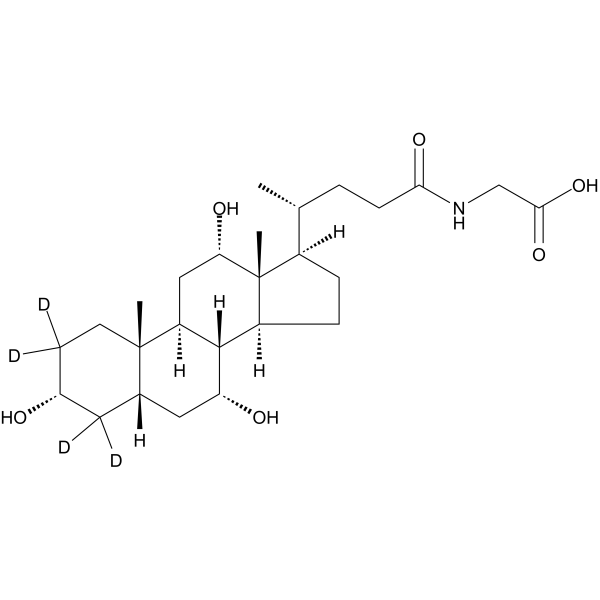
Glycocholic acid-d4 is the deuterium labeled Glycocholic acid (HY-N1423). Glycocholic acid is a bile acid derivative. Glycocholic acid downregulates MDR1, Bcl-2, MRP1, MRP2 and FXR, upregulates Bax, p53, caspase-9, caspase-3, TGR5 and S1PR2. Glycocholic acid inhibits multidrug resistance and efflux pumps, induces mitochondrial apoptosis, and enhances chemosensitivity. Glycocholic acid modulates related bile acid receptor signaling. Glycocholic acid suppresses growth and conjugation of Enterobacteriaceae and increases their antibiotic susceptibility. Glycocholic acid can be used for the research of colon adenocarcinoma and cholangiocarcinoma (CCA).
|
-
-
- HY-D1078
-
|
|
Fluorescent Dye
Reactive Oxygen Species (ROS)
P-glycoprotein
|
Others
|
|
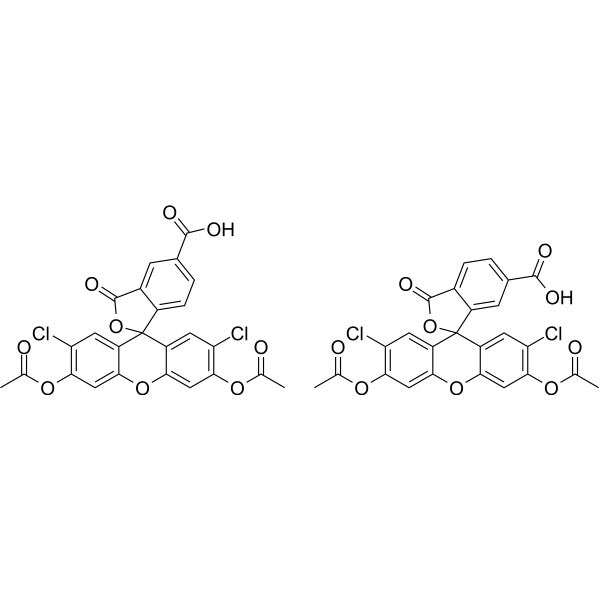
5 (6)-Carboxy-2',7'-dichlorofluorescein diacetate is a fluorescein-based reactive oxygen species (ROS) probe and also a MRP2 substrate. 5 (6)-Carboxy-2',7'-dichlorofluorescein diacetate serves as a substrate for intracellular esterases, which cleave its acetate groups to generate a fluorescent product capable of detecting intracellular ROS. 5 (6)-Carboxy-2',7'-dichlorofluorescein diacetate is ATP-dependent and is transported via a single MRP2 binding site; it competes with LTC4 for MRP2 binding sites and inhibits MRP2-mediated LTC4 transport (Ex/Em = 496/525 nm) .
|
-
-
- HY-B0501
-
|
CP 76136-27
|
P-glycoprotein
Bacterial
Antibiotic
|
Infection
|
|
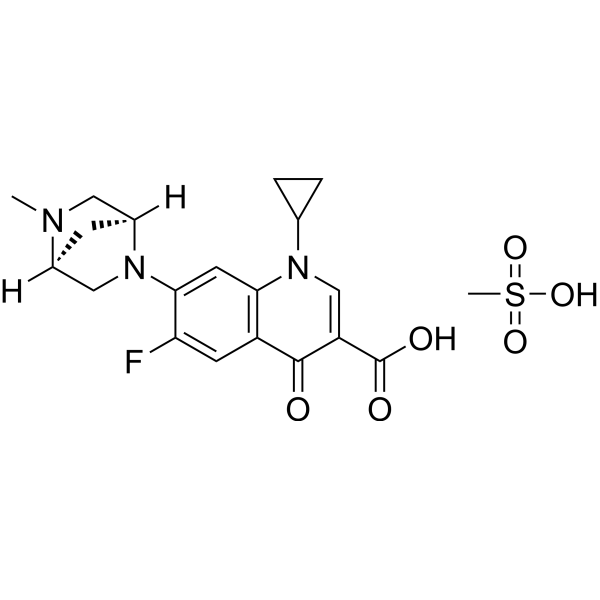
Danofloxacin mesylate (CP 76136-27) is a fluoroquinolone used as a veterinary drug. Danofloxacin mesylate has a broad spectrum of bactericidal activity, mainly inhibiting the DNA cycloenzyme of the bacteria. In addition, Danofloxacin mesylate is a substrate for ATP-dependent efflux transporters (P-gp and MRP2) .
|
-
-
- HY-N0248
-
|
|
HCV
P-glycoprotein
|
Infection
Cancer
|
|
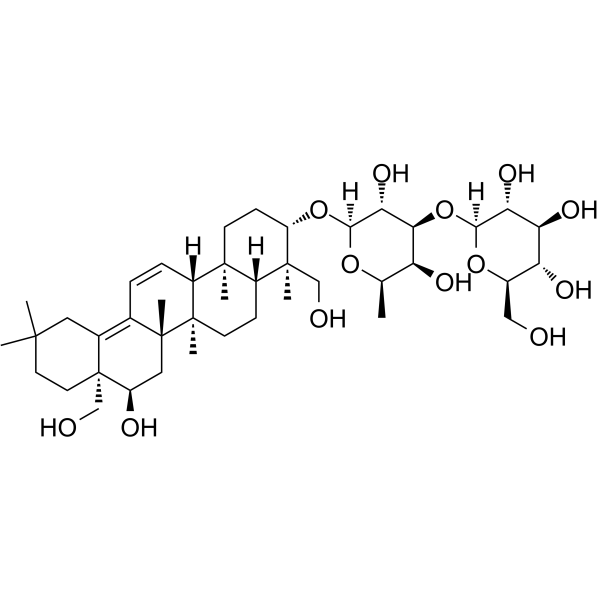
Saikosaponin B2 is an antiviral and anticancer agent that regulates multiple transporters (such as various solute carriers and ATP-binding cassette transporters including MRP1, MRP2, and OCT2). Saikosaponin B2 is isolated from the plant glycoside component of the roots of Bupleurum scorzonerifolium. Saikosaponin B2 enhances the liver targeting of anticancer drugs via vinegar-baked Radix Bupleuri. Saikosaponin B2 inhibits HCV entry, replication, and translation, is effective against Daclatasvir (HY-10466)-resistant strains, and exerts a synergistic effect when used in combination with Daclatasvir. Saikosaponin B2 is commonly used in studies related to hepatocellular carcinoma and HCV infection .
|
-
-
- HY-W353102
-
|
|
Endogenous Metabolite
P-glycoprotein
|
Metabolic Disease
|
|
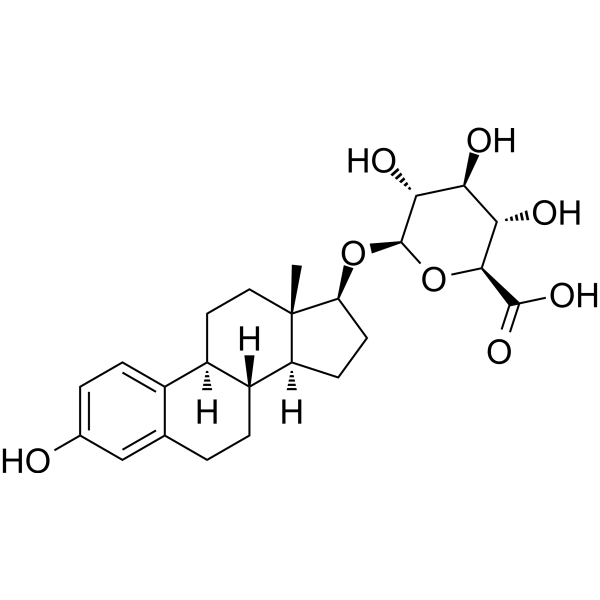
Estradiol 17-(β-D-Glucuronide) is a D-ring glucuronide metabolite of natural estrogen formed in the liver. Estradiol 17-(β-D-Glucuronide) is a substrate of the organic anion-transporting polypeptide family (Oatp) and multidrug resistance-associated protein 2 (Mrp2). Estradiol 17-(β-D-Glucuronide) regulates MRP8-mediated transport processes and inhibits MRP8-mediated transport of dehydroepiandrosterone 3-sulfate and taurocholic acid. Estradiol 17-(β-D-Glucuronide) induces immediate, reversible reduction of bile flow and acute intrahepatic cholestasis in female rats without altering the bile acid composition in bile. Estradiol 17-(β-D-Glucuronide) can be used in studies related to intrahepatic cholestasis .
|
-
-
- HY-129987
-
|
|
Endogenous Metabolite
P-glycoprotein
|
Metabolic Disease
|
|
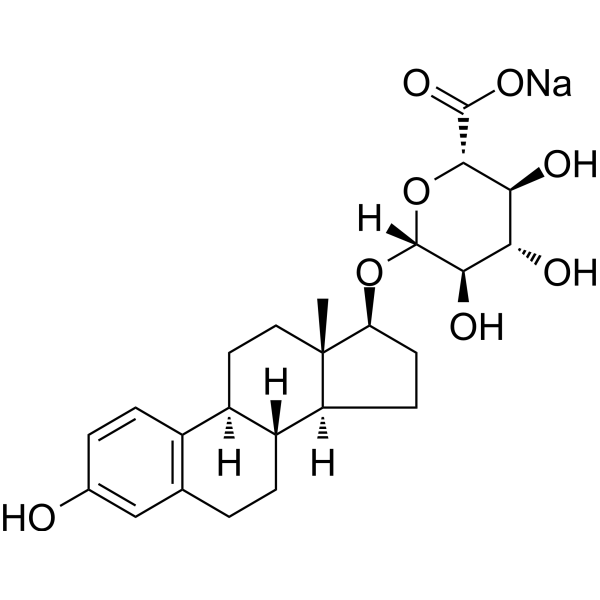
Estradiol 17-(β-D-Glucuronide) sodium is a D-ring glucuronide metabolite of natural estrogen formed in the liver. Estradiol 17-(β-D-Glucuronide) sodium is a substrate of the organic anion-transporting polypeptide family (Oatp) and multidrug resistance-associated protein 2 (Mrp2). Estradiol 17-(β-D-Glucuronide) sodium regulates MRP8-mediated transport processes and inhibits MRP8-mediated transport of dehydroepiandrosterone 3-sulfate and taurocholic acid. Estradiol 17-(β-D-Glucuronide) sodium induces immediate, reversible reduction of bile flow and acute intrahepatic cholestasis in female rats without altering the bile acid composition in bile. Estradiol 17-(β-D-Glucuronide) sodium can be used in studies related to intrahepatic cholestasis .
|
-
-
- HY-W013105
-
|
N-Cholylglycine sodium salt, 98%
|
Bcl-2 Family
Caspase
Endogenous Metabolite
Bacterial
MDM-2/p53
P-glycoprotein
LPL Receptor
FXR
G protein-coupled Bile Acid Receptor 1
Apoptosis
|
Others
|
|
Sodium glycocholate hydrate, 98% is a bile acid derivative. Sodium glycocholate hydrate, 98% downregulates MDR1, Bcl-2, MRP1, MRP2 and FXR, upregulates Bax, p53, caspase-9, caspase-3, TGR5 and S1PR2. Sodium glycocholate hydrate, 98% inhibits multidrug resistance and efflux pumps, induces mitochondrial apoptosis, and enhances chemosensitivity. Sodium glycocholate hydrate, 98% modulates related bile acid receptor signaling. Sodium glycocholate hydrate, 98% suppresses growth and conjugation of Enterobacteriaceae and increases their antibiotic susceptibility. Sodium glycocholate hydrate, 98% can be used for the research of colon adenocarcinoma and cholangiocarcinoma (CCA) .
|
-

-
- HY-N1423B
-
|
|
Endogenous Metabolite
Caspase
G protein-coupled Bile Acid Receptor 1
LPL Receptor
MDM-2/p53
Bcl-2 Family
P-glycoprotein
FXR
Bacterial
Apoptosis
|
Metabolic Disease
Inflammation/Immunology
Cancer
|
|
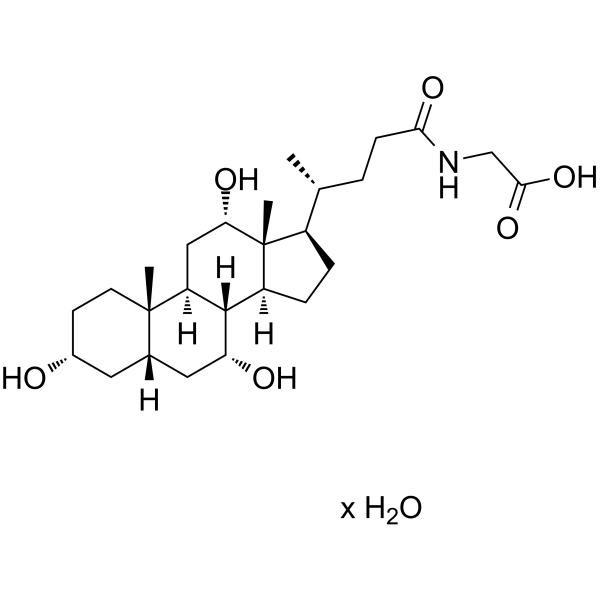
Glycocholic acid hydrate is a bile acid derivative. Glycocholic acid hydrate downregulates MDR1, Bcl-2, MRP1, MRP2 and FXR, upregulates Bax, p53, caspase-9, caspase-3, TGR5 and S1PR2. Glycocholic acid hydrate inhibits multidrug resistance and efflux pumps, induces mitochondrial apoptosis, and enhances chemosensitivity. Glycocholic acid hydrate modulates related bile acid receptor signaling. Glycocholic acid hydrate suppresses growth and conjugation of Enterobacteriaceae and increases their antibiotic susceptibility. Glycocholic acid hydrate can be used for the research of colon adenocarcinoma and cholangiocarcinoma (CCA) .
|
-
-
- HY-N4108
-
|
|
P-glycoprotein
|
Inflammation/Immunology
Cancer
|
|
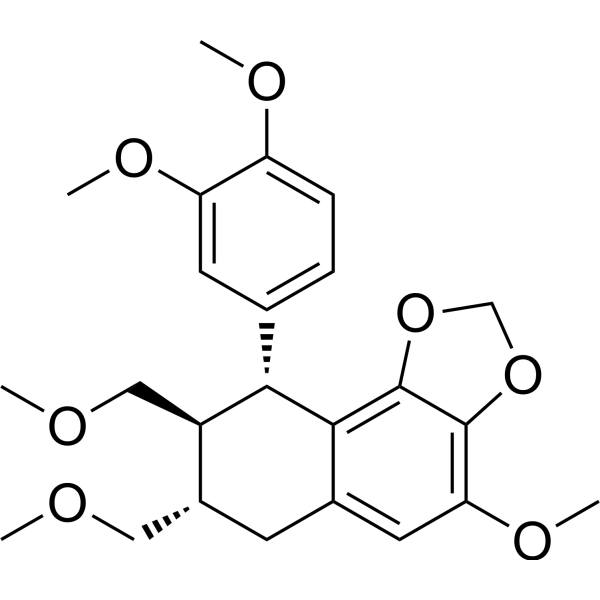
Hypophyllanthin is a major lignan in Phyllanthus spp, with strong anti-inflammatory activity. Hypophyllanthin directly inhibits P-glycoprotein (P-gp) activity and did not interfere with multidrug resistance protein 2 (MRP2) activity .
|
-
-
- HY-16773
-
|
GS-9451
|
HCV Protease
BCRP
P-glycoprotein
|
Infection
|
|
Vedroprevir (GS-9451) is an inhibitor for HCV NS3/4A protease with an IC50 of 3.2 nM. Vedroprevir is also an inhibitor for breast cancer resistant protein (BCRP) with an IC50 of 1.4 μM. Vedroprevir inhibits P-gp, MRP1 and MRP2 with IC50 of 34, 14.9 and 12 μM, respectively. Vedroprevir exhibits good pharmacokinetic characteristics in rats and dogs .
|
-

-
- HY-108347A
-
|
|
P-glycoprotein
BCRP
|
Metabolic Disease
|
|
CP-100356 is an orally active dual MDR1 (P-gp)/BCRP inhibitor, with an IC50s of 0.5 and 1.5 µM for inhibiting MDR1-mediated Calcein-AM transport and BCRP-mediated Prazosin transport, respectively. CP-100356 is also a weak inhibitor of OATP1B1 (IC50 = ∼66 µM). CP-100356 is devoid of inhibition against MRP2 and major human P450 enzymes (IC50 > 15 µM) .
|
-

-
- HY-W702907
-
|
|
P-glycoprotein
|
Metabolic Disease
|
|
DM-4103 is a major metabolite of Tolvaptan (HY-17000) that is metabolized primarily by the CYP3A4 enzyme in the liver. DM-4103 inhibits the ability of human liver transporters NTCP, BSEP, MRP2, MRP3, MRP4 (IC50 values are 16.3, 4.15, 51.0, 44.6, 4.26 μM, respectively) and bile acid transport in SCHH cells. DM-4103 can be used in the study of autosomal dominant polycystic kidney disease (ADPKD) .
|
-

-
- HY-N1423S1
-
|
|
Isotope-Labeled Compounds
P-glycoprotein
Bcl-2 Family
G protein-coupled Bile Acid Receptor 1
Endogenous Metabolite
Bacterial
Apoptosis
FXR
Caspase
MDM-2/p53
LPL Receptor
|
Metabolic Disease
Cancer
|
|
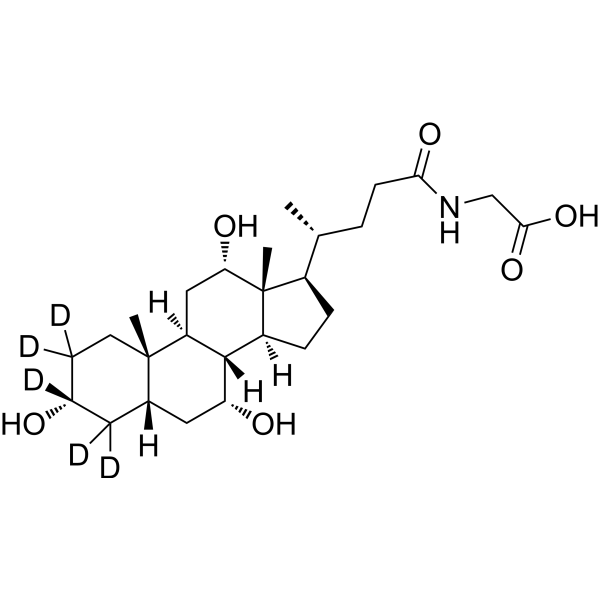
Glycocholic acid-d5 is the deuterium labeled Glycocholic acid (HY-N1423). Glycocholic acid is a bile acid derivative. Glycocholic acid downregulates MDR1, Bcl-2, MRP1, MRP2 and FXR, upregulates Bax, p53, caspase-9, caspase-3, TGR5 and S1PR2. Glycocholic acid inhibits multidrug resistance and efflux pumps, induces mitochondrial apoptosis, and enhances chemosensitivity. Glycocholic acid modulates related bile acid receptor signaling. Glycocholic acid suppresses growth and conjugation of Enterobacteriaceae and increases their antibiotic susceptibility. Glycocholic acid can be used for the research of colon adenocarcinoma and cholangiocarcinoma (CCA).
|
-
-
- HY-N4108R
-
|
|
Reference Standards
P-glycoprotein
|
Inflammation/Immunology
Cancer
|
|
Hypophyllanthin (Standard) is the analytical standard of Hypophyllanthin. This product is intended for research and analytical applications. Hypophyllanthin is a major lignan in Phyllanthus spp, with strong anti-inflammatory activity. Hypophyllanthin directly inhibits P-glycoprotein (P-gp) activity and did not interfere with multidrug resistance protein 2 (MRP2) activity .
|
-

-
- HY-B0501R
-
|
CP 76136-27 (Standard)
|
Reference Standards
Bacterial
Antibiotic
|
Infection
|
|
Danofloxacin mesylate (Standard) is the analytical standard of Danofloxacin mesylate. This product is intended for research and analytical applications. Danofloxacin mesylate (CP 76136-27) is a fluoroquinolone used as a veterinary drug. Danofloxacin mesylate has a broad spectrum of bactericidal activity, mainly inhibiting the DNA cycloenzyme of the bacteria. In addition, Danofloxacin mesylate is a substrate for ATP-dependent efflux transporters (P-gp and MRP2) .
|
-

-
- HY-N1423AR
-
|
|
Reference Standards
P-glycoprotein
Bcl-2 Family
G protein-coupled Bile Acid Receptor 1
Bacterial
Apoptosis
FXR
Caspase
MDM-2/p53
LPL Receptor
Endogenous Metabolite
|
Metabolic Disease
Cancer
|
|
Glycocholic acid (sodium) (Standard) is the analytical standard of Glycocholic acid sodium (HY-N1423A). This product is intended for research and analytical applications. Glycocholic acid sodium is a bile acid derivative. Glycocholic acid downregulates MDR1, Bcl-2, MRP1, MRP2 and FXR, upregulates Bax, p53, caspase-9, caspase-3, TGR5 and S1PR2. Glycocholic acid sodium inhibits multidrug resistance and efflux pumps, induces mitochondrial apoptosis, and enhances chemosensitivity. Glycocholic acid sodium modulates related bile acid receptor signaling. Glycocholic acid sodium suppresses growth and conjugation of Enterobacteriaceae and increases their antibiotic susceptibility. Glycocholic acid sodium can be used for the research of colon adenocarcinoma and cholangiocarcinoma (CCA).
|
-

-
- HY-W754548
-
|
|
Isotope-Labeled Compounds
Endogenous Metabolite
P-glycoprotein
Bcl-2 Family
G protein-coupled Bile Acid Receptor 1
Bacterial
Apoptosis
FXR
Caspase
MDM-2/p53
LPL Receptor
|
Metabolic Disease
Cancer
|
|
Glycocholic acid- 13C2,d4 is the deuterium labeled and 13C-labeled Glycocholic acid (HY-N1423). Glycocholic acid is a bile acid derivative. Glycocholic acid downregulates MDR1, Bcl-2, MRP1, MRP2 and FXR, upregulates Bax, p53, caspase-9, caspase-3, TGR5 and S1PR2. Glycocholic acid inhibits multidrug resistance and efflux pumps, induces mitochondrial apoptosis, and enhances chemosensitivity. Glycocholic acid modulates related bile acid receptor signaling. Glycocholic acid suppresses growth and conjugation of Enterobacteriaceae and increases their antibiotic susceptibility. Glycocholic acid can be used for the research of colon adenocarcinoma and cholangiocarcinoma (CCA).
|
-

-
- HY-N0248R
-
|
|
Reference Standards
P-glycoprotein
HCV
|
Infection
Cancer
|
|
Saikosaponin B2 (Standard) is the analytical standard of Saikosaponin B2. This product is intended for research and analytical applications. Saikosaponin B2 is an antiviral and anticancer agent that regulates multiple transporters (such as various solute carriers and ATP-binding cassette transporters including MRP1, MRP2, and OCT2). Saikosaponin B2 is isolated from the plant glycoside component of the roots of Bupleurum scorzonerifolium. Saikosaponin B2 enhances the liver targeting of anticancer drugs via vinegar-baked Radix Bupleuri. Saikosaponin B2 inhibits HCV entry, replication, and translation, is effective against Daclatasvir (HY-10466)-resistant strains, and exerts a synergistic effect when used in combination with Daclatasvir. Saikosaponin B2 is commonly used in studies related to hepatocellular carcinoma and HCV infection .
|
-

-
- HY-108347R
-
|
|
Reference Standards
P-glycoprotein
BCRP
|
Metabolic Disease
|
|
CP-100356 hydrochloride (Standard) is the analytical standard of CP-100356 (hydrochloride) (HY-108347). This product is intended for research and analytical applications. CP-100356 hydrochloride is an orally active dual MDR1 (P-gp)/BCRP inhibitor, with an IC50s of 0.5 and 1.5 µM for inhibiting MDR1-mediated Calcein-AM transport and BCRP-mediated Prazosin transport, respectively. CP-100356 hydrochloride is also a weak inhibitor of OATP1B1 (IC50=∼66 µM). CP-100356 hydrochloride is devoid of inhibition against MRP2 and major human P450 enzymes (IC50>15 µM) .
|
-

| Cat. No. |
Product Name |
Type |
-
- HY-D1078
-
|
|
Fluorescent Dyes
|
|
5 (6)-Carboxy-2',7'-dichlorofluorescein diacetate is a fluorescein-based reactive oxygen species (ROS) probe and also a MRP2 substrate. 5 (6)-Carboxy-2',7'-dichlorofluorescein diacetate serves as a substrate for intracellular esterases, which cleave its acetate groups to generate a fluorescent product capable of detecting intracellular ROS. 5 (6)-Carboxy-2',7'-dichlorofluorescein diacetate is ATP-dependent and is transported via a single MRP2 binding site; it competes with LTC4 for MRP2 binding sites and inhibits MRP2-mediated LTC4 transport (Ex/Em = 496/525 nm) .
|
| Cat. No. |
Product Name |
Type |
-
- HY-D1078
-
|
|
Biochemical Assay Reagents
|
|
5 (6)-Carboxy-2',7'-dichlorofluorescein diacetate is a fluorescein-based reactive oxygen species (ROS) probe and also a MRP2 substrate. 5 (6)-Carboxy-2',7'-dichlorofluorescein diacetate serves as a substrate for intracellular esterases, which cleave its acetate groups to generate a fluorescent product capable of detecting intracellular ROS. 5 (6)-Carboxy-2',7'-dichlorofluorescein diacetate is ATP-dependent and is transported via a single MRP2 binding site; it competes with LTC4 for MRP2 binding sites and inhibits MRP2-mediated LTC4 transport (Ex/Em = 496/525 nm) .
|
-
- HY-W013105
-
|
N-Cholylglycine sodium salt, 98%
|
Biochemical Assay Reagents
|
|
Sodium glycocholate hydrate, 98% is a bile acid derivative. Sodium glycocholate hydrate, 98% downregulates MDR1, Bcl-2, MRP1, MRP2 and FXR, upregulates Bax, p53, caspase-9, caspase-3, TGR5 and S1PR2. Sodium glycocholate hydrate, 98% inhibits multidrug resistance and efflux pumps, induces mitochondrial apoptosis, and enhances chemosensitivity. Sodium glycocholate hydrate, 98% modulates related bile acid receptor signaling. Sodium glycocholate hydrate, 98% suppresses growth and conjugation of Enterobacteriaceae and increases their antibiotic susceptibility. Sodium glycocholate hydrate, 98% can be used for the research of colon adenocarcinoma and cholangiocarcinoma (CCA) .
|
| Cat. No. |
Product Name |
Category |
Target |
Chemical Structure |
-
- HY-N1423
-
|
|
Structural Classification
Human Gut Microbiota Metabolites
Classification of Application Fields
Endogenous metabolite
Disease Research Fields
Steroids
Source Classification
Cancer
|
P-glycoprotein
Bcl-2 Family
G protein-coupled Bile Acid Receptor 1
Endogenous Metabolite
Bacterial
Apoptosis
FXR
Caspase
MDM-2/p53
LPL Receptor
|
|
Glycocholic acid is a bile acid derivative. Glycocholic acid downregulates MDR1, Bcl-2, MRP1, MRP2 and FXR, upregulates Bax, p53, caspase-9, caspase-3, TGR5 and S1PR2. Glycocholic acid inhibits multidrug resistance and efflux pumps, induces mitochondrial apoptosis, and enhances chemosensitivity. Glycocholic acid modulates related bile acid receptor signaling. Glycocholic acid suppresses growth and conjugation of Enterobacteriaceae and increases their antibiotic susceptibility. Glycocholic acid can be used for the research of colon adenocarcinoma and cholangiocarcinoma (CCA) .
|
-
-
- HY-N0217
-
-
-
- HY-N1423A
-
|
|
Triterpenes
Structural Classification
Terpenoids
Endogenous metabolite
Source Classification
|
P-glycoprotein
Bcl-2 Family
G protein-coupled Bile Acid Receptor 1
Bacterial
Apoptosis
FXR
Caspase
MDM-2/p53
LPL Receptor
Endogenous Metabolite
|
|
Glycocholic acid sodium is a bile acid derivative. Glycocholic acid downregulates MDR1, Bcl-2, MRP1, MRP2 and FXR, upregulates Bax, p53, caspase-9, caspase-3, TGR5 and S1PR2. Glycocholic acid sodium inhibits multidrug resistance and efflux pumps, induces mitochondrial apoptosis, and enhances chemosensitivity. Glycocholic acid sodium modulates related bile acid receptor signaling. Glycocholic acid sodium suppresses growth and conjugation of Enterobacteriaceae and increases their antibiotic susceptibility. Glycocholic acid sodium can be used for the research of colon adenocarcinoma and cholangiocarcinoma (CCA) .
|
-
-
- HY-N0248
-
-
-
- HY-W353102
-
-
-
- HY-129987
-
-
-
- HY-N1423B
-
|
|
Structural Classification
Classification of Application Fields
Metabolic Disease
Endogenous metabolite
Disease Research Fields
Steroids
Source Classification
|
Endogenous Metabolite
Caspase
G protein-coupled Bile Acid Receptor 1
LPL Receptor
MDM-2/p53
Bcl-2 Family
P-glycoprotein
FXR
Bacterial
Apoptosis
|
|
Glycocholic acid hydrate is a bile acid derivative. Glycocholic acid hydrate downregulates MDR1, Bcl-2, MRP1, MRP2 and FXR, upregulates Bax, p53, caspase-9, caspase-3, TGR5 and S1PR2. Glycocholic acid hydrate inhibits multidrug resistance and efflux pumps, induces mitochondrial apoptosis, and enhances chemosensitivity. Glycocholic acid hydrate modulates related bile acid receptor signaling. Glycocholic acid hydrate suppresses growth and conjugation of Enterobacteriaceae and increases their antibiotic susceptibility. Glycocholic acid hydrate can be used for the research of colon adenocarcinoma and cholangiocarcinoma (CCA) .
|
-
-
- HY-N4108
-
-
-
- HY-N4108R
-
-
-
- HY-N1423AR
-
|
|
Structural Classification
Endogenous metabolite
Steroids
Source Classification
|
Reference Standards
P-glycoprotein
Bcl-2 Family
G protein-coupled Bile Acid Receptor 1
Bacterial
Apoptosis
FXR
Caspase
MDM-2/p53
LPL Receptor
Endogenous Metabolite
|
|
Glycocholic acid (sodium) (Standard) is the analytical standard of Glycocholic acid sodium (HY-N1423A). This product is intended for research and analytical applications. Glycocholic acid sodium is a bile acid derivative. Glycocholic acid downregulates MDR1, Bcl-2, MRP1, MRP2 and FXR, upregulates Bax, p53, caspase-9, caspase-3, TGR5 and S1PR2. Glycocholic acid sodium inhibits multidrug resistance and efflux pumps, induces mitochondrial apoptosis, and enhances chemosensitivity. Glycocholic acid sodium modulates related bile acid receptor signaling. Glycocholic acid sodium suppresses growth and conjugation of Enterobacteriaceae and increases their antibiotic susceptibility. Glycocholic acid sodium can be used for the research of colon adenocarcinoma and cholangiocarcinoma (CCA).
|
-
-
- HY-N0248R
-
|
|
Triterpenes
Structural Classification
Terpenoids
Umbelliferae
Plants
Carphephorus corymbosus (Nutt.) Torr. & A.Gray
Source Classification
|
Reference Standards
P-glycoprotein
HCV
|
|
Saikosaponin B2 (Standard) is the analytical standard of Saikosaponin B2. This product is intended for research and analytical applications. Saikosaponin B2 is an antiviral and anticancer agent that regulates multiple transporters (such as various solute carriers and ATP-binding cassette transporters including MRP1, MRP2, and OCT2). Saikosaponin B2 is isolated from the plant glycoside component of the roots of Bupleurum scorzonerifolium. Saikosaponin B2 enhances the liver targeting of anticancer drugs via vinegar-baked Radix Bupleuri. Saikosaponin B2 inhibits HCV entry, replication, and translation, is effective against Daclatasvir (HY-10466)-resistant strains, and exerts a synergistic effect when used in combination with Daclatasvir. Saikosaponin B2 is commonly used in studies related to hepatocellular carcinoma and HCV infection .
|
-
| Cat. No. |
Product Name |
Chemical Structure |
-
- HY-N1423S
-
|
|
|
Glycocholic acid-d4 is the deuterium labeled Glycocholic acid (HY-N1423). Glycocholic acid is a bile acid derivative. Glycocholic acid downregulates MDR1, Bcl-2, MRP1, MRP2 and FXR, upregulates Bax, p53, caspase-9, caspase-3, TGR5 and S1PR2. Glycocholic acid inhibits multidrug resistance and efflux pumps, induces mitochondrial apoptosis, and enhances chemosensitivity. Glycocholic acid modulates related bile acid receptor signaling. Glycocholic acid suppresses growth and conjugation of Enterobacteriaceae and increases their antibiotic susceptibility. Glycocholic acid can be used for the research of colon adenocarcinoma and cholangiocarcinoma (CCA).
|
-
-
- HY-N1423S1
-
|
|
|
Glycocholic acid-d5 is the deuterium labeled Glycocholic acid (HY-N1423). Glycocholic acid is a bile acid derivative. Glycocholic acid downregulates MDR1, Bcl-2, MRP1, MRP2 and FXR, upregulates Bax, p53, caspase-9, caspase-3, TGR5 and S1PR2. Glycocholic acid inhibits multidrug resistance and efflux pumps, induces mitochondrial apoptosis, and enhances chemosensitivity. Glycocholic acid modulates related bile acid receptor signaling. Glycocholic acid suppresses growth and conjugation of Enterobacteriaceae and increases their antibiotic susceptibility. Glycocholic acid can be used for the research of colon adenocarcinoma and cholangiocarcinoma (CCA).
|
-
-
- HY-W754548
-
|
|
|
Glycocholic acid- 13C2,d4 is the deuterium labeled and 13C-labeled Glycocholic acid (HY-N1423). Glycocholic acid is a bile acid derivative. Glycocholic acid downregulates MDR1, Bcl-2, MRP1, MRP2 and FXR, upregulates Bax, p53, caspase-9, caspase-3, TGR5 and S1PR2. Glycocholic acid inhibits multidrug resistance and efflux pumps, induces mitochondrial apoptosis, and enhances chemosensitivity. Glycocholic acid modulates related bile acid receptor signaling. Glycocholic acid suppresses growth and conjugation of Enterobacteriaceae and increases their antibiotic susceptibility. Glycocholic acid can be used for the research of colon adenocarcinoma and cholangiocarcinoma (CCA).
|
-
Your information is safe with us. * Required Fields.
Inquiry Information
- Product Name:
- Cat. No.:
- Quantity:
- MCE Japan Authorized Agent:








