



Sodium glycocholate hydrate, 98%

Based on 1 Customer Validation
Sodium glycocholate hydrate, 98% is a bile acid derivative. Sodium glycocholate hydrate, 98% downregulates MDR1, Bcl-2, MRP1, MRP2 and FXR, upregulates Bax, p53, caspase-9, caspase-3, TGR5 and S1PR2. Sodium glycocholate hydrate, 98% inhibits multidrug resistance and efflux pumps, induces mitochondrial apoptosis, and enhances chemosensitivity. Sodium glycocholate hydrate, 98% modulates related bile acid receptor signaling. Sodium glycocholate hydrate, 98% suppresses growth and conjugation of Enterobacteriaceae and increases their antibiotic susceptibility. Sodium glycocholate hydrate, 98% can be used for the research of colon adenocarcinoma and cholangiocarcinoma (CCA).
For research use only. We do not sell to patients.
- Purity : 99.93%
- CAS No.: 338950-81-5
- Formula: C26H43NO6.xH2O.Na
-
Storage:
4°C, sealed storage, away from moisture
* In solvent : -80°C, 6 months; -20°C, 1 month (sealed storage, away from moisture)


To place orders, for customer services and technical support, please contact: MedChemExpress USA
Tel: 609-228-6898 E-mail: [email protected] [email protected]


-
 Biological Activity
-
Chemical Information
-
Solvent & Solubility
- Protocols
- Purity & Documentation
- References
-
 Help & FAQs


-
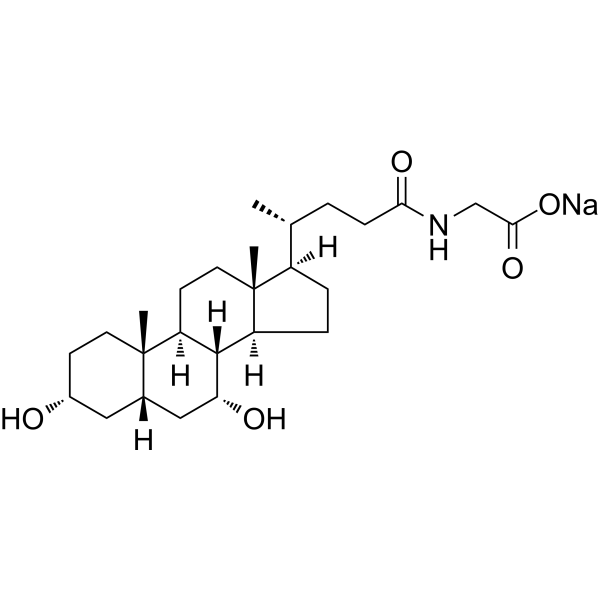
HY-N2334A
Glycochenodeoxycholic acid sodium saltEndogenous Metabolite -
HY-B0172
Lithocholic acidAutophagy Inducer -
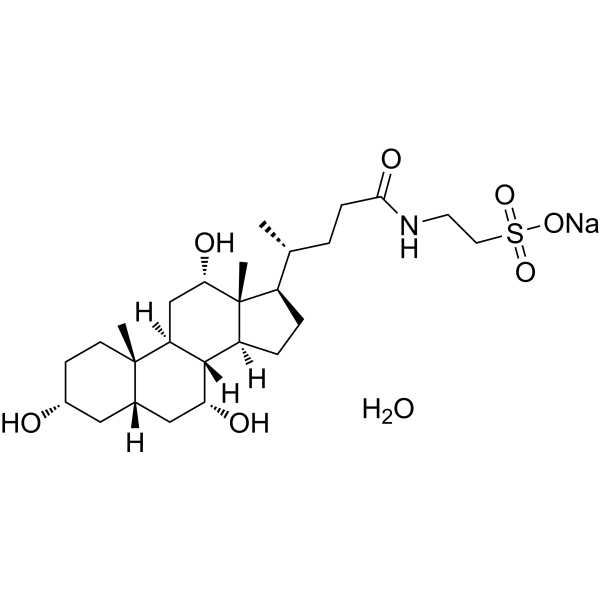
HY-B1131
Taurocholic acid sodium salt hydrateEndogenous Metabolite -
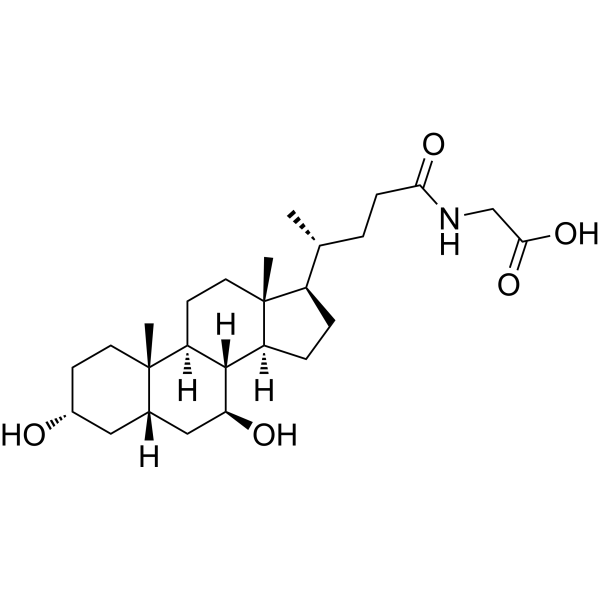
HY-N1424
Glycoursodeoxycholic acidEndogenous Metabolite -
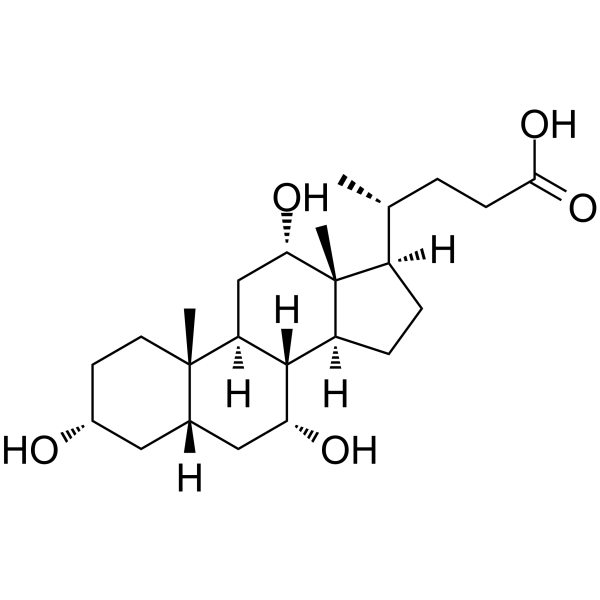
HY-N0324
Cholic acidEndogenous Metabolite -

HY-N1424R
Glycoursodeoxycholic acid (Standard)Endogenous Metabolite -

HY-N2334AR
Glycochenodeoxycholic acid sodium salt (Standard)Endogenous Metabolite -
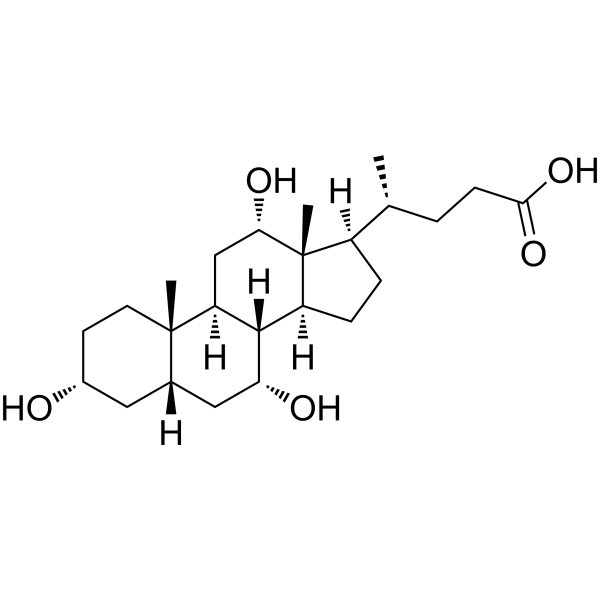
HY-N0324R
Cholic acid (Standard)Endogenous Metabolite -
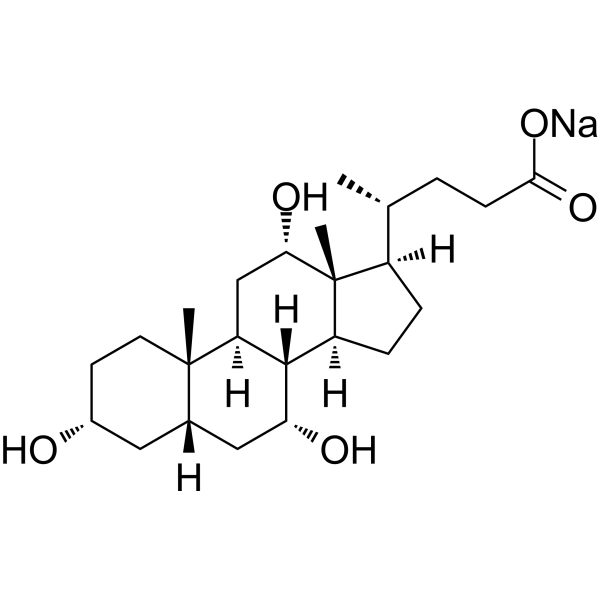
HY-N0324A
Cholic acid sodiumEndogenous Metabolite -
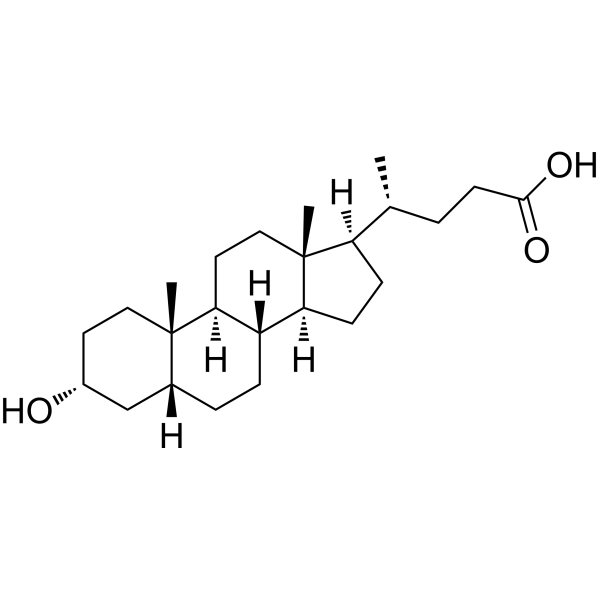
HY-B0172R
Lithocholic acid (Standard)Autophagy Inducer -

HY-N0324AR
Cholic acid sodium (Standard)Endogenous Metabolite


Biological Activity
Description
IC50 & Target
|
Microbial Metabolite |
In Vitro
Glycocholic acid (0-500 μM; 0, 24, 48, 72 h) hydrate reduces the viability of human colon adenocarcinoma Caco-2 cells in a time- and concentration-dependent manner[1].
Glycocholic acid (250 μM; 72 h) hydrate at 250 μM significantly increases the chemosensitivity of human colon adenocarcinoma Caco-2 cells to Epirubicin (HY-13624)[1].
Glycocholic acid (250 μM; 72 h) hydrate alters the expression of multidrug resistance and apoptosis-related genes in human colon adenocarcinoma Caco-2 cells, downregulating MDR1, MRP1, MRP2, and Bcl-2 while upregulating Bax, caspase-3, caspase-9, and p53, and increasing the Bax-to-Bcl-2 ratio[1].
Glycocholic acid (250 μM; 72 h) hydrate reduces hMDR1 promoter activity in human colon adenocarcinoma Caco-2 cells[1].
Glycocholic acid (250 μM; 72 h) hydrate induces chromatin condensation, a marker of apoptosis, in human colon adenocarcinoma Caco-2 cells[1].
Glycocholic acid (250 μM; 72 h) hydrate increases the sub-G1 DNA content population, indicating apoptosis, in human colon adenocarcinoma Caco-2 cells[1].
Glycocholic acid (GCA) (1.6 μM; 48 h) hydrate modulates bile acid receptor gene expression in SNU-245 cholangiocarcinoma cells, reducing FXR expression and increasing TGR5 and S1PR2 expression[2].
Glycocholic acid hydrate inhibits late logarithmic phase growth of E. coli K1037, clinical UTI E. coli, Klebsiella pneumoniae, Klebsiella oxytoca, Salmonella Typhimurium, Raoultella ornithinolytica, and Citrobacter freundii in liquid LB culture, but not on solid LB agar medium[3].
Glycocholic acid hydrate reduces the MIC of ampicillin for E. coli K1037 by 2-fold and the MIC of chloramphenicol for Raoultella ornithinolytica and Citrobacter freundii by 2-fold, resulting in additive antimicrobial interactions (FIC index 0.625-0.75)[3].
Glycocholic acid (0.125-2%; 6 h) hydrate reduces conjugation frequency of multiple Enterobacteriaceae conjugative plasmids by 70 to 97% in a dose-dependent manner, with no prominent reduction in donor strain viability[3].
Glycocholic acid (0.2-2%; 16 h) hydrate significantly reduces E. coli K1037 motility on soft LB agar by downregulating fliC gene expression[3].
Glycocholic acid (0.125-2%) hydrate increases membrane permeability and compromises membrane integrity of E. coli K1037, as shown by increased NPN/EtBr uptake and cytoplasmic DnaK leakage[3].
MedChemExpress (MCE) has not independently confirmed the accuracy of these methods. They are for reference only. Further protocols information, click here.
-
Cell Line:human colon adenocarcinoma Caco-2 cells
-
Concentration:0 μM, 100 μM, 250 μM, 300 μM, 400 μM, 500 μM
-
Incubation Time:0 h, 24 h, 48 h, 72 h
-
Result:Reduced cell viability in a time-dependent manner, with the most profound effects seen after 72 h.
Decreased cell viability to 80% after 72 h incubation with 250 μM.
Caused further significant decreases in viability after 72 h at concentrations of 300, 400, 500 μM compared to lower concentrations.
Maintained cell viability at 96% and 90% after 24 h and 48 h incubation with 250 μM, respectively.
-
Cell Line:human colon adenocarcinoma Caco-2 cells
-
Concentration:250 μM (in combination with Epirubicin (HY-13624))
-
Incubation Time:72 h
-
Result:Reduced the mean IC50 value of epirubicin to 8.08 μg/mL, which was significantly lower than the IC50 value for epirubicin alone.
-
Cell Line:human colon adenocarcinoma Caco-2 cells
-
Concentration:250 μM
-
Incubation Time:72 h
-
Result:Significantly downregulated mRNA expression of MDR1 (P-gp), MRP1, MRP2, and Bcl-2.
Significantly upregulated mRNA expression of Bax, caspase-3, caspase-9, and p53 compared to untreated controls.
Significantly increased the Bax-to-Bcl-2 ratio.
Showed no significant effect on caspase-8 expression.
-
Cell Line:human colon adenocarcinoma Caco-2 cells
-
Concentration:250 μM
-
Incubation Time:72 h
-
Result:Increased the percentage of cells in the sub-G1 phase (apoptotic cells) to 26.8% after treatment, which was significantly higher than the control (1.3%) and epirubicin alone (20.6%).
-
Cell Line:human colon adenocarcinoma Caco-2 cells
-
Concentration:1.6 μM
-
Incubation Time:48 h
-
Result:Reduced FXR gene expression to 0.17-fold of untreated control levels.
Increased TGR5 gene expression to 8.55-fold of untreated control levels, which was significantly higher than both control and taurochenodeoxycholic acid-treated cells.
Increased S1PR2 gene expression to 3.4-fold of untreated control levels and 3.9-fold of taurochenodeoxycholic acid-treated cell levels.


Chemical Information
-
CAS No. 338950-81-5
-
Appearance Solid
-
Formula C26H43NO6.xH2O.Na
-
Color White to off-white
-
SMILES
O[C@H]1[C@@]2([H])[C@@]3([H])[C@@]([C@@](CC3)([H])[C@H](C)CCC(NCC(O[Na])=O)=O)([C@H](C[C@]2([H])[C@@]4([C@](C[C@@H](CC4)O)([H])C1)C)O)C.O.[x]
-
Synonyms
N-Cholylglycine sodium salt, 98%
-
Shipping
Room temperature in continental US; may vary elsewhere.
-
Storage
4°C, sealed storage, away from moisture
* In solvent : -80°C, 6 months; -20°C, 1 month (sealed storage, away from moisture)


Solvent & Solubility
In Vitro:
DMSO : 50 mg/mL (Need ultrasonic; Hygroscopic DMSO has a significant impact on the solubility of product, please use newly opened DMSO)

Protocols
-
Apoptosis
Apoptosis, also called programmed cell death, is generally characterized by distinct morphological characteristics.
-
TUNEL staining for apoptotic DNA fragmentation
TUNEL staining detects DNA strand breaks by using terminal deoxynucleotidyl transferase to add labeled nucleotides to exposed 3′-OH DNA termini, generating either microscopic staining in fixed cells or tissue sections, or fluorescence/cytometric signal in cell suspensions. TUNEL positivity reflects DNA fragmentation but should not be interpreted alone as definitive apoptosis, because TUNEL can also label necrotic, autolytic, mechanically damaged, or DNA-repair-associated DNA breaks.
-
Annexin V plus membrane-impermeant dye apoptosis staining
Annexin V-based apoptosis assays rely on the detection of phosphatidylserine (PS) externalization from the inner leaflet of the plasma membrane to the outer leaflet, an early biochemical hallmark of apoptosis. Fluorescently labeled Annexin V binds PS in a calcium-dependent manner, enabling identification of early apoptotic cells by flow cytometry or fluorescence microscopy. When combined with a membrane-impermeant DNA-binding dye (e. g. , propidium iodide), this approach allows discrimination between viable (Annexin V−/dye−), early apoptotic (Annexin V+/dye−), and late apoptotic or necrotic (Annexin V+/dye+) cell populations by assessing membrane integrity and PS exposure.
-
Apoptosis Solutions
Apoptosis is a regulated, generally non-lytic cell-death pathway that removes unwanted, damaged, infected, or abnormal cells through coordinated morphological changes, caspase activation, DNA fragmentation, and membrane remodeling. The intrinsic apoptosis pathway is controlled mainly by mitochondrial outer membrane permeabilization, BCL-2 family proteins, cytochrome c release, apoptosome formation, caspase-9 activation, and downstream executioner caspase-3/7 activation. The extrinsic apoptosis pathway is initiated by death receptors such as Fas, TNFR, and TRAIL receptors, which recruit adaptor proteins and activate caspase-8 before engaging executioner caspases or mitochondrial amplification through BID cleavage. Apoptosis is linked to many phenotypes, including cancer cell killing, tissue homeostasis, immune regulation, neurodegeneration, infection response, and treatment-induced cytotoxicity; unresolved questions include how apoptosis interacts with necroptosis, pyroptosis, ferroptos


Purity & Documentation
-
Data Sheet (280 KB)
-
SDS (394 KB)
- English - EN (394 KB)
- Français - FR (394 KB)
- Deutsch - DE (394 KB)
- Norwegian - NO (394 KB)
- Español - ES (394 KB)
- Swedish - SV (394 KB)
- Italian - IT (394 KB)
- Korean - KR (394 KB)
- Portuguese - PT (394 KB)
-
Handling Instructions (2659 KB)
References
[1]. Lo YL, et al. Inhibit multidrug resistance and induce apoptosis by using glycocholic acid and epirubicin. Eur J Pharm Sci. 2008;35(1-2):52-67. [Content Brief]
[2]. Song WS, et al. Discovery of glycocholic acid and taurochenodeoxycholic acid as phenotypic biomarkers in cholangiocarcinoma. Sci Rep. 2018;8(1):11088. Published 2018 Jul 23. [Content Brief]
[3]. Piscon B, et al. The Effect of glycocholic acid on the growth, membrane permeability, conjugation and antibiotic susceptibility of Enterobacteriaceae. Front Cell Infect Microbiol. 2025;15:1550545. Published 2025 Mar 20. [Content Brief]
[4]. Lo YL, et al. Inhibit multidrug resistance and induce apoptosis by using glycocholic acid and epirubicin. Eur J Pharm Sci. 2008 Sep 2;35(1-2):52-67. [Content Brief]

Calculators
Concentration (start) × Volume (start) = Concentration (final) × Volume (final)


Sodium glycocholate hydrate, 98% Related Classifications
HY-W013105 Related Classifications
 Powered by Bioz