



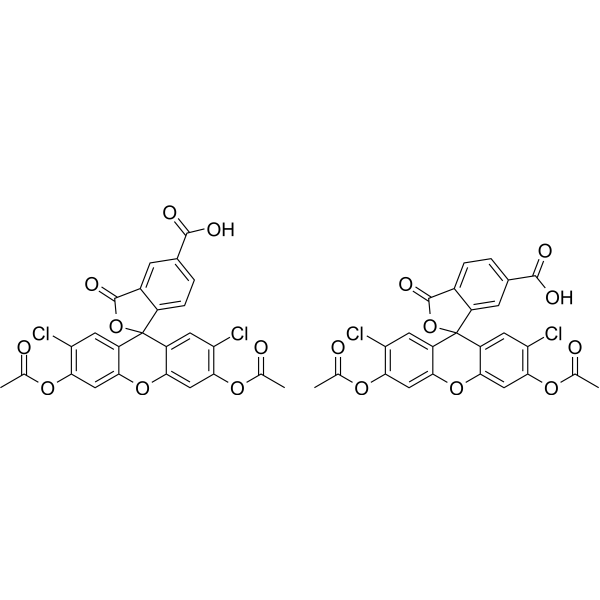
5(6)-Carboxy-2',7'-dichlorofluorescein diacetate

Based on 1 Customer Validation
5 (6)-Carboxy-2',7'-dichlorofluorescein diacetate is a fluorescein-based reactive oxygen species (ROS) probe and also a MRP2 substrate. 5 (6)-Carboxy-2',7'-dichlorofluorescein diacetate serves as a substrate for intracellular esterases, which cleave its acetate groups to generate a fluorescent product capable of detecting intracellular ROS. 5 (6)-Carboxy-2',7'-dichlorofluorescein diacetate is ATP-dependent and is transported via a single MRP2 binding site; it competes with LTC4 for MRP2 binding sites and inhibits MRP2-mediated LTC4 transport (Ex/Em = 496/525 nm).
For research use only. We do not sell to patients.
- Purity : 97.5%
- CAS No.: 127770-45-0
- Formula: C25H14Cl2O9
- Molecular Weight:529.28
-
Storage:Powder -20°C, 3 years ; In solvent -80°C, 6 months , -20°C, 1 month

To place orders, for customer services and technical support, please contact: MedChemExpress USA
Tel: 609-228-6898 E-mail: [email protected] [email protected]


-
 Biological Activity
-
Chemical Information
-
Solvent & Solubility
- Purity & Documentation
- References
-
 Help & FAQs


-
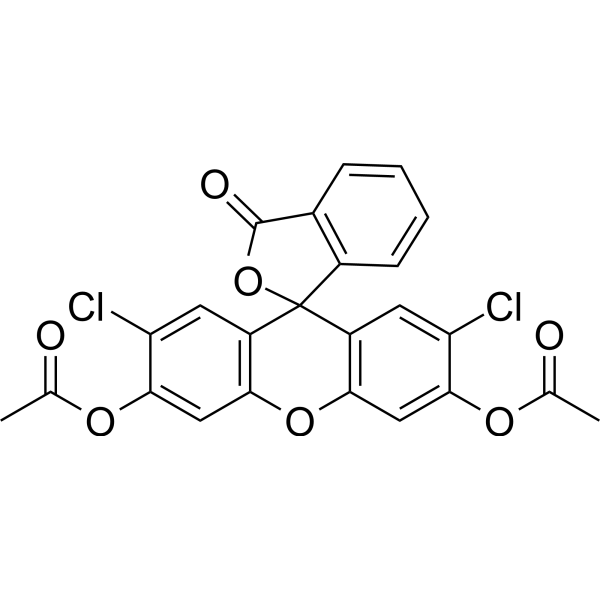
HY-126793
2′,7′-Dichlorofluorescein diacetate -
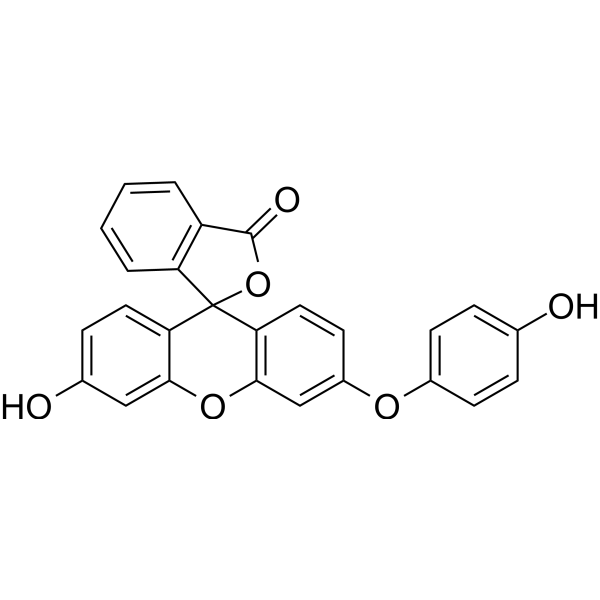
HY-111330
Hydroxyphenyl Fluorescein -
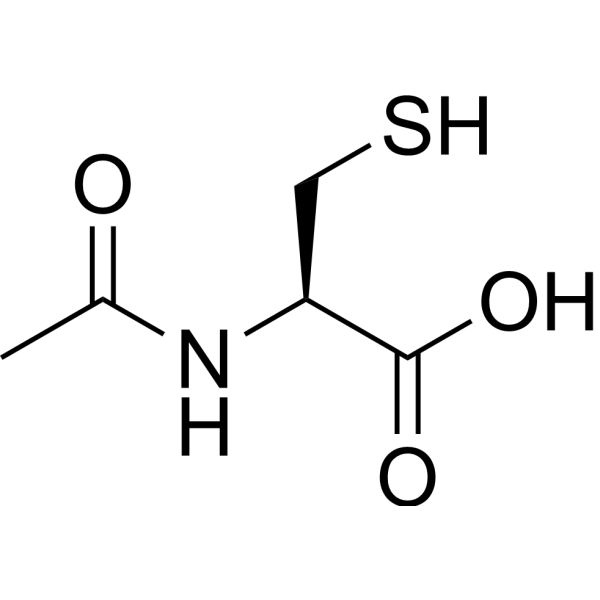
HY-B0215
Acetylcysteine -

HY-DY1035
Hydroxyphenyl Fluorescein (solution) -
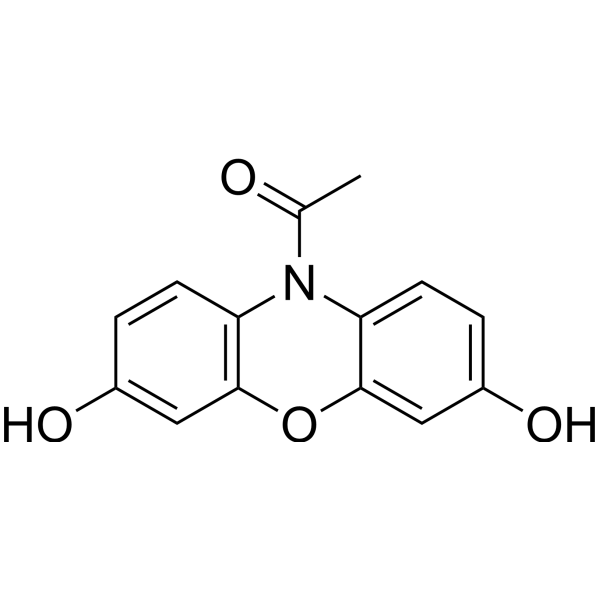
HY-101880
ADHP -
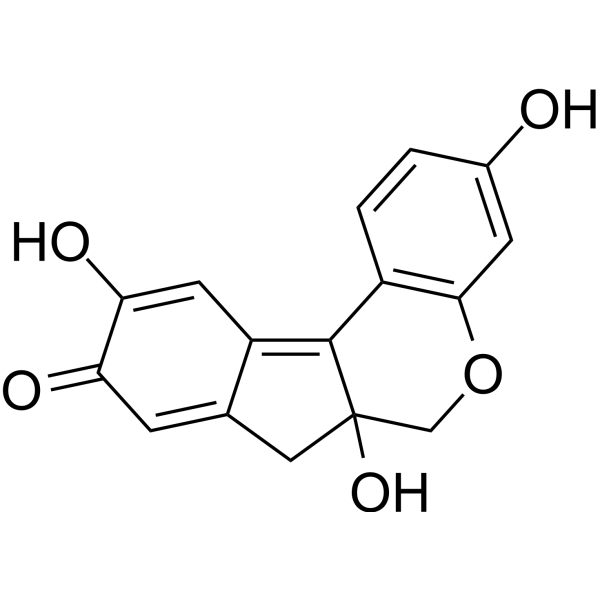
HY-N10424
Brazilein -

HY-B0215R
Acetylcysteine (Standard) -
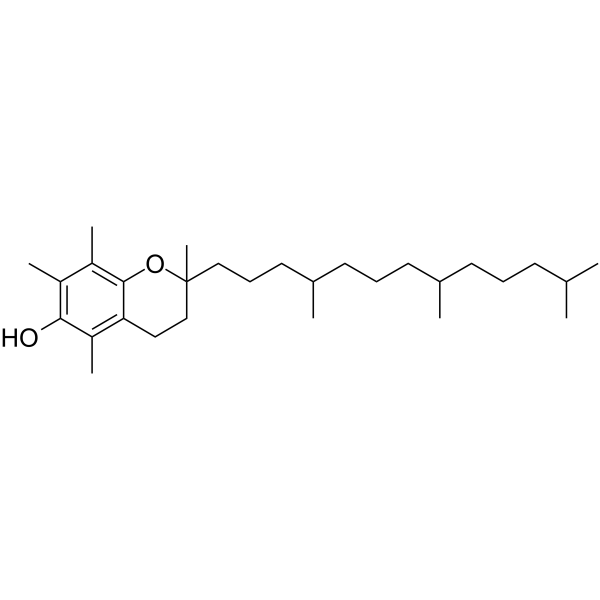
HY-W020044
DL-alpha-Tocopherol -

HY-DY1058
2′,7′-Dichlorofluorescein diacetate (solution) -
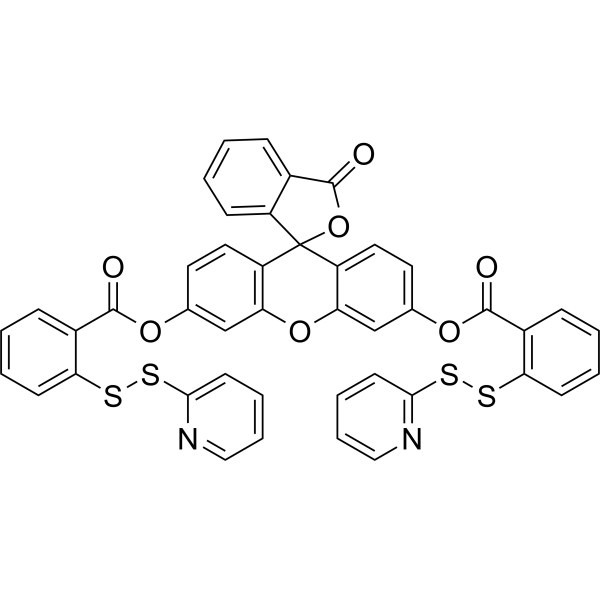
HY-129420
WSP-5 -
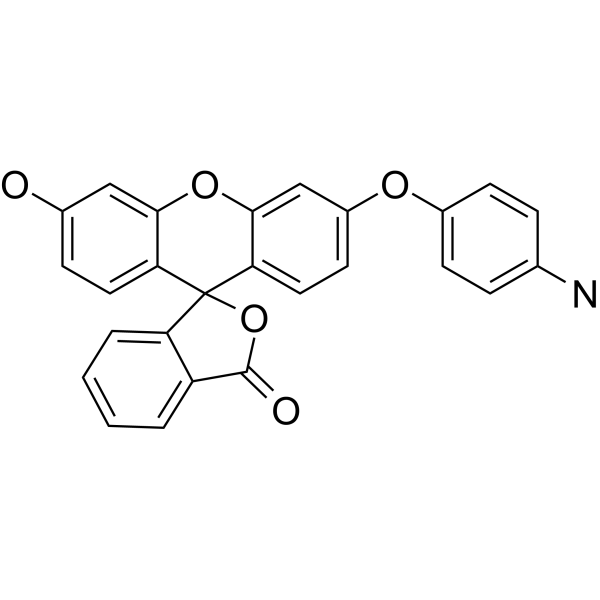
HY-119977
APF -
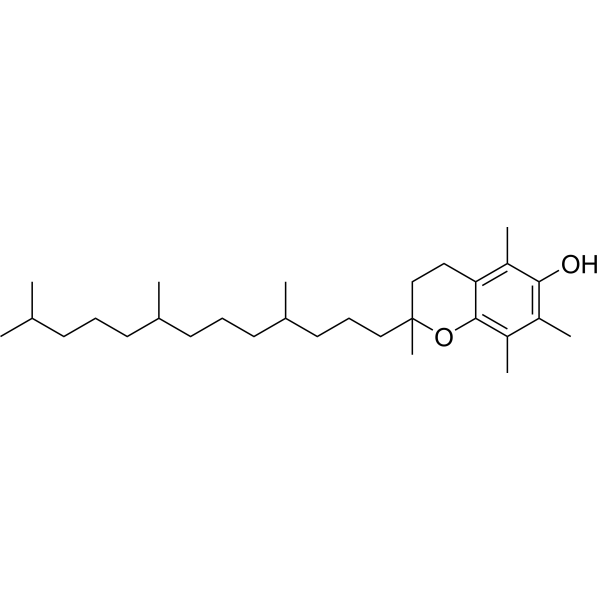
HY-W020044R
DL-alpha-Tocopherol (Standard)


Biological Activity
Description
In Vitro
Guide (The following is our recommended protocol. This protocol is only a guide and should be modified according to your specific needs).
1. Dye preparation
1.1 Preparation of stock solution
Use anhydrous DMSO to prepare a 10 mM stock solution.
Note: It is recommended that the stock solution be stored at -20°C or -80°C in the dark after aliquoting.
1.2 Preparation of working solution
Use preheated serum-free cell culture medium or PBS to dilute the stock solution to prepare a 1-10 μM working solution.
Note: Please adjust the concentration of H2DCFDA working solution according to actual conditions and prepare it before use.
2. Cell staining (suspended cells)
2.1 Collect cells by centrifugation and wash twice with PBS for 5 minutes each time. The cell density is 1×10⁶/mL.
2.2 Add dye working solution and incubate at room temperature for 5-30 minutes.
2.3 Centrifuge at 400 g for 3-4 minutes and discard the supernatant.
2.4 Add PBS to wash the cells twice, 5 minutes each time.
2.5 Resuspend the cells in of serum-free medium or PBS and observe using a fluorescence microscope or flow cytometer.
3. Cell staining (adherent cells)
3.1 Culture the adherent cells on a sterile coverslip.
3.2 Remove the coverslip from the culture medium and remove the excess culture medium.
3.3 Add of dye working solution, gently shake to completely cover the cells, and incubate for 5-30 minutes.
3.4 Aspirate the dye working solution, wash 2-3 times with culture medium, 5 minutes each time, and observe using a fluorescence microscope or flow cytometer.
Note: If flow cytometry is required, the cells need to be digested with trypsin and resuspended before staining.
5(6)-Carboxy-2',7'-dichlorofluorescein diacetate (sufficient to determine Michaelis-Menten kinetics; up to 30 min) acts as an active, single-binding-site substrate of MRP2 in Sf9 cell membrane vesicles, with a Km of 12.3 μM, and functions as a valid fluorescent surrogate for LTC4 in MRP2 vesicular transport assays[1].
5(6)-Carboxy-2',7'-dichlorofluorescein diacetate (10 μM) is a highly sensitive, long-lasting cell-permeant tracer that detects ROS generation in primary human neuronal-glial (HNG) cell co-cultures, with an intracellular fluorescence persistence at least 10-fold longer than non-carboxylated 2′,7′-dichlorofluorescein diacetate[2].
MedChemExpress (MCE) has not independently confirmed the accuracy of these methods. They are for reference only.
Emission (Em)
525
Excitation (Ex)
496


Chemical Information
-
CAS No. 127770-45-0
-
Appearance Solid
-
Molecular Weight 529.28
-
Formula C25H14Cl2O9
-
Color Off-white to light yellow
-
SMILES
ClC1=C(OC(C)=O)C=C2OC3=CC(OC(C)=O)=C(Cl)C=C3C(OC4=O)(C5=CC=C(C(O)=O)C=C54)C2=C1.ClC6=C(OC(C)=O)C=C7OC8=CC(OC(C)=O)=C(Cl)C=C8C(OC9=O)(C%10=CC(C(O)=O)=CC=C%109)C7=C6
-
Shipping
Room temperature in continental US; may vary elsewhere.
-
Storage
Powder -20°C 3 years In solvent -80°C 6 months -20°C 1 month


Solvent & Solubility
In Vitro:
DMSO : 125 mg/mL (236.17 mM; ultrasonic and warming and heat to 60°C; Hygroscopic DMSO has a significant impact on the solubility of product, please use newly opened DMSO)
Please refer to the solubility information to select the appropriate solvent. Once prepared, please aliquot and store the solution to prevent product inactivation from repeated freeze-thaw cycles.
Storage method and period of stock solution: -80°C, 6 months; -20°C, 1 month. When stored at -80°C, please use it within 6 months. When stored at -20°C, please use it within 1 month.
Please refer to the solubility information to select the appropriate solvent. Once prepared, please aliquot and store the solution to prevent product inactivation from repeated freeze-thaw cycles.
Storage method and period of stock solution: -80°C, 6 months; -20°C, 1 month. When stored at -80°C, please use it within 6 months. When stored at -20°C, please use it within 1 month.
Concentration (start) × Volume (start) = Concentration (final) × Volume (final)


Purity & Documentation
-
Data Sheet (277 KB)
-
SDS (394 KB)
- English - EN (394 KB)
- Français - FR (394 KB)
- Deutsch - DE (394 KB)
- Norwegian - NO (394 KB)
- Español - ES (394 KB)
- Swedish - SV (394 KB)
- Italian - IT (394 KB)
- Korean - KR (394 KB)
- Portuguese - PT (394 KB)
-
Handling Instructions (2659 KB)
References
[1]. Heredi-Szabo K, et al. Characterization of 5(6)-carboxy-2,'7'-dichlorofluorescein transport by MRP2 and utilization of this substrate as a fluorescent surrogate for LTC4. J Biomol Screen. 2008;13(4):295-301. [Content Brief]
[2]. Pogue AI, et al. Metal-sulfate induced generation of ROS in human brain cells: detection using an isomeric mixture of 5- and 6-carboxy-2',7'-dichlorofluorescein diacetate (carboxy-DCFDA) as a cell permeant tracer. Int J Mol Sci. 2012;13(8):9615-9626. [Content Brief]
[3]. Munić V, et al. Characterization of rhodamine-123, calcein and 5(6)-carboxy-2',7'-dichlorofluorescein (CDCF) export via MRP2 (ABCC2) in MES-SA and A549 cells. Eur J Pharm Sci. 2011;43(5):359-369. [Content Brief]
[4]. Zamek-Gliszczynski MJ, et al. Pharmacokinetics of 5 (and 6)-carboxy-2',7'-dichlorofluorescein and its diacetate promoiety in the liver. J Pharmacol Exp Ther. 2003;304(2):801-809. [Content Brief]


Complete Stock Solution Preparation Table
Please refer to the solubility information to select the appropriate solvent. Once prepared, please aliquot and store the solution to prevent product inactivation from repeated freeze-thaw cycles.
Storage method and period of stock solution: -80°C, 6 months; -20°C, 1 month. When stored at -80°C, please use it within 6 months. When stored at -20°C, please use it within 1 month.
| Optional Solvent | Concentration Solvent Mass | 1 mg | 5 mg | 10 mg | 25 mg |
|---|---|---|---|---|---|
| DMSO | 1 mM | 1.8894 mL | 9.4468 mL | 18.8936 mL | 47.2340 mL |
| 5 mM | 0.3779 mL | 1.8894 mL | 3.7787 mL | 9.4468 mL | |
| 10 mM | 0.1889 mL | 0.9447 mL | 1.8894 mL | 4.7234 mL | |
| 15 mM | 0.1260 mL | 0.6298 mL | 1.2596 mL | 3.1489 mL | |
| 20 mM | 0.0945 mL | 0.4723 mL | 0.9447 mL | 2.3617 mL | |
| 25 mM | 0.0756 mL | 0.3779 mL | 0.7557 mL | 1.8894 mL | |
| 30 mM | 0.0630 mL | 0.3149 mL | 0.6298 mL | 1.5745 mL | |
| 40 mM | 0.0472 mL | 0.2362 mL | 0.4723 mL | 1.1808 mL | |
| 50 mM | 0.0378 mL | 0.1889 mL | 0.3779 mL | 0.9447 mL | |
| 60 mM | 0.0315 mL | 0.1574 mL | 0.3149 mL | 0.7872 mL | |
| 80 mM | 0.0236 mL | 0.1181 mL | 0.2362 mL | 0.5904 mL | |
| 100 mM | 0.0189 mL | 0.0945 mL | 0.1889 mL | 0.4723 mL |


5(6)-Carboxy-2',7'-dichlorofluorescein diacetate Related Classifications
HY-D1078 Related Classifications
 Powered by Bioz
Keywords
- 5(6)-Carboxy-2',7'-dichlorofluorescein diacetate
- 127770-45-0
- Fluorescent Dye
- Reactive Oxygen Species (ROS)
- P-glycoprotein
- intracellular reactive oxygen species
- Oatp
- MRP3
- A549 human lung carcinoma cells
- LTC4
- hepatocytes
- rat hepatocytes
- MRP2
- primary human neuronal-glial (HNG) cell co-cultures
- intracellular esterases
- Inhibitor
- inhibitor
- inhibit