



Acetylcysteine (Standard)

Based on 1 Customer Validation
Acetylcysteine (Standard) is the analytical standard of Acetylcysteine. This product is intended for research and analytical applications. Acetylcysteine (N-Acetylcysteine) is a mucolytic agent which reduces the thickness of the mucus. Acetylcysteine is a ROS inhibitor. Acetylcysteine is a cysteine precursor, prevents hemin-induced ferroptosis by neutralizing toxic lipids generated by arachidonate-dependent activity of 5-lipoxygenases. Acetylcysteine induces cell apoptosis. Acetylcysteine also has anti-influenza virus activities. In addition, Acetylcysteine is the most stable form of cysteine during drug delivery and can be used in disulfidptosis studies.
Nos produits utilisent uniquement pour la recherche. Nous ne vendons pas aux patients.
- Pureté : 98.24%
- CAS No.: 616-91-1
- Formule: C5H9NO3S
- Masse moléculaire:163.19
-
Stockage:
Please store the product under the recommended conditions in the Certificate of Analysis.


To place orders, for customer services and technical support, please contact: MedChemExpress USA
Tel: 609-228-6898 E-mail: [email protected] [email protected]


-
 Product Information
-
Chemical Information
- Pureté et documentation
-
 Help & FAQs


-
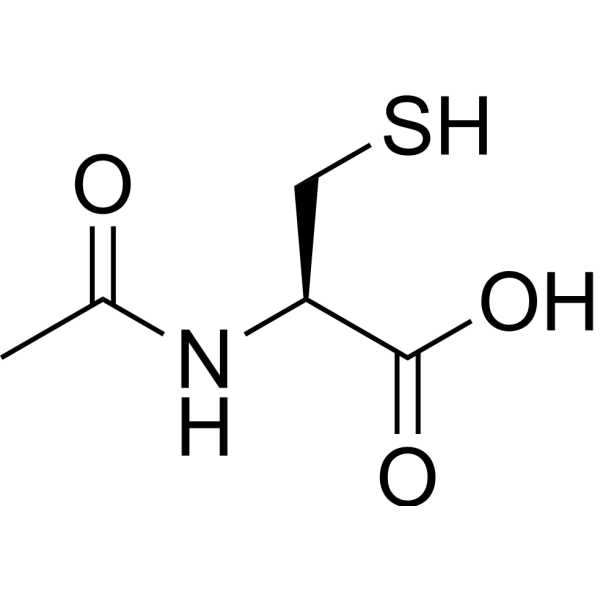
HY-B0215
AcetylcysteineMucolytic Agent -
HY-B0151
PregnenoloneCB1 Inhibitor -
HY-76299
GalanthamineCholinesterase (ChE) Inhibitor -
HY-17368
RivastigmineCholinesterase Inhibitor -
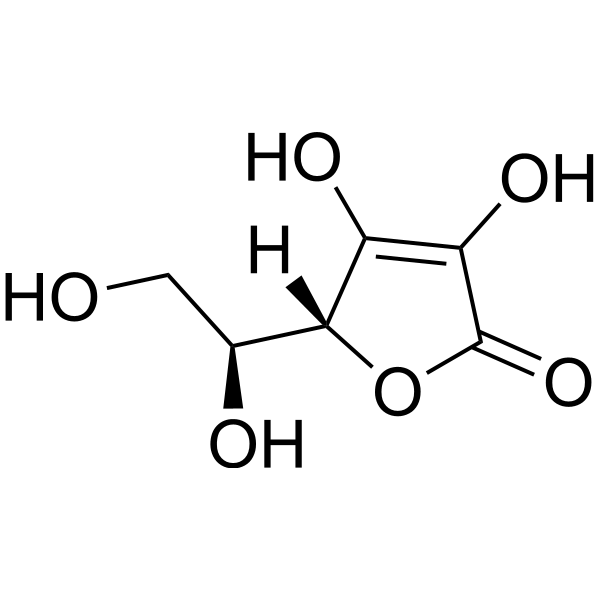
HY-B0166
L-Ascorbic acidAntioxidant -
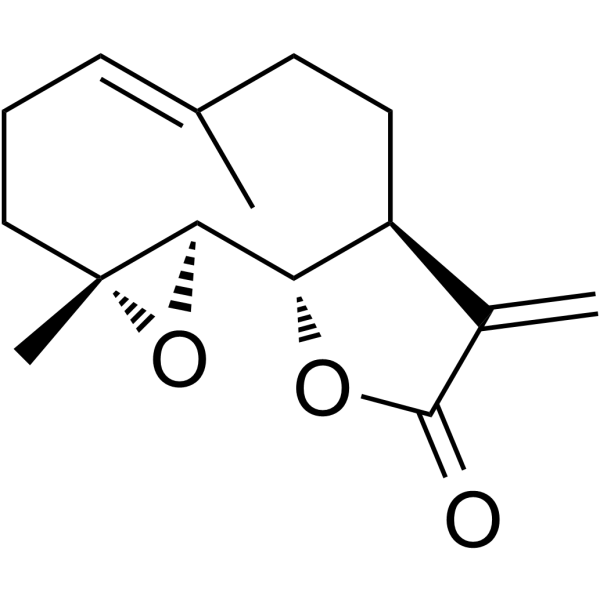
HY-N0141
ParthenolideNF-κB Inhibitor -
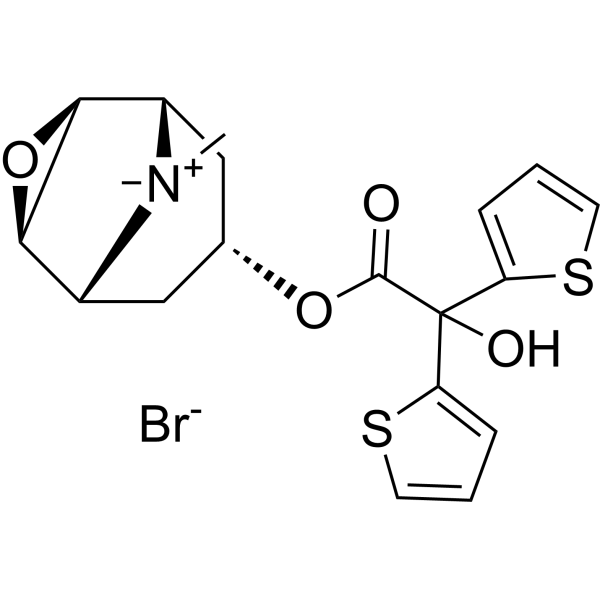
HY-17360
Tiotropium BromidemAChR Antagonist -
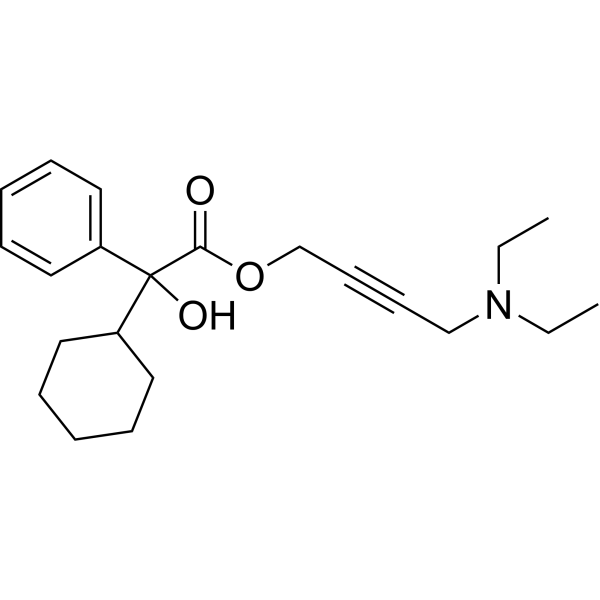
HY-B0267
OxybutyninmAChR Antagonist -
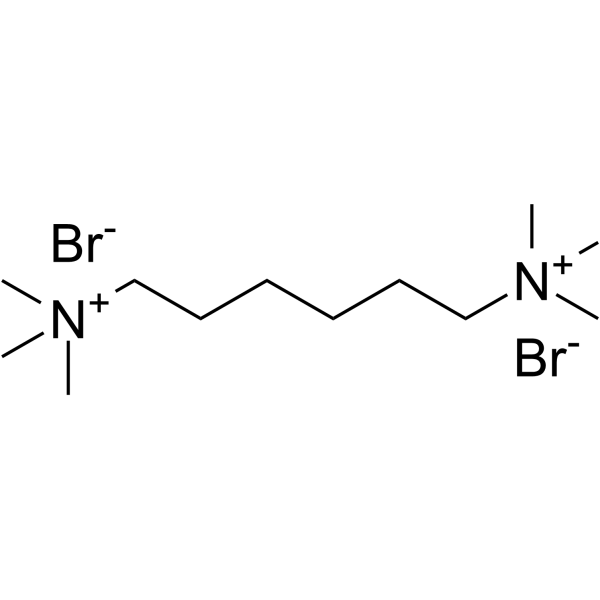
HY-B0569
Hexamethonium BromidenAChR Antagonist -
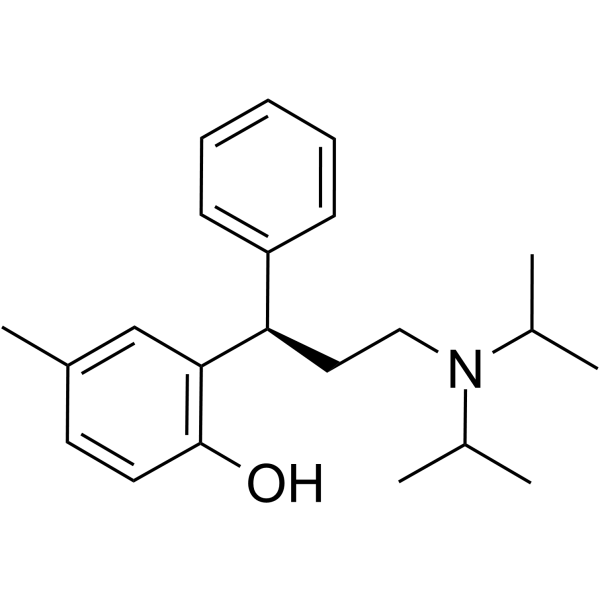
HY-A0024
TolterodinemAChR Inhibitor -
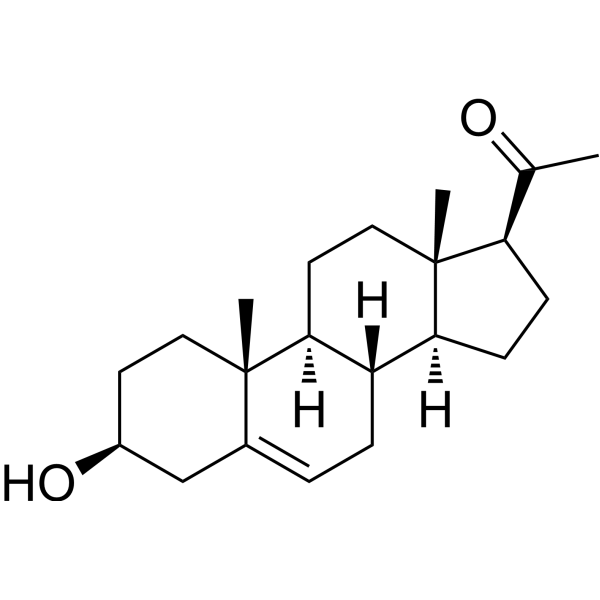
HY-B0151R
Pregnenolone (Standard) -
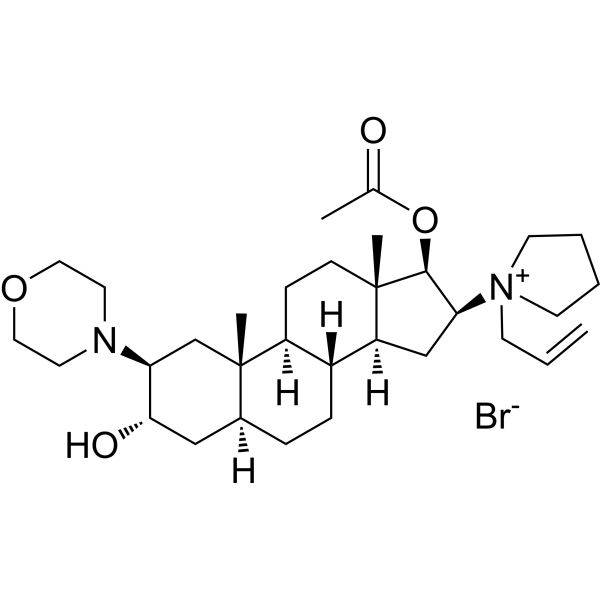
HY-17440
Rocuronium BromideMuscle Relaxant


Product Information
Information
Application
The compound is the grade of analytical standard, which is the reference standard supplied assay. It is commonly used in qualitative, quantitative and methodological research experiments in HPLC, GC and MS.


Chemical Information
-
CAS No. 616-91-1
-
Appearance Solid
-
Masse moléculaire 163.19
-
Formule C5H9NO3S
-
Color White to off-white
-
SMILES
SC[C@@H](C(O)=O)NC(C)=O
-
Synonyms
N-Acetylcysteine (Standard); N-Acetyl-L-cysteine (Standard); NAC (Standard)
-
Structure Classification
-
Initial Source
-
Livraison
Room temperature in continental US; may vary elsewhere.
-
Stockage
Please store the product under the recommended conditions in the Certificate of Analysis.


Pureté et documentation
-
SDS (393 KB)
- English - EN (393 KB)
- Français - FR (393 KB)
- Deutsch - DE (393 KB)
- Norwegian - NO (393 KB)
- Español - ES (393 KB)
- Swedish - SV (393 KB)
- Italian - IT (393 KB)
- Korean - KR (393 KB)
- Portuguese - PT (393 KB)
-
Instruction de manipulation (2659 KB)
Références
[1]. Halasi M, et al. ROS inhibitor N-acetyl-L-cysteine antagonizes the activity of proteasome inhibitors. Biochem J. 2013 Sep 1;454(2):201-8. [Content Brief]
[2]. Ferrari G, et al. N-acetylcysteine (D- and L-stereoisomers) prevents apoptotic death of neuronal cells. J Neurosci. 1995 Apr;15(4):2857-66. [Content Brief]
[3]. Tsai JC, et al. Induction of apoptosis by pyrrolidinedithiocarbamate and N-acetylcysteine in vascular smooth muscle cells. J Biol Chem. 1996 Feb 16;271(7):3667-70. [Content Brief]
[4]. Yan CY, et al. Prevention of PC12 cell death by N-acetylcysteine requires activation of the Ras pathway. J Neurosci. 1998 Jun 1;18(11):4042-9. [Content Brief]
[5]. Farr SA, et al. The antioxidants alpha-lipoic acid and N-acetylcysteine reverse memory impairment and brain oxidative stress in aged SAMP8 mice. J Neurochem. 2003 Mar;84(5):1173-83. [Content Brief]
[6]. Kalimeris K, et al. N-acetylcysteine ameliorates liver injury in a rat model of intestinal ischemia reperfusion. J Surg Res. 2016 Dec;206(2):263-272. [Content Brief]
[7]. Garigliany MM, et al. N-acetylcysteine lacks universal inhibitory activity against influenza A viruses. J Negat Results Biomed. 2011 May 9;10:5. [Content Brief]
[8]. Gu Q, et al. Disulfidptosis, a novel cell death pathway: molecular landscape and therapeutic implications[J]. Aging Dis, 2024, 10. [Content Brief]

Calculators
Concentration (start) × Volume (start) = Concentration (final) × Volume (final)


Acetylcysteine (Standard) Related Classifications
HY-B0215R Related Classifications
 Powered by Bioz