1. Search Result
Search Result
Results for "

Penicillium species

" in MedChemExpress (MCE) Product Catalog:

23

Inhibitors & Agonists

1

Peptides

17

Natural
Products

3

Isotope-Labeled Compounds

Targets Recommended:
Cat. No. Product Name Target Research Areas Chemical Structure
  • HY-N6779
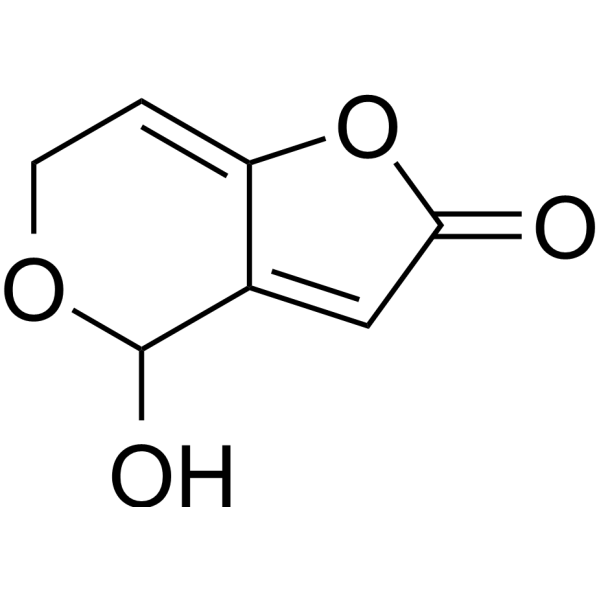
    Patulin
    4 Publications Verification

    Terinin

    Bacterial Apoptosis Autophagy Antibiotic Infection
    Patulin (Terinin) is a mycotoxin produced by fungi including the Aspergillus, Penicillium, and Byssochlamys species, causes chromosome breakage, mutation, teratogenic and cytotoxic. Patulin induces autophagy-dependent apoptosis through lysosomal-mitochondrial axis, and causes DNA damage .
    Patulin
  • HY-N6777
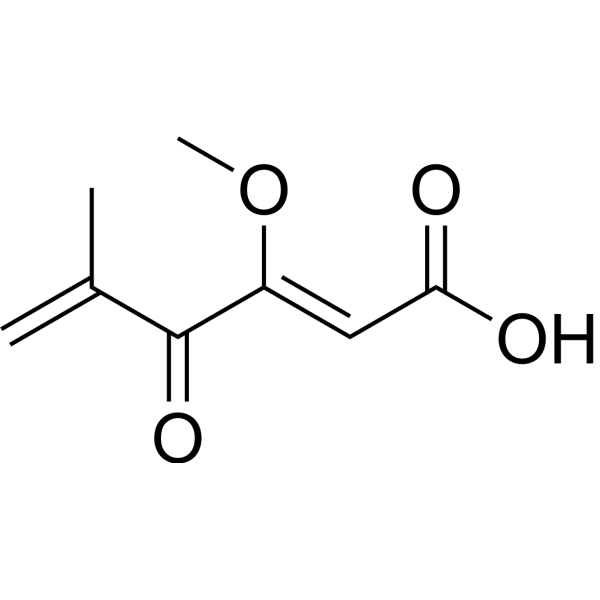
    Penicillic acid
    1 Publications Verification

    Caspase Bacterial Apoptosis Antibiotic Infection Inflammation/Immunology Cancer
    Penicillic acid is a polyketide mycotoxin produced by several species of Aspergillus and Penicillium. Penicillic acid exhibits cytotoxicity in rat alveolar macrophages (AM) in vitro. Penicillic acid inhibits Fas ligand-induced apoptosis by blocking self-processing of caspase-8 .
    Penicillic acid
  • HY-N6748
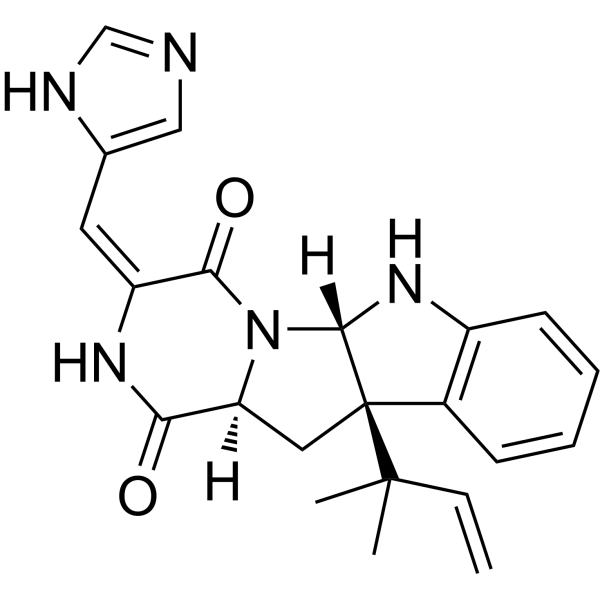
    Roquefortine C
    1 Publications Verification

    P-glycoprotein Cytochrome P450 Bacterial c-Met/HGFR Infection Neurological Disease Cancer
    Roquefortine C is a mycotoxin that can be isolated from Penicillium species. Roquefortine C is an agonist of P-gp and an inhibitor of P450 3A and P450 1A. Roquefortine C can inhibit Gram-positive bacteria and also has certain neurotoxicity. Additionally, Roquefortine C can exert antitumor activity .
    Roquefortine C
  • HY-N6688

    Potassium Channel Bacterial Infection Neurological Disease
    Verruculogen is a tremorgenic mycotoxin and inhibitor of the M phase of the mammalian cell cycle. Verruculogen is produced by Penicillium and Aspergillus species. Verruculogen enhances the binding of ChTX to maxi-k channels with a K1/2 value of 170 nM. Verruculogen inhibits the amplitude of Ca 2+-activated K + currents. Verruculogen induces severe tremors in infected animals .
    Verruculogen
  • HY-W099579

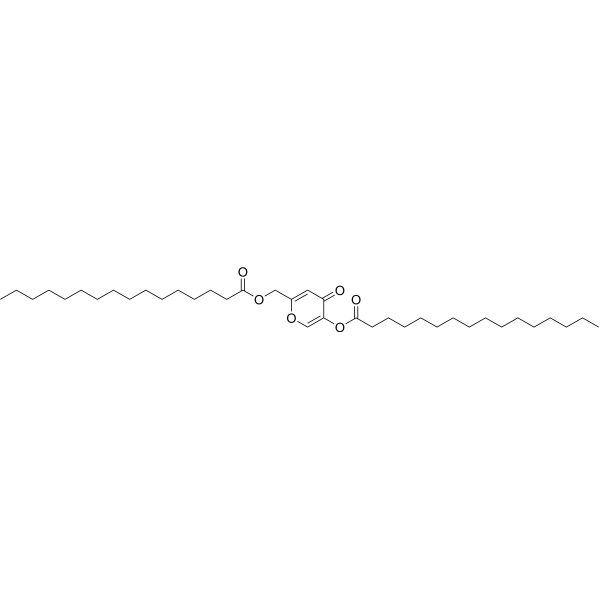
    Kojic dipalmitate

    Tyrosinase Endocrinology
    Kojic acid dipalmitate (Kojic dipalmitate) is a derivative of Kojic acid (HY-W050154), a fungal metabolite that can be produced by species of Aspergillus, Acetobacter and Penicillium. Kojic acid dipalmitate is a slow and reversible competitive inhibitor of tyrosinase. Kojic acid dipalmitate can be used for skin‐lightening agent research .
    Kojic acid dipalmitate
  • HY-N6779R

    Terinin (Standard)

    Reference Standards Bacterial Apoptosis Autophagy Antibiotic Infection
    Patulin (Standard) is the analytical standard of Patulin. This product is intended for research and analytical applications. Patulin (Terinin) is a mycotoxin produced by fungi including the Aspergillus, Penicillium, and Byssochlamys species, causes chromosome breakage, mutation, teratogenic and cytotoxic. Patulin induces autophagy-dependent apoptosis through lysosomal-mitochondrial axis, and causes DNA damage .
    Patulin (Standard)
  • HY-W134163

    trans-2-Octenal

    Fungal Reactive Oxygen Species (ROS) Mitochondrial Metabolism Phosphatase Pyruvate Kinase Infection
    (E)-2-Octenal is an Antifungal agent. (E)-2-Octenal disrupts cell membrane integrity and causes ROS accumulation. (E)-2-Octenal decreases the activities of phosphofructokinase and pyruvate kinase. (E)-2-Octenal inhibits Neofusicoccum parvum growth by disrupting mitochondrial energy metabolism. (E)-2-Octenal suppresses the growth of a Prochloraz (HY-B0845)-resistant Penicillium italicum strain. (E)-2-octenal exerts a broad-spectrum and potent inhibitory effect on various fungi, including Sclerotium rolfsii, Metarhizium anisopliae sensu lato, and Aspergillus flavus, etc. (E)-2-Octenal can be used for the research of citrus blue mold and mango stem-end rot .
    (E)-2-Octenal
  • HY-129279

    Farnesyl Transferase Cancer
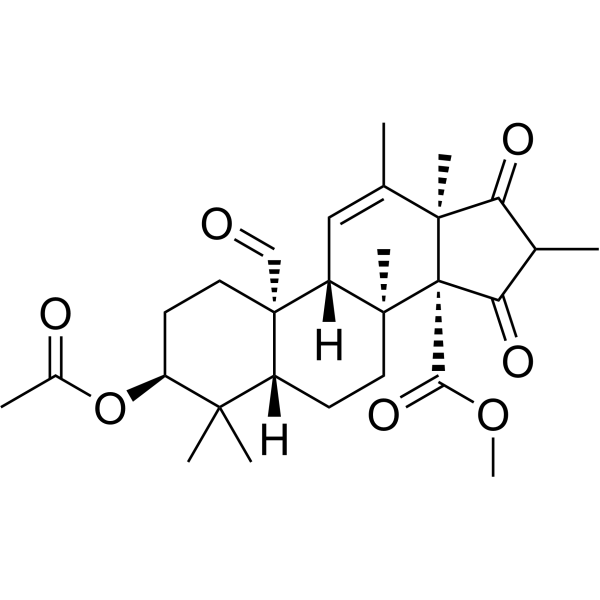
    Andrastin A meroterpenoid compound, is a farnesyltransferase inhibitor. Andrastin A inhibits the efflux of anticancer compounds from multidrug-resistant cancer cells. Andrastin A can be isolated from Penicillium species .
    Andrastin A
  • HY-N12914

    (+)-Tanzawaic acid B; GS-1302-1; 10-Deoxytanzawaic acid E

    Reactive Oxygen Species (ROS) Others
    Tanzawaic acid B ((+)-Tanzawaic acid B; GS-1302-1; 10-Deoxytanzawaic acid E) is a superoxide anion production inhibitor and can be isolated from Penicillium citrinum .
    Tanzawaic acid B
  • HY-115127

    m-Methoxytoluene; m-Methylanisole

    Endogenous Metabolite Bacterial Infection Others
    Methylanisole (m-Methoxytoluene; m-MetHYlanisole) is a volatile metabolite produced by Penicillium strains growing on barley. 3-Methylanisole serves as a precursor for the biotechnological production of vanillin .
    3-Methylanisole
  • HY-125060

    Antibiotic Endogenous Metabolite Infection
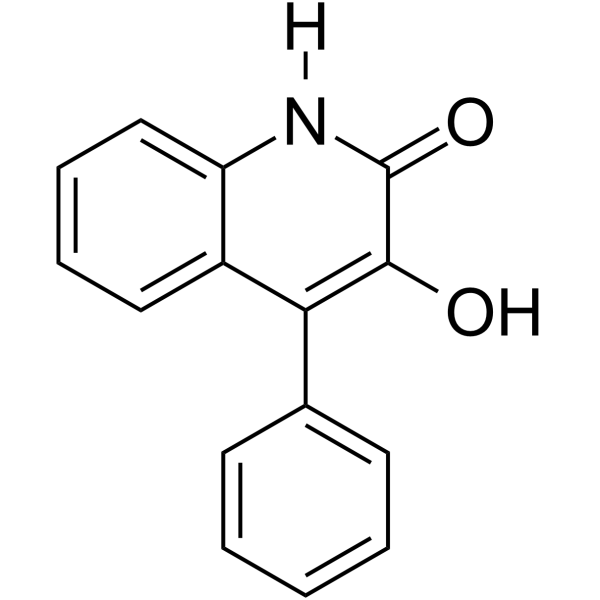
    Viridicatin is a fungal metabolite from Penicillium species. Viridicatin shows slight in vitro antibiotic activity against Mycobacterium tuberculosis .
    Viridicatin
  • HY-N14665

    Antibiotic Bacterial Infection
    Atrovenetin is an antibiotic found in Penicillium species. Atrovenetin has inhibitory activity against Bacillus subtilis and Staphylococcus aureus. Atrovenetin is also a potent antioxidant.
    Atrovenetin
  • HY-N20622

    Endogenous Metabolite Others
    Terrestric acid is a secondary metabolite and fungal toxin produced by various fungi, primarily found in Penicillium species. Terrestric acid induces early cell aging in Penicillium aurantiogriseum .
    Terrestric acid
  • HY-126775

    Mitochondrial Metabolism Endogenous Metabolite Cancer
    Xenoclauxin is a secondary metabolite isolated from certain species of the Penicillium genus, which exhibits an inhibitory effect on the proliferation of tumor cells. Xenoclauxin affects cellular energy metabolism, particularly by inhibiting ATP synthesis in the mitochondria. Xenoclauxin can be used for anti-tumor research .
    Xenoclauxin
  • HY-N4096R

    Reference Standards Others Inflammation/Immunology
    Kojic acid dipalmitate (Standard) is the analytical standard of Kojic acid dipalmitate. This product is intended for research and analytical applications. Kojic acid dipalmitate (Kojic dipalmitate) is a derivative of Kojic acid (HY-W050154), a fungal metabolite that can be produced by species of Aspergillus, Acetobacter and Penicillium. Kojic acid dipalmitate is a slow and reversible competitive inhibitor of tyrosinase. Kojic acid dipalmitate can be used for skin‐lightening agent research .
    Tsugaric acid A (Standard)
  • HY-W099579R

    Kojic dipalmitate (Standard)

    Reference Standards Tyrosinase Endocrinology
    Kojic acid dipalmitate (Standard) is the analytical standard of Kojic acid dipalmitate. This product is intended for research and analytical applications. Kojic acid dipalmitate (Kojic dipalmitate) is a derivative of Kojic acid (HY-W050154), a fungal metabolite that can be produced by species of Aspergillus, Acetobacter and Penicillium. Kojic acid dipalmitate is a slow and reversible competitive inhibitor of tyrosinase. Kojic acid dipalmitate can be used for skin‐lightening agent research .
    Kojic acid dipalmitate (Standard)
  • HY-N6779S

    Terinin-13C7

    Isotope-Labeled Compounds Infection
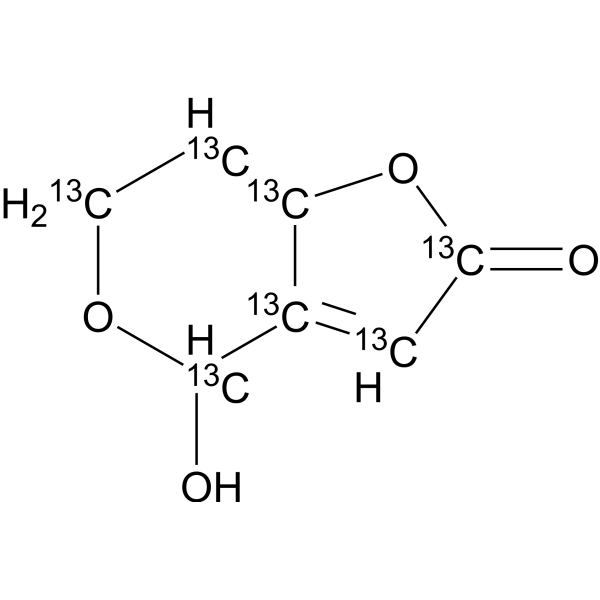
    Patulin- 13C7 (Terinin- 13C7) is the 13C labeled Patulin (HY-N6779) . Patulin (Terinin) is a mycotoxin produced by fungi including the Aspergillus, Penicillium, and Byssochlamys species, is suspected to be clastogenic, mutagenic, teratogenic and cytotoxic. Patulin induces autophagy-dependent apoptosis through lysosomal-mitochondrial axis, and causes DNA damage .
    Patulin-13C7
  • HY-N19641

    Dichlorodiaportin

    Bacterial Endogenous Metabolite Infection
    Dichlorodiaporthin (Dichlorodiaportin) is an isocoumarin metabolite found in cultures of Penicillium nalgiovense. Dichlorodiaporthin acts as an antibacterial agent against various bacterial species .
    Dichlorodiaporthin
  • HY-N19113

    Endogenous Metabolite Infection Cancer
    Emindole SB is an anticancer agent. Emindole SB can be isolated from Penicillium species. Emindole SB exerts anticancer effects against ovarian cancer, breast cancer and lymphoma. Emindole SB shows no toxicity to Caenorhabditis elegans. Emindole SB can be used in studies related to ovarian cancer, lymphoma and breast cancer .
    Emindole SB
  • HY-N6777S

    Isotope-Labeled Compounds Cancer
    Penicillic acid- 13C8 is the 13C-labeled Penicillic acid (HY-N6777). Penicillic acid is a polyketide mycotoxin produced by several species of Aspergillus and Penicillium. Penicillic acid exhibits cytotoxicity in rat alveolar macrophages (AM) in vitro. Penicillic acid inhibits Fas ligand-induced apoptosis by blocking self-processing of caspase-8 .
    Penicillic acid-13C8
  • HY-N6748S

    Isotope-Labeled Compounds P-glycoprotein Cytochrome P450 Bacterial c-Met/HGFR Infection
    Roquefortine C- 13C22 is the 13C-labeled Roquefortine C (HY-N6748). Roquefortine C is a mycotoxin that can be isolated from Penicillium species. Roquefortine C is an agonist of P-gp and an inhibitor of P450 3A and P450 1A. Roquefortine C can inhibit Gram-positive bacteria and also has certain neurotoxicity. Additionally, Roquefortine C can exert antitumor activity .
    Roquefortine C-13C22
  • HY-N17442

    Topoisomerase Caspase PARP Fungal DNA/RNA Synthesis Infection Cancer
    Echinoside A is a saponin. Echinoside A can be isolated from sea cucumber. Echinoside A inhibits the catalytic activity of Top2α, reduces the noncovalent binding of Top2α to DNA. Echinoside A activates Caspase-3 and induces PARP cleavage. Echinoside A induces Apoptosis. Echinoside A has anticancer activity against prostate cancer, hepatocellular carcinoma, and S-180 sarcoma. Echinoside A exhibits antifungal activity against a variety of fungi, with a minimum growth inhibitory concentration range of 3.12 to 50.0 μg/mL, including potent activity against Aspergillus and Penicillium species .
    Echinoside A
  • HY-N19782

    Bacterial Apoptosis Reactive Oxygen Species (ROS) Infection Neurological Disease
    Striatisporolide A is an antibacterial agent. Striatisporolide A exhibits antibacterial activity against Escherichia coli in vitro. Striatisporolide A damages the cell wall and cell membrane of Escherichia coli, and induces changes in protein levels and morphology. Striatisporolide A reduces the level of apoptosis (apoptosis) in HUVECs, inhibits excessive production of ROS, and possesses pro-proliferative and mild cytoprotective effects. Striatisporolide A can be used in studies related to bacterial infections and degenerative diseases .
    Striatisporolide A

Inquiry Online

Your information is safe with us. * Required Fields.

Salutation


Country or Region *

Applicant Name *


Organization Name *

Department *


Email Address *


Product Name *

Cat. No.


Requested quantity *

Phone Number *


Remarks

Inquiry Online

Inquiry Information

Product Name:
Cat. No.:
Quantity:
MCE Japan Authorized Agent:

