



3-Methylanisole

Based on 1 Customer Validation
Methylanisole (m-Methoxytoluene; m-MetHYlanisole) is a volatile metabolite produced by Penicillium strains growing on barley. 3-Methylanisole serves as a precursor for the biotechnological production of vanillin.
商品は「研究用試薬」です。人や動物の医療用・臨床診断用・食品用の製品ではありません。
研究用途以外に使用した場合、当社は一切の責任を負いかねます。
- CAS 番号: 100-84-5
- 分子式: C8H10O
- 分子量:122.17
-
保管条件:
Store at room temperature 3 years.
In solvent -80°C, 2 years , -20°C, 1 year


To place orders, for customer services and technical support, please contact: MedChemExpress USA
Tel: 609-228-6898 E-mail: [email protected] [email protected]


-
 生物活性
生物活性
-
化学情報
- 純度とドキュメンテーション
- 参考文献
-
 Help & FAQs


-
HY-Y0678
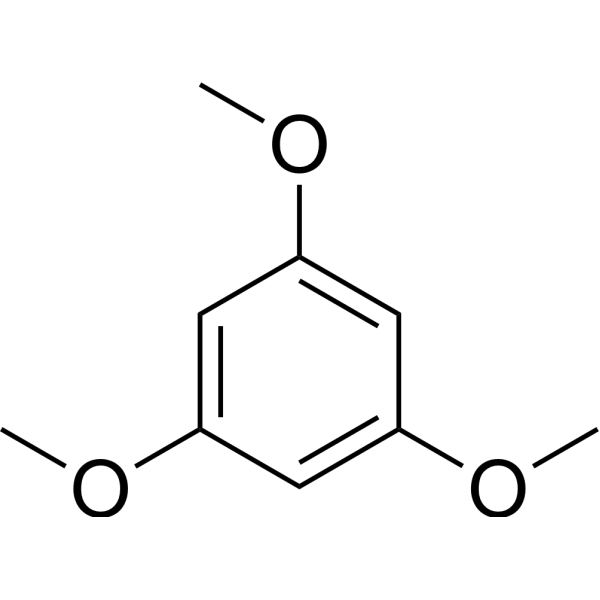
1,3,5-TrimethoxybenzeneFree Chlorine/Bromolybdenum Quencher -

HY-Y1207
EthoxybenzeneSARM1 NAD+ Hydrolase Inhibitor -

HY-W017087
1,2,4-TrimethoxybenzeneNLRP3 Inhibitor -

HY-W275882
1,6-DimethoxyhexaneTesticular Toxicant -
HY-Y0159
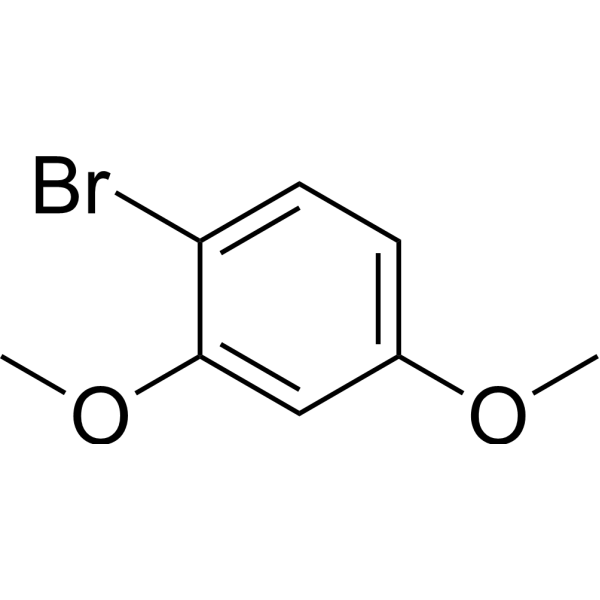
1-Bromo-2,4-dimethoxybenzeneBiochemical Reagent -
HY-N0367
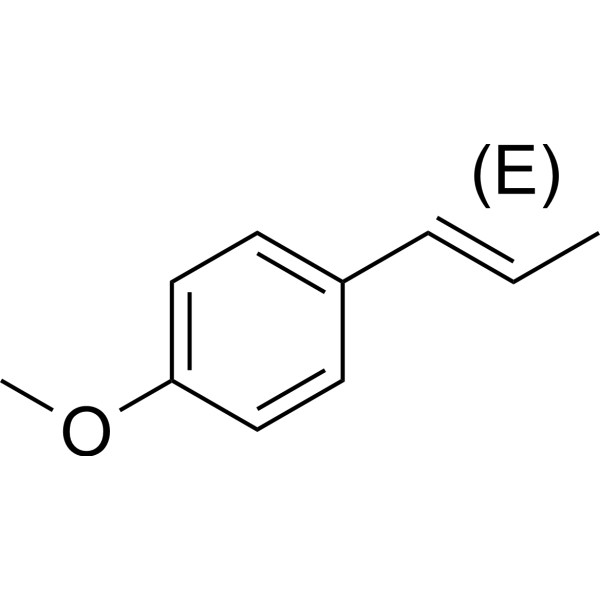
Trans-AnetholeEndogenous Metabolite -

HY-N0367R
Trans-Anethole (Standard)Endogenous Metabolite -

HY-Y0678R
1,3,5-Trimethoxybenzene (Standard)Free Chlorine/Bromolybdenum Quencher -
HY-N2439
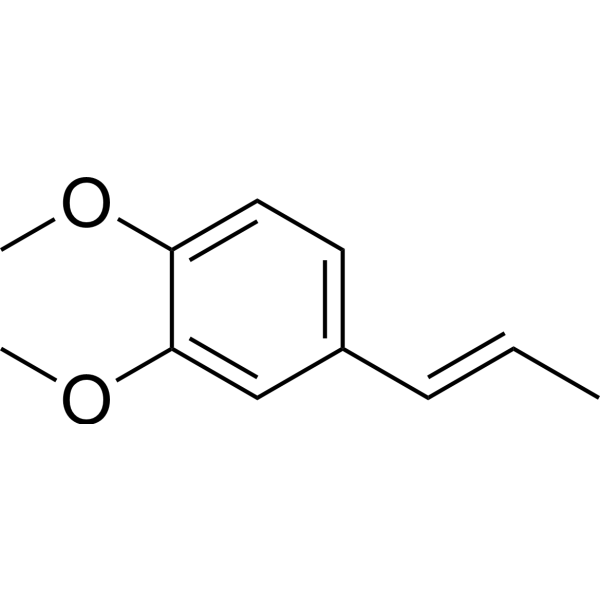
Methyl isoeugenolIsoeugenol-type Eugenol Analog -
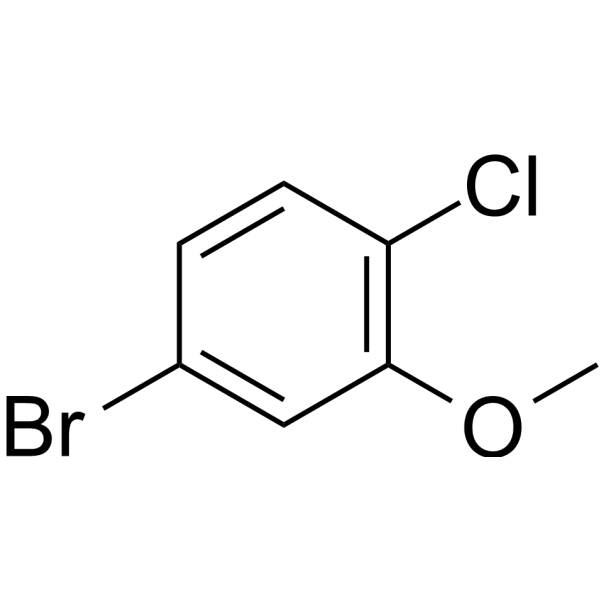
HY-W012416
5-Bromo-2-chloroanisoleBiochemical Reagent -

HY-W017834
2-(Benzyloxy)-1-ethanamineBiochemical Reagent -

HY-N2439R
Methyl isoeugenol (Standard)Anxiolytic/Antidepressant Agent
Endogenous Metabolite アイソフォーム固有の製品をすべて表示
More

生物活性
製品説明
体外実験
3-Methylanisole is produced by Saccharomyces cerevisiae CEN.PK2-1C expressing OOMT2 via conversion of 3-methylphenol[1].
3-Methylanisole (7 d) is produced in small quantities (100-400 area units) by Penicillium aurantiogriseum, Penicillium viridicatum, and Penicillium coprophilum grown on radiation-sterilized barley, while Penicillium verrucosum does not produce detectable levels of this volatile metabolite[2].
MedChemExpress (MCE) has not independently confirmed the accuracy of these methods. They are for reference only.


化学情報
-
CAS 番号 100-84-5
-
性状 Liquid
-
分子量 122.17
-
分子式 C8H10O
-
Color Colorless to light yellow
-
SMILES
CC1=CC(OC)=CC=C1
-
別名
m-Methoxytoluene; m-Methylanisole
-
輸送条件
Room temperature in continental US; may vary elsewhere.
-
保管条件
Store at room temperature 3 years
In solvent -80°C 2 years -20°C 1 year


純度とドキュメンテーション
-
データシート (267 KB)
-
SDS (604 KB)
- English - EN (604 KB)
- Français - FR (604 KB)
- Deutsch - DE (604 KB)
- Norwegian - NO (604 KB)
- Español - ES (604 KB)
- Swedish - SV (604 KB)
- Italian - IT (604 KB)
- Korean - KR (604 KB)
- Portuguese - PT (604 KB)
-
取扱説明書 (2659 KB)
参考文献
[1]. Hitschler J, et al. Improving 3-methylphenol (m-cresol) production in yeast via in vivo glycosylation or methylation. FEMS Yeast Res. 2020;20(8):foaa063. [Content Brief]
[2]. Wilkins CK, et al. Volatile metabolites of some barley storage molds. Int J Food Microbiol. 1989;8(1):11-17. [Content Brief]

Calculators
濃度 (開始) × 体積 (開始) = 濃度 (終了) × 体積 (終了)


3-Methylanisole 関連分類
HY-115127 関連分類
 Powered by Bioz
Keywords
- 3-Methylanisole
- 100-84-5
- m-Methoxytoluene
- m-Methylanisole
- Endogenous Metabolite
- Bacterial
- Saccharomyces cerevisiae CEN.PK2-1C
- Saccharomyces cerevisiae JHY281 (ΔPGI1)
- dodecane
- Penicillium species
- barley
- Saccharomyces cerevisiae JHY162
- 6-methylsalicylic acid
- orcinol-O-methyltransferase (OOMT2)
- yeast
- vanillin
- Inhibitor
- inhibitor
- inhibit