1. Search Result
Search Result
Isoforms Recommended: SGK1
Results for "

SGK1

" in MedChemExpress (MCE) Product Catalog:

24

Inhibitors & Agonists

2

Recombinant Proteins

2

Antibodies

3

Oligonucleotides

Targets Recommended:
Cat. No. Product Name Target Research Areas Chemical Structure
  • HY-15193
    EMD638683
    15+ Cited Publications

    SGK NOD-like Receptor (NLR) Interleukin Related Apoptosis Cardiovascular Disease Cancer
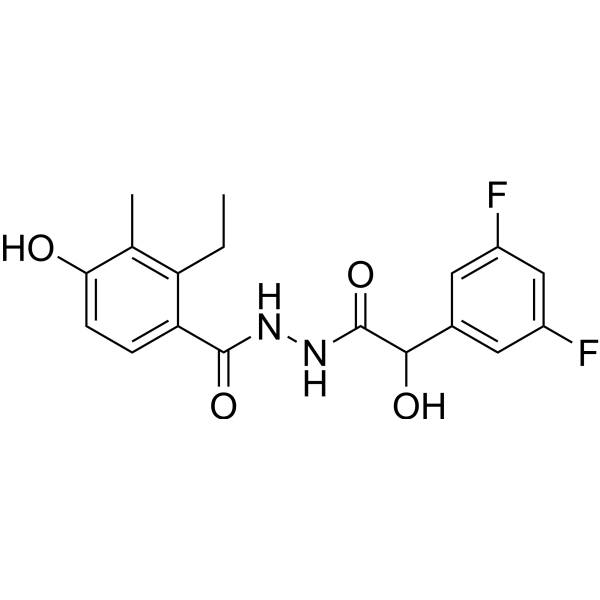
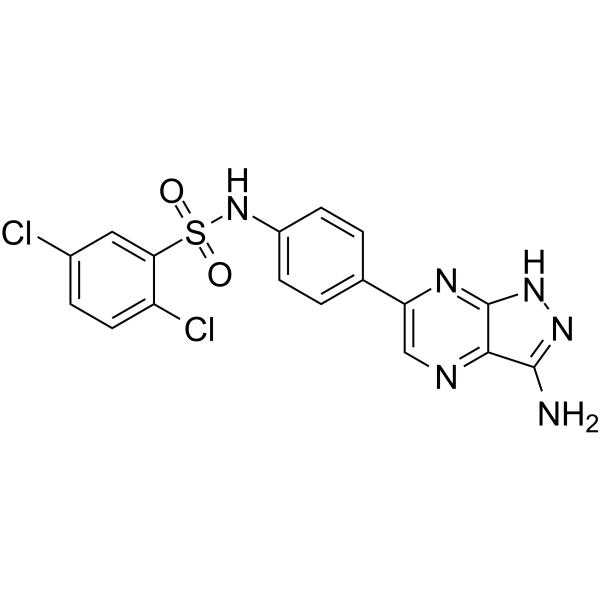
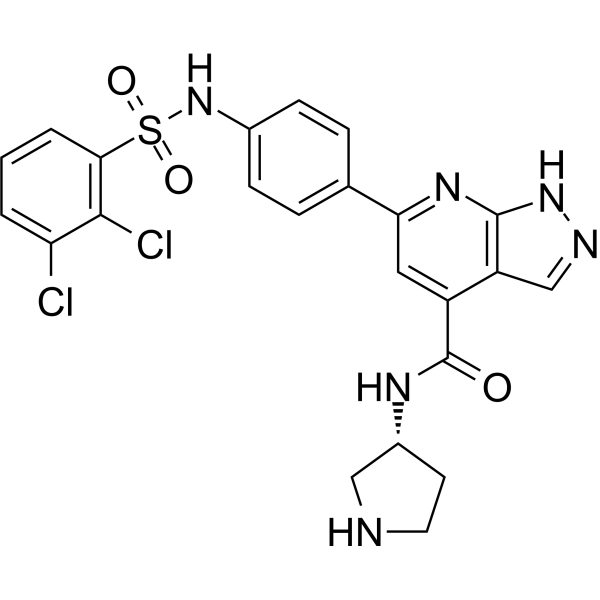
    EMD638683 is an orally active SGK1 inhibitor with an IC50 of 3 μM. EMD638683 exhibits strong inhibition against SGK1, moderate inhibition against SGK2 and SGK3, and shows excellent selectivity for other AGC kinase family members. EMD638683 has antihypertensive activity by inhibiting SGK1, and independently of the blood pressure-lowering effect, it effectively prevents heart inflammation and fibrosis caused by hypertension by inhibiting the cardiac NLRP3 inflammation body/ IL-1β axis. EMD638683 promotes apoptosis of colon cancer cells and sensitizes radiotherapy. EMD638683 (S-Form) can be used in research related to hypertension, hypertensive heart damage, and colon cancer [1] .
    EMD638683
  • HY-15192
    GSK 650394
    Maximum Cited Publications
    26 Publications Verification

    SGK Influenza Virus Infection Cancer
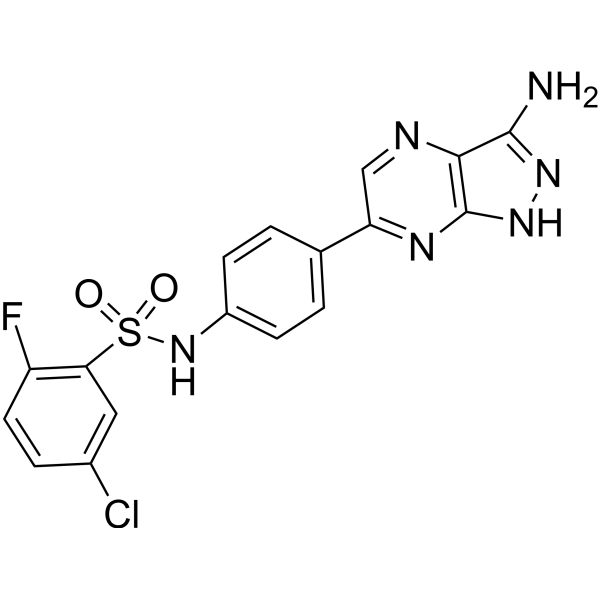
    GSK 650394 is a novel SGK inhibitor with IC50 of 62 nM and 103 nM for SGK1 and SGK2 in the SPA assay respectively. GSK 650394 also inhibits influenza virus replication.
    GSK 650394
  • HY-142687
    SGK1-IN-4
    2 Publications Verification

    SGK Inflammation/Immunology
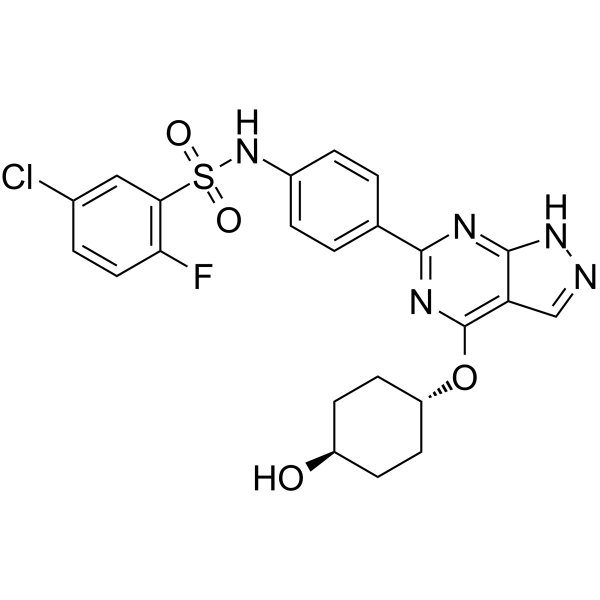
    SGK1-IN-4 (compound 17a) is a highly selective, orally active SGK1 inhibitor. SGK1-IN-4 can be used for osteoarthritis research [1].
    SGK1-IN-4
  • HY-142686A

    SGK CDK P-glycoprotein Inflammation/Immunology
    SGK1-IN-3 hydrochloride (Compound 3a) is an ATP-competitive SGK1 inhibitor with an IC50 of <1 nM against hSGK1. SGK1-IN-3 hydrochloride blocks the activity of CDK family members. SGK1-IN-3 hydrochloride serves as a P-glycoprotein substrate. SGK1-IN-3 can be used for the research of osteoarthritis [1].
    SGK1-IN-3 hydrochloride
  • HY-18607
    SGK1-IN-1
    2 Publications Verification

    SGK Inflammation/Immunology
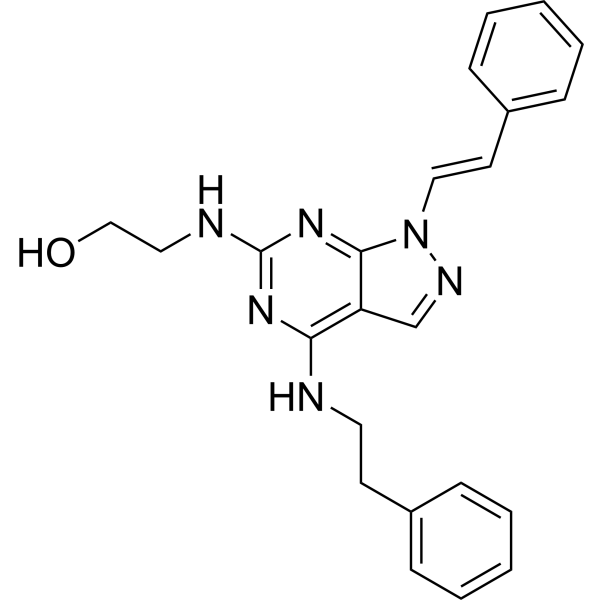
    SGK1-IN-1 is a highly active and selective inhibitor of SGK-1, with an IC50 of 1 nM.
    SGK1-IN-1
  • HY-135893

    SGK Cardiovascular Disease Metabolic Disease Inflammation/Immunology Cancer
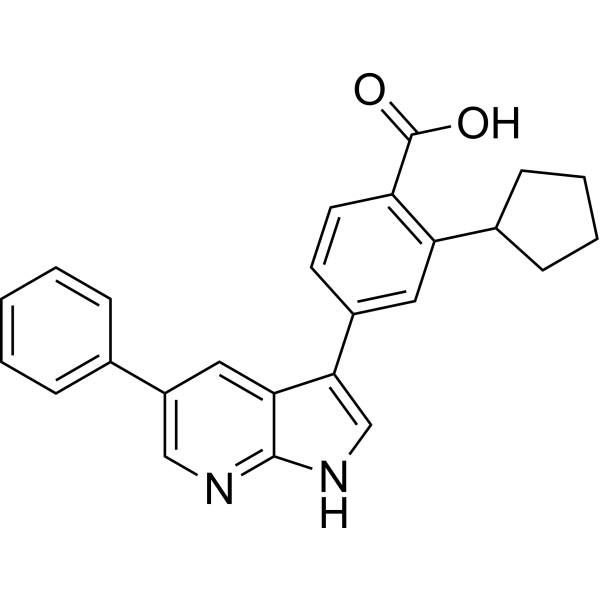
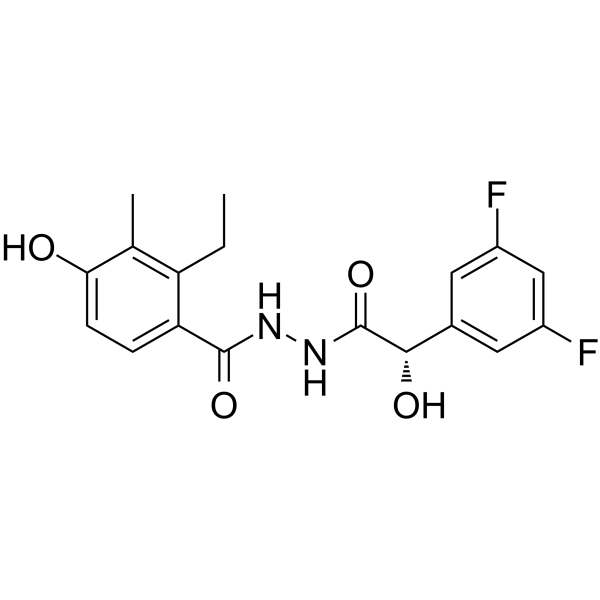
    SGK1-IN-2 (Compound 14h) is a selective, ATP-competitive SGK1 inhibitor, with an IC50 of 0.005 μM at 10 μM ATP and an IC50 of 0.025 μM at 500 μM ATP. SGK1-IN-2 can be used in studies of cancer, hypertension and diabetes [1].
    SGK1-IN-2
  • HY-117357

    SGK Cancer
    SI-113 is a SGK1 inhibitor, with an IC50 of 600 nM. SI113 induces autophagy [1] .
    SI-113
  • HY-167832

    JNK SGK ROCK Tau Protein MMP DNA/RNA Synthesis Pyruvate Kinase NF-κB COX NO Synthase Reactive Oxygen Species (ROS) Neurological Disease Cancer
    PT109 is an orally active, blood-brain barrier permeable multi-kinase inhibitor. By inhibiting PTBP1, PT109 promotes the switch of pyruvate kinase isoform from PKM2 to PKM1, thereby effectively inhibiting the proliferation and migration of glioblastoma multiforme and inducing its reprogramming into oligodendrocytes. PT109 also targets and regulates key signaling molecules such as JNK, SGK1, GSK3β to exert neuroprotective effects including promoting neurogenesis, inducing synapse formation and alleviating neuroinflammation. In Alzheimer's disease models, PT109 exhibits significant efficacy in improving spatial learning ability, along with excellent in vivo pharmacokinetic properties. PT109 can be used to investigate metabolic reprogramming of glioblastoma multiforme and neuroprotective mechanisms of Alzheimer's disease [1] .
    PT109
  • HY-128221

    SGK Inflammation/Immunology
    SGK1-IN-5 is a SGK1 inhibitor with an IC50 of 0.003 μM. SGK1-IN-5 can be used for the research of osteoarthritis, rheumatism [1].
    SGK1-IN-5
  • HY-170933

    SGK Cancer
    SGK1-IN-6 is a selective SGK1 inhibitor with an IC50 of 0.39 μM, showing selectivity over SGK2/3. SGK1-IN-6 inhibits cancer cell migration and invasion, improves SGK1 protein thermal stability. SGK1-IN-6 decreases SGK1 protein levels in tumor tissues, suppresses tumor growth in mouse xenograft models. SGK1-IN-6 can be used for the research of prostate cancer [1].
    SGK1-IN-6
  • HY-15193B

    SGK Drug Isomer Cardiovascular Disease Cancer
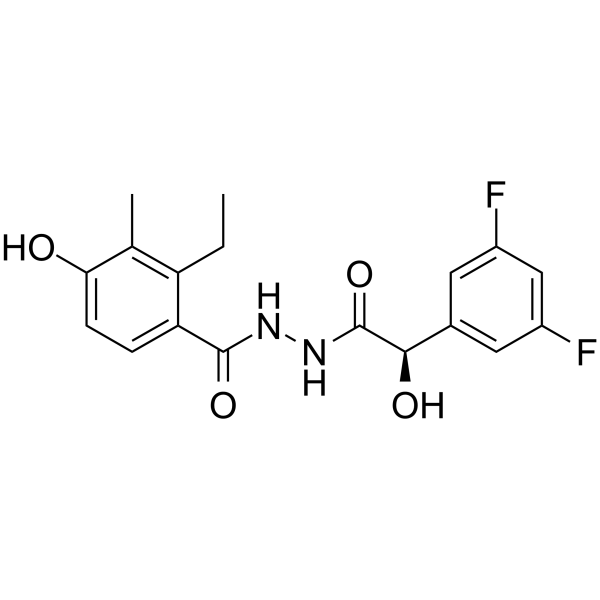
    EMD638683 (S-Form) (Compound 1a), the S-enantiomer of EMD638683 (HY-15193), is a SGK1 inhibitor with an IC50 value > 300 nM. EMD638683 is an orally active SGK1 inhibitor with an IC50 of 3 μM. EMD638683 exhibits strong inhibition against SGK1, moderate inhibition against SGK2 and SGK3, and shows excellent selectivity for other AGC kinase family members. EMD638683 has antihypertensive activity by inhibiting SGK1, and independently of the blood pressure-lowering effect, it effectively prevents heart inflammation and fibrosis caused by hypertension by inhibiting the cardiac NLRP3 inflammation body/ IL-1β axis. EMD638683 promotes apoptosis of colon cancer cells and sensitizes radiotherapy. EMD638683 (S-Form) can be used in research related to hypertension, hypertensive heart damage, and colon cancer [1] .
    EMD638683 (S-Form)
  • HY-142686

    SGK P-glycoprotein CDK Inflammation/Immunology
    SGK1-IN-3 (Compound 3a) is an ATP-competitive SGK1 inhibitor with an IC50 of <1 nM against hSGK1. SGK1-IN-3 blocks the activity of CDK family members. SGK1-IN-3 is a P-glycoprotein substrate. SGK1-IN-3 can be used for research on osteoarthritis [1].
    SGK1-IN-3
  • HY-15193A
    EMD638683 (R-Form)
    2 Publications Verification

    SGK Cardiovascular Disease Cancer
    EMD638683 R-Form is the R-form of EMD638683 (HY-15193). EMD638683 is a highly selective SGK1 inhibitor.
    EMD638683 (R-Form)
  • HY-RS12800

    Small Interfering RNA (siRNA) SGK Others

    Sgk1 Rat Pre-designed siRNA Set A contains three designed siRNAs for Sgk1 gene (Rat), as well as a negative control, a positive control, and a FAM-labeled negative control.

    Sgk1 Rat Pre-designed siRNA Set A
    Sgk1 Rat Pre-designed siRNA Set A
  • HY-RS12799

    Small Interfering RNA (siRNA) SGK Others

    Sgk1 Mouse Pre-designed siRNA Set A contains three designed siRNAs for Sgk1 gene (Mouse), as well as a negative control, a positive control, and a FAM-labeled negative control.

    Sgk1 Mouse Pre-designed siRNA Set A
    Sgk1 Mouse Pre-designed siRNA Set A
  • HY-RS12798

    Small Interfering RNA (siRNA) SGK Others

    SGK1 Human Pre-designed siRNA Set A contains three designed siRNAs for SGK1 gene (Human), as well as a negative control, a positive control, and a FAM-labeled negative control.

    SGK1 Human Pre-designed siRNA Set A
    SGK1 Human Pre-designed siRNA Set A
  • HY-15193R

    Reference Standards SGK NOD-like Receptor (NLR) Interleukin Related Apoptosis Cardiovascular Disease Cancer
    EMD638683 (Standard) is the analytical standard of EMD638683. This product is intended for research and analytical applications. EMD638683 is an orally effective SGK1 inhibitor with an IC50 of 3 μM. EMD638683 exhibits strong inhibition against SGK1, moderate inhibition against SGK2 and SGK3, and shows excellent selectivity for other AGC kinase family members. EMD638683 has antihypertensive activity by inhibiting SGK1, and independently of the blood pressure-lowering effect, it effectively prevents heart inflammation and fibrosis caused by hypertension by inhibiting the cardiac NLRP3 inflammation body/ IL-1β axis. EMD638683 promotes apoptosis of colon cancer cells and sensitizes radiotherapy. EMD638683 (S-Form) can be used in research related to hypertension, hypertensive heart damage, and colon cancer.
    EMD638683 (Standard)
  • HY-143898

    Pim Cancer
    PIM1-IN-4 (Compound 8) is a potent inhibitor of PIM1. PIM1-IN-4 reveals strong inhibition of five other enzymes, i.e., SGK-1, PKA, CaMK-1, GSK3β, and MSK1. PIM1-IN-4 has the potential for the research of cancer diseases [1].
    PIM1-IN-4
  • HY-15192R

    SGK Influenza Virus Infection Cancer
    GSK 650394 (Standard) is the analytical standard of GSK 650394. This product is intended for research and analytical applications. GSK 650394 is a novel SGK inhibitor with IC50 of 62 nM and 103 nM for SGK1 and SGK2 in the SPA assay respectively. GSK 650394 also inhibits influenza virus replication.
    GSK 650394 (Standard)
  • HY-176823

    PROTACs SGK Cancer
    PROTAC SGK3 degrader-2 is the cis epimer of PROTAC SGK3 degrader-1 (SGK3-PROTAC1) (HY-125878), with a cis hydroxyl group in its VH032 moiety, which is incapable of binding to the VHL E3 ligase. PROTAC SGK3 degrader-2 exhibits inhibitory activity against SGK3, SGK1, and S6K1 with IC50 values of 0.6 μM, 1.4 μM, and 1.7 μM, respectively, but shows no SGK3 degradation efficiency. PROTAC SGK3 degrader-2 can be used as a control compound to study the specific effects of SGK3-PROTAC1-mediated SGK3 degradation. (Pink: SGK3 ligand (HY-167701), Blue: VHL Ligand (HY-120217A), Black: Linker (HY-130618), SGK3 ligand-linker conjugate (HY-176824)) [1].
    PROTAC SGK3 degrader-2
  • HY-185412

    SGK Cancer
    SGK1-IN-9 (Compound 1) is a SGK1 inhibitor. SGK1-IN-9 can be used in cancer research [1].
    SGK1-IN-9
  • HY-182342

    SGK Neurological Disease
    SGK1-IN-8 (compound 55) is a SGK1 and GSK3β inhibitor, with an IC50 of 0.11 μM against human SGK1 and an IC50 of 3.39 μM against human GSK3β. SGK1-IN-8 inhibits the catalytic activities of SGK1 and GSK3β, and reduces the phosphorylation level of TAU protein at the Ser214 site. SGK1-IN-8 is available for the research of Alzheimer's disease [1].
    SGK1-IN-8
  • HY-182323

    SGK Tau Protein Neurological Disease
    SGK1-IN-7 is a blood-brain barrier-permeable SGK1 inhibitor with an IC50 of 0.72 μM. SGK1-IN-7 reduces the phosphorylation level of TAU protein at the Ser396 and Ser214 epitopes. SGK1-IN-7 antagonizes the toxicity induced by Okadaic acid (HY-N6785). SGK1-IN-7 can be used in the research of Alzheimer's disease [1].
    SGK1-IN-7
  • HY-E70860

    SGK Cancer
    SGK2 belongs to the SGK family of AGC kinases, which includes SGK1, SGK2, and SGK3 gene. SGK2 upregulation promotes the progression of metastasis in bladder, kidney, and colon cancers. SGK2 Recombinant Human Active Protein Kinase is a recombinant SGK2 protein that can be used to study SGK2-related functions [1].
    SGK2 Recombinant Human Active Protein Kinase

Inquiry Online

Your information is safe with us. * Required Fields.

Salutation


Country or Region *

Applicant Name *


Organization Name *

Department *


Email Address *


Product Name *

Cat. No.


Requested quantity *

Phone Number *


Remarks

Inquiry Online

Inquiry Information

Product Name:
Cat. No.:
Quantity:
MCE Japan Authorized Agent:

