Search Result
Results for "
Thiophene
" in MedChemExpress (MCE) Product Catalog:
5
Biochemical Assay Reagents
3
Isotope-Labeled Compounds
| Cat. No. |
Product Name |
Target |
Research Areas |
Chemical Structure |
-
- HY-138161
-
JR14a
Maximum Cited Publications
8 Publications Verification
|
Complement System
|
Inflammation/Immunology
|
|
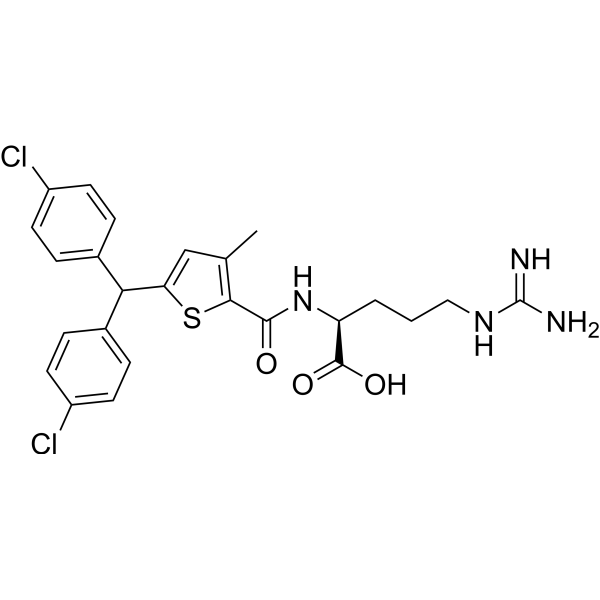
JR14a is a potent thiophene antagonist of human complement C3a receptor. JR14a shows selectivity for the human C3a receptor over C5a receptor. JR14a can suppress C3aR-mediated inflammation .
|
-
-
- HY-104027
-
-
-
- HY-N2048
-
|
α-TerThiophene; α-Terthienyl; TriThiophene
|
Environmental Pollutants
Antibiotic
Bacterial
|
Infection
|
|
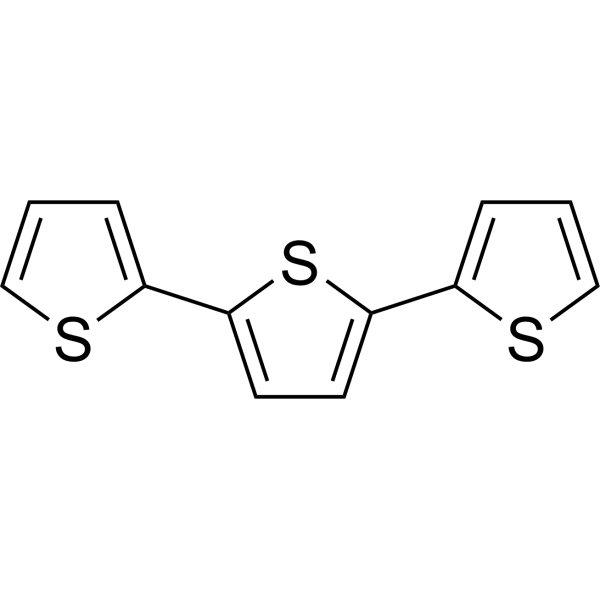
2,2':5',2''-Terthiophene (α-Terthiophene) is an oligomer of the heterocycle thiophene. 2,2':5',2''-Terthiophene has been employed as building block for the organic semi-conductor polythiophene.
|
-
-
- HY-13769A
-
|
NSC55712; TPU-260 Dihydrochloride
|
Drug Derivative
Amyloid-β
Beta-secretase
|
Cardiovascular Disease
Neurological Disease
Inflammation/Immunology
|
|
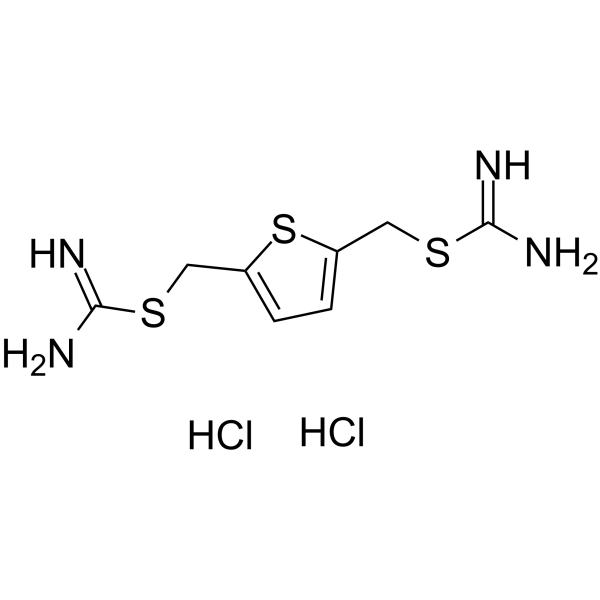
TPT-260 Dihydrochloride (NSC55712), a thiophene thiourea derivative, is a retromer complex stabilizer against thermal denaturation (Kd = ~5 µM). TPT-260 Dihydrochloride increases the levels of retromer proteins, shifts amyloid-precursor protein (APP) away from the endosome, and decreases the pathogenic processing of APP. TPT-260 Dihydrochloride inhibits TLR4 upregulation, IKKβ phosphorylation, NF-κB p65 nuclear translocation, and NLRP3 inflammasome formation. TPT-260 Dihydrochloride improves retromer-mediated cargo trafficking, reduces brain infarct area, and decreases amyloid plaque deposition. TPT-260 Dihydrochloride exhibits minimal cytotoxicity to primary microglia at tested concentrations. TPT-260 Dihydrochloride can be used for the research of inflammatory bowel disease, ischemic stroke and Alzheimer's disease .
|
-
-
- HY-W002251
-
|
|
Biochemical Assay Reagents
|
Others
|
|
Benzo[b]thiophene-3-carbaldehyde is a 3-formyl-substituted benzo[b]thiophene derivative that acts as an oxidizable substrate to convert to benzo[b]thiophene-3-carboxylic acid under liquid-phase conditions. Compared with analogs such as benzaldehyde and thiophene-2-carbaldehyde, Benzo[b]thiophene-3-carbaldehyde has lower oxidation difficulty, and can significantly increase the reaction rate in the presence of initiators (such as Na +Br - or DBA). Benzo[b]thiophene-3-carbaldehyde also serves as a key starting material for the synthesis of compounds including heteroaryl chalcones .
|
-
-
- HY-W012941
-
|
Thiophene-2-carboxaldehyde
|
Antibiotic
Bacterial
Parasite
|
Infection
|
|
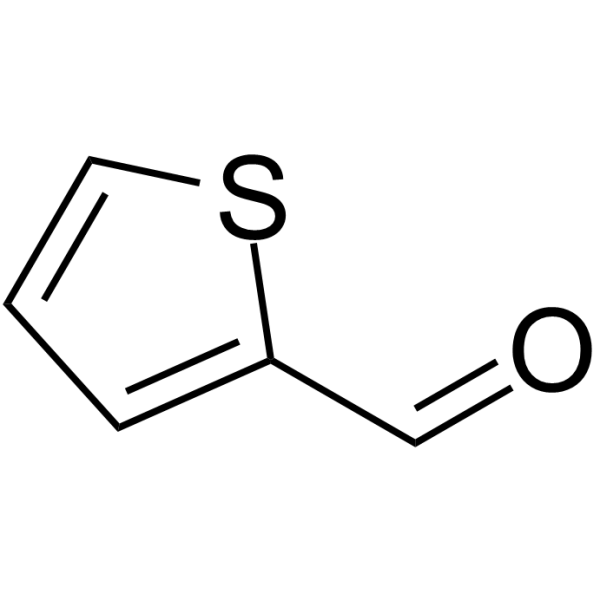
2-Thiophenecarboxaldehyde (Thiophene-2-carboxaldehyde) is an antibiotic that exhibits antibacterial and nematicidal activities .
|
-
-
- HY-14175
-
|
GSI-953
|
γ-secretase
|
Neurological Disease
|
|
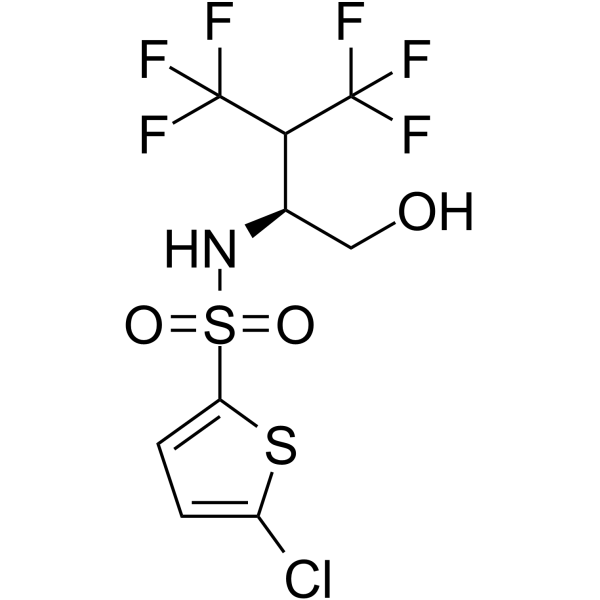
Begacestat (GSI-953) is a selective thiophene sulfonamide inhibitor of amyloid precursor protein gamma-secretase (IC50Aβ40=15 nM) for the treatment of Alzheimer's disease .
|
-
-
- HY-120553
-
|
|
Apoptosis
|
Neurological Disease
|
|
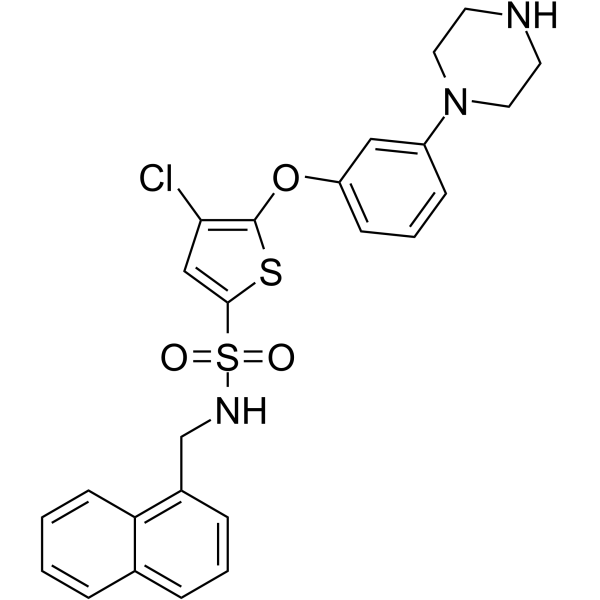
B355252, a phenoxy thiophene sulfonamide small molecule, is a potent NGF receptor agonist. B355252 potentiates NGF-induced neurite outgrowth. B355252 protects ischemic neurons from neuronal loss by attenuating DNA damage, reducing ROS production and the LDH level, and preventing neuronal apoptosis. B355252 has anti-apoptotic effects in glutamate-induced excitotoxicity, as well as in a murine hippocampal cell line (HT22) model of Parkinson disease (PD) .
|
-
-
- HY-117145
-
|
|
Bacterial
|
Infection
|
|
Thiophene-2 (TP2) is a specific polyketide synthase 13 (Pks13) inhibitor. Thiophene-2 inhibits mycolic acid biosynthesis and rapidly leads to mycobacterial cell death. Thiophene-2 is active against Mycobacterium tuberculosis with a MIC value of 1 μM, and has potent anti-tuberculosis activity .
|
-
-
- HY-I0182
-
|
|
Drug Intermediate
|
Others
|
|
2-(4-Fluorophenyl)-5-[(5-iodo-2-methylphenyl) methyl]thiophene is a drug intermediate for synthesis of various active compounds.
|
-
-
- HY-13465
-
VCH-916
1 Publications Verification
|
HCV
|
Infection
|
|
VCH-916 is a thiophene derivative and non-nucleoside inhibitor of HCV NS5B polymerase with sub-micromolar IC50 values versus genotype 1a and 1b replicons. VCH-916 binds to Thumb Site II. VCH-916 can be used for the research of hepatitis c virus (hcv) infection .
|
-
-
- HY-Y0024
-
|
|
Environmental Pollutants
Drug Intermediate
|
Others
|
|
4-Methoxyacetophenone is a versatile aromatic ketone that is widely used in the synthesis of various organic compounds. 4-Methoxyacetophenone has a pleasant aroma and can be used to create scents. 4-Methoxyacetophenone can also be used to make dyes and pigments .
|
-
-
- HY-I0565
-
|
|
Drug Intermediate
|
Others
|
|
2-(5-Bromo-2-fluorobenzyl)benzo[b]thiophene is a drug intermediate for synthesis of various active compounds.
|
-
-
- HY-150053
-
|
|
JNK
|
Neurological Disease
|
|
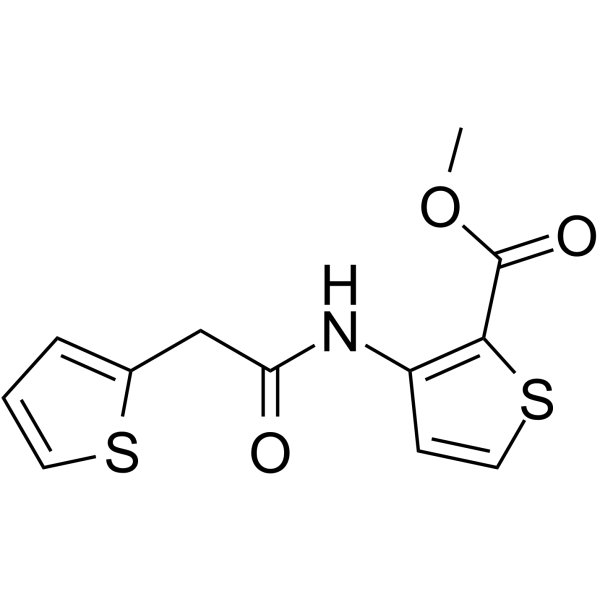
JNK-IN-11 (compound 1) is a potent JNK inhibitor with an IC50 value of 2.2, 21.4, 1.8 µM for JNK1, JNK2, JNK3, respectively. JNK-IN-11 has the potential for the research of alzheimer and parkinson disease .
|
-
-
- HY-148481
-
|
|
Deubiquitinase
|
Cancer
|
|
USP7-IN-10 (compound 1) is a potent ubiquitin-specific protease 7 (USP7) inhibitor, with an IC50 of 13.39 nM .
|
-
-
- HY-59299
-
|
|
Biochemical Assay Reagents
Drug Intermediate
|
Others
|
|
3-Bromothiophene is a bromine atom-substituted 3-halogenated thiophene. Polymers of 3-Bromothiophene are conductive polymers and have potential optoelectronic application value. Additionally, 3-Bromothiophene serves as a key intermediate for the synthesis of a variety of important pharmaceuticals, agrochemicals, and cosmetics .
|
-
-
- HY-W016900
-
|
Thiophene-2,5-dicarboxylate
|
MOFs
|
Others
|
|
Thiophene-2,5-dicarboxylic acid (Thiophene-2,5-dicarboxylate) is a metal-organic framework (MOF).
|
-
-
- HY-117052
-
-
-
- HY-20379
-
|
Thiophene-2-carboxylate
|
Drug Intermediate
|
Others
|
|
Rivaroxaban impurity 50 (thiophene-2-carboxylate) is an impurity of Rivaroxaban.
|
-
-
- HY-I0207
-
|
|
Drug Intermediate
|
Others
|
|
2-(5-Iodo-2-methylbenzoyl)-5-(4-fluorophenyl)thiophene is a drug intermediate for synthesis of various active compounds.
|
-
-
- HY-148431
-
|
|
Bacterial
|
Infection
|
|
Antimicrobial agent-14, a benzyl thiophene sulfonamide derivative is an antimicrobial agent, with a MIC of 200 μM against Campylobacter coli ATCC33559. Antimicrobial agent-14 can be used for the research of bacterial foodborne gastroenteritis .
|
-
-
- HY-I0563
-
|
α-(5-Bromo-2-fluorophenyl)benzo[b]Thiophene-2-methanol
|
Drug Intermediate
|
Others
|
|
Benzo[b]thiophen-2-yl(5-bromo-2-fluorophenyl)methanol (α-(5-Bromo-2-fluorophenyl)benzo[b]thiophene-2-methanol) is a drug intermediate for synthesis of various active compounds.
|
-
-
- HY-W004615
-
|
|
Biochemical Assay Reagents
|
Others
|
|
Thiophene-3-carboxylic acid is a biochemical reagent that can be used as a biological material or organic compound for life science related research.
|
-
-
- HY-W045268
-
|
|
Drug Intermediate
|
Others
|
|
Ethyl-2-amino-4-phenyl thiophene-3-carboxylate is a synthetic intermediate useful for pharmaceutical synthesis.
|
-
-
- HY-151581
-
|
|
Virus Protease
|
Infection
|
|
HCVcc-IN-1 is a benzothiazole-2-thiophene S-glycoside derivative with low toxic and antiviral activity .
|
-
-
- HY-176753
-
|
|
Liposome
|
Inflammation/Immunology
|
|
Lipid 20b is a thiophene ionizable cationic lipid. Lipid 20 b can be used to generate lipid nanoparticles (LNPs) for the delivery of mRNA in vivo. Lipid 20b can be studied in research for enhancing mRNA vaccine delivery and transfection efficacy .
|
-
-
- HY-W001968
-
|
3-TC
|
Drug Intermediate
|
Others
|
|
3-Thiophenecarboxaldehyde is a thiophene derivative substrate for biocatalytic reduction to 3-thiophenemethanol, and can be processed by Pseudomonas putida S12 cells. 3-Thiophenecarboxaldehyde functions as an intermediate compound. 3-Thiophenecarboxaldehyde exhibits toxicity toward Pseudomonas putida S12 cells at elevated concentrations, reducing specific growth rate and final biomass yield .
|
-
-
- HY-13769
-
|
TPU260
|
Drug Derivative
Beta-secretase
Amyloid-β
|
Cardiovascular Disease
Neurological Disease
Inflammation/Immunology
|
|
TPT-260 (TPU260), a thiophene thiourea derivative, is a retromer complex stabilizer against thermal denaturation (Kd = ~5 µM). TPT-260 increases the levels of retromer proteins, shifts amyloid-precursor protein (APP) away from the endosome, and decreases the pathogenic processing of APP. TPT-260 inhibits TLR4 upregulation, IKKβ phosphorylation, NF-κB p65 nuclear translocation, and NLRP3 inflammasome formation. TPT-260 improves retromer-mediated cargo trafficking, reduces brain infarct area, and decreases amyloid plaque deposition. TPT-260 exhibits minimal cytotoxicity to primary microglia at tested concentrations. TPT-260 can be used for the research of inflammatory bowel disease, ischemic stroke and Alzheimer's disease .
|
-
-
- HY-W004615R
-
|
|
Biochemical Assay Reagents
Reference Standards
|
Others
|
|
Thiophene-3-carboxylic acid (Standard) is the analytical standard of Thiophene-3-carboxylic acid. This product is intended for research and analytical applications. Thiophene-3-carboxylic acid is a biochemical reagent that can be used as a biological material or organic compound for life science related research.
|
-
-
- HY-W202854
-
|
|
Drug Isomer
|
Others
|
|
Methiopropamine 3’-thiophene isomer is an isomer of Methiopropamine that has the sulfur atom of the thiophene group at the 3 position.
|
-
-
- HY-N3795
-
|
EchinoyneThiophene A; Thiophene A dio
|
Others
|
Others
|
|
Thiophene E (Echinoynethiophene A) is a natural product .
|
-
-
- HY-W012941R
-
|
Thiophene-2-carboxaldehyde (Standard)
|
Reference Standards
Antibiotic
Bacterial
Parasite
|
Infection
|
|
2-Thiophenecarboxaldehyde (Standard) is the analytical standard of 2-Thiophenecarboxaldehyde. This product is intended for research and analytical applications. 2-Thiophenecarboxaldehyde (Thiophene-2-carboxaldehyde) is an antibiotic that exhibits antibacterial and nematicidal activities .
|
-
-
- HY-147951
-
|
|
COX
Lipoxygenase
|
Inflammation/Immunology
|
|
COX-2/5-LOX-IN-3 (compound 5b) is a potent and dual COX-2/5-LOX inhibitor with IC50 values of 45.73, 5.45 and 4.33 μM for COX-1, COX-2, and 5-LOX, respectively. COX-2/5-LOX-IN-3 has the potential for the research of inflammation diseases .
|
-
-
- HY-151588
-
|
|
Virus Protease
|
Cancer
|
|
Anticancer agent 90 is a benzothiazole-2-thiophene S-glycoside derivative with antitumor activity. Anticancer agent 90 has high inhibition against the two cell line from ovarian cancer (OVCAR-4), renal cancer (A498) .
|
-
-
- HY-151592
-
|
|
Antibiotic
|
Cancer
|
|
Anticancer agent 91 is a benzothiazole-2-thiophene S-glycoside derivative with antitumor and antiviral activity. Anticancer agent 91 has high inhibition against the two cell line from CNS cancer (SF-539 and SNB-75) .
|
-
-
- HY-151587
-
|
|
Others
|
Cancer
|
|
Anticancer agent 89 is a benzothiazole-2-thiophene S-glycoside derivative with antitumor activity, has high inhibition against the three cell line from ovarian cancer (OVCAR-4), renal cancer (A498), and melanoma (SK-MEL-5) .
|
-
-
- HY-Z4441R
-
|
|
Reference Standards
|
|
|
Methyl 5-chloro-3-[(methylamino)sulfonyl]-thiophene-2-carboxylate (Lornoxicam Impurity) (Standard) is the analytical standard of Methyl 5-chloro-3-[(methylamino)sulfonyl]-thiophene-2-carboxylate (Lornoxicam Impurity). This product is intended for research and analytical applications.
|
-
-
- HY-151589
-
|
|
Virus Protease
|
Infection
Cancer
|
|
HCVcc-IN-2 is a benzothiazole-2-thiophene S-glycoside derivative with antitumor and antiviral activity. HCVcc-IN-2 has high inhibition against the three cell line from CNS cancer (SF-539 and SNB-75), colon cancer (HCT-116), and renal cancer (A498) .
|
-
-
- HY-148548
-
|
|
Amyloid-β
|
Neurological Disease
|
|
p-HTAA is a pentamer hydrogen thiophene acetic acid. p-HTAA specifically labels Aβ deposits in the mice living brain .
|
-
-
- HY-12384
-
|
|
COX
|
Inflammation/Immunology
|
|
Tenosal is a new compound obtained by esterifying salicylic acid with 2-thiophene-carboxylic acid and displays anti-inflammatory, analgesic and antipyretic properties.
|
-
-
- HY-W159102
-
|
|
Parasite
|
Infection
|
|
8CN, a 2-amino-thiophene derivative, has anti-leishmanial activity. 8CN can be used in research of Leishmaniasis .
|
-
-
- HY-163521
-
|
|
Influenza Virus
|
Cancer
|
|
Neuraminidase-IN-19 (compound 5n) is an inhibitor (IC50: 0.13 μM) of neuraminidase with a thiophene ring (neuraminidase) and has anticancer activity .
|
-
-
- HY-170940
-
|
|
DYRK
Enterovirus
|
Infection
|
|
Dyrk1A-IN-12 (compound S43) is a Dyrk (Dual specificity tyrosine phosphorylation regulated kinase 1A inhibitor. Dyrk1A-IN-12 inhibits Dyrk1A with a IC50 of 95 nM. Dyrk1A-IN-12 shows anti-EV-A71 activity with an EC50 of 4.4 μM, CC50 of 12.8 μM and SI of 2.9. Dyrk1A-IN-12 shows potent inhibition against herpes simplex virus (HSV) .
|
-
-
- HY-117817
-
|
|
Endogenous Metabolite
|
Metabolic Disease
|
|
Ranelic acid is an organic acid with metal cation chelating activity. Ranelic acid can be used to inhibit osteoporosis and increase bone mineral density. Ranelic acid derivatives exhibit highly substituted thiophene ring structures .
|
-
-
- HY-14175R
-
|
GSI-953 (Standard)
|
γ-secretase
Reference Standards
|
Neurological Disease
|
|
Begacestat (Standard) is the analytical standard of Begacestat. This product is intended for research and analytical applications. Begacestat (GSI-953) is a selective thiophene sulfonamide inhibitor of amyloid precursor protein gamma-secretase (IC50Aβ40=15 nM) for the treatment of Alzheimer's disease .
|
-
-
- HY-N2048R
-
|
α-TerThiophene (Standard); α-Terthienyl (Standard); TriThiophene (Standard)
|
Reference Standards
Bacterial
Antibiotic
|
Infection
|
|
2,2':5',2''-Terthiophene (Standard) is the analytical standard of 2,2':5',2''-Terthiophene. This product is intended for research and analytical applications. 2,2':5',2''-Terthiophene (α-Terthiophene) is an oligomer of the heterocycle thiophene. 2,2':5',2''-Terthiophene has been employed as building block for the organic semi-conductor polythiophene.
|
-
-
- HY-124987
-
|
|
Endogenous Metabolite
|
Inflammation/Immunology
|
|
MRS4458 is a P2Y14 receptor antagonist with anti-inflammatory activity. MRS4458 mediates inflammatory activity by activating the motility of neutrophils. The design of MRS4458 is based on the interaction with the P2Y14 receptor and optimized by molecular dynamic simulation. MRS4458 performs well in terms of shape and complementarity with the receptor. The prediction that the 5-phenyl group of MRS4458 is substituted with thiophene is generally consistent with empirical results. The biological activity of MRS4458 was verified by fluorescence assay, showing its potent antagonistic effect .
|
-
-
- HY-W002309
-
|
Thiophene-3,4-dicarboxylate
|
MOFs
|
Others
|
|
Thiophene-3,4-dicarboxylic acid (Thiophene-3,4-dicarboxylate) is a metal-organic framework (MOF).
|
-
-
- HY-CE01952
-
-
-
- HY-W112080
-
|
Thieno[3,2-b]Thiophene-2,4-dicarboxylic acid
|
MOFs
|
Others
|
|
Thieno[3,2-b]thiophene-2,5-dicarboxylic acid (Thieno[3,2-b]thiophene-2,4-dicarboxylic acid) is a metal-organic framework (MOF).
|
-
- HY-W124390
-
|
|
MOFs
|
Others
|
|
4,7-Dibromobenzo[c]thiophene is a metal-organic framework (MOF).
|
-
- HY-W721828
-
|
Thiophene-2-carboxaldehyde-d3
|
Isotope-Labeled Compounds
Antibiotic
Bacterial
Parasite
|
Infection
|
|
2-Thiophenecarboxaldehyde-d3 (Thiophene-2-carboxaldehyde-d3) is the deuterium labeled 2-Thiophenecarboxaldehyde (HY-W012941). 2-Thiophenecarboxaldehyde (Thiophene-2-carboxaldehyde) is an antibiotic that exhibits antibacterial and nematicidal activities .
|
-
- HY-W586988
-
|
|
MOFs
|
Others
|
|
5-(4-Carboxyphenyl)thiophene-2-carboxylic acid is a metal-organic framework (MOF).
|
-
- HY-Z3474A
-
|
Duloxetine N-methyl 3-Thiophene isomer oxalate
|
Drug Intermediate
|
Others
|
|
Duloxetine impurity 4 oxalate (Duloxetine N-methyl 3-thiophene isomer oxalate) is an impurity of Duloxetine oxalate.
|
-
- HY-W100981
-
|
3,4-Dimethylthieno(2,3-b)Thiophene-2,5-dicarboxylic acid
|
MOFs
|
Others
|
|
3,4-Dimethylthieno[2,3-b]thiophene-2,5-dicarboxylic acid (3,4-Dimethylthieno(2,3-b)thiophene-2,5-dicarboxylic acid) is a metal-organic framework (MOF).
|
-
- HY-W112081
-
|
3,4-Diaminothieno(2,3-b)Thiophene-2,5-dicarboxylic acid
|
MOFs
|
Others
|
|
3,4-Diaminothieno[2,3-b]thiophene-2,5-dicarboxylicacid (3,4-Diaminothieno(2,3-b)thiophene-2,5-dicarboxylic acid) is a metal-organic framework (MOF).
|
-
- HY-W1049901
-
|
|
MOFs
|
Others
|
|
Dibenzo[b,d]thiophene-2,8-dicarboxylic acid is a metal-organic framework (MOF).
|
-
- HY-W112622
-
|
|
MOFs
|
Others
|
|
2,5-Di(pyridin-4-yl)thiophene is a metal-organic framework (MOF).
|
-
- HY-W1049921
-
|
|
MOFs
|
Others
|
|
thieno[2,3-b]thiophene-2,5-dicarboxylic acid is a metal-organic framework (MOF).
|
-
- HY-W113034
-
|
|
MOFs
|
Others
|
|
2,8-Di(pyridin-4-yl)dibenzo[b,d]thiophene is a metal-organic framework (MOF).
|
-
- HY-W320589
-
|
3,7-DibenzoThiophenedicarboxylic acid
|
MOFs
|
Others
|
|
Dibenzo[b,d]thiophene-3,7-dicarboxylic acid (3,7-Dibenzothiophenedicarboxylic acid) is a metal-organic framework (MOF).
|
-
- HY-W075414
-
|
|
MOFs
|
Others
|
|
5-(4-(Bis(4-bromophenyl)amino)phenyl)thiophene-2-carbaldehyde is a metal-organic framework (MOF).
|
-
- HY-W1049922
-
|
|
MOFs
|
Others
|
|
3,4-Diphenylthieno[2,3-b]thiophene-2,5-dicarboxylic acid is a metal-organic framework (MOF).
|
-
- HY-W586956
-
|
|
MOFs
|
Others
|
|
4,4′-Thieno[3,2-b]thiophene-2,5-diylbis[pyridine] is a metal-organic framework (MOF).
|
-
- HY-W1049924
-
|
|
MOFs
|
Others
|
|
3-Methyl-4-phenylthieno[2,3-b]thiophene-2,5-dicarboxylic acid is a metal-organic framework (MOF).
|
-
- HY-W009438R
-
|
5-Methyl-2-[(2-nitrophenyl)amino]-3-Thiophenecarbonitrile (Standard)
|
Reference Standards
|
|
|
5-Methyl-2-((2-nitrophenyl)amino)thiophene-3-carbonitrile (Standard) is the analytical standard of 5-Methyl-2-((2-nitrophenyl)amino)thiophene-3-carbonitrile. This product is intended for research and analytical applications.
|
-
- HY-W456526
-
|
|
MOFs
|
Others
|
|
5,5',5''-(Benzene-1,3,5-triyl)tris(thiophene-2-carboxylic acid) is a metal-organic framework (MOF).
|
-
- HY-W112665
-
|
|
MOFs
|
Others
|
|
2,3,5,6-Tetra(thiophen-2-yl)thieno[3,2-b]thiophene is a metal-organic framework (MOF).
|
-
- HY-W024229
-
|
DTT-2,6-dicarboxylic acid
|
MOFs
|
Others
|
|
Dithieno[3,2-b:2',3'-d]thiophene-2,6-dicarboxylic acid(DTT-2,6-dicarboxylic acid) is a metal-organic framework (MOF).
|
-
- HY-I0371R
-
|
|
Reference Standards
|
|
|
(S)-4,5-dichloro-N-((2-oxo-3-(4-(3-oxomorpholino)phenyl)oxazolidin-5-yl)methyl)thiophene-2-carboxamide (Standard) is the analytical standard of (S)-4,5-dichloro-N-((2-oxo-3-(4-(3-oxomorpholino)phenyl)oxazolidin-5-yl)methyl)thiophene-2-carboxamide. This product is intended for research and analytical applications.
|
-
- HY-W075496
-
|
DibenzoThiophene-5,5'-dioxide-3,7-dicarboxylic acid
|
MOFs
|
Others
|
|
5,5-Dioxo-5H-dibenzo[b,d]thiophene-3,7-dicarboxylic acid (Dibenzothiophene-5,5'-dioxide-3,7-dicarboxylic acid) is a metal-organic framework (MOF).
|
-
- HY-132475S
-
-
- HY-129881
-
-
- HY-W456314
-
|
2,2'-{Thiene-2,5-diylbis[(1H-1,2,4-triazole-5,3-diyl)]}dipyridine
|
MOFs
|
Others
|
|
2,5-Bis(5-(pyridin-2-yl)-4H-1,2,4-triazol-3-yl)thiophene (2,2'-{Thiene-2,5-diylbis[(1H-1,2,4-triazole-5,3-diyl)]}dipyridine) is a metal-organic framework (MOF).
|
-
- HY-Z4463R
-
|
|
Reference Standards
|
|
|
5-(2-Thiocyanatoacetyl)thiophene-2-carboxamide (Standard) is the analytical standard of 5-(2-Thiocyanatoacetyl)thiophene-2-carboxamide. This product is intended for research and analytical applications.
|
-
- HY-I0534R
-
|
|
Reference Standards
|
|
|
2-(5-Bromo-2-methylbenzyl)thiophene (Standard) is the analytical standard of 2-(5-Bromo-2-methylbenzyl)thiophene. This product is intended for research and analytical applications.
|
-
- HY-W715361S
-
-
- HY-128220
-
-
- HY-177958
-
-
- HY-105857
-
|
|
GABA Receptor
|
Neurological Disease
|
|
Thiazesim is a benzothiazepine compound with a thiophene structure and acts as a GABAA receptor inhibitor, exerting anticonvulsant and antidepressant effects. Thiazesim exhibits specific pharmacological properties in animal experiments. Thiazesim reduces motor activity in rats and effectively inhibits rat killing responses, with a ratio of 2.1 between the ED50 in rotarod tests and the ED50 for anti-killing behavior. Thiazesim can be widely used in basic and clinical studies related to epilepsy .
|
-
- HY-105857A
-
|
|
GABA Receptor
|
Neurological Disease
|
|
Thiazesim hydrochloride is a benzothiazepine compound with a thiophene structure and acts as a GABAA receptor inhibitor, exerting anticonvulsant and antidepressant effects. Thiazesim hydrochloride exhibits specific pharmacological properties in animal experiments. Thiazesim hydrochloride reduces motor activity in rats and effectively inhibits rat killing responses, with a ratio of 2.1 between the ED50 in rotarod tests and the ED50 for anti-killing behavior. Thiazesim hydrochloride can be widely used in basic and clinical studies related to epilepsy .
|
-
- HY-104027R
-
|
|
Reference Standards
Potassium Channel
|
Neurological Disease
|
|
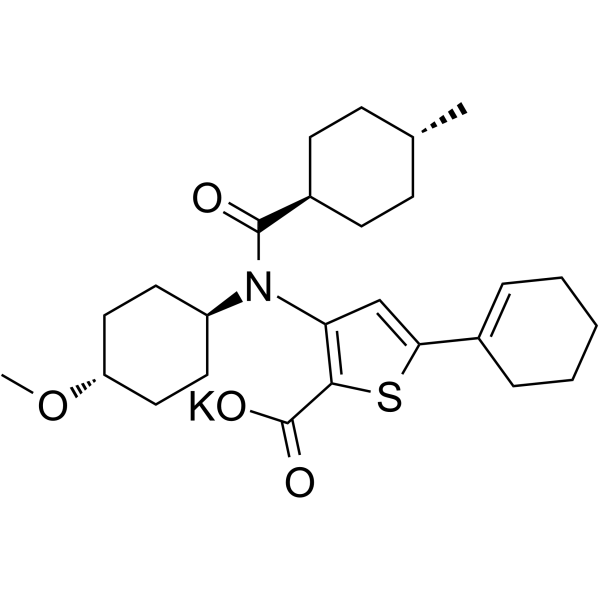
ML402 (Standard) is the analytical standard of ML402 (HY-104027). This product is intended for research and analytical applications. ML402, a thiophene-carboxamide, is a selective K2P2.1(TREK-1) and K2P10.1(TREK-2) activator. ML402 is inactive against K2P4.1(TRAAK) .
|
-
- HY-111090
-
|
|
Polo-like Kinase (PLK)
NEKs
|
Cancer
|
|
GSK461364 analogue 1 is a thiophene-based PLK1 inhibitor with a PLK1 IC50 of 2 nM and a PLK3 IC50 of 630 nM. GSK461364 analogue 1 also acts as an inhibitor of Nek2 kinase (IC50: 21 nM). GSK461364 analogue 1 has a solubility of ≥190 μM in pH 7.4 PBS and a human plasma protein binding rate of 91.5%. GSK461364 analogue 1 can be used in studies related to colon cancer, lung cancer, breast cancer and ovarian cancer .
|
-
- HY-15111R
-
|
1-(Benzo[b]thiophen-2-yl)ethan-1-one (Standard); 2-Acetylbenzo[b]Thiophene (Standard); 2-Acetyl BenzoThiophene (Standard)
|
Reference Standards
|
|
|
2-Acetylbenzothiophene (Standard) is the analytical standard of 2-Acetylbenzothiophene. This product is intended for research and analytical applications.
|
-
- HY-115465
-
|
|
DNA/RNA Synthesis
|
Cancer
|
|
Rev1-CT/RIR PPI-IN-1 (Compound 1) is a thiophene-based compound. Rev1-CT/RIR PPI-IN-1 can specifically disrupt the protein-protein interaction between Rev1-CT and RIR, with an IC50 value of 2.5 µM. Rev1-CT/RIR PPI-IN-1 can enhance chemosensitivity and reduce the mutation rate in Cisplatin (HY-17394)-sensitive HT-1080 cells. Rev1-CT/RIR PPI-IN-1 can be used for tumor research .
|
-
| Cat. No. |
Product Name |
Type |
-
- HY-W002251
-
|
|
Biochemical Assay Reagents
|
|
Benzo[b]thiophene-3-carbaldehyde is a 3-formyl-substituted benzo[b]thiophene derivative that acts as an oxidizable substrate to convert to benzo[b]thiophene-3-carboxylic acid under liquid-phase conditions. Compared with analogs such as benzaldehyde and thiophene-2-carbaldehyde, Benzo[b]thiophene-3-carbaldehyde has lower oxidation difficulty, and can significantly increase the reaction rate in the presence of initiators (such as Na +Br - or DBA). Benzo[b]thiophene-3-carbaldehyde also serves as a key starting material for the synthesis of compounds including heteroaryl chalcones .
|
-
- HY-Y0024
-
|
|
Biochemical Assay Reagents
|
|
4-Methoxyacetophenone is a versatile aromatic ketone that is widely used in the synthesis of various organic compounds. 4-Methoxyacetophenone has a pleasant aroma and can be used to create scents. 4-Methoxyacetophenone can also be used to make dyes and pigments .
|
-
- HY-59299
-
|
|
Biochemical Assay Reagents
|
|
3-Bromothiophene is a bromine atom-substituted 3-halogenated thiophene. Polymers of 3-Bromothiophene are conductive polymers and have potential optoelectronic application value. Additionally, 3-Bromothiophene serves as a key intermediate for the synthesis of a variety of important pharmaceuticals, agrochemicals, and cosmetics .
|
-
- HY-W004615
-
|
|
Biochemical Assay Reagents
|
|
Thiophene-3-carboxylic acid is a biochemical reagent that can be used as a biological material or organic compound for life science related research.
|
-
- HY-W004615R
-
|
|
Biochemical Assay Reagents
|
|
Thiophene-3-carboxylic acid (Standard) is the analytical standard of Thiophene-3-carboxylic acid. This product is intended for research and analytical applications. Thiophene-3-carboxylic acid is a biochemical reagent that can be used as a biological material or organic compound for life science related research.
|
| Cat. No. |
Product Name |
Category |
Target |
Chemical Structure |
| Cat. No. |
Product Name |
Chemical Structure |
-
- HY-W721828
-
|
|
|
2-Thiophenecarboxaldehyde-d3 (Thiophene-2-carboxaldehyde-d3) is the deuterium labeled 2-Thiophenecarboxaldehyde (HY-W012941). 2-Thiophenecarboxaldehyde (Thiophene-2-carboxaldehyde) is an antibiotic that exhibits antibacterial and nematicidal activities .
|
-
-
- HY-132475S
-
|
|
|
rac Duloxetine 3-Thiophene Isomer-d3 Oxalate is a stable isotope of Duloxetine.
|
-
-
- HY-W715361S
-
|
|
|
2,4,6,8-Tetrachloro dibenzothiophene- 13C12 is 13C labeled 2,4,6,8-Tetrachlorodibenzo[b,d]thiophene .
|
-
| Cat. No. |
Product Name |
|
Classification |
-
- HY-176753
-
|
|
|
Cationic Lipids
|
|
Lipid 20b is a thiophene ionizable cationic lipid. Lipid 20 b can be used to generate lipid nanoparticles (LNPs) for the delivery of mRNA in vivo. Lipid 20b can be studied in research for enhancing mRNA vaccine delivery and transfection efficacy .
|
Your information is safe with us. * Required Fields.
Inquiry Information
- Product Name:
- Cat. No.:
- Quantity:
- MCE Japan Authorized Agent: