1. Search Result
Search Result
Results for "

Toxoplasmosis

" in MedChemExpress (MCE) Product Catalog:

31

Inhibitors & Agonists

1

Peptides

1

Natural
Products

6

Isotope-Labeled Compounds

Cat. No. Product Name Target Research Areas Chemical Structure
  • HY-13832
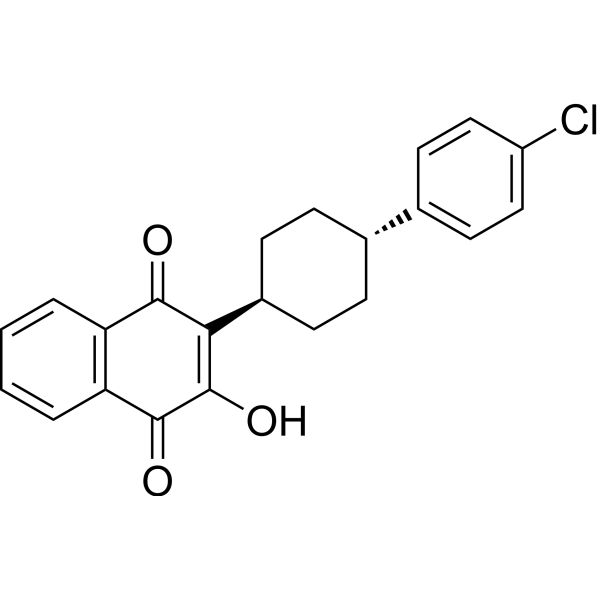
    Atovaquone
    4 Publications Verification

    Atavaquone

    Parasite Cytochrome P450 Antibiotic Bacterial Infection Cancer
    Atovaquone (Atavaquone) is a potent, selective and orally active inhibitor of the parasite’s mitochondrial cytochrome bc1 complex. Atovaquone is against human and  P. falciparum cytochrome bc1 activity with IC50 values of 460 nM and 2.0 nM, respectively. Atovaquone is an antimalarial agent and has the potential for the investigation of neumocystis pneumonia, toxoplasmosis, malaria, and babesia .
    Atovaquone
  • HY-B0688
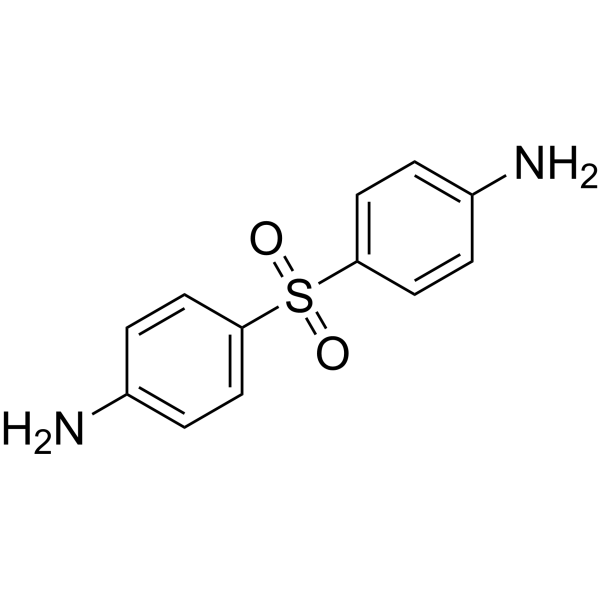
    Dapsone
    4 Publications Verification

    4,4′-Diaminodiphenyl sulfone; DDS

    Antibiotic Parasite Bacterial Reactive Oxygen Species (ROS) Infection Inflammation/Immunology
    Dapsone (4,4′-Diaminodiphenyl sulfone) is an orally active and blood-brain penetrant sulfonamide antibiotic with bacteriostatic, antimycobacterial and antiprotozoal activities . Dapsone?exerts effective antileprosy activity?and inhibits folate synthesis in cell extracts of?M. leprae. Dapsone is used for dermatologic disorder research, including leprosy, dermatitis herpetiformis, acne vulgaris et al .
    Dapsone
  • HY-B0273
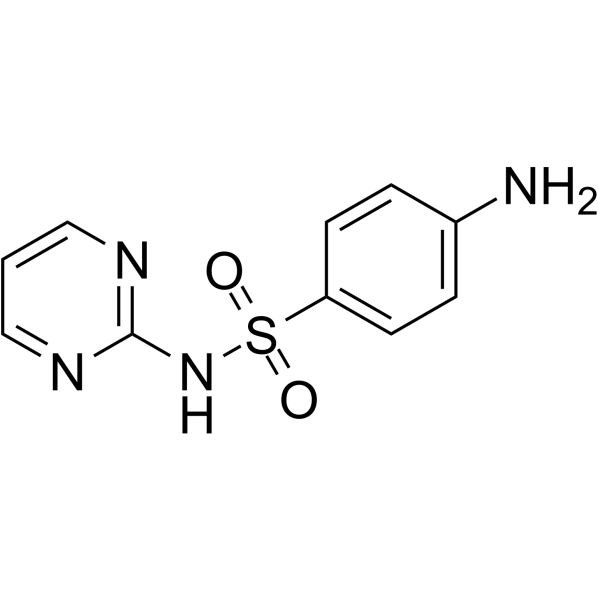
    Sulfadiazine
    Maximum Cited Publications
    8 Publications Verification

    Bacterial Parasite Antibiotic Infection
    Sulfadiazine is a sulfonamide antibiotic with antimalarial activity. Sulfadiazine can be used for toxoplasmosis research .
    Sulfadiazine
  • HY-B1916
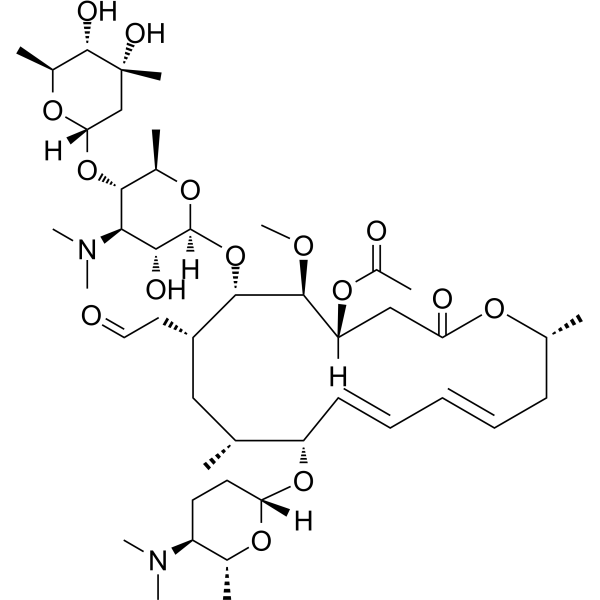
    Acetylspiramycin
    2 Publications Verification

    Spiramycin B; Spiramycin II; Foromacidin B

    Antibiotic Bacterial Parasite Infection
    Acetylspiramycin (Spiramycin B) is an effective oral macrolide antibiotic produced by Streptomyces, It can inhibit the splenic lymphocyte transformation induced by phytohemagglutinin (PHA), LPS (HY-D1056) and antigen, reduce the procoagulant activity of macrophages, have good antibacterial effect on gram-positive bacteria, and is also an effective antigenic insect agent, which can be used to fight parasitic infection .
    Acetylspiramycin
  • HY-B0357
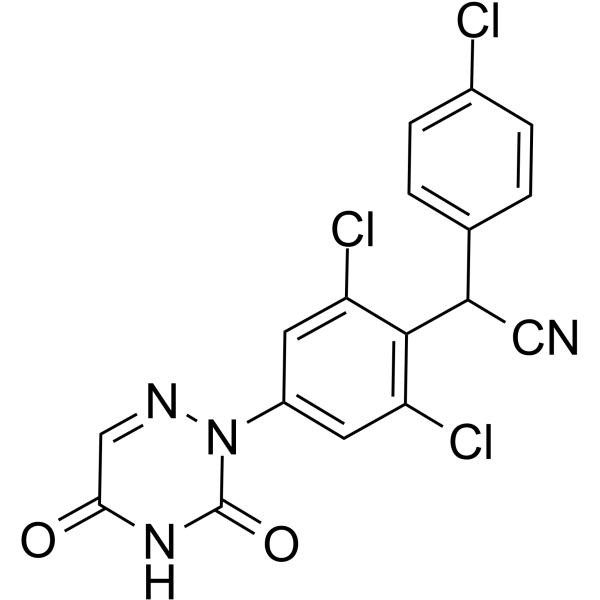
    Diclazuril
    2 Publications Verification

    R-64433

    Parasite Antibiotic Infection
    Diclazuril (R-64433), a benzeneacetonitrile derivative, is a potent and orally active anticoccidial agent. Diclazuril can be used for the research of certain infectious and parasitic diseases, including coccidiosis, acute toxoplasmosis, equine protozoal pyoencephalitis (EPM) et.al .
    Diclazuril
  • HY-B0357S

    R-64433-d4

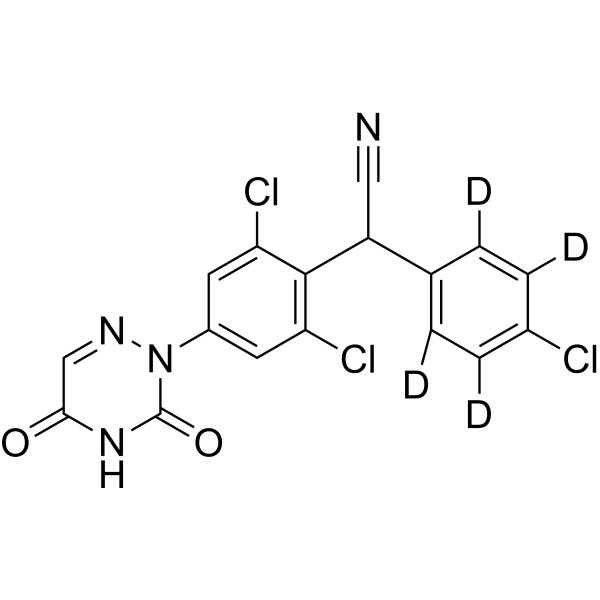
    Isotope-Labeled Compounds Parasite Antibiotic Infection
    Diclazuril-d4 is deuterium labeled Diclazuril. Diclazuril (R-64433), a benzeneacetonitrile derivative, is a potent and orally active anticoccidial agent. Diclazuril can be used for the research of certain infectious and parasitic diseases, including coccidiosis, acute toxoplasmosis, equine protozoal pyoencephalitis (EPM) et.al .
    Diclazuril-d4
  • HY-B1350A
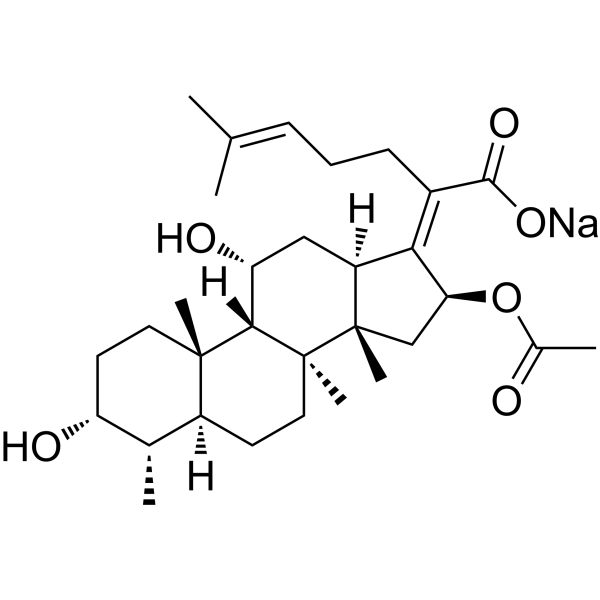
    Fusidic acid sodium salt
    2 Publications Verification

    Sodium fusidate; SQ-16360

    Bacterial Antibiotic Interleukin Related Infection Inflammation/Immunology
    Fusidic acid sodium salt is an orally available antibacterial agent that inhibits bacterial protein synthesis by preventing the release of translation elongation factor G (EF-G) from ribosomes. Fusidic acid sodium salt inhibits the inhibitory and activating effects of interleukins IL-1 and IL-6 on glucose-induced insulin production and exhibits antidiabetic effects in a rat model. Fusidic acid sodium salt improves the symptoms of colitis in rats and inhibits the growth of Toxoplasma gondii and Listeria monocytogenes EGD in vitro, but not in mice .
    Fusidic acid sodium salt
  • HY-B0273A
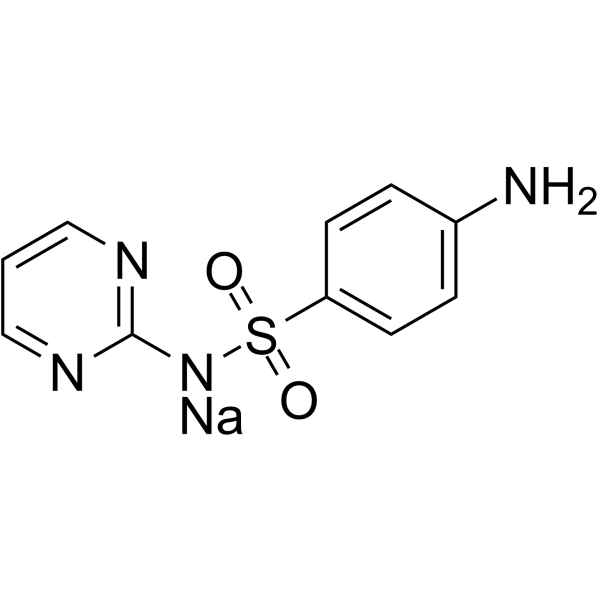
    Sulfadiazine sodium
    Maximum Cited Publications
    8 Publications Verification

    Bacterial Parasite Antibiotic Infection
    Sulfadiazine sodium is a sulfonamide antibiotic with antimalarial activity. Sulfadiazine can be used for toxoplasmosis research .
    Sulfadiazine sodium
  • HY-13833

    Parasite Infection
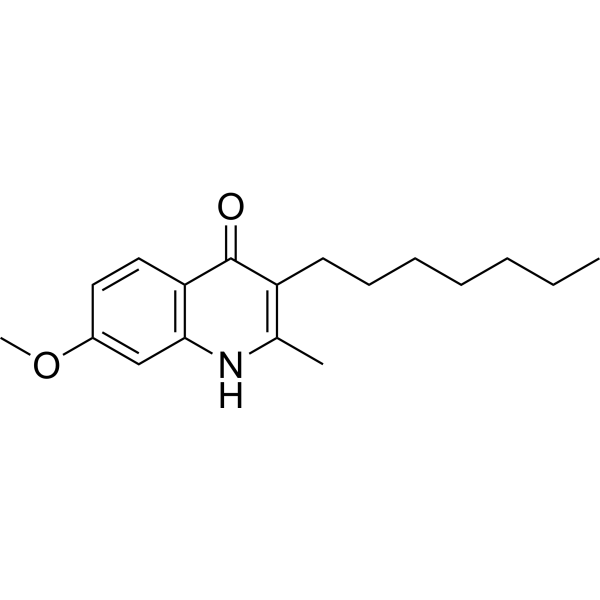
    Endochin is an antimalarial agent. Endochin inhibits T.gondii with an IC50 of 0.003 nM. Endochin is also active against experimental toxoplasmosis .
    Endochin
  • HY-B0273S

    Bacterial Infection
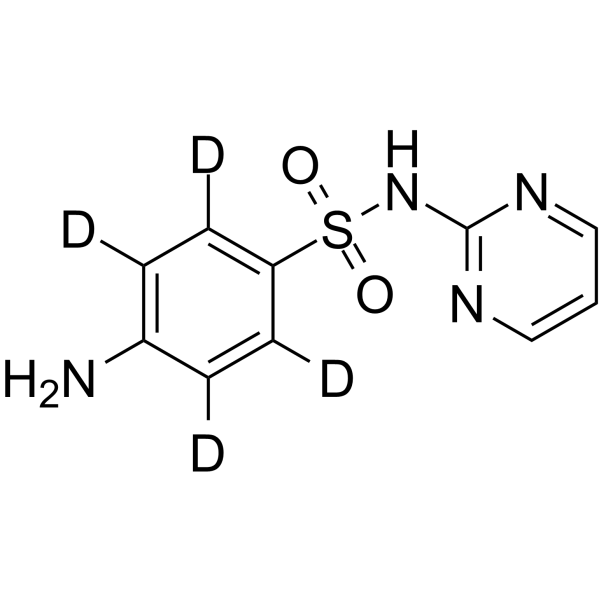
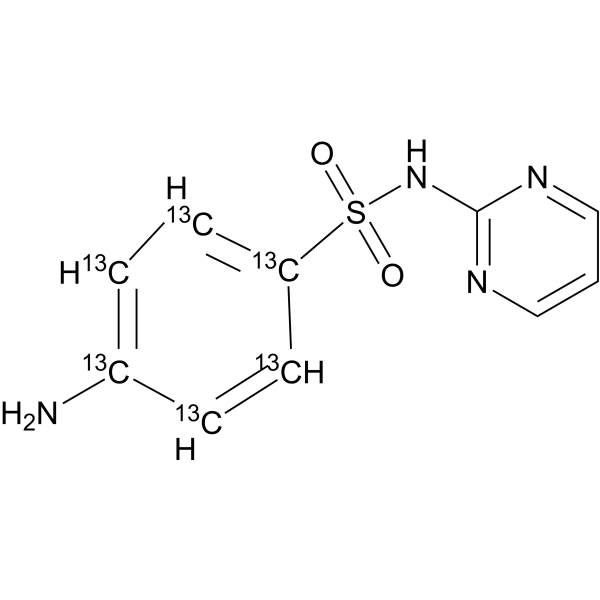
    Sulfadiazine-d4 is a deuterium labeled Sulfadiazine. Sulfadiazine is a sulfonamide antibiotic used for the treatment of toxoplasmosis .
    Sulfadiazine-d4
  • HY-B0273R

    Reference Standards Bacterial Parasite Antibiotic Infection
    Sulfadiazine (Standard) is the analytical standard of Sulfadiazine. This product is intended for research and analytical applications. Sulfadiazine is a sulfonamide antibiotic with antimalarial activity. Sulfadiazine can be used for toxoplasmosis research .
    Sulfadiazine (Standard)
  • HY-161666

    Aminoacyl-tRNA Synthetase Parasite Infection
    mCMY416 is an orally active and blood brain barrier (BBB) permeability apicomplexan phenylalanine tRNA synthetase inhibitor, and shows antiparasitic activity .
    mCMY416
  • HY-171190

    Parasite Infection
    ELQ-316 is an endochinlike quinolone compound and an anti-parasite agent. ELQ-316 demonstrates a great efficacy against acute and chronic experimental toxoplasmosis .
    ELQ-316
  • HY-13832R

    Atavaquone (Standard)

    Reference Standards Parasite Cytochrome P450 Antibiotic Bacterial Infection Cancer
    Atovaquone (Standard) is the analytical standard of Atovaquone. This product is intended for research and analytical applications. Atovaquone (Atavaquone) is a potent, selective and orally active inhibitor of the parasite’s mitochondrial cytochrome bc1 complex. Atovaquone is against human and  P. falciparum cytochrome bc1 activity with IC50 values of 460 nM and 2.0 nM, respectively. Atovaquone is an antimalarial agent and has the potential for the investigation of neumocystis pneumonia, toxoplasmosis, malaria, and babesia .
    Atovaquone (Standard)
  • HY-B0273B
    Sulfadiazine 100 µg/mL in methanol
    Maximum Cited Publications
    8 Publications Verification

    Parasite Bacterial Environmental Pollutants Infection
    Sulfadiazine 100 µg/mL in methanol is an orally active sulfonamide antibiotic. Sulfadiazine 100 µg/mL in methanol competitively inhibits p-aminobenzoic acid in the folic-acid-metabolism cycle, inhibiting multiplication of most Gram-positive and many Gram-negative bacteria. Sulfadiazine 100 µg/mL in methanol persists in soil long-term, and exerts selective pressure for sulfonamide-resistant microbial populations. Sulfadiazine 100 µg/mL in methanol targets Toxoplasma gondii DHPS enzyme. Sulfadiazine 100 µg/mL in methanol can be used for the research of congenital toxoplasmosis and bacterial infection .
    Sulfadiazine 100 µg/mL in methanol
  • HY-13832S

    Isotope-Labeled Compounds Parasite Infection
    Atovaquone-d4 is the deuterium labeled Atovaquone. Atovaquone is a medication used to treat or prevent for pneumocystis pneumonia, toxoplasmosis, malaria, and babesia .
    Atovaquone-d4
  • HY-B0273AR

    Reference Standards Bacterial Parasite Antibiotic Infection
    Sulfadiazine (sodium) (Standard) is the analytical standard of Sulfadiazine (sodium). This product is intended for research and analytical applications. Sulfadiazine sodium is a sulfonamide?antibiotic with antimalarial activity. Sulfadiazine can be used for toxoplasmosis research .
    Sulfadiazine sodium (Standard)
  • HY-137439

    VYR-006

    Antifolate Infection
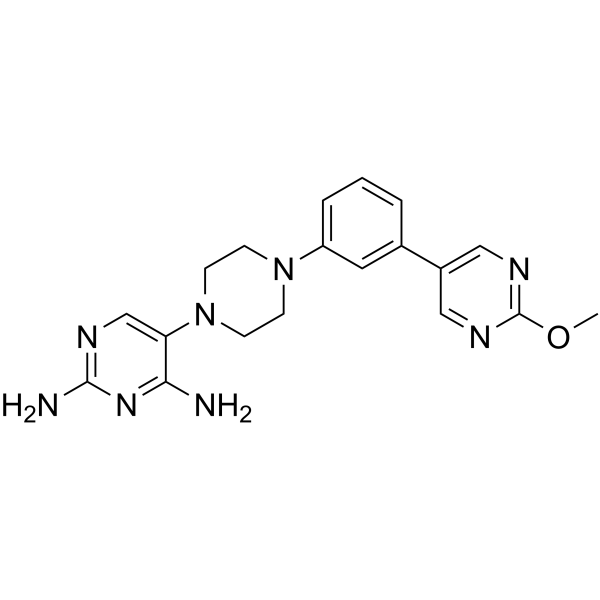
    Fanotaprim is a dihydrofolate reductase (DHFR) inhibitor with IC50s of 1.57 and 308 nM for tgDHFR (Toxoplasma gondii DHFR) and hDHFR (human DHFR), respectively. Fanotaprim has the potential for the research of toxoplasmosis .
    Fanotaprim
  • HY-128397

    Parasite Bcr-Abl Src Infection
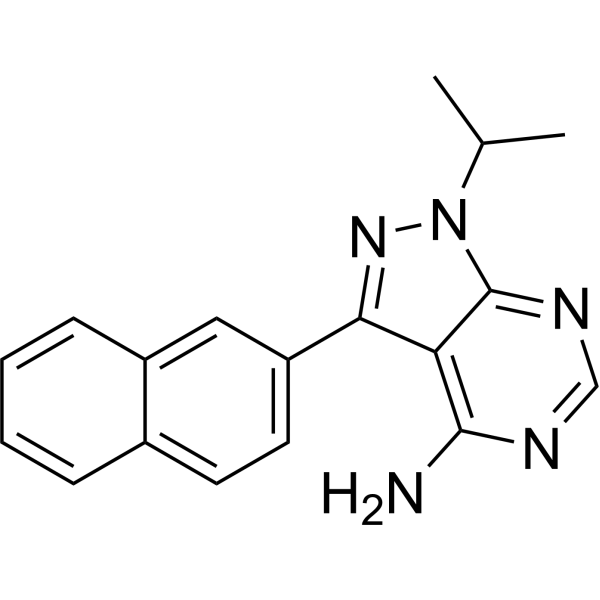
    CpCDPK1/TgCDPK1-IN-1 (compound 7p) is a potent CpCDPK1/TgCDPK1 dual inhibitor (IC50: 10 nM and 5.0 nM respectively). CpCDPK1/TgCDPK1-IN-1 also inhibits Abl and Src (IC50: 75 nM and 65 nM respectively). CpCDPK1/TgCDPK1-IN-1 can be used for research of toxoplasmosis .
    CpCDPK1/TgCDPK1-IN-1
  • HY-B0357A

    R-64433 potassium

    Antibiotic Parasite Infection
    Diclazuril (R-64433) potassium, a benzeneacetonitrile derivative, is a potent and orally active anticoccidial agent. Diclazuril potassium can be used for the research of certain infectious and parasitic diseases, including coccidiosis, acute toxoplasmosis, equine protozoal pyoencephalitis (EPM) et.al .
    Diclazuril potassium
  • HY-B0357R

    R-64433 (Standard)

    Antibiotic Parasite Reference Standards Infection
    Diclazuril (Standard) is the analytical standard of Diclazuril. This product is intended for research and analytical applications. Diclazuril (R-64433), a benzeneacetonitrile derivative, is a potent and orally active anticoccidial agent. Diclazuril can be used for the research of certain infectious and parasitic diseases, including coccidiosis, acute toxoplasmosis, equine protozoal pyoencephalitis (EPM) et.al .
    Diclazuril (Standard)
  • HY-W654156

    Isotope-Labeled Compounds Parasite Antibiotic Infection
    Diclazuril- 13C3, 15N 2 is 13C and 15N labeled Diclazuril. Diclazuril (R-64433), a benzeneacetonitrile derivative, is a potent and orally active anticoccidial agent. Diclazuril can be used for the research of certain infectious and parasitic diseases, including coccidiosis, acute toxoplasmosis, equine protozoal pyoencephalitis (EPM) et.al .
    Diclazuril-13C3,15N2
  • HY-B1916R

    Spiramycin B (Standard); Spiramycin II (Standard); Foromacidin B (Standard)

    Reference Standards Antibiotic Bacterial Parasite Infection
    Acetylspiramycin (Standard) is the analytical standard of Acetylspiramycin. This product is intended for research and analytical applications. Acetylspiramycin (Spiramycin B) is an effective oral macrolide antibiotic produced by Streptomyces, It can inhibit the splenic lymphocyte transformation induced by phytohemagglutinin (PHA), LPS (HY-D1056) and antigen, reduce the procoagulant activity of macrophages, have good antibacterial effect on gram-positive bacteria, and is also an effective antigenic insect agent, which can be used to fight parasitic infection[1][2][3][4].
    Acetylspiramycin (Standard)
  • HY-13832S2

    Atavaquone-d5

    Isotope-Labeled Compounds Parasite Cytochrome P450 Antibiotic Infection
    Atovaquone-d5 is the deuterium labeled Atovaquone. Atovaquone (Atavaquone) is a potent, selective and orally active inhibitor of the parasite’s mitochondrial cytochrome?bc1?complex. Atovaquone is against human and ?P. falciparum?cytochrome?bc1?activity with IC50 values of 460 nM and 2.0 nM, respectively. Atovaquone is an antimalarial agent and has the potential for the investigation of neumocystis pneumonia, toxoplasmosis, malaria, and babesia .
    Atovaquone-d5
  • HY-B0688R

    4,4′-Diaminodiphenyl sulfone (Standard); DDS (Standard)

    Reference Standards Antibiotic Parasite Bacterial Reactive Oxygen Species (ROS) Infection Inflammation/Immunology
    Dapsone (Standard) is the analytical standard of Dapsone. This product is intended for research and analytical applications. Dapsone (4,4′-Diaminodiphenyl sulfone) is an orally active and blood-brain penetrant sulfonamide antibiotic with bacteriostatic, antimycobacterial and antiprotozoal activities . Dapsone exerts effective antileprosy activity and inhibits folate synthesis in cell extracts of M. leprae. Dapsone is used for dermatologic disorder research, including leprosy, dermatitis herpetiformis, acne vulgaris et al .
    Dapsone (Standard)
  • HY-13832S3

    cis-Atavaquone-d4

    Isotope-Labeled Compounds Parasite Cytochrome P450 Antibiotic Infection
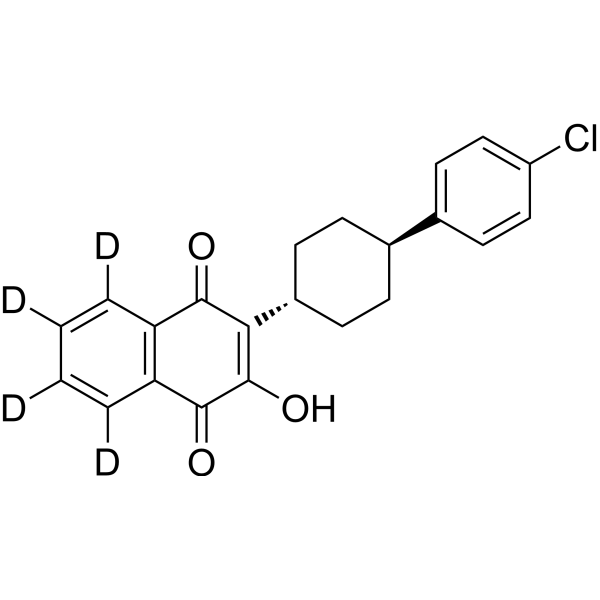
    cis-Atovaquone-d4 is deuterium labeled Atovaquone. Atovaquone (Atavaquone) is a potent, selective and orally active inhibitor of the parasite’s mitochondrial cytochrome bc1 complex. Atovaquone is against human and  P. falciparum cytochrome bc1 activity with IC50 values of 460 nM and 2.0 nM, respectively. Atovaquone is an antimalarial agent and has the potential for the investigation of neumocystis pneumonia, toxoplasmosis, malaria, and babesia[1][2].
    cis-Atovaquone-d4
  • HY-175648

    Parasite Infection
    Antiparasitic agent-28 is an orally active, selective inhibitor of Toxoplasma gondii phenylalanine tRNA synthetase (TgcPheRS) with blood-brain barrier penetration. Antiparasitic agent-28 inhibits the growth of T. gondii tachyzoites (TgME49-Fluc strain) an (EC50 = 1 nM) and T. gondii bradyzoites (Tg68nLuc strain) induced by alkaline (EC50 = 3 nM) and glutamine-rich medium (EC50 = 0.1 nM). Antiparasitic agent-28 demonstrates potent anti-toxoplasmosis efficacy in mice infected with TgME49-Fluc tachyzoites. Antiparasitic agent-28 can be used for the study of Toxoplasma gondii infection .
    Antiparasitic agent-28
  • HY-120808

    Parasite Infection
    GSK2188764 is a Toxoplasma gondii rhoptry protein 18 (ROP18) inhibitor with reported IC50 values of 7.49 μM against Toxoplasma gondii. GSK2188764 inhibits serine-threonine kinase activity of ROP18 in vitro.GSK2188764 can be used for the research of toxoplasmosis .
    GSK2188764
  • HY-183286

    Dihydrofolate reductase (DHFR) Parasite Infection
    DHFR-IN-27 (Compound LA4) is an orally active DHFR inhibitor and antimalarial agent, with a Ki value of 1.71 nM against TgDHFR. DHFR-IN-27 reduces the parasitic load of Toxoplasma gondii in infected mice and prolongs the survival time of infected mice. DHFR-IN-27 exerts Antiparasitic effects against Toxoplasma gondii. DHFR-IN-27 can be used in the research of toxoplasmosis .
    DHFR-IN-27
  • HY-W714214

    Herbicide Microtubule/Tubulin PI3K Akt Apoptosis Autophagy Reactive Oxygen Species (ROS) NF-κB p38 MAPK Infection
    Ethalfluralin is a dinitroaniline herbicide and microtubule inhibitor. Ethalfluralin blocks nuclear division and cytokinesis of parasites by inhibiting intranuclear spindle formation. Ethalfluralin activates the phosphorylation levels of NF-κB and P38 MAPK, inhibits the PI3K/AKT signaling pathway, impairs mitochondrial function, and induces apoptosis, endoplasmic reticulum stress, autophagy, and ROS production. Ethalfluralin is applicable to research related to toxoplasmosis .
    Ethalfluralin
  • HY-P11767

    Ferroptosis Infection
    NCR247 is a defensin-like nodule cysteine-rich (NCR) peptide and haem sequesterer. NCR247 forms 6:6 haem:NCR247 hexamers and higher-order complexes to render haem and bound iron biologically inaccessible, induces iron-starvation response in Sinorhizobium meliloti and Medicago truncatula, and supports nitrogenase activity.NCR247 is critical for establishing nitrogen-fixing symbiosis between Sinorhizobium meliloti and Medicago truncatula, and is inactive against cytochrome haem.NCR247’s D-enantiomer binds and sequesters haem equivalently to its L-enantiomer.NCR247 can be used for the research of infections, periodontal disease, toxoplasmosis .
    NCR247

Inquiry Online

Your information is safe with us. * Required Fields.

Salutation


Country or Region *

Applicant Name *


Organization Name *

Department *


Email Address *


Product Name *

Cat. No.


Requested quantity *

Phone Number *


Remarks

Inquiry Online

Inquiry Information

Product Name:
Cat. No.:
Quantity:
MCE Japan Authorized Agent:

