
Delivery of temperature sensitive items including proteins and kits will be paused on 6/19 for the Juneteenth holiday. For urgent orders please contact customer service.
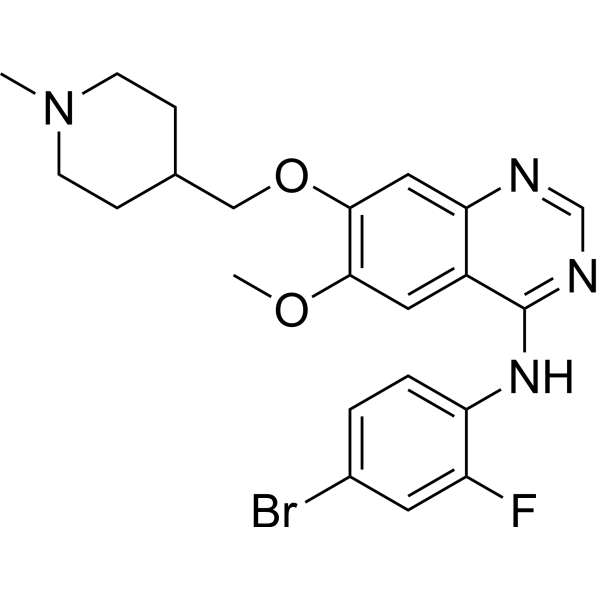
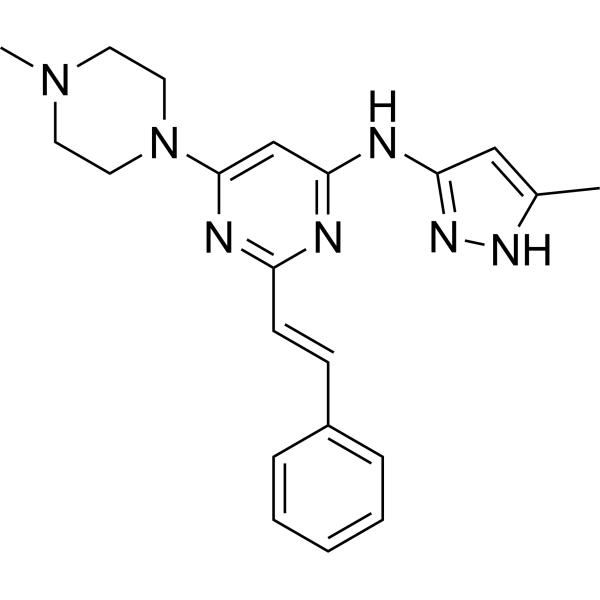
Vandetanib (D6474) is a potent, orally active, and blood-brain-barrier penetrate inhibitor of VEGFR2/KDR tyrosine kinase activity (IC50=40 nM). Vandetanib also has activity versus the tyrosine kinase activity of VEGFR3/FLT4 (IC50=110 nM) and EGFR/HER1 (IC50=500 nM) .
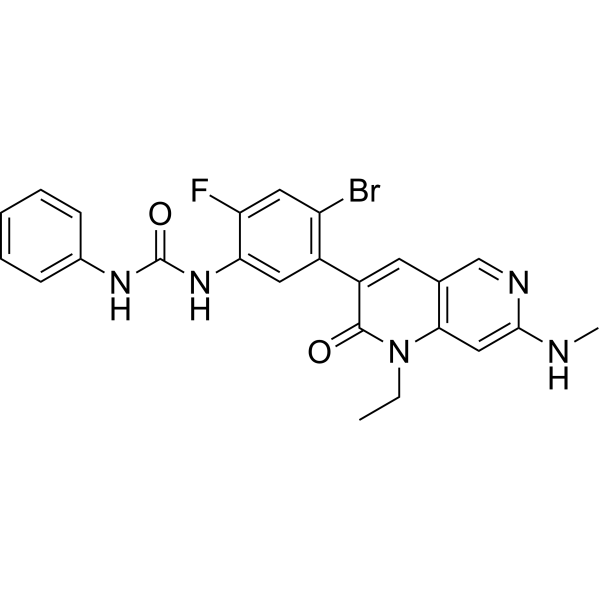
Ripretinib (DCC-2618) is an orally bioavailable, selective KIT and PDGFRA switch-control inhibitor. Ripretinib (DCC-2618) targets and binds to both wild-type and mutant forms of KIT and PDGFRA specifically at their switch pocket binding sites, thereby preventing the switch from inactive to active conformations of these kinases and inactivating their wild-type and mutant forms. Ripretinib (DCC-2618) also inhibits multiple other kinase targets, such as FLT3 and KDR (or VEGFR-2) . DCC-2618 exerts antineoplastic effect and induces apoptosis .
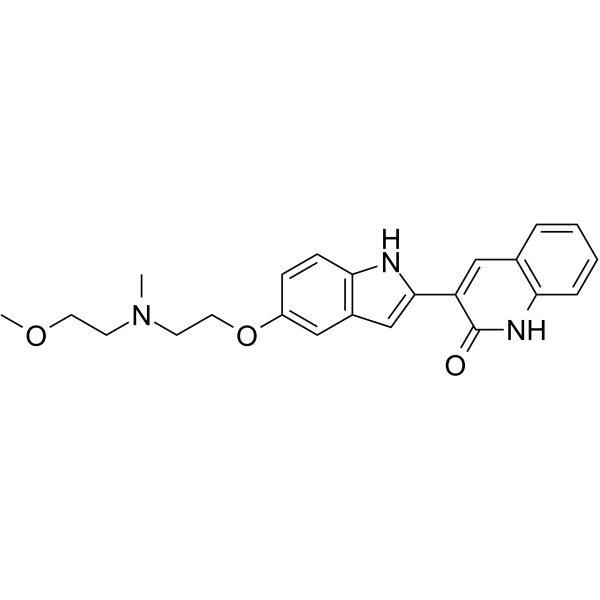
ENMD-2076 is a multi-targeted kinase inhibitor with IC50s of 1.86, 14, 58.2, 15.9, 92.7, 70.8, 56.4 nM for Aurora A, Flt3, KDR/VEGFR2, Flt4/VEGFR3, FGFR1, FGFR2, Src, PDGFRα, respectively.
Olinvacimab (TTAC-0001) is a fully human anti-VEGFR2 monoclonal antibody. Olinvacimab inhibits VEGF binds to KDR with a Kd value of 0.23 nM. Olinvacimab has antiangiogenic activity. Olinvacimab can be used for the research of recurrent glioblastoma and breast cancer .
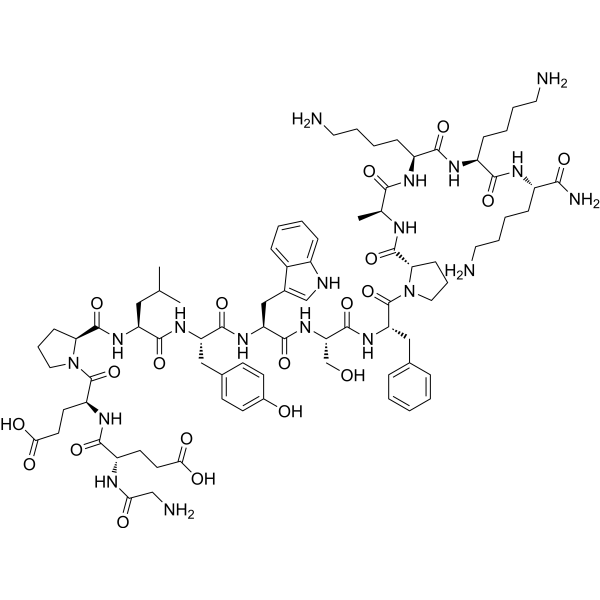
Srctide is a biological active peptide. (This is a peptide substrate for many protein kinases, such as Blk, BTK, cKit, EPHA1, EPHB2, EPHB3, ERBB4, FAK, Flt3, IGF-1R, ITK, Lck, MET, MUSK, Ret, Src, TIE2, TrkB, VEGF-R1 (Flt-1) and VEGF-R2 (KDR).)
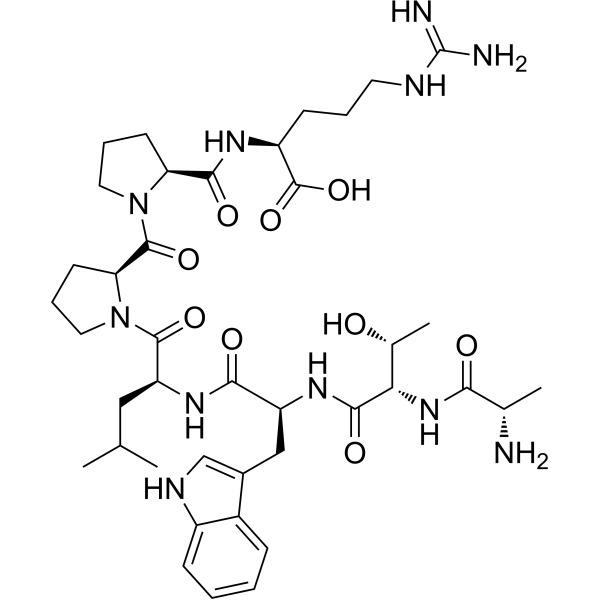
ATWLPPR Peptide is a biological active peptide. (This peptide is a specific VEGFR2/KDR heptapeptide antagonist, it binds VEGFR2 (KDR/flk), completely inhibiting VEGF binding to KDR and preventing VEGF-induced angiogenesis in-vivo. It specifically inhibits human endothelial cell proliferation in-vitro and totally abolishes VEGF-induced angiogenesis in-vivo.)
Tyrphostin AG1433 (SU1433) is a tyrosine kinases inhibitor. AG1433 is also a selective PDGFRβ and VEGFR-2(Flk-1/KDR) inhibitor with IC50s of 5.0 μM and 9.3 μM, respectively. Tyrphostin AG1433 prevents blood vessel formation .
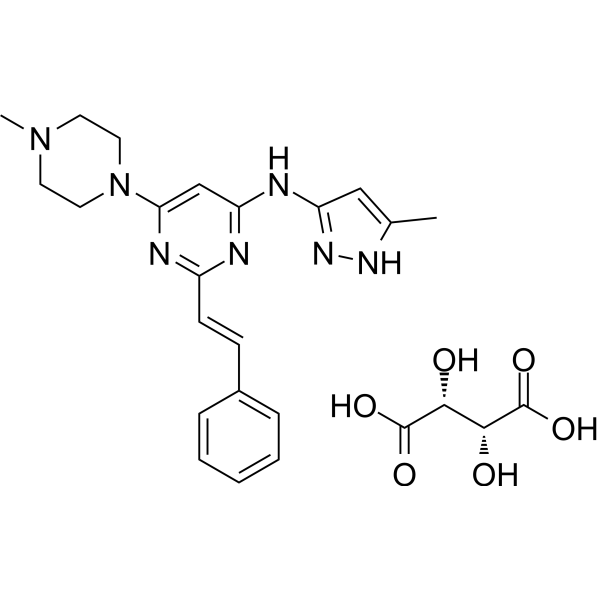
ENMD-2076 Tartrate is a multi-targeted kinase inhibitor with IC50s of 1.86, 14, 58.2, 15.9, 92.7, 70.8, 56.4 nM for Aurora A, Flt3, KDR/VEGFR2, Flt4/VEGFR3, FGFR1, FGFR2, Src, PDGFRα, respectively.
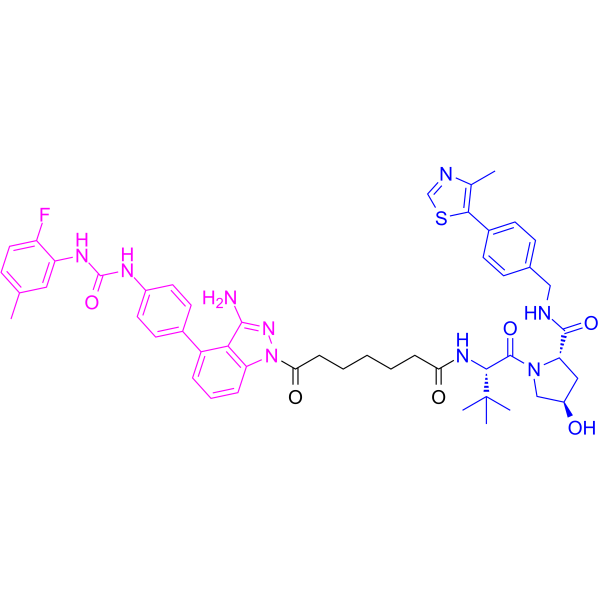
PROTAC VEGFR-2 degrader-2 is a VEGFR-2(KDR)PROTAC degrader with weak inhibitory activity against VEGFR-2 (IC50 > 1 μM). It is applicable to the research of cancer-related pathological angiogenesis .
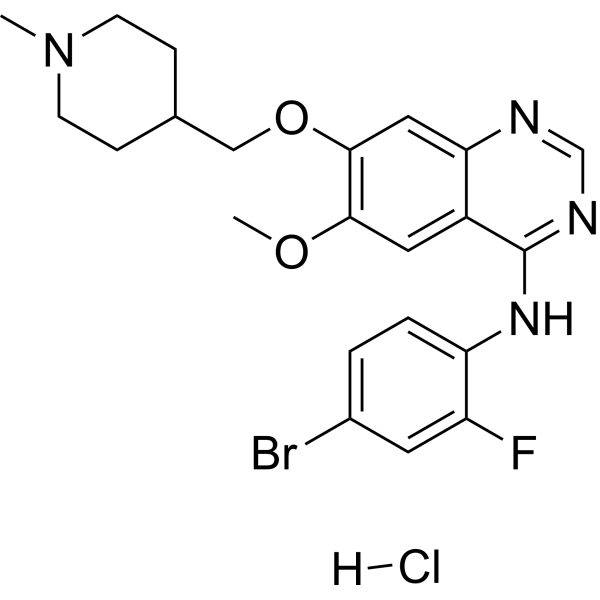
Vandetanib hydrochloride (D6474 hydrochloride) is a potent, orally active inhibitor of VEGFR2/KDR tyrosine kinase activity (IC50=40 nM). Vandetanib hydrochloride also has activity versus the tyrosine kinase activity of VEGFR3/FLT4 (IC50=110 nM) and EGFR/HER1 (IC50=500 nM) .
The Anti-VEGFR2/KDR/CD309 Antibody (AT001) is a humanized antibody expressed in CHO cells that targets VEGFR2/KDR/CD309. The Anti-VEGFR2/KDR/CD309 Antibody (AT001) contains a huIgG1 heavy chain and a huκ light chain, with a predicted molecular weight (MW) of 145 kDa. The isotype control for the Anti-VEGFR2/KDR/CD309 Antibody (AT001) can be referenced as Human IgG4 kappa, Isotype Control (HY-P99003).
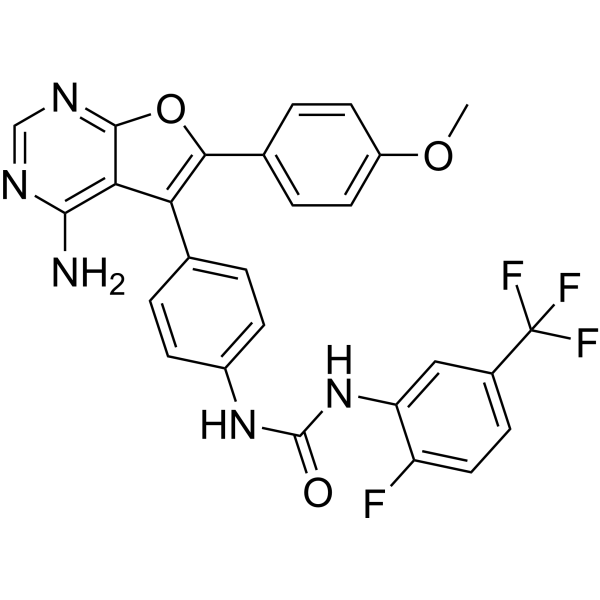
GW768505A free base is a potent dual inhibitor of VEGFR2(KDR) and Tie-2, with a pIC50 of 7.81 for VEGFR2. GW768505A free base has anti-angiogenic activity .
Vandetanib (Standard) is the analytical standard of Vandetanib. This product is intended for research and analytical applications. Vandetanib (D6474) is a potent, orally active inhibitor of VEGFR2/KDR tyrosine kinase activity (IC50=40 nM). Vandetanib also has activity versus the tyrosine kinase activity of VEGFR3/FLT4 (IC50=110 nM) and EGFR/HER1 (IC50=500 nM) .
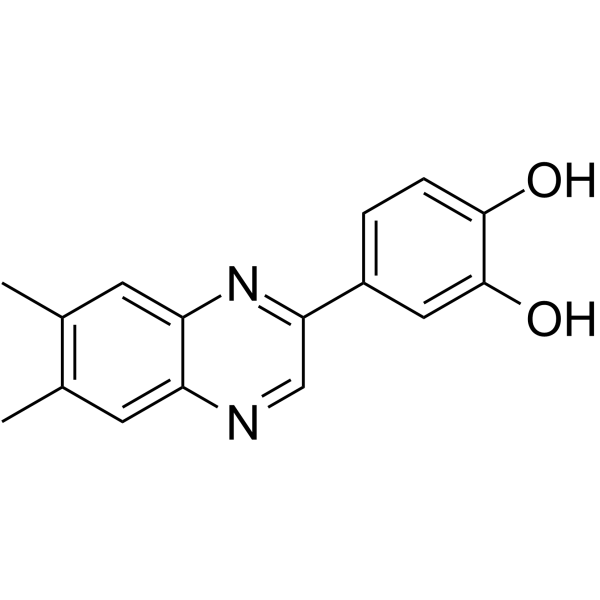
L-783277 (Compound 4) is a MEK inhibitor (IC50 = 4 nM). L-783277 has potent inhibitory activity against a variety of kinases, including VEGFR2/3, FLT1/3/4, MEK1/2, KDR, and PDGFRα, but has low selectivity for the kinase community. L-783277 inhibits viability (IC50 = 22 mM) and cell proliferation (IC50 = 21 mM) of H295R cells. L-783277 could be used in research on cancers such as adrenocortical carcinoma .
Ripretinib (Standard) is the analytical standard of Ripretinib. This product is intended for research and analytical applications. Ripretinib (DCC-2618) is an orally bioavailable, selective KIT and PDGFRA switch-control inhibitor. Ripretinib (DCC-2618) targets and binds to both wild-type and mutant forms of KIT and PDGFRA specifically at their switch pocket binding sites, thereby preventing the switch from inactive to active conformations of these kinases and inactivating their wild-type and mutant forms. Ripretinib (DCC-2618) also inhibits multiple other kinase targets, such as FLT3 and KDR (or VEGFR-2) . DCC-2618 exerts antineoplastic effect and induces apoptosis .
Anti-VEGFR2/KDR/CD309 Antibody is a humanized antibody expressed in CHO, targeting VEGFR2/KDR/CD309. The Anti-VEGFR2/KDR/CD309 Antibody is equipped with muIgG1 heavy chain and huκ light chain, with a predicted molecular weight (MW) of 150 kDa. For isotype control of the Anti-VEGFR2/KDR/CD309 Antibody, refer to Human IgG1 kappa, Isotype Control (HY-P99001).
Takeda-6D (compound 6d) is an orally active and potent BRAF/VEGFR2 inhibitor, with IC50 values of 7.0 and 2.2 nM, respectively. Takeda-6D shows antiangiogenesis by suppressing the VEGFR2 pathway in 293/KDR and VEGF-stimulated HUVEC cells.Takeda-6D shows significant suppression of ERK1/2 phosphorylation. Takeda-6D shows antitumor activity .
Vandetanib trifluoroacetate (D6474 trifluoroacetate) is a potent, orally active inhibitor of VEGFR2/KDR tyrosine kinase activity (IC50=40 nM). Vandetanib trifluoroacetate also has activity versus the tyrosine kinase activity of VEGFR3/FLT4 (IC50=110 nM) and EGFR/HER1 (IC50=500 nM) .
Girancitug is a humanized IgG1κ monoclonal antibody inhibitor targeting VEGFR2/KDR/CD309. Girancitug effectively inhibits angiogenesis. Girancitug can be used for anti-angiogenic therapy in cancers like colorectal and ovarian cancer research .
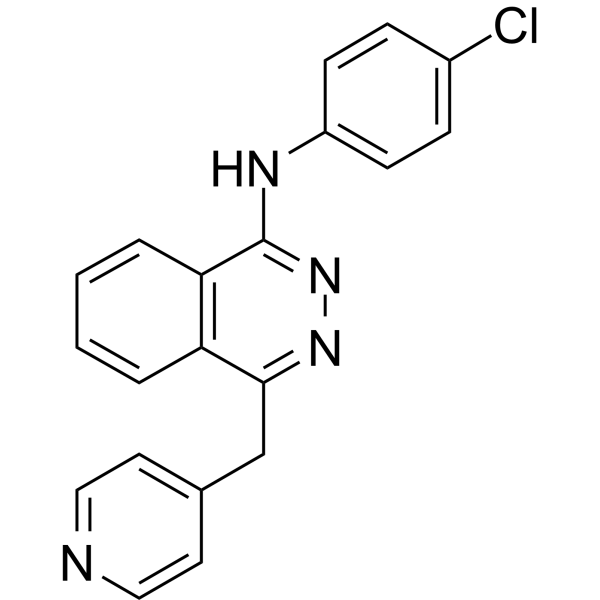
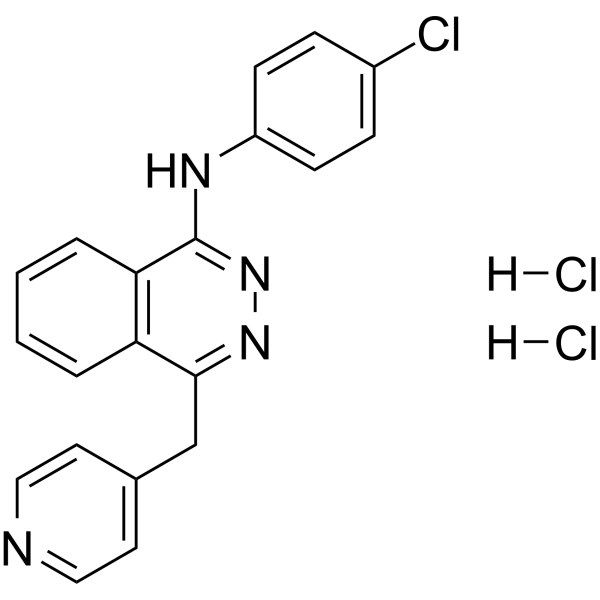
Vatalanib-d4 (PTK787-d4; ZK-222584-d4; CGP-79787-d4) is the deuterium labeled Vatalanib (HY-10203). Vatalanib (PTK787; ZK-222584; CGP-79787) is an inhibitor of VEGFR2/KDR with IC50 of 37 nM.
Vandetanib-d6 is the deuterium labeled Vandetanib. Vandetanib (D6474) is a potent, orally active inhibitor of VEGFR2/KDR tyrosine kinase activity (IC50=40 nM). Vandetanib also has activity versus the tyrosine kinase activity of VEGFR3/FLT4 (IC50=110 nM) and EGFR/HER1 (IC50=500 nM) .
Vandetanib-d4 is the deuterium labeled Vandetanib. Vandetanib (ZD6474) is a potent, orally active inhibitor of VEGFR2/KDR tyrosine kinase activity (IC50=40 nM). Vandetanib also has activity versus the tyrosine kinase activity of VEGFR3/FLT4 (IC50=110 nM) and EGFR/HER1 (IC50=500 nM) .
MSB-0254 is a human monoclonal antibody (mAb) targeting VEGFR2/KDR/CD309. MSB-0254 inhibits the invasion, migration, and vascular mimetic (VM) formation of U251 and primary glioma cells. MSB-0254 inhibits the growth of U251 and GL261 cell transplanted tumors. MSB-0254 reduces the expression of CD34, VEGFR2, Ki67, MMP2, MMP9, and CD34/PAS. MSB-0254 can be used in advanced solid tumors research .
Vandetanib- 13C6 is a 13C labeled Vandetanib (HY-10260) . Vandetanib (D6474) is a potent, orally active inhibitor of VEGFR2/KDR tyrosine kinase activity (IC50=40 nM). Vandetanib also has activity versus the tyrosine kinase activity of VEGFR3/FLT4 (IC50=110 nM) and EGFR/HER1 (IC50=500 nM) .
CEP-5214, derived from a new indenopyrrolocarbazole template, is a potent inhibitor of vascular endothelial growth factor R2 (VEGF-R2) tyrosine kinase. Structurally, it features optimal substitutions at positions 9 (ethoxymethyl) and 12 (hydroxypropyl) on the indeno[2,1-a]pyrrolo[3,4-c]carbazole-5-one scaffold, leading to high potency against VEGF-R2 (IC50 8 nM). Compound 21 (CEP-5214) exhibits low-nanomolar inhibition of human VEGF-R tyrosine kinases (IC50 4 nM for VEGF-R2/KDR), with good selectivity over other kinases. The compound demonstrated significant cellular and in vivo antitumor activity across various models and advanced into phase I clinical trials as a water-soluble prodrug (CEP-7055) to enhance oral bioavailability .
Vatalanib (Standard) is the analytical standard of Vatalanib (HY-10203). This product is intended for research and analytical applications. Vatalanib (PTK787; ZK-222584; CGP-79787) is an inhibitor of VEGFR2/KDR with IC50 of 37 nM.
Alacizumab is a CHO-expressed humanized antibody that targets VEGFR2/KDR/CD309. Alacizumab contains huIgG1 heavy chain and huκ light chain, with a predicted molecular weight (MW) of 144.08 kDa. The isotype control for Alacizumab can be referenced as Human IgG1 kappa, Isotype Control (HY-P99001).
Zerumin A is an anti-angiogenic agent that acts on multiple molecular targets related to angiogenesis (including kdr/VEGFR2, angpt1, angpt2, tie1, and tie2). Zerumin A specifically inhibits the proliferation and migration of human umbilical vein endothelial cells (HUVECs) by regulating the VEGF-VEGFR and ANGPT-TIE signaling pathways, and dose-dependently inhibits angiogenesis (10-20 μM significantly inhibits zebrafish embryo angiogenesis). Zerumin A can be used in the research of cancer and angiogenesis-related inflammatory diseases. Zerumin A can be naturally extracted from the 95% ethanol extract of the fruits, seeds, and pericarp of Alpinia caerulea (R.Br.) Bentham (a plant of the Alpinia genus in the Zingiberaceae family) .
Srctide is a biological active peptide. (This is a peptide substrate for many protein kinases, such as Blk, BTK, cKit, EPHA1, EPHB2, EPHB3, ERBB4, FAK, Flt3, IGF-1R, ITK, Lck, MET, MUSK, Ret, Src, TIE2, TrkB, VEGF-R1 (Flt-1) and VEGF-R2 (KDR).)
ATWLPPR Peptide is a biological active peptide. (This peptide is a specific VEGFR2/KDR heptapeptide antagonist, it binds VEGFR2 (KDR/flk), completely inhibiting VEGF binding to KDR and preventing VEGF-induced angiogenesis in-vivo. It specifically inhibits human endothelial cell proliferation in-vitro and totally abolishes VEGF-induced angiogenesis in-vivo.)
Olinvacimab (TTAC-0001) is a fully human anti-VEGFR2 monoclonal antibody. Olinvacimab inhibits VEGF binds to KDR with a Kd value of 0.23 nM. Olinvacimab has antiangiogenic activity. Olinvacimab can be used for the research of recurrent glioblastoma and breast cancer .
The Anti-VEGFR2/KDR/CD309 Antibody (AT001) is a humanized antibody expressed in CHO cells that targets VEGFR2/KDR/CD309. The Anti-VEGFR2/KDR/CD309 Antibody (AT001) contains a huIgG1 heavy chain and a huκ light chain, with a predicted molecular weight (MW) of 145 kDa. The isotype control for the Anti-VEGFR2/KDR/CD309 Antibody (AT001) can be referenced as Human IgG4 kappa, Isotype Control (HY-P99003).
Anti-VEGFR2/KDR/CD309 Antibody is a humanized antibody expressed in CHO, targeting VEGFR2/KDR/CD309. The Anti-VEGFR2/KDR/CD309 Antibody is equipped with muIgG1 heavy chain and huκ light chain, with a predicted molecular weight (MW) of 150 kDa. For isotype control of the Anti-VEGFR2/KDR/CD309 Antibody, refer to Human IgG1 kappa, Isotype Control (HY-P99001).
Girancitug is a humanized IgG1κ monoclonal antibody inhibitor targeting VEGFR2/KDR/CD309. Girancitug effectively inhibits angiogenesis. Girancitug can be used for anti-angiogenic therapy in cancers like colorectal and ovarian cancer research .
MSB-0254 is a human monoclonal antibody (mAb) targeting VEGFR2/KDR/CD309. MSB-0254 inhibits the invasion, migration, and vascular mimetic (VM) formation of U251 and primary glioma cells. MSB-0254 inhibits the growth of U251 and GL261 cell transplanted tumors. MSB-0254 reduces the expression of CD34, VEGFR2, Ki67, MMP2, MMP9, and CD34/PAS. MSB-0254 can be used in advanced solid tumors research .
Alacizumab is a CHO-expressed humanized antibody that targets VEGFR2/KDR/CD309. Alacizumab contains huIgG1 heavy chain and huκ light chain, with a predicted molecular weight (MW) of 144.08 kDa. The isotype control for Alacizumab can be referenced as Human IgG1 kappa, Isotype Control (HY-P99001).
Zerumin A is an anti-angiogenic agent that acts on multiple molecular targets related to angiogenesis (including kdr/VEGFR2, angpt1, angpt2, tie1, and tie2). Zerumin A specifically inhibits the proliferation and migration of human umbilical vein endothelial cells (HUVECs) by regulating the VEGF-VEGFR and ANGPT-TIE signaling pathways, and dose-dependently inhibits angiogenesis (10-20 μM significantly inhibits zebrafish embryo angiogenesis). Zerumin A can be used in the research of cancer and angiogenesis-related inflammatory diseases. Zerumin A can be naturally extracted from the 95% ethanol extract of the fruits, seeds, and pericarp of Alpinia caerulea (R.Br.) Bentham (a plant of the Alpinia genus in the Zingiberaceae family) .
VEGFR-2 protein is a tyrosine protein kinase receptor for VEGFA, VEGFC and VEGFD and is critical in angiogenesis, blood vessel development and embryonic hematopoiesis. It promotes endothelial cell function and actin cytoskeletal reorganization. VEGFR-2 Protein, Rhesus macaque (HEK293, His) is the recombinant Rhesus Macaque-derived VEGFR-2 protein, expressed by HEK293 , with C-His labeled tag.
VEGFR-2 is a tyrosine-protein kinase of the cell surface receptors of VEGFA, VEGFC, and VEGFD that mediates activation of the MAPK1/ERK2, MAPK3/ERK1, and MAP kinase signaling pathways, as well as the AKT1 signaling pathway. VEGFR-2 can promote the proliferation, survival, migration and differentiation of endothelial cells. Overexpression of VEGFR-2 is associated with the development of tumors. FITC-Labeled VEGFR-2 Protein, Human (HEK293, His) is the recombinant human-derived FITC-Labeled VEGFR-2 protein, expressed by HEK293 , with His labeled tag.
VEGFR-2 protein is a tyrosine protein kinase receptor for VEGFA, VEGFC and VEGFD and is critical in angiogenesis, blood vessel development and embryonic hematopoiesis. It promotes endothelial cell function and actin cytoskeletal reorganization. VEGFR-2 Protein, Human (HEK293, mFc) is the recombinant human-derived VEGFR-2 protein, expressed by HEK293 , with C-mFc labeled tag.
VEGFR-2 protein is a tyrosine protein kinase receptor for VEGFA, VEGFC and VEGFD and is critical in angiogenesis, blood vessel development and embryonic hematopoiesis. It promotes endothelial cell function and actin cytoskeletal reorganization. VEGFR-2 Protein, Human (Biotinylated, HEK293, mFc) is the recombinant human-derived VEGFR-2 protein, expressed by HEK293 , with C-mFc labeled tag.
VEGFR-2 protein is a tyrosine protein kinase receptor for VEGFA, VEGFC and VEGFD and is critical in angiogenesis, blood vessel development and embryonic hematopoiesis. It promotes endothelial cell function and actin cytoskeletal reorganization. VEGFR-2 Protein, Human (Biotinylated, HEK293, His-Avi) is the recombinant human-derived VEGFR-2 protein, expressed by HEK293 , with C-Avi, C-His labeled tag.
VEGFR-2 Protein is a type III receptor tyrosine kinase, also known as the receptor for vascular endothelial growth factor 2.VEGFR-2 Protein mediates vascular endothelial growth factor (VEGF)-induced endothelial proliferation, survival, migration, tubular morphogenesis, and sprouting, and plays a key role in angiogenesis and vasculogenesis.VEGFR-2 Protein, Rat (HEK293, Fc) is the recombinant rat-derived VEGFR-2 protein, expressed by HEK293 , with C-hFc labeled tag.
VEGFR-2 protein is a tyrosine protein kinase receptor for VEGFA, VEGFC and VEGFD and is critical in angiogenesis, blood vessel development and embryonic hematopoiesis. It promotes endothelial cell function and actin cytoskeletal reorganization. VEGFR-2 Protein, Human (Biotinylated, HEK293, His) is the recombinant human-derived VEGFR-2 protein, expressed by HEK293 , with C-6*His labeled tag.
VEGFR-2 is a tyrosine-protein kinase of the cell surface receptors of VEGFA, VEGFC, and VEGFD that mediates activation of the MAPK1/ERK2, MAPK3/ERK1, and MAP kinase signaling pathways, as well as the AKT1 signaling pathway. VEGFR-2 can promote the proliferation, survival, migration and differentiation of endothelial cells. Overexpression of VEGFR-2 is associated with the development of tumors. VEGFR-2 Protein, Human (HEK293, His) is the recombinant human-derived VEGFR-2 protein, expressed by HEK293 , with C-His labeled tag.
VEGFR-2 protein is a tyrosine protein kinase receptor for VEGFA, VEGFC and VEGFD and is critical in angiogenesis, blood vessel development and embryonic hematopoiesis. It promotes endothelial cell function and actin cytoskeletal reorganization. VEGFR-2 Protein, Human (HEK293, His-Avi) is the recombinant human-derived VEGFR-2 protein, expressed by HEK293 , with C-Avi, C-6*His labeled tag.
VEGFR-2 protein is a tyrosine protein kinase receptor for VEGFA, VEGFC and VEGFD and is critical in angiogenesis, blood vessel development and embryonic hematopoiesis. It promotes endothelial cell function and actin cytoskeletal reorganization. VEGFR-2 Protein, Human (208a.a, HEK293, Fc) is the recombinant human-derived VEGFR-2 protein, expressed by HEK293 , with C-hFc labeled tag.
VEGFR-2 protein is a tyrosine protein kinase receptor for VEGFA, VEGFC and VEGFD and is critical in angiogenesis, blood vessel development and embryonic hematopoiesis. It promotes endothelial cell function and actin cytoskeletal reorganization. VEGFR-2 Protein, Human (327a.a, HEK293, Fc) is the recombinant human-derived VEGFR-2 protein, expressed by HEK293 , with C-hFc labeled tag.
VEGFR-2 protein is a tyrosine protein kinase receptor for VEGFA, VEGFC and VEGFD and is critical in angiogenesis, blood vessel development and embryonic hematopoiesis. It promotes endothelial cell function and actin cytoskeletal reorganization. VEGFR-2 Protein, Human (745a.a, HEK293, Fc) is the recombinant human-derived VEGFR-2 protein, expressed by HEK293 , with C-hFc labeled tag.
VEGFR-2 protein is a tyrosine protein kinase receptor for VEGFA, VEGFC and VEGFD and is critical in angiogenesis, blood vessel development and embryonic hematopoiesis. It promotes endothelial cell function and actin cytoskeletal reorganization. VEGFR-2 Protein, Human (Biotinylated, Sf9, His) is the recombinant human-derived VEGFR-2, expressed by Sf9 insect cells, with GST labeled tag and biotin labeling..
Vatalanib-d4 (PTK787-d4; ZK-222584-d4; CGP-79787-d4) is the deuterium labeled Vatalanib (HY-10203). Vatalanib (PTK787; ZK-222584; CGP-79787) is an inhibitor of VEGFR2/KDR with IC50 of 37 nM.
Vandetanib-d6 is the deuterium labeled Vandetanib. Vandetanib (D6474) is a potent, orally active inhibitor of VEGFR2/KDR tyrosine kinase activity (IC50=40 nM). Vandetanib also has activity versus the tyrosine kinase activity of VEGFR3/FLT4 (IC50=110 nM) and EGFR/HER1 (IC50=500 nM) .
Vandetanib-d4 is the deuterium labeled Vandetanib. Vandetanib (ZD6474) is a potent, orally active inhibitor of VEGFR2/KDR tyrosine kinase activity (IC50=40 nM). Vandetanib also has activity versus the tyrosine kinase activity of VEGFR3/FLT4 (IC50=110 nM) and EGFR/HER1 (IC50=500 nM) .
Vandetanib- 13C6 is a 13C labeled Vandetanib (HY-10260) . Vandetanib (D6474) is a potent, orally active inhibitor of VEGFR2/KDR tyrosine kinase activity (IC50=40 nM). Vandetanib also has activity versus the tyrosine kinase activity of VEGFR3/FLT4 (IC50=110 nM) and EGFR/HER1 (IC50=500 nM) .
Western blot analysis of extracts from THP-1(lane 2(20μg), Jurkat (lane 3(20μg) and NIH3T3(lane 4(20μg) using FOXO1A (HY-P80132) Rabbit mAb. Proteins were transferred
to a PVDF membrane and blocked with 5% non-fat milk in TBST for 2 hour at room temperature. The primary antibody (1/1000) and Loading control antibody (Beta Actin, HY-P80438, 1/10000) was
used in 5% non-fat milk in TBST at 4°C overnight. Goat Anti-Mouse/Rabbit IgG-HRP Secondary Antibody (1/10000) was used for 1 hour at room temperature.
Western blot analysis of extracts from THP-1(lane 2(20μg), Jurkat (lane 3(20μg) and NIH3T3(lane 4(20μg) using FOXO1A (HY-P80132) Rabbit mAb. Proteins were transferred
to a PVDF membrane and blocked with 5% non-fat milk in TBST for 2 hour at room temperature. The primary antibody (1/1000) and Loading control antibody (Beta Actin, HY-P80438, 1/10000) was
used in 5% non-fat milk in TBST at 4°C overnight. Goat Anti-Mouse/Rabbit IgG-HRP Secondary Antibody (1/10000) was used for 1 hour at room temperature.
Western blot analysis of extracts from THP-1(lane 2(20μg), Jurkat (lane 3(20μg) and NIH3T3(lane 4(20μg) using FOXO1A (HY-P80132) Rabbit mAb. Proteins were transferred
to a PVDF membrane and blocked with 5% non-fat milk in TBST for 2 hour at room temperature. The primary antibody (1/1000) and Loading control antibody (Beta Actin, HY-P80438, 1/10000) was
used in 5% non-fat milk in TBST at 4°C overnight. Goat Anti-Mouse/Rabbit IgG-HRP Secondary Antibody (1/10000) was used for 1 hour at room temperature.
Western blot analysis of extracts from THP-1(lane 2(20μg), Jurkat (lane 3(20μg) and NIH3T3(lane 4(20μg) using FOXO1A (HY-P80132) Rabbit mAb. Proteins were transferred
to a PVDF membrane and blocked with 5% non-fat milk in TBST for 2 hour at room temperature. The primary antibody (1/1000) and Loading control antibody (Beta Actin, HY-P80438, 1/10000) was
MedchemExpress Validation 03
Western blot analysis of extracts from THP-1(lane 2(20μg), Jurkat (lane 3(20μg) and NIH3T3(lane 4(20μg) using FOXO1A (HY-P80132) Rabbit mAb. Proteins were transferred
MedchemExpress Validation 04
Western blot analysis of extracts from THP-1(lane 2(20μg), Jurkat (lane 3(20μg) and NIH3T3(lane 4(20μg) using FOXO1A (HY-P80132) Rabbit mAb. Proteins were transferred
to a PVDF membrane and blocked with 5% non-fat milk in TBST for 2 hour at room temperature. The primary antibody (1/1000) and Loading control antibody (Beta Actin, HY-P80438, 1/10000) was
used in 5% non-fat milk in TBST at 4°C overnight. Goat Anti-Mouse/Rabbit IgG-HRP Secondary Antibody (1/10000) was used for 1 hour at room temperature.
MedchemExpress Validation
Western blot analysis of extracts from THP-1(lane 2(20μg), Jurkat (lane 3(20μg) and NIH3T3(lane 4(20μg) using FOXO1A (HY-P80132) Rabbit mAb. Proteins were transferred
to a PVDF membrane and blocked with 5% non-fat milk in TBST for 2 hour at room temperature. The primary antibody (1/1000) and Loading control antibody (Beta Actin, HY-P80438, 1/10000) was
used in 5% non-fat milk in TBST at 4°C overnight. Goat Anti-Mouse/Rabbit IgG-HRP Secondary Antibody (1/10000) was used for 1 hour at room temperature.
Western blot analysis of extracts from THP-1(lane 2(20μg), Jurkat (lane 3(20μg) and NIH3T3(lane 4(20μg) using FOXO1A (HY-P80132) Rabbit mAb. Proteins were transferred
to a PVDF membrane and blocked with 5% non-fat milk in TBST for 2 hour at room temperature. The primary antibody (1/1000) and Loading control antibody (Beta Actin, HY-P80438, 1/10000) was
used in 5% non-fat milk in TBST at 4°C overnight. Goat Anti-Mouse/Rabbit IgG-HRP Secondary Antibody (1/10000) was used for 1 hour at room temperature.
MedchemExpress Validation
Western blot analysis of extracts from THP-1(lane 2(20μg), Jurkat (lane 3(20μg) and NIH3T3(lane 4(20μg) using FOXO1A (HY-P80132) Rabbit mAb. Proteins were transferred
to a PVDF membrane and blocked with 5% non-fat milk in TBST for 2 hour at room temperature. The primary antibody (1/1000) and Loading control antibody (Beta Actin, HY-P80438, 1/10000) was
used in 5% non-fat milk in TBST at 4°C overnight. Goat Anti-Mouse/Rabbit IgG-HRP Secondary Antibody (1/10000) was used for 1 hour at room temperature.
MedchemExpress Validation
Western blot analysis of extracts from THP-1(lane 2(20μg), Jurkat (lane 3(20μg) and NIH3T3(lane 4(20μg) using FOXO1A (HY-P80132) Rabbit mAb. Proteins were transferred
to a PVDF membrane and blocked with 5% non-fat milk in TBST for 2 hour at room temperature. The primary antibody (1/1000) and Loading control antibody (Beta Actin, HY-P80438, 1/10000) was
used in 5% non-fat milk in TBST at 4°C overnight. Goat Anti-Mouse/Rabbit IgG-HRP Secondary Antibody (1/10000) was used for 1 hour at room temperature.
MedchemExpress Validation
Western blot analysis of extracts from THP-1(lane 2(20μg), Jurkat (lane 3(20μg) and NIH3T3(lane 4(20μg) using FOXO1A (HY-P80132) Rabbit mAb. Proteins were transferred
to a PVDF membrane and blocked with 5% non-fat milk in TBST for 2 hour at room temperature. The primary antibody (1/1000) and Loading control antibody (Beta Actin, HY-P80438, 1/10000) was
used in 5% non-fat milk in TBST at 4°C overnight. Goat Anti-Mouse/Rabbit IgG-HRP Secondary Antibody (1/10000) was used for 1 hour at room temperature.
MedchemExpress Validation
Western blot analysis of extracts from THP-1(lane 2(20μg), Jurkat (lane 3(20μg) and NIH3T3(lane 4(20μg) using FOXO1A (HY-P80132) Rabbit mAb. Proteins were transferred
to a PVDF membrane and blocked with 5% non-fat milk in TBST for 2 hour at room temperature. The primary antibody (1/1000) and Loading control antibody (Beta Actin, HY-P80438, 1/10000) was
used in 5% non-fat milk in TBST at 4°C overnight. Goat Anti-Mouse/Rabbit IgG-HRP Secondary Antibody (1/10000) was used for 1 hour at room temperature.
MedchemExpress Validation
Western blot analysis of extracts from THP-1(lane 2(20μg), Jurkat (lane 3(20μg) and NIH3T3(lane 4(20μg) using FOXO1A (HY-P80132) Rabbit mAb. Proteins were transferred
to a PVDF membrane and blocked with 5% non-fat milk in TBST for 2 hour at room temperature. The primary antibody (1/1000) and Loading control antibody (Beta Actin, HY-P80438, 1/10000) was
used in 5% non-fat milk in TBST at 4°C overnight. Goat Anti-Mouse/Rabbit IgG-HRP Secondary Antibody (1/10000) was used for 1 hour at room temperature.
MedchemExpress Validation
Western blot analysis of extracts from THP-1(lane 2(20μg), Jurkat (lane 3(20μg) and NIH3T3(lane 4(20μg) using FOXO1A (HY-P80132) Rabbit mAb. Proteins were transferred
to a PVDF membrane and blocked with 5% non-fat milk in TBST for 2 hour at room temperature. The primary antibody (1/1000) and Loading control antibody (Beta Actin, HY-P80438, 1/10000) was
used in 5% non-fat milk in TBST at 4°C overnight. Goat Anti-Mouse/Rabbit IgG-HRP Secondary Antibody (1/10000) was used for 1 hour at room temperature.
MedChemExpress values your privacy and your trust is important to us. We use cookies to enhance your website experience. Some cookies are necessary to run the website.
Privacy and Cookie Policy

