



Ripretinib
Based on 9 publication(s) in Google Scholar
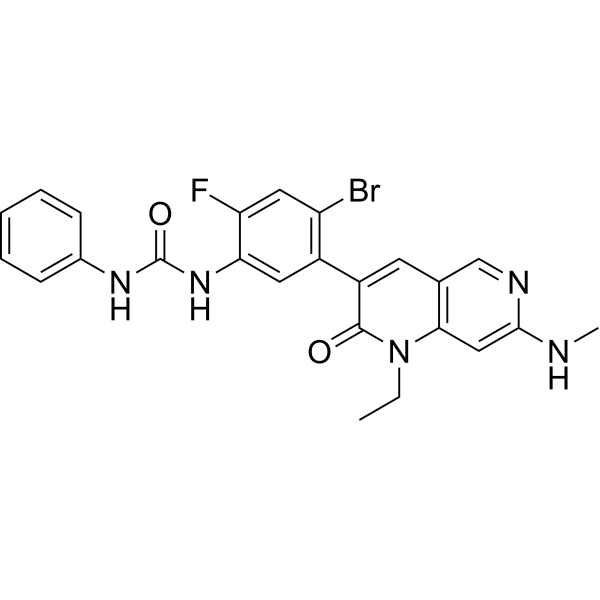
Ripretinib (DCC-2618) is an orally bioavailable, selective KIT and PDGFRA switch-control inhibitor. Ripretinib (DCC-2618) targets and binds to both wild-type and mutant forms of KIT and PDGFRA specifically at their switch pocket binding sites, thereby preventing the switch from inactive to active conformations of these kinases and inactivating their wild-type and mutant forms. Ripretinib (DCC-2618) also inhibits multiple other kinase targets, such as FLT3 and KDR (or VEGFR-2). DCC-2618 exerts antineoplastic effect and induces apoptosis.
Nur für Forschungszwecke. Wir verkaufen nicht an Patienten.
- Reinheit : 98.71%
- CAS. Nr.: 1442472-39-0
- Formel: C24H21BrFN5O2
- Molecular Weight:510.36
-
Speicherung:Powder -20°C, 3 years , 4°C, 2 years ; In solvent -80°C, 2 years , -20°C, 1 year

To place orders, for customer services and technical support, please contact: MedChemExpress USA
Tel: 609-228-6898 E-mail: [email protected] [email protected]


-
 Biologische Aktivität
-
Chemical Information
-
Lösungsmittel & Löslichkeit
- Protokoll
- Reinheit & Dokumentation
- Verweise
-
 Help & FAQs


-
HY-15463
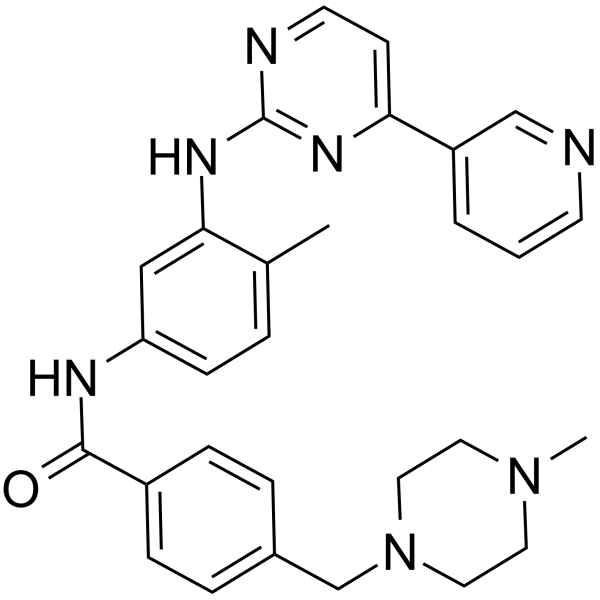
ImatinibTyrosine Kinases Inhibitor -
HY-101561
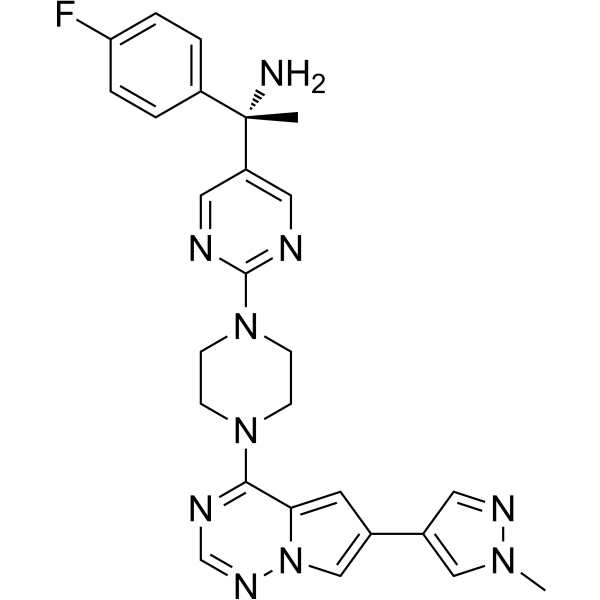
AvapritinibKIT/PDGFRA Inhibitor -
HY-10255A
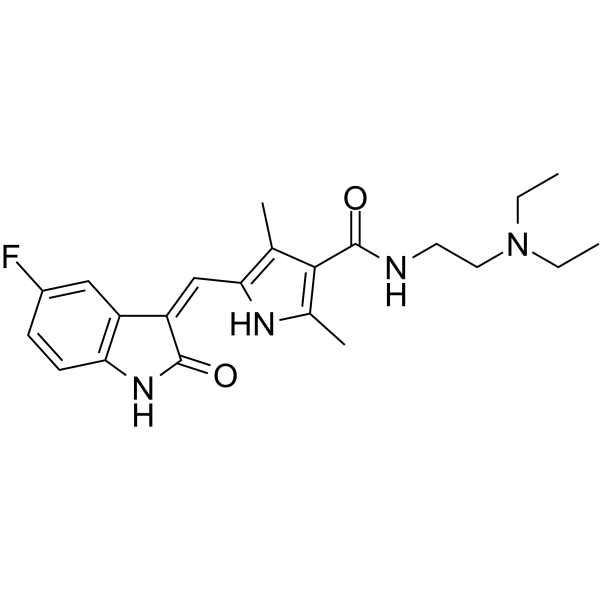
SunitinibMulti-targeted RTK Inhibitor -
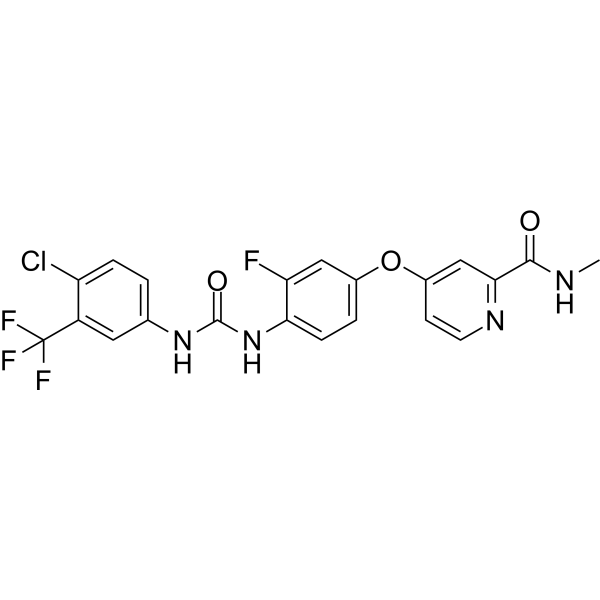
HY-10331
RegorafenibMulti-kinase Inhibitor -
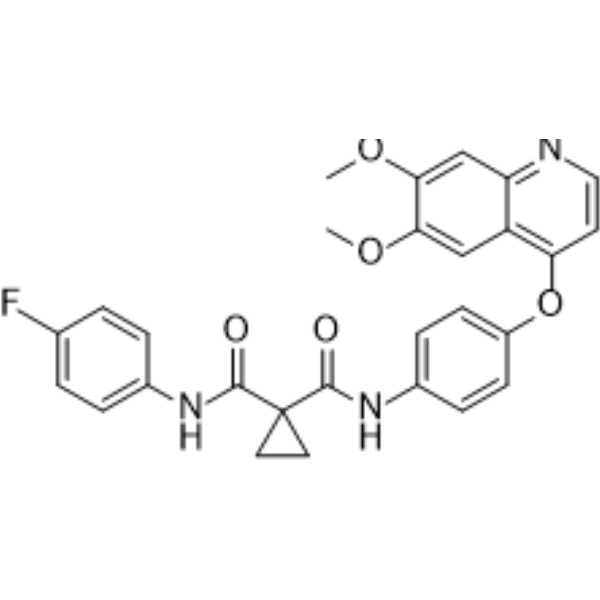
HY-13016
CabozantinibVEGFR2/MET Inhibitor -
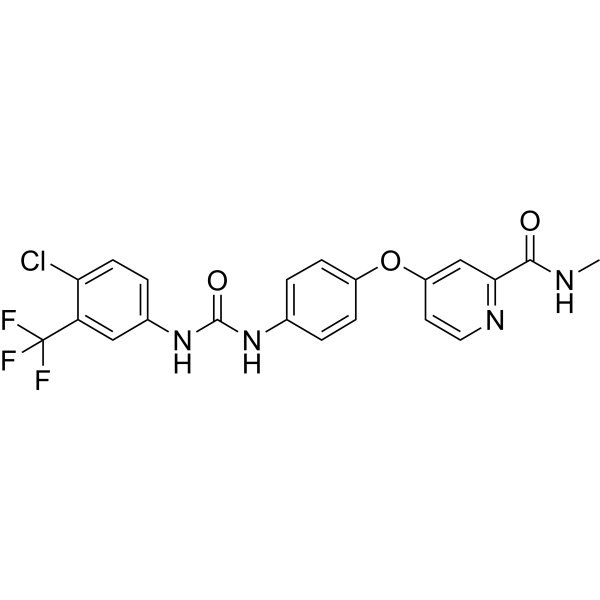
HY-10201
SorafenibMultikinase Inhibitor -
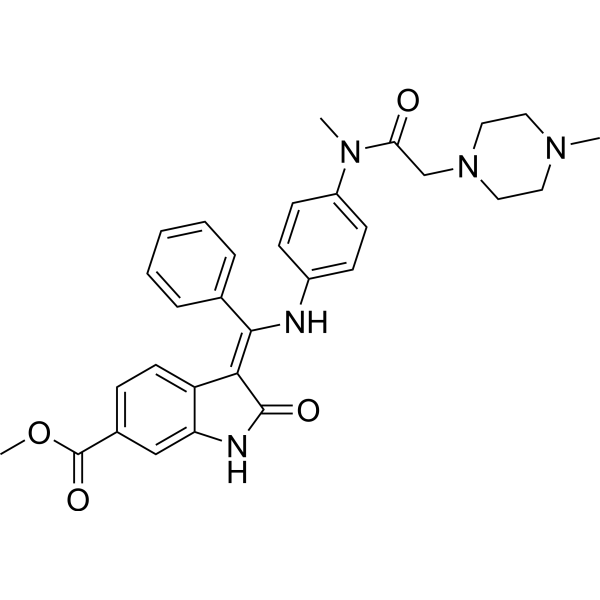
HY-50904
NintedanibPDGFR/VEGFR/FGFR Inhibitor -
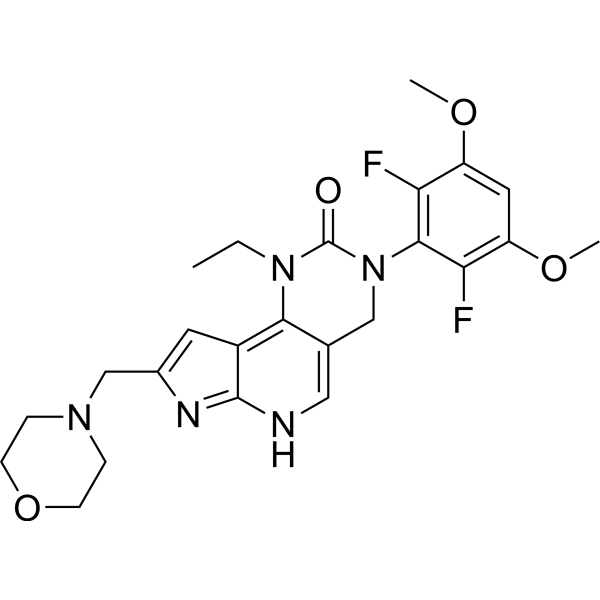
HY-109099
PemigatinibFGFR Inhibitor -
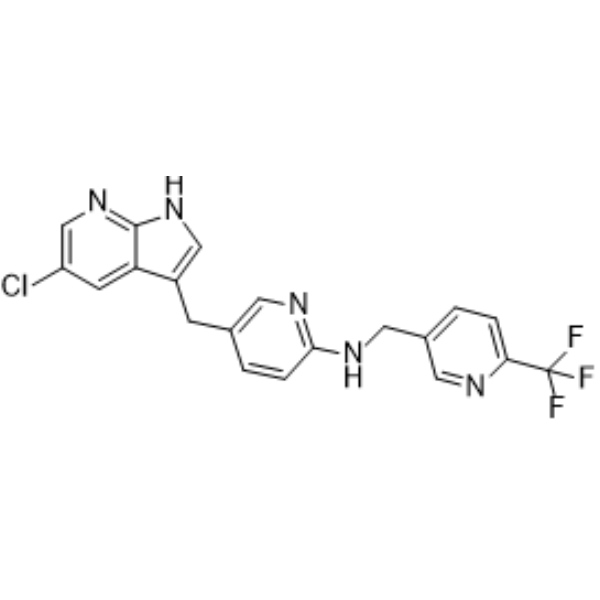
HY-16749
PexidartinibCSF1R/c-Kit Inhibitor -
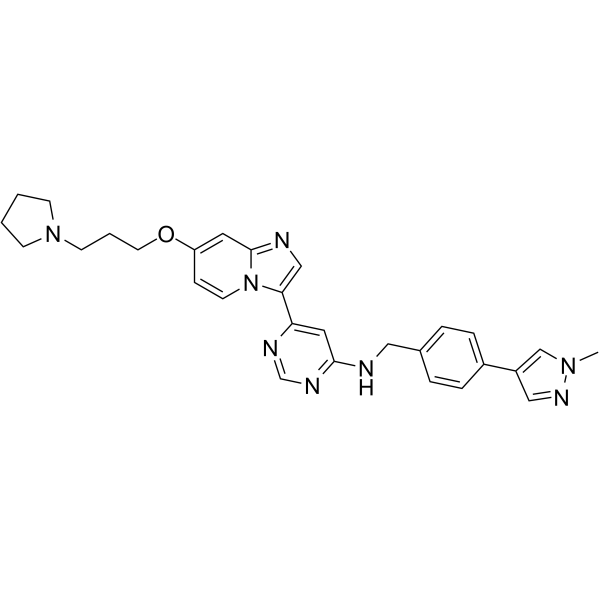
HY-132166
Velzatinibc-KIT Inhibitor -
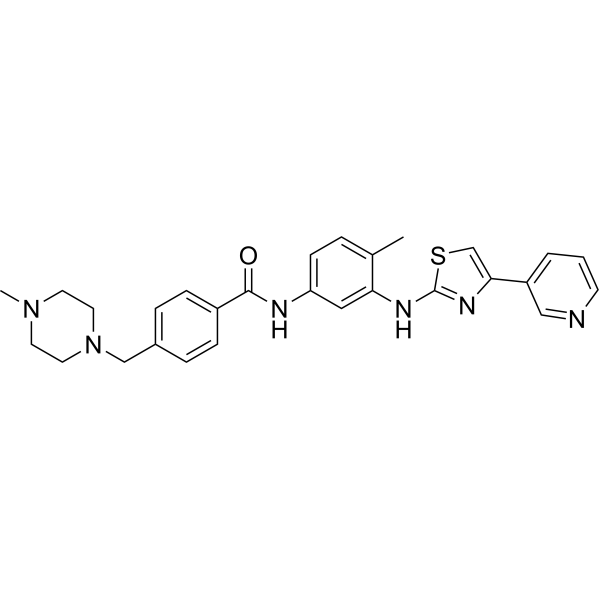
HY-10209
Masitinibc-Kit Inhibitor -
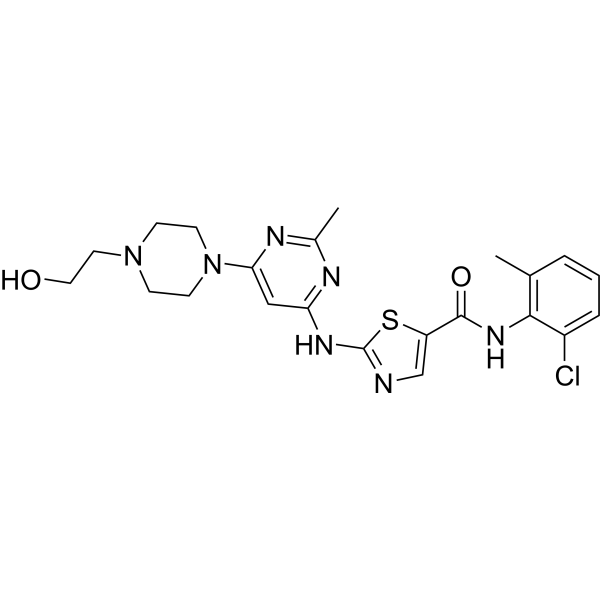
HY-10181
DasatinibSrc/Bcr-Abl Inhibitor
Publications Citing Use of MedChemExpress (MCE) Ripretinib
More- Autophagy. 2025 Jul;21(7):1523-1543. [Abstract]
- NPJ Precis Oncol. 2025 Aug 16;9(1):289. [Abstract]
- Cancers (Basel). 2025 Sep 9;17(18):2950. [Abstract]
- Analyst. 2026 Feb 16;151(4):1058-1070. [Abstract]
- Clin Genitourin Cancer. 2025 Aug;23(4):102359. [Abstract]
- Biomed Pharmacother. 2026 Sep:202:119803.
- bioRxiv. 2026 Mar 25.
- bioRxiv. 2026 Feb 20.
- bioRxiv. 2025 Jun 16:2025.06.11.659120. [Abstract]
 Customer Validation & Images

-
Cell Proliferation/Viability Assay
-
WB
-
WB
-
Cell Proliferation/Viability Assay
-
Cell Proliferation/Viability Assay
Alle VEGFR Isoform-spezifische Produkte anzeigen
More

Biologische Aktivität
Beschreibung
|
PDGFRA |
KIT |
Cellular Effect
|
Cell Line

|
Type | Value | Description | References |
|---|---|---|---|---|
| BaF3 | GI50 |
8.037 μM
Compound: 4; DCC-2618
|
Cytotoxicity in mouse parental BA/F3 cells incubated for 72 hrs by MTS assay
Cytotoxicity in mouse parental BA/F3 cells incubated for 72 hrs by MTS assay
|
[PMID: 30204441] |
In Vitro
Ripretinib (DCC-2618) suppresses phosphorylation of KIT and decreases the expression of phosphosphorylated (p)STAT5, pAKT and pERK1/2 in neoplastic mast cells. Ripretinib inhibits the growth of ROSAKIT K509I cells with an IC50 of 34 ± 10 nM, and also induces apoptosis in these cells. Ripretinib (0.1-1.0 μM) inhibits IgE-dependent histamine release from basophils and spontaneous tryptase release from neoplastic mast cells, and also counteracts growth and survival of leukemic monocytes and blast cells at 0.01-5 μM[2].
Ripretinib (DCC-2618) is a pan-KIT and PDGFRA inhibitor, shows cytotoxic activity against gastrointestinal stromal tumors[4].
MedChemExpress (MCE) has not independently confirmed the accuracy of these methods. They are for reference only.
Clinical Trial
| NCT Number | Sponsor | Condition | Start Date |
Phase
|
|---|---|---|---|---|
| NCT01329991 | Plexxikon| | 2011-05 | PHASE1 |


Chemical Information
-
CAS. Nr. 1442472-39-0
-
Appearance Solid
-
Molecular Weight 510.36
-
Formel C24H21BrFN5O2
-
Color White to light yellow
-
SMILES
O=C(NC1=CC(C2=CC3=C(C=C(NC)N=C3)N(CC)C2=O)=C(Br)C=C1F)NC4=CC=CC=C4
-
Synonyms
DCC-2618
-
Versand
Room temperature in continental US; may vary elsewhere.
-
Speicherung
Powder -20°C 3 years 4°C 2 years In solvent -80°C 2 years -20°C 1 year


Publications (9)
-
Journal Impact Factor
-
Most Recent
-
Autophagy
Kit-mediated autophagy suppression driven by a viral oncoprotein emerges as a crucial survival mechanism in Merkel cell carcinoma. [Abstract]2025 Jul;21(7):1523-1543. PMID: 40108758
Ripretinib purchased from MedChemExpress. Usage Cited in: Autophagy. 2025 Jul;21(7):1523-1543. [Abstract]
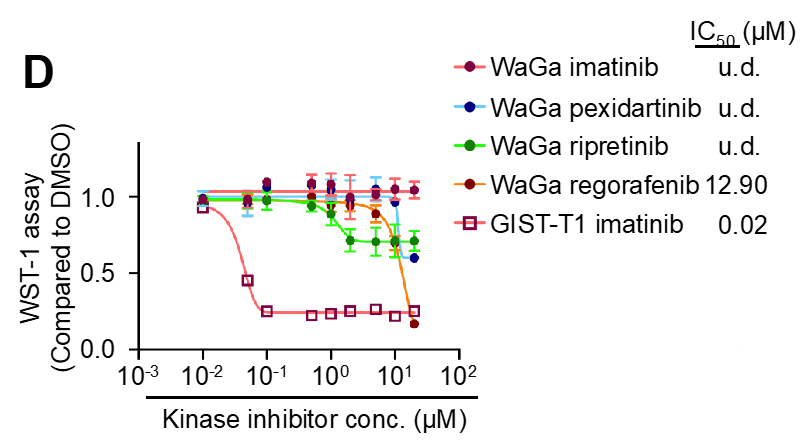
Ripretinib (10-2-102 μM; 24 h) induced apoptosis of WaGa cells.
Ripretinib purchased from MedChemExpress. Usage Cited in: Autophagy. 2025 Jul;21(7):1523-1543. [Abstract]
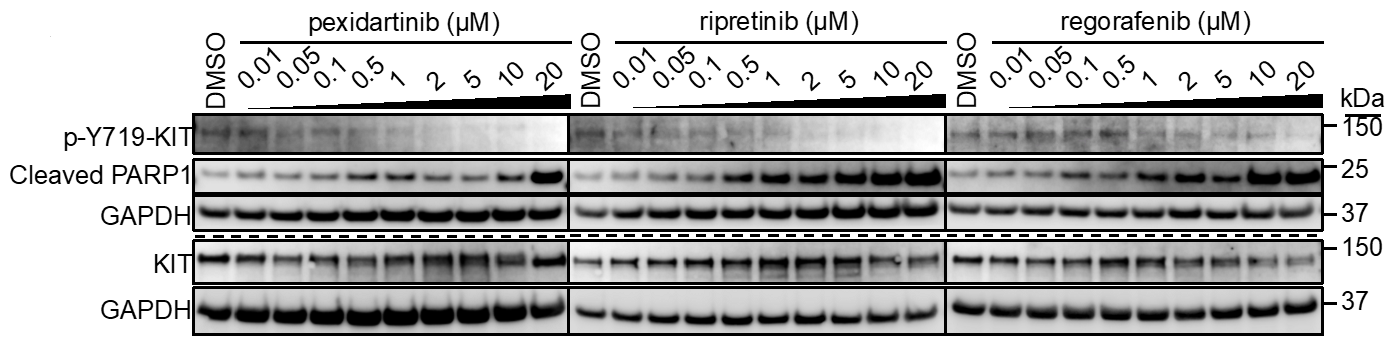
Ripretinib (0.1-20 μM; 24 h) reduced KIT phosphorylation and increased cleaved PARP levels in WaGa cells.
-
NPJ Precis Oncol
Clinical and preclinical insights into a novel MDM2::PDGFRA fusion in recurrent glioblastoma. [Abstract]2025 Aug 16;9(1):289. PMID: 40819143
Ripretinib purchased from MedChemExpress. Usage Cited in: NPJ Precis Oncol. 2025 Aug 16;9(1):289. [Abstract]
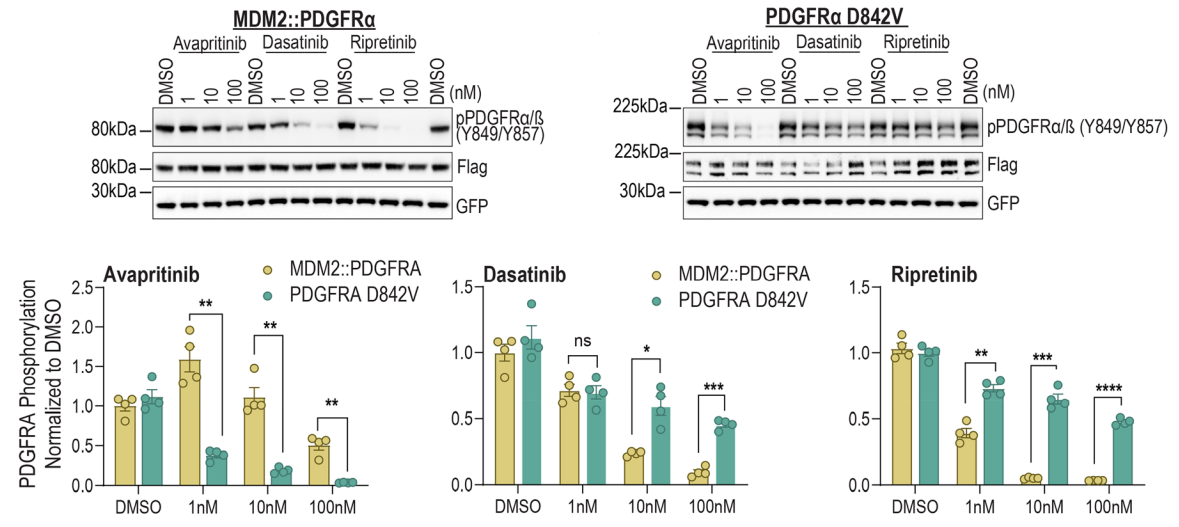
Ripretinib (1-100 nM; 2 h) significantly inhibited PDGFRA autophosphorylation in Ba/F3 cells expressing MDM2::PDGFRA or PDGFRA D842V.
Ripretinib purchased from MedChemExpress. Usage Cited in: NPJ Precis Oncol. 2025 Aug 16;9(1):289. [Abstract]
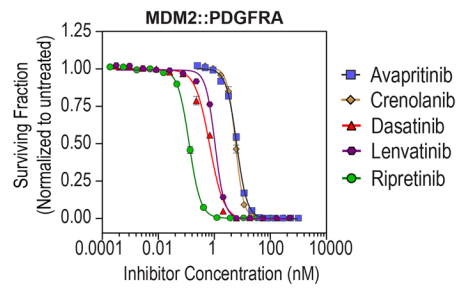
Dose-response cell viability of onco-addicted Ba/F3 cells expressing MDM2::PDGFRA after treatment with Ripretinib (0.0001-10000 nM; 72 h).
-
Cancers (Basel)
Cabozantinib Sensitizes NSCLC Cells to Radiation by Inducing Ferroptosis via STAT3/MCL1/BECN1/SLC7A11 Axis Suppression. [Abstract]2025 Sep 9;17(18):2950. PMID: 41008795 -
Analyst
Quantification of buparlisib in human liver microsomes employing an ultra-fast, sensitive UPLC-MS/MS method: in vitro and in silico metabolic stability evaluation. [Abstract]2026 Feb 16;151(4):1058-1070. PMID: 41589698 -
Clin Genitourin Cancer
2025 Aug;23(4):102359. PMID: 40408838
Ripretinib purchased from MedChemExpress. Usage Cited in: Clin Genitourin Cancer. 2025 Aug;23(4):102359. [Abstract]
Ripretinib (1 μM; 120 h) decreased viability of three ChRCC cell lines (RCJ-T1, RCJ-T2, and RCJ-M).
-
-
-
-
bioRxiv
A Hotspot Phosphorylation Site on SHP2 Drives Oncoprotein Activation and Drug Resistance. [Abstract]2025 Jun 16:2025.06.11.659120. PMID: 40667115


Lösungsmittel & Löslichkeit
In Vitro:
DMSO : 25 mg/mL (48.99 mM; Need ultrasonic; Hygroscopic DMSO has a significant impact on the solubility of product, please use newly opened DMSO)
Please refer to the solubility information to select the appropriate solvent. Once prepared, please aliquot and store the solution to prevent product inactivation from repeated freeze-thaw cycles.
Storage method and period of stock solution: -80°C, 2 years; -20°C, 1 year. When stored at -80°C, please use it within 2 years. When stored at -20°C, please use it within 1 year.
Please refer to the solubility information to select the appropriate solvent. Once prepared, please aliquot and store the solution to prevent product inactivation from repeated freeze-thaw cycles.
Storage method and period of stock solution: -80°C, 2 years; -20°C, 1 year. When stored at -80°C, please use it within 2 years. When stored at -20°C, please use it within 1 year.
Konzentration (Stammlösung) × Volumen (Stammlösung) = Konzentration (Ziellösung) × Volumen (Ziellösung)
In Vivo:
Select the appropriate dissolution method based on your experimental animal and administration route.
- For the following dissolution methods, please ensure to first prepare a clear stock solution using an In Vitro approach and then sequentially add co-solvents:
- To ensure reliable experimental results, the clarified stock solution can be appropriately stored based on storage conditions. As for the working solution for In Vivo experiments, it is recommended to prepare freshly and use it on the same day.
- The percentages shown for the solvents indicate their volumetric ratio in the final prepared solution. If precipitation or phase separation occurs during preparation, heat and/or sonication can be used to aid dissolution.
Add each solvent one by one: 10% DMSO 40% PEG300 5% Tween-80 45% Saline
Solubility: 2.08 mg/mL (4.08 mM); Suspended solution; Need ultrasonic
This protocol yields a suspended solution of 2.08 mg/mL. Suspended solution can be used for oral and intraperitoneal injection.
Taking 1 mL working solution as an example, add 100 μL DMSO stock solution (20.8 mg/mL) to 400 μL PEG300, and mix evenly; then add 50 μL Tween-80 and mix evenly; then add 450 μL Saline to adjust the volume to 1 mL.
Preparation of Saline: Dissolve 0.9 g sodium chloride in ddH₂O and dilute to 100 mL to obtain a clear Saline solution.
Add each solvent one by one: 10% DMSO 90% (20% SBE-β-CD in Saline)
Solubility: 2.08 mg/mL (4.08 mM); Suspended solution; Need ultrasonic
This protocol yields a suspended solution of 2.08 mg/mL. Suspended solution can be used for oral and intraperitoneal injection.
Taking 1 mL working solution as an example, add 100 μL DMSO stock solution (20.8 mg/mL) to 900 μL 20% SBE-β-CD in Saline, and mix evenly.
Preparation of 20% SBE-β-CD in Saline (4°C, storage for one week): 2 g SBE-β-CD powder is dissolved in 10 mL Saline, completely dissolve until clear.
In Vivo Dissolution Calculator
Please enter the basic information of animal experiments:
-
-
-
-
Recommended: Prepare an additional quantity of animals to account for potential losses during experiments.
Please enter your animal formula composition:
-
%DMSO +
Recommended: Keep the proportion of DMSO in working solution below 2% if your animal is weak.
-
%+
-
+%Tween-80 + +
-
%Saline +
The co-solvents required include: DMSO, . All of co-solvents are available by MedChemExpress (MCE). , Tween 80. All of co-solvents are available by MedChemExpress (MCE).
Working solution concentration: 0.22 mg/mL
Method for preparing stock solution: mg drug dissolved in μL DMSO. Stock solution concentration: mg/mL.
1. Take μL DMSO stock solution;
2. Add μL .
μL , mix evenly;
3. Then add μL Tween 80, mix evenly;
4. Then add μL
Please ensure that the stock solution in the first step is dissolved to a clear state, and add co-solvents in sequence. You can use ultrasonic heating (ultrasonic cleaner, recommended frequency 20-40 kHz), vortexing, etc. to assist dissolution.


Reinheit & Dokumentation
-
Data Sheet (274 KB)
-
SDS (393 KB)
- English - EN (393 KB)
- Français - FR (393 KB)
- Deutsch - DE (393 KB)
- Norwegian - NO (393 KB)
- Español - ES (393 KB)
- Swedish - SV (393 KB)
- Italian - IT (393 KB)
- Korean - KR (393 KB)
- Portuguese - PT (393 KB)
-
Handling Instructions (2659 KB)
Verweise
[1]. KIT/PDGFR Inhibitor DCC-2618.
[2]. BLU-285, DCC-2618 Show Activity against GIST. Cancer Discov. 2017 Feb;7(2):121-122. [Content Brief]
[3]. Schneeweiss M, et al. The KIT and PDGFRA switch-control inhibitor DCC-2618 blocks growth and survival of multiple neoplastic cell types in advanced mastocytosis. Haematologica. 2018 May;103(5):799-809. [Content Brief]


Complete Stock Solution Preparation Table
Please refer to the solubility information to select the appropriate solvent. Once prepared, please aliquot and store the solution to prevent product inactivation from repeated freeze-thaw cycles.
Storage method and period of stock solution: -80°C, 2 years; -20°C, 1 year. When stored at -80°C, please use it within 2 years. When stored at -20°C, please use it within 1 year.
| Optional Solvent | Concentration Solvent Mass | 1 mg | 5 mg | 10 mg | 25 mg |
|---|---|---|---|---|---|
| DMSO | 1 mM | 1.9594 mL | 9.7970 mL | 19.5940 mL | 48.9850 mL |
| 5 mM | 0.3919 mL | 1.9594 mL | 3.9188 mL | 9.7970 mL | |
| 10 mM | 0.1959 mL | 0.9797 mL | 1.9594 mL | 4.8985 mL | |
| 15 mM | 0.1306 mL | 0.6531 mL | 1.3063 mL | 3.2657 mL | |
| 20 mM | 0.0980 mL | 0.4899 mL | 0.9797 mL | 2.4493 mL | |
| 25 mM | 0.0784 mL | 0.3919 mL | 0.7838 mL | 1.9594 mL | |
| 30 mM | 0.0653 mL | 0.3266 mL | 0.6531 mL | 1.6328 mL | |
| 40 mM | 0.0490 mL | 0.2449 mL | 0.4899 mL | 1.2246 mL |


Ripretinib Related Classifications
HY-112306 Related Classifications
 Powered by Bioz