



Vatalanib dihydrochloride
Based on 15 publication(s) in Google Scholar
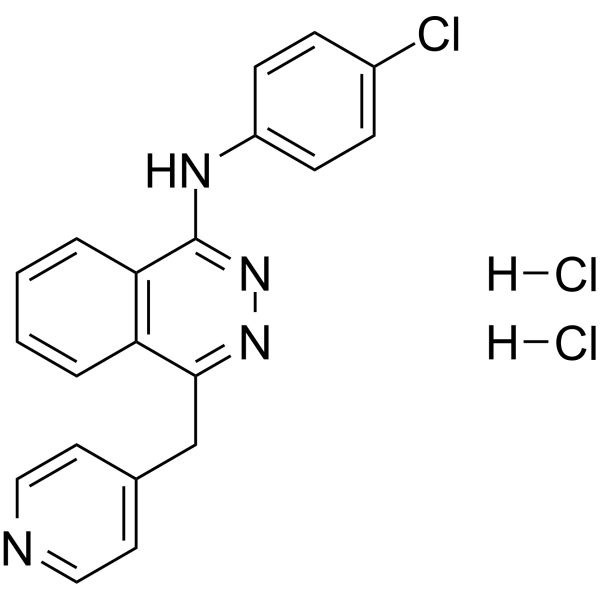
Vatalanib dihydrochloride (PTK787 dihydrochloride) is a BBB-permeable VEGFR2/KDR inhibitor with an IC50 of 37 nM.
Nos produits utilisent uniquement pour la recherche. Nous ne vendons pas aux patients.
- Pureté : 99.68%
- CAS No.: 212141-51-0
- Formule: C20H17Cl3N4
- Masse moléculaire:419.73
-
Stockage:
4°C, sealed storage, away from moisture
* In solvent : -80°C, 6 months; -20°C, 1 month (sealed storage, away from moisture)

To place orders, for customer services and technical support, please contact: MedChemExpress USA
Tel: 609-228-6898 E-mail: [email protected] [email protected]


-
 Activité biologique
-
Chemical Information
-
Solvant et solubilité
- Protocole
- Pureté et documentation
- Références
-
 Help & FAQs


-
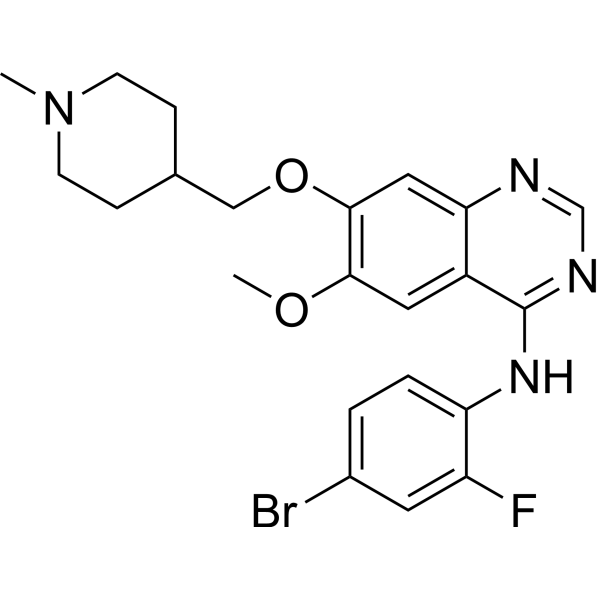
HY-10260
VandetanibVEGFR2/3 Inhibitor -
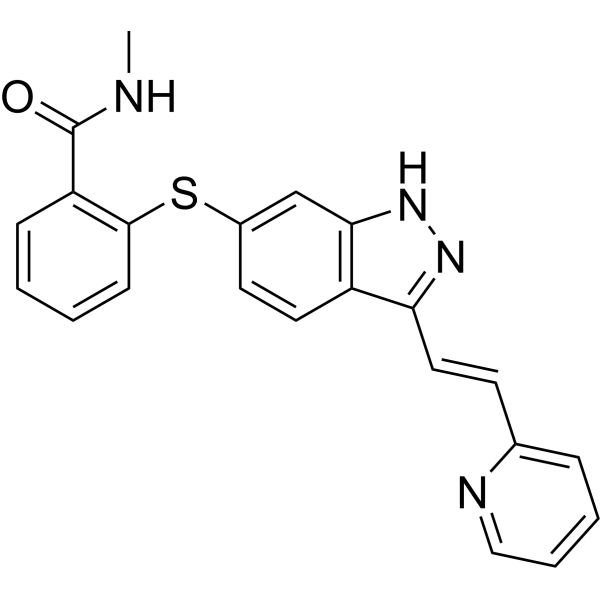
HY-10065
AxitinibTyrosine Kinase Inhibitor -
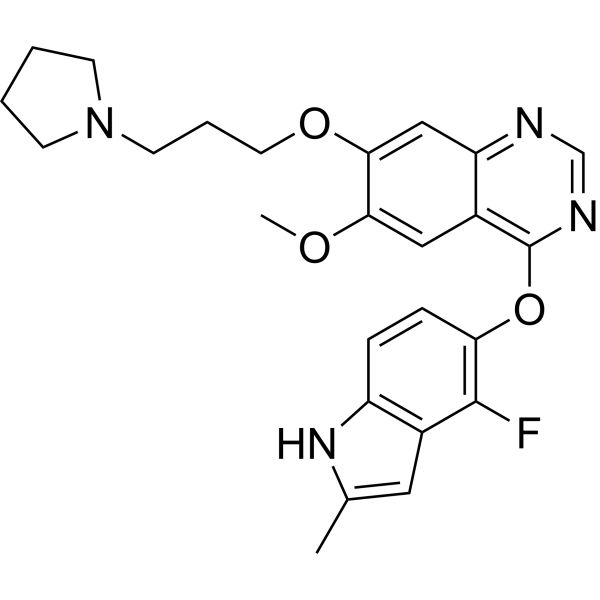
HY-10205
CediranibVEGFR2 Inhibitor -
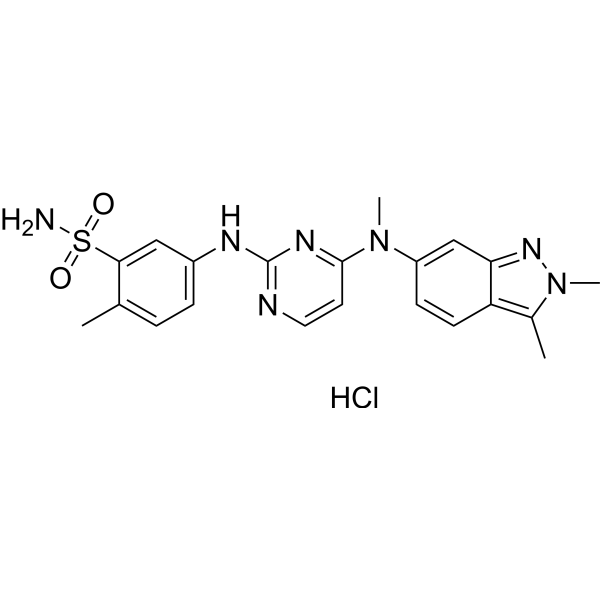
HY-12009
Pazopanib Hydrochloridec-Kit Inhibitor -
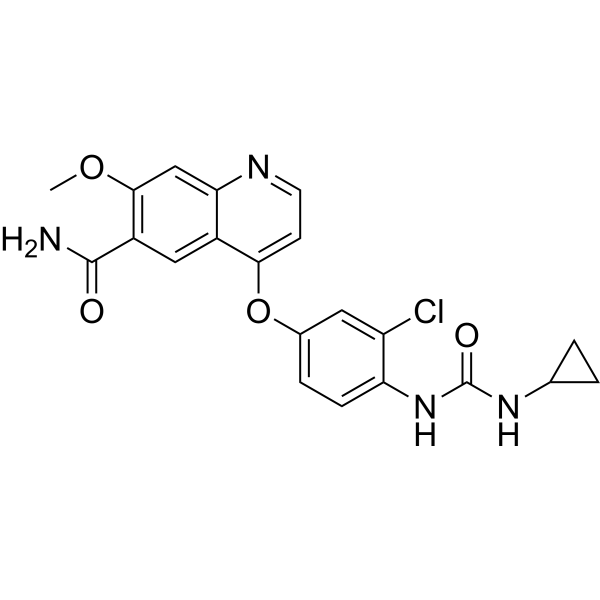
HY-10981
LenvatinibVEGFR/FGFR Inhibitor -
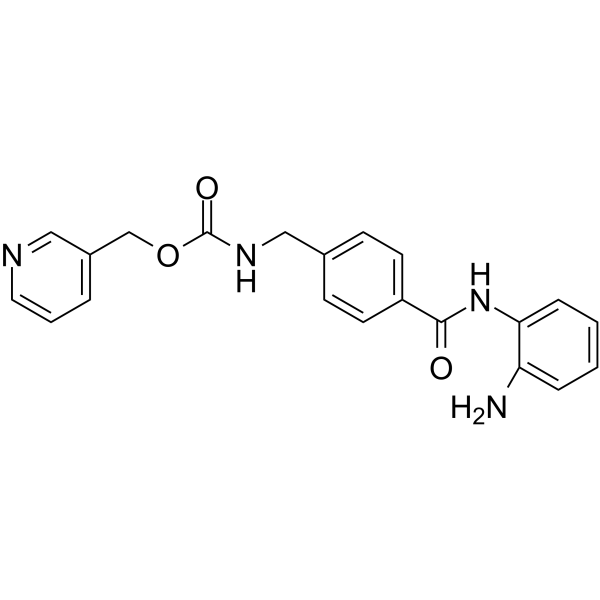
HY-12163
EntinostatHDAC Class I Inhibitor -
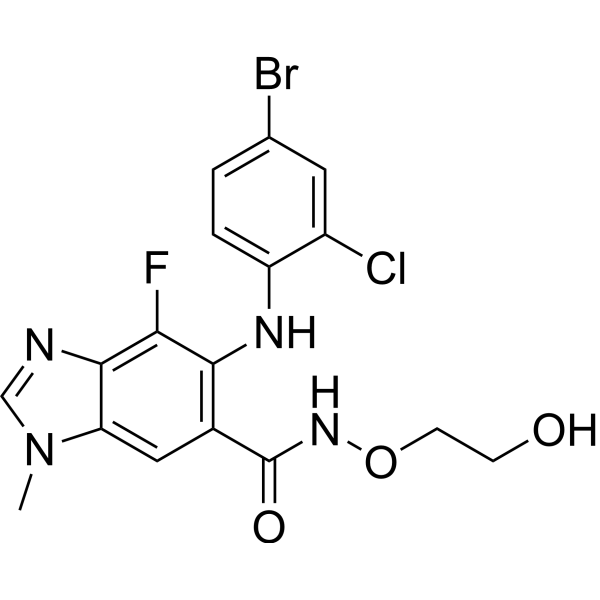
HY-50706
SelumetinibMEK1/2 Inhibitor -
HY-10407
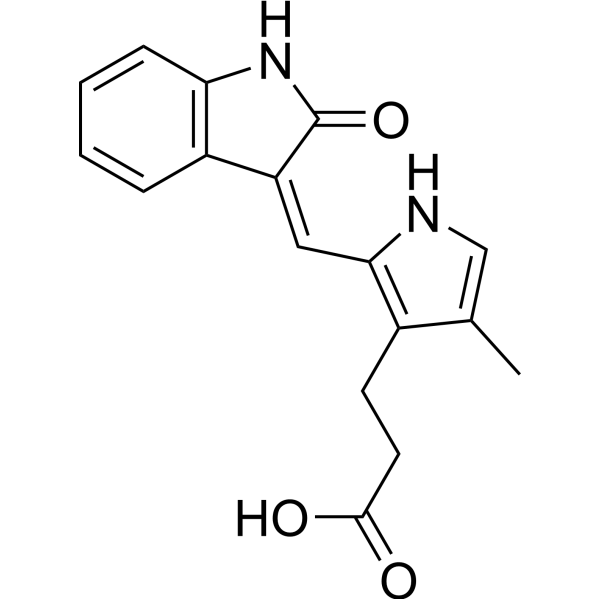
SU 5402Tyrosine Kinase Inhibitor -
HY-19624
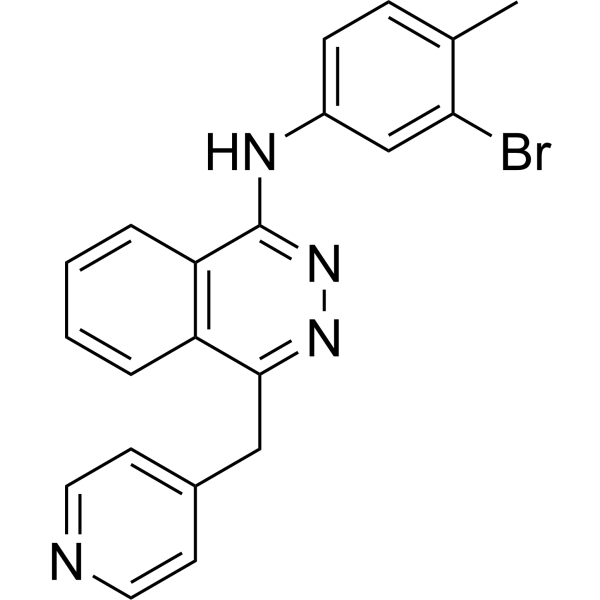
NVP-ACC789VEGFR Inhibitor -
HY-10181
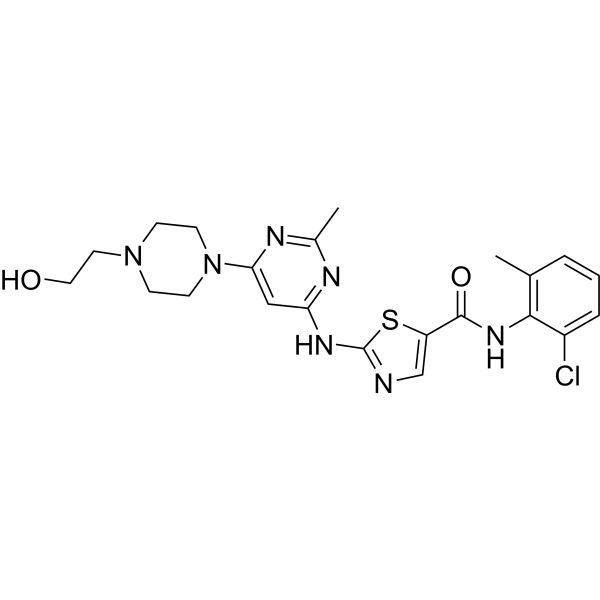
DasatinibSrc/Bcr-Abl Inhibitor -
HY-50946
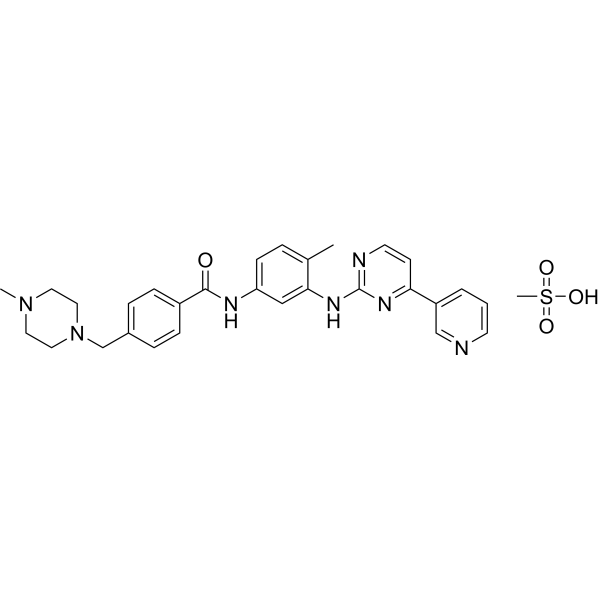
Imatinib Mesylatec-Kit Inhibitor -
HY-50751
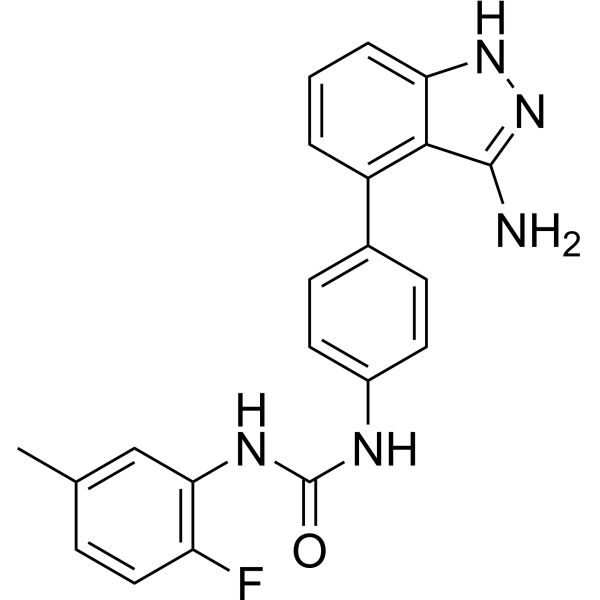
LinifanibMulti-Targeted RTK Inhibitor
Publications Citing Use of MedChemExpress (MCE) Vatalanib dihydrochloride
More- Bioact Mater. 2022 Jan 2:15:131-144. [Abstract]
- Sci Transl Med. 2018 Jul 18;10(450):eaaq1093. [Abstract]
- J Pharm Anal. 2024 Jan;14(1):100-114. [Abstract]
- Br J Pharmacol. 2019 Sep;176(17):3143-3160. [Abstract]
- JCI Insight. 2024 May 22;9(10):e166402. [Abstract]
- Int J Mol Sci. 2024 Nov 15;25(22):12277. [Abstract]
- Oncol Rep. 2016 Mar;35(3):1297-308. [Abstract]
- J Microbiol Biotechnol. 2015 Aug;25(8):1227-33. [Abstract]
- Mutat Res. 2025 Jul-Dec:831:111916. [Abstract]
- Drug Metab Pharmacokinet. 2017 Jun;32(3):179-188. [Abstract]
- Ulm University. 2023 Mar 21.
- Oxid Med Cell Longev. 2022 Jul 18:2022:2232365. [Abstract]
- Evid Based Complement Alternat Med. 2021 Apr 26:2021:5543259. [Abstract]
- Patent. US20170349880A1.
- Kitasato University. 2017.
Voir tous les produits spécifiques à Isoform VEGFR
More

Activité biologique
Description
IC50 & Target
[1]|
VEGFR2 37 nM (IC50) |
In Vitro
Vatalanib also inhibits Flk, c-Kit and PDGFRβ with IC50 of 270 nM, 730 nM and 580 nM, respectively. Vatalanib shows the anti-proliferation effect by inhibiting thymidine incorporation induced by VEGF in HUVECs with and IC50 of 7.1 nM, and dose-dependently suppresses VEGF-induced survival and migration of endothelial cells in the same dose range without cytotoxic or antiproliferative effect on cells that do not express VEGF receptors[1]. A recent study shows that Vatalanib significantly inhibits the growth of hepatocellular carcinoma cells and enhances the IFN/5-FU induced apoptosis by increasing proteins levels of Bax and reduced Bcl-xL and Bcl-2[2].
MedChemExpress (MCE) has not independently confirmed the accuracy of these methods. They are for reference only. Further protocols information, click here.
In Vivo
MedChemExpress (MCE) has not independently confirmed the accuracy of these methods. They are for reference only.


Chemical Information
-
CAS No. 212141-51-0
-
Appearance Solid
-
Masse moléculaire 419.73
-
Formule C20H17Cl3N4
-
Color Off-white to pink
-
SMILES
ClC1=CC=C(C=C1)NC2=NN=C(C3=C2C=CC=C3)CC4=CC=NC=C4.[H]Cl.[H]Cl
-
Synonyms
PTK787 dihydrochloride; ZK-222584 dihydrochloride; CGP-797870 dihydrochloride
-
Livraison
Room temperature in continental US; may vary elsewhere.
-
Stockage
4°C, sealed storage, away from moisture
* In solvent : -80°C, 6 months; -20°C, 1 month (sealed storage, away from moisture)


Publications (15)
-
Journal Impact Factor
-
Most Recent
-
Bioact Mater
2022 Jan 2:15:131-144. PMID: 35386336 -
Sci Transl Med
PP2A inhibition is a druggable MEK inhibitor resistance mechanism in KRAS-mutant lung cancer cells. [Abstract]2018 Jul 18;10(450):eaaq1093. PMID: 30021885 -
J Pharm Anal
Distinct molecular targets of ProEGCG from EGCG and superior inhibition of angiogenesis signaling pathways for treatment of endometriosis. [Abstract]2024 Jan;14(1):100-114. PMID: 38352946 -
Br J Pharmacol
Tanshinol borneol ester, a novel synthetic small molecule angiogenesis stimulator inspired by botanical formulations for angina pectoris. [Abstract]2019 Sep;176(17):3143-3160. PMID: 31116880 -
JCI Insight
Blocking the angiopoietin-2-dependent integrin β-1 signaling axis abrogates small cell lung cancer invasion and metastasis. [Abstract]2024 May 22;9(10):e166402. PMID: 38775153 -
Int J Mol Sci
Targeting Myeloid Cells in Head and Neck Squamous Cell Carcinoma: A Kinase Inhibitor Library Screening Approach. [Abstract]2024 Nov 15;25(22):12277. PMID: 39596341 -
Oncol Rep
Local recurrence of small cell lung cancer following radiofrequency ablation is induced by HIF-1α expression in the transition zone. [Abstract]2016 Mar;35(3):1297-308. PMID: 26750332 -
J Microbiol Biotechnol
Soluble Expression and Purification of the Catalytic Domain of Human Vascular Endothelial Growth Factor Receptor 2 in Escherichia coli. [Abstract]2015 Aug;25(8):1227-33. PMID: 25907066 -
Mutat Res
Deciphering the molecular mechanism of YY1/HIF1A modulating ovarian cancer angiogenesis based on single-cell transcriptomics technology. [Abstract]2025 Jul-Dec:831:111916. PMID: 41072350 -
Drug Metab Pharmacokinet
Precise prediction of activators for the human constitutive androstane receptor using structure-based three-dimensional quantitative structure-activity relationship methods. [Abstract]2017 Jun;32(3):179-188. PMID: 28412023 -
-
Oxid Med Cell Longev
Tetramethylpyrazine Protects Endothelial Injury and Antithrombosis via Antioxidant and Antiapoptosis in HUVECs and Zebrafish. [Abstract]2022 Jul 18:2022:2232365. PMID: 35898617 -
Evid Based Complement Alternat Med
Inhibitory Effects of Euphorbia ebracteolata Hayata Extract ECB on Melanoma-Induced Hyperplasia of Blood Vessels in Zebrafish Embryos. [Abstract]2021 Apr 26:2021:5543259. PMID: 33995546 -
-


Solvant et solubilité
In Vitro:
DMSO : 50 mg/mL (119.12 mM; ultrasonic and warming and heat to 80°C; Hygroscopic DMSO has a significant impact on the solubility of product, please use newly opened DMSO)
H2O : 50 mg/mL (119.12 mM; Need ultrasonic)
Please refer to the solubility information to select the appropriate solvent. Once prepared, please aliquot and store the solution to prevent product inactivation from repeated freeze-thaw cycles.
Storage method and period of stock solution: -80°C, 6 months; -20°C, 1 month (sealed storage, away from moisture). When stored at -80°C, please use it within 6 months. When stored at -20°C, please use it within 1 month.
* Note: If you choose water as the stock solution, please dilute it to the working solution, then filter and sterilize it with a 0.22 μm filter before use.
Please refer to the solubility information to select the appropriate solvent. Once prepared, please aliquot and store the solution to prevent product inactivation from repeated freeze-thaw cycles.
Storage method and period of stock solution: -80°C, 6 months; -20°C, 1 month (sealed storage, away from moisture). When stored at -80°C, please use it within 6 months. When stored at -20°C, please use it within 1 month.
* Note: If you choose water as the stock solution, please dilute it to the working solution, then filter and sterilize it with a 0.22 μm filter before use.
Concentration (start) × Volume (start) = Concentration (final) × Volume (final)
In Vivo:
Select the appropriate dissolution method based on your experimental animal and administration route.
- For the following dissolution methods, please ensure to first prepare a clear stock solution using an In Vitro approach and then sequentially add co-solvents:
- To ensure reliable experimental results, the clarified stock solution can be appropriately stored based on storage conditions. As for the working solution for In Vivo experiments, it is recommended to prepare freshly and use it on the same day.
- The percentages shown for the solvents indicate their volumetric ratio in the final prepared solution. If precipitation or phase separation occurs during preparation, heat and/or sonication can be used to aid dissolution.
Add each solvent one by one: 10% DMSO 40% PEG300 5% Tween-80 45% Saline
Solubility: ≥ 2.08 mg/mL (4.96 mM); Clear solution
This protocol yields a clear solution of ≥ 2.08 mg/mL (saturation unknown).
Taking 1 mL working solution as an example, add 100 μL DMSO stock solution (20.8 mg/mL) to 400 μL PEG300, and mix evenly; then add 50 μL Tween-80 and mix evenly; then add 450 μL Saline to adjust the volume to 1 mL.
Preparation of Saline: Dissolve 0.9 g sodium chloride in ddH₂O and dilute to 100 mL to obtain a clear Saline solution.
Add each solvent one by one: 10% DMSO 90% (20% SBE-β-CD in Saline)
Solubility: ≥ 2.08 mg/mL (4.96 mM); Clear solution
This protocol yields a clear solution of ≥ 2.08 mg/mL (saturation unknown).
Taking 1 mL working solution as an example, add 100 μL DMSO stock solution (20.8 mg/mL) to 900 μL 20% SBE-β-CD in Saline, and mix evenly.
Preparation of 20% SBE-β-CD in Saline (4°C, storage for one week): 2 g SBE-β-CD powder is dissolved in 10 mL Saline, completely dissolve until clear.
In Vivo Dissolution Calculator
Please enter the basic information of animal experiments:
-
-
-
-
Recommended: Prepare an additional quantity of animals to account for potential losses during experiments.
Working solution concentration: 0.22 mg/mL
This product has good water solubility, please refer to the measured solubility data in water/PBS/Saline for details.

Protocole
-
Cell Cytotoxicity Assay
Cytotoxicity assays are usually based on the assessment of cell membrane damage, which can also be indirectly detected by measuring cell viability. Detection methods include MTT assay, CKK-8 assay, LDH assay and ATP assay, etc.


Pureté et documentation
-
Fiche technique (282 KB)
-
SDS (393 KB)
- English - EN (393 KB)
- Français - FR (393 KB)
- Deutsch - DE (393 KB)
- Norwegian - NO (393 KB)
- Español - ES (393 KB)
- Swedish - SV (393 KB)
- Italian - IT (393 KB)
- Korean - KR (393 KB)
- Portuguese - PT (393 KB)
-
Instruction de manipulation (2659 KB)
Références
[1]. Wood JM, et al. PTK787/ZK 222584, a novel and potent inhibitor of vascular endothelial growth factor receptor tyrosine kinases, impairs vascular endothelial growth factor-induced responses and tumor growth after oral administration. Cancer Res. 2000, 60(8 [Content Brief]
[2]. Wan J, et al. Local recurrence of small cell lung cancer following radiofrequency ablation is induced by HIF-1α expression in the transition zone. Oncol Rep. 2016 Mar;35(3):1297-308. [Content Brief]
[3]. Murakami M, et al. Tyrosine kinase inhibitor PTK/ZK enhances the antitumor effects of interferon-α/5-fluorouracil therapy for hepatocellular carcinoma cells. Ann Surg Oncol. 2011, 18(2), 589-596. [Content Brief]
[4]. Jeon SG, et al. The VEGF inhibitor vatalanib regulates AD pathology in 5xFAD mice. Mol Brain. 2020 Sep 25;13(1):131. [Content Brief]


Complete Stock Solution Preparation Table
Please refer to the solubility information to select the appropriate solvent. Once prepared, please aliquot and store the solution to prevent product inactivation from repeated freeze-thaw cycles.
Storage method and period of stock solution: -80°C, 6 months; -20°C, 1 month (sealed storage, away from moisture). When stored at -80°C, please use it within 6 months. When stored at -20°C, please use it within 1 month.
| Optional Solvent | Concentration Solvent Mass | 1 mg | 5 mg | 10 mg | 25 mg |
|---|---|---|---|---|---|
| DMSO / H2O | 1 mM | 2.3825 mL | 11.9124 mL | 23.8248 mL | 59.5621 mL |
| 5 mM | 0.4765 mL | 2.3825 mL | 4.7650 mL | 11.9124 mL | |
| 10 mM | 0.2382 mL | 1.1912 mL | 2.3825 mL | 5.9562 mL | |
| 15 mM | 0.1588 mL | 0.7942 mL | 1.5883 mL | 3.9708 mL | |
| 20 mM | 0.1191 mL | 0.5956 mL | 1.1912 mL | 2.9781 mL | |
| 25 mM | 0.0953 mL | 0.4765 mL | 0.9530 mL | 2.3825 mL | |
| 30 mM | 0.0794 mL | 0.3971 mL | 0.7942 mL | 1.9854 mL | |
| 40 mM | 0.0596 mL | 0.2978 mL | 0.5956 mL | 1.4891 mL | |
| 50 mM | 0.0476 mL | 0.2382 mL | 0.4765 mL | 1.1912 mL | |
| 60 mM | 0.0397 mL | 0.1985 mL | 0.3971 mL | 0.9927 mL | |
| 80 mM | 0.0298 mL | 0.1489 mL | 0.2978 mL | 0.7445 mL | |
| 100 mM | 0.0238 mL | 0.1191 mL | 0.2382 mL | 0.5956 mL |
* Note: If you choose water as the stock solution, please dilute it to the working solution, then filter and sterilize it with a 0.22 μm filter before use.


Vatalanib dihydrochloride Related Classifications
HY-12018 Related Classifications
 Powered by Bioz