
1. Search Result
Search Result
Results for "

angiotensin receptor blockers

" in MedChemExpress (MCE) Product Catalog:

33

Inhibitors & Agonists

1

Screening Libraries

6

Peptides

3

Inhibitory Antibodies

1

Natural
Products

6

Isotope-Labeled Compounds

Cat. No. Product Name Target Research Areas Chemical Structure
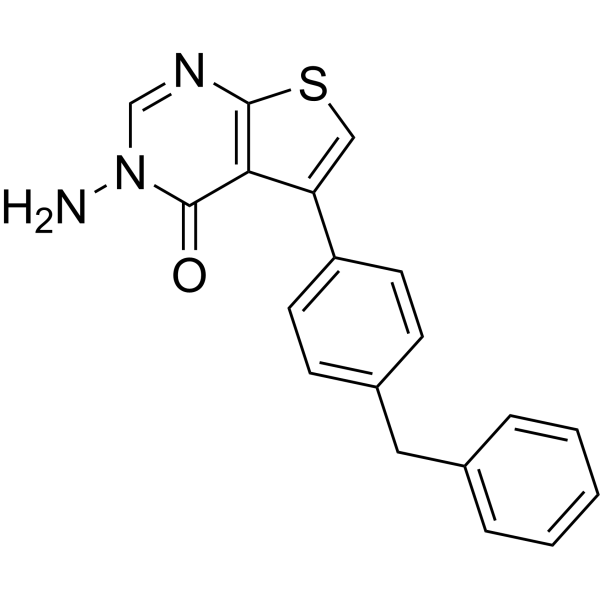
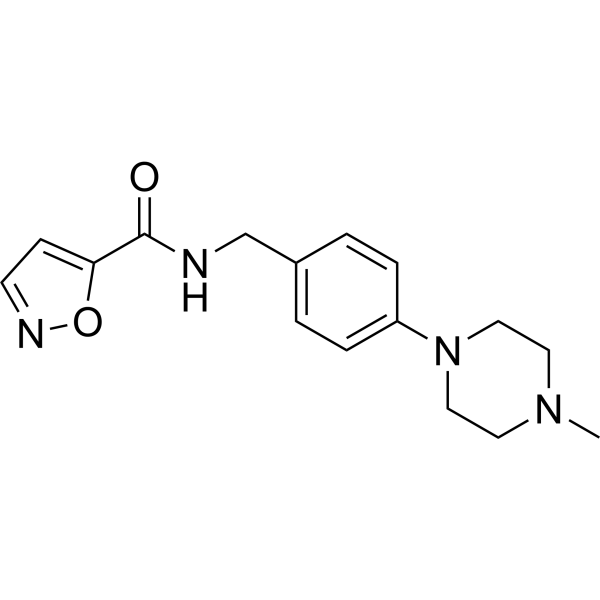
  • HY-119706
    Barbadin
    Maximum Cited Publications
    16 Publications Verification

    Apoptosis Arrestin Others
    Barbadin is a novel and selective β-arrestin/β2-adaptin interaction inhibitor, has IC50 values of 19.1 μM for β-arrestin1 and 15.6 μM for β-arrestin2. Barbadin blocks agonist-promoted endocytosis of the prototypical β2-adrenergic, V2-vasopressin and angiotensin-II type-1 receptors. Barbadin can induce apoptosis .
    Barbadin
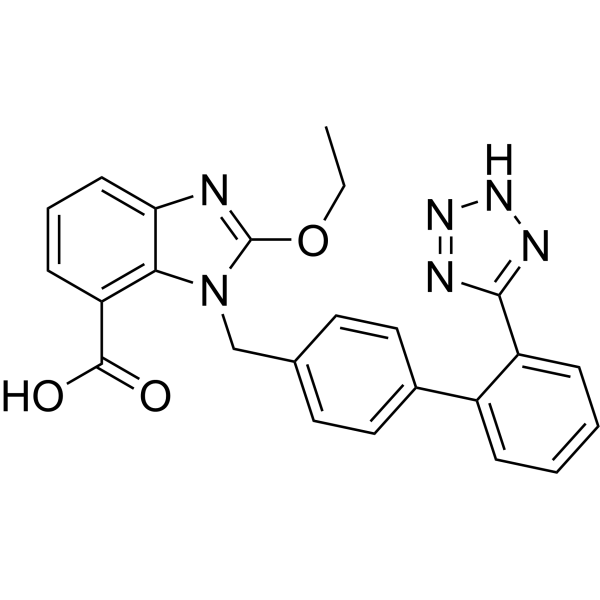
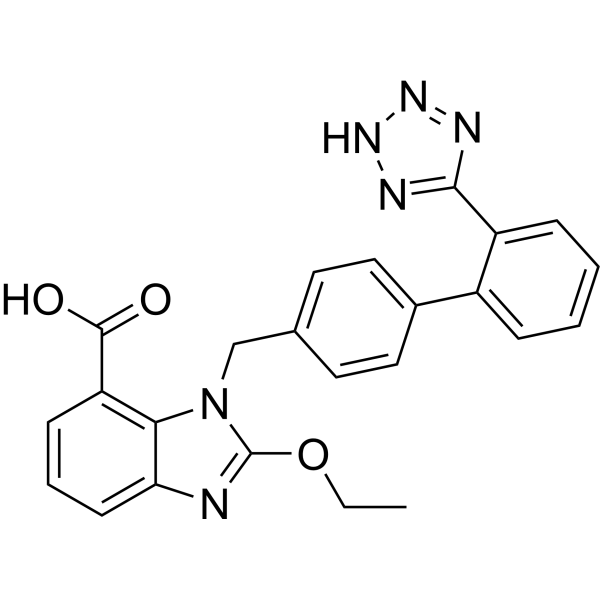
  • HY-B0205
    Candesartan
    5+ Cited Publications

    CV 11974

    Angiotensin Receptor PPAR Cardiovascular Disease Endocrinology Cancer
    Candesartan (CV 11974) is an orally active angiotensin II AT1-Receptor blocker and PPAR-γ agonist. Candesartan has potent and long-lasting antihypertensive effects. Candesartan can be used for the research of hypertension, chronic heart failure (CHF) and Traumatic brain injury (TBI) .
    Candesartan
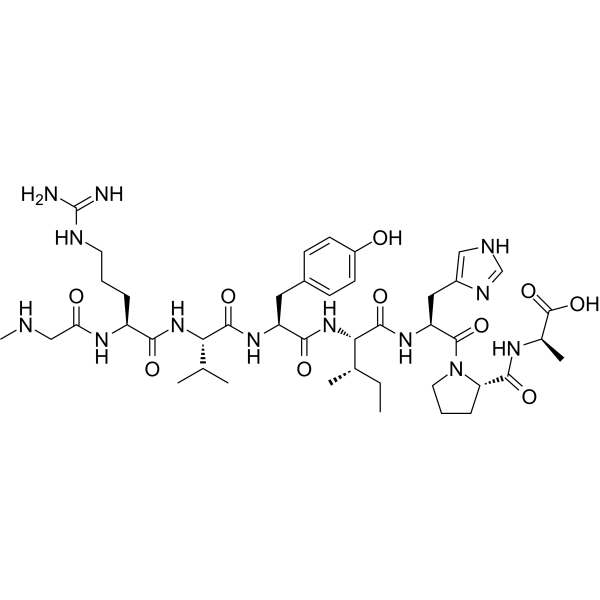
  • HY-P1656
    (D-Pro7)-Angiotensin I/II (1-7)
    1 Publications Verification

    Angiotensin Receptor Mas-related G-protein-coupled Receptor (MRGPR) Cardiovascular Disease
    (D-Pro7)-Angiotensin I/II (1-7) is a potent Mas receptor inhibitor with a Ki of 0.001 μM for rat receptors. (D-Pro7)-Angiotensin I/II (1-7) competitively blocks the binding of Angiotensin-(1-7) to the Mas receptor and attenuates the vasodilatory effect of rat aortas under physiological and hypertensive conditions. (D-Pro7)-Angiotensin I/II (1-7) can be used for studies on the function of the renin-angiotensin system and the pathological mechanisms of hypertension .
    (D-Pro7)-Angiotensin I/II (1-7)
  • HY-160187

    Orphan GPCR Angiotensin Receptor Cardiovascular Disease
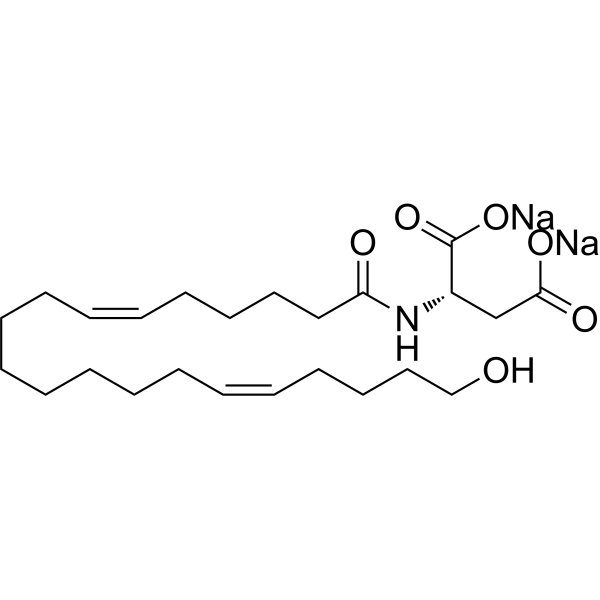
    AAA is an orally active 20-HETE receptor antagonist. AAA exerts antihypertensive and organoprotective effects. AAA blocks 20-HETE prohypertensive actions, suppresses intrarenal and circulating angiotensin II levels, and interferes with renin-angiotensin system interactions. AAA attenuates development of, and reverses established, ANG II (HY-13948)-dependent malignant hypertension. AAA reduces albuminuria, glomerulosclerosis, and cardiac hypertrophy linked to malignant hypertension. AAA can be used for the research of malignant hypertension .
    AAA
  • HY-12765

    E-3174; EXP-3174

    Drug Metabolite Angiotensin Receptor Cardiovascular Disease
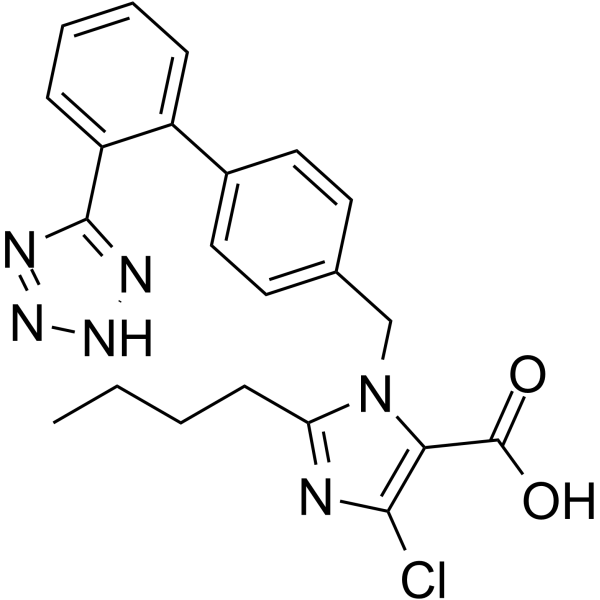
    Losartan Carboxylic Acid (E-3174), an active carboxylic acid metabolite of Losartan, is an angiotensin II receptor type 1 (AT1) antagonist. The Ki values are 0.97, 0.57, 0.67 nM for rat AT1B/AT1A and human AT1, respectively. Losartan Carboxylic Acid blocks the angiotensin II-induced responses in vascular smoothmuscle cells (VSMC). Losartan Carboxylic Acid elevates plasma renin activities and reduces mean arterial pressure .
    Losartan Carboxylic Acid
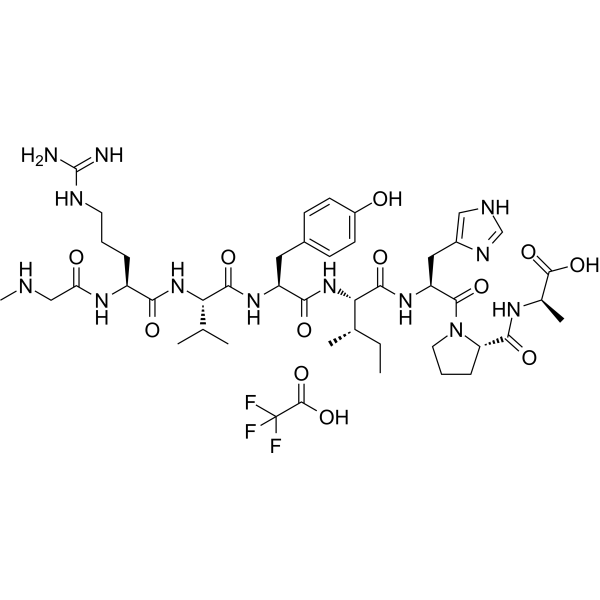
  • HY-P2141
    TRV-120027
    3 Publications Verification

    TRV027

    Angiotensin Receptor Arrestin Cardiovascular Disease
    TRV120027, a β-arrestin-1-biased agonist of the angiotensin II receptor type 1 (AT1R), engages β-arrestins while blocking G-protein signaling . TRV120027 induces acute catecholamine secretion through cation channel subfamily C3 (TRPC3) coupling, promotes the formation of a macromolecular complex composed of AT1R-β-arrestin-1-TRPC3-PLCγ at the plasma membrane. TRV120027 inhibits angiotensin II-mediated vasoconstriction and increases cardiomyocyte contractility. TRV120027 has the potential for the acute decompensated heart failure (ADHF) treatment .
    TRV-120027
  • HY-P990951

    REGN-5381

    Natriuretic Peptide Receptor (NPR) Cardiovascular Disease
    Vixticibart (REGN-5381) is a fully human IgG4 monoclonal antibody and NPR1 agonist that targets NPR1. Vixticibart stabilizes the receptor in an activated conformation by binding to the N-terminal domain of NPR1, and enhances the activity of endogenous ligands ANP and BNP without blocking ligand binding when these ligands are present. Vixticibart exerts vasodilatory and hypotensive effects by inducing cGMP production, preferentially dilating venous vessels to reduce systolic and venous pressure, but does not induce diuresis and may trigger a compensatory increase in heart rate. Vixticibart produces a synergistic hypotensive effect when combined with angiotensin-converting enzyme inhibitors or angiotensin receptor blockers, and is currently mainly used in research related to heart failure and hypertension .
    Vixticibart
  • HY-107867

    P2Y Receptor Cardiovascular Disease Inflammation/Immunology
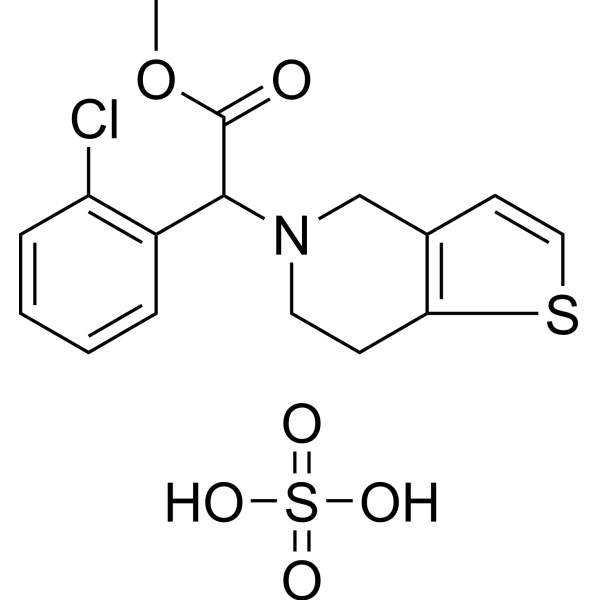
    (±)-Clopidogrel bisulfate is a platelet P2Y12 receptor inhibitor and an adenosine diphosphate (ADP) receptor antagonist. (±)-Clopidogrel bisulfate inhibits the binding of ADP to its receptors on the membranes of platelet cells, and blocks ADP-mediated activation of the glycoprotein GPIIb/IIIa complex. (±)-Clopidogrel bisulfate reduces vascular inflammation and angiotensin II induced-abdominal aortic aneurysm progression. (±)-Clopidogrel bisulfate has anti-inflammatory effects .
    (±)-Clopidogrel bisulfate
  • HY-12765S

    E-3174 d4; EXP-3174 d4

    Angiotensin Receptor Cardiovascular Disease Endocrinology Cancer
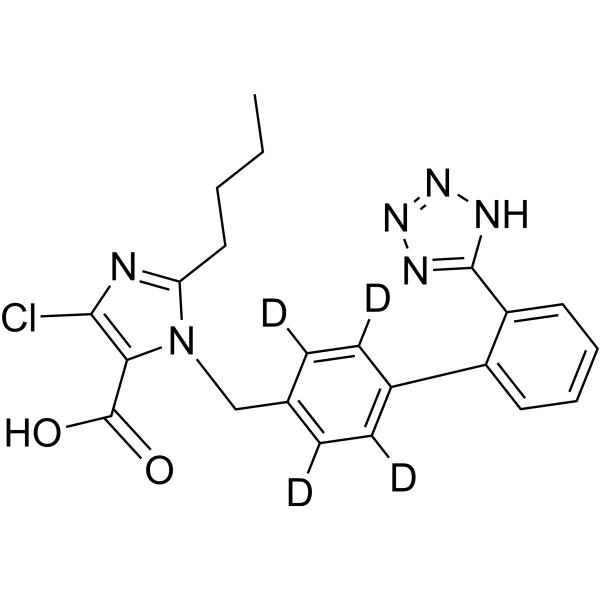
    Losartan-d4 carboxylic acid (E-3174-d4) is the deuterium labeled Losartan Carboxylic Acid (HY-12765). Losartan Carboxylic Acid (E-3174), an active carboxylic acid metabolite of Losartan, is an angiotensin II receptor type 1 (AT1) antagonist. The Ki values are 0.97, 0.57, 0.67 nM for rat AT1B/AT1A and human AT1, respectively. Losartan Carboxylic Acid blocks the angiotensin II-induced responses in vascular smoothmuscle cells (VSMC). Losartan Carboxylic Acid elevates plasma renin activities and reduces mean arterial pressure.
    Losartan-d4 (carboxylic acid)
  • HY-W414915

    CGP 48933 methyl ester

    Drug Derivative Angiotensin Receptor Cardiovascular Disease Cancer
    Valsartan (CGP 48933) methyl ester is the methyl ester derivative of Valsartan (HY-18204). Valsartan is a selective and orally active angiotensin II type 1 (AT1) receptor blocker (ARB) with potent antihypertensive and cardioprotective effects. Valsartan competitively binds to AT1 receptors, inhibiting the binding of angiotensin II to AT1 receptors, thereby blocking angiotensin II-mediated vasoconstriction, sodium retention, and myocardial hypertrophy signaling pathways. Valsartan reduces systolic blood pressure in L-NAME-induced hypertensive rats. Valsartan can be used for the study and treatment of arterial hypertension, hypertensive heart disease, and heart failure .
    Valsartan methyl ester
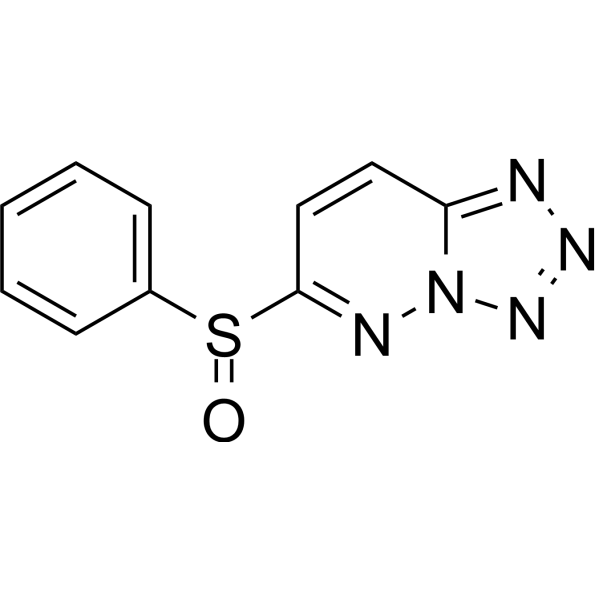
  • HY-138067

    SARS-CoV Inflammation/Immunology
    SSAA09E2 is an inhibitor of SARS-CoV (Severe acute respiratory syndrome-Coronavirus) replication, acting by blocking early interactions of SARS-S with the receptor for SARS-CoV, Angiotensin Converting Enzyme-2 (ACE2) .
    SSAA09E2
  • HY-P10933

    Renin Cardiovascular Disease
    PRO20 is a specific and competitive (pro)renin receptor (PRR) antagonist. PRO20 inhibits Prorenin-induced calcium influx with an IC50 value of 81 nmol/L. PRO20 exerts antihypertensive activity by blocking the binding of prorenin to the PRR, inhibiting the activation of the renin-angiotensin system (RAS), and reducing the production of angiotensin II (Ang II). PRO20 is promising for research of antihypertensive agents .
    PRO20
  • HY-P5407

    SARS-CoV Angiotensin-converting Enzyme (ACE) Infection Cancer
    HD5 is an innate immune effector peptide and SARS-CoV Inhibitor. HD5 binds to the ligand-binding domain of angiotensin-converting enzyme-2 (ACE2) via multiple hydrogen bonds to competitively block the receptor, shielding it from viral recognition. HD5 can be used for the research of COVID-19, HPV16 infection, epithelial ovarian cancer, small-cell lung cancer, and colon cancer .
    HD5
  • HY-P2141A
    TRV-120027 TFA
    3 Publications Verification

    Angiotensin Receptor Arrestin Cardiovascular Disease
    TRV120027 TFA, a β-arrestin-1-biased agonist of the angiotensin II receptor type 1 (AT1R), engages ?-arrestins while blocking G-protein signaling . TRV120027?TFA induces?acute?catecholamine?secretion?through cation channel subfamily C3 (TRPC3) coupling, promotes the formation of a macromolecular complex composed of AT1R–β-arrestin-1–TRPC3–PLCγ at the plasma membrane. TRV120027 TFA inhibits angiotensin II–mediated vasoconstriction and increases cardiomyocyte contractility. TRV120027 TFA has the potential for the?acute decompensated heart failure (ADHF) treatment .
    TRV-120027 TFA
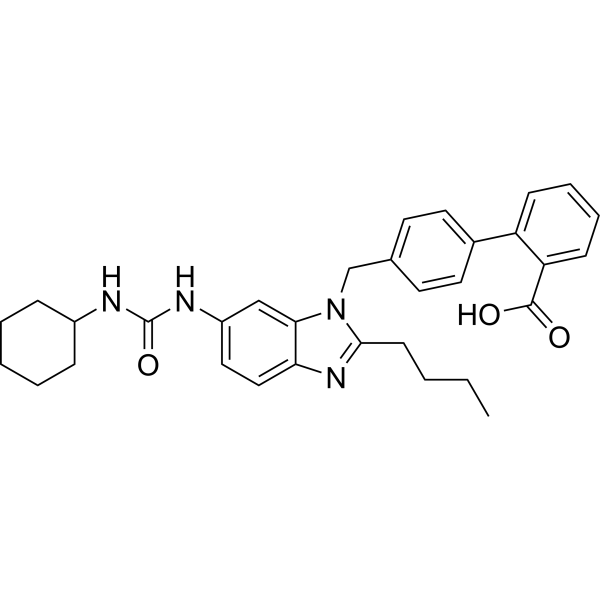
  • HY-10382

    Angiotensin Receptor Cardiovascular Disease
    EXP-6803 is a specific nonpeptide angiotensin II receptor antagonist with antihypertensive activity. EXP-6803 inhibits the contractile response to angiotensin II with a pA2 value of 7.20. EXP-6803 effectively blocks responses to angiotensin I and II while not affecting responses to bradykinin or acetylcholine in guinea pig ileum. EXP-6803 can be used for hypertension research .
    EXP-6803
  • HY-B0205R

    CV 11974 (Standard)

    Reference Standards Angiotensin Receptor PPAR Cardiovascular Disease Endocrinology Cancer
    Candesartan (Standard) is the analytical standard of Candesartan. This product is intended for research and analytical applications. Candesartan (CV 11974) is an orally active angiotensin II AT1-Receptor blocker and PPAR-γ agonist. Candesartan has potent and long-lasting antihypertensive effects. Candesartan can be used for the research of hypertension, chronic heart failure (CHF) and Traumatic brain injury (TBI) .
    Candesartan (Standard)
  • HY-B0205S

    CV-11974-d4

    Angiotensin Receptor Others
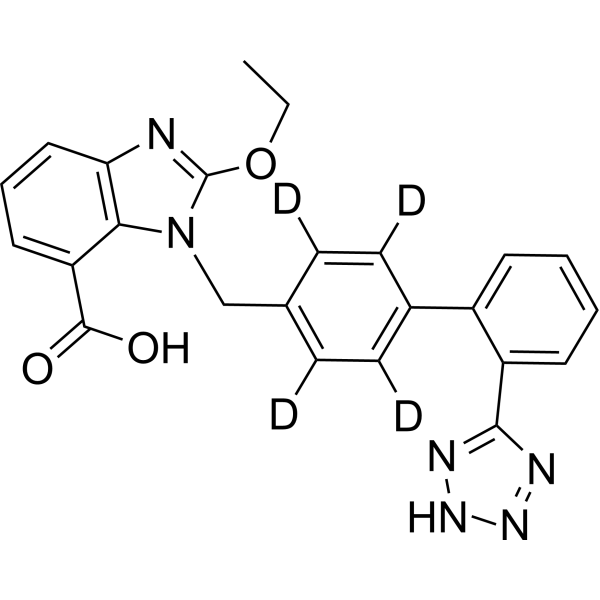
    Candesartan-d4 (CV-11974-d4) is the deuterium labeled Candesartan (HY-B0205). Candesartan (CV 11974) is an orally active angiotensin II AT1-Receptor blocker and PPAR-γ agonist. Candesartan has potent and long-lasting antihypertensive effects. Candesartan can be used for the research of hypertension, chronic heart failure (CHF) and Traumatic brain injury (TBI).
    Candesartan-d4
  • HY-N9530

    Acyltransferase Angiotensin Receptor Bacterial Infection Cardiovascular Disease Metabolic Disease
    1-Methyl-2-[(4Z,7Z)-4,7-tridecadienyl]-4(1H)-quinolone, a quinolone alkaloid, is a diacylglycerol acyltransferase inhibitor and angiotensin II receptor blocker, with IC50s of 20.1 μM and 34.1 μM, respectively. 1-Methyl-2-[(4Z,7Z)-4,7-tridecadienyl]-4(1H)-quinolone shows potent anti-Helicobacter pylori activity with the MIC of 10 μg/mL .
    1-Methyl-2-[(4Z,7Z)-4,7-tridecadienyl]-4(1H)-quinolone
  • HY-160292

    Angiotensin Receptor Cardiovascular Disease
    Enoltasosartan is an angiotensin II (AngII) receptor blocker .
    Enoltasosartan
  • HY-19022

    Angiotensin Receptor Cardiovascular Disease Others Metabolic Disease
    Palatrigine is a compound with angiotensin-converting enzyme inhibitory and beta-adrenergic receptor blocking properties .
    BW A256C
  • HY-19207

    Angiotensin Receptor Cardiovascular Disease
    GA-0056 is an angiotensin II receptor blocker. GA-0056 can be used in the research of heart disease .
    GA-0056
  • HY-106123

    Angiotensin Receptor Cardiovascular Disease
    Pomisartan is an orally active angiotensin II receptor type AT1 antagonist (IC50=0.26 μM). Pomisartan works by inhibiting the binding of angiotensin II to the AT1 receptor, thereby blocking the vasoconstriction and aldosterone release caused by this interaction. Pomisartan results in a blood pressure-lowering effect .
    Pomisartan
  • HY-W414915R

    CGP 48933 methyl ester (Standard)

    Reference Standards Drug Derivative Angiotensin Receptor Cardiovascular Disease
    Valsartan (CGP 48933) methyl ester (Standard) is the analytical standard of Valsartan methyl ester (HY-W414915). This product is intended for research and analytical applications. Valsartan methyl ester is the methyl ester derivative of Valsartan (HY-18204). Valsartan is a selective angiotensin II type 1 (AT1) receptor blocker (ARB) with potent antihypertensive and cardioprotective effects. Valsartan competitively binds to AT1 receptors, inhibiting the binding of angiotensin II to AT1 receptors, thereby blocking angiotensin II-mediated vasoconstriction, sodium retention, and myocardial hypertrophy signaling pathways. Valsartan reduces systolic blood pressure in L-NAME-induced hypertensive rats. Valsartan can be used for the study and treatment of arterial hypertension, hypertensive heart disease, and heart failure .
    Valsartan methyl ester (Standard)
  • HY-12765S1

    Isotope-Labeled Compounds Angiotensin Receptor Cardiovascular Disease
    Losartan carboxylic acid-d4 (hydrochloride) is deuterium labeled Losartan Carboxylic Acid. Losartan Carboxylic Acid (E-3174), an active carboxylic acid metabolite of Losartan, is an angiotensin II receptor type 1 (AT1) antagonist. The Ki values are 0.97, 0.57, 0.67 nM for rat AT1B/AT1A and human AT1, respectively. Losartan Carboxylic Acid blocks the angiotensin II-induced responses in vascular smoothmuscle cells (VSMC). Losartan Carboxylic Acid elevates plasma renin activities and reduces mean arterial pressure .
    Losartan carboxylic acid-d4 hydrochloride
  • HY-12765R

    E-3174 (Standard); EXP-3174 (Standard)

    Drug Metabolite Reference Standards Angiotensin Receptor Cardiovascular Disease
    Losartan Carboxylic Acid (Standard) is the analytical standard of Losartan Carboxylic Acid. This product is intended for research and analytical applications. Losartan Carboxylic Acid (E-3174), an active carboxylic acid metabolite of Losartan, is an angiotensin II receptor type 1 (AT1) antagonist. The Ki values are 0.97, 0.57, 0.67 nM for rat AT1B/AT1A and human AT1, respectively. Losartan Carboxylic Acid blocks the angiotensin II-induced responses in vascular smoothmuscle cells (VSMC). Losartan Carboxylic Acid elevates plasma renin activities and reduces mean arterial pressure [4].
    Losartan Carboxylic Acid (Standard)
  • HY-107867S1

    Isotope-Labeled Compounds P2Y Receptor Inflammation/Immunology
    (Rac)-Clopidogrel hydrogen-d9 sulfate is the deuterium labeled (±)-Clopidogrel (bisulfate) (HY-107867). (±)-Clopidogrel bisulfate is a platelet P2Y12 receptor inhibitor and an adenosine diphosphate (ADP) receptor antagonist. (±)-Clopidogrel bisulfate inhibits the binding of ADP to its receptors on the membranes of platelet cells, and blocks ADP-mediated activation of the glycoprotein GPIIb/IIIa complex. (±)-Clopidogrel bisulfate reduces vascular inflammation and angiotensin II induced-abdominal aortic aneurysm progression. (±)-Clopidogrel bisulfate has anti-inflammatory effects .
    (Rac)-Clopidogrel hydrogen-d9 sulfate
  • HY-122282

    Angiotensin Receptor Cardiovascular Disease
    AZ11657312 is a P2X7 receptor antagonist with activity to restore stress natriuresis. AZ11657312 significantly increased renal medullary perfusion, only in mice treated with angiotensin II. AZ11657312 improves tissue oxygenation by blocking P2X7R, especially in areas of the kidney that are underoxygenated. Administration of AZ11657312 increased sodium excretion up to sixfold while normalizing blood pressure .
    AZ11657312
  • HY-107867S2

    Isotope-Labeled Compounds P2Y Receptor Cardiovascular Disease
    Clopidogrel- 13C,d3 sulfate is the deuterium and 13C-labeled (±)-Clopidogrel (bisulfate) (HY-107867). (±)-Clopidogrel bisulfate is a platelet P2Y12 receptor inhibitor and an adenosine diphosphate (ADP) receptor antagonist. (±)-Clopidogrel bisulfate inhibits the binding of ADP to its receptors on the membranes of platelet cells, and blocks ADP-mediated activation of the glycoprotein GPIIb/IIIa complex. (±)-Clopidogrel bisulfate reduces vascular inflammation and angiotensin II induced-abdominal aortic aneurysm progression. (±)-Clopidogrel bisulfate has anti-inflammatory effects .
    Clopidogrel-13C,d3 sulfate
  • HY-170767

    SARS-CoV Infection
    SARS-CoV-2-IN-109 (compound 50) is an inhibitor targeting SARS-CoV with in vivo anti-infection activity. SARS-CoV-2-IN-109 targets the interaction between the SARS-CoV-2 Spike receptor-binding domain (RBD) and the human receptor angiotensin-converting enzyme 2 (ACE2) (EC50=26.5 μM), blocking the entry of SARS-CoV-2 into VeroE6 cells (EC50=17.0 μM). The CC50 of SARS-CoV-2-IN-109 for VeroE6 cells is >100 μM .
    SARS-CoV-2-IN-109
  • HY-P990815

    SARS-CoV Infection
    Anti-SARS-CoV-2 S protein Antibody (RBD epitope A, SARS2-01) is a mouse-derived IgG1 κ type antibody inhibitor, targeting to SARS-CoV-2 S protein. Anti-SARS-CoV-2 S protein Antibody (RBD epitope A, SARS2-01) reacts with the receptor binding domain (RBD) epitope A in the spike (S) protein of SARS-CoV-2 (Severe Acute Respiratory Syndrome Coronavirus 2). Anti-SARS-CoV-2 S protein Antibody (RBD epitope A, SARS2-01) can block the binding of the SARS-CoV-2 S protein to angiotensin-converting enzyme 2 (ACE2). Anti-SARS-CoV-2 S protein Antibody (RBD epitope A, SARS2-01) can be used for the research of SARS-CoV-2 infection .
    Anti-SARS-CoV-2 S protein Antibody (RBD epitope A, SARS2-01)
  • HY-P990814

    SARS-CoV Infection
    Anti-SARS-CoV-2 S protein Antibody (RBD epitope B, SARS2-34) is a mouse-derived IgG1 κ type antibody inhibitor, targeting to SARS-CoV-2 S protein. Anti-SARS-CoV-2 S protein Antibody (RBD epitope B, SARS2-34) reacts with the receptor binding domain (RBD) epitope B in the spike (S) protein of SARS-CoV-2 (Severe Acute Respiratory Syndrome Coronavirus 2). Anti-SARS-CoV-2 S protein Antibody (RBD epitope B, SARS2-34) can block the binding of the SARS-CoV-2 S protein to angiotensin-converting enzyme 2 (ACE2). Anti-SARS-CoV-2 S protein Antibody (RBD epitope B, SARS2-34) can be used for the research of SARS-CoV-2 infection .
    Anti-SARS-CoV-2 S protein Antibody (RBD epitope B, SARS2-34)
  • HY-15283AS1

    (±)-Clopidogrelum-d4

    Isotope-Labeled Compounds P2Y Receptor Cardiovascular Disease Inflammation/Immunology
    (±)-Clopidogrel-d4 ((±)-Clopidogrelum-d4) is the deuterium labeled (±)-Clopidogrel (HY-107867). (±)-Clopidogrel is a platelet P2Y12 receptor inhibitor and an adenosine diphosphate (ADP) receptor antagonist. (±)-Clopidogrel inhibits the binding of ADP to its receptors on the membranes of platelet cells, and blocks ADP-mediated activation of the glycoprotein GPIIb/IIIa complex. (±)-Clopidogrel reduces vascular inflammation and angiotensin II induced-abdominal aortic aneurysm progression. (±)-Clopidogrel has anti-inflammatory effects .
    (±)-Clopidogrel-d4
  • HY-P5407A

    SARS-CoV Angiotensin-converting Enzyme (ACE) Infection Cancer
    HD5 TFA is an innate immune effector peptide and SARS-CoV Inhibitor. HD5 TFA binds to the ligand-binding domain of angiotensin-converting enzyme-2 (ACE2) via multiple hydrogen bonds to competitively block the receptor, shielding it from viral recognition. HD5 TFA can be used for the research of COVID-19, HPV16 infection, epithelial ovarian cancer, small-cell lung cancer, and colon cancer .
    HD5 TFA

Inquiry Online

Your information is safe with us. * Required Fields.

Salutation


Country or Region *

Applicant Name *


Organization Name *

Department *


Email Address *


Product Name *

Cat. No.


Requested quantity *

Phone Number *


Remarks

Inquiry Online

Inquiry Information

Product Name:
Cat. No.:
Quantity:
MCE Japan Authorized Agent:

