1. Search Result
Search Result
Results for "

calcium transport

" in MedChemExpress (MCE) Product Catalog:

24

Inhibitors & Agonists

1

Biochemical Assay Reagents

4

MCE Kits

6

Natural
Products

1

Recombinant Proteins

1

Antibodies

Cat. No. Product Name Target Research Areas Chemical Structure
  • HY-Y0095

    2-Hydroxyethanesulfonic acid

    Environmental Pollutants Mitochondrial Metabolism Parasite Metabolic Disease
    Isethionic acid is a calcium binder and anionic detergent that enhances mitochondrial calcium binding capacity by competitively binding to calcium binding sites on the outer mitochondrial membrane. Isethionic acid can inhibit calcium-activated mitochondrial respiration. Isethionic acid inhibits barnacle (Balanus amphitrite) larvae with LC50s of 23 μg/mL (24 h) and 17 μg/mL (48 h), respectively. Isethionic acid can inhibit the attachment of barnacle larvae (complete inhibition at 10 μg/mL) and regulate mitochondrial calcium transport, and can enhance ATP-dependent calcium uptake at high calcium concentrations. Isethionic acid can be used to study the mechanism of mitochondrial calcium metabolism.
    Isethionic acid (80% in water)
  • HY-Y0488A
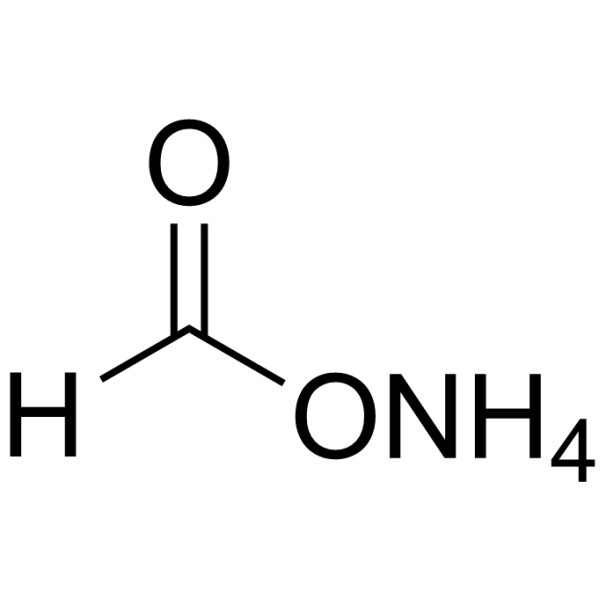
    Formic acid ammonium
    2 Publications Verification

    Ammonium formate

    Environmental Pollutants Calcium Channel NO Synthase Bacterial ATP Synthase Metabolic Disease
    Formic acid ammonium is the ammonium salt form of formic acid, which is an endogenous metabolite. Formic acid ammonium activates the nitric oxide/cyclic guanosine monophosphate (NO/cGMP) signaling pathway in endothelial cells and inhibits calcium ion influx in vascular smooth muscle cells, resulting in vasomotor relaxation. Formic acid ammonium inhibits cytochrome C oxidase (CcO) and disrupts the electron transport chain, leading to ATP depletion. Formic acid ammonium can be used as a feed additive, which can lower the feed pH value, inhibit the growth of microorganisms (such as Escherichia coli, Salmonella), and extend the shelf life of the feed .
    Formic acid ammonium
  • HY-135336

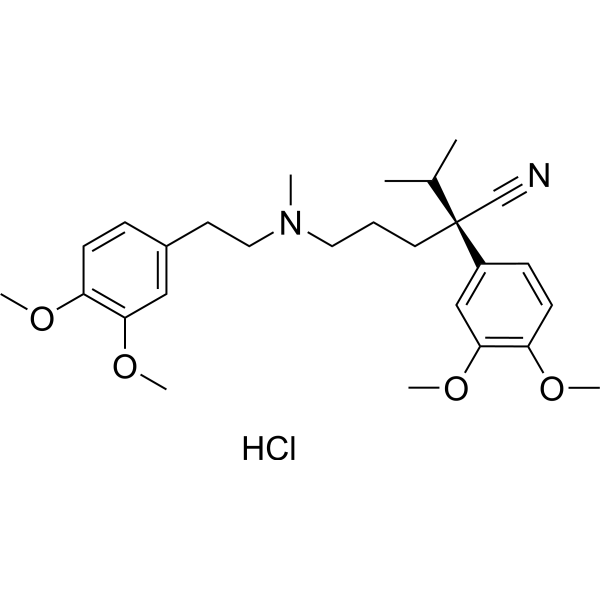
    (R)-(+)-Verapamil hydrochloride

    P-glycoprotein Apoptosis Calcium Channel Infection Metabolic Disease
    (R)-Verapamil hydrochloride ((R)-(+)-Verapamil hydrochloride) is an orally active P-Glycoprotein inhibitor. (R)-Verapamil hydrochloride blocks MRP1 mediated transport. (R)-Verapamil hydrochloride induces Apoptosis and inhibits L-type calcium channels BZPcc, DHPcc and PLLcc. (R)-Verapamil hydrochloride has anti-septic shock and anti-diabetic effects .
    (R)-Verapamil hydrochloride
  • HY-113355

    Endogenous Metabolite Apoptosis Neurological Disease Inflammation/Immunology Endocrinology
    NADH is an orally active dehydrogenase coenzyme that acts as a crucial electron carrier in cellular respiration and participates in ATP production. NADH promotes metabolism, supports brain function, and counteracts oxidative stress by transferring electrons to the electron transport chain. As a signaling molecule, NADH regulates multiple biological processes, including anti-apoptosis, synaptic plasticity, gene expression, and calcium homeostasis. Redox imbalance of NADH/NAD⁺ is one of the key pathological mechanisms of various diseases, such as diabetic nephropathy, neurodegenerative diseases, and ischemia-reperfusion injury.
    NADH
  • HY-B1194

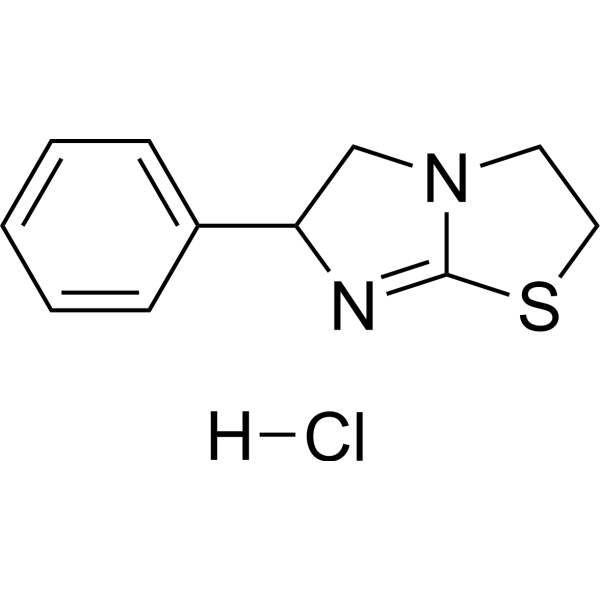
    (±)-Tetramisole hydrochloride; DL-Tetramisole hydrochloride; R-829

    Potassium Channel Parasite PKA Infection Cardiovascular Disease
    Tetramisole hydrochloride is an orally active, selective inward rectifier potassium channel agonist with an EC50 of approximately 30 μM for the Kir2.1 subunit. Tetramisole hydrochloride is also an anti-nematode agent that blocks neuromuscular transmission by non-competitive depolarization. Tetramisole hydrochloride promotes the forward transport of Kir2.1 channels, hyperpolarizes the resting potential (RP), shortens the action potential duration (APD), inhibits intracellular calcium overload and the PKA signaling pathway, and exerts anti-arrhythmic and anti-myocardial remodeling activities. Tetramisole hydrochloride can be used in cardiac electrophysiology research and research related to myocardial ischemia and heart failure .
    Tetramisole hydrochloride
  • HY-N6701

    Arp2/3 Complex DNA/RNA Synthesis Calcium Channel Inflammation/Immunology
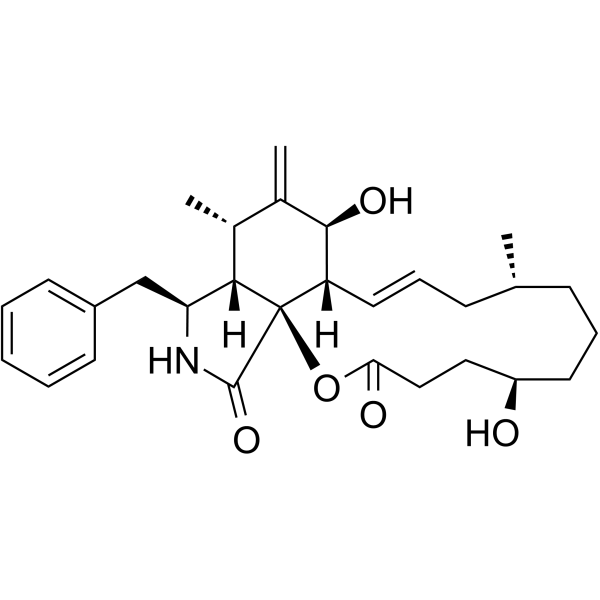
    Dihydrocytochalasin B is an Actin disruptor. Dihydrocytochalasin B disrupts actin microfilament bundles, inhibits actin polymerization, and alters intracellular actin cytoskeletal structures. Dihydrocytochalasin B blocks the initiation of DNA synthesis. Dihydrocytochalasin B inhibits Calcium transport. Dihydrocytochalasin B inhibits cytokinesis and alters cell morphology. Dihydrocytochalasin B can be used in studies related to rickets .
    Dihydrocytochalasin B
  • HY-15830

    25,26-Dihydroxycholecalciferol

    VD/VDR Drug Metabolite Drug Derivative Calcium Channel Metabolic Disease
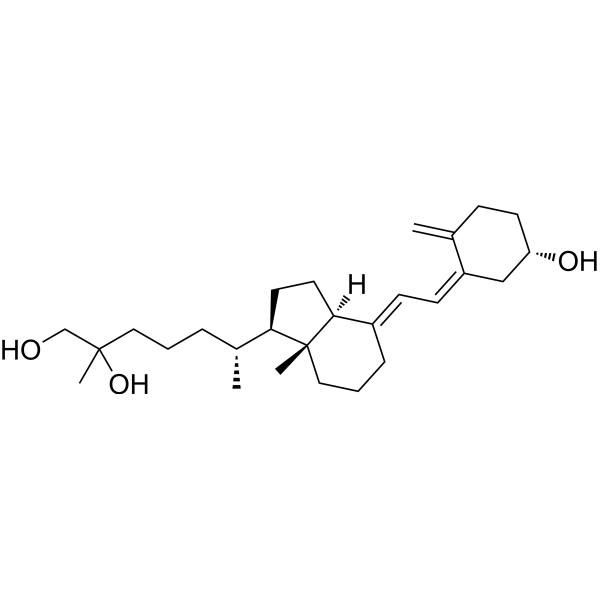
    25,26-Dihydroxyvitamin D3 (25,26-Dihydroxycholecalciferol) is a dihydroxylated derivative and metabolite of Vitamin D3 (HY-15398). 25,26-Dihydroxyvitamin D3 moderately increases serum calcium levels when the initial serum calcium level is low. 25,26-Dihydroxyvitamin D3 promotes intestinal calcium absorption in vitamin D-deficient rats fed a low-calcium diet. 25,26-Dihydroxyvitamin D3 is applicable to research related to osteomalacia .
    25,26-Dihydroxyvitamin D3
  • HY-167548

    PKC Potassium Channel Others
    L-α-Phosphatidylinositol-4,5-bisphosphate ammonium is a key signaling lipid. L-α-Phosphatidylinositol-4,5-bisphosphate ammonium is an activator of PKC in the presence of calcium ions and phospholipid serine. L-α-Phosphatidylinositol-4,5-bisphosphate ammonium is also an antagonist of the KIR3.4 (ATP-sensitive potassium, KATP) channel. L-α-Phosphatidylinositol-4,5-bisphosphate ammonium can be used in research related to signal transduction, ion channel regulation, and membrane transport.
    L-α-Phosphatidylinositol-4,5-bisphosphate ammonium
  • HY-130704

    Calcium Channel Metabolic Disease
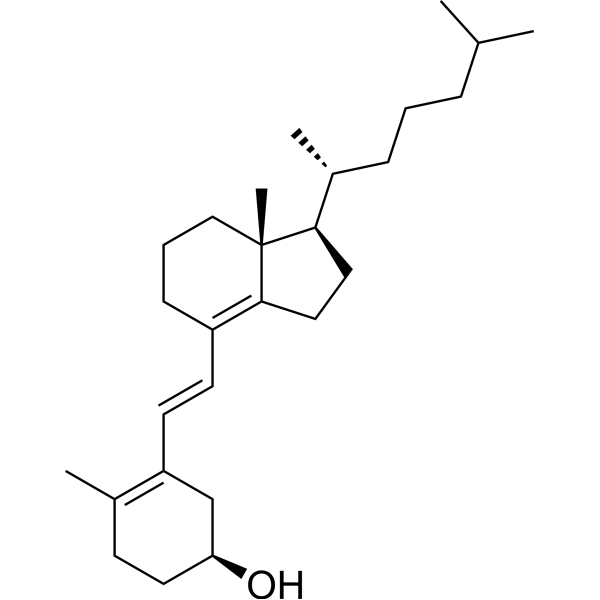
    Isotachysterol 3 is an analog of 1,25-dihydrox Vitamin D3. Isotachysterol 3 stimulates intestinal calcium transport and bone calcium mobilization in anephric rats .
    Isotachysterol 3
  • HY-B1837A

    beta-Cyfluthrin

    Environmental Pollutants Calcium Channel SOD Neurological Disease
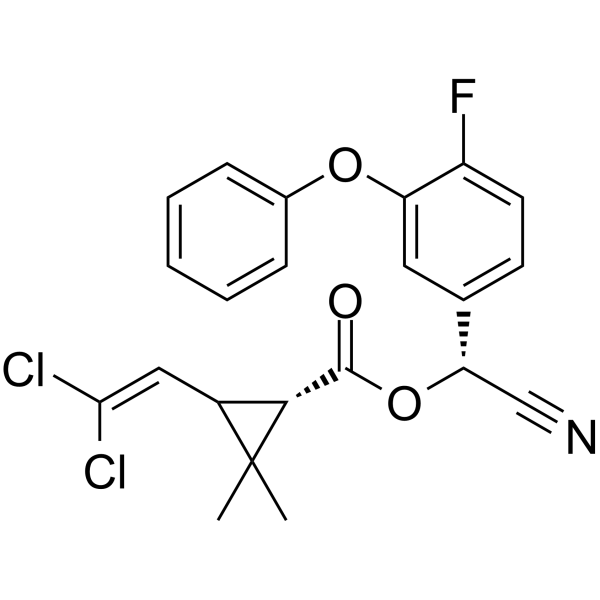
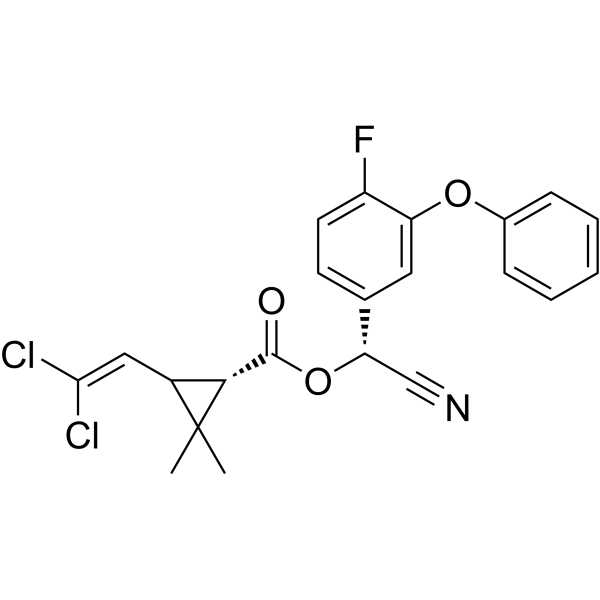
    β-Cyfluthrin (beta-Cyfluthrin) is a type II synthetic pyrethroid and also an active ingredient of many insecticide products used for pestsin agriculture. β-Cyfluthrin is a neurotoxicant and affects calcium concentration in nervous tissue by inhibiting Ca 2+ ATPase involved in calcium transport .
    β-Cyfluthrin
  • HY-100928

    Calcium Channel Neurological Disease
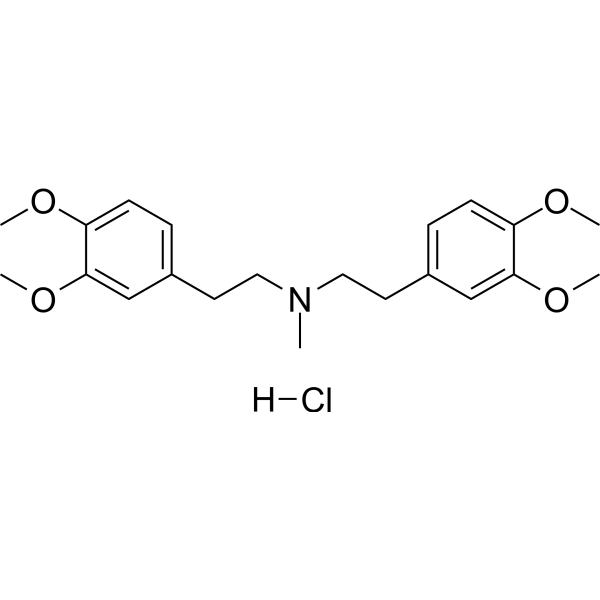
    YS 035 hydrochloride is a Ca 2+ antagonist on cellular uptake and mitochondrial efflux of calcium ions. YS 035 hydrochloride inhibits Ca 2+ uptake by muscle cells and inhibits Na +/Ca 2+ exchange (Ki=28 µM). YS 035 hydrochloride is a useful tool for research on the mitochondrial Ca 2+ transport .
    YS 035 hydrochloride
  • HY-19062

    Calcium Channel Na+/Ca2+ Exchanger Cardiovascular Disease
    SM-6586 is a calcium channel antagonist and inhibitor of Na +/H + and Na +/Ca 2+ exchange transport, potentially for the treatment of cerebrovasular diseases and hypertension.
    SM-6586
  • HY-B1837AR

    beta-Cyfluthrin (Standard)

    Reference Standards Calcium Channel SOD Neurological Disease
    β-Cyfluthrin (Standard) is the analytical standard of β-Cyfluthrin. This product is intended for research and analytical applications. β-Cyfluthrin (beta-Cyfluthrin) is a type II synthetic pyrethroid and also an active ingredient of many insecticide products used for pestsin agriculture. β-Cyfluthrin is a neurotoxicant and affects calcium concentration in nervous tissue by inhibiting Ca 2+ ATPase involved in calcium transport .
    β-Cyfluthrin (Standard)
  • HY-117763

    Calcium Channel Others
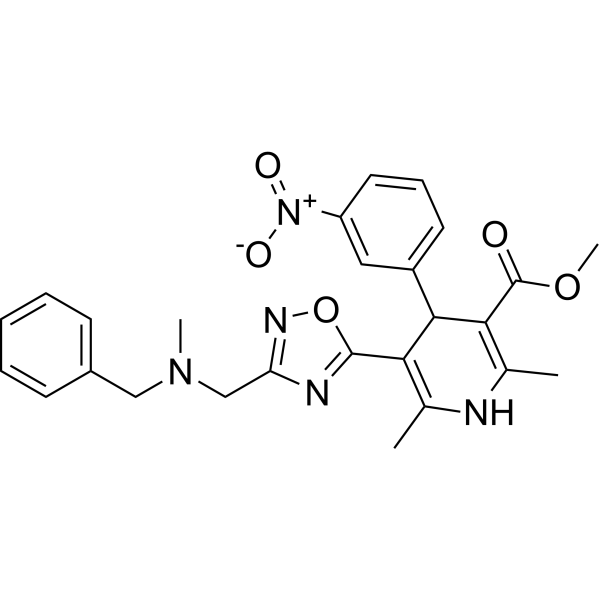
    A-39355 is a compound that can overcome multidrug resistance and has the activity of reversing multidrug resistance. A-39355 can enhance the cytotoxicity of antitumor compounds in multidrug-resistant cells, increase the accumulation of compounds in cells, inhibit the efflux of compounds, and compared with calcium antagonists, it has no serious hypotensive effect. Its activity may be unrelated to the ability to block calcium transport.
    A-39355
  • HY-U00049B

    Calcium Channel Cardiovascular Disease Neurological Disease
    Mioflazine dihydrochloride is a nucleoside transport inhibitor with sleep-improving activity. Mioflazine dihydrochloride significantly improves cardiac survival after global cardiac ischemia. Mioflazine dihydrochloride reduces the mitochondrial calcium content in guinea-pig. Mioflazine dihydrochloride does not exhibit inotropic effects during induction and nursing .
    Mioflazine dihydrochloride
  • HY-U00049A

    Calcium Channel Cardiovascular Disease Neurological Disease
    Mioflazine dihydrochloride hydrate is a nucleoside transport inhibitor with sleep-improving activity. Mioflazine dihydrochloride hydrate helps maintain the mechanical function of the left ventricle and significantly improves the heart's recovery ability after global ischemia at new temperatures. Mioflazine dihydrochloride hydrate reduces the mitochondrial calcium content in guinea-pig .
    Mioflazine (di(hydrochloride) hydrate)
  • HY-167689

    Adrenergic Receptor Neurological Disease
    Parethoxycaine hydrochloride is an anesthetic with nerve conduction blocking activity. Parethoxycaine hydrochloride exhibits non-selective inhibitory effects on responses to various stimulants in rat vas deferens and guinea pig ileum muscles. Parethoxycaine hydrochloride has an enhanced effect on the action of norepinephrine, and its methyl bromide derivative also exhibits the same properties on the action of norepinephrine and potassium ions. Derivatives of parethoxycaine hydrochloride have significant effects on calcium dose-response curves, displaying different tissue and stimulant selectivities. The mechanism of action of Parethoxycaine hydrochloride involves the regulation of calcium transport processes .
    Parethoxycaine hydrochloride
  • HY-B1194A

    Potassium Channel Parasite PKA Infection Cardiovascular Disease
    Tetramisole is an orally active, selective inward rectifier potassium channel agonist with an EC50 of approximately 30 μM for the Kir2.1 subunit. Tetramisole is also an anti-nematode agent that blocks neuromuscular transmission by non-competitive depolarization. Tetramisole promotes the forward transport of Kir2.1 channels, hyperpolarizes the resting potential (RP), shortens the action potential duration (APD), inhibits intracellular calcium overload and the PKA signaling pathway, and exerts anti-arrhythmic and anti-myocardial remodeling activities. Tetramisole can be used in cardiac electrophysiology research and research related to myocardial ischemia and heart failure .
    Tetramisole
  • HY-Y0488AR

    Ammonium formate (Standard)

    Reference Standards NO Synthase Calcium Channel Bacterial ATP Synthase Metabolic Disease
    Formic acid ammonium (Standard) is the analytical standard of Formic acid ammonium. This product is intended for research and analytical applications. Formic acid ammonium is the ammonium salt form of formic acid, which is an endogenous metabolite. Formic acid ammonium activates the nitric oxide/cyclic guanosine monophosphate (NO/cGMP) signaling pathway in endothelial cells and inhibits calcium ion influx in vascular smooth muscle cells, resulting in vasomotor relaxation. Formic acid ammonium inhibits cytochrome C oxidase (CcO) and disrupts the electron transport chain, leading to ATP depletion. Formic acid ammonium can be used as a feed additive, which can lower the feed pH value, inhibit the growth of microorganisms (such as Escherichia coli, Salmonella), and extend the shelf life of the feed.
    Formic acid ammonium (Standard)
  • HY-B1194R

    (±)-Tetramisole hydrochloride (Standard); DL-Tetramisole hydrochloride (Standard); R-829 (Standard)

    Reference Standards Potassium Channel Parasite PKA Infection Cardiovascular Disease
    Tetramisole hydrochloride (Standard) is the analytical standard of Tetramisole (hydrochloride). This product is intended for research and analytical applications. Tetramisole hydrochloride is an orally active, selective inward rectifier potassium channel agonist with an EC50 of approximately 30 μM for the Kir2.1 subunit. Tetramisole hydrochloride is also an anti-nematode agent that blocks neuromuscular transmission by non-competitive depolarization. Tetramisole hydrochloride promotes the forward transport of Kir2.1 channels, hyperpolarizes the resting potential (RP), shortens the action potential duration (APD), inhibits intracellular calcium overload and the PKA signaling pathway, and exerts anti-arrhythmic and anti-myocardial remodeling activities. Tetramisole hydrochloride can be used in cardiac electrophysiology research and research related to myocardial ischemia and heart failure .
    Tetramisole hydrochloride (Standard)
  • HY-182543

    CaSR Others
    NPS-467 is a calcium-sensing receptor (CaR) activator and stereospecific agent with only its R-enantiomer active. NPS-467 increases the sensitivity of the CaR to activation by extracellular calcium. NPS-467 stimulates stanniocalcin (STC) secretion in trout and induces inhibition of gill calcium transport in trout. NPS-467 has no effect on serum calcitonin levels in trout .
    NPS-467
  • HY-120768

    Drug Derivative Others
    A-30312 is a compound that can overcome multidrug resistance and has the activity of reversing multidrug resistance. A-30312 can enhance the cytotoxicity of antitumor compounds in multidrug-resistant cells, increase the accumulation of compounds in cells, inhibit the efflux of compounds, and compared with calcium antagonists, it has no serious hypotensive effect. Its activity may be unrelated to the ability to block calcium transport.
    A-30312
  • HY-159201

    Calcium Channel Metabolic Disease
    24-Oxo-25-hydroxyvitamin D3 is a vitamin D3 metabolite and an intermediate in the renal mitochondrial side-chain oxidation pathway. 24-Oxo-25-hydroxyvitamin D3 enhances intestinal calcium transport in rats . 24-Oxo-25-hydroxyvitamin D3 can be used in studies related to X-linked hypophosphatemic rickets .
    24-Oxo-25-hydroxyvitamin D3
  • HY-160475

    Aldehyde Dehydrogenase (ALDH) Apoptosis Autophagy Cardiovascular Disease Metabolic Disease
    AD-9308 is a highly selective and orally active ALDH2 activator. AD-9308 activates ALDH2 to promote the clearance of 4-HNE, inhibiting myocardial fibrosis, inflammation and cell apoptosis. AD-9308 improves mitochondrial function, sarcoplasmic reticulum/ endoplasmic reticulum calcium transport and regulates autophagy, restoring intracellular homeostasis. AD-9308 improves the diastolic and systolic function of the heart in diabetic mice and reverses ventricular mal-reconstruction. AD-9308 can be used for the study of diabetic cardiomyopathy .
    AD-9308

Inquiry Online

Your information is safe with us. * Required Fields.

Salutation


Country or Region *

Applicant Name *


Organization Name *

Department *


Email Address *


Product Name *

Cat. No.


Requested quantity *

Phone Number *


Remarks

Inquiry Online

Inquiry Information

Product Name:
Cat. No.:
Quantity:
MCE Japan Authorized Agent:

