



(R)-Verapamil hydrochloride

Based on 1 Customer Validation
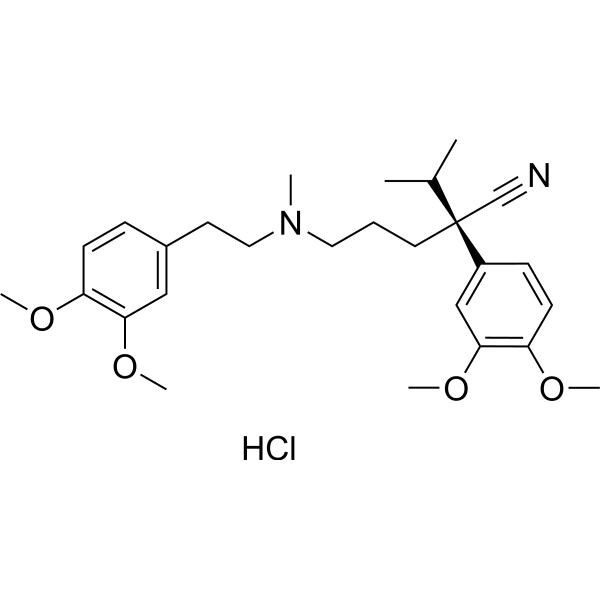
(R)-Verapamil hydrochloride ((R)-(+)-Verapamil hydrochloride) is an orally active P-Glycoprotein inhibitor. (R)-Verapamil hydrochloride blocks MRP1 mediated transport. (R)-Verapamil hydrochloride induces Apoptosis and inhibits L-type calcium channels BZPcc, DHPcc and PLLcc. (R)-Verapamil hydrochloride has anti-septic shock and anti-diabetic effects.
For research use only. We do not sell to patients.
- Purity : 99.37%
- CAS No.: 38176-02-2
- Formula: C27H39ClN2O4
- Molecular Weight:491.06
-
Storage:
4°C, stored under nitrogen
* In solvent : -80°C, 6 months; -20°C, 1 month (stored under nitrogen)

To place orders, for customer services and technical support, please contact: MedChemExpress USA
Tel: 609-228-6898 E-mail: [email protected] [email protected]


-
 Biological Activity
-
Chemical Information
-
Solvent & Solubility
- Protocols
- Purity & Documentation
- References
-
 Help & FAQs


-
HY-135336A
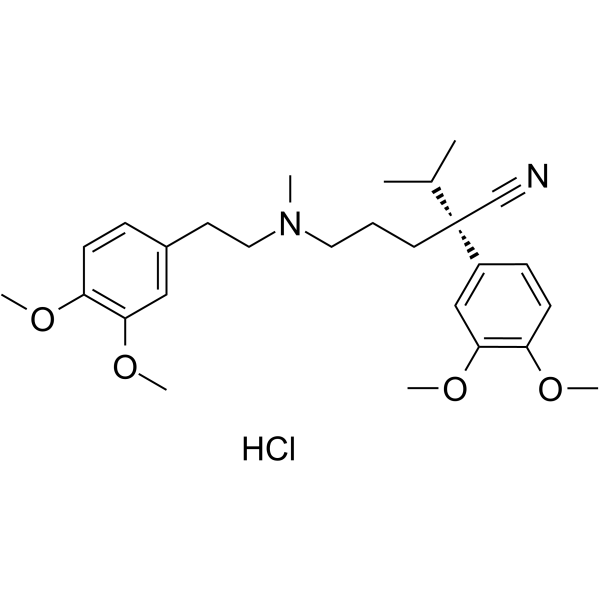
(S)-Verapamil hydrochlorideLTC4/calcein Inhibitor -
HY-100750
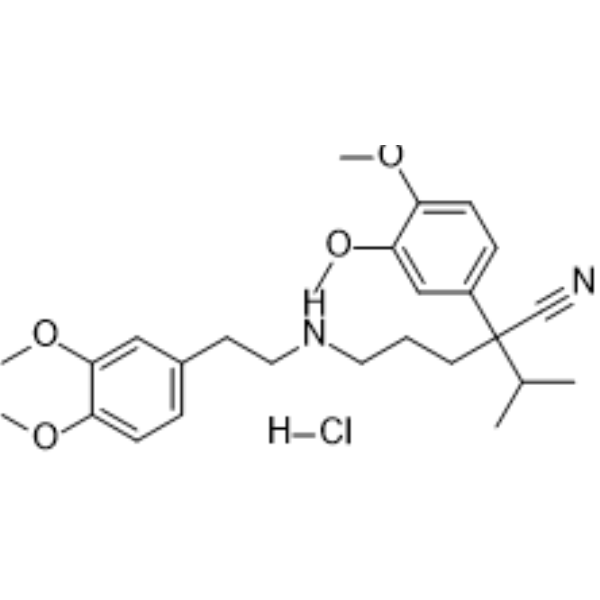
Norverapamil hydrochlorideL-type Calcium Channel Blocker -
HY-136589
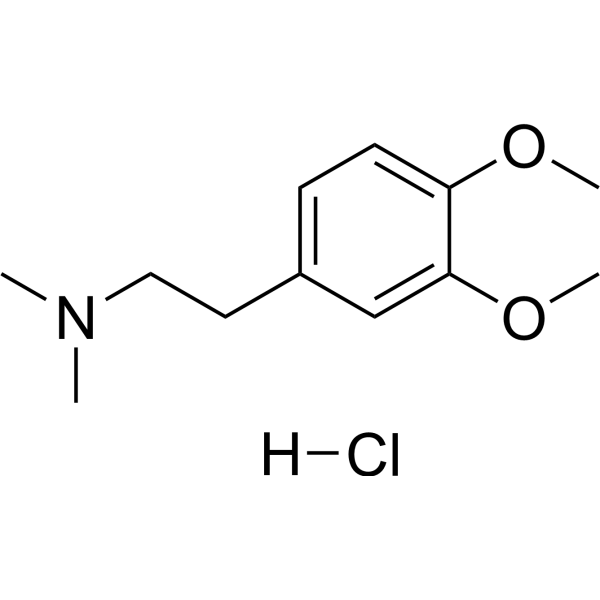
Verapamil EP Impurity C hydrochlorideCytochrome P450 Inhibitor -
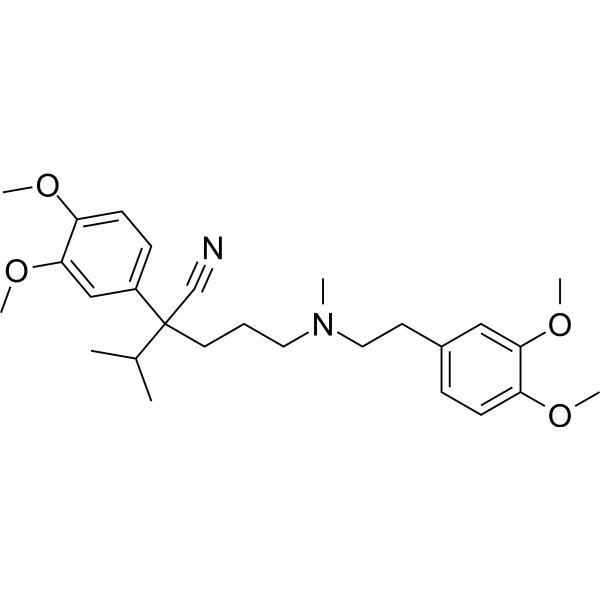
HY-14275
VerapamilCalcium Channel Blocker -
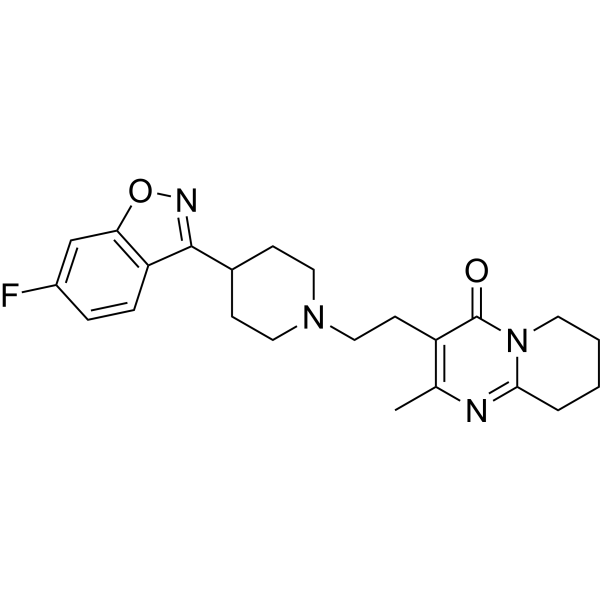
HY-11018
Risperidone5-HT2 Receptor Blocker -

HY-100750R
Norverapamil hydrochloride (Standard)L-type Calcium Channel Blocker -
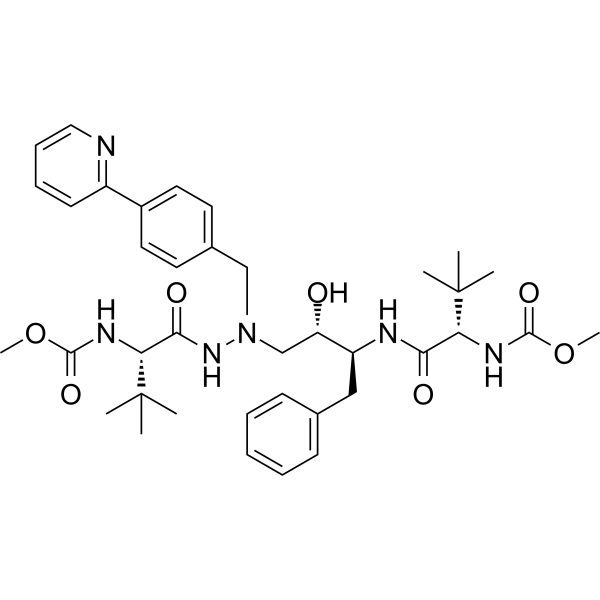
HY-17367
AtazanavirHIV Protease Inhibitor -
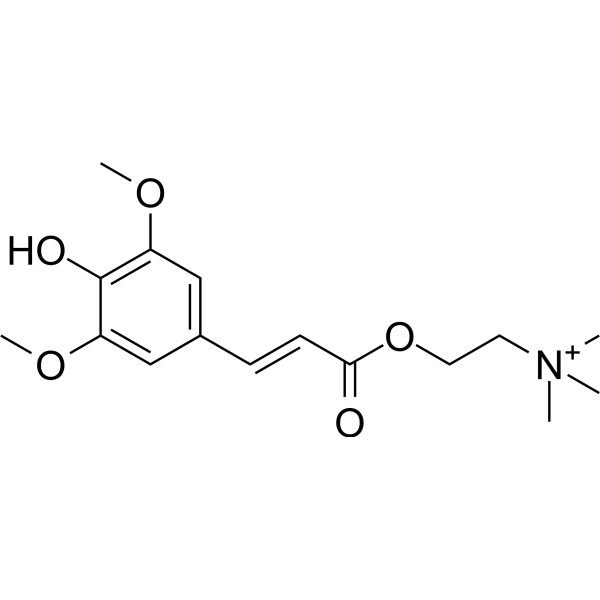
HY-N5077
SinapineAChE Inhibitor -

HY-14275R
Verapamil (Standard)Calcium Channel Blocker -
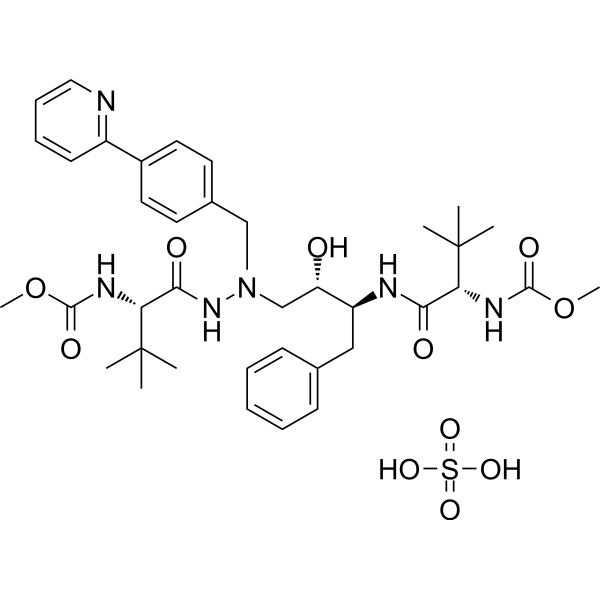
HY-17367A
Atazanavir sulfateHIV Protease Inhibitor -
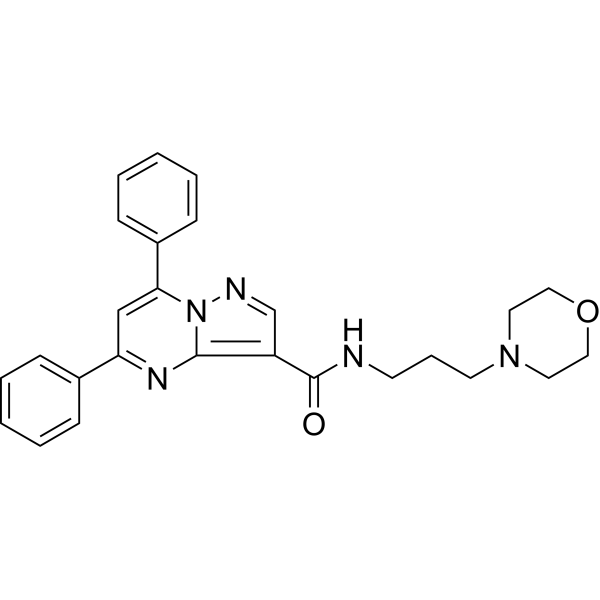
HY-107643
ReversanPgp Inhibitor; MRP1 Inhibitor -
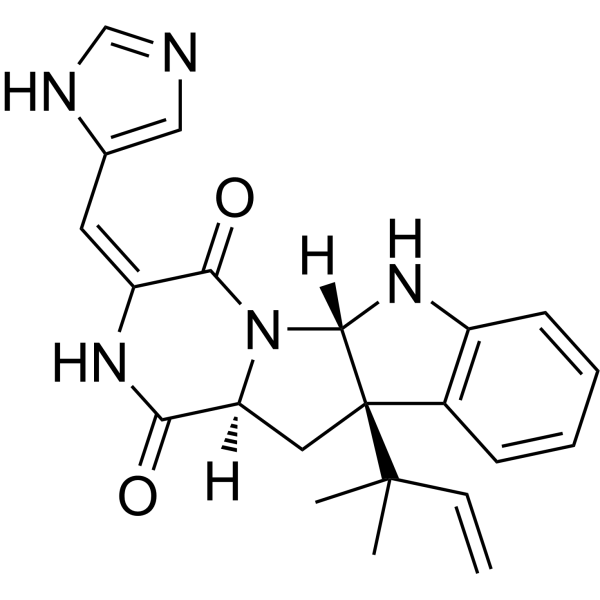
HY-N6748
Roquefortine CMycotoxin
All Calcium Channel Isoforms
More

Biological Activity
Description
In Vitro
(R)-Verapamil (10-1000 µM, contraction of RPE cells is complete after 15-18 h) hydrochloride inhibits the contraction of RPE cells[3].
(R)-Verapamil (24 h) hydrochloride induces apoptosis in CHRC5 cells at levels comparable to those induced by racemic verapamil[4].
(R)-Verapamil (10 µM) hydrochloride inhibits L-type calcium channels BZPcc, DHPcc and PLLcc with 90%, 85% and 104% inhibition respectively[5].
(R)-Verapamil (3-30 μM) hydrochloride exerts a consistent growth inhibition on BFU-E cells[6].
(R)-Verapamil hydrochloride has a slight inhibitory effect on CFU-L colony growth, and combined with Daunorubicin (DNR) (HY-13062A) can reduce the average IC50 of DNR[6].
MedChemExpress (MCE) has not independently confirmed the accuracy of these methods. They are for reference only. Further protocols information, click here.
In Vivo
(R)-Verapamil (100 mg/kg, i.p., 1 h before the injection of LPS) hydrochloride significantly reduces mortality and cytokine (TNF-α and IFN-γ) expression in murine model of septic shock[7].
MedChemExpress (MCE) has not independently confirmed the accuracy of these methods. They are for reference only.
-
Animal Model:Male wild type C57BL/6J mice (7 weeks old), male C57BLKS/J Iar-+Leprdb/+Leprdb mice (male, 50 g, 9-10 weeks old); Streptozotocin (HY-13753)-induced type 1 diabetes mellitus model and db/db type 2 diabetes mellitus model[5]
-
Dosage:In type 1 diabetes mellitus model, 50 mg/kg/day and 100 mg/kg/day (dissolved in drinking water); in type 2 diabetes mellitus model, 30-150 mg/kg/day (dissolved in distilled water for monotherapy, and in 1% Tween 80 or 0.25% carboxymethylcellulose for combination therapy)
-
Administration:In type 1 diabetes mellitus model, administered via drinking water, daily, for 10 days; in type 2 diabetes mellitus model, administered by oral gavage, twice daily, for 6 weeks (Experiment 2) or 17 days (Experiment 3)
-
Result:Significantly reduced fasting blood glucose levels, downregulated Txnip expression, and decreased β-cell apoptosis at 100 mg/kg/day (the type 1 diabetes mellitus model).
Had the best effect on reducing blood glucose and increasing serum insulin levels at 60 mg/kg/day (the type 2 diabetes mellitus model).


Chemical Information
-
CAS No. 38176-02-2
-
Appearance Solid
-
Molecular Weight 491.06
-
Formula C27H39ClN2O4
-
Color White to off-white
-
SMILES
COC1=C(OC)C=CC(CCN(C)CCC[C@](C#N)(C2=CC(OC)=C(OC)C=C2)C(C)C)=C1.Cl
-
Synonyms
(R)-(+)-Verapamil hydrochloride
-
Shipping
Room temperature in continental US; may vary elsewhere.
-
Storage
4°C, stored under nitrogen
* In solvent : -80°C, 6 months; -20°C, 1 month (stored under nitrogen)


Solvent & Solubility
In Vitro:
DMSO : 100 mg/mL (203.64 mM; Need ultrasonic; Hygroscopic DMSO has a significant impact on the solubility of product, please use newly opened DMSO)
H2O : 100 mg/mL (203.64 mM; Need ultrasonic)
Please refer to the solubility information to select the appropriate solvent. Once prepared, please aliquot and store the solution to prevent product inactivation from repeated freeze-thaw cycles.
Storage method and period of stock solution: -80°C, 6 months; -20°C, 1 month (stored under nitrogen). When stored at -80°C, please use it within 6 months. When stored at -20°C, please use it within 1 month.
* Note: If you choose water as the stock solution, please dilute it to the working solution, then filter and sterilize it with a 0.22 μm filter before use.
Please refer to the solubility information to select the appropriate solvent. Once prepared, please aliquot and store the solution to prevent product inactivation from repeated freeze-thaw cycles.
Storage method and period of stock solution: -80°C, 6 months; -20°C, 1 month (stored under nitrogen). When stored at -80°C, please use it within 6 months. When stored at -20°C, please use it within 1 month.
* Note: If you choose water as the stock solution, please dilute it to the working solution, then filter and sterilize it with a 0.22 μm filter before use.
Concentration (start) × Volume (start) = Concentration (final) × Volume (final)
In Vivo:
Select the appropriate dissolution method based on your experimental animal and administration route.
- For the following dissolution methods, please ensure to first prepare a clear stock solution using an In Vitro approach and then sequentially add co-solvents:
- To ensure reliable experimental results, the clarified stock solution can be appropriately stored based on storage conditions. As for the working solution for In Vivo experiments, it is recommended to prepare freshly and use it on the same day.
- The percentages shown for the solvents indicate their volumetric ratio in the final prepared solution. If precipitation or phase separation occurs during preparation, heat and/or sonication can be used to aid dissolution.
Add each solvent one by one: 10% DMSO 40% PEG300 5% Tween-80 45% Saline
Solubility: ≥ 5 mg/mL (10.18 mM); Clear solution
This protocol yields a clear solution of ≥ 5 mg/mL (saturation unknown).
Taking 1 mL working solution as an example, add 100 μL DMSO stock solution (50.0 mg/mL) to 400 μL PEG300, and mix evenly; then add 50 μL Tween-80 and mix evenly; then add 450 μL Saline to adjust the volume to 1 mL.
Preparation of Saline: Dissolve 0.9 g sodium chloride in ddH₂O and dilute to 100 mL to obtain a clear Saline solution.
Add each solvent one by one: 10% DMSO 90% (20% SBE-β-CD in Saline)
Solubility: ≥ 5 mg/mL (10.18 mM); Clear solution
This protocol yields a clear solution of ≥ 5 mg/mL (saturation unknown).
Taking 1 mL working solution as an example, add 100 μL DMSO stock solution (50.0 mg/mL) to 900 μL 20% SBE-β-CD in Saline, and mix evenly.
Preparation of 20% SBE-β-CD in Saline (4°C, storage for one week): 2 g SBE-β-CD powder is dissolved in 10 mL Saline, completely dissolve until clear.
For the following dissolution methods, please prepare the working solution directly:
It is recommended to prepare fresh solutions and use them promptly within a short period of time.
The percentages shown for the solvents indicate their volumetric ratio in the final prepared solution. If precipitation or phase separation occurs during preparation, heat and/or sonication can be used to aid dissolution.
Add each solvent one by one: PBS
Solubility: 50 mg/mL (101.82 mM); Clear solution; Need ultrasonic
In Vivo Dissolution Calculator
Please enter the basic information of animal experiments:
-
-
-
-
Recommended: Prepare an additional quantity of animals to account for potential losses during experiments.
Working solution concentration: 0.22 mg/mL
This product has good water solubility, please refer to the measured solubility data in water/PBS/Saline for details.

Protocols
-
Apoptosis
Apoptosis, also called programmed cell death, is generally characterized by distinct morphological characteristics.
-
TUNEL staining for apoptotic DNA fragmentation
TUNEL staining detects DNA strand breaks by using terminal deoxynucleotidyl transferase to add labeled nucleotides to exposed 3′-OH DNA termini, generating either microscopic staining in fixed cells or tissue sections, or fluorescence/cytometric signal in cell suspensions. TUNEL positivity reflects DNA fragmentation but should not be interpreted alone as definitive apoptosis, because TUNEL can also label necrotic, autolytic, mechanically damaged, or DNA-repair-associated DNA breaks.
-
Annexin V plus membrane-impermeant dye apoptosis staining
Annexin V-based apoptosis assays rely on the detection of phosphatidylserine (PS) externalization from the inner leaflet of the plasma membrane to the outer leaflet, an early biochemical hallmark of apoptosis. Fluorescently labeled Annexin V binds PS in a calcium-dependent manner, enabling identification of early apoptotic cells by flow cytometry or fluorescence microscopy. When combined with a membrane-impermeant DNA-binding dye (e. g. , propidium iodide), this approach allows discrimination between viable (Annexin V−/dye−), early apoptotic (Annexin V+/dye−), and late apoptotic or necrotic (Annexin V+/dye+) cell populations by assessing membrane integrity and PS exposure.
-
Apoptosis Solutions
Apoptosis is a regulated, generally non-lytic cell-death pathway that removes unwanted, damaged, infected, or abnormal cells through coordinated morphological changes, caspase activation, DNA fragmentation, and membrane remodeling. The intrinsic apoptosis pathway is controlled mainly by mitochondrial outer membrane permeabilization, BCL-2 family proteins, cytochrome c release, apoptosome formation, caspase-9 activation, and downstream executioner caspase-3/7 activation. The extrinsic apoptosis pathway is initiated by death receptors such as Fas, TNFR, and TRAIL receptors, which recruit adaptor proteins and activate caspase-8 before engaging executioner caspases or mitochondrial amplification through BID cleavage. Apoptosis is linked to many phenotypes, including cancer cell killing, tissue homeostasis, immune regulation, neurodegeneration, infection response, and treatment-induced cytotoxicity; unresolved questions include how apoptosis interacts with necroptosis, pyroptosis, ferroptos


Purity & Documentation
-
Data Sheet (278 KB)
-
SDS (480 KB)
- English - EN (480 KB)
- Français - FR (480 KB)
- Deutsch - DE (480 KB)
- Norwegian - NO (480 KB)
- Español - ES (480 KB)
- Swedish - SV (480 KB)
- Italian - IT (480 KB)
- Korean - KR (480 KB)
- Portuguese - PT (480 KB)
-
Handling Instructions (2659 KB)
References
[1]. Plumb JA, et al. The activity of verapamil as a resistance modifier in vitro in drug resistant human tumour cell lines is not stereospecific. Biochem Pharmacol. 1990 Feb 15;39(4):787-92. [Content Brief]
[2]. Perrotton T, et al. (R)- and (S)-verapamil differentially modulate the multidrug-resistant protein MRP1. J Biol Chem. 2007 Oct 26;282(43):31542-8. Epub 2007 Jul 22. [Content Brief]
[3]. Faude F, et al. R-(+)-verapamil, S-(-)-verapamil, and racemic verapamil inhibit human retinal pigment epithelial cell contraction. Graefes Arch Clin Exp Ophthalmol. 2000 Jun;238(6):537-41. [Content Brief]
[4]. Karwatsky J, et al. A mechanism for P-glycoprotein-mediated apoptosis as revealed by verapamil hypersensitivity. Biochemistry. 2003 Oct 28;42(42):12163-73. [Content Brief]
[5]. Chen YS, et al. Evaluating the antidiabetic effects of R-verapamil in type 1 and type 2 diabetes mellitus mouse models. PLoS One. 2021 Aug 6;16(8):e0255405. [Content Brief]
[6]. Visani G, et al. Comparative effects of racemic verapamil vs R-verapamil on normal and leukemic progenitors. Ann Hematol. 1993 Jun;66(6):273-6. [Content Brief]
[7]. Wyska E. Pretreatment with R(+)-verapamil significantly reduces mortality and cytokine expression in murine model of septic shock. Int Immunopharmacol. 2009 Apr;9(4):478-90. [Content Brief]


Complete Stock Solution Preparation Table
Please refer to the solubility information to select the appropriate solvent. Once prepared, please aliquot and store the solution to prevent product inactivation from repeated freeze-thaw cycles.
Storage method and period of stock solution: -80°C, 6 months; -20°C, 1 month (stored under nitrogen). When stored at -80°C, please use it within 6 months. When stored at -20°C, please use it within 1 month.
| Optional Solvent | Concentration Solvent Mass | 1 mg | 5 mg | 10 mg | 25 mg |
|---|---|---|---|---|---|
| DMSO / H2O | 1 mM | 2.0364 mL | 10.1821 mL | 20.3641 mL | 50.9103 mL |
| 5 mM | 0.4073 mL | 2.0364 mL | 4.0728 mL | 10.1821 mL | |
| 10 mM | 0.2036 mL | 1.0182 mL | 2.0364 mL | 5.0910 mL | |
| 15 mM | 0.1358 mL | 0.6788 mL | 1.3576 mL | 3.3940 mL | |
| 20 mM | 0.1018 mL | 0.5091 mL | 1.0182 mL | 2.5455 mL | |
| 25 mM | 0.0815 mL | 0.4073 mL | 0.8146 mL | 2.0364 mL | |
| 30 mM | 0.0679 mL | 0.3394 mL | 0.6788 mL | 1.6970 mL | |
| 40 mM | 0.0509 mL | 0.2546 mL | 0.5091 mL | 1.2728 mL | |
| 50 mM | 0.0407 mL | 0.2036 mL | 0.4073 mL | 1.0182 mL | |
| 60 mM | 0.0339 mL | 0.1697 mL | 0.3394 mL | 0.8485 mL | |
| 80 mM | 0.0255 mL | 0.1273 mL | 0.2546 mL | 0.6364 mL | |
| 100 mM | 0.0204 mL | 0.1018 mL | 0.2036 mL | 0.5091 mL |
* Note: If you choose water as the stock solution, please dilute it to the working solution, then filter and sterilize it with a 0.22 μm filter before use.


(R)-Verapamil hydrochloride Related Classifications
HY-135336 Related Classifications
 Powered by Bioz