



Dihydrocytochalasin B

Based on 1 Customer Validation
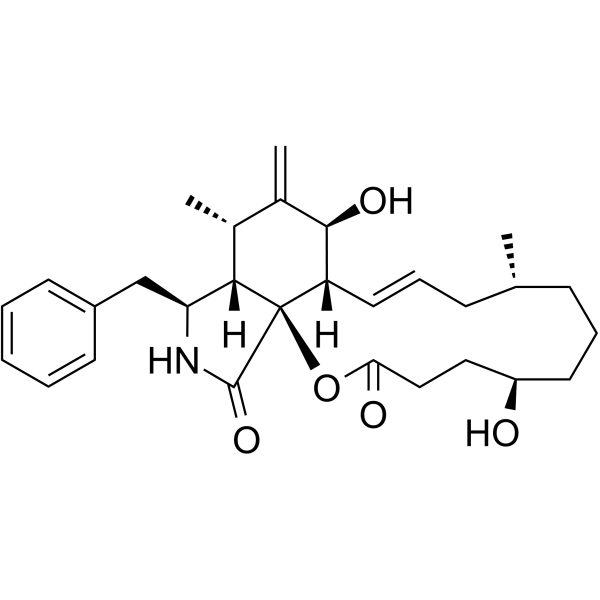
Dihydrocytochalasin B is an Actin disruptor. Dihydrocytochalasin B disrupts actin microfilament bundles, inhibits actin polymerization, and alters intracellular actin cytoskeletal structures. Dihydrocytochalasin B blocks the initiation of DNA synthesis. Dihydrocytochalasin B inhibits Calcium transport. Dihydrocytochalasin B inhibits cytokinesis and alters cell morphology. Dihydrocytochalasin B can be used in studies related to rickets.
Nur für Forschungszwecke. Wir verkaufen nicht an Patienten.
- Reinheit : 99.0%
- CAS. Nr.: 39156-67-7
- Formel: C29H39NO5
- Molecular Weight:481.62
-
Speicherung:Powder -20°C, 3 years ; In solvent -80°C, 6 months , -20°C, 1 month

To place orders, for customer services and technical support, please contact: MedChemExpress USA
Tel: 609-228-6898 E-mail: [email protected] [email protected]


-
 Biologische Aktivität
-
Chemical Information
-
Lösungsmittel & Löslichkeit
- Protokoll
- Reinheit & Dokumentation
- Verweise
-
 Help & FAQs


-
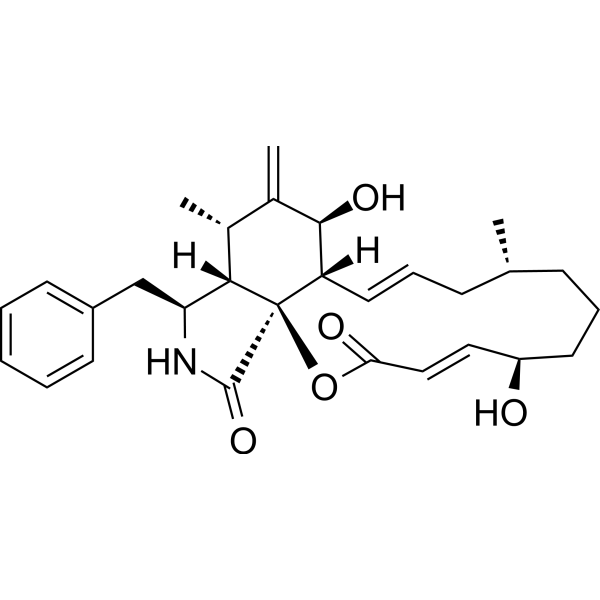
HY-16928
Cytochalasin BMycotoxin -
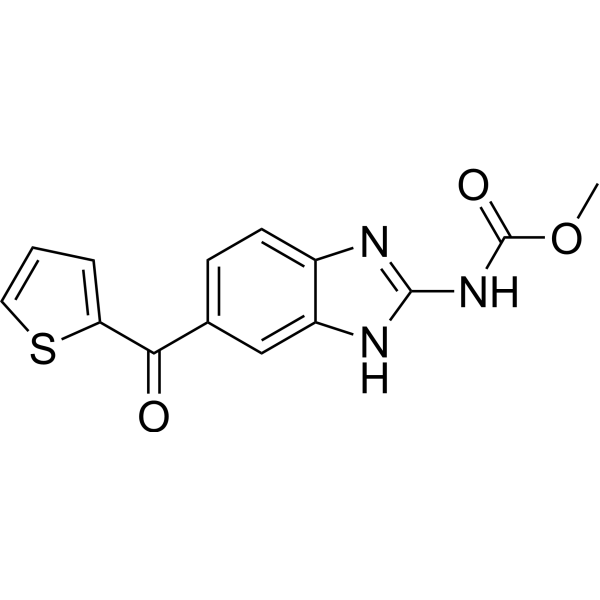
HY-13520
NocodazoleMicrotubule Inhibitor -
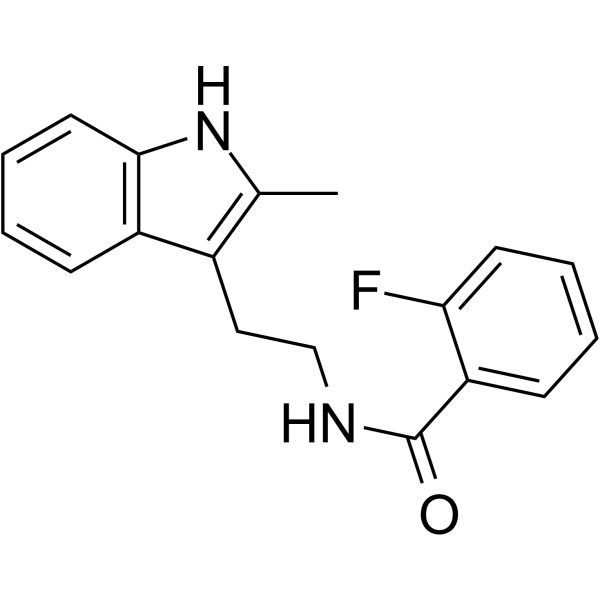
HY-16926
CK-666Arp2/3 Complex Inhibitor -
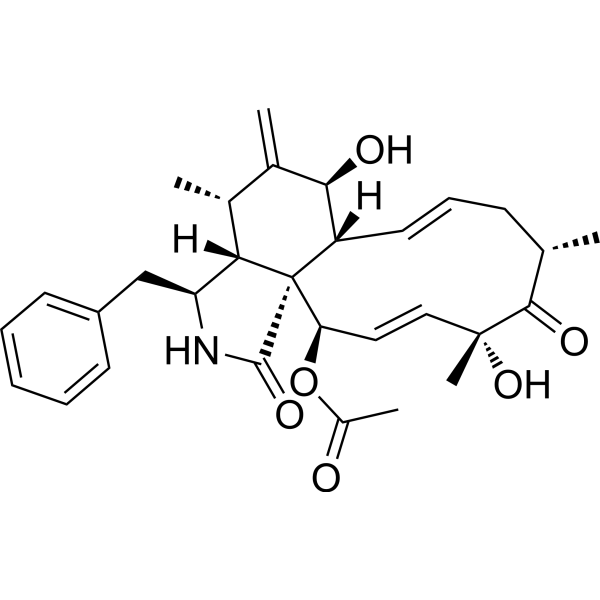
HY-N6682
Cytochalasin DActin Polymerization Inhibitor -
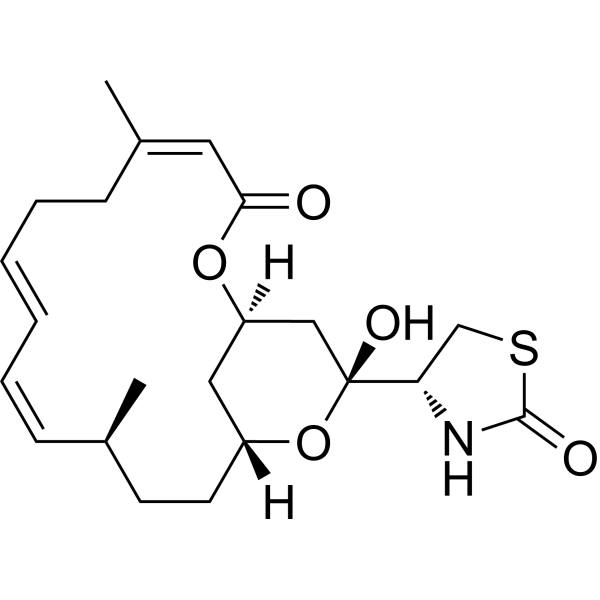
HY-16929
Latrunculin AG-actin Polymerization Inhibitor -
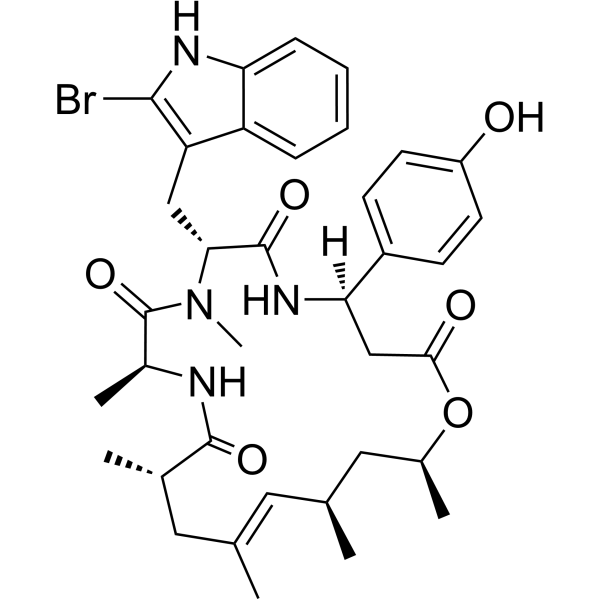
HY-P0027
JasplakinolideActin Polymerization Inducer -
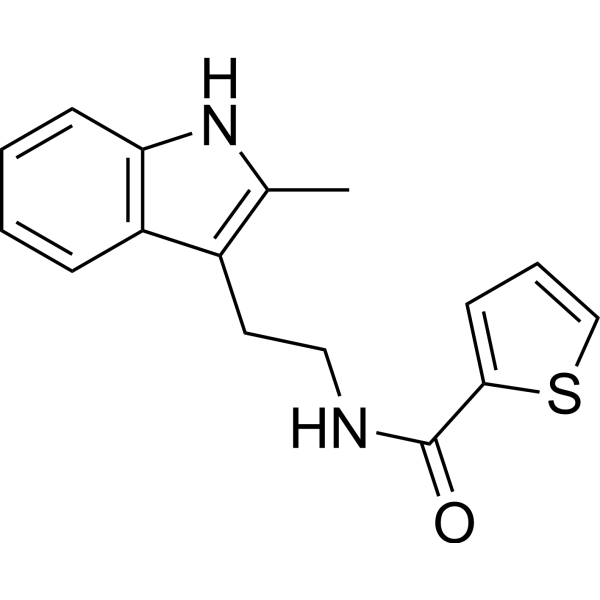
HY-15892
CK-636Arp2/3 Complex Inhibitor -
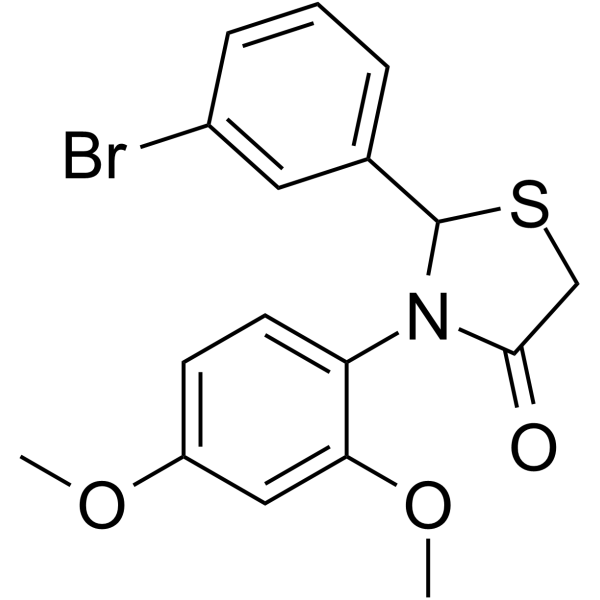
HY-16927
CK-869Arp2/3 Complex Inhibitor -
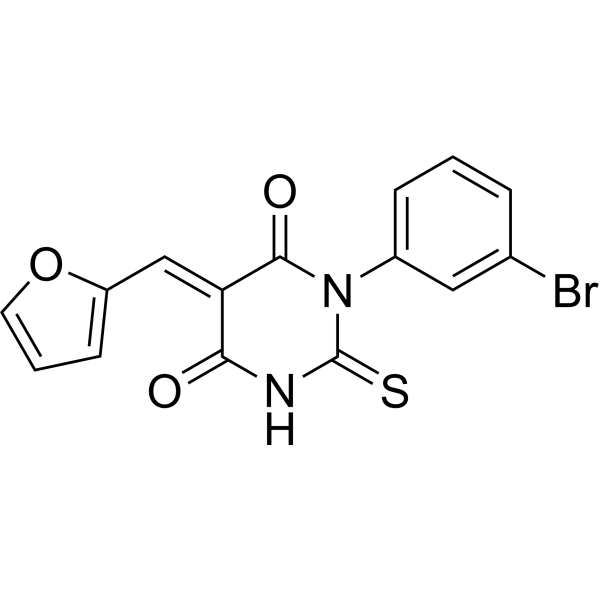
HY-16931
SMIFH2Formin Inhibitor -
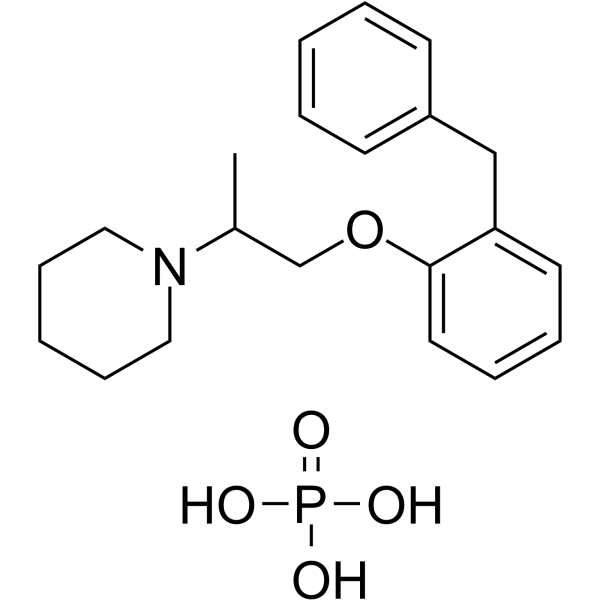
HY-114657A
Benproperine phosphateARPC2 Inhibitor -

HY-16928R
Cytochalasin B (Standard)Mycotoxin -
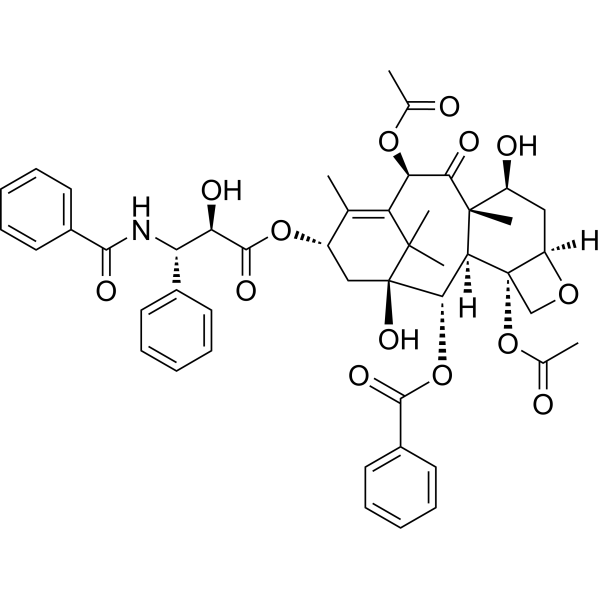
HY-B0015
PaclitaxelAntitumor Agent
Alle DNA/RNA Synthesis Isoform-spezifische Produkte anzeigen
MoreAlle Calcium Channel Isoform-spezifische Produkte anzeigen
More

Biologische Aktivität
Beschreibung
In Vitro
Dihydrocytochalasin B (2-150×10-7 M; 24 h) reversibly inhibits serum-induced initiation of DNA synthesis in serum-starved Swiss/3T3 mouse fibroblasts[1].
Dihydrocytochalasin B (1-7×10⁻⁷ M) does not inhibit 3H-2-deoxyglucose uptake by proliferating Swiss/3T3 mouse fibroblasts[1].
Dihydrocytochalasin B (2-10×10-7 M; 24 h) inhibits serum-induced initiation of DNA synthesis in serum-starved Swiss/3T3 mouse fibroblasts, and this effect is fully reversible[1].
Dihydrocytochalasin B (5-25 μg/mL; 30-60 min) inhibits active calcium transport in everted ileal sacs of young rabbits in a dose-dependent manner; after 60 min of incubation, a significant increase in 45Ca accumulation in mucosal scrapings is observed at the dose of 25 μg/mL[2].
Dihydrocytochalasin B (4-10 μM; 1 h) induces dose-dependent morphological changes identical to those induced by cytochalasin B (including cytoplasmic blebbing, nuclear extrusion, dendritization, and cell rounding) in BALB/c 3T3 cells, but it has slightly lower potency and exhibits an additive effect with cytochalasin B[3].
MedChemExpress (MCE) has not independently confirmed the accuracy of these methods. They are for reference only.
-
Cell Line:serum-arrested Swiss/3T3 mouse fibroblasts
-
Concentration:1×10⁻⁷ M, 2×10⁻⁷ M, 5×10⁻⁷ M, 7.8×10⁻⁷ M, 10×10-7 M
-
Incubation Time:24 h
-
Result:Caused concentration-dependent disruption of actin microfilament bundles, loss of cell-substratum attachment sites, and progressive cell rounding.
Detected no changes in actin structure or cell shape at 1×10⁻⁷ M.
Made microfilament bundles fewer, thinner, and shorter, with cells assuming a rectangular shape at 2×10⁻⁷ M.
Left only peripheral microfilament bundles remaining, with cells adopting a spindle shape at 5×10⁻⁷ M.
Resulted in few to no actin microfilament bundles visible, with cells becoming rounded with blebby surfaces at 7.8 and 10×10-7 M.
Increased the percentage of cells with disorganized actin structure with concentration: 11% at 1×10⁻⁷ M, 30% at 2×10⁻⁷ M, 43% at 5×10⁻⁷ M, 60% at 7.8×10⁻⁷ M, and 89% at 10×10-7 M.
Showed correlation between actin disorganization and inhibition of DNA synthesis.


Chemical Information
-
CAS. Nr. 39156-67-7
-
Appearance Solid
-
Molecular Weight 481.62
-
Formel C29H39NO5
-
Color White to off-white
-
SMILES
O=C1[C@]2(O3)[C@]([C@@H](C([C@@H](O)[C@]2([H])/C=C/C[C@@H](CCC[C@@H](O)CCC3=O)C)=C)C)([H])[C@H](CC4=CC=CC=C4)N1
-
Versand
Room temperature in continental US; may vary elsewhere.
-
Speicherung
Powder -20°C 3 years In solvent -80°C 6 months -20°C 1 month


Lösungsmittel & Löslichkeit
In Vitro:
DMF : 30 mg/mL (62.29 mM; Need ultrasonic and warming)
DMSO : ≥ 20 mg/mL (41.53 mM; Hygroscopic DMSO has a significant impact on the solubility of product, please use newly opened DMSO)
* "≥" means soluble, but saturation unknown.
Please refer to the solubility information to select the appropriate solvent. Once prepared, please aliquot and store the solution to prevent product inactivation from repeated freeze-thaw cycles.
Storage method and period of stock solution: -80°C, 6 months; -20°C, 1 month. When stored at -80°C, please use it within 6 months. When stored at -20°C, please use it within 1 month.
Please refer to the solubility information to select the appropriate solvent. Once prepared, please aliquot and store the solution to prevent product inactivation from repeated freeze-thaw cycles.
Storage method and period of stock solution: -80°C, 6 months; -20°C, 1 month. When stored at -80°C, please use it within 6 months. When stored at -20°C, please use it within 1 month.
Konzentration (Stammlösung) × Volumen (Stammlösung) = Konzentration (Ziellösung) × Volumen (Ziellösung)


Reinheit & Dokumentation
-
Data Sheet (277 KB)
-
SDS (644 KB)
- English - EN (644 KB)
- Français - FR (644 KB)
- Deutsch - DE (644 KB)
- Norwegian - NO (644 KB)
- Español - ES (644 KB)
- Swedish - SV (644 KB)
- Italian - IT (644 KB)
- Korean - KR (644 KB)
- Portuguese - PT (644 KB)
-
Handling Instructions (2659 KB)
Verweise
[1]. Maness PF, et al. Dihydrocytochalasin B disorganizes actin cytoarchitecture and inhibits initiation of DNA synthesis in 3T3 cells. Cell. 1982 Aug;30(1):253-62. [Content Brief]
[2]. Jande SS, et al. Effects of cytochalasin B and dihydrocytochalasin B on calcium transport by intestinal absorptive cells. Calcif Tissue Int. 1981;33(2):143-151. [Content Brief]
[3]. Atlas SJ, et al. Dihydrocytochalasin B. Biological effects and binding to 3T3 cells. J Cell Biol. 1978 Feb;76(2):360-70. [Content Brief]


Complete Stock Solution Preparation Table
Please refer to the solubility information to select the appropriate solvent. Once prepared, please aliquot and store the solution to prevent product inactivation from repeated freeze-thaw cycles.
Storage method and period of stock solution: -80°C, 6 months; -20°C, 1 month. When stored at -80°C, please use it within 6 months. When stored at -20°C, please use it within 1 month.
| Optional Solvent | Concentration Solvent Mass | 1 mg | 5 mg | 10 mg | 25 mg |
|---|---|---|---|---|---|
| DMSO / DMF | 1 mM | 2.0763 mL | 10.3816 mL | 20.7633 mL | 51.9081 mL |
| 5 mM | 0.4153 mL | 2.0763 mL | 4.1527 mL | 10.3816 mL | |
| 10 mM | 0.2076 mL | 1.0382 mL | 2.0763 mL | 5.1908 mL | |
| 15 mM | 0.1384 mL | 0.6921 mL | 1.3842 mL | 3.4605 mL | |
| 20 mM | 0.1038 mL | 0.5191 mL | 1.0382 mL | 2.5954 mL | |
| 25 mM | 0.0831 mL | 0.4153 mL | 0.8305 mL | 2.0763 mL | |
| 30 mM | 0.0692 mL | 0.3461 mL | 0.6921 mL | 1.7303 mL | |
| 40 mM | 0.0519 mL | 0.2595 mL | 0.5191 mL | 1.2977 mL | |
| DMF | 50 mM | 0.0415 mL | 0.2076 mL | 0.4153 mL | 1.0382 mL |
| 60 mM | 0.0346 mL | 0.1730 mL | 0.3461 mL | 0.8651 mL |


Dihydrocytochalasin B Related Classifications
HY-N6701 Related Classifications
 Powered by Bioz
Keywords
- Dihydrocytochalasin B
- 39156-67-7
- Arp2/3 Complex
- DNA/RNA Synthesis
- Calcium Channel
- SV40-transformed Swiss/3T3 mouse fibroblasts
- M-MuSV-transformed Swiss/3T3 mouse fibroblasts
- intestinal absorptive cells
- DNA synthesis
- actin microfilament bundles
- actin
- rickets
- BALB/c 3T3 cells
- Swiss/3T3 mouse fibroblasts
- actin polymerization
- Inhibitor
- inhibitor
- inhibit