



25,26-Dihydroxyvitamin D3

Based on 1 Customer Validation
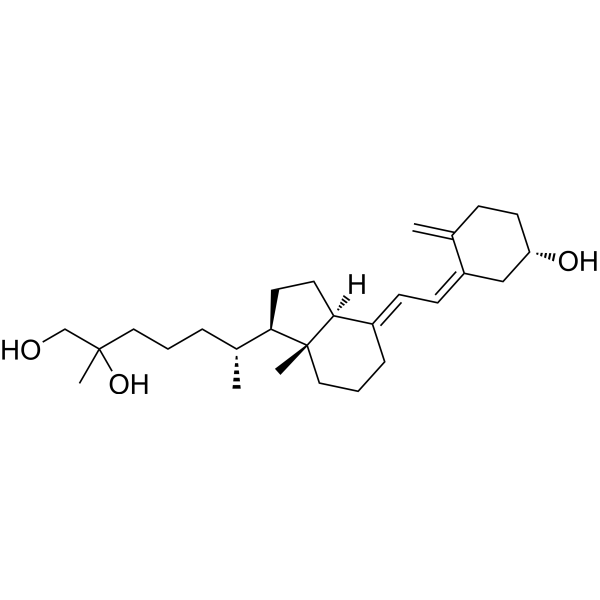
25,26-Dihydroxyvitamin D3 (25,26-Dihydroxycholecalciferol) is a dihydroxylated derivative and metabolite of Vitamin D3 (HY-15398). 25,26-Dihydroxyvitamin D3 moderately increases serum calcium levels when the initial serum calcium level is low. 25,26-Dihydroxyvitamin D3 promotes intestinal calcium absorption in vitamin D-deficient rats fed a low-calcium diet. 25,26-Dihydroxyvitamin D3 is applicable to research related to osteomalacia.
For research use only. We do not sell to patients.
- Purity : 95.47%
- CAS No.: 29261-12-9
- Formula: C27H44O3
- Molecular Weight:416.64
-
Storage:
4°C, protect from light, stored under nitrogen
* In solvent : -80°C, 6 months; -20°C, 1 month (protect from light, stored under nitrogen)

To place orders, for customer services and technical support, please contact: MedChemExpress USA
Tel: 609-228-6898 E-mail: [email protected] [email protected]


-
 Biological Activity
-
Chemical Information
-
Solvent & Solubility
- Purity & Documentation
- References
-
 Help & FAQs


-
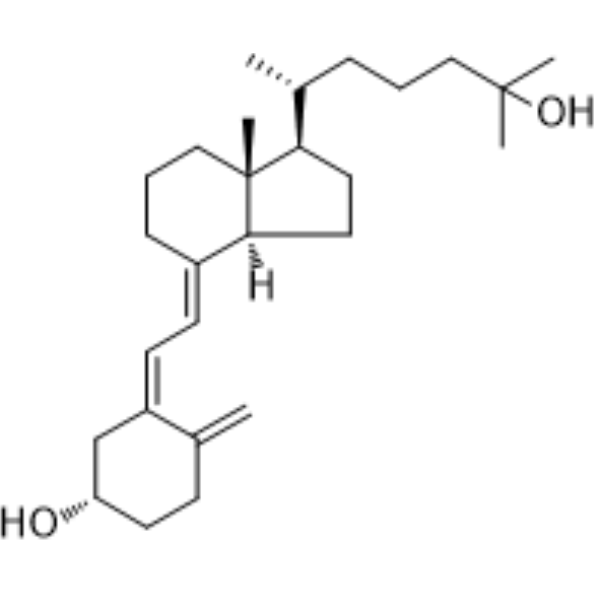
HY-32351
CalcifediolVDR Ligand -
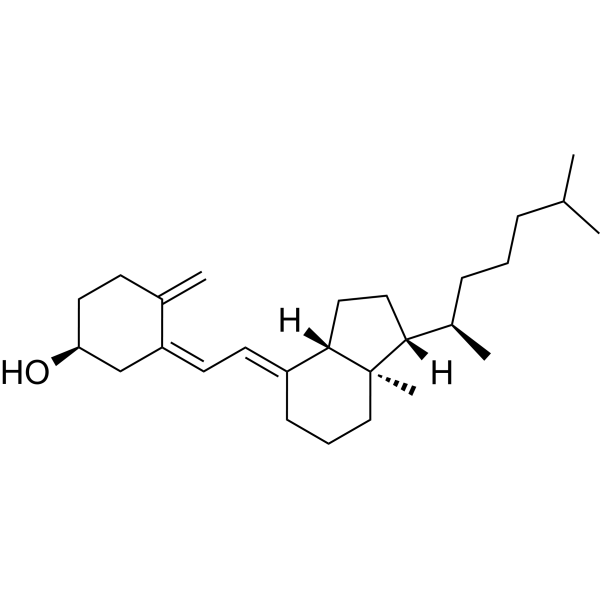
HY-15398
Vitamin D3Vitamin -
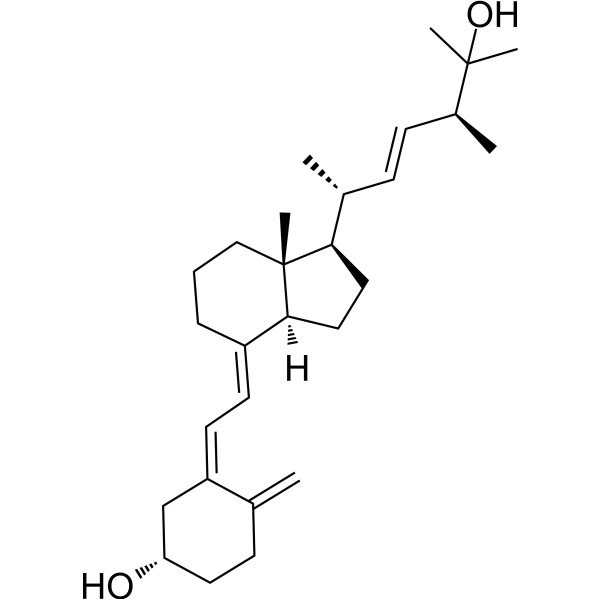
HY-32349
ErcalcidiolVitamin D2 Metabolite -

HY-15398R
Vitamin D3 (Standard)Vitamin -

HY-32351R
Calcifediol (Standard)VDR Ligand -
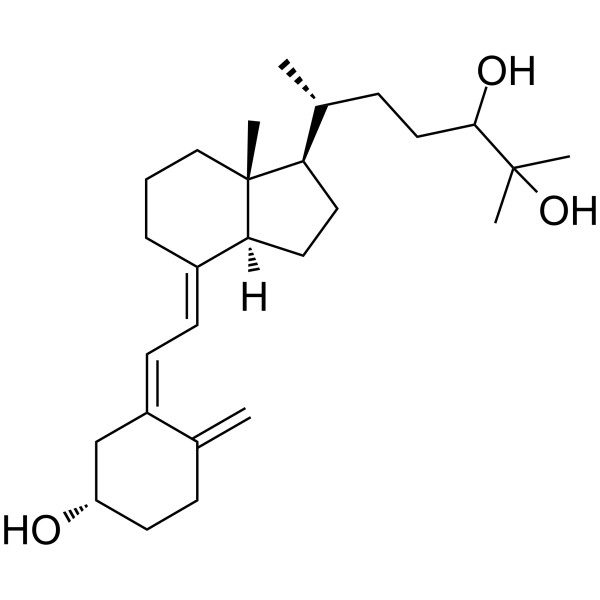
HY-76915
24, 25-Dihydroxy VD3Vitamin D3 -

HY-32349R
Ercalcidiol (Standard)Vitamin D2 Metabolite -
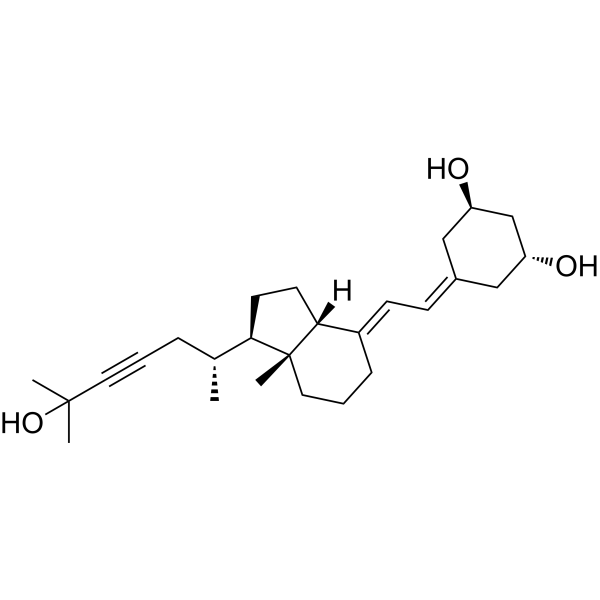
HY-32344
InecalcitolVDR Agonist -
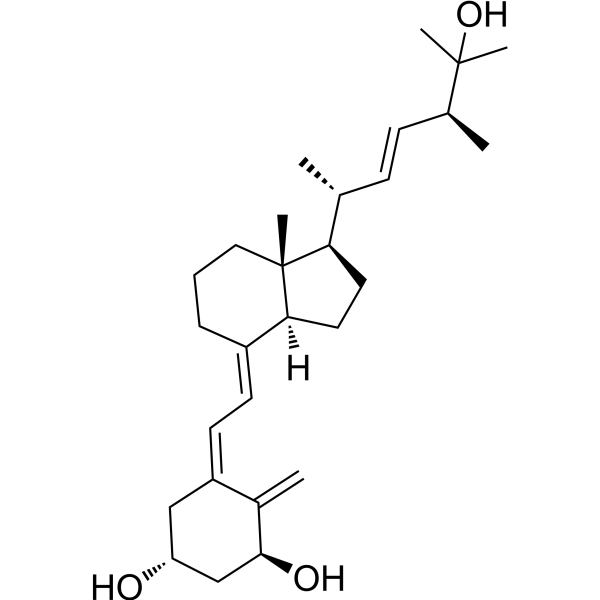
HY-32350
ErcalcitriolVDR Agonist -
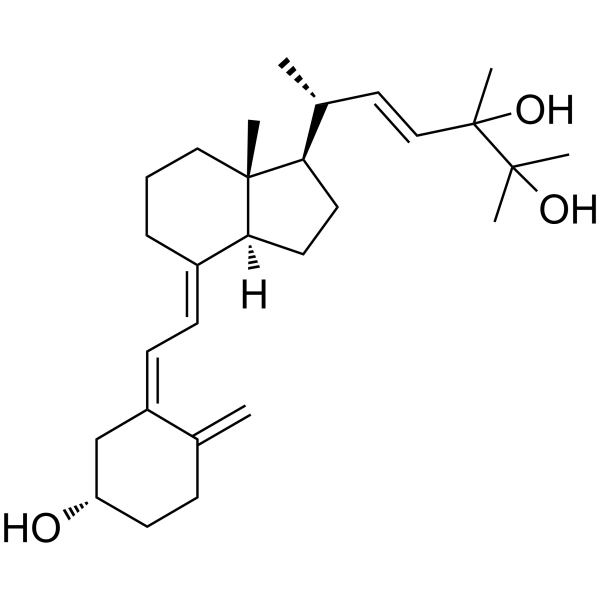
HY-76801
24, 25-Dihydroxy VD2Metabolite -
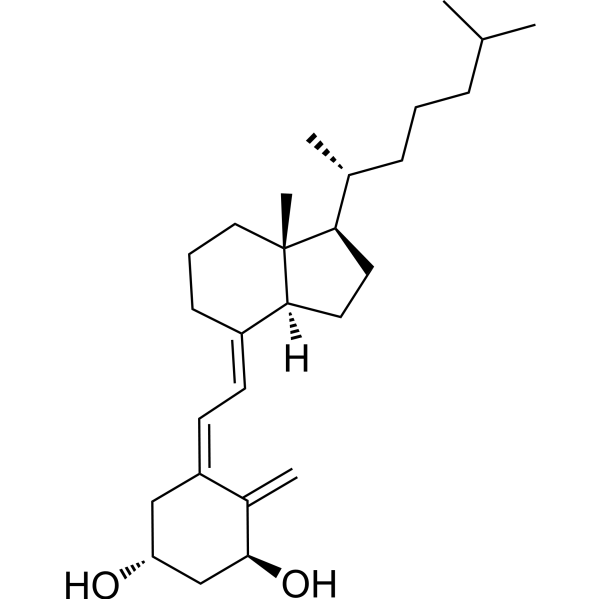
HY-10003
AlfacalcidolVDR Activator -
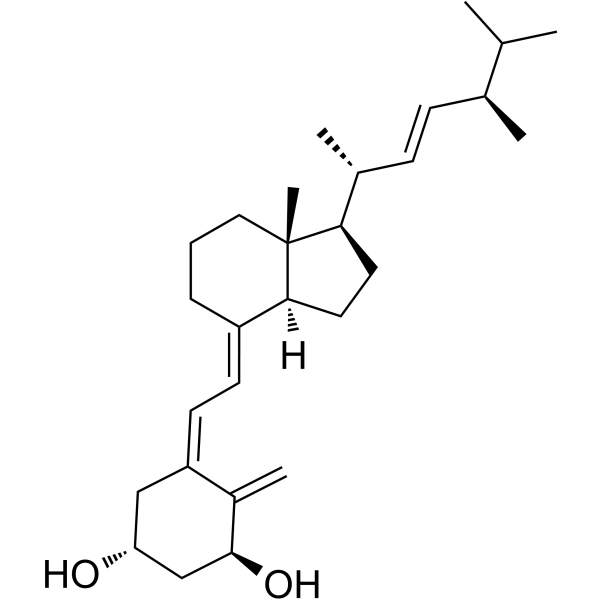
HY-32348
DoxercalciferolVD/VDR Activator
All Calcium Channel Isoforms
More

Biological Activity
Description
IC50 & Target
|
Human Endogenous Metabolite |
In Vivo
25,26-Dihydroxyvitamin D3 (0.25 μg; intravenous injection) does not stimulate bone mineral mobilization in rats fed a low-calcium diet, but it significantly increases intestinal calcium transport, with an activity approximately half that of 25-HCC[2].
25,26-Dihydroxyvitamin D3 (650 pmol; jugular vein injection) induces a significant, rapid, and sustained decrease in serum Ca2+ that lasts for 48 h in vitamin D-deficient, phosphorus-deprived rats[3].
25,26-Dihydroxyvitamin D3 (325 pmol; i.p.; for 5 consecutive days) significantly increases the serum Ca2+ level in vitamin D-deficient rats (p < 0.01)[3].
MedChemExpress (MCE) has not independently confirmed the accuracy of these methods. They are for reference only.
-
Animal Model:unspecified strain (maintained on low calcium diet)[2]
-
Dosage:0.25 μg
-
Administration:i.v.; single dose
-
Result:Elicited no significant elevation of serum calcium concentration (5.1 ± 0.2 mg% vs.
control 4.7 ± 0.1 mg%).
Significantly increased intestinal calcium transport, with a 45Ca serosal/45Ca mucosal ratio of 2.8 ± 0.6 (vs.
control 1.6 ± 0.2).
Was approximately one-half as active as 25-HCC in stimulating intestinal calcium transport.
-
Animal Model:Sprague-Dawley albino (weanling male; vitamin D deficiency model, fed vitamin D-free diets for 3 weeks)[3]
-
Dosage:325 pmol
-
Administration:i.p.; daily for 5 consecutive days
-
Result:Increased serum calcium to 6.50 ± 1.75 mg% (p < 0.01 vs.
controls) in normal calcium/phosphorus diet rats.
I


Chemical Information
-
CAS No. 29261-12-9
-
Appearance Solid
-
Molecular Weight 416.64
-
Formula C27H44O3
-
Color White to off-white
-
SMILES
C[C@@H]([C@H]1CC[C@@]2([H])/C(CCC[C@]12C)=C/C=C3C(CC[C@H](O)C\3)=C)CCCC(O)(C)CO
-
Synonyms
25,26-Dihydroxycholecalciferol
-
Structure Classification
-
Initial Source
-
Shipping
Room temperature in continental US; may vary elsewhere.
-
Storage
4°C, protect from light, stored under nitrogen
* In solvent : -80°C, 6 months; -20°C, 1 month (protect from light, stored under nitrogen)


Solvent & Solubility
In Vitro:
DMSO : 100 mg/mL (240.02 mM; Need ultrasonic; Hygroscopic DMSO has a significant impact on the solubility of product, please use newly opened DMSO)
Please refer to the solubility information to select the appropriate solvent. Once prepared, please aliquot and store the solution to prevent product inactivation from repeated freeze-thaw cycles.
Storage method and period of stock solution: -80°C, 6 months; -20°C, 1 month (protect from light, stored under nitrogen). When stored at -80°C, please use it within 6 months. When stored at -20°C, please use it within 1 month.
Please refer to the solubility information to select the appropriate solvent. Once prepared, please aliquot and store the solution to prevent product inactivation from repeated freeze-thaw cycles.
Storage method and period of stock solution: -80°C, 6 months; -20°C, 1 month (protect from light, stored under nitrogen). When stored at -80°C, please use it within 6 months. When stored at -20°C, please use it within 1 month.
Concentration (start) × Volume (start) = Concentration (final) × Volume (final)


Purity & Documentation
-
Data Sheet (273 KB)
-
SDS (728 KB)
- English - EN (728 KB)
- Français - FR (728 KB)
- Deutsch - DE (728 KB)
- Norwegian - NO (728 KB)
- Español - ES (728 KB)
- Swedish - SV (728 KB)
- Italian - IT (728 KB)
- Korean - KR (728 KB)
- Portuguese - PT (728 KB)
-
Handling Instructions (2659 KB)
References
[1]. Fraher LJ, et al. Determination of circulating 25,26-dihydroxycholecalciferol in man by radioimmunoassay. Clin Sci (Lond). 1980;59(4):257-263. [Content Brief]
[2]. DeLuca HF, et al. 25,26-dihydroxycholecalciferol, a metabolite of vitamin D3 with intestinal calcium transport activity. Biochemistry. 1970 Nov 24;9(24):4776-80. [Content Brief]
[3]. Miravet L, et al. The biological activity of synthetic 25,26-dihydroxycholecalciferol and 24,25-dihydroxycholecalciferol in vitamin D-deficient rats. Calcif Tissue Res. 1976;21(3):145-152. [Content Brief]


Complete Stock Solution Preparation Table
Please refer to the solubility information to select the appropriate solvent. Once prepared, please aliquot and store the solution to prevent product inactivation from repeated freeze-thaw cycles.
Storage method and period of stock solution: -80°C, 6 months; -20°C, 1 month (protect from light, stored under nitrogen). When stored at -80°C, please use it within 6 months. When stored at -20°C, please use it within 1 month.
| Optional Solvent | Concentration Solvent Mass | 1 mg | 5 mg | 10 mg | 25 mg |
|---|---|---|---|---|---|
| DMSO | 1 mM | 2.4002 mL | 12.0008 mL | 24.0015 mL | 60.0038 mL |
| 5 mM | 0.4800 mL | 2.4002 mL | 4.8003 mL | 12.0008 mL | |
| 10 mM | 0.2400 mL | 1.2001 mL | 2.4002 mL | 6.0004 mL | |
| 15 mM | 0.1600 mL | 0.8001 mL | 1.6001 mL | 4.0003 mL | |
| 20 mM | 0.1200 mL | 0.6000 mL | 1.2001 mL | 3.0002 mL | |
| 25 mM | 0.0960 mL | 0.4800 mL | 0.9601 mL | 2.4002 mL | |
| 30 mM | 0.0800 mL | 0.4000 mL | 0.8001 mL | 2.0001 mL | |
| 40 mM | 0.0600 mL | 0.3000 mL | 0.6000 mL | 1.5001 mL | |
| 50 mM | 0.0480 mL | 0.2400 mL | 0.4800 mL | 1.2001 mL | |
| 60 mM | 0.0400 mL | 0.2000 mL | 0.4000 mL | 1.0001 mL | |
| 80 mM | 0.0300 mL | 0.1500 mL | 0.3000 mL | 0.7500 mL | |
| 100 mM | 0.0240 mL | 0.1200 mL | 0.2400 mL | 0.6000 mL |


25,26-Dihydroxyvitamin D3 Related Classifications
HY-15830 Related Classifications
 Powered by Bioz
Keywords
- 25,26-Dihydroxyvitamin D3
- 29261-12-9
- 25,26-Dihydroxycholecalciferol
- VD/VDR
- Drug Metabolite
- Drug Derivative
- Calcium Channel
- osteomalacia
- vitamin D-deficient rats
- nephrectomized rats
- intestinal calcium absorption
- intestinal calcium transport
- serum calcium
- bone mineral
- antirachitic activity
- rats
- parathyroid hormone
- Inhibitor
- inhibitor
- inhibit