
1. Search Result
Search Result
Results for "

calf thymus

" in MedChemExpress (MCE) Product Catalog:

26

Inhibitors & Agonists

1

Fluorescent Dyes

3

Biochemical Assay Reagents

1

Peptides

5

Natural
Products

Cat. No. Product Name Target Research Areas Chemical Structure
  • HY-109517
    Calf thymus DNA
    5 Publications Verification

    DNA from calf thymus, Thymonucleic acid

    DNA/RNA Synthesis Inflammation/Immunology Cancer
    Calf thymus DNA (DNA from calf thymus) is high quality double-stranded template DNA isolated from the thymus of male and female calves. Calf thymus DNA can be used for the research of the interaction between DNA and agents .
    Calf thymus DNA
  • HY-NP155
    Histone (calf thymus)
    1 Publications Verification

    Endogenous Metabolite Others
    Histone (calf thymus) is a histone found in the deoxyribonucleoprotein of calf thymus and can be obtained by acid extraction technique .
    Histone (calf thymus)
  • HY-13718

    H-Glu-Trp-OH; L-Glutamyl-L-tryptophan

    VEGFR HCV Endogenous Metabolite Infection Cardiovascular Disease Inflammation/Immunology Cancer
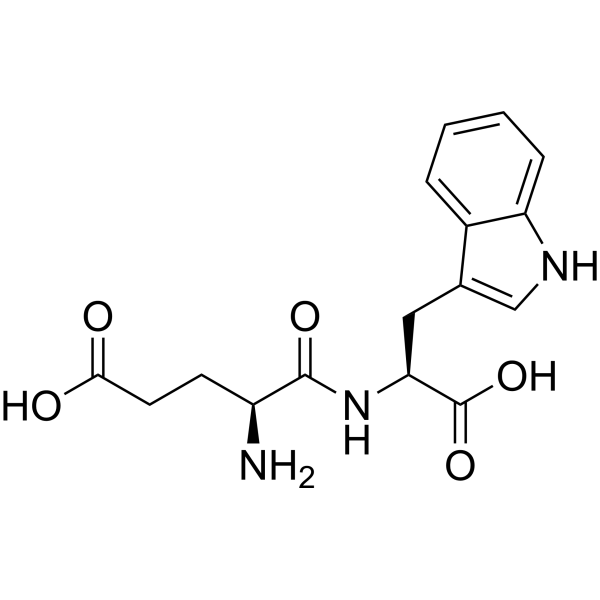
    Oglufanide (H-Glu-Trp-OH) is a dipeptide immunomodulator isolated from calf thymus. Oglufanide inhibits vascular endothelial growth factor (VEGF). Oglufanide can stimulate the immune response to hepatitic C virus (HCV) and intracellular bacterial infections. Oglufanide shows antitumor and anti-angiogenesis activities .
    Oglufanide
  • HY-121309
    Doxorubicinone
    2 Publications Verification

    Adriamycin aglycone; Adriamycinone

    NF-κB TNF Receptor Interleukin Related Drug Derivative Inflammation/Immunology Cancer
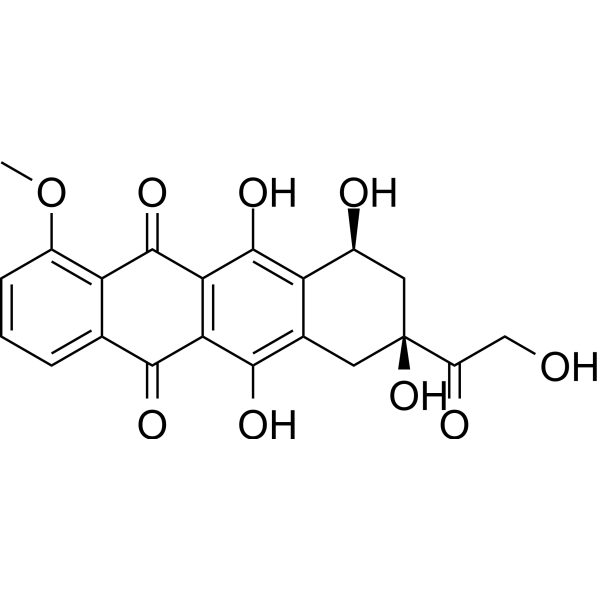
    Doxorubicinone (Adriamycin aglycone) is the aglycone of the antibiotic Doxorubicin (HY-15142A), i.e., its sugar-free parent nucleus structure. Doxorubicinone does not induce DNA damage or bind to RelA, but still downregulates the expression of pro-inflammatory cytokines (such as TNF, IL-12, etc.) regulated by the NF-κB pathway. Doxorubicinone can be used in sepsis-related research .
    Doxorubicinone
  • HY-W020955

    Chloro(triphenylphosphine)gold(I)

    Biochemical Assay Reagents Apoptosis DNA Alkylator/Crosslinker Lipoxygenase Cancer
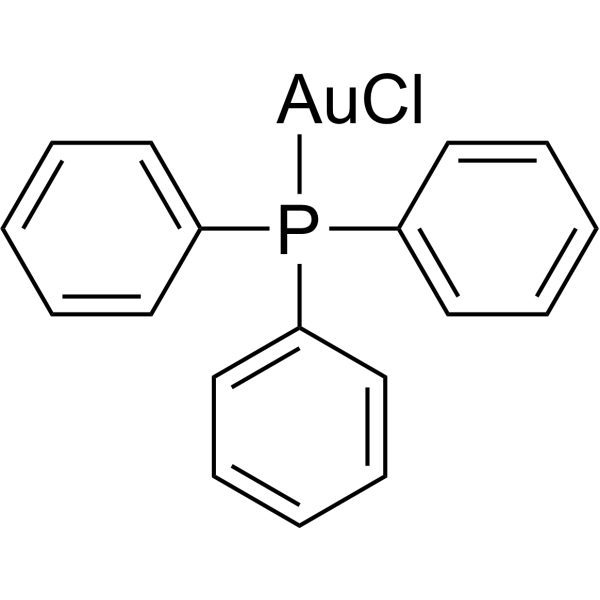
    Triphenylphosphinechlorogold (Chloro(triphenylphosphine)gold(I)) is a gold complex, Apoptosis inducer, and catalyst. Triphenylphosphinechlorogold exhibits high LOX inhibitory activity. Triphenylphosphinechlorogold induces cell cycle arrest and apoptosis. Triphenylphosphinechlorogold catalyzes the peroxidation of linoleic acid. A weak interaction exists between Triphenylphosphinechlorogold and DNA. Triphenylphosphinechlorogold displays antiproliferative activity against breast cancer cells .
    Triphenylphosphinechlorogold
  • HY-153118

    ctDNA sodium, Type I, fibers; DNA sodium, from calf thymus, Type I, fibers; Thymonucleic acid sodium, Type I, fibers

    Biochemical Assay Reagents Others Cancer
    Deoxyribonucleic acid sodium, from calf thymus, Type I, fibers is the sodium salts form of Calf thymus DNA (HY-109517). Calf thymus DNA is a double-stranded template DNA isolated from calf thymus. It can be used to study the interaction between DNA and DNA binding agents, as well as the structure and function of DNA, for DNA quantification and used as a substrate for DNA polymerase analysis, etc​ .
    Deoxyribonucleic acid sodium, from calf thymus, Type I, fibers
  • HY-NP155A

    Endogenous Metabolite Others
    Histone H1 (calf thymus) is a linker histone subtype found in the deoxyribonucleoprotein of calf thymus and can be obtained by separation and purification from total calf thymus histones .
    Histone H1 (calf thymus)
  • HY-N12851

    (E)-4-Oxo-2-hexenal

    Bacterial Apoptosis Infection
    4-OHE ((E)-4-Oxo-2-hexenal) is a mutagen formed by omega-3 lipid peroxidation. 4-OHE reacts with deoxyguanosine, deoxycytidine and 5-methyldeoxycytidine to form covalent adducts. 4-OHE induces apoptosis and exhibits genotoxicity. 4-OHE inhibits the growth of Gram-positive and Gram-negative bacteria, which correlates with its electrophilic reactivity towards nucleophilic biomolecules. 4-OHE is a chemical defense component of Dolycoris baccarum (sloe bug), and acts as a deterrent and toxin against insect predators .
    4-OHE
  • HY-W339331

    NNI-0001

    Insecticide Calcium Channel Reactive Oxygen Species (ROS) Apoptosis Infection Metabolic Disease
    Flubendiamide (NNI-0001) is an orally active phthalic diamide insecticide that acts by targeting insect ryanodine receptors (RyRs), causing insect muscle dysfunction, paralysis and death. Flubendiamide disrupts molting, metamorphosis and reproductive processes, induces oxidative stress by increasing the levels of ROS/RNS, MDA and 8OHdG and decreasing the levels of SOD, CAT and GST, activates the CncC/Maf apoptosis pathway, impairs calcium homeostasis, promotes adipogenesis, increases triglyceride accumulation, and upregulates the expression of regulatory factors for adipocyte differentiation and adipogenesis .
    Flubendiamide
  • HY-146350

    TrxR Reactive Oxygen Species (ROS) Apoptosis Cancer
    TrxR-IN-4 is a thioredoxin reductase (TrxR) inhibitor with a rat IC50 of 0.37 μM. TrxR-IN-4 inhibits TrxR activity, elevates reactive oxygen species (ROS) and induces apoptosis. TrxR-IN-4 mediates endoplasmic reticulum stress and induces mitochondrial dysfunction. TrxR-IN-4 can be used for the research of hepatocellular carcinoma .
    TrxR-IN-4
  • HY-137673

    NADH Dehydrogenase Others
    2'-Deoxy-NAD+ is a noncompetitive NAD+ inhibitor with a Ki of 32 μM. 2'-Deoxy-NAD+ can be utilized as a substrate to study the ADP-ribosyl transfer reaction .
    2'-Deoxy-NAD+
  • HY-121782

    Bacterial DNA/RNA Synthesis Infection
    A 65281 is a potent DNA gyrase inhibitor with an IC50 value of 0.1 µg/mL. A 65281 induces DNA breakage mediated by calf thymus topoisomerase II. A 65281 inhibits P4 DNA unknotting with an IC50 value of 8 µg/mL .
    A 65281
  • HY-N16549

    3-O-Galloylprocyanidin B3

    DNA/RNA Synthesis Reactive Oxygen Species (ROS) Inflammation/Immunology
    Procyanidin B3-3-O-gallate (3-O-Galloylprocyanidin B3) is a selective mammalian DNA polymerase α inhibitor, with a calf DNA polymerase α IC50 of 0.26 μM. Procyanidin B3-3-O-gallate scavenges DPPH radicals. Procyanidin B3-3-O-gallate can be used for research on oxidative stress and inflammatory diseases[1].
    Procyanidin B3-3-O-gallate
  • HY-135181

    Antibiotic Bacterial Inflammation/Immunology
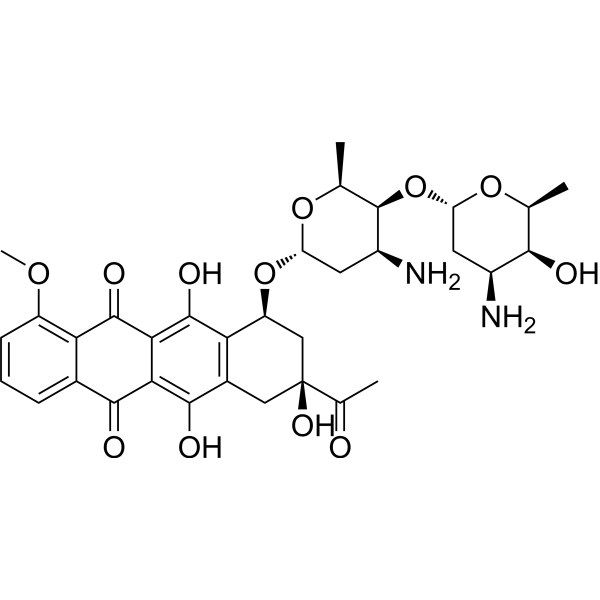
    Daunosamnyl-daunorubic, an antibiotic, can bind calf thymus DNA .
    Daunosamnyl-daunorubicin
  • HY-120747

    Bacterial DNA/RNA Synthesis Infection
    A-65282 is an antibacterial agent. A-65282 inhibits P4 DNA unknotting with an IC50 value of 8 µg/mL. A 65281 induces DNA breakage mediated by calf thymus topoisomerase II .
    A-65282
  • HY-13718A

    H-Glu-Trp-OH disodium; L-Glutamyl-L-tryptophan disodium

    VEGFR HCV Endogenous Metabolite Infection Cardiovascular Disease Inflammation/Immunology Cancer
    Oglufanide (H-Glu-Trp-OH) disodium is a dipeptide immunomodulator isolated from calf thymus. Oglufanide disodium inhibits vascular endothelial growth factor (VEGF). Oglufanide disodium can stimulate the immune response to hepatitic C virus (HCV) and intracellular bacterial infections. Oglufanide disodium shows antitumor and anti-angiogenesis activities .
    Oglufanide disodium
  • HY-137673A

    NADH Dehydrogenase Others
    2'-Deoxy-NAD+ sodium is a noncompetitive NAD+ inhibitor with a Ki of 32 μM. 2'-Deoxy-NAD+ sodium can be utilized as a substrate to study the ADP-ribosyl transfer reaction .
    2'-Deoxy-NAD+ sodium
  • HY-185452

    Drug Intermediate Others
    N4-Acetyldeoxycytidine triphosphate is a terminal deoxynucleotidyl transferase substrate. N4-Acetyldeoxycytidine triphosphate acts as a substrate for calf thymus terminal deoxynucleotidyl transferase and undergoes polymerization to form extended polydeoxynucleotide chains .
    N4-Acetyldeoxycytidine triphosphate
  • HY-181519

    DNA Alkylator/Crosslinker Aldose Reductase Glycosidase Metabolic Disease Inflammation/Immunology
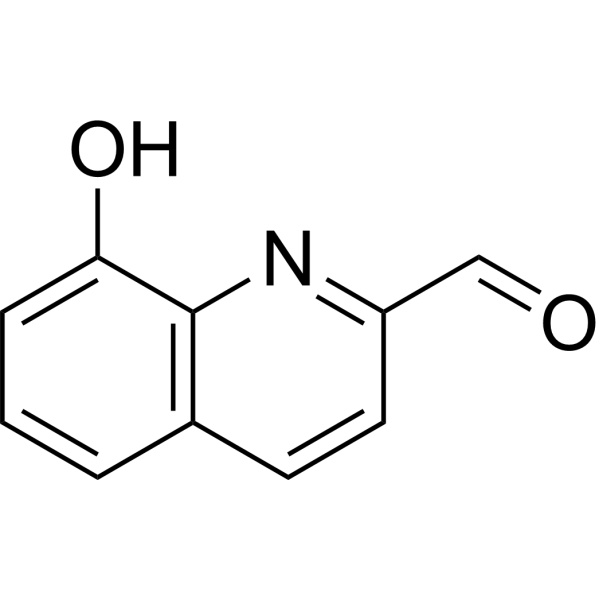
    ALR2/α-GLY-IN-1 is a potent dual-target inhibitor that targets aldose reductase ALR2 and α-glucosidase (IC50 values are 0.72 μM and 0.82 μM, respectively; Ki values are 1.67 μM and 1.37 μM, respectively). ALR2/α-GLY-IN-1 also acts as a DNA binder, which stably interacts with calf thymus double-stranded DNA through non-covalent interactions such as groove-binding mode and water-bridged hydrogen bonds. ALR2/α-GLY-IN-1 can be used in studies related to diabetes and its complications .
    ALR2/α-GLY-IN-1
  • HY-N2062

    Topoisomerase Cancer
    10-Nitrocamptothecin is a topoisomerase I inhibitor with an IC50 of 0.64 μM. 10-Nitrocamptothecin interferes with the formation of cleavable complexes, thereby inhibiting the activity of Topoisomerase I. 10-Nitrocamptothecin is applicable for cancer research .
    10-Nitrocamptothecin
  • HY-160968

    Drug Derivative Antibiotic Bacterial DNA/RNA Synthesis Infection Cancer
    4-Demethoxy-7,9-di-epi-daunorubicin, a derivative of Daunorubicin (HY-13062A), is an anthracycline antibiotics. 4-Demethoxy-7,9-di-epi-daunorubicin can bind to calf thymus DNA and forms a complex with the stacked DNA base pairs. 4-Demethoxy-7,9-di-epi-daunorubicin can inhibit prokaryotic nucleic acid polymerases, including E. coli DNA polymerase I and RNA polymerase. 4-Demethoxy-7,9-di-epi-daunorubicin can be used for researches of cancer and infection .
    4-Demethoxy-7,9-di-epi-daunorubicin
  • HY-165400

    Fluorescent Dye DNA Alkylator/Crosslinker Others
    TODi-1 (TOTO) is a double-stranded DNA binder and Fluorescence enhancer (with a lambda max of 513 nm for dsDNA-TOTO). TODi-1 forms stable bis-intercalation complexes with double-stranded DNA. TODi-1 shows almost no fluorescence in free solution, but its fluorescence intensity increases significantly upon binding to double-stranded DNA .
    TODi-1
  • HY-183291

    Bacterial DNA/RNA Synthesis DNA Alkylator/Crosslinker Reactive Oxygen Species (ROS) Penicillin-binding protein (PBP) Infection
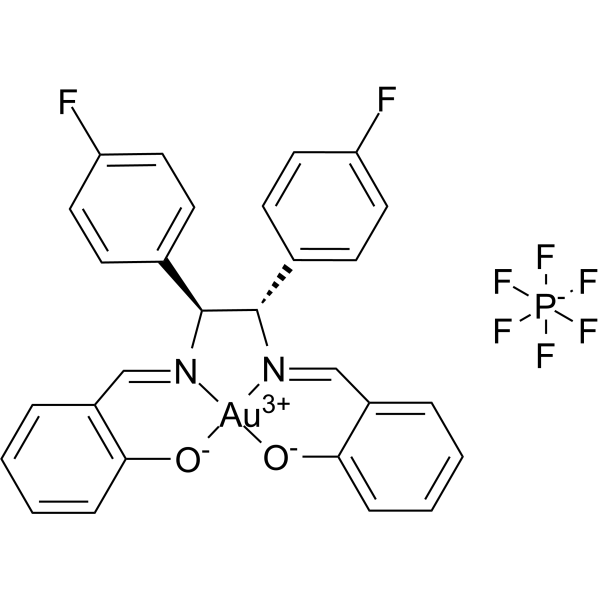
    Antibacterial agent 343 (Compound 47) is an Antibacterial agent. Antibacterial agent 343 binds to the allosteric site of PBP2a to open its active site. Antibacterial agent 343 disrupts bacterial cell membranes, leading to protein leakage. Antibacterial agent 343 interacts with DNA and inhibits replication and transcription. Antibacterial agent 343 induces ROS accumulation. Antibacterial agent 343 exhibits antibacterial activity against MRSA, Staphylococcus aureus, and Enterococcus faecalis. Antibacterial agent 343 can be used for the research of methicillin-resistant Staphylococcus aureus infections .
    Antibacterial agent 343
  • HY-137694A

    DNA/RNA Synthesis DNA Alkylator/Crosslinker HIV Infection
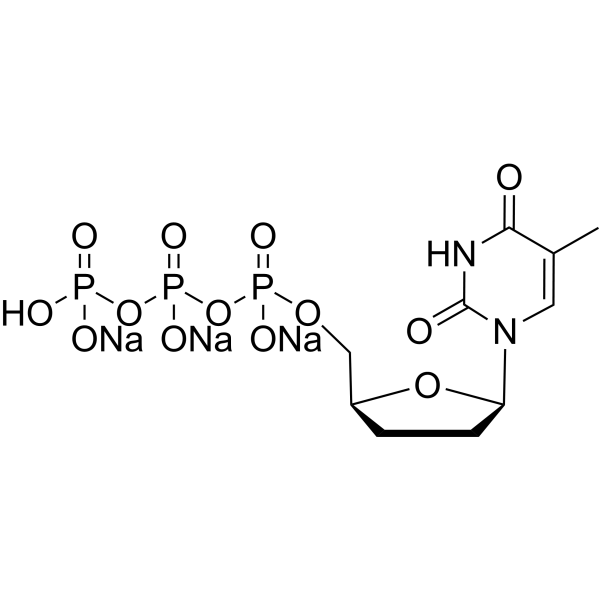
    ddTTP tetrasodium is a DNA polymerase γ inhibitor, with Ki values of 0.05 μM and 0.4 μM against bovine testicular DNA polymerase γ. ddTTP tetrasodium can be incorporated into DNA to cause termination of the extended DNA strand. ddTTP tetrasodium can be used in the research of HIV infection .
    ddTTP tetrasodium
  • HY-W356181

    DNA Alkylator/Crosslinker DNA/RNA Synthesis Bacterial Infection Neurological Disease Cancer
    4,8-DiMeIQx is an orally active mutagen, selective dopaminergic neurotoxicant, and DNA damaging agent. 4,8-DiMeIQx can be isolated from cooked beef, sausage, pork, and chicken. 4,8-DiMeIQx induces reverse mutations in *Salmonella typhimurium* TA98 in the presence or absence of S9 mix, and forms DNA adducts in vivo in rat liver. 4,8-DiMeIQx exhibits selective neurotoxicity toward dopaminergic neurons. 4,8-DiMeIQx shows no activity against non-dopaminergic neurons. 4,8-DiMeIQx can be used in studies related to Parkinson's disease and colorectal cancer .
    4,8-DiMeIQx
  • HY-181080

    Topoisomerase DNA/RNA Synthesis Apoptosis Cancer
    TOP1/TDP1-IN-1 is a DNA topoisomerase 1B (TOP1) and tyrosyl-DNA phosphodiesterase 1 (TDP1) inhibitor with a TDP1 IC50 of 17.8 μM. TOP1/TDP1-IN-1directly suppresses TOP1 catalytic activity without forming a DNA-TOP1 ternary complex, inhibits TDP1-mediated repair of TOP1-induced DNA damage, and exhibits low acute toxicity. TOP1/TDP1-IN-1 disrupts DNA repair pathways, induces apoptosis, suppresses clonogenic growth, and elicits antiproliferative effects in cancer cells. TOP1/TDP1-IN-1 can be used for the research of non-small cell lung cancer, cervical cancer, colon cancer .
    TOP1/TDP1-IN-1

Inquiry Online

Your information is safe with us. * Required Fields.

Salutation


Country or Region *

Applicant Name *


Organization Name *

Department *


Email Address *


Product Name *

Cat. No.


Requested quantity *

Phone Number *


Remarks

Inquiry Online

Inquiry Information

Product Name:
Cat. No.:
Quantity:
MCE Japan Authorized Agent:

