Search Result
Results for "
cholesterol metabolite
" in MedChemExpress (MCE) Product Catalog:
10
Isotope-Labeled Compounds
| Cat. No. |
Product Name |
Target |
Research Areas |
Chemical Structure |
-
- HY-113134
-
|
25-OHC
|
Endogenous Metabolite
|
Inflammation/Immunology
|
|
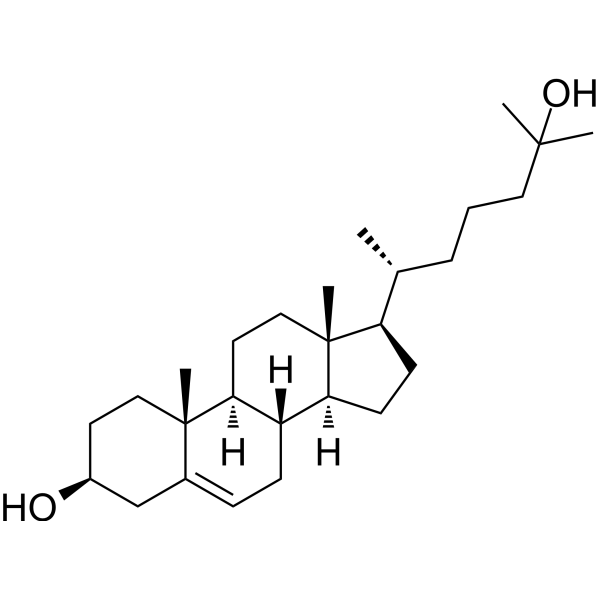
25-Hydroxycholesterol (25-OHC) is a metabolite of cholesterol that is produced and secreted by macrophages in response to Toll-like receptor (TLR) activation. 25-hydroxycholesterol is a potent (EC50≈65 nM) and selective suppressor of IgA production by B cells.
|
-
-
- HY-16940
-
|
24S-OHC; 24S-HC; Cerebrosterol
|
LXR
iGluR
Endogenous Metabolite
|
Metabolic Disease
|
|
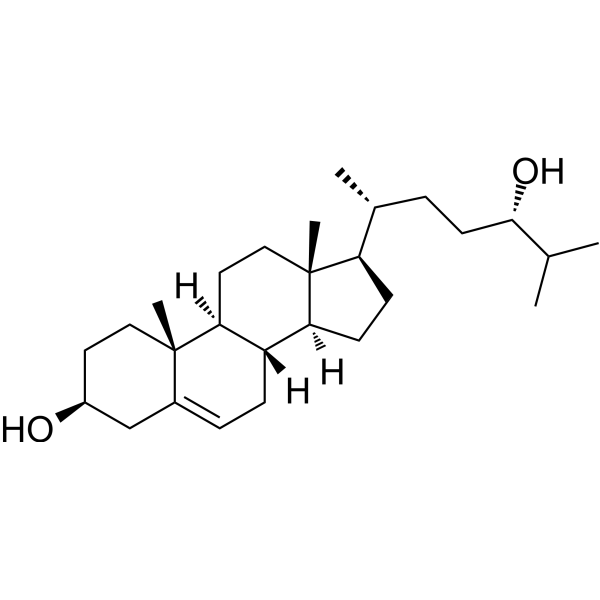
24(S)-Hydroxycholesterol (24S-OHC), the major brain cholesterol metabolite, plays an important role to maintain homeostasis of cholesterol in the brain. 24(S)-Hydroxycholesterol (24S-OHC) is one of the most efficient endogenous LXR agonist known and is present in the brain and in the circulation at relatively high levels. 24(S)-Hydroxycholesterol (24S-OHC) is a very potent, direct, and selective positive allosteric modulator of NMDARs with a mechanism that does not overlapthat of other allosteric modulators .
|
-
-
- HY-113224
-
-
-
- HY-124265
-
|
|
Endogenous Metabolite
|
Metabolic Disease
|
|
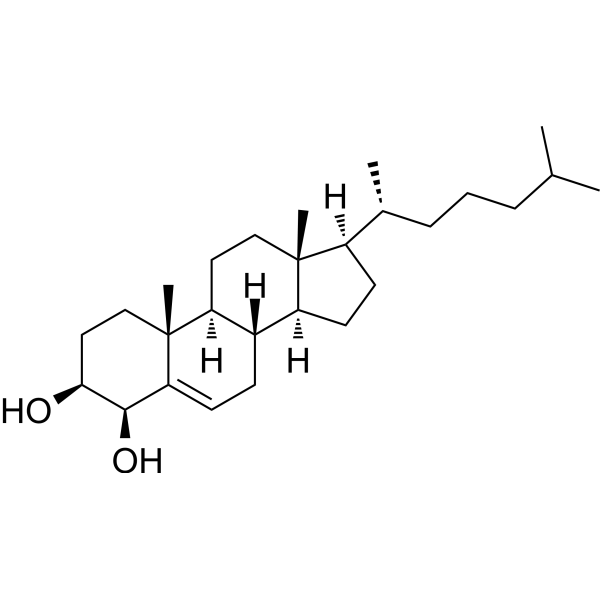
4β-Hydroxycholesterol is a major Cholesterol (HY-N0322) metabolite and a precursor in the synthesis of bile acids that is found in human circulation .
|
-
-
- HY-14925
-
-
-
- HY-113202
-
|
|
Endogenous Metabolite
PKC
GlyT
|
Neurological Disease
Metabolic Disease
|
|
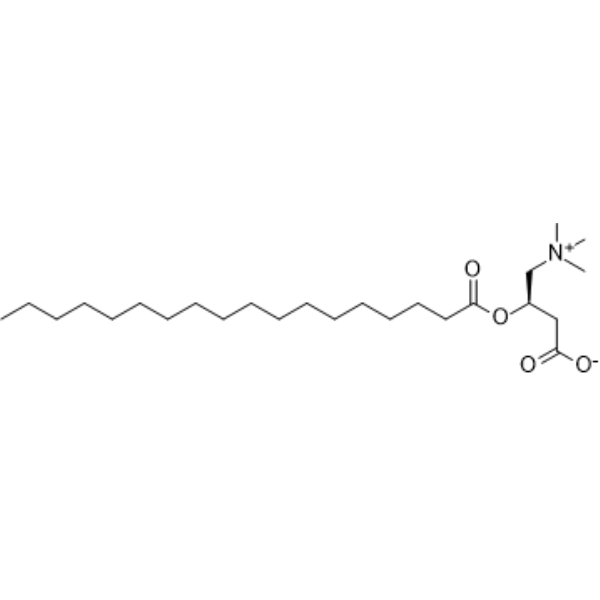
Stearoylcarnitine, a fatty ester lipid molecule, is an endogenous metabolite. Stearoylcarnitine can be used as PKC inhibitor. Stearoylcarnitine accumulates in β cells, leading to arrest of insulin synthesis and energy deficiency in type 2 diabetes mouse. Stearoylcarnitine inhibits lecithin cholesterol acyltransferase (LCAT) in rat and rabbits plasma. Stearoylcarnitine acts as a metabolomics biomarker for Parkinson’s disease. Stearoylcarnitine is a less potent inhibitor of GlyT2 .
|
-
-
- HY-W587530
-
|
6-Ketolithocholic acid
|
Endogenous Metabolite
Apoptosis
|
Endocrinology
|
|
6-Oxolithocholic acid is a bile acid metabolite derived from Lithocholic acid (HY-B0172). 6-Oxolithocholic acid has high cytotoxicity and can induce apoptosis, especially in hepatocytes. 6-Oxolithocholic acid can participate in the regulation of bile acid metabolism and synthesis and affect the metabolic pathway of cholesterol. 6-Oxolithocholic acid can be used to study the role of bile acids in health and disease, especially in the context of digestive and liver diseases .
|
-
-
- HY-114297
-
|
|
Endogenous Metabolite
|
Others
|
|
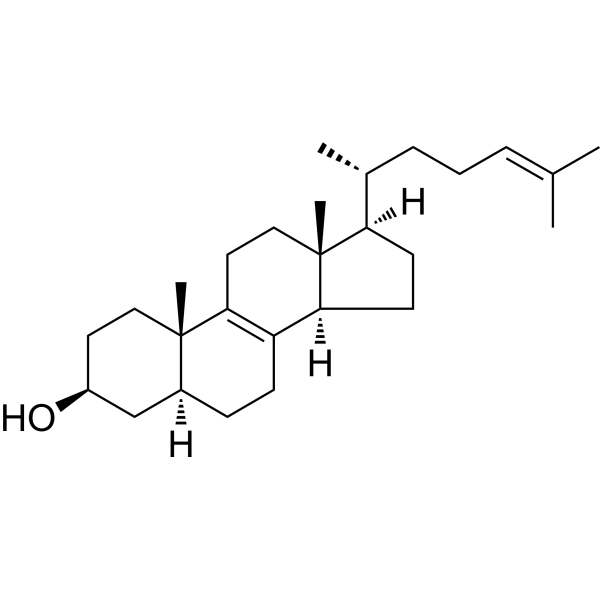
Zymosterol is a Cholesterol (HY-N0322) biosynthesis metabolite. Zymosterol, a precursor of Cholesterol, is found mostly in the plasma membrane. Zymosterol circulates within the cell .
|
-
-
- HY-116290
-
|
Squalestatin S1
|
Endogenous Metabolite
|
Metabolic Disease
|
|
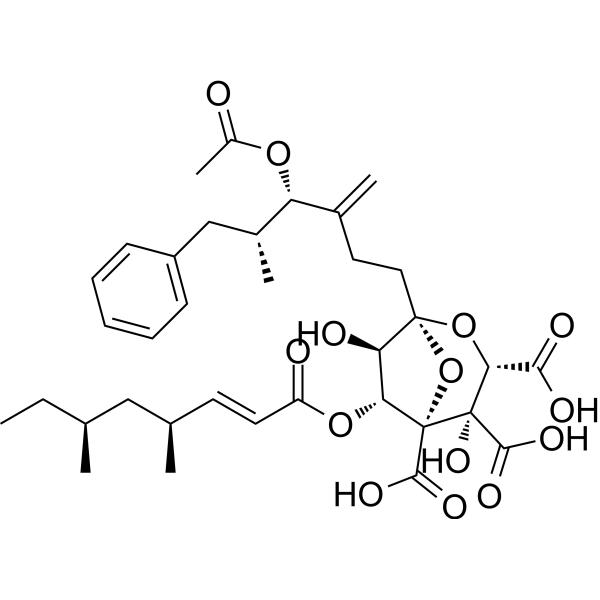
Zaragozic acid A is a fungal metabolite that acts as a reversible competitive inhibitor of squalene synthase. Zaragozic acid A is an inhibitor of acute hepatic cholesterol synthesis in mouse (IC50 = 6 μM) .
|
-
-
- HY-124265S
-
|
|
Endogenous Metabolite
|
Metabolic Disease
|
|
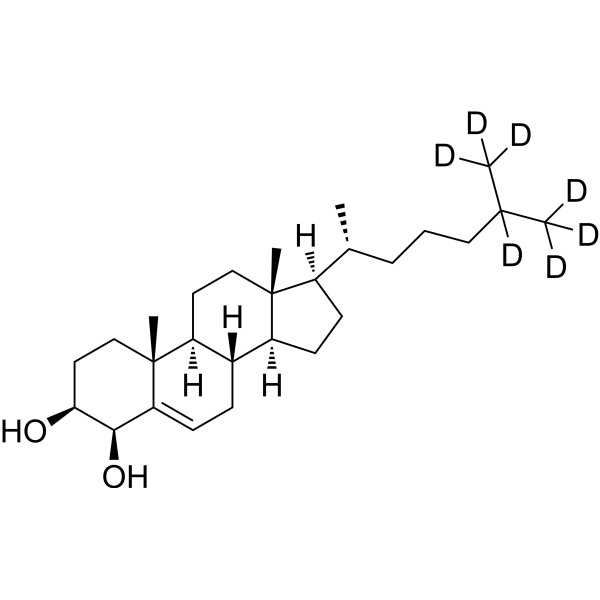
4β-Hydroxycholesterol-d7 is the deuterium labeled 4β-Hydroxycholesterol (HY-124265). 4β-Hydroxycholesterol is a major Cholesterol (HY-N0322) metabolite and a precursor in the synthesis of bile acids that is found in human circulation .
|
-
-
- HY-W015882
-
|
Isocaproic acid
|
Drug Metabolite
|
Neurological Disease
Metabolic Disease
|
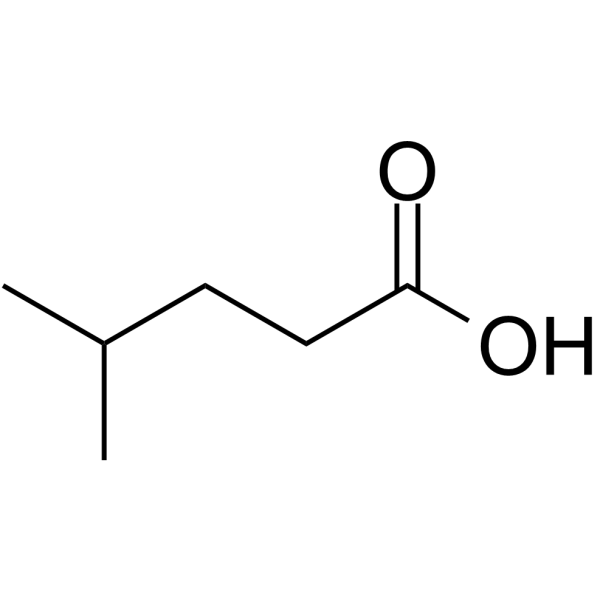
4-Methylpentanoic acid (Isocaproic Acid) is a short-chain fatty acid and a metabolite of 20 α-hydroxycholesterol (HY-12316) that can be detected in feces. The concentration of 4-Methylpentanoic acid is closely associated with several diseases, such as depression. 4-Methylpentanoic acid is also applicable to studies on cholesterol metabolism .
|
-
-
- HY-W015780
-
|
|
Environmental Pollutants
Endogenous Metabolite
|
Metabolic Disease
|
|
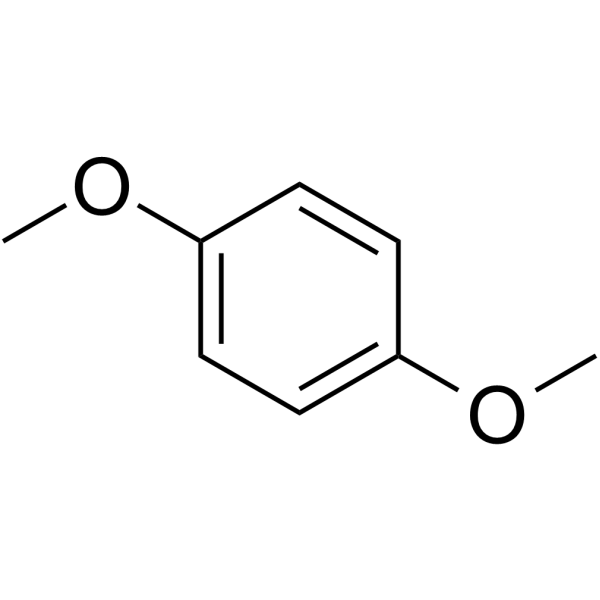
1,4-Dimethoxybenzene is an endogenous metabolite. 1,4-Dimethoxybenzene has an anti-anxiety effect, increasing atherogenic index (AI) levels in rabbits and inducing sedentary behavior. Sedentary behavior may increase blood cholesterol levels and disrupt blood lipids .
1,4-Dimethoxybenzene considers to be not clastogenic in the in vivo micronucleus test .
|
-
-
- HY-113224S
-
|
|
Isotope-Labeled Compounds
Endogenous Metabolite
|
Metabolic Disease
|
|
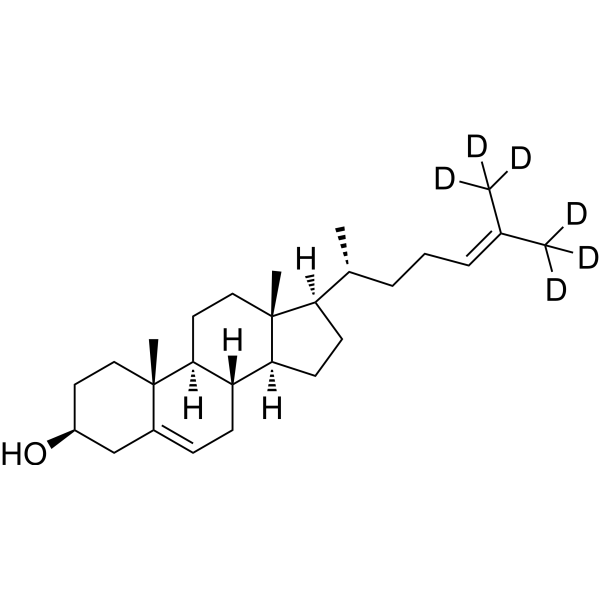
Desmosterol-d6 is the deuterium labeled Desmosterol. Desmosterol is a molecule similar to cholesterol. Desmosterol is the immediate precursor of cholesterol in the Bloch pathway of cholesterol biosynthesis. Desmosterol, as an endogenous metabolite, used to study cholesterol metabolism .
|
-
-
- HY-135391
-
|
Ezetimibe glucuronide; Ezetimibe β-D-glucuronide
|
Drug Metabolite
|
Metabolic Disease
|
|
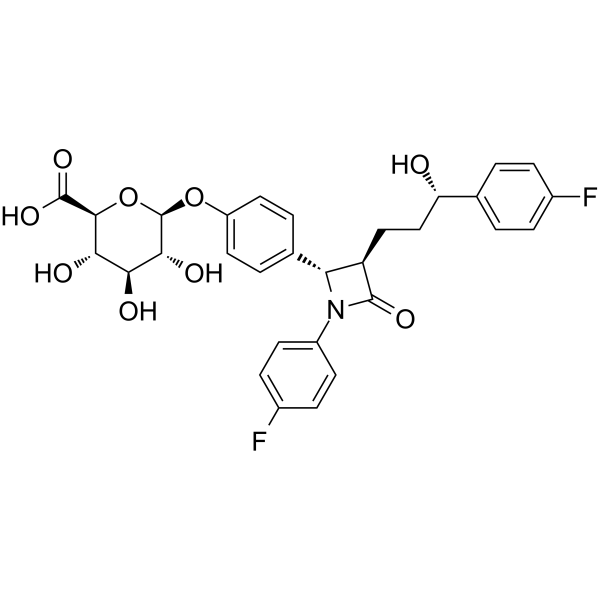
Ezetimibe phenoxy glucuronide (Ezetimibe glucuronide) is the active metabolite of Ezetimibe. Antihyperlipoproteinemic activity . Ezetimibe is a potent cholesterol absorption inhibitor .
|
-
-
- HY-124265S2
-
|
|
Endogenous Metabolite
|
Metabolic Disease
|
|
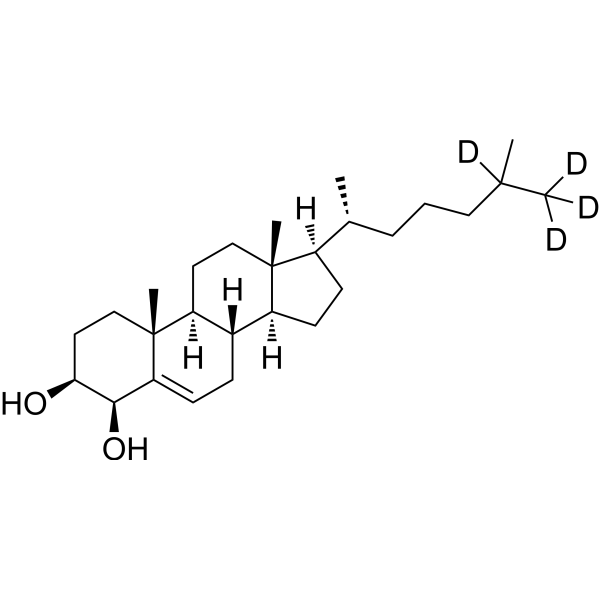
4β-Hydroxycholesterol-d4 is the deuterium labeled 4β-Hydroxycholesterol (HY-124265) . 4β-Hydroxycholesterol is a major Cholesterol (HY-N0322) metabolite and a precursor in the synthesis of bile acids that is found in human circulation .
|
-
-
- HY-139576B
-
|
DUR-928 trimethylamine
|
LXR
Endogenous Metabolite
|
Metabolic Disease
|
|
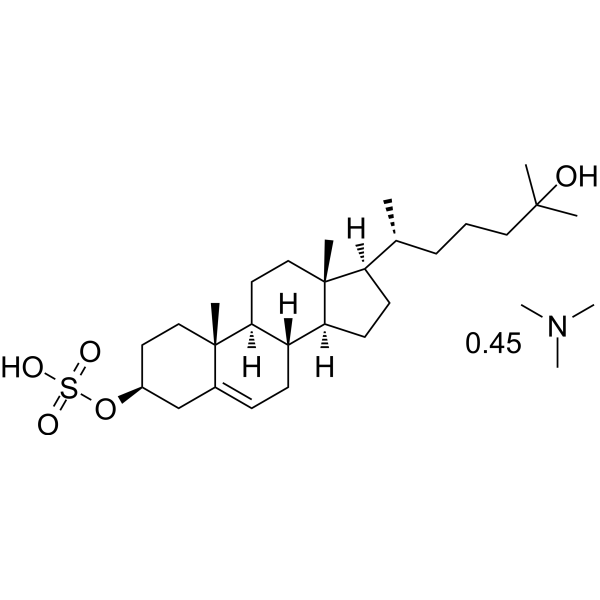
Larsucosterol (DUR-928) trimethylamine, a cholesterol metabolite, is a potent liver X receptor (LXR) antagonist. Larsucosterol trimethylamine as a potent endogenous regulator decreases lipogenesis. Larsucosterol trimethylamine inhibits the cholesterol biosynthesis via decreasing mRNA levels and inhibiting the activation of SREBP-1 .
|
-
-
- HY-N7390
-
-
-
- HY-123349
-
|
|
Drug Metabolite
|
Cardiovascular Disease
|
|
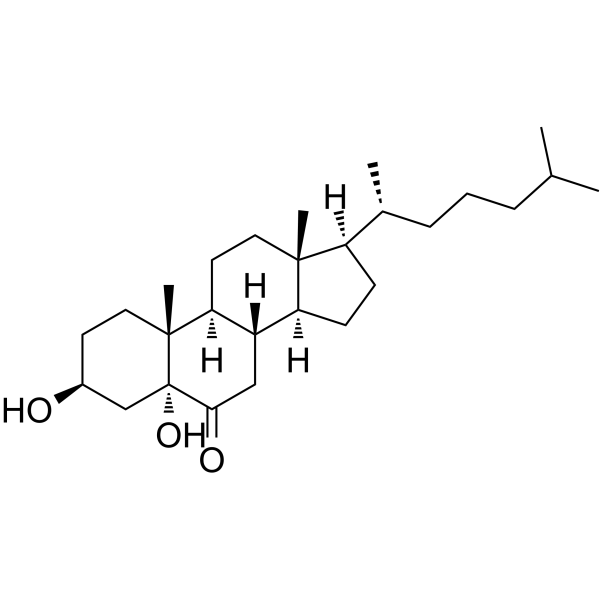
5α-Hydroxy-6-keto cholesterol is major metabolite of β-epoxide (5α,6β-epoxycholesterol) during direct exposure of intact cultured human bronchial epithelial cells (16-HBE) to ozone. 5α-Hydroxy-6-keto cholesterol inhibits cholesterol synthesis with an IC50 of 350 nM .
|
-
-
- HY-W588187
-
|
5β-Cholestan-3-one
|
Drug Metabolite
Apoptosis
|
Cancer
|
|
Coprostanone (5β-cholestan-3-one) is an oxysterol and active metabolite of Cholesterol (HY-N0322). Coprostanone induces apoptosis in primary dog gallbladder epithelial cells. Coprostanone is promising for research of colon cancers or adenomatous polyps .
|
-
-
- HY-122439
-
|
Mevinolinic acid; MSD803
|
HMG-CoA Reductase (HMGCR)
Drug Metabolite
|
Metabolic Disease
|
|
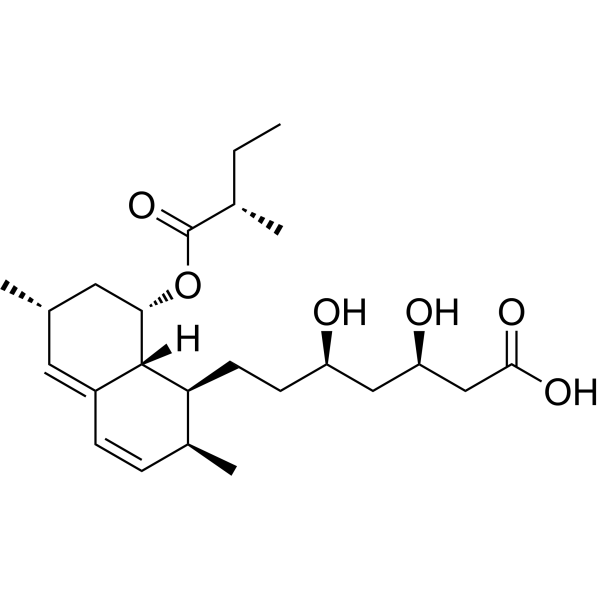
Lovastatin acid (Mevinolinic acid; MSD803), an active metabolite of Lovastatin (HY-N0504), is a potent competitive HMG-CoA reductase inhibitor with a Ki of 0.6 nM. Lovastatin acid acts as a competitive inhibitor with respect to substrate HMG-CoA, interfering cholesterol synthesis. Lovastatin acid can be used for the research of hypercholesterolemia .
|
-
-
- HY-113134S
-
|
25-OHC-d6
|
Isotope-Labeled Compounds
Endogenous Metabolite
|
Inflammation/Immunology
|
|
25-Hydroxycholesterol-d6 (25-OHC-d6) is the deuterium labeled 25-Hydroxycholesterol. 25-Hydroxycholesterol is a metabolite of cholesterol that is produced and secreted by macrophages in response to Toll-like receptor (TLR) activation. 25-hydroxycholesterol is a potent (EC50≈65 nM) and selective suppressor of IgA production by B cells .
|
-
-
- HY-121795
-
|
|
HMG-CoA Reductase (HMGCR)
|
Cardiovascular Disease
|
|
Pravastatin lactone is a potent HMG-CoA inhibitor. Pravastatin Lactone is a metabolite of pravastatin. Pravastatin lactone reduces blood cholesterol levels by inhibiting cholesterol synthesis .
|
-
-
- HY-139576
-
|
DUR-928
|
LXR
Endogenous Metabolite
|
Metabolic Disease
|
|
Larsucosterol (DUR-928), a cholesterol metabolite, is a potent liver X receptor (LXR) antagonist. Larsucosterol as a potent endogenous regulator decreases lipogenesis. Larsucosterol inhibits the cholesterol biosynthesis via decreasing mRNA levels and inhibiting the activation of SREBP-1 .
|
-
-
- HY-139067
-
|
|
LXR
|
Cardiovascular Disease
|
|
25(S)-27-Hydroxy cholesterol is a metabolite of CYP27A1 mediated cholesterol hydroxylation. 25(S)-27-Hydroxy cholesterol inhibits melanoma cell proliferation .
|
-
-
- HY-W015882S
-
|
Isocaproic acid-d12
|
Isotope-Labeled Compounds
Drug Metabolite
|
Neurological Disease
Metabolic Disease
|
4-Methylpentanoic acid-d12 (Isocaproic Acid-d12) is the deuterium labeled 4-Methylpentanoic acid. 4-Methylpentanoic acid is a short-chain fatty acid and a metabolite of 20 α-hydroxycholesterol (HY-12316) that can be detected in feces. The concentration of 4-Methylpentanoic acid is closely associated with several diseases, such as depression. 4-Methylpentanoic acid is also applicable to studies on cholesterol metabolism.
|
-
-
- HY-N16439
-
|
Phoenicine
|
HMG-CoA Reductase (HMGCR)
|
Others
|
|
Phenicin (Phoenicine), a microbial metabolite, is an irreversible HMG-CoA reductase (HMGCR) inhibitor. Phenicin can be isolated from cultures of Penicillium phoeniceum and Penicillium rubrum. Phenicin specifically inhibits the conversion of HMG-CoA to mevalonate catalyzed by HMGCR, effectively inhibiting cholesterol synthesis .
|
-
-
- HY-135391S
-
|
Ezetimibe glucuronide-d4; Ezetimibe β-D-glucuronide-d4
|
Drug Metabolite
|
Metabolic Disease
|
|
Ezetimibe phenoxy glucuronide-d4 is the deuterium labeled Ezetimibe phenoxy glucuronide. Ezetimibe phenoxy glucuronide is the active metabolite of Ezetimibe. Antihyperlipoproteinemic activity . Ezetimibe is a potent cholesterol absorption inhibitor .
|
-
-
- HY-W015882R
-
|
Isocaproic acid (Standard)
|
Endogenous Metabolite
Reference Standards
|
Metabolic Disease
|
|
4-Methylpentanoic acid (Isocaproic acid) (Standard) is an analytical standard form of 4-Methylpentanoic acid (HY-W015882). This product is intended for research and analytical applications. 4-Methylpentanoic acid (Isocaproic Acid) is a short-chain fatty acid, an endogenous metabolite, and a metabolite of 20 α-hydroxycholesterol (HY-12316), which can be found in feces. The concentration of 4-Methylpentanoic acid is closely related to some diseases, such as depression. 4-Methylpentanoic acid can also be used in the research of cholesterol metabolism .
|
-
-
- HY-W740611
-
|
|
Drug Intermediate
|
Inflammation/Immunology
|
|
Trihydroxycoprostane (THCP) is a polyhydroxysterane compound with a 5β configuration. ITrihydroxycoprostane acts as a key intermediate in the biosynthesis of bile acids from cholesterol and also serves as an important sterol metabolite generated by host-gut microbiota interactions. Trihydroxycoprostane can be used for mechanistic studies of diseases such as non-alcoholic fatty liver disease, inflammatory bowel disease, and bile acid metabolism disorders .
|
-
-
- HY-W015882S1
-
|
|
Isotope-Labeled Compounds
Drug Metabolite
|
Neurological Disease
Metabolic Disease
|
4-Methylpentanoic acid-d11 (Isocaproic Acid-d11) is the deuterium labeled 4-Methylpentanoic acid. 4-Methylpentanoic acid is a short-chain fatty acid and a metabolite of 20 α-hydroxycholesterol (HY-12316) that can be detected in feces. The concentration of 4-Methylpentanoic acid is closely associated with several diseases, such as depression. 4-Methylpentanoic acid is also applicable to studies on cholesterol metabolism.
|
-
-
- HY-139576C
-
|
DUR-928 ammonium
|
LXR
Endogenous Metabolite
|
Metabolic Disease
|
|
Larsucosterol (DUR-928) ammonium, a cholesterol metabolite, is a potent liver X receptor (LXR) antagonist. Larsucosterol ammonium as a potent endogenous regulator decreases lipogenesis. Larsucosterol ammonium inhibits the cholesterol biosynthesis via decreasing mRNA levels and inhibiting the activation of SREBP-1 .
|
-
-
- HY-113224R
-
|
|
Reference Standards
Endogenous Metabolite
LXR
Fatty Acid Synthase (FASN)
Interleukin Related
Reactive Oxygen Species (ROS)
NOD-like Receptor (NLR)
|
Cardiovascular Disease
Metabolic Disease
Inflammation/Immunology
|
|
Desmosterol (Standard) is the analytical standard of Desmosterol. This product is intended for research and analytical applications. Desmosterol is a cholesterol-like molecule. In the Bloch pathway of cholesterol biosynthesis, Desmosterol is a direct precursor of cholesterol. As an endogenous metabolite, Desmosterol is used to study cholesterol metabolism [1]. Desmosterol is an LXR activator and SREBP inhibitor, which can suppress macrophage inflammasome activation and prevent vascular inflammation and atherosclerosis. A reduction in Desmosterol promotes the production of mitochondrial reactive oxygen species (ROS) in macrophages and pyrin domain-dependent inflammasome activation of NLRP3. Desmosterol holds potential for research in inflammation, metabolism, and cardiovascular diseases [1][2][3].
|
-
-
- HY-124265R
-
|
|
Reference Standards
Endogenous Metabolite
|
Metabolic Disease
|
|
4β-hydroxy Cholesterol (Standard) is the analytical reference standard of 4β-hydroxy Cholesterol (HY-124265). This product is used for research and analytical applications. 4β-Hydroxycholesterol is a major Cholesterol (HY-N0322) metabolite and a precursor in the synthesis of bile acids that is found in human circulation .
|
-
-
- HY-124265S1
-
-
-
- HY-185104
-
|
|
LXR
|
Cardiovascular Disease
|
|
Ginsenoside C-K hexapropionate ester (Structure 2) is a selective agonist of LXRα, with no significant activation effect on LXRβ. Ginsenoside C-K hexapropionate ester upregulates the expression of downstream genes such as ABCA1 by activating LXRα, promoting reverse cholesterol transport, and reducing lipid deposition in macrophage-derived foam cells. It can be used in the research of atherosclerosis. Ginsenoside C-K hexapropionate ester is a derivative synthesized from ginsenoside Compound K, an active metabolite of Panax notoginseng saponins, by modification with propionic anhydride .
|
-
-
- HY-113202S
-
|
|
Isotope-Labeled Compounds
Endogenous Metabolite
PKC
GlyT
|
Neurological Disease
Metabolic Disease
|
|
Stearoyl-L-carnitine-d3 is the deuterium labeled Stearoylcarnitine. Stearoylcarnitine, a fatty ester lipid molecule, is an endogenous metabolite. Stearoylcarnitine can be used as PKC inhibitor. Stearoylcarnitine accumulates in β cells, leading to arrest of insulin synthesis and energy deficiency in type 2 diabetes mouse. Stearoylcarnitine inhibits lecithin cholesterol acyltransferase (LCAT) in rat and rabbits plasma. Stearoylcarnitine acts as a metabolomics biomarker for Parkinson’s disease. Stearoylcarnitine is a less potent inhibitor of GlyT2 .
|
-
-
- HY-139576A
-
|
DUR-928 sodium
|
LXR
Endogenous Metabolite
|
Metabolic Disease
|
|
Larsucosterol (DUR-928) sodium, a cholesterol metabolite, is a potent liver X receptor (LXR) antagonist. Larsucosterol sodium as a potent endogenous regulator decreases lipogenesis. Larsucosterol sodium inhibits the cholesterol biosynthesis via decreasing mRNA levels and inhibiting the activation of SREBP-1 .
|
-
-
- HY-N10234
-
|
|
Acyltransferase
|
Infection
|
|
Phenylpyropene A, a fungal metabolite, is a potent acyl-CoA: cholesterol acyltransferase (ACAT) inhibitor with an IC50 of 0.8 μM .
|
-
-
- HY-138026
-
-
-
- HY-113134R
-
|
25-OHC (Standard)
|
Endogenous Metabolite
Reference Standards
|
Inflammation/Immunology
|
|
25-Hydroxycholesterol (Standard) is the analytical standard of 25-Hydroxycholesterol. This product is intended for research and analytical applications. 25-Hydroxycholesterol (25-OHC) is a metabolite of cholesterol that is produced and secreted by macrophages in response to Toll-like receptor (TLR) activation. 25-hydroxycholesterol is a potent (EC50≈65 nM) and selective suppressor of IgA production by B cells.
|
-
-
- HY-178088
-
|
|
Fungal
Drug Derivative
Drug Metabolite
|
Infection
Metabolic Disease
|
|
L-731120 is an alkyl citrate zargozaga acid A analogue, which is secondary metabolite produced by fungal fermentation. L-731120 shows inhibitory activity against squalene synthase (SQS) (IC50 = 260 nM). L-731120 can inhibit the synthesis of cholesterol in the liver. L-731120 can be used for the research of infection and metabolic disease, such as hypercholesterolemia .
|
-
-
- HY-W436495
-
|
6,15-Diketo-13,14-dihydro-PGF1α
|
Drug Metabolite
|
Metabolic Disease
|
|
6,15-Diketo-13,14-dihydro prostaglandin F1α (6,15-Diketo-13,14-dihydro-PGF1α) is a metabolite of prostacyclin (PGI2). 6,15-Diketo-13,14-dihydro prostaglandin F1α enhances intracellular cAMP and cholesterol metabolism in bovine arterial smooth muscle cells .
|
-
-
- HY-113202S1
-
|
|
Isotope-Labeled Compounds
GlyT
Endogenous Metabolite
PKC
|
Neurological Disease
Metabolic Disease
|
|
Stearoyl-L-carnitine-d9 chloride is the deuterium labeled Stearoyl-L-carnitine chloride. Stearoyl-L-carnitine chloride, a fatty ester lipid molecule, is an endogenous metabolite. Stearoyl-L-carnitine chloride can be used as PKC inhibitor. Stearoyl-L-carnitine chloride accumulates in β cells, leading to arrest of insulin synthesis and energy deficiency in type 2 diabetes mouse. Stearoyl-L-carnitine chloride inhibits lecithin cholesterol acyltransferase (LCAT) in rat and rabbits plasma. Stearoyl-L-carnitine chloride acts as a metabolomics biomarker for Parkinson’s disease. Stearoyl-L-carnitine chloride is a less potent inhibitor of GlyT2 .
|
-
-
- HY-137390A
-
|
|
HMG-CoA Reductase (HMGCR)
|
Cardiovascular Disease
Metabolic Disease
|
|
(3S,5R)-Fluvastatin (potassium) is a synthetic hypolipidemic drug that inhibits HMG-CoA reductase activity. (3S,5R)-Fluvastatin (potassium) has similar antioxidative effects on copper ion-induced LDL oxidation compared to its 3R,5S enantiomer. (3S,5R)-Fluvastatin (potassium) and its metabolites demonstrate a potential to exhibit anti-atherosclerotic effects through their antioxidative activities. (3S,5R)-Fluvastatin (potassium) is clinically utilized as part of a racemic mixture for reducing plasma cholesterol levels.
|
-
-
- HY-138089
-
|
|
Androgen Receptor
Estrogen Receptor/ERR
LDLR
|
Metabolic Disease
Cancer
|
|
17β-Hydroxy exemestane (17-H-EXE) is the primary active metabolite of Exemestane (HY-13632). 17β-Hydroxy exemestane is an aromatase inhibitor (IC50 = 69 nM) and an androgen receptor (AR) agonist (IC50 = 39.6 nM) that is selective for AR over estrogen receptor α (ERα; IC50 = 21.2 μM). 17β-Hydroxy exemestane stimulates growth of AR- and ERα-positive MCF-7 (EC50= 2.7 μM) and T47D breast cancer cells (EC50s = 0.43 and 1500 nM for AR- and ER-mediated growth, respectively) and inhibits proliferation of testosterone-treated aromatase-overexpressing MCF-7 cells. 17β-Hydroxy exemestane inhibits increases in serum cholesterol and LDL levels and prevents decreases in bone mineral density in the lumbar vertebrae and femur, as well as femoral bending strength and compressive strength of the fifth lumbar vertebrae in ovariectomized rats .
|
-
| Cat. No. |
Product Name |
Category |
Target |
Chemical Structure |
| Cat. No. |
Product Name |
Chemical Structure |
-
- HY-124265S
-
|
|
|
4β-Hydroxycholesterol-d7 is the deuterium labeled 4β-Hydroxycholesterol (HY-124265). 4β-Hydroxycholesterol is a major Cholesterol (HY-N0322) metabolite and a precursor in the synthesis of bile acids that is found in human circulation .
|
-
-
- HY-113224S
-
|
|
|
Desmosterol-d6 is the deuterium labeled Desmosterol. Desmosterol is a molecule similar to cholesterol. Desmosterol is the immediate precursor of cholesterol in the Bloch pathway of cholesterol biosynthesis. Desmosterol, as an endogenous metabolite, used to study cholesterol metabolism .
|
-
-
- HY-124265S2
-
|
|
|
4β-Hydroxycholesterol-d4 is the deuterium labeled 4β-Hydroxycholesterol (HY-124265) . 4β-Hydroxycholesterol is a major Cholesterol (HY-N0322) metabolite and a precursor in the synthesis of bile acids that is found in human circulation .
|
-
-
- HY-113134S
-
|
|
|
25-Hydroxycholesterol-d6 (25-OHC-d6) is the deuterium labeled 25-Hydroxycholesterol. 25-Hydroxycholesterol is a metabolite of cholesterol that is produced and secreted by macrophages in response to Toll-like receptor (TLR) activation. 25-hydroxycholesterol is a potent (EC50≈65 nM) and selective suppressor of IgA production by B cells .
|
-
-
- HY-W015882S
-
|
|
4-Methylpentanoic acid-d12 (Isocaproic Acid-d12) is the deuterium labeled 4-Methylpentanoic acid. 4-Methylpentanoic acid is a short-chain fatty acid and a metabolite of 20 α-hydroxycholesterol (HY-12316) that can be detected in feces. The concentration of 4-Methylpentanoic acid is closely associated with several diseases, such as depression. 4-Methylpentanoic acid is also applicable to studies on cholesterol metabolism.
|
-
-
- HY-135391S
-
|
|
|
Ezetimibe phenoxy glucuronide-d4 is the deuterium labeled Ezetimibe phenoxy glucuronide. Ezetimibe phenoxy glucuronide is the active metabolite of Ezetimibe. Antihyperlipoproteinemic activity . Ezetimibe is a potent cholesterol absorption inhibitor .
|
-
-
- HY-W015882S1
-
|
|
4-Methylpentanoic acid-d11 (Isocaproic Acid-d11) is the deuterium labeled 4-Methylpentanoic acid. 4-Methylpentanoic acid is a short-chain fatty acid and a metabolite of 20 α-hydroxycholesterol (HY-12316) that can be detected in feces. The concentration of 4-Methylpentanoic acid is closely associated with several diseases, such as depression. 4-Methylpentanoic acid is also applicable to studies on cholesterol metabolism.
|
-
-
- HY-124265S1
-
|
|
|
4β-Hydroxycholesterol-d5 is the deuterium labeled 4β-Hydroxycholesterol (HY-124265). 4β-Hydroxycholesterol is a major Cholesterol (HY-N0322) metabolite and a precursor in the synthesis of bile acids that is found in human circulation .
|
-
-
- HY-113202S
-
|
|
|
Stearoyl-L-carnitine-d3 is the deuterium labeled Stearoylcarnitine. Stearoylcarnitine, a fatty ester lipid molecule, is an endogenous metabolite. Stearoylcarnitine can be used as PKC inhibitor. Stearoylcarnitine accumulates in β cells, leading to arrest of insulin synthesis and energy deficiency in type 2 diabetes mouse. Stearoylcarnitine inhibits lecithin cholesterol acyltransferase (LCAT) in rat and rabbits plasma. Stearoylcarnitine acts as a metabolomics biomarker for Parkinson’s disease. Stearoylcarnitine is a less potent inhibitor of GlyT2 .
|
-
-
- HY-113202S1
-
|
|
|
Stearoyl-L-carnitine-d9 chloride is the deuterium labeled Stearoyl-L-carnitine chloride. Stearoyl-L-carnitine chloride, a fatty ester lipid molecule, is an endogenous metabolite. Stearoyl-L-carnitine chloride can be used as PKC inhibitor. Stearoyl-L-carnitine chloride accumulates in β cells, leading to arrest of insulin synthesis and energy deficiency in type 2 diabetes mouse. Stearoyl-L-carnitine chloride inhibits lecithin cholesterol acyltransferase (LCAT) in rat and rabbits plasma. Stearoyl-L-carnitine chloride acts as a metabolomics biomarker for Parkinson’s disease. Stearoyl-L-carnitine chloride is a less potent inhibitor of GlyT2 .
|
-
Your information is safe with us. * Required Fields.
Inquiry Information
- Product Name:
- Cat. No.:
- Quantity:
- MCE Japan Authorized Agent:

