



Desmosterol
Based on 6 publication(s) in Google Scholar
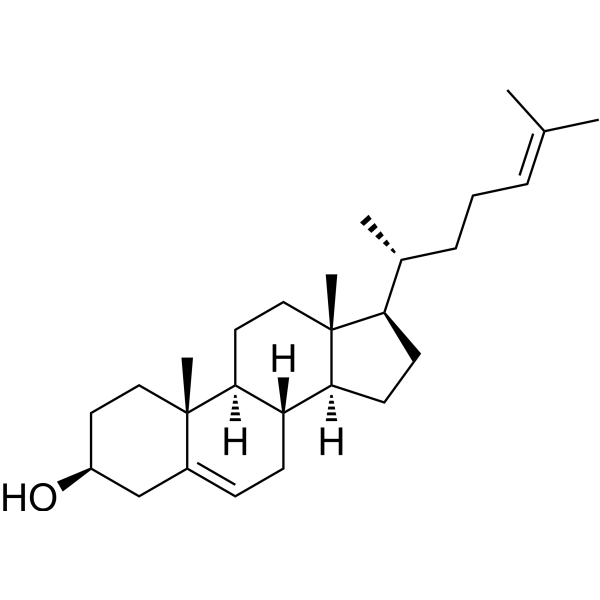
Desmosterol is a cholesterol-like molecule. In the Bloch pathway of cholesterol biosynthesis, Desmosterol is a direct precursor of cholesterol. As an endogenous metabolite, Desmosterol is used to study cholesterol metabolism . Desmosterol is an LXR activator and SREBP inhibitor, which can suppress macrophage inflammasome activation and prevent vascular inflammation and atherosclerosis. A reduction in Desmosterol promotes the production of mitochondrial reactive oxygen species (ROS) in macrophages and pyrin domain-dependent inflammasome activation of NLRP3. Desmosterol holds potential for research in inflammation, metabolism, and cardiovascular diseases .
For research use only. We do not sell to patients.
- Purity : 99.40%
- CAS No.: 313-04-2
- Formula: C27H44O
- Molecular Weight:384.64
-
Storage:
-20°C, sealed storage, away from moisture
* In solvent : -80°C, 6 months; -20°C, 1 month (sealed storage, away from moisture)

To place orders, for customer services and technical support, please contact: MedChemExpress USA
Tel: 609-228-6898 E-mail: [email protected] [email protected]


-
 Biological Activity
-
Chemical Information
-
Solvent & Solubility
- Protocols
- Purity & Documentation
- References
-
 Help & FAQs


-
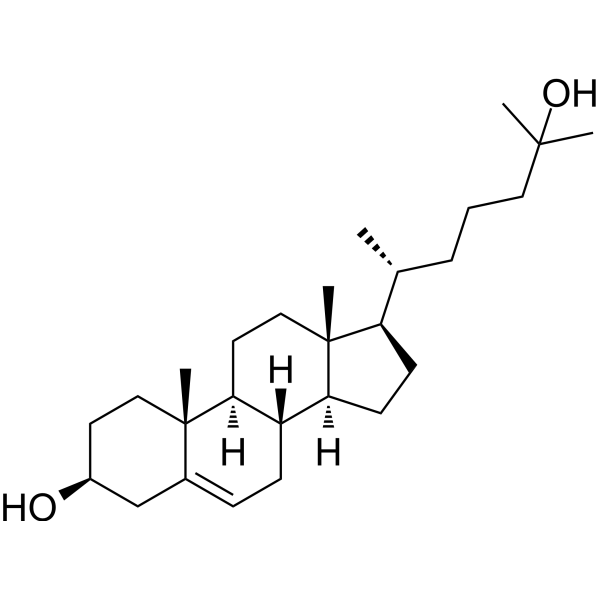
HY-113134
25-HydroxycholesterolCholesterol Metabolite -
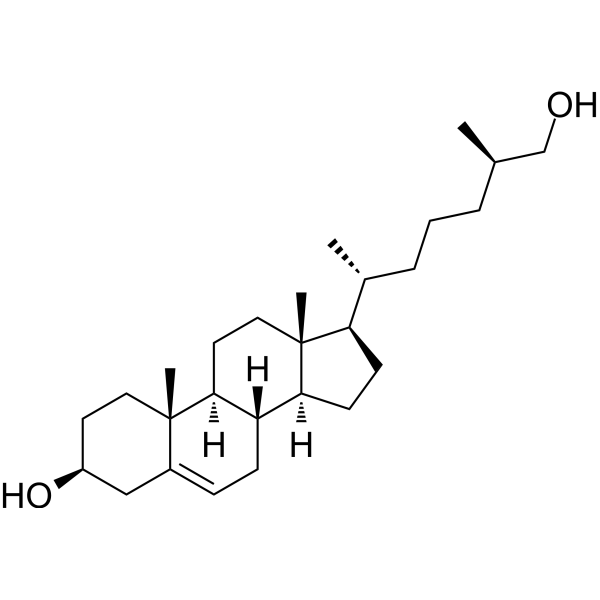
HY-N2371
27-HydroxycholesterolLXR Agonist -
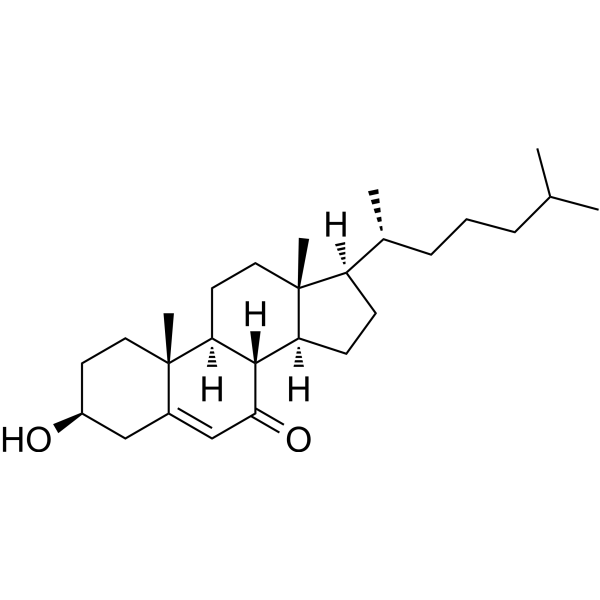
HY-113342
7-KetocholesterolCholesterol 7 Alpha-Hydroxylase Inhibitor -
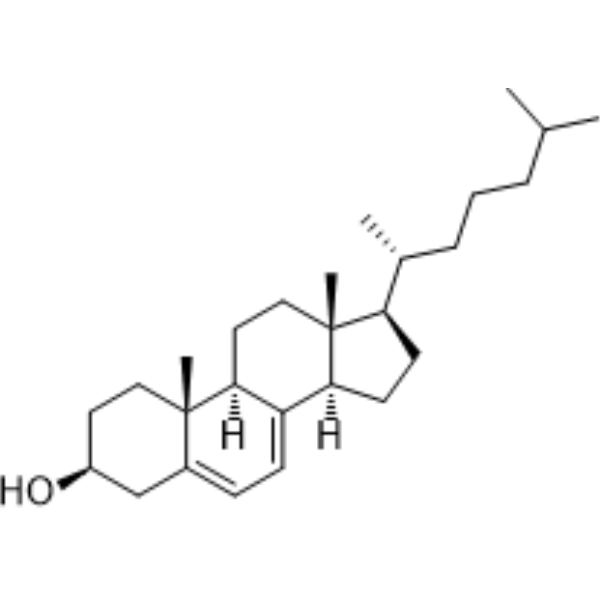
HY-113279
7-DehydrocholesterolEndogenous Metabolite -
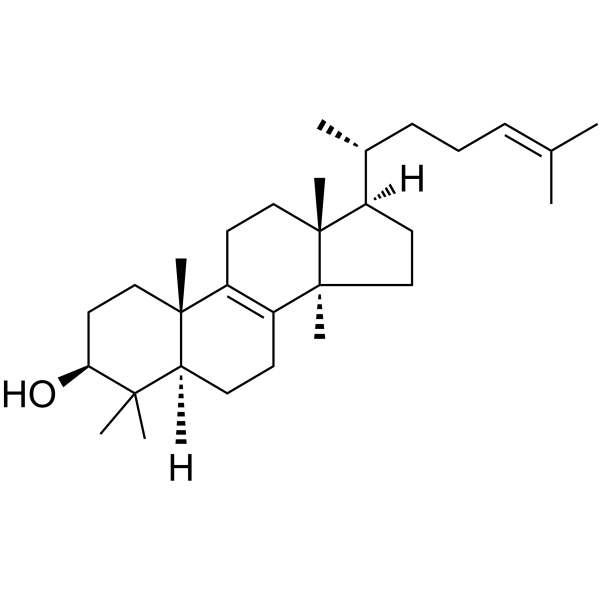
HY-W020033
Lanosterol -
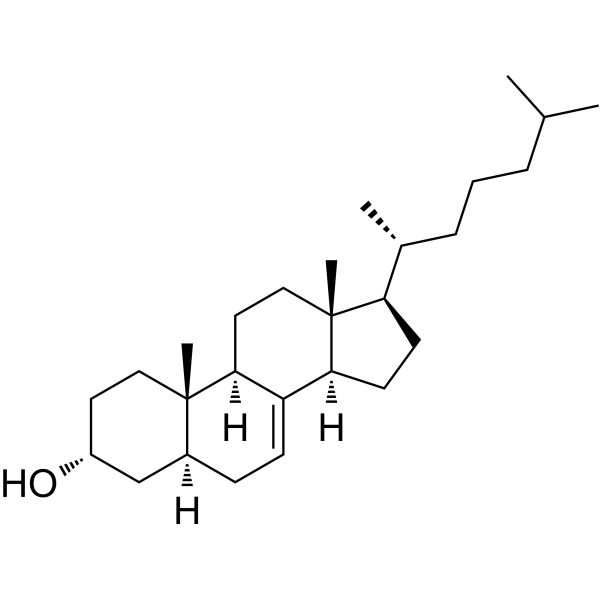
HY-113486
LathosterolEndogenous Metabolite -
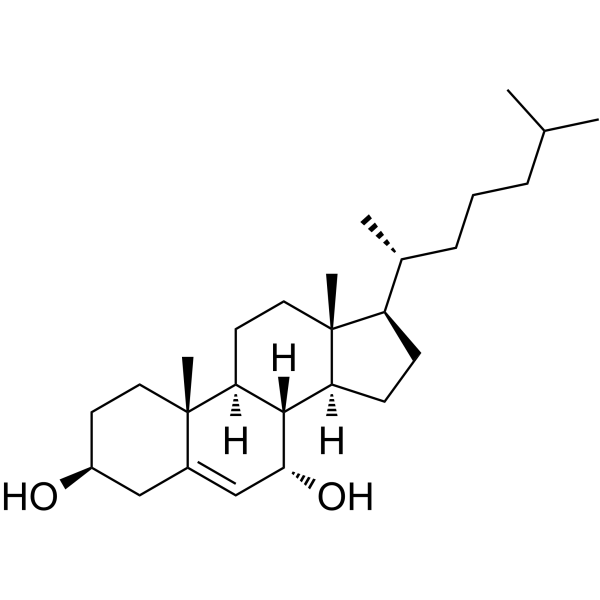
HY-N7264
7α-HydroxycholesterolCholesterol Oxide -

HY-113224R
Desmosterol (Standard)Endogenous Metabolite -
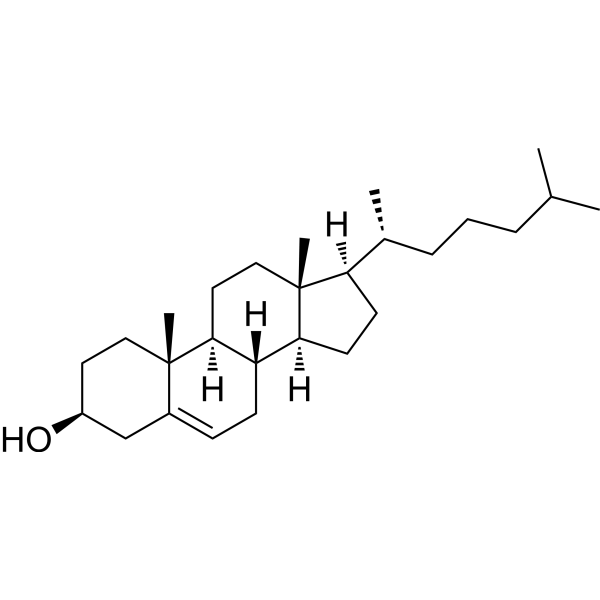
HY-N0322
Cholesterol (from animal)ERRα Agonist -
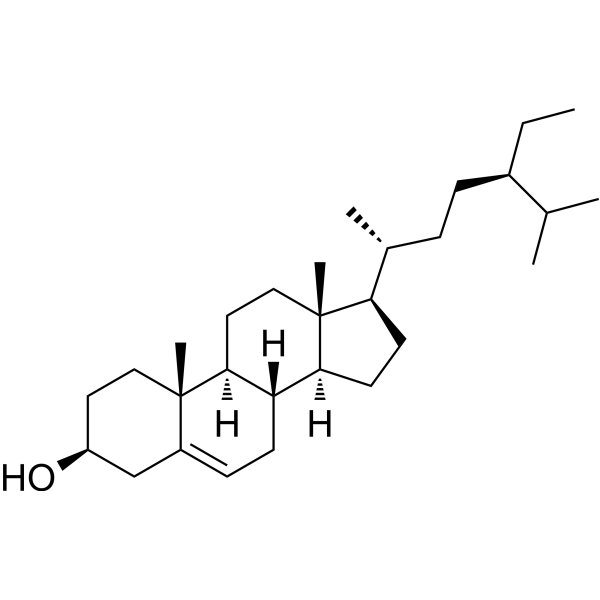
HY-N0171A
Beta-Sitosterol (purity>98%)Dietary Plant Sterols -
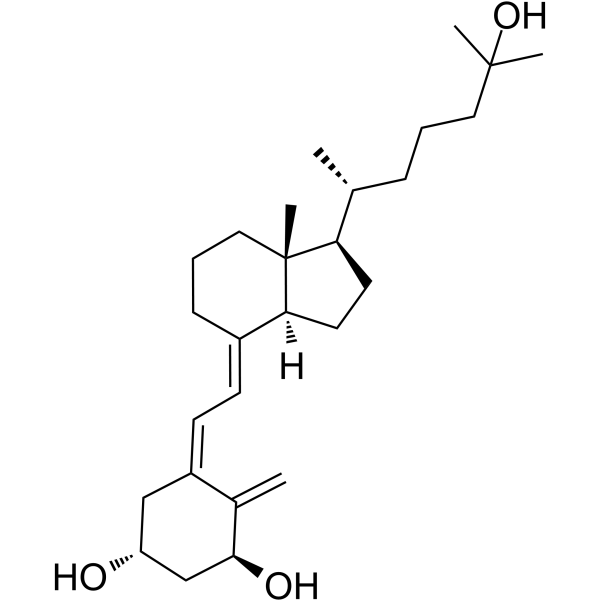
HY-10002
CalcitriolVDR Agonist -
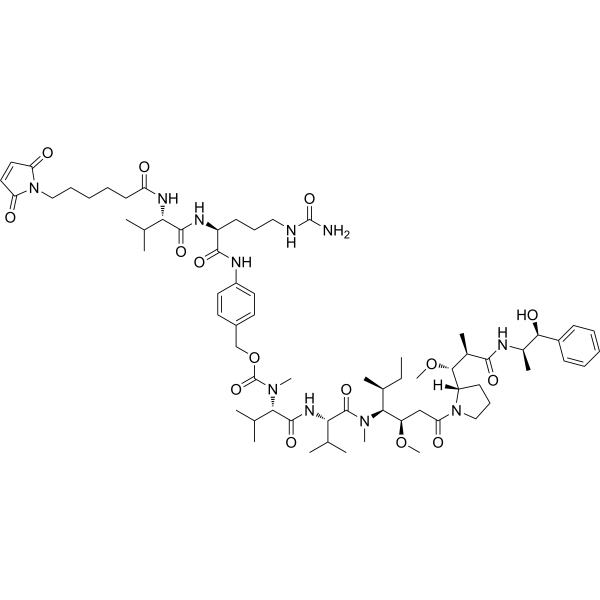
HY-15575
VcMMAEDrug-Linker Conjugate for ADC
Publications Citing Use of MedChemExpress (MCE) Desmosterol
MoreAll Endogenous Metabolite Isoforms
More

Biological Activity
Description
IC50 & Target
[1]|
Human Endogenous Metabolite |
Cellular Effect
|
Cell Line

|
Type | Value | Description | References |
|---|---|---|---|---|
| A549 | ED50 |
>50 μg/mL
Compound: 1, desmosterol
|
Cytotoxicity against human A549 cells by MTT assay
Cytotoxicity against human A549 cells by MTT assay
|
[PMID: 8984148] |
| HT-29 | ED50 |
>50 μg/mL
Compound: 1, desmosterol
|
Cytotoxicity against human HT29 cells by MTT assay
Cytotoxicity against human HT29 cells by MTT assay
|
[PMID: 8984148] |
| KB | ED50 |
>50 μg/mL
Compound: 1, desmosterol
|
Cytotoxicity against human KB cells by MTT assay
Cytotoxicity against human KB cells by MTT assay
|
[PMID: 8984148] |
| P388 | ED50 |
33.53 μg/mL
Compound: 1, desmosterol
|
Cytotoxicity against mouse P388 cells by MTT assay
Cytotoxicity against mouse P388 cells by MTT assay
|
[PMID: 8984148] |
In Vitro
Desmosterol depletion (by activating the DHCR24 gene in Dhcr24TG mice to lower Desmosterol levels in macrophages for 4 weeks) inhibits LXR activation, upregulates immune response genes, suppresses cholesterol efflux, thereby leading to lipid accumulation in macrophages and foam cell formation, which is closely associated with the development of atherosclerosis disease [2].
MedChemExpress (MCE) has not independently confirmed the accuracy of these methods. They are for reference only.
-
Cell Line:Mouse peritoneal macrophages (TGEM) and human hepatocyte cell line (HepG2)
-
Concentration:10 μM
-
Incubation Time:48 hours
-
Result:Activated Abca1 protein expression in TGEMs but had no significant effect in HepG2 cells.
-
Cell Line:Mouse peritoneal macrophages (TGEM)
-
Concentration:10 μM
-
Incubation Time:48 h
-
Result:Suppressed the expression of the SREBP target gene Dhcr24.
In Vivo
MedChemExpress (MCE) has not independently confirmed the accuracy of these methods. They are for reference only.
-
Animal Model:Dhcr24TG and WT mice Note: 1. Dhcr24TG mice: Crossing Dhcr24fl/fl mice with LysM-Cre mice to obtain conditional Dhcr24TG mice, ensuring that DHCR24 was overexpressed only in macrophages 2. DHCR24 catalyzed the final step in the conversion of Desmosterol to cholesterol. Activating the DHCR24 gene decreased the level of Desmosterol.
-
Dosage:This experiment did not involve drug administration but altered Desmosterol levels through genetic engineering: 1. Adenovirus (AAV-Cre) was injected (i.p.) to activate DHCR24 in Dhcr24fl/fl mice. 2. After genetic modification, macrophages were isolated from blood and analyzed via Western Blot after 2 weeks of AAV-Cre injection.
-
Administration:Samples of macrophages were collected starting from 2 weeks after the virus injection, with the total experimental period lasting 4 weeks.
-
Result:Significantly reduced the LXR signaling in Dhcr24TG mice, and downregulated LXR-dependent genes like ABCA1 and ABCG1 (Desmosterol depletion). Increased expression of inflammatory genes like Cxcl9, Cxcl10, Il6 in Dhcr24TG macrophages.


Chemical Information
-
CAS No. 313-04-2
-
Appearance Solid
-
Molecular Weight 384.64
-
Formula C27H44O
-
Color White to off-white
-
SMILES
C/C(C)=C\CC[C@@H](C)[C@H]1CC[C@@]2([H])[C@]3([H])CC=C4C[C@@H](O)CC[C@]4(C)[C@@]3([H])CC[C@]12C
-
Structure Classification
-
Initial Source
-
Shipping
Room temperature in continental US; may vary elsewhere.
-
Storage
-20°C, sealed storage, away from moisture
* In solvent : -80°C, 6 months; -20°C, 1 month (sealed storage, away from moisture)


Publications (6)
-
Journal Impact Factor
-
Most Recent
-
J Exp Clin Cancer Res
Cholesterol sensor SCAP contributes to sorafenib resistance by regulating autophagy in hepatocellular carcinoma. [Abstract]2022 Mar 30;41(1):116. PMID: 35354475 -
Cell Death Dis
Inhibition of Hedgehog signaling ameliorates foam cell formation by promoting autophagy in early atherosclerosis. [Abstract]2023 Nov 14;14(11):740. PMID: 37963874 -
Cell Chem Biol
Transient hydroxycholesterol treatment restrains TCR signaling to promote long-term immunity. [Abstract]2024 May 16;31(5):920-931.e6. PMID: 38759618 -
-
-


Solvent & Solubility
In Vitro:
DMF : 50 mg/mL (129.99 mM; Need ultrasonic)
DMSO : 2 mg/mL (5.20 mM; ultrasonic and warming and heat to 60°C; Hygroscopic DMSO has a significant impact on the solubility of product, please use newly opened DMSO)
H2O : < 0.1 mg/mL (insoluble)
Please refer to the solubility information to select the appropriate solvent. Once prepared, please aliquot and store the solution to prevent product inactivation from repeated freeze-thaw cycles.
Storage method and period of stock solution: -80°C, 6 months; -20°C, 1 month (sealed storage, away from moisture). When stored at -80°C, please use it within 6 months. When stored at -20°C, please use it within 1 month.
Please refer to the solubility information to select the appropriate solvent. Once prepared, please aliquot and store the solution to prevent product inactivation from repeated freeze-thaw cycles.
Storage method and period of stock solution: -80°C, 6 months; -20°C, 1 month (sealed storage, away from moisture). When stored at -80°C, please use it within 6 months. When stored at -20°C, please use it within 1 month.
Concentration (start) × Volume (start) = Concentration (final) × Volume (final)


Purity & Documentation
-
Data Sheet (279 KB)
-
SDS (252 KB)
- English - EN (252 KB)
- Français - FR (252 KB)
- Deutsch - DE (252 KB)
- Norwegian - NO (252 KB)
- Español - ES (252 KB)
- Swedish - SV (252 KB)
- Italian - IT (252 KB)
- Korean - KR (252 KB)
- Portuguese - PT (252 KB)
-
Handling Instructions (2659 KB)
References
[1]. Clark RM, et al. Desmosterol in human milk. Lipids. 1983;18(3):264-266. [Content Brief]
[2]. Zhang X, et al. Desmosterol suppresses macrophage inflammasome activation and protects against vascular inflammation and atherosclerosis. Proc Natl Acad Sci U S A. 2021 Nov 23;118(47):e2107682118. [Content Brief]
[3]. Muse ED, et al. Cell-specific discrimination of desmosterol and desmosterol mimetics confers selective regulation of LXR and SREBP in macrophages. Proc Natl Acad Sci U S A. 2018 May 15;115(20):E4680-E4689. [Content Brief]


Complete Stock Solution Preparation Table
Please refer to the solubility information to select the appropriate solvent. Once prepared, please aliquot and store the solution to prevent product inactivation from repeated freeze-thaw cycles.
Storage method and period of stock solution: -80°C, 6 months; -20°C, 1 month (sealed storage, away from moisture). When stored at -80°C, please use it within 6 months. When stored at -20°C, please use it within 1 month.
| Optional Solvent | Concentration Solvent Mass | 1 mg | 5 mg | 10 mg | 25 mg |
|---|---|---|---|---|---|
| DMSO / DMF | 1 mM | 2.5998 mL | 12.9992 mL | 25.9983 mL | 64.9958 mL |
| 5 mM | 0.5200 mL | 2.5998 mL | 5.1997 mL | 12.9992 mL | |
| DMF | 10 mM | 0.2600 mL | 1.2999 mL | 2.5998 mL | 6.4996 mL |
| 15 mM | 0.1733 mL | 0.8666 mL | 1.7332 mL | 4.3331 mL | |
| 20 mM | 0.1300 mL | 0.6500 mL | 1.2999 mL | 3.2498 mL | |
| 25 mM | 0.1040 mL | 0.5200 mL | 1.0399 mL | 2.5998 mL | |
| 30 mM | 0.0867 mL | 0.4333 mL | 0.8666 mL | 2.1665 mL | |
| 40 mM | 0.0650 mL | 0.3250 mL | 0.6500 mL | 1.6249 mL | |
| 50 mM | 0.0520 mL | 0.2600 mL | 0.5200 mL | 1.2999 mL | |
| 60 mM | 0.0433 mL | 0.2167 mL | 0.4333 mL | 1.0833 mL | |
| 80 mM | 0.0325 mL | 0.1625 mL | 0.3250 mL | 0.8124 mL | |
| 100 mM | 0.0260 mL | 0.1300 mL | 0.2600 mL | 0.6500 mL |


Desmosterol Related Classifications
HY-113224 Related Classifications
 Powered by Bioz