Search Result
Results for "
glucocorticoid receptor antagonist
" in MedChemExpress (MCE) Product Catalog:
9
Isotope-Labeled Compounds
| Cat. No. |
Product Name |
Target |
Research Areas |
Chemical Structure |
-
- HY-13683
-
-
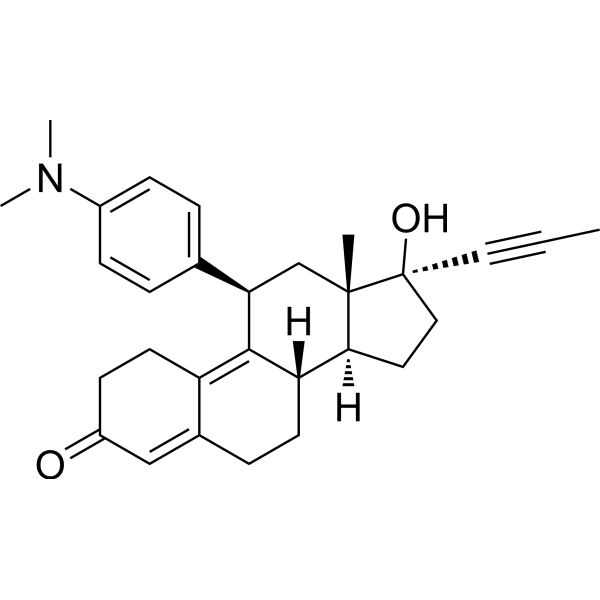
-
- HY-111372
-
|
BAY 94-8862
|
Mineralocorticoid Receptor
|
Cardiovascular Disease
Metabolic Disease
|
|
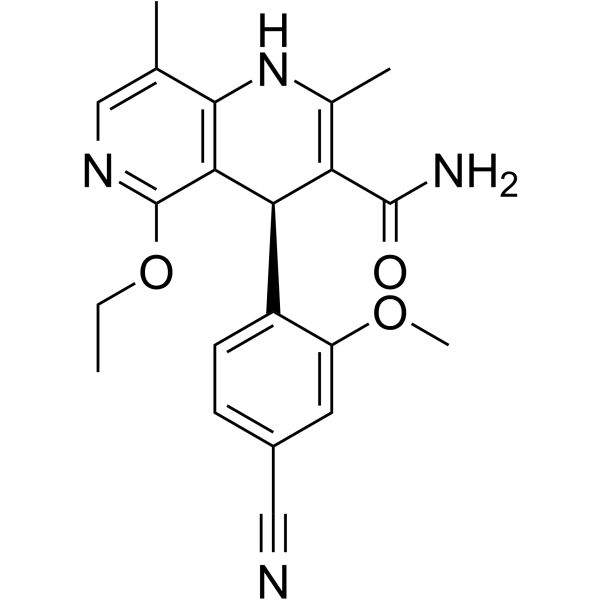
Finerenone (BAY 94-8862) is a third-generation, selective, and orally active nonsteroidal mineralocorticoid receptor (MR) antagonist (IC50 = 18 nM). Finerenone displays excellent selectivity versus glucocorticoid receptor (GR), androgen receptor (AR), and progesterone receptor (> 500-fold). Finerenone has the potential for cardiorenal diseases research, such as type 2 diabetes mellitus and chronic kidney disease .
|
-
-
- HY-113416
-
|
DHEA sulfate; Prasterone sulfate
|
GABA Receptor
Sigma Receptor
iGluR
PPAR
NF-κB
|
Neurological Disease
Metabolic Disease
Inflammation/Immunology
|
|
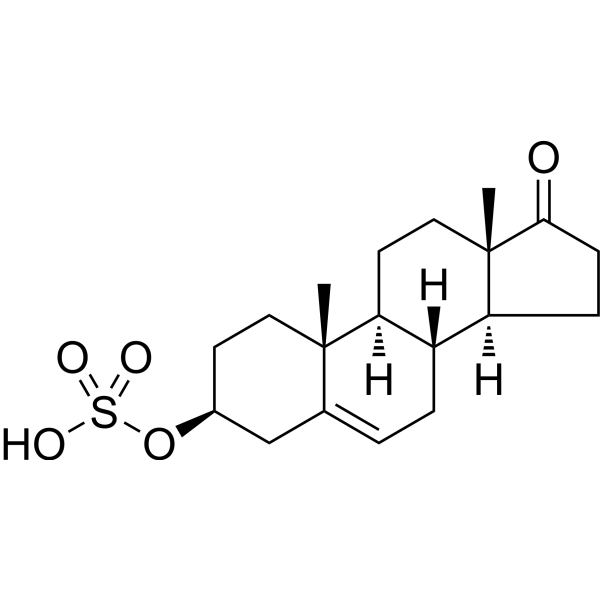
Dehydroepiandrosterone sulfate (DHEA sulfate; Prasterone sulfate) is a neurosteroid and the main secretion product of the adrenal gland. Dehydroepiandrosterone sulfate has both non-competitive antagonist activity of GABAA receptor and agonist activity of σ1 receptor. Dehydroepiandrosterone sulfate can partially penetrate the blood-brain barrier, inhibit GABAA receptor-mediated chloride influx, enhance NMDA receptor activity through σ1 receptors, exert anti-inflammatory, anti-glucocorticoid and antidepressant effects, and increase convulsive sensitivity. Dehydroepiandrosterone sulfate participates in neuroprotection, neurite growth regulation and catecholamine secretion regulation, and can be used in the study of depression, post-traumatic stress disorder (PTSD), Alzheimer's disease, etc. Dehydroepiandrosterone sulfate may also be a biomarker for cardiovascular disease mortality, and its concentration is independently and negatively correlated with mortality .
|
-
-
- HY-B0765
-
|
DHEA sulfate sodium; Prasterone sulfate sodium
|
GABA Receptor
Sigma Receptor
iGluR
PPAR
NF-κB
|
Neurological Disease
Metabolic Disease
Inflammation/Immunology
|
|
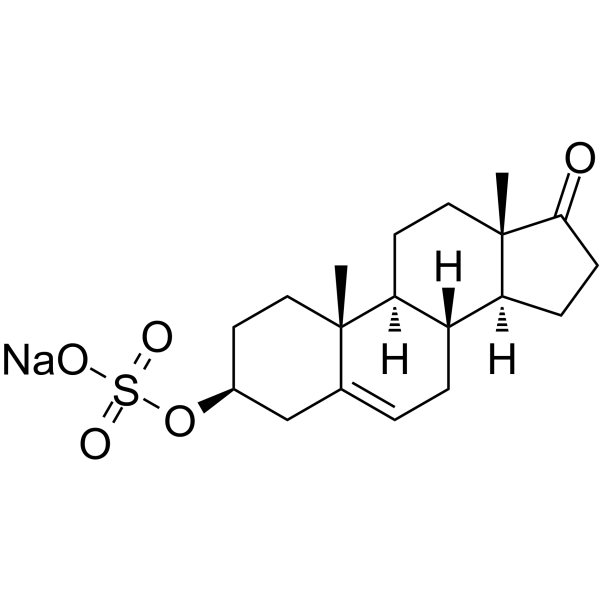
Dehydroepiandrosterone sulfate (DHEA sulfate; Prasterone sulfate) sodium salt is a neurosteroid and the main secretion product of the adrenal gland. Dehydroepiandrosterone sulfate sodium salt has both non-competitive antagonist activity of GABAA receptor and agonist activity of σ1 receptor. Dehydroepiandrosterone sulfate sodium salt can partially penetrate the blood-brain barrier, inhibit GABAA receptor-mediated chloride influx, enhance NMDA receptor activity through σ1 receptors, exert anti-inflammatory, anti-glucocorticoid and antidepressant effects, and increase convulsive sensitivity. Dehydroepiandrosterone sulfate sodium salt participates in neuroprotection, neurite growth regulation and catecholamine secretion regulation, and can be used in the study of depression, post-traumatic stress disorder (PTSD), Alzheimer's disease, etc. Dehydroepiandrosterone sulfate sodium salt may also be a biomarker for cardiovascular disease mortality, and its concentration is independently and negatively correlated with mortality .
|
-
-
- HY-13702
-
|
Nilandron; RU 23908
|
Androgen Receptor
Parasite
|
Infection
Endocrinology
Cancer
|
|
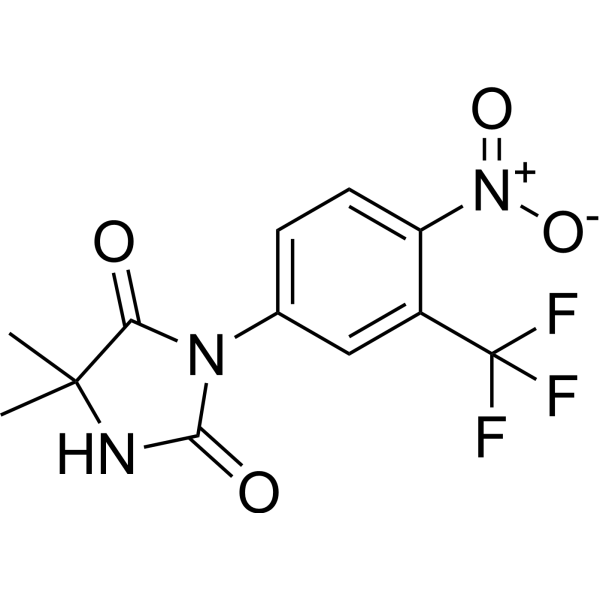
Nilutamide (Nilandron) is an orally active nonsteroidal androgen receptor antagonist with affinity for androgen receptors but not for progestogen, estrogen or glucocorticoid receptors. Nilutamide can be used to research prostate cancer. Nilutamide also has antischistosomal properties .
|
-
-
- HY-117880
-
|
CORT 125281
|
Glucocorticoid Receptor
|
Metabolic Disease
Endocrinology
|
|
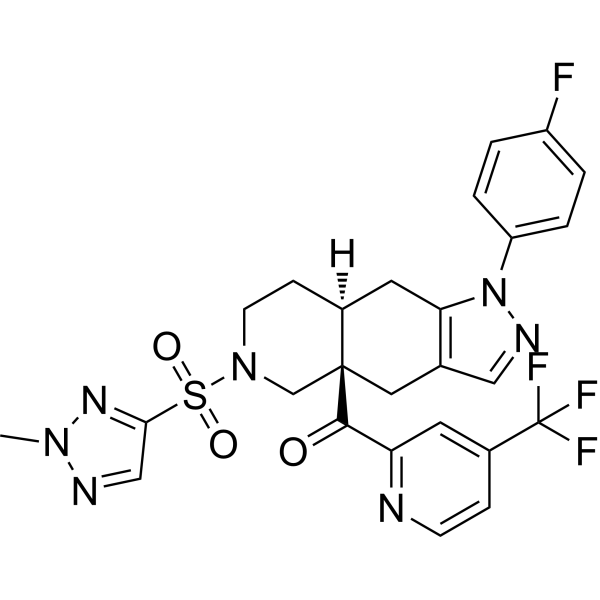
Exicorilant (CORT 125281) is a selective and oral active glucocorticoid receptor (GR) antagonist, with a Ki value of 7 nM . Exicorilant (CORT 125281) has potential to overcome adiposity, glucose intolerance and dyslipidaemia .
|
-
-
- HY-111372R
-
|
BAY 94-8862 (Standard)
|
Reference Standards
Mineralocorticoid Receptor
|
Cardiovascular Disease
|
|
Finerenone (Standard) is the analytical standard of Finerenone. This product is intended for research and analytical applications. Finerenone (BAY 94-8862) is a third-generation, selective, and orally available nonsteroidal mineralocorticoid receptor (MR) antagonist (IC50=18 nM). Finerenone displays excellent selectivity versus glucocorticoid receptor (GR), androgen receptor (AR), and progesterone receptor (>500-fold). Finerenone has the potential for cardiorenal diseases research, such as type 2 diabetes mellitus and chronic kidney disease .
|
-

-
- HY-15710
-
-
-
- HY-15709
-
-
-
- HY-112710
-
|
|
Glucocorticoid Receptor
|
Endocrinology
Cancer
|
|
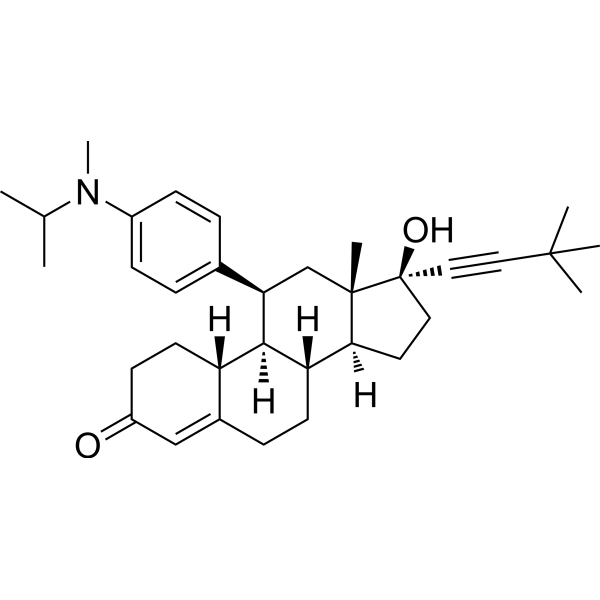
ORIC-101 is a highly potent and selective glucocorticoid receptor antagonist, with an EC50 of 5.6 nM. Anti-cancer activity. ORIC-101 is a click chemistry reagent, it contains an Alkyne group and can undergo copper-catalyzed azide-alkyne cycloaddition (CuAAc) with molecules containing Azide groups.
|
-
-
- HY-N0910
-
-
-
- HY-13683R
-
-
-
- HY-125558
-
|
ORG-34517
|
Glucocorticoid Receptor
|
Neurological Disease
|
|
PT150 (ORG-34517) is a competitive and orally active glucocorticoid receptor antagonist. PT150 shows neuroprotective effects. PT150 has the potential for the research of Parkinson’s disease .
|
-

-
- HY-141921S
-
|
DHEA sulfate sodium-d6; Prasterone sulfate sodium-d6
|
Isotope-Labeled Compounds
GABA Receptor
Sigma Receptor
iGluR
PPAR
NF-κB
|
Neurological Disease
Metabolic Disease
Inflammation/Immunology
|
|
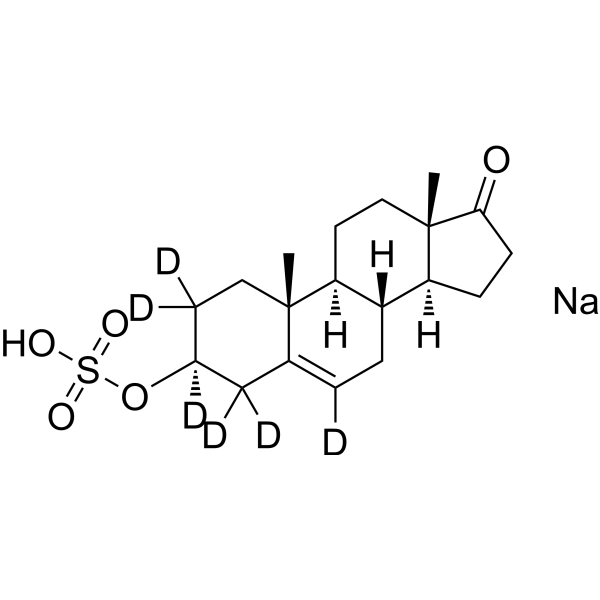
Dehydroepiandrosterone sulfate sodium salt-d6 (DHEA sulfate sodium salt-d6; Prasterone sulfate sodium salt-d6) is the deuterium labeled Dehydroepiandrosterone sulfate sodium salt (HY-B0765). Dehydroepiandrosterone sulfate (DHEA sulfate; Prasterone sulfate) sodium salt is a neurosteroid and the main secretion product of the adrenal gland. Dehydroepiandrosterone sulfate sodium salt has both non-competitive antagonist activity of GABAA receptor and agonist activity of σ1 receptor. Dehydroepiandrosterone sulfate sodium salt can partially penetrate the blood-brain barrier, inhibit GABAA receptor-mediated chloride influx, enhance NMDA receptor activity through σ1 receptors, exert anti-inflammatory, anti-glucocorticoid and antidepressant effects, and increase convulsive sensitivity. Dehydroepiandrosterone sulfate sodium salt participates in neuroprotection, neurite growth regulation and catecholamine secretion regulation, and can be used in the study of depression, post-traumatic stress disorder (PTSD), Alzheimer's disease, etc. Dehydroepiandrosterone sulfate sodium salt may also be a biomarker for cardiovascular disease mortality, and its concentration is independently and negatively correlated with mortality .
|
-
-
- HY-159695A
-
-

-
- HY-13683S
-
-
-
- HY-113416R
-
|
DHEA sulfate (Standard); Prasterone sulfate (Standard)
|
Reference Standards
GABA Receptor
Sigma Receptor
iGluR
PPAR
NF-κB
|
Neurological Disease
Metabolic Disease
Inflammation/Immunology
|
|
Dehydroepiandrosterone sulfate (DHEA sulfate; Prasterone sulfate) (Standard) is the analytical standard of Dehydroepiandrosterone sulfate (HY-113416). This product is intended for research and analytical applications. Dehydroepiandrosterone sulfate (DHEA sulfate; Prasterone sulfate) is a neurosteroid and the main secretion product of the adrenal gland. Dehydroepiandrosterone sulfate has both non-competitive antagonist activity of GABAA receptor and agonist activity of σ1 receptor. Dehydroepiandrosterone sulfate can partially penetrate the blood-brain barrier, inhibit GABAA receptor-mediated chloride influx, enhance NMDA receptor activity through σ1 receptors, exert anti-inflammatory, anti-glucocorticoid and antidepressant effects, and increase convulsive sensitivity. Dehydroepiandrosterone sulfate participates in neuroprotection, neurite growth regulation and catecholamine secretion regulation, and can be used in the study of depression, post-traumatic stress disorder (PTSD), Alzheimer's disease, etc. Dehydroepiandrosterone sulfate may also be a biomarker for cardiovascular disease mortality, and its concentration is independently and negatively correlated with mortality .
|
-

-
- HY-113416AS
-
|
DHEA sulfate-d6 sodium dihydrate; Prasterone sulfate-d6 sodium dihydrate
|
Isotope-Labeled Compounds
GABA Receptor
Sigma Receptor
iGluR
PPAR
NF-κB
|
Neurological Disease
Metabolic Disease
Inflammation/Immunology
|
|
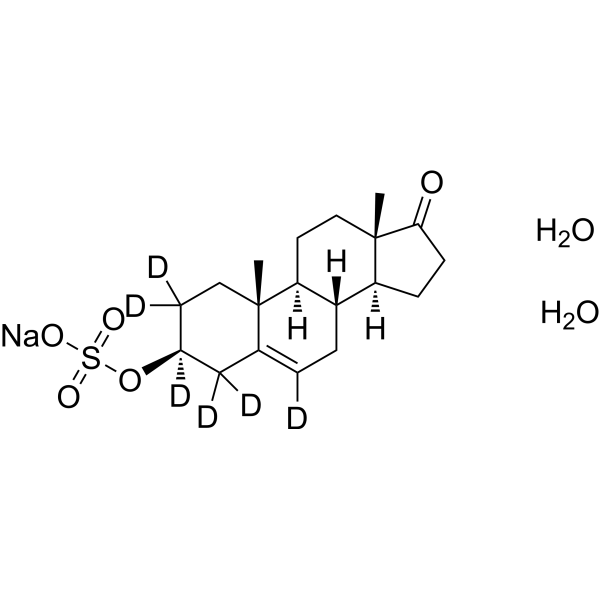
Dehydroepiandrosterone sulfate sodium dihydrate-d6 sodium dihydrate is the deuterium labeled Dehydroepiandrosterone sulfate sodium dihydrate. Dehydroepiandrosterone sulfate (DHEA sulfate; Prasterone sulfate) sodium dihydrate is a neurosteroid and the main secretion product of the adrenal gland. Dehydroepiandrosterone sulfate sodium dihydrate has both non-competitive antagonist activity of GABAA receptor and agonist activity of σ1 receptor. Dehydroepiandrosterone sulfate sodium dihydrate can partially penetrate the blood-brain barrier, inhibit GABAA receptor-mediated chloride influx, enhance NMDA receptor activity through σ1 receptors, exert anti-inflammatory, anti-glucocorticoid and antidepressant effects, and increase convulsive sensitivity. Dehydroepiandrosterone sulfate sodium dihydrate participates in neuroprotection, neurite growth regulation and catecholamine secretion regulation, and can be used in the study of depression, post-traumatic stress disorder (PTSD), Alzheimer's disease, etc. Dehydroepiandrosterone sulfate sodium dihydrate may also be a biomarker for cardiovascular disease mortality, and its concentration is independently and negatively correlated with mortality .
|
-
-
- HY-13683S2
-
-
-
- HY-111372A
-
|
(Rac)-BAY 94-8862
|
Mineralocorticoid Receptor
|
Cardiovascular Disease
|
|
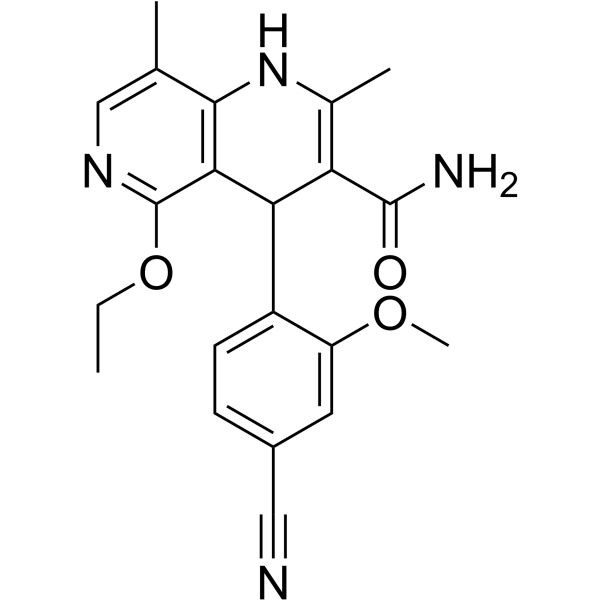
(Rac)-Finerenone ((Rac)-BAY 94-8862) is the racemate of Finerenone. Finerenone is a third-generation, selective, and orally available nonsteroidal mineralocorticoid receptor (MR) antagonist (IC50=18 nM). Finerenone displays excellent selectivity versus glucocorticoid receptor (GR), androgen receptor (AR), and progesterone receptor (>500-fold) .
|
-
-
- HY-111372S
-
|
BAY 94-8862-d3
|
Mineralocorticoid Receptor
|
Others
|
|
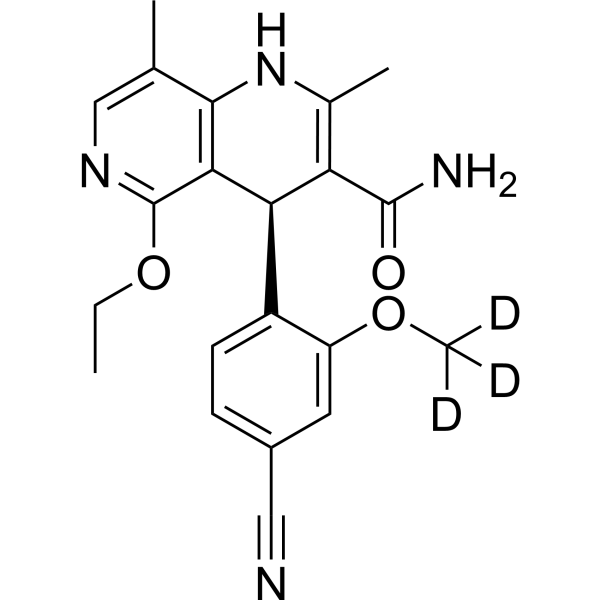
Finerenone-d3 is the deuterium labeled finerenone (HY-111372). Finerenone is a third-generation, selective, and orally available nonsteroidal mineralocorticoid receptor (MR) antagonist (IC50=18 nM). Finerenone displays excellent selectivity versus glucocorticoid receptor (GR), androgen receptor (AR), and progesterone receptor (>500-fold). Finerenone has the potential for cardiorenal diseases research, such as type 2 diabetes mellitus and chronic kidney disease .
|
-
-
- HY-111372S1
-
|
BAY 94-8862-d5
|
Isotope-Labeled Compounds
Mineralocorticoid Receptor
|
Cardiovascular Disease
|
|
Finerenone-d5 (BAY 94-8862-d5) is deuterium labeled Finerenone. Finerenone (BAY 94-8862) is a third-generation, selective, and orally available nonsteroidal mineralocorticoid receptor (MR) antagonist (IC50=18 nM). Finerenone displays excellent selectivity versus glucocorticoid receptor (GR), androgen receptor (AR), and progesterone receptor (>500-fold). Finerenone has the potential for cardiorenal diseases research, such as type 2 diabetes mellitus and chronic kidney disease .
|
-

-
- HY-125627
-
|
|
Glucocorticoid Receptor
Androgen Receptor
|
Neurological Disease
Metabolic Disease
|
|
CP-394531 is an efficient and highly selective non-steroidal glucocorticoid receptor (GR) antagonist, with a Ki value of 0.1 nM. CP-394531 has a weak binding to androgen receptor (AR) (Ki = 130 nM), and has almost no effect on progesterone receptor (PR) and estrogen receptors (ERα, ERβ). CP-394531 completely blocks the half-maximal agonistic effect induced by Dexamethasone (HY-14648G), with a Kif of 4.1 nM. CP-394531 can be used to study various diseases such as diabetes, obesity, depression, neurodegenerative diseases, glaucoma and Cushing's disease .
|
-

-
- HY-159695
-
-

-
- HY-125839
-
|
|
Glucocorticoid Receptor
|
Inflammation/Immunology
Endocrinology
|
|
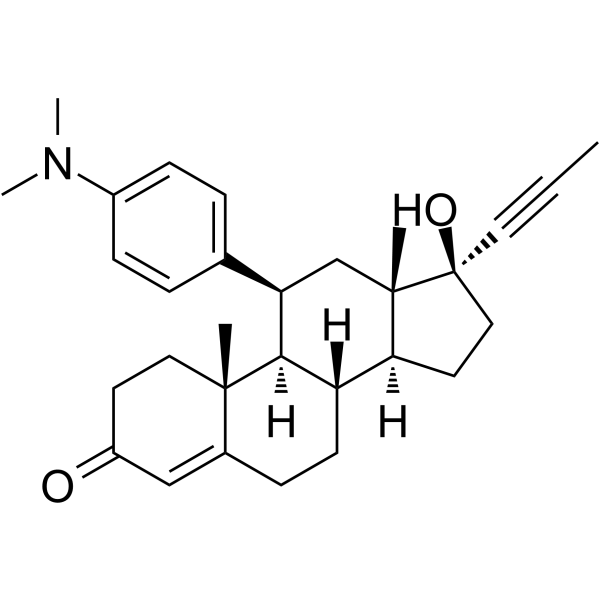
OP-3633 is a potent and selective steroidal glucocorticoid receptor (GR) antagonist with an IC50 of 29 nM, with inhibition of GR transcriptional activity. OP-3633 exhibits low progesterone receptor (PR) agonism and androgen receptor (AR) antagonism .
|
-
-
- HY-B0251S
-
|
Epoxymexrenone-d3
|
Isotope-Labeled Compounds
Mineralocorticoid Receptor
Endogenous Metabolite
|
Cardiovascular Disease
|
|
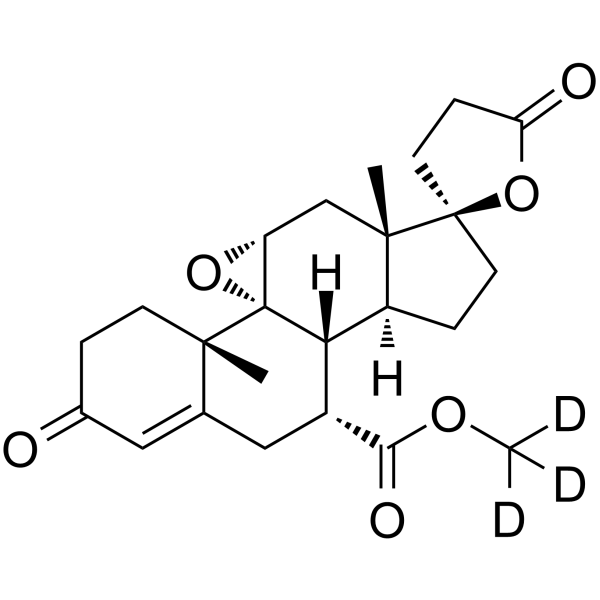
Eplerenone-d3 is the deuterium labeled Eplerenone. Eplerenone (Epoxymexrenone) is a selective, competitive and oreally active aldosterone antagonist with an IC50 of 138 nM. Eplerenone has low affinity for progesterone, androgen, estrogen and glucocorticoid receptors. Eplerenone can be used for hypertension and heart failure after myocardial infarction reserch .
|
-
-
- HY-123163
-
|
RWJ-66826; RTI-6617-003
|
Progesterone Receptor
Glucocorticoid Receptor
Androgen Receptor
Estrogen Receptor/ERR
|
Endocrinology
Cancer
|
|
JNJ-1250132 (RWJ-66826) is an orally active and potent steroidal progesterone receptor (PR) antagonist, with an IC50 of 1.3 nM. JNJ-1250132 inhibits binding of the receptor to DNA in vitro. JNJ-1250132 is a potent competitive inhibitor of binding to the human glucocorticoid receptor (GR) (IC50=0.50 nM) and the rat androgen receptor (AR) (IC50=5.6 nM), and was a weak inhibitor of binding to human Estrogen receptor (ER) (IC50 >3000 nM) .
|
-

-
- HY-117847
-
-

-
- HY-167932
-
|
RU486 methochloride; RU 38486 methochloride
|
Progesterone Receptor
|
Endocrinology
|
|
Mifepristone (RU486) methochloride is a glucocorticoid antagonist that blocks peripheral glucocorticoid and progesterone receptors. Mifepristone methochloride has been shown to have minimal effects on intraocular pressure in treated rabbits. Mifepristone methochloride was developed as a water-soluble formulation to enhance ocular penetration of the drug.
|
-

-
- HY-13702R
-
|
Nilandron (Standard); RU 23908 (Standard)
|
Reference Standards
Androgen Receptor
Parasite
|
Infection
Endocrinology
Cancer
|
|
Nilutamide (Standard) is the analytical standard of Nilutamide. This product is intended for research and analytical applications. Nilutamide (Nilandron) is an orally active nonsteroidal androgen receptor antagonist with affinity for androgen receptors but not for progestogen, estrogen or glucocorticoid receptors. Nilutamide can be used to research prostate cancer. Nilutamide also has antischistosomal properties .
|
-

-
- HY-108061
-
|
|
Glucocorticoid Receptor
|
Metabolic Disease
|
|
A-348441 is a liver selective glucocorticoid receptor antagonist. A-348441 can reduce the glucose level in the liver. A-348441 can be used for the research of metabolic disease, such as type 2 diabetes .
|
-

-
- HY-13683S1
-
|
RU486-13C,d3; RU 38486-13C,d3
|
Isotope-Labeled Compounds
Progesterone Receptor
Glucocorticoid Receptor
NO Synthase
Autophagy
|
Endocrinology
Cancer
|
|
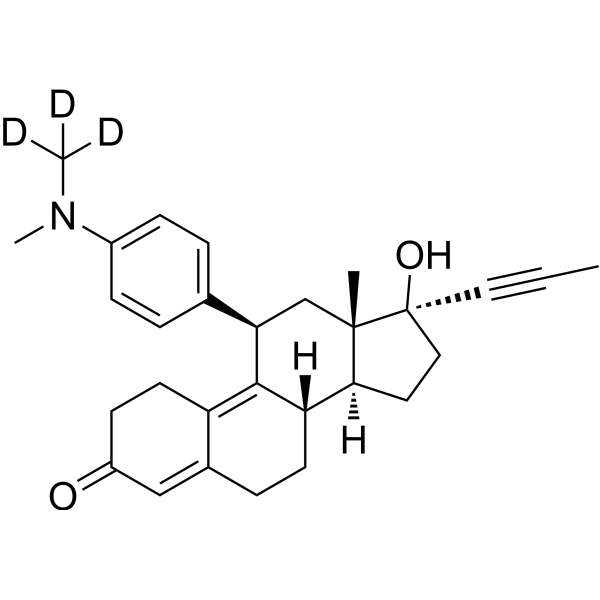
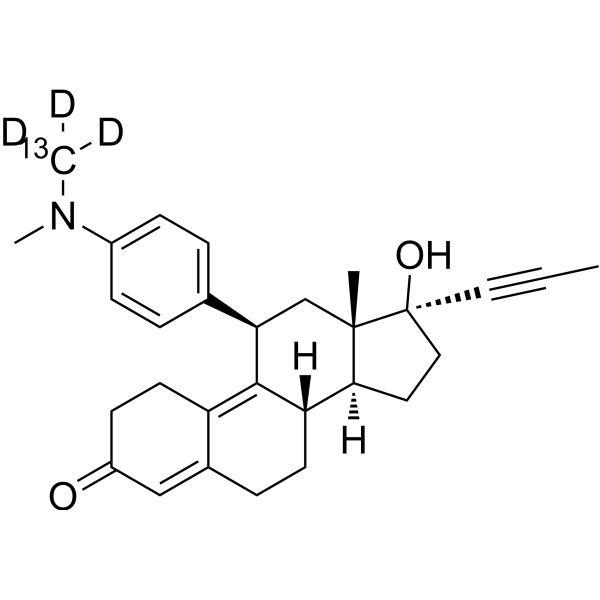
Mifepristone- 13C,d3 is the 13C- and deuterium labeled Mifepristone. Mifepristone (RU486) is a progesterone receptor (PR) and glucocorticoid receptor (GR) antagonist with IC50s of 0.2 nM and 2.6 nM in in vitro assay . Mifepristone-13C,d3 is a click chemistry reagent, it contains an Alkyne group and can undergo copper-catalyzed azide-alkyne cycloaddition (CuAAc) with molecules containing Azide groups.
|
-
-
- HY-B0765R
-
|
DHEA sulfate sodium (Standard); Prasterone sulfate sodium (Standard)
|
Reference Standards
GABA Receptor
Sigma Receptor
iGluR
PPAR
NF-κB
|
Neurological Disease
Metabolic Disease
Inflammation/Immunology
|
|
Dehydroepiandrosterone sulfate (DHEA sulfate; Prasterone sulfate) sodium salt (Standard) is the analytical standard of Dehydroepiandrosterone sulfate sodium salt (HY-B0765). This product is intended for research and analytical applications. Dehydroepiandrosterone sulfate (DHEA sulfate; Prasterone sulfate) is a neurosteroid and the main secretion product of the adrenal gland. Dehydroepiandrosterone sulfate has both non-competitive antagonist activity of GABAA receptor and agonist activity of σ1 receptor. Dehydroepiandrosterone sulfate can partially penetrate the blood-brain barrier, inhibit GABAA receptor-mediated chloride influx, enhance NMDA receptor activity through σ1 receptors, exert anti-inflammatory, anti-glucocorticoid and antidepressant effects, and increase convulsive sensitivity. Dehydroepiandrosterone sulfate participates in neuroprotection, neurite growth regulation and catecholamine secretion regulation, and can be used in the study of depression, post-traumatic stress disorder (PTSD), Alzheimer's disease, etc. Dehydroepiandrosterone sulfate may also be a biomarker for cardiovascular disease mortality, and its concentration is independently and negatively correlated with mortality .
|
-

-
- HY-W950003
-
|
(Rac)-BAY 94-8862-d5
|
Isotope-Labeled Compounds
Mineralocorticoid Receptor
|
Cardiovascular Disease
|
|
(Rac)-Finerenone-d5 ((Rac)-BAY 94-8862-d5) is the deuterium labeled (Rac)-Finerenone (HY-111372A). (Rac)-Finerenone ((Rac)-BAY 94-8862) is the racemate of Finerenone. Finerenone is a third-generation, selective, and orally available nonsteroidal mineralocorticoid receptor (MR) antagonist (IC50=18 nM). Finerenone displays excellent selectivity versus glucocorticoid receptor (GR), androgen receptor (AR), and progesterone receptor (>500-fold).
|
-

-
- HY-111372B
-
|
(R)-BAY 94-8862
|
Drug Isomer
Mineralocorticoid Receptor
|
Cardiovascular Disease
|
|
(R)-Finerenone ((R)-BAY 94-8862) is the R-isomer of Finerenone (HY-111372). Finerenone is a third-generation selective, orally active, non-steroidal mineralocorticoid receptor (MR) antagonist (IC50 = 18 nM). Compared with glucocorticoid receptors (GR), androgen receptors (AR), and progesterone receptors (AR), Finerenone shows good selectivity (> 500-fold). Finerenone has potential application prospects in studies of heart and kidney diseases, such as type 2 diabetes and chronic kidney disease .
|
-

-
- HY-119080
-
|
|
Progesterone Receptor
|
Endocrinology
Cancer
|
|
CP8754 is an orally active, selective human progesterone receptor (hPR) antagonist that blocks progesterone-mediated signaling pathways. CP8754 competitively inhibits the binding of [ 3H]-progesterone to hPR. And in vitro, CP8754 inhibits progesterone-dependent exogenous luciferase and endogenous alkaline phosphatase expression; while in vivo, CP8754 inhibits rabbit endometrial transformation. CP8754 does not significantly bind to human glucocorticoid receptors (hGR), estrogen receptors (hER), or rat androgen receptors (rAR). CP8754 can be used in the study of progesterone-related diseases such as breast cancer, endometriosis, uterine fibroids, and meningioma, as well as hormone-dependent tumors .
|
-

-
- HY-179476
-
|
|
Androgen Receptor
Endogenous Metabolite
|
Inflammation/Immunology
Cancer
|
|
3-Oxochol-5-en-24-oic acid is a rare bile acid produced by the intestinal microbiota. 3-Oxochol-5-en-24-oic acid is a potent antagonist of the human androgen receptor (hAR), with an IC50 of 119.4 nM. 3-Oxochol-5-en-24-oic acid has no significant agonistic or antagonistic effects on estrogen receptors (ER) or glucocorticoid receptors (GR). 3-Oxochol-5-en-24-oic acid effectively inhibits the growth of prostate cancer cells. In animal models, it enhances the efficacy of anti-PD-1 therapy by regulating the differentiation of CD8 + T cells. 3-Oxochol-5-en-24-oic acid can be used for research on regulating host immunity and anti-tumor studies .
|
-

| Cat. No. |
Product Name |
Category |
Target |
Chemical Structure |
-
- HY-113416
-
|
DHEA sulfate; Prasterone sulfate
|
Human Gut Microbiota Metabolites
Microorganisms
Disease markers
Endocrine diseases
Nervous System Disorder
Endogenous metabolite
Source Classification
|
GABA Receptor
Sigma Receptor
iGluR
PPAR
NF-κB
|
|
Dehydroepiandrosterone sulfate (DHEA sulfate; Prasterone sulfate) is a neurosteroid and the main secretion product of the adrenal gland. Dehydroepiandrosterone sulfate has both non-competitive antagonist activity of GABAA receptor and agonist activity of σ1 receptor. Dehydroepiandrosterone sulfate can partially penetrate the blood-brain barrier, inhibit GABAA receptor-mediated chloride influx, enhance NMDA receptor activity through σ1 receptors, exert anti-inflammatory, anti-glucocorticoid and antidepressant effects, and increase convulsive sensitivity. Dehydroepiandrosterone sulfate participates in neuroprotection, neurite growth regulation and catecholamine secretion regulation, and can be used in the study of depression, post-traumatic stress disorder (PTSD), Alzheimer's disease, etc. Dehydroepiandrosterone sulfate may also be a biomarker for cardiovascular disease mortality, and its concentration is independently and negatively correlated with mortality .
|
-
-
- HY-B0765
-
|
DHEA sulfate sodium; Prasterone sulfate sodium
|
Classification of Application Fields
Metabolic Disease
Endogenous metabolite
Disease Research Fields
Steroids
Source Classification
|
GABA Receptor
Sigma Receptor
iGluR
PPAR
NF-κB
|
|
Dehydroepiandrosterone sulfate (DHEA sulfate; Prasterone sulfate) sodium salt is a neurosteroid and the main secretion product of the adrenal gland. Dehydroepiandrosterone sulfate sodium salt has both non-competitive antagonist activity of GABAA receptor and agonist activity of σ1 receptor. Dehydroepiandrosterone sulfate sodium salt can partially penetrate the blood-brain barrier, inhibit GABAA receptor-mediated chloride influx, enhance NMDA receptor activity through σ1 receptors, exert anti-inflammatory, anti-glucocorticoid and antidepressant effects, and increase convulsive sensitivity. Dehydroepiandrosterone sulfate sodium salt participates in neuroprotection, neurite growth regulation and catecholamine secretion regulation, and can be used in the study of depression, post-traumatic stress disorder (PTSD), Alzheimer's disease, etc. Dehydroepiandrosterone sulfate sodium salt may also be a biomarker for cardiovascular disease mortality, and its concentration is independently and negatively correlated with mortality .
|
-
-
- HY-N0910
-
-
-
- HY-113416R
-
|
DHEA sulfate (Standard); Prasterone sulfate (Standard)
|
Human Gut Microbiota Metabolites
Microorganisms
Disease markers
Endocrine diseases
Nervous System Disorder
Endogenous metabolite
Source Classification
|
Reference Standards
GABA Receptor
Sigma Receptor
iGluR
PPAR
NF-κB
|
|
Dehydroepiandrosterone sulfate (DHEA sulfate; Prasterone sulfate) (Standard) is the analytical standard of Dehydroepiandrosterone sulfate (HY-113416). This product is intended for research and analytical applications. Dehydroepiandrosterone sulfate (DHEA sulfate; Prasterone sulfate) is a neurosteroid and the main secretion product of the adrenal gland. Dehydroepiandrosterone sulfate has both non-competitive antagonist activity of GABAA receptor and agonist activity of σ1 receptor. Dehydroepiandrosterone sulfate can partially penetrate the blood-brain barrier, inhibit GABAA receptor-mediated chloride influx, enhance NMDA receptor activity through σ1 receptors, exert anti-inflammatory, anti-glucocorticoid and antidepressant effects, and increase convulsive sensitivity. Dehydroepiandrosterone sulfate participates in neuroprotection, neurite growth regulation and catecholamine secretion regulation, and can be used in the study of depression, post-traumatic stress disorder (PTSD), Alzheimer's disease, etc. Dehydroepiandrosterone sulfate may also be a biomarker for cardiovascular disease mortality, and its concentration is independently and negatively correlated with mortality .
|
-
-
- HY-B0765R
-
|
DHEA sulfate sodium (Standard); Prasterone sulfate sodium (Standard)
|
Structural Classification
Endogenous metabolite
Steroids
Source Classification
|
Reference Standards
GABA Receptor
Sigma Receptor
iGluR
PPAR
NF-κB
|
|
Dehydroepiandrosterone sulfate (DHEA sulfate; Prasterone sulfate) sodium salt (Standard) is the analytical standard of Dehydroepiandrosterone sulfate sodium salt (HY-B0765). This product is intended for research and analytical applications. Dehydroepiandrosterone sulfate (DHEA sulfate; Prasterone sulfate) is a neurosteroid and the main secretion product of the adrenal gland. Dehydroepiandrosterone sulfate has both non-competitive antagonist activity of GABAA receptor and agonist activity of σ1 receptor. Dehydroepiandrosterone sulfate can partially penetrate the blood-brain barrier, inhibit GABAA receptor-mediated chloride influx, enhance NMDA receptor activity through σ1 receptors, exert anti-inflammatory, anti-glucocorticoid and antidepressant effects, and increase convulsive sensitivity. Dehydroepiandrosterone sulfate participates in neuroprotection, neurite growth regulation and catecholamine secretion regulation, and can be used in the study of depression, post-traumatic stress disorder (PTSD), Alzheimer's disease, etc. Dehydroepiandrosterone sulfate may also be a biomarker for cardiovascular disease mortality, and its concentration is independently and negatively correlated with mortality .
|
-
| Cat. No. |
Product Name |
Chemical Structure |
-
- HY-141921S
-
|
|
|
Dehydroepiandrosterone sulfate sodium salt-d6 (DHEA sulfate sodium salt-d6; Prasterone sulfate sodium salt-d6) is the deuterium labeled Dehydroepiandrosterone sulfate sodium salt (HY-B0765). Dehydroepiandrosterone sulfate (DHEA sulfate; Prasterone sulfate) sodium salt is a neurosteroid and the main secretion product of the adrenal gland. Dehydroepiandrosterone sulfate sodium salt has both non-competitive antagonist activity of GABAA receptor and agonist activity of σ1 receptor. Dehydroepiandrosterone sulfate sodium salt can partially penetrate the blood-brain barrier, inhibit GABAA receptor-mediated chloride influx, enhance NMDA receptor activity through σ1 receptors, exert anti-inflammatory, anti-glucocorticoid and antidepressant effects, and increase convulsive sensitivity. Dehydroepiandrosterone sulfate sodium salt participates in neuroprotection, neurite growth regulation and catecholamine secretion regulation, and can be used in the study of depression, post-traumatic stress disorder (PTSD), Alzheimer's disease, etc. Dehydroepiandrosterone sulfate sodium salt may also be a biomarker for cardiovascular disease mortality, and its concentration is independently and negatively correlated with mortality .
|
-
-
- HY-13683S
-
|
|
|
Mifepristone-d3 is the deuterium labeled Mifepristone. Mifepristone (RU486) is a progesterone receptor (PR) and glucocorticoid receptor (GR) antagonist with IC50s of 0.2 nM and 2.6 nM in in vitro assay .
|
-
-
- HY-113416AS
-
|
|
|
Dehydroepiandrosterone sulfate sodium dihydrate-d6 sodium dihydrate is the deuterium labeled Dehydroepiandrosterone sulfate sodium dihydrate. Dehydroepiandrosterone sulfate (DHEA sulfate; Prasterone sulfate) sodium dihydrate is a neurosteroid and the main secretion product of the adrenal gland. Dehydroepiandrosterone sulfate sodium dihydrate has both non-competitive antagonist activity of GABAA receptor and agonist activity of σ1 receptor. Dehydroepiandrosterone sulfate sodium dihydrate can partially penetrate the blood-brain barrier, inhibit GABAA receptor-mediated chloride influx, enhance NMDA receptor activity through σ1 receptors, exert anti-inflammatory, anti-glucocorticoid and antidepressant effects, and increase convulsive sensitivity. Dehydroepiandrosterone sulfate sodium dihydrate participates in neuroprotection, neurite growth regulation and catecholamine secretion regulation, and can be used in the study of depression, post-traumatic stress disorder (PTSD), Alzheimer's disease, etc. Dehydroepiandrosterone sulfate sodium dihydrate may also be a biomarker for cardiovascular disease mortality, and its concentration is independently and negatively correlated with mortality .
|
-
-
- HY-13683S2
-
|
|
|
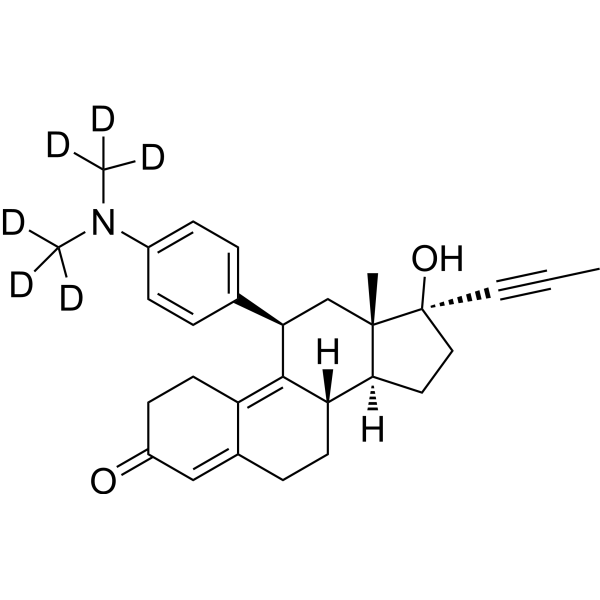
Mifepristone-d6 is deuterated labeled Mifepristone (HY-13683). Mifepristone (RU486) is a progesterone receptor (PR) and glucocorticoid receptor (GR) antagonist with IC50s of 0.2 nM and 2.6 nM in in vitro assay .
|
-
-
- HY-111372S
-
|
|
|
Finerenone-d3 is the deuterium labeled finerenone (HY-111372). Finerenone is a third-generation, selective, and orally available nonsteroidal mineralocorticoid receptor (MR) antagonist (IC50=18 nM). Finerenone displays excellent selectivity versus glucocorticoid receptor (GR), androgen receptor (AR), and progesterone receptor (>500-fold). Finerenone has the potential for cardiorenal diseases research, such as type 2 diabetes mellitus and chronic kidney disease .
|
-
-
- HY-111372S1
-
1 Publications Verification
|
|
Finerenone-d5 (BAY 94-8862-d5) is deuterium labeled Finerenone. Finerenone (BAY 94-8862) is a third-generation, selective, and orally available nonsteroidal mineralocorticoid receptor (MR) antagonist (IC50=18 nM). Finerenone displays excellent selectivity versus glucocorticoid receptor (GR), androgen receptor (AR), and progesterone receptor (>500-fold). Finerenone has the potential for cardiorenal diseases research, such as type 2 diabetes mellitus and chronic kidney disease .
|
-
-
- HY-B0251S
-
|
|
|
Eplerenone-d3 is the deuterium labeled Eplerenone. Eplerenone (Epoxymexrenone) is a selective, competitive and oreally active aldosterone antagonist with an IC50 of 138 nM. Eplerenone has low affinity for progesterone, androgen, estrogen and glucocorticoid receptors. Eplerenone can be used for hypertension and heart failure after myocardial infarction reserch .
|
-
-
- HY-13683S1
-
|
|
|
Mifepristone- 13C,d3 is the 13C- and deuterium labeled Mifepristone. Mifepristone (RU486) is a progesterone receptor (PR) and glucocorticoid receptor (GR) antagonist with IC50s of 0.2 nM and 2.6 nM in in vitro assay . Mifepristone-13C,d3 is a click chemistry reagent, it contains an Alkyne group and can undergo copper-catalyzed azide-alkyne cycloaddition (CuAAc) with molecules containing Azide groups.
|
-
-
- HY-W950003
-
|
|
|
(Rac)-Finerenone-d5 ((Rac)-BAY 94-8862-d5) is the deuterium labeled (Rac)-Finerenone (HY-111372A). (Rac)-Finerenone ((Rac)-BAY 94-8862) is the racemate of Finerenone. Finerenone is a third-generation, selective, and orally available nonsteroidal mineralocorticoid receptor (MR) antagonist (IC50=18 nM). Finerenone displays excellent selectivity versus glucocorticoid receptor (GR), androgen receptor (AR), and progesterone receptor (>500-fold).
|
-
| Cat. No. |
Product Name |
|
Classification |
-
- HY-159695A
-
|
ISIS 426115 sodium
|
|
Antisense Oligonucleotides
|
|
IONIS-GCCRRx (ISIS 426115) sodium, a glucocorticoid receptor antagonist, is a 2'-O-methoxyethyl (2'-MOE) antisense oligonucleotide (ASO) .
|
-
- HY-159695
-
|
ISIS 426115
|
|
Antisense Oligonucleotides
|
|
IONIS-GCCRRx (ISIS 426115), a glucocorticoid receptor antagonist, is a 2'-O-methoxyethyl (2'-MOE) antisense oligonucleotide (ASO) .
|
Your information is safe with us. * Required Fields.
Inquiry Information
- Product Name:
- Cat. No.:
- Quantity:
- MCE Japan Authorized Agent:








