1. Search Result
Search Result
Results for "

glycine site NMDA receptor

" in MedChemExpress (MCE) Product Catalog:

33

Inhibitors & Agonists

1

Peptides

3

Natural
Products

1

Isotope-Labeled Compounds

Cat. No. Product Name Target Research Areas Chemical Structure
  • HY-100834
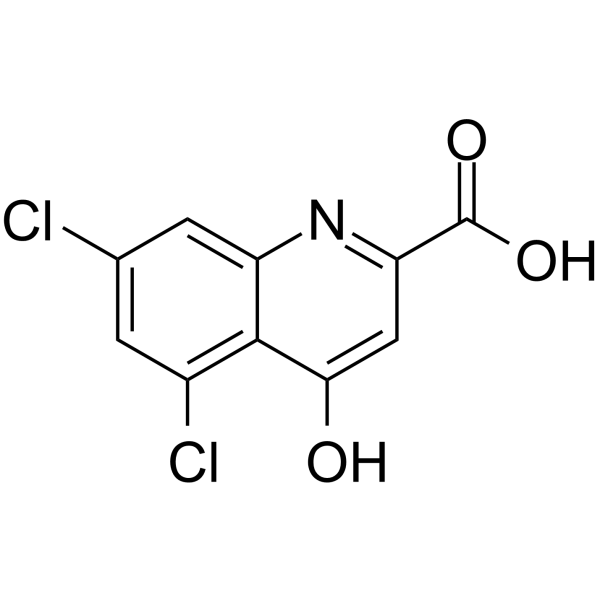
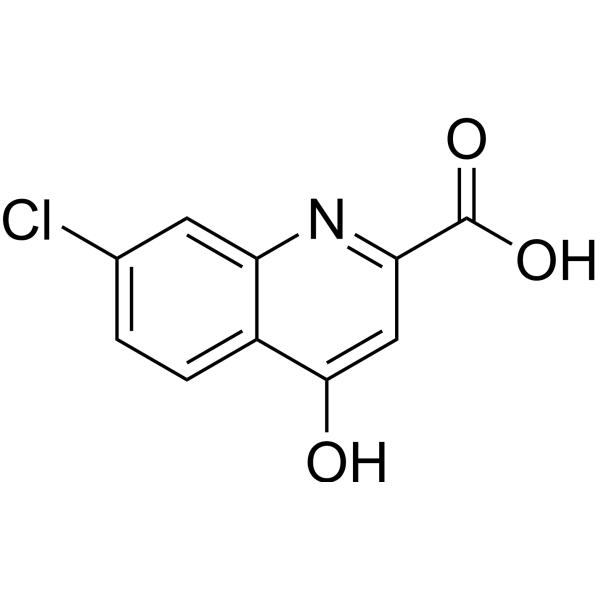
    5,7-Dichlorokynurenic acid
    1 Publications Verification

    5,7-DCKA

    iGluR Neurological Disease
    5,7-Dichlorokynurenic acid (5,7-DCKA) is a selective and competitive antagonist of the glycine site on NMDA receptor with a KB of 65 nM. 5,7-Dichlorokynurenic acid reduces NMDA-induced neuron injury. 5,7-Dichlorokynurenic acid increases social interaction time, increases open arm exploration time, disinhibits suppressed conflict responding in rodent models. 5,7-Dichlorokynurenic acid exhibits anxiolytic-like activity in rodent models and supports exploration of glycine’s role in NMDA receptor-mediated synaptic transmission .
    5,7-Dichlorokynurenic acid
  • HY-I0096

    iGluR HIV HIV Integrase Neurological Disease
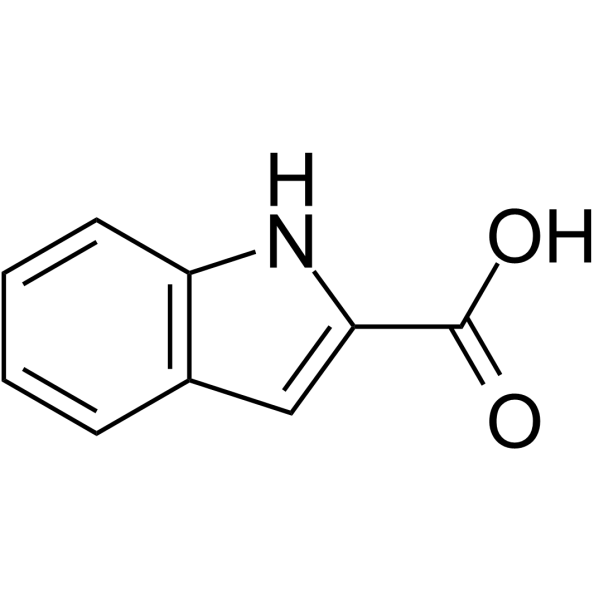
    Indole-2-carboxylic acid (I2CA) is a competitive antagonist of the glycine site of the NMDA receptor (Ki=15 μM, 5-fluoro-I2CA) and an inhibitor of HIV-1 integrase. Indole-2-carboxylic acid is selective for the glycine site of the NMDA receptor and blocks the enhancement of NMDA receptor by competitively inhibiting the binding of glycine to the NMDA receptor. Indole-2-carboxylic acid can also inhibit the strand transfer activity of HIV-1 integrase by chelating Mg 2+ at the active site of integrase and interacting with the hydrophobic cavity. Indole-2-carboxylic acid can be used in the study of neurological diseases (such as stroke, epilepsy) and HIV-1 infection .
    Indole-2-carboxylic acid
  • HY-18698

    iGluR Neurological Disease
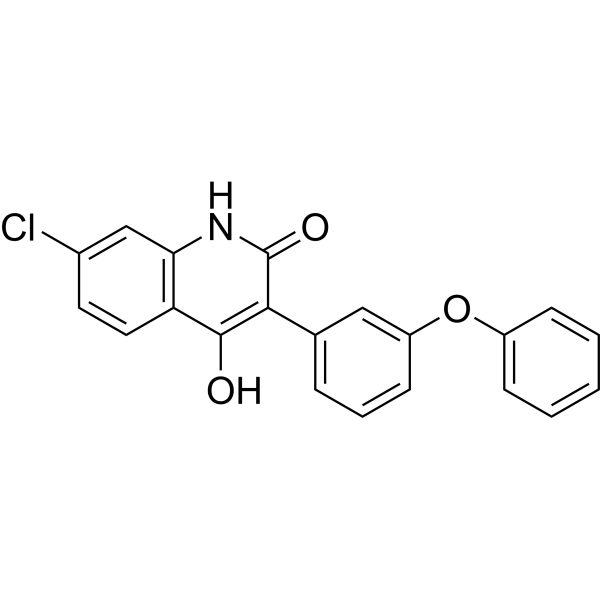
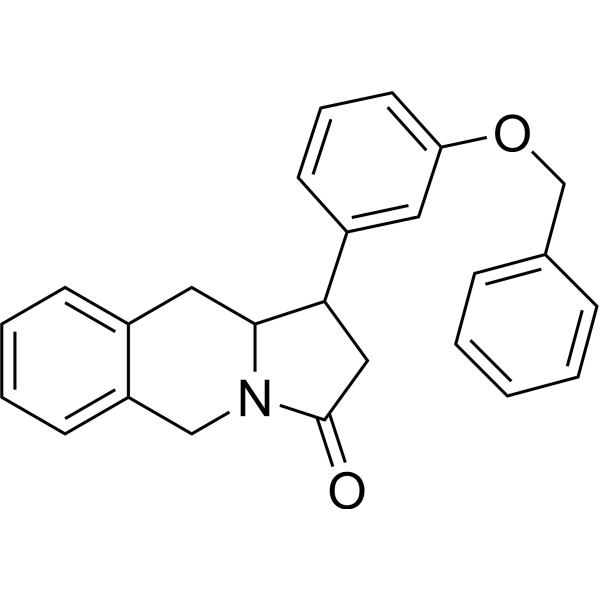
    L-701324 is a potent, orally active NMDA receptor antagonist that antagonizes the activity of the NMDA receptor by blocking its glycine B binding site. L-701324 binds with high affinity to rat brain membranes (IC50=2 nM). L-701324 has antidepressant activity .
    L-701324
  • HY-107701

    iGluR Neurological Disease
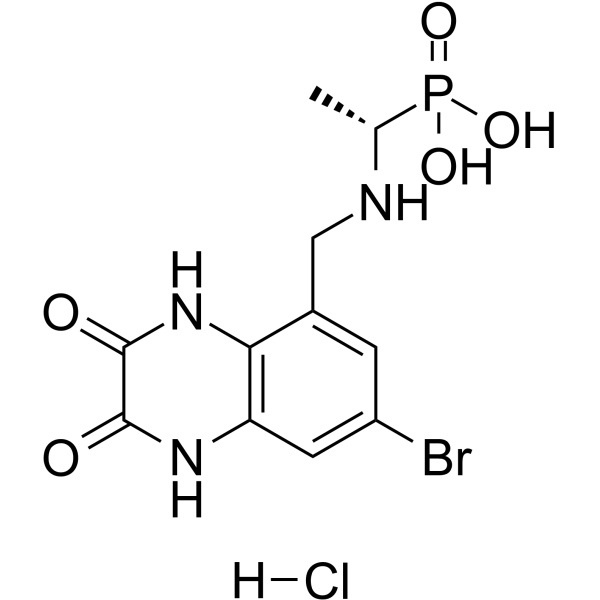
    CGP 78608 hydrochloride is a highly potent and selective antagonist at the glycine-binding site of the NMDA receptor, with an IC50 of 6 nM. CGP 78608 hydrochloride acts as a potentiator of GluN1/GluN3A-mediated glycine currents, with an estimated EC50 in the low nM range (26.3 nM). Anticonvulsant activity .
    CGP 78608 hydrochloride
  • HY-100811
    7-Chlorokynurenic acid
    4 Publications Verification

    7-CKA

    iGluR Neurological Disease
    7-Chlorokynurenic acid (7-CKA) is a potent and selective antagonist of the glycine B coagonist site of the N-methyl-D-aspartate (NMDA) receptor (IC50=0.56 μM). 7-Chlorokynurenic acid is also a potent inhibitor of the reuptake of glutamate into synaptic vesicles with a Ki of 0.59 μM. 7-Chlorokynurenic acid has potent antinociceptive actions after neuraxial delivery .
    7-Chlorokynurenic acid
  • HY-100811A
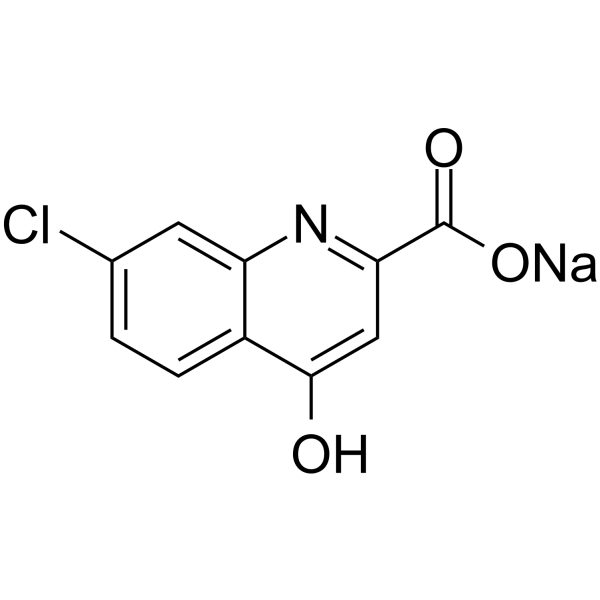
    7-Chlorokynurenic acid sodium salt
    4 Publications Verification

    7-CKA sodium salt

    iGluR Neurological Disease
    7-Chlorokynurenic acid sodium salt (7-CKA sodium salt) is a potent and selective antagonist of the glycine B coagonist site of the N-methyl-D-aspartate (NMDA) receptor (IC50=0.56 μM). 7-Chlorokynurenic acid sodium salt is also a potent inhibitor of the reuptake of glutamate into synaptic vesicles with a Ki of 0.59 μM. 7-Chlorokynurenic acid sodium salt has potent antinociceptive actions after neuraxial delivery .
    7-Chlorokynurenic acid sodium salt
  • HY-101178

    iGluR Neurological Disease
    L-689560 is a potent N-methyl-D-aspartate (NMDA) receptor antagonist at the GluN1 glycine binding site. L-689560 is widely used as a radiolabeled ligand in binding studies and used for study the roles of NMDA receptors in normal neurological processes as well as in diseases .
    L-689560
  • HY-W014504

    Endogenous Metabolite Metabolic Disease
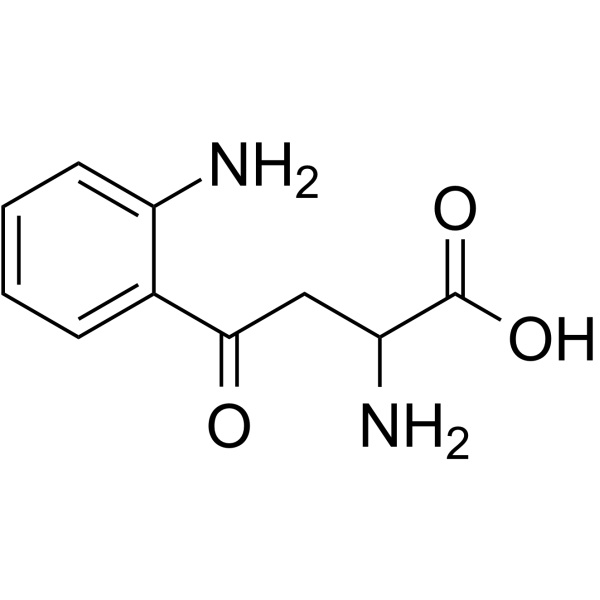
    DL-Kynurenine is a key metabolite in the tryptophan metabolic pathway and can cross the blood-brain barrier. DL-Kynurenine has a bidirectional regulatory effect on neural excitability. DL-Kynurenine can enhance the convulsive and lethal effects caused by strychnine. DL-Kynurenine is the precursor of Kynurenic acid (HY-100806), which is an antagonist at the glycine site of NMDA receptors and can counteract excitatory toxins. DL-Kynurenine can be used for research on neurotoxicity .
    DL-Kynurenine
  • HY-150138

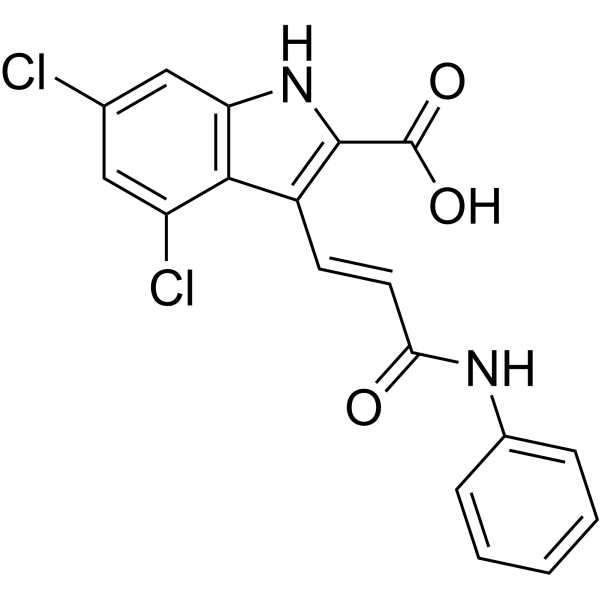
    GV 150526

    iGluR Neurological Disease
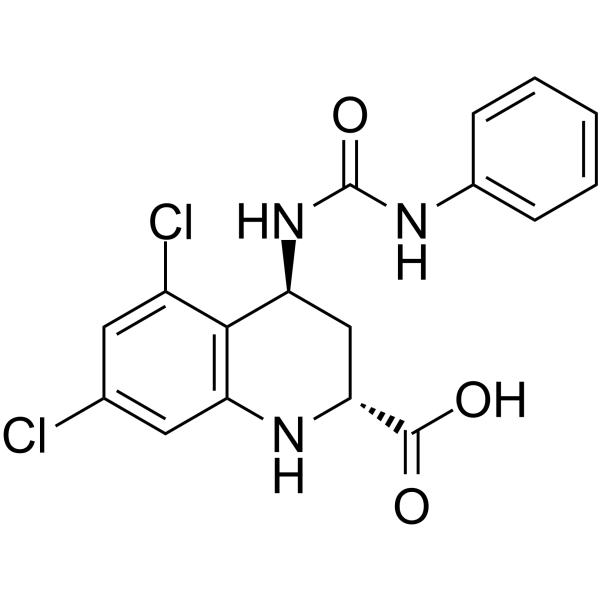
    Gavestinel (GV 150526) is a selective and potent the glycine site of the NMDA receptor antagonist. Gavestinel has neuroprotectant effects .
    Gavestinel
  • HY-114753A

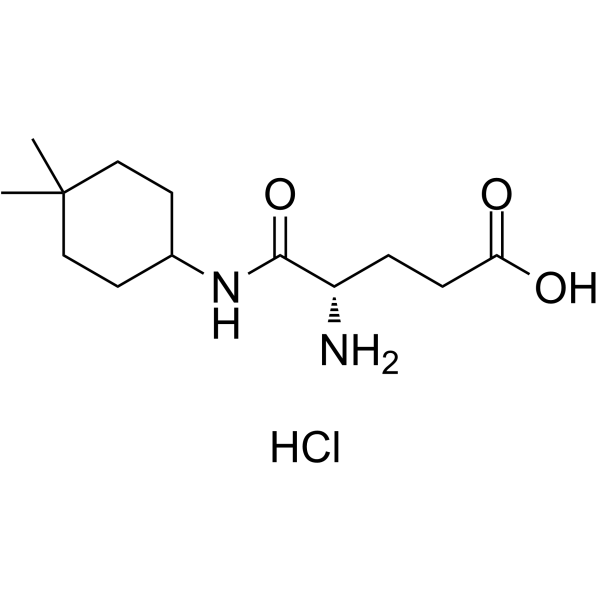
    CR-2249 hydrochloride; XY-2401 hydrochloride

    iGluR Neurological Disease
    Neboglamine (CR-2249, XY-2401) hydrochloride is an orally active NMDA receptor glycine site positive modulator that can be used in schizophrenia research .
    Neboglamine hydrochloride
  • HY-100822

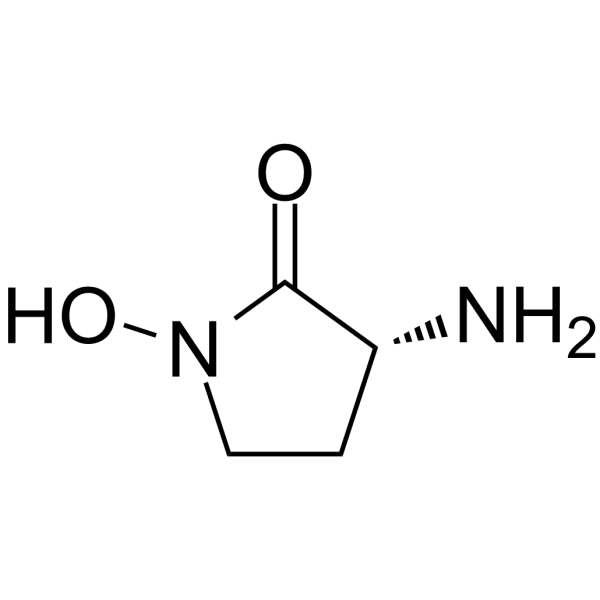
    (+)-HA-966

    iGluR Neurological Disease
    (R)-(+)-HA-966 ((+)-HA-966) is a partial agonist/antagonist of glycine site of the N-methyl-D-aspartate (NMDA) receptor complex. (R)-(+)-HA-966 selectively blocks the activation of the mesolimbic dopamine system by amphetamine . (R)-(+)-HA-966 can cross the blood-brain barrier and has the potential for neuropathic and acute pain .
    (R)-(+)-HA-966
  • HY-107700

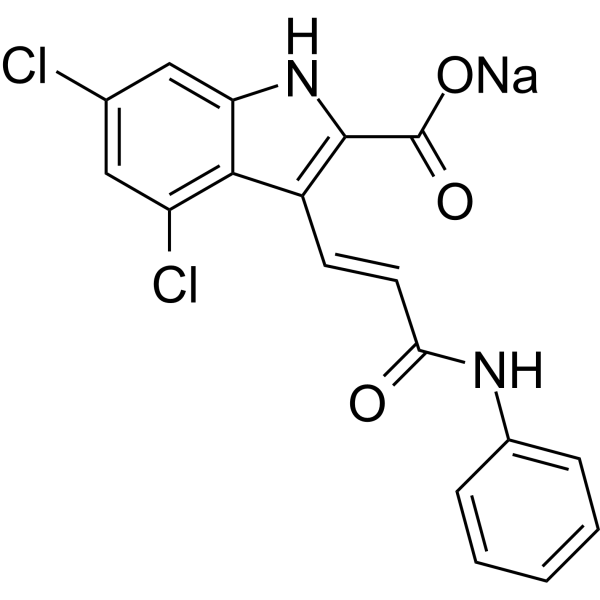
    GV 150526A

    iGluR Cardiovascular Disease
    Gavestinel (GV 150526A) is a potent, selective, orally active and non-competitive antagonist of NMDA receptor. Gavestinel binds to the glycine site of the NMDA receptor, with a pKi of 8.5. Gavestinel can be used for the research of acute ischemic stroke .
    Gavestinel sodium salt
  • HY-106969A

    Glycine Receptor (GlyR) iGluR Cardiovascular Disease Neurological Disease
    ZD 9379 sodium is a competitive glycine/NMDA receptor antagonist, with an IC50 value of 75 nM (glutamate site). ZD 9379 sodium selectively antagonizes the glycine binding site (GlyB site) on the NMDA receptor, inhibiting the binding of glycine to the NMDA receptor and alleviating excitotoxicity. ZD 9379 sodium reduces the frequency of cortical spreading depression (SDs), alleviates energy depletion in the ischemic penumbra, and delays the expansion of infarction. ZD 9379 sodium reduces the infarct volume and improves neurological function in mouse models. ZD 9379 sodium can be used in studies of acute ischemic stroke, etc .
    ZD 9379 sodium
  • HY-15436

    iGluR Neurological Disease
    L-687414 is an orally active glycine-site NMDA receptor antagonist or low-potency partial agonist. L-687414 has anticonvulsant activity .
    L-687414
  • HY-W014692

    N-t-Boc-amino-D-alanine; Boc-D-Dap-OH

    Amino Acid Derivatives Others
    Boc-D-2,3-diaminopropionic acid (N-t-Boc-amino-D-alanine) is an amino acid derivative with a Boc protecting group, which can be used to synthesize a potent NMDA receptor glycine site agonist with GluN2 subunit-specific activity .
    Boc-D-2,3-diaminopropionic acid
  • HY-125313

    Orphan GPCR Cardiovascular Disease Inflammation/Immunology
    PSB-1737 is a human-selective GPR17 agonist with an EC50 for human GPR17 of 270 nM, and its activity on murine GPR17 is relatively weak (EC50 > 10 μM). PSB-1737 shows no significant inhibition at the glycine binding site of NMDA receptors, and has no significant agonistic or antagonistic activity on P2Y receptor subtypes. PSB-1737 can be used in demyelinating diseases (such as multiple sclerosis) or inflammatory-related anemia .
    PSB-1737
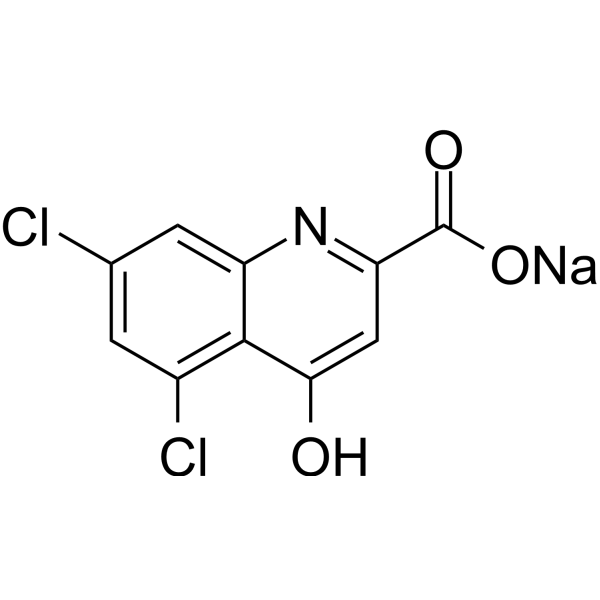
  • HY-100834A

    5,7-DCKA sodium

    iGluR Neurological Disease
    5,7-Dichlorokynurenic acid (5,7-DCKA) sodium is a selective and competitive antagonist of the glycine site on NMDA receptor with a KB of 65 nM. 5,7-Dichlorokynurenic acid sodium reduces NMDA-induced neuron injury. 5,7-Dichlorokynurenic acid sodium increases social interaction time, increases open arm exploration time, disinhibits suppressed conflict responding in rodent models. 5,7-Dichlorokynurenic acid sodium exhibits anxiolytic-like activity in rodent models and supports exploration of glycine’s role in NMDA receptor-mediated synaptic transmission .
    5,7-Dichlorokynurenic acid sodium
  • HY-183201

    iGluR Neurological Disease
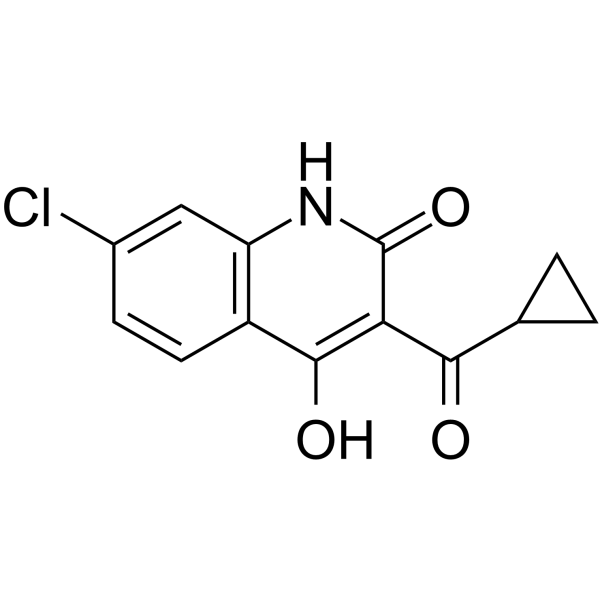
    NMDA receptor antagonist 11 is a NMDA receptor antagonist with an IC50 of 65 μM. NMDA receptor antagonist 11 inhibits glycine action at the NMDA receptor glycine site. NMDA receptor antagonist 11 can be used for research on neurological diseases .
    NMDA receptor antagonist 11
  • HY-183200

    iGluR Neurological Disease
    NMDA receptor antagonist 10 is a NMDA receptor antagonist with an IC50 of 28 μM. NMDA receptor antagonist 10 inhibits glycine action at the NMDA receptor glycine site. NMDA receptor antagonist 10 can be used for research on neurological diseases .
    NMDA receptor antagonist 10
  • HY-W424730

    iGluR Others
    HA-966 hydrochloride is a glycine site antagonist of the NMDA receptor, exhibiting non-competitive antagonism on NMDA responses. HA-966 hydrochloride effectively blocks the enhancement of NMDA responses by glycine in a competitive manner. HA-966 hydrochloride plays a significant role in mediating the antagonist action at the glycine modulatory site of the NMDA receptor.
    HA-966 hydrochloride
  • HY-107705

    iGluR Neurological Disease
    NMDAR antagonist 4 (Compound 8) is the antagonist for NMDA receptor that binds NMDA receptor on glycine site with Ki >100 μM .
    NMDAR antagonist 4
  • HY-155049

    iGluR Neurological Disease
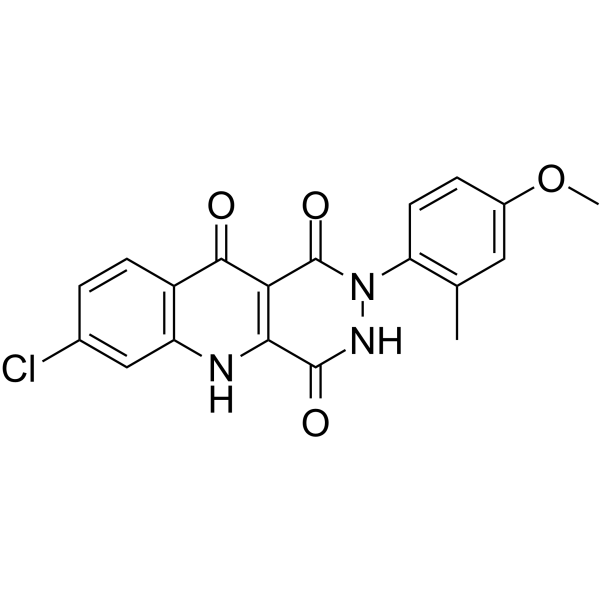
    NMDA receptor antagonist 6 (compound 13b) is an antagonist of NMDA receptor, targeting to the glycine binding site. NMDA receptor antagonist 6 shows cytoneuroprotective potency, and protects PC12 cells against NMDA-induced injury and cell apoptosis .
    NMDA receptor antagonist 6
  • HY-182479

    iGluR Others Neurological Disease
    MDL 100748 is an NMDA receptor glycine site antagonist. MDL 100748 modulates NMDA receptor function by acting at the strychnine-insensitive glycine site, which is required for NMDA receptor activation alongside glutamate. MDL 100748 decreases response rates in operant conditioning sessions in phencyclidin (PCP)-trained rats. MDL 100748 can be used for reserach on dementias and schizophrenia .
    MDL 100748
  • HY-101101

    iGluR Neurological Disease
    L-701252 is a potent antagonist of glycine site NMDA receptor with an IC50 of 420 nM. L-701252 provides a small degree of neuroprotection in global cerebral ischaemia .
    L-701252
  • HY-106968

    iGluR Neurological Disease
    ZD-9379 is a potent, orally active, and brain penetrant full antagonist at the glycine site of the NMDA receptor. ZD-9379 has neuroprotective effect .
    ZD-9379
  • HY-107701A

    iGluR Neurological Disease
    CGP 78608 is a highly potent and selective antagonist at the glycine-binding site of the NMDA receptor, with an IC50 of 6 nM. CGP 78608 acts as a potentiator of GluN1/GluN3A-mediated glycine currents, with an estimated EC50 in the low nM range (26.3 nM). CGP 78608 has anticonvulsant activities .
    CGP-78608
  • HY-100834R

    5,7-DCKA (Standard)

    Reference Standards iGluR Neurological Disease
    5,7-Dichlorokynurenic acid (Standard) is the analytical standard of 5,7-Dichlorokynurenic acid (HY-100834). This product is intended for research and analytical applications. 5,7-Dichlorokynurenic acid (5,7-DCKA) is a selective and competitive antagonist of the glycine site on NMDA receptor with a KB of 65 nM. 5,7-Dichlorokynurenic acid reduces NMDA-induced neuron injury. 5,7-Dichlorokynurenic acid increases social interaction time, increases open arm exploration time, disinhibits suppressed conflict responding in rodent models. 5,7-Dichlorokynurenic acid exhibits anxiolytic-like activity in rodent models and supports exploration of glycine’s role in NMDA receptor-mediated synaptic transmission .
    5,7-Dichlorokynurenic acid (Standard)
  • HY-W014504S1

    Isotope-Labeled Compounds Endogenous Metabolite Metabolic Disease
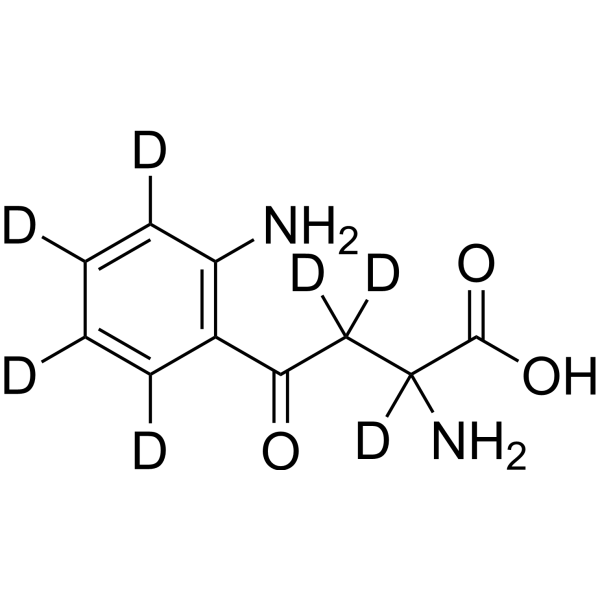
    DL-Kynurenine-d7 is the deuterium labeled DL-Kynurenine. DL-Kynurenine is a key metabolite in the tryptophan metabolic pathway and can cross the blood-brain barrier. DL-Kynurenine has a bidirectional regulatory effect on neural excitability. DL-Kynurenine can enhance the convulsive and lethal effects caused by strychnine. DL-Kynurenine is the precursor of Kynurenic acid (HY-100806), which is an antagonist at the glycine site of NMDA receptors and can counteract excitatory toxins. DL-Kynurenine can be used for research on neurotoxicity.
    DL-Kynurenine-d7
  • HY-100811AR

    7-CKA sodium salt (Standard)

    Reference Standards iGluR Neurological Disease
    7-Chlorokynurenic acid (sodium salt) (Standard) is the analytical standard of 7-Chlorokynurenic acid (sodium salt). This product is intended for research and analytical applications. 7-Chlorokynurenic acid sodium salt (7-CKA sodium salt) is a potent and selective antagonist of the glycine B coagonist site of the N-methyl-D-aspartate (NMDA) receptor (IC50=0.56 μM). 7-Chlorokynurenic acid sodium salt is also a potent inhibitor of the reuptake of glutamate into synaptic vesicles with a Ki of 0.59 μM. 7-Chlorokynurenic acid sodium salt has potent antinociceptive actions after neuraxial delivery .
    7-Chlorokynurenic acid sodium salt (Standard)
  • HY-100811R

    7-CKA (Standard)

    Reference Standards iGluR Neurological Disease
    7-Chlorokynurenic acid (Standard) is the analytical standard of 7-Chlorokynurenic acid. This product is intended for research and analytical applications. 7-Chlorokynurenic acid (7-CKA) is a potent and selective antagonist of the glycine B coagonist site of the N-methyl-D-aspartate (NMDA) receptor (IC50=0.56 μM). 7-Chlorokynurenic acid is also a potent inhibitor of the reuptake of glutamate into synaptic vesicles with a Ki of 0.59 μM. 7-Chlorokynurenic acid has potent antinociceptive actions after neuraxial delivery .
    7-Chlorokynurenic acid (Standard)
  • HY-W014504R

    Reference Standards Endogenous Metabolite Metabolic Disease
    DL-Kynurenine (Standard) is the analytical standard of DL-Kynurenine. This product is intended for research and analytical applications. DL-Kynurenine is a key metabolite in the tryptophan metabolic pathway and can cross the blood-brain barrier. DL-Kynurenine has a bidirectional regulatory effect on neural excitability. DL-Kynurenine can enhance the convulsive and lethal effects caused by strychnine. DL-Kynurenine is the precursor of Kynurenic acid (HY-100806), which is an antagonist at the glycine site of NMDA receptors and can counteract excitatory toxins. DL-Kynurenine can be used for research on neurotoxicity.
    DL-Kynurenine (Standard)
  • HY-120681

    iGluR Neurological Disease
    CGP39653 is a competitive NMDA receptor antagonist that inhibits receptor function by competing with glutamate for the binding site .
    CGP39653
  • HY-100822R

    (+)-HA-966 (Standard)

    iGluR Reference Standards Neurological Disease
    (R)-(+)-HA-966 (Standard) is the analytical standard of (R)-(+)-HA-966 (HY-100822). This product is intended for research and analytical applications. (R)-(+)-HA-966 ((+)-HA-966) is a partial agonist/antagonist of glycine site of the N-methyl-D-aspartate (NMDA) receptor complex. (R)-(+)-HA-966 selectively blocks the activation of the mesolimbic dopamine system by amphetamine . (R)-(+)-HA-966 can cross the blood-brain barrier and has the potential for neuropathic and acute pain .
    (R)-(+)-HA-966 (Standard)

Inquiry Online

Your information is safe with us. * Required Fields.

Salutation


Country or Region *

Applicant Name *


Organization Name *

Department *


Email Address *


Product Name *

Cat. No.


Requested quantity *

Phone Number *


Remarks

Inquiry Online

Inquiry Information

Product Name:
Cat. No.:
Quantity:
MCE Japan Authorized Agent: